
LEAD ANALYST
Utkarsh Khirodkar is a Lead Market Research Analyst at MetaStat Insight, specializing in market intelligence, technology sector assessments, and competitive strategy.

Vietnam Fintech Market Size, Share, By Service Type (Digital Payments and Money Transfers, Digital Lending and Consumer Credit, Buy Now Pay Later, Digital Banking and Neobanking, WealthTech and Digital Investment, InsurTech, RegTech, RiskTech and Digital Identity), By Technology (Application Programming Interfaces (APIs) and Open Banking, Artificial Intelligence (AI), Blockchain, Distributed Computing), By Deployment Mode (Cloud, On-Premises), By End User (Consumers, Small and Medium-Sized Enterprises, Large Enterprises, Banks and Financial Institutions, Insurance Companies, Government and Public-Sector Organizations), Industry Analysis, Growth, Trends, and Forecast, 2026-2033
Report ID
MSI-4963
Published
August, 2026
Pages
252 Pages
Format
Historical
Base year
Forecast
Forecast period
Report Details
Choose Your License
Vietnam Fintech Market
The Vietnam Fintech market was valued at USD 19.4 billion in 2025 and is projected to reach USD 55.9 billion by 2033, growing at a CAGR of 14.1% over the forecast period.
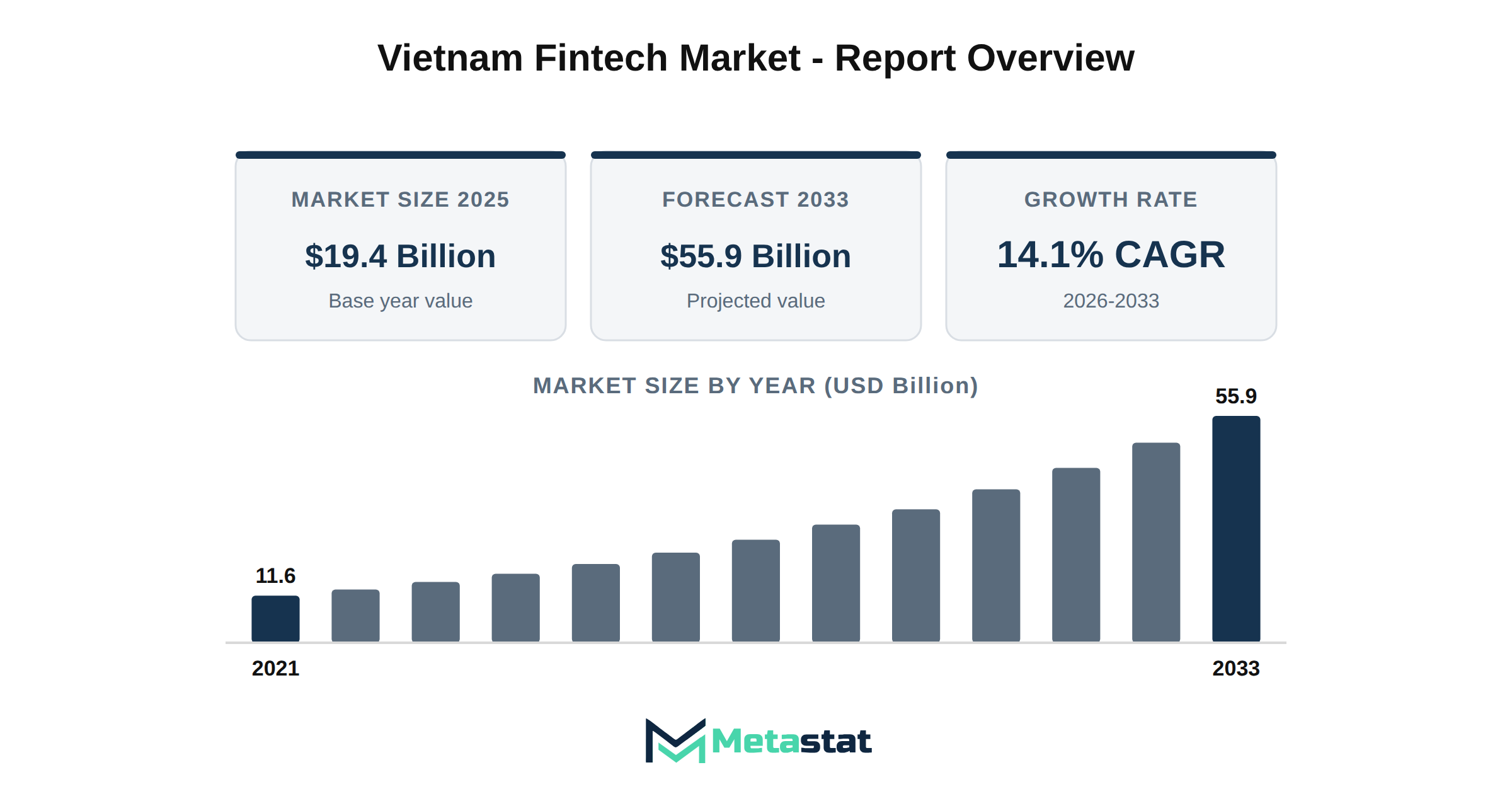
The Vietnam Fintech market exhibits significant growth, with a base value of USD 19.4 billion in 2025, reflecting robust expansion from USD 11.6 billion in 2021. Projections indicate an increase to USD 55.9 billion by 2033, representing a compound annual growth rate (CAGR) of 14.1 percent throughout the forecast period.
Key segments contributing to this growth include digital payments, digital lending, and neobanking. The digital payments and money transfers segment accounts for USD 7.3 billion in 2026, with expectations to rise to USD 15.3 billion by 2033 at a CAGR of 11.2 percent. Digital lending and consumer credit is anticipated to reach USD 9.5 billion by 2033, driven by increasing consumer demand for accessible credit solutions.
Technological advancements play a crucial role in shaping the Vietnam Fintech market. The application programming interfaces (APIs) and open banking segment is projected to grow from USD 5.5 billion in 2026 to USD 12.9 billion by 2033, reflecting a CAGR of 12.9 percent. Artificial intelligence (AI) technologies are expected to reach USD 17.3 billion within the same timeframe, driving innovation in financial services.
Cloud deployment stands out, with a growth trajectory from USD 15.5 billion in 2026 to USD 42 billion by 2033, demonstrating a CAGR of 15.3 percent. This shift towards cloud solutions enhances operational efficiency and scalability, which is crucial for financial institutions aiming to meet evolving customer needs.
Overall, the Vietnam Fintech market presents strong potential driven by technological evolution, increasing consumer adoption, and evolving regulatory frameworks. This dynamic environment creates opportunities for key players to invest strategically and optimize their service offerings to capture market share.
The Vietnam Fintech market faces a landscape influenced by various factors, including regulatory compliance, which shapes operational frameworks and influences market dynamics. Companies operating within this environment navigate a complex web of standards and geopolitical risks that impact their strategies and growth trajectories.
Investment in research and development plays a critical role in driving innovation within the market. Emerging technologies including artificial intelligence and blockchain are integral to next-generation solutions, enhancing service delivery and operational efficiency. These advancements encourage firms to adopt sustainable practices, contributing to decarbonization and circular economy dynamics in their operations.
The market experiences fragmentation, with numerous players vying for market share. This scenario creates opportunities for mergers and acquisitions, allowing companies to consolidate resources and enhance their value chain capabilities. Strategic capital allocation and infrastructure investments are vital for maintaining competitive advantages and ensuring long-term sustainability in the market.
Macroeconomic headwinds, including inflationary pressures and currency volatility, pose challenges for firms. Inflationary pressures and currency volatility influence operational costs and affect pricing strategies, impacting overall profitability. Navigating these challenges requires a keen understanding of the economic landscape and proactive risk management strategies.
Looking ahead, the Vietnam Fintech market presents significant opportunities for growth and expansion. Corporate imperatives will drive firms to adapt to evolving consumer preferences and technological advancements. High-value recommendations for stakeholders in this market include focusing on customer journey dynamics and leveraging innovative technologies to enhance service offerings and drive customer engagement.
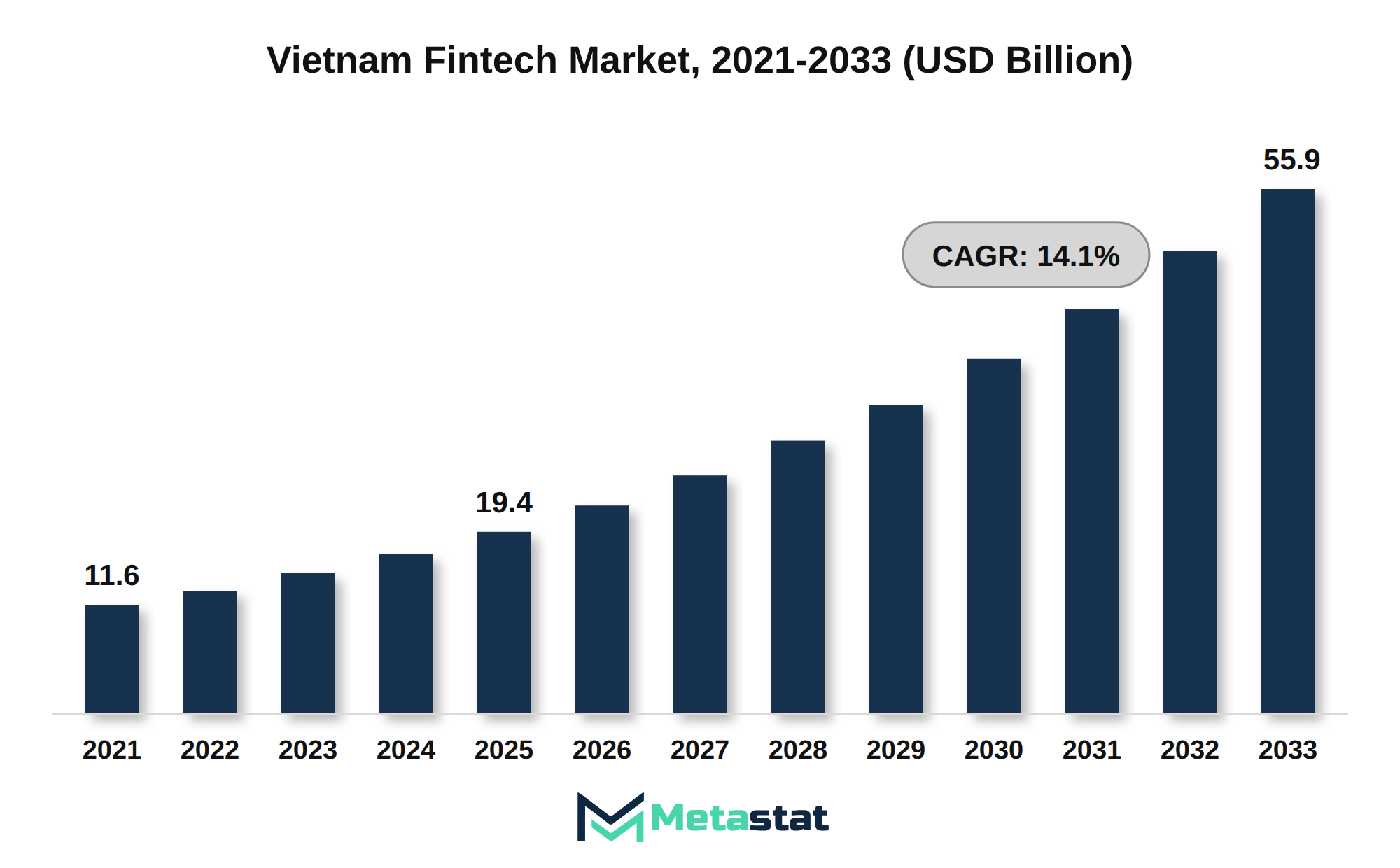
The Vietnam Fintech market experiences significant growth driven by digital transformation initiatives that reshape traditional financial services. Increased smartphone penetration and internet access across the nation facilitate the adoption of digital financial solutions. Consumers exhibit evolving preferences, shifting towards convenience and accessibility in financial transactions, which drives demand for digital payments, online lending, and neobanking services.
Investment in technological integration, including automation and artificial intelligence, plays a critical role in enhancing service delivery and operational efficiency. Financial providers leverage these technologies to streamline processes, reduce operational costs, and improve customer experiences. The market reflects a significant shift towards digital platforms, resulting in enhanced competition among service providers.
Venture funding has surged, supporting startups and established players in developing innovative fintech solutions. Investors recognize the potential of the Vietnam Fintech market, leading to increased capital inflow that drives product diversification and service enhancement. This influx contributes to the market's growth trajectory, with projections indicating continued expansion through 2033.
Overall, digital transformation serves because a key factor driving the Vietnam Fintech market, influencing service offerings, customer behaviors, and investment patterns. The evolving landscape presents vast opportunities for growth, positioning the market for sustained development in the coming years.
The Vietnam Fintech market experiences accelerated growth driven by significant investment in digital infrastructure. This investment stems from a combination of increasing public-private spending power and a focus on upgrading both physical and digital capabilities. The push for enhanced digital services aligns with overall macro-economic factors, including rising GDP and favorable interest rates, which facilitate venture funding and capital investment environments.
Strategic investment in technologies including artificial intelligence and automation enhances operational productivity across various sectors. The adoption of these technologies streamlines processes, resulting in cost-efficiency initiatives that benefit both financial institutions and consumers. Consequently, the market positions itself for robust development, driven by companies seeking to improve service delivery and customer engagement through innovative digital solutions.
In addition, evolving consumer behaviors and shifting demographic patterns contribute to the market's expansion. An increasingly urbanized population demands more accessible and efficient financial services, prompting fintech firms to diversify their product offerings. This diversification focuses on meeting the unique needs of various consumer segments, further driving the overall growth of the Vietnam Fintech market.
The Vietnam Fintech market encounters significant challenges owing to regulatory compliance hurdles. The evolving regulatory environment places pressure on businesses to align with strict legal requirements, which often leads to increased operational costs. Such stringent regulations deter new entrants from competing in the market, limiting innovation and growth opportunities.
Macroeconomic headwinds contribute to market constraints, particularly inflationary pressures affecting operational expenditures. Rising costs of living and doing business reduce consumer spending, impacting demand for fintech services. This situation results in a complex relationship between consumer behavior and service offerings, stalling potential growth.
Infrastructure gaps and connectivity deficits further complicate the market, particularly in rural areas where access to digital financial services remains limited. These gaps restrict service reach and hinder the adoption of innovative fintech solutions. Deployment bottlenecks affect the market's ability to deliver services efficiently, ultimately slowing down growth trajectories.
Skilled labor deficiencies pose another challenge, driven by the market's reliance on a workforce adept in advanced technologies. Talent gaps impede the implementation of advanced solutions, creating a bottleneck in development and service delivery. The shortage of skilled professionals directly influences the competitive edge of domestic players in the Vietnam Fintech market.
Data security vulnerabilities and privacy concerns undermine consumer trust in digital financial solutions. These issues lead to increased scrutiny from regulators, further complicating compliance efforts. The market grapples with balancing innovation with the imperative of protecting consumer data, which adds another layer of complexity to operational strategies.
Market fragmentation creates further complications. Numerous players with diverse offerings lead to confusion among consumers, limiting market penetration for specific services. This fragmentation hinders the establishment of clear market leaders or dominant technologies, slowing the overall growth of the Vietnam Fintech market.
The Vietnam Fintech market encounters challenges stemming from geopolitical fragmentation, which influences trade dynamics and investment flows. This fragmentation complicates cross-border transactions, resulting in increased tariffs and trade deficits. Consequently, financial technology firms face heightened operational costs and competitive pressures that hinder growth potential.
Technological disruptions contribute to market volatility, driven by rapid advancements that outpace existing infrastructural capabilities. Companies struggle with integrating complex research and development processes, which raises costs and delays product rollout. Interoperability friction among diverse financial platforms further complicates service delivery, leading to customer dissatisfaction and reduced adoption rates.
Supply chain instability exacerbates these issues, resulting from disruptions in logistics and component availability that slow down the deployment of innovative solutions. The market experiences tightening regional regulatory standards, increasing compliance overhead and evolving legal liabilities for firms navigating this landscape. Such regulatory pressures strain resources and divert focus from core business activities, impacting profitability in a fiercely competitive environment.
In addition, rising input costs and pricing compression challenge operational sustainability. Talent retention pressures emerge owing to firms competing for skilled personnel, with workforce skill gaps limiting the ability to adopt advanced technologies effectively. These factors collectively create a challenging environment for companies operating in the Vietnam Fintech market, necessitating strategic adjustments to remain competitive and responsive to evolving market demands.
The Vietnam Fintech market presents substantial opportunities driven by emerging technological innovations that reshape financial services. The integration of Artificial Intelligence (AI) into various segments enhances operational efficiencies and customer engagement, contributing to a projected compound annual growth rate (CAGR) of 17.3 percent through 2033. This technological advancement influences sectors including digital lending and consumer credit, where a CAGR of 13.4 percent is anticipated, reflecting a clear demand for innovative financial solutions.
Infrastructure modernization facilitates this growth, with a significant shift towards cloud deployment expected to transition from USD 15.5 billion in 2026 to USD 42 billion by 2033, reflecting a CAGR of 15.3 percent. The increasing adoption of cloud-based solutions supports scalability and flexibility for financial service providers, ensuring they effectively meet the evolving demands of their customers. This progression towards cloud solutions strengthens the overall market while addressing the need for robust technological frameworks.
Geographical expansion across the Vietnam Fintech market enhances market penetration. Emerging regional demands drive new entrants to local markets, increasing competition and innovation. Downstream market diversification increases the breadth of services available, allowing financial institutions to cater to a wider audience. This growth strategy aligns with the increasing consumer preference for integrated financial services, enhancing the customer experience while driving revenue growth.
Sustainability imperatives, including eco-friendly practices and ESG-driven alignments, emerge driven by critical factors influencing market dynamics. Financial institutions adopting green transformations enhance their brand reputation and appeal to environmentally conscious consumers. This alignment with sustainability trends not only fulfills corporate responsibility but creates new market opportunities, reinforcing the Vietnam Fintech market's growth trajectory.
The strategic consolidation of fintech players facilitates cross-industry mergers and acquisitions, further propelling market expansion. Collaborative efforts among industry participants encourage innovation and result in comprehensive service offerings, enhancing competitive positioning. This trend signifies a collective movement towards creating a more resilient and integrated financial ecosystem that aligns with evolving consumer expectations.
The Vietnam Fintech market is segmented based on Service Type, Technology, Deployment Mode, and End User.
Valued at USD 7.3 billion in 2026, the Digital Payments and Money Transfers segment is projected to reach USD 15.3 billion by 2033, at a CAGR of 11.2% during the forecast period. Enhanced smartphone penetration and internet accessibility drive consumer adoption of digital payment solutions. The Vietnam Fintech market experiences significant demand from small and medium-sized enterprises (SMEs) seeking to streamline transaction processes and improve cash flow management. Advanced technology, particularly mobile wallets and peer-to-peer payment systems, enables efficient money transfers, meeting the evolving needs of customers.
Regulatory frameworks promoting digital transactions further support market expansion. Government initiatives aimed at financial inclusion encourage unbanked and underbanked populations to access digital financial services. This shift results in increased transactional volumes and revenue generation for providers in the market. The emergence of value-added services, including loyalty programs and personalized financial advice, enhances customer engagement and retention.
Competitive pressures compel players to innovate and differentiate their offerings, leading to rapid technological maturation. Investment in next-gen upgrades, including artificial intelligence-driven fraud detection and blockchain for security, builds customer trust. The Vietnam Fintech market is projected to experience significant growth, driven by evolving consumer preferences and a commitment to digital transformation across various sectors.
Demand for Digital Lending and Consumer Credit in the Vietnam Fintech market is driven by a growing preference for online financial solutions among consumers and small businesses. Increased smartphone penetration and internet access facilitate convenient loan applications and approvals, enhancing accessibility for a wider audience. This segment benefits from the rise of e-commerce, stimulating consumer spending and the subsequent necessity for flexible credit options.
Technological advancements, including the implementation of artificial intelligence and machine learning, enable lenders to assess credit risks effectively and tailor loan offers to individual customers. This evolution creates a more personalized lending experience, attracting borrowers seeking custom solutions. Enhanced data analytics allows for improved underwriting processes, promoting trust among users in the lending system.
Regulatory frameworks play a crucial role in shaping the segment's development. Policymakers focus on establishing guidelines that safeguard consumer interests while encouraging innovation within the lending space. Compliance with these regulations creates an environment conducive to market growth, ensuring that customers receive fair treatment and transparency throughout the borrowing process.
The Digital Lending and Consumer Credit segment is projected to reach USD 9.5 billion by 2033, at a CAGR of 13.4% during the forecast period. Continuous investment in technology and infrastructure further supports this growth trajectory, enabling service providers to expand their offerings. Increased adoption of digital financial services among consumers underlines the significance of this segment within the broader Vietnam Fintech market.
Growth in the Buy Now Pay Later segment aligns with increasing consumer demand for flexible payment options, allowing buyers to manage expenses more effectively. Retailers and e-commerce platforms play a critical role in this trend, attracting customers by integrating Buy Now Pay Later solutions into their checkout processes. Improved customer satisfaction and higher conversion rates reinforce the segment's value proposition.
Technological advancements contribute to the segment's maturation, with streamlined API integrations enabling efficient transactions. Enhanced data analytics capabilities allow providers to assess credit risk more accurately, ensuring sustainable growth while minimizing defaults. These technological innovations create opportunities for new entrants and established players alike, fostering a competitive environment within the Vietnam Fintech market.
Regulatory compliance remains a vital factor, shaping the operational landscape for Buy Now Pay Later services. Adhering to consumer protection laws and financial regulations strengthens trust among users and builds credibility for providers. While the market continues to evolve, maintaining compliance supports long-term growth and sustainability.
Market dynamics indicate that the Buy Now Pay Later segment is expected to reach USD 6.8 billion by 2033. This anticipated growth reflects shifting consumer preferences and the increasing integration of digital payment solutions across various sectors. Sustained investment in marketing and technology will further enhance the segment's appeal, driving greater adoption rates.
Growth expectations for the Digital Banking and Neobanking segment reflect ongoing shifts in consumer behavior and technological advancements. Increasing smartphone penetration and internet accessibility drive demand for digital banking solutions among consumers seeking convenience and efficiency. A growing preference for online banking services encourages traditional financial institutions to adapt their offerings to remain competitive in the Vietnam Fintech market.
The Digital Banking and Neobanking segment is projected to grow at a CAGR of 16.2% during the forecast period. This growth results from the convergence of innovative financial technologies and changing consumer expectations. Enhanced user experiences through user-friendly interfaces and faster transaction processes contribute to the segment's expansion. Financial institutions and neobanks prioritize integration and personalized services to attract and retain customers, influencing overall market growth.
Regulatory changes aimed at promoting financial inclusion and encouraging digital transactions stimulate the segment's growth. Policymakers implement supportive frameworks, enabling neobanks to operate effectively and establish trust with consumers. Such developments lead to increased competition within the market, prompting players to innovate continuously and optimize service offerings.
Investments in artificial intelligence and data analytics drive advancements in digital banking capabilities. These technologies enhance fraud detection, risk management, and customer insights, enabling firms to offer tailored solutions. The strategic focus on technological maturation and next-gen upgrades positions the Digital Banking and Neobanking segment favorably within the Vietnam Fintech market, supporting its growth trajectory.
Investment in innovative financial solutions significantly influences the WealthTech and Digital Investment segment within the Vietnam Fintech market. Growing consumer awareness regarding asset management and investment opportunities drives demand for digital investment platforms. Increased accessibility to technology enhances user engagement, prompting more individuals to explore investment options previously considered complex or inaccessible.
Technological advancements facilitate the development of user-friendly interfaces and automated investment services, which attract a wider audience. The proliferation of mobile applications further simplifies investment processes, allowing users to manage portfolios effectively from their devices. This ease of access contributes to a shift towards digital investment strategies among various consumer demographics.
Regulatory compliance shapes segment dynamics. Adherence to local financial regulations ensures that platforms operate within legal frameworks, building consumer trust and promoting wider adoption. Enhanced regulatory standards create a competitive environment that encourages service providers to innovate while maintaining compliance.
Market players continuously evolve their offerings, integrating advanced technologies including artificial intelligence to optimize investment strategies. These next-generation upgrades enhance customer experience and drive operational efficiency. While competition increases, platforms aim to differentiate themselves by offering unique features tailored to consumer preferences.
Downstream applications of WealthTech solutions extend across various sectors, including retail, insurance, and retirement planning. These applications reflect a growing trend where consumers expect personalized investment advice aligned with their financial goals. This demand indicates a significant shift towards digital solutions that integrate seamlessly with overall financial planning.
Overall, the WealthTech and Digital Investment segment demonstrates potential for growth within the Vietnam Fintech market, driven by technological maturation, regulatory compliance, and evolving consumer behaviors. Strategic investments in this area will likely yield significant returns attributed to increasing financial literacy and the integral role of digital platforms in personal finance management.
Technological advancements significantly influence the InsurTech sector within the Vietnam Fintech market, driving the adoption of more efficient and customer-centric insurance solutions. Emerging technologies, including artificial intelligence and blockchain, facilitate enhanced underwriting processes and claims management while improving customer engagement. The sector's growth stems from increasing demand for personalized insurance products, with consumers seeking tailored coverage options that address specific needs.
Regulatory compliance remains a critical factor, with evolving standards ensuring consumer protection while promoting innovation. InsurTech stakeholders navigate these regulations to implement solutions that meet compliance requirements and enhance operational efficiency. This adaptability promotes a more agile market that responds swiftly to changing consumer expectations and regulatory landscapes, strengthening long-term demand for InsurTech solutions.
Investment in InsurTech continues to rise, driven by venture capital funding and strategic partnerships aimed at expanding service offerings. Insurers increasingly collaborate with technology firms to develop next-generation products, enhancing their competitive position. This trend reflects a shift toward digital transformation, where traditional insurers seek to integrate innovative solutions to capture market share in an evolving landscape, increasing investment across the value chain.
Downstream applications, particularly in health and property insurance, exhibit promising growth potential, driven by consumer awareness and demand for comprehensive coverage. The InsurTech segment actively addresses consumption shifts, aligning product offerings with the preferences of tech-savvy consumers who prioritize convenience and accessibility. While the market matures, opportunities for expansion and strategic investment become more apparent, reinforcing the segment's position in the overall Fintech landscape.
RegTech, RiskTech and Digital Identity play a critical role in enhancing operational efficiency and compliance within the Vietnam Fintech market. Demand drivers include the growing emphasis on regulatory compliance and the need for advanced security measures in financial transactions. Financial institutions prioritize technology solutions that mitigate risk and ensure adherence to local and international regulations. The growing complexity of regulatory frameworks necessitates innovative solutions that simplify compliance processes while minimizing operational disruptions.
Adoption of these technologies accelerates due to organizations recognizing the importance of safeguarding customer data and maintaining trust in their services. Financial service providers increasingly depend on robust identity verification mechanisms to reduce fraud risk, thereby enhancing customer confidence. Investments in RegTech solutions lead to increased operational resilience and improved customer experience, which supports market growth.
Technological maturation drives the evolution of RegTech solutions, enabling organizations to leverage artificial intelligence for enhanced fraud detection and compliance monitoring. Next-gen upgrades contribute to the development of more sophisticated systems that facilitate integration with existing financial infrastructures. This evolution reflects the broader trends in the market where operational efficiency and regulatory compliance dictate technology adoption.
The relationship between regulatory compliance standards and technological advancements creates a dynamic environment for innovation. Organizations in the market continuously explore strategic opportunity windows that arise from changing regulations and consumer expectations. Investments in RegTech and related technologies signal a proactive approach to addressing compliance challenges while optimizing operational costs, thereby enhancing overall profitability.
Demand for Blockchain-Based Financial Services and Personal Finance Management aligns with the increasing adoption of digital solutions among consumers. Factors including the rise of fintech startups, coupled with growing awareness of blockchain technology's benefits, drive market interest. The segment experiences traction owing to its potential to streamline financial processes and enhance security, appealing to both individual consumers and small businesses.
Technological maturation plays a critical role in the segment's expansion. Innovations in blockchain technology facilitate greater transparency and efficiency in financial transactions. This evolution incentivizes financial institutions and fintech companies to invest in next-generation upgrades, further enhancing offerings and addressing customer needs.
Regulatory compliance standards significantly influence the landscape of this segment. While regulations evolve, businesses in the Vietnam Fintech market adapt to ensure alignment, building consumer trust and encouraging broader adoption. Compliance with new regulations often requires investment in technology and infrastructure, impacting cost structures and pricing strategies.
Strategic opportunity windows emerge owing to consumer preferences shifting toward more flexible and accessible financial management solutions. This shift opens avenues for companies to introduce innovative products tailored to specific consumer needs. The focus on user experience and personalization drives competition, compelling firms to enhance their service offerings.
Overall, the segment's growth potential reflects the broader trajectory of the Vietnam Fintech market, with a focus on leveraging technological advancements to meet evolving consumer demands. Investment in this area presents a strategic opportunity for stakeholders aiming to capitalize on the growing trend towards digital financial services.
Valued at USD 5.5 billion in 2026, the Application Programming Interfaces (APIs) and Open Banking segment is projected to reach USD 12.9 billion by 2033, at a CAGR of 12.9% during the forecast period. Demand drivers include the increasing need for efficient digital transactions and enhanced customer experiences within the Vietnam Fintech market. Innovations in technology support this segment, allowing financial institutions to integrate services swiftly and efficiently, creating an ecosystem that embraces agility and responsiveness.
Adoption rates reflect a growing understanding of the advantages that APIs offer in enhancing operational efficiency and enabling faster product development cycles. Financial institutions increasingly recognize that leveraging APIs streamlines service delivery while expanding their service offerings to meet evolving consumer demands. The competitive landscape encourages banks and fintech companies to collaborate, resulting in an enriched suite of financial products and services.
The environment of regulatory frameworks surrounding APIs and Open Banking contributes to the segment's expansion. Policymakers emphasize transparency and consumer protection, creating an environment that champions innovation while ensuring compliance. This supportive regulatory backdrop facilitates investments and partnerships that enhance technological maturity, driving further growth within the Vietnam Fintech market.
Cost structures within the segment favor scalability, allowing companies to optimize their operations without incurring prohibitive expenses. Pricing volatility remains relatively low, attributed to the increasing competition among service providers, which promotes cost-effective solutions for clients. Overall, the emphasis on technological advancements and regulatory alignment positions the Application Programming Interfaces (APIs) and Open Banking segment because a critical component of the market's evolution.
Significant growth in the Vietnam Fintech market stems from advancements in Artificial Intelligence (AI), which enhance operational efficiency and user experience across various financial services. Investment in AI technologies drives better data analytics, fraud detection, and customer service automation, making financial institutions more competitive. The increasing integration of AI in financial solutions promotes adoption among banks and fintech companies, providing them with strategic advantages. Regulatory compliance standards in the market further encourage AI adoption, driven by institutions seeking to streamline their processes and enhance security measures. With AI expected to reach USD 17.3 billion by 2033, at a CAGR of 17.3% during the forecast period, financial organizations are prioritizing capital investments in this technology to capitalize on market opportunities.
Rapid advancements in Blockchain technology serve because a primary demand driver within the Vietnam Fintech market. Increased interest in decentralized finance (DeFi) and smart contracts drives adoption across various industries, including banking, insurance, and supply chain management. Sector expansion occurs owing to rising awareness of Blockchain's potential to enhance transparency, reduce fraud, and streamline processes. The trend towards digital transformation among organizations accelerates investments in Blockchain solutions, prompting financial institutions to explore innovative applications. Regulatory compliance influences Blockchain deployment, with evolving standards creating a conducive environment for secure financial transactions.
Blockchain segment is expected to reach USD 9.5 billion by 2033. The ongoing maturation of technology coupled with increasing integration into mainstream financial services drives growth. Strategic investment opportunities arise because firms recognize the necessity of Blockchain for competitive advantage, leading to enhanced partnerships across the ecosystem. The pursuit of cost-effective solutions influences the demand for Blockchain applications, driving efficiency in operational structures. The Vietnam Fintech market stands poised for substantial growth driven by continued investment and the development of innovative financial solutions leveraging Blockchain technology.
Significant growth is anticipated in the Distributed Computing segment within the Vietnam Fintech market, with a projected CAGR of 13.3% during the forecast period. Increasing demand for efficient data processing and improved scalability in financial services drives this growth. The emergence of advanced technologies, including cloud computing and high-performance computing, supports the evolution of Distributed Computing solutions, enabling fintech companies to enhance operational capabilities.
Investment in next-generation infrastructure is essential for the expansion of the Distributed Computing segment. Financial institutions and service providers prioritize adopting distributed solutions to improve service delivery, reduce latency, and enhance customer experiences. This prioritization results in greater adoption rates among various end users, including banks, insurance companies, and small and medium-sized enterprises.
Increased regulatory compliance requirements necessitate robust data management and security measures, further driving demand for Distributed Computing solutions. Financial organizations recognize the importance of complying with industry standards and regulations, leading to investments in technologies that facilitate secure and efficient data processing. The ongoing evolution of regulatory frameworks influences the investment landscape, prompting firms to adopt innovative solutions that align with compliance standards.
The Vietnam Fintech market demonstrates a strong outlook for Distributed Computing solutions, with significant capital investments expected to enhance infrastructure capabilities. Companies in this segment continuously innovate their offerings to meet the evolving needs of consumers and enterprises. The growing emphasis on data-driven decision-making and the need for quick adaptation to market changes further support the expansion of Distributed Computing in the fintech sector.
Increasing demand for advanced security measures in the Vietnam Fintech market drives interest in cryptography and biometrics. Heightened awareness of data breaches and fraud pushes financial institutions to adopt improved security technologies. This focus on protecting sensitive information creates opportunities for innovative solutions, including biometric authentication methods and advanced encryption algorithms.
The evolution of regulatory compliance standards further influences the adoption of cryptography and biometrics. Financial institutions face pressure to comply with stringent regulations aimed at safeguarding customer data and privacy. Investment in these technologies fulfills compliance requirements and builds customer trust, enhancing overall market competitiveness.
Next-gen upgrades in biometric technologies, including facial recognition and fingerprint scanning, facilitate user experiences while enhancing security. Increased integration of these technologies across various platforms contributes to a smoother transaction process for consumers and businesses alike, reinforcing the importance of secure transactions in the Vietnam Fintech market.
Downstream applications of cryptography and biometrics extend to various sectors, including banking, insurance, and e-commerce. Each industry experiences unique benefits, including reduced fraud rates and improved customer satisfaction. These advancements position the market for continued growth, because businesses increasingly prioritize secure financial transactions.
Strategic opportunity windows emerge for players innovating in cryptography and biometrics. Capital investment in research and development fuels ongoing technological maturation, leading to more robust solutions that meet the evolving demands of the market. Overall, the shift towards enhanced security mechanisms aligns with broader trends in financial technology, positioning the Vietnam Fintech market for sustained expansion.
Cloud deployment mode in the Vietnam Fintech market exhibits significant potential for expansion, valued at USD 15.5 billion in 2026 and projected to reach USD 42 billion by 2033, at a CAGR of 15.3% during the forecast period. This growth is attributed to increasing demand for scalable and flexible financial solutions that align with the evolving needs of businesses and consumers.
Adoption of cloud technologies facilitates integration of various financial services and enhances the customer experience. Organizations benefit from reduced operational costs and improved efficiency when leveraging cloud-based solutions, enabling effective resource allocation. Financial institutions that embrace cloud services position themselves strategically to respond to changing market dynamics and consumer preferences.
Technological maturation in cloud infrastructure has led to enhanced security measures and compliance with regulatory standards. The integration of advanced analytics and artificial intelligence within cloud platforms provides organizations with valuable insights for decision-making, driving further investment in this deployment mode. The ability to quickly adapt to changing regulatory requirements supports continued growth within the Vietnam Fintech market.
Strategic opportunity windows for investment in cloud technologies arise from the increasing emphasis on digital transformation across various sectors. Financial institutions and technology providers explore innovative solutions to meet customer demands, creating a competitive environment that accelerates growth. The trend toward cloud adoption highlights the importance of agility and scalability in the financial services industry.
Adoption of On-Premises solutions in the Vietnam Fintech market experiences significant momentum driven by businesses seeking to maintain control over sensitive data and comply with regulatory standards. The segment is characterized by increased investments in building robust infrastructure, enabling companies to tailor their services to specific customer needs. Strategic upgrades to legacy systems drive this transition, enhancing operational efficiencies and ensuring data security. Demand from large enterprises and financial institutions fuels growth, because these organizations prioritize data sovereignty and customization in their financial operations.
On-Premises segment is estimated to reach USD 13.9 billion by 2033, at a CAGR of 10.9% during the forecast period. This growth reflects the market's response to rising cyber threats and heightened awareness of data privacy. Regulatory compliance pressures push businesses to adopt more secure solutions, creating a favorable environment for On-Premises deployments. Investment in advanced technologies and next-generation upgrades further supports this segment's expansion, allowing fintech firms to offer tailored solutions while addressing unique customer requirements.
The focus on enhancing customer experiences through personalized financial services drives consumption shifts within the market. End-users, including banks and financial institutions, recognize the value of in-house management of financial technologies, leading to a stronger preference for On-Premises solutions. Overall, the On-Premises segment contributes significantly to the evolving landscape of the Vietnam Fintech market, establishing its place because a critical component of financial service delivery.
Consumer engagement drives significant transformation within the Vietnam Fintech market. Increasing smartphone penetration and internet accessibility enhance consumers' ability to access financial services conveniently. This accessibility encourages a shift towards digital payment solutions, enabling consumers to conduct transactions swiftly and securely.
The demand for personalized financial products and services contributes to segment expansion. Consumers increasingly seek tailored offerings that cater to their specific needs, prompting fintech companies to innovate continuously. This trend aligns with the broader growth of digital lending, allowing consumers to secure loans quickly and efficiently.
Regulatory compliance standards play a vital role in shaping the consumer segment. The introduction of policies aimed at protecting consumer interests enhances trust in digital financial services, driving adoption rates upward. Compliance with these standards ensures transparency and security in transactions, creating a positive consumer experience.
Technological advancements influence consumer behavior significantly. Innovations in artificial intelligence and blockchain technology provide enhanced security and streamlined processes, improving overall user experience. Consumers become more comfortable with these technologies, leading to an increase in demand for digital financial solutions within the market.
Price volatility and margin pressures present challenges for companies targeting consumers. Competitive pricing strategies emerge because essential for attracting and retaining customers, compelling fintech firms to optimize their cost structures. Strategic investments in technology and customer engagement initiatives contribute to long-term viability in this dynamic environment.
Investment in financial technology by Small and Medium-Sized Enterprises (SMEs) drives significant innovation and accessibility within the Vietnam Fintech market. SMEs increasingly adopt digital solutions to enhance operational efficiency and customer engagement. This transition results from a growing recognition of digital tools that simplify payment processing, credit acquisition, and financial management.
Technological advancements facilitate the development of tailored financial products that cater specifically to SME needs. The adoption of digital lending platforms enables SMEs to access credit more efficiently, overcoming traditional barriers associated with obtaining financing. This dynamic significantly influences the demand for digital lending solutions within the market.
Regulatory compliance remains a vital consideration for SMEs operating in the Fintech sector. Regulatory frameworks increasingly accommodate the unique challenges faced by smaller enterprises, promoting a more inclusive environment for financial services. This adaptability enhances SMEs' confidence in adopting Fintech solutions.
Cost structures and pricing volatility represent key concerns for SMEs when integrating new technologies. The availability of competitive pricing models for digital financial services supports SMEs in managing operational costs without sacrificing service quality. This balance is critical for maintaining profitability and ensuring sustainable growth in the competitive environment.
Downstream application of Fintech solutions among SMEs demonstrates a shift in consumption patterns. Businesses increasingly leverage digital tools to streamline transactions, improve cash flow management, and enhance customer experiences. This shift reflects a broader trend toward digitalization across various business sectors within the Vietnam Fintech market.
Strategic opportunity windows arise for Fintech providers targeting SMEs, particularly in offering specialized solutions that address specific pain points. By focusing on this underserved market segment, Fintech firms enhance their value propositions, ultimately contributing to the overall growth trajectory of the market.
Demand for financial technology solutions among large enterprises in Vietnam demonstrates significant growth driven by the increasing need for digital transformation. Enterprises recognize the potential of fintech solutions to enhance operational efficiency and customer engagement. Adoption of advanced technologies, including artificial intelligence and blockchain, significantly influences this segment. Organizations leverage these technologies to streamline processes, reduce transaction costs, and improve service delivery, resulting in strengthened operational capabilities.
Segment expansion finds support through the rising emphasis on regulatory compliance and the digitalization of financial services. Large enterprises aim to enhance their capabilities in areas including digital payments, lending, and risk management. This shift aligns with the broader trends observed in the Vietnam Fintech market, where evolving regulatory frameworks accommodate innovative financial solutions while ensuring consumer protection, thereby fostering a more competitive environment.
Investment in next-generation upgrades positions large enterprises favorably within the competitive landscape. Organizations adopt fintech tools that provide comprehensive data analytics and insights, enabling informed decision-making and strategic planning. The emphasis on consumer-centric services drives businesses to explore alternatives to traditional banking, leading to a shift towards integrated digital platforms that enhance customer satisfaction and retention.
Challenges related to cost structures and pricing volatility persist, impacting the profitability of large enterprises. Companies face pressure to balance investment in technology with operational costs while navigating an environment marked by fluctuating market conditions. Maintaining competitive margins requires ongoing evaluation of fintech solutions that align with long-term business objectives, ensuring sustainable growth.
Strategic opportunity windows emerge for large enterprises willing to invest in innovative fintech solutions. The focus on enhancing supply chain resilience and exploring disruptive alternatives supports the development of a dynamic financial ecosystem. With a keen eye on evolving consumer preferences and technological advancements, large enterprises in Vietnam are well-positioned to capitalize on growth potential within the market, reinforcing their competitive edge.
Investment in technology by banks and financial institutions in the Vietnam Fintech market aligns with increasing demand for enhanced customer experiences and operational efficiency. The adoption of digital solutions facilitates streamlined processes, allowing these institutions to respond to customer needs more effectively. Innovations in digital payment systems and lending platforms drive competitive advantages, influencing traditional banking models and promoting agility within the sector.
Regulatory compliance standards significantly impact operations, prompting banks to incorporate advanced technologies that ensure adherence to evolving regulations. These institutions face challenges related to cost structures and pricing volatility, which affect their margins. Balancing innovation and regulatory demands remains essential to maintaining profitability and market share in a competitive environment.
Strategic investment opportunities exist in next-generation upgrades, particularly in artificial intelligence and blockchain technologies. These technologies promise to enhance transaction security and streamline customer interactions, positioning banks to better serve their clients. Ongoing technological maturation supports the development of more sophisticated financial products, catering to a broader audience and adapting to shifting consumer preferences. This evolving environment requires banks and financial institutions to navigate emerging trends while managing operational costs and maintaining robust service offerings.
Growth in the insurance sector aligns with increased consumer demand for innovative financial products. Adoption of digital solutions enhances operational efficiency and customer service capabilities for insurance companies. Regulatory compliance standards drive the need for advanced technology to ensure transparency and security in transactions. Investment in artificial intelligence (AI) and blockchain technologies supports the development of personalized insurance products, enabling companies to enhance customer engagement and streamline processes.
The Vietnam Fintech market reflects a shift toward more sophisticated risk assessment models, driven by data analytics. Enhanced data analytics capabilities allow insurers to better understand customer needs and tailor offerings accordingly. Cost structures are evolving, influenced by technological advancements that reduce operational expenses and improve profitability. Strategic opportunity windows emerge owing to traditional insurers seeking to partner with fintech firms, leveraging their technological prowess to innovate and expand their service offerings.
Downstream application of fintech solutions in the insurance domain includes automated claims processing and customer service chatbots, which improve response times and customer satisfaction. Consumption shifts toward digital channels necessitate robust online platforms, increasing pressure on insurance companies to enhance their digital infrastructures. The Vietnam Fintech market presents a landscape ripe for investment, particularly in technologies that facilitate customer experiences and regulatory compliance.
Government and public-sector organizations increasingly prioritize digital transformation to enhance service delivery and operational efficiency. This shift supports the adoption of fintech solutions, which allow for streamlined processes and improved financial management in public services. Regulatory compliance standards drive this demand, pushing organizations to adopt technologies that ensure transparency and accountability in financial transactions.
Technological maturation accelerates the integration of advanced fintech solutions, building trust in government financial systems. Next-gen upgrades, including artificial intelligence and blockchain, enable these organizations to enhance security and facilitate better data management. The expectation for more robust digital infrastructure results in strategic opportunity windows for technology providers targeting public-sector needs.
Cost structures within government entities often face scrutiny, compelling organizations to seek solutions that enhance cost-effectiveness while maintaining service quality. Pricing volatility in traditional financial services further incentivizes the shift to fintech solutions, which offer more predictable and lower-cost alternatives. Increased investments in the Vietnam Fintech market indicate a strong commitment to advancing financial technologies that support public-sector objectives.
Downstream applications of fintech services within government organizations include efficient budgeting, real-time reporting, and improved citizen engagement. Enhanced service delivery through fintech solutions reshapes end-use dynamics, aligning public-sector goals with rising expectations from the populace. These developments position the sector for sustained growth and innovation in the evolving environment of the Vietnam Fintech market.
The Vietnam Fintech market features significant activity driven by various strategic behaviors. Companies focus on mergers and acquisitions to enhance market presence and drive growth. Strategic consolidation efforts have emerged among key players, with firms seeking to expand their service offerings and customer bases through collaborations and partnerships.
Go-to-market strategies prioritize innovative commercial models and competitive pricing architectures. The emphasis on product differentiation is evident, reflecting companies' investments in research and development pipelines to maintain technological advantages. Proprietary technology moats play a crucial role in establishing barriers to entry, deterring potential new entrants from disrupting the market.
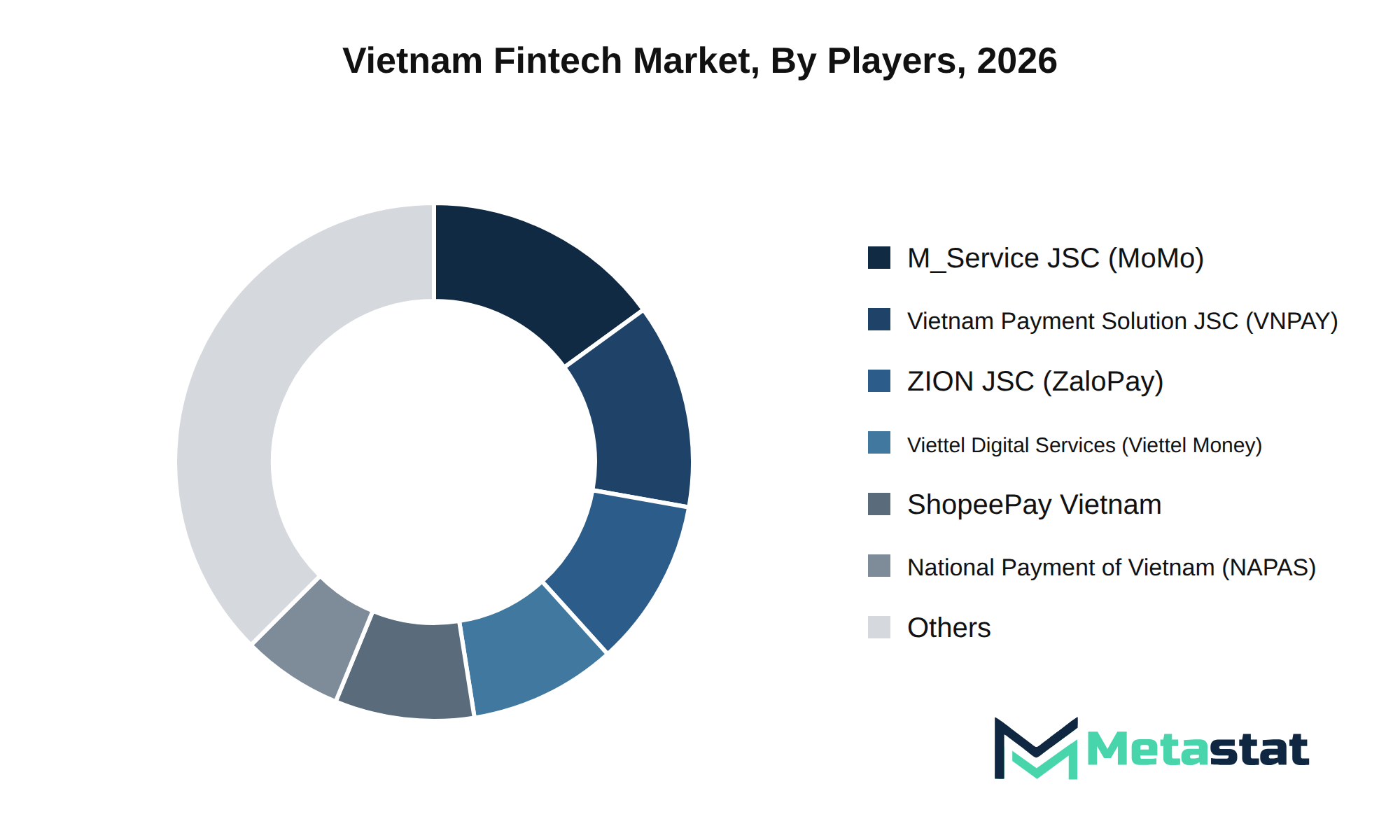
Strategic alliances and joint ventures have become common, facilitating cross-industry partnerships that enhance service delivery and customer experience. Companies like M_Service JSC (MoMo) and Viettel Digital Services Corporation (Viettel Money) leverage strong brand equity to retain customers and reduce switching costs.
The competitive landscape continues to evolve, with firms focusing on value chain integration and supply chain dominance to optimize procurement leverage. Companies address defensive imperatives and strategic growth vectors to ensure sustained success in the Vietnam Fintech market.
Market size is forecast to rise from USD 19.4 billion in 2025 to over USD 55.9 billion by 2033. The base case reflects a growth trajectory with a compound annual growth rate (CAGR) of 14.1%. In a favorable scenario, the market experiences accelerated adoption of innovative financial services and technologies, expanding investment from both domestic and international stakeholders. Conversely, a challenging scenario could arise from regulatory constraints or economic downturns that hinder growth.
Drivers of demand stem from macroeconomic factors, including increasing consumer acceptance of digital financial solutions, evolving regulatory frameworks that support innovation, and strategic investments in technology infrastructure. Integration of next-generation technologies, including artificial intelligence and blockchain, plays a critical role in shaping the Vietnam Fintech market.
R&D commercialization timelines define the pace at which new products penetrate the market, while regulatory evolution sets the compliance milestones for fintech companies. Geopolitical realignments and evolving trade corridors influence market dynamics by altering the competitive environment and affecting cross-border financial services.
Strategic capital allocation directives alongside infrastructure commitments enhance operational efficiencies within the market. Identifying high-growth pockets uncovers emerging white-space opportunities that address unmet enterprise needs. Executive-level strategic imperatives focusing on defensibility roadmaps remain essential for long-term sustainability and competitiveness in the Vietnam Fintech market.
The report strategically identifies and profiles the key market players and analyses their core competencies in each sub-segment of the Fintech market.
Report Attributes | Details |
Study Period | 2021-2033 |
Base Year | 2025 |
Estimated Year | 2026 |
Forecast Period | 2026-2033 |
Historical Period | 2021-2025 |
Growth Rate | CAGR 14.1% from 2026 to 2033 |
Revenue Unit | USD billion |
Segmentation | By Service Type, Technology, Deployment Mode, End User, and Region |
Find answers to common questions about this report
The Vietnam Fintech market size was valued at USD 19.4 billion in 2025.
The Fintech market is projected to grow at a CAGR of 14.1% during the forecast period from 2026 to 2033.
Digital Banking and Neobanking leads the Vietnam Fintech market, with a projected value of USD 15.3 billion by 2033. This segment surpasses others in growth potential, driven by increasing consumer adoption and technological advancements.
Key drivers for the Vietnam Fintech market include robust digital transformation initiatives, increased smartphone penetration, and evolving consumer preferences for convenience in financial transactions. Significant investment in digital infrastructure and technologies including artificial intelligence enhances operational efficiency and service delivery, supporting market growth.
The Vietnam Fintech market faces significant challenges due to regulatory compliance hurdles, which increase operational costs and deter new entrants. Infrastructure gaps, particularly in rural areas, limit access to digital financial services, while skilled labor deficiencies hinder the implementation of advanced technologies. Data security vulnerabilities further undermine consumer trust and complicate compliance efforts.
Increased smartphone penetration and internet access across Vietnam facilitate the adoption of digital financial solutions. Evolving consumer preferences for convenience and accessibility in financial transactions drive demand for digital payments, online lending, and neobanking services, positioning the market for sustained growth.
The Fintech market is estimated to reach a valuation of USD 55.9 billion by 2033.
Key players in the Vietnam Fintech market include M_Service JSC (MoMo), Vietnam Payment Solution JSC (VNPAY), ZION JSC (ZaloPay), Viettel Digital Services Corporation (Viettel Money), ShopeePay Vietnam, and National Payment Corporation of Vietnam (NAPAS).
The digital payments segment is projected to grow at a CAGR of 11.2% from USD 7.3 billion in 2026 to USD 15.3 billion by 2033.
The digital lending and consumer credit segment is projected to reach USD 9.5 billion by 2033, reflecting strong market demand.
The analysts below cover Banking & Finance research at Metastat Insights.
LEAD ANALYST
Utkarsh Khirodkar is a Lead Market Research Analyst at MetaStat Insight, specializing in market intelligence, technology sector assessments, and competitive strategy.

PRINCIPAL CONSULTANT - ENTERPRISE AI & EMERGING TECHNOLOGIES
Banking & Finance · Electronics and Semiconductor · Energy and Power · Healthcare IT · Information & Technology · Professional Services
Vijay Gunti is a Principal Consultant at MetaStat Insight, bringing over two decades of experience across enterprise digital transformation, technology strategy, and intelligent systems.
Floating offshore wind feasibility relies heavily on specialized installation vessel availability and port crane limits, which most broad renewable energy forecasts ignore. The report delivered a thorough analysis of dry dock capacity, mooring chain supply constraints, and raw material pricing trends for deepwater anchor installations. It served as a solid independent sanity check for our offshore project capital expenditure assumptions.
Assessing commercial microgrid software adoption requires looking past top-level installation numbers and examining utility interconnection queues. The research provided verifiable data on average permitting timelines, tariff structures, and battery storage integration costs across regional utility territories. That grounded perspective was valuable for our team when building five-year demand projections for industrial microgrid controllers.
Ambulatory surgical centers have very different purchasing cycles for robotic-assisted surgery platforms than major hospital networks. The MetaStat Insight study focused squarely on capital expenditure depreciation, procedural reimbursement pathways, and surgeon training overhead. That operational clarity made it much simpler to validate multi-year procedure growth forecasts against actual ambulatory center adoption patterns.
Explore related market intelligence reports worth reading alongside this one.