
LEAD ANALYST
Utkarsh Khirodkar is a Lead Market Research Analyst at MetaStat Insight, specializing in market intelligence, technology sector assessments, and competitive strategy.

Global Securities Lending Market Size, Share, By Lender Type (Asset Managers, Pension Funds, Insurance Companies, Sovereign Wealth Funds and Central Banks, Banks and Broker-Dealers, Mutual Funds and Investment Funds, Other Institutional Investors), By Borrower Type (Hedge Funds, Large Asset Managers, Pension Funds, Retail Brokers, Investment Banks and Broker-Dealers, Other Institutional Borrowers), By Security Type (Equity Securities, Government Bonds, Corporate Bonds, Exchange-Traded Funds, Convertible Securities, Other Securities), By Lending Duration (Short-Term Lending, Medium-Term Lending, Long-Term Lending), Industry Analysis, Growth, Trends, and Forecast, 2026-2033
Report ID
MSI-5187
Published
September, 2026
Pages
260 Pages
Format
Historical
Base year
Forecast
Forecast period
Report Details
Choose Your License
Global Securities Lending Market
The global Securities Lending market was valued at USD 14 billion in 2025 and is projected to reach USD 27 billion by 2033, growing at a CAGR of 8.5% over the forecast period.
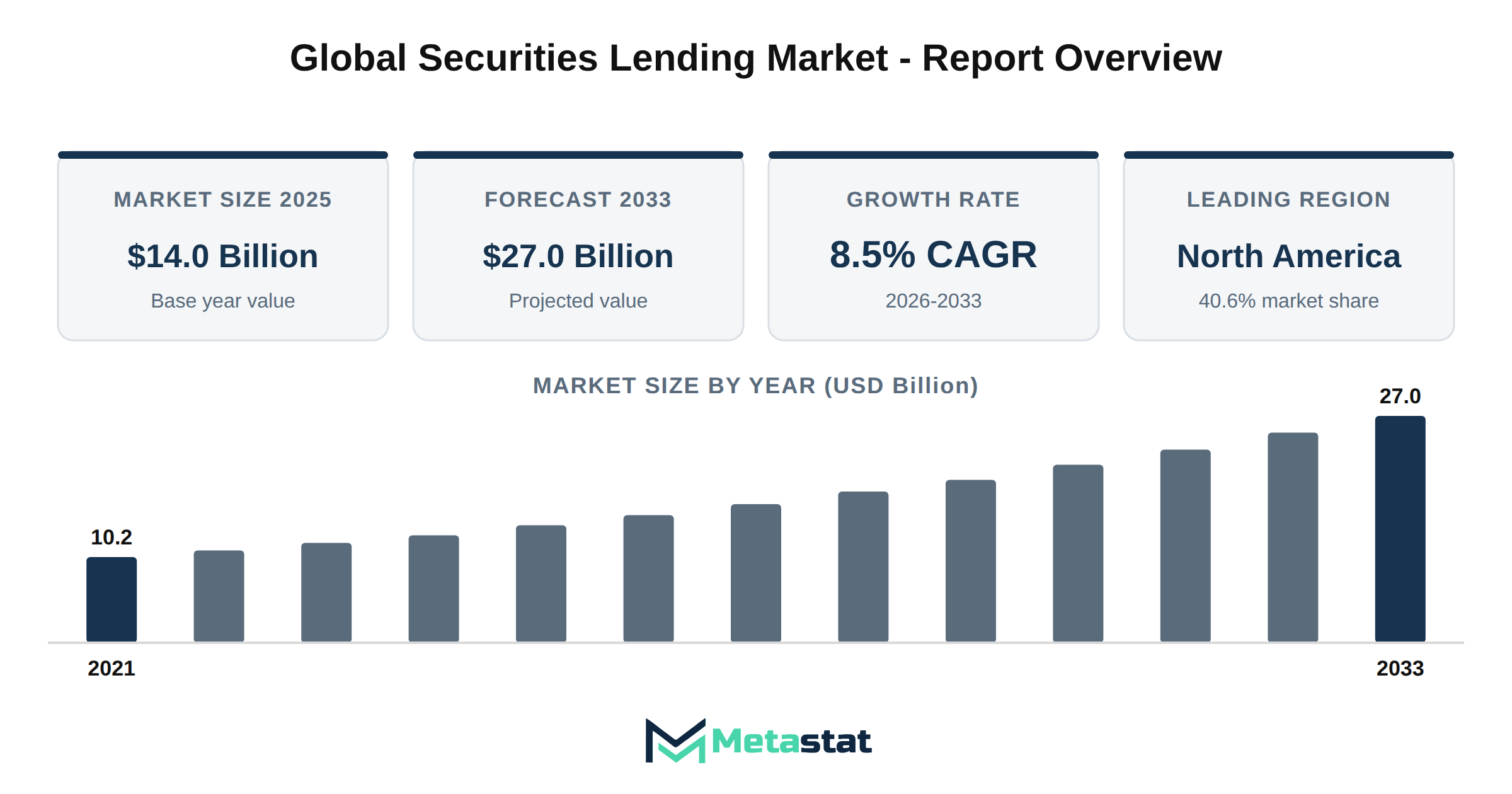
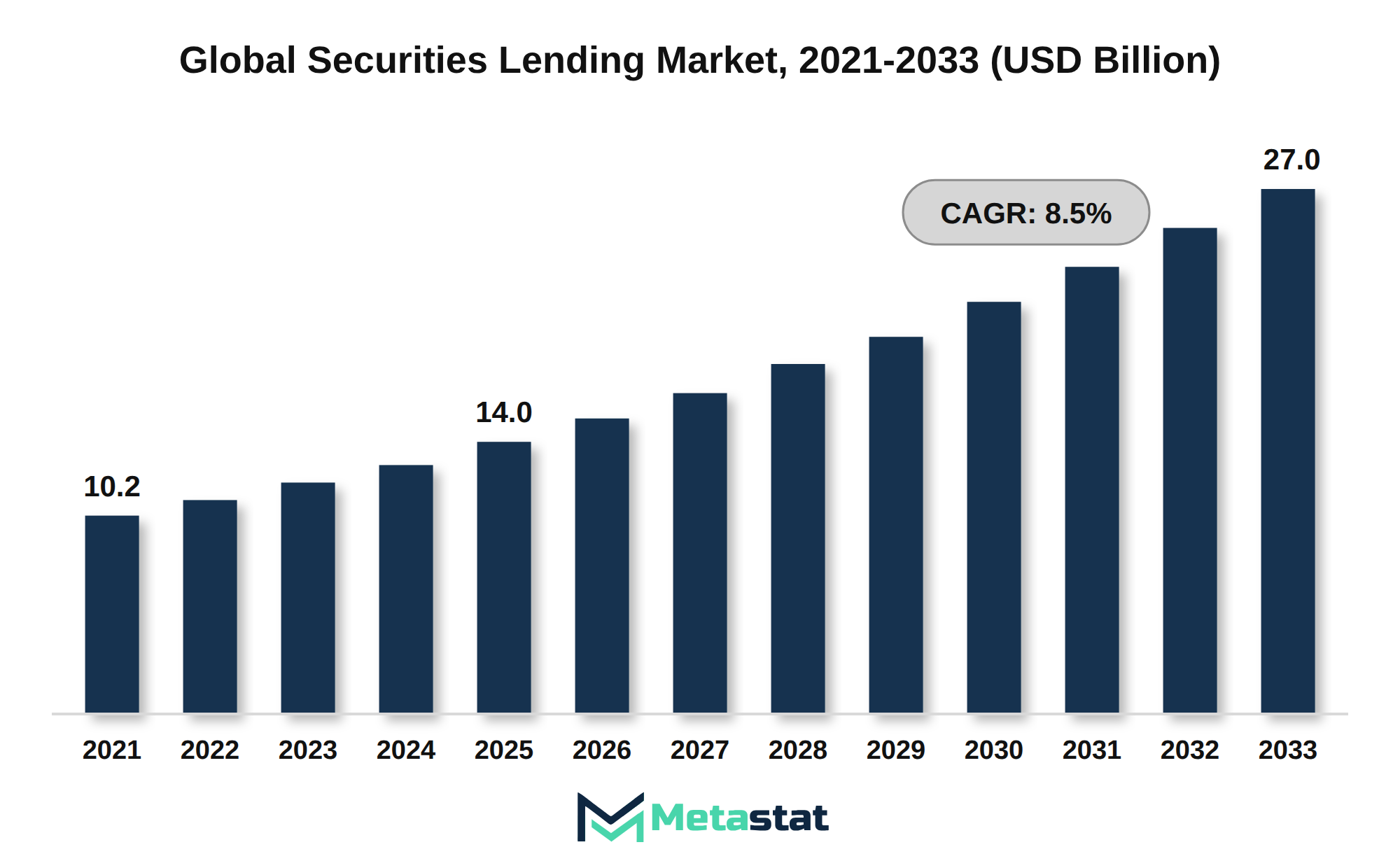
The Securities Lending market is positioned for significant growth, expanding from a base value of USD 14 billion in 2025 to a projected USD 27 billion by 2033. A compound annual growth rate (CAGR) of 8.5 percent will drive this expansion, reflecting increasing demand across various sectors. Historical data indicates a steady rise from USD 10.2 billion in 2021 to USD 14 billion in 2025, demonstrating a robust trajectory in market performance.
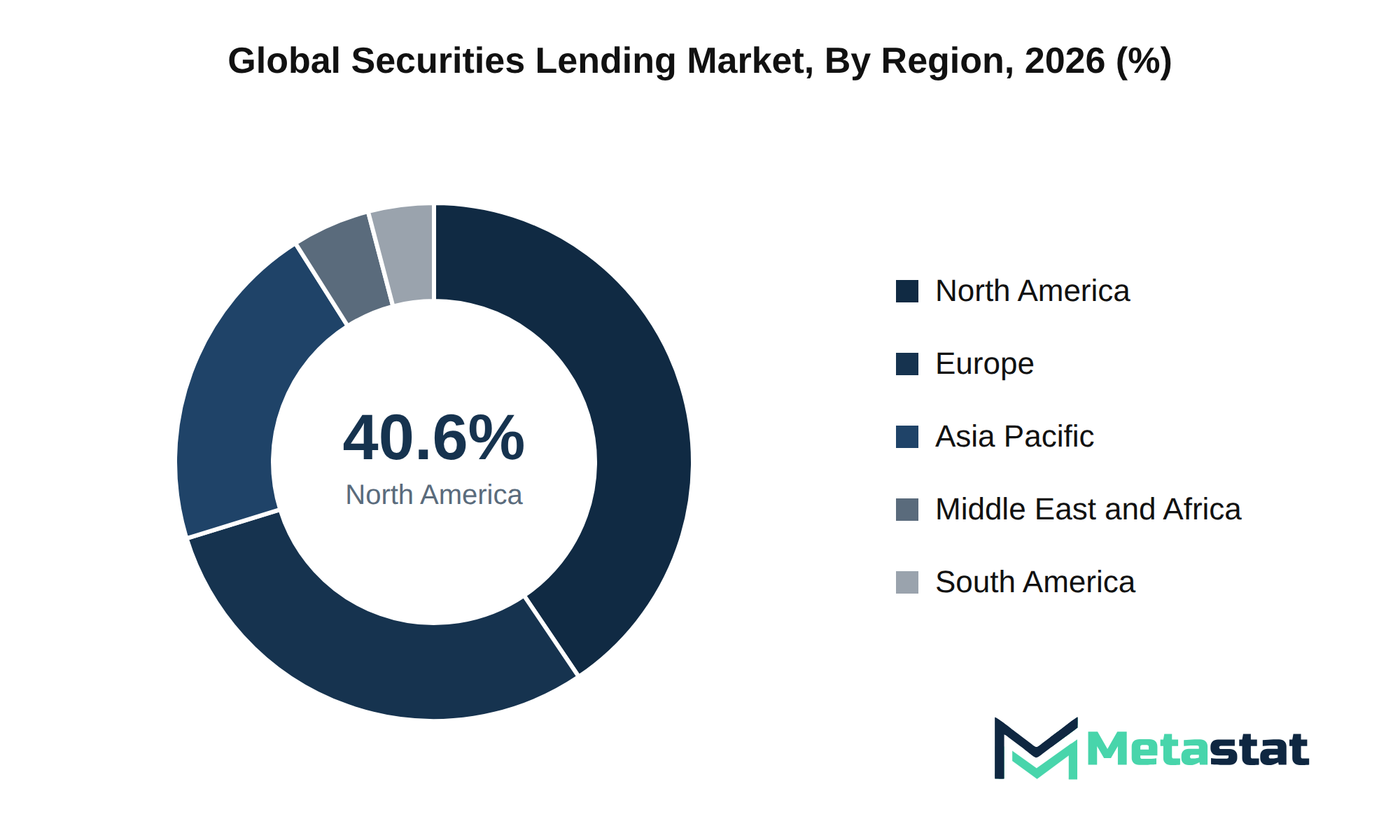
North America holds the largest share of the market, accounting for 40.6 percent. This region is expected to reach a value of USD 9.7 billion by 2033, with a CAGR of 8.5 percent. Europe follows, representing 29.7 percent of the market, while Asia Pacific constitutes 20.8 percent. Growth in these regions results from heightened activity among institutional investors, including asset managers and hedge funds, who seek to optimize portfolio returns through securities lending.
The market demonstrates varying growth rates across different segments. For instance, asset managers will see an increase from USD 3.7 billion in 2026 to USD 7.1 billion by 2033, reflecting a CAGR of 9.7 percent. In contrast, sovereign wealth funds and central banks exhibit a CAGR of 10 percent, driven by their unique investment strategies and liquidity requirements. Diverse lender types contribute to a dynamic competitive environment, where firms strategically enhance their offerings to capture market share.
Borrower types influence market dynamics significantly. Hedge funds are anticipated to grow from USD 12.8 billion in 2026 to USD 20.2 billion by 2033, reflecting a CAGR of 6.7 percent. This growth stems from the need for hedge funds to access additional liquidity and leverage their positions in volatile markets. Retail brokers, with a CAGR of 26.6 percent, highlight a segment driven by increased retail investor participation in securities lending.
The Securities Lending market experiences ongoing evolution driven by regulatory compliance and regional risk frameworks. Robust regulations ensure transparency and reduce systemic risk in the lending process. Adherence to these regulations, particularly in regions with stringent oversight, influences operational strategies and shapes market dynamics. The presence of a well-defined risk framework enhances the confidence of participants and supports market stability.
Disruptive technologies continue to reshape the market, enhancing operational efficiency and customer engagement. Advancements in technology enable participants to streamline processes and access real-time data for informed decision-making. Research and development trajectories focus on creating innovative solutions that provide competitive advantages and address emerging market needs.
Next-generation innovations, including advanced analytics and blockchain technology, facilitate greater transparency and efficiency in securities lending transactions. Such innovations support the maturation of the market, positioning it for expanded opportunities. These developments contribute to the overall growth and attractiveness of the Securities Lending market.
Sustainable transformation remains a key focus for market participants. Industry players increasingly prioritize decarbonization and circular economy dynamics, aiming to align their operations with environmental, social, and governance (ESG) criteria. This shift not only addresses regulatory expectations but responds to growing investor demand for sustainable practices.
The evolving supply chain landscape influences market dynamics, with logistics architecture adapting to new challenges and opportunities. Efficient sourcing strategies enhance operational effectiveness, ensuring that market players respond to fluctuations in demand and supply. This agility is essential in maintaining competitiveness within the market.
Market fragmentation presents both challenges and opportunities, driven by numerous players operating across various segments. Mergers and acquisitions emerge from strategies for consolidation, enabling companies to enhance their market share and streamline operations. These dynamics shape the competitive landscape, influencing capital allocation and strategic planning.
Infrastructure investments are essential for supporting the growth trajectory of the market. Continued investment in technology and operational capabilities enhances the efficiency and scalability of securities lending operations. This focus on infrastructure aligns with future strategic outlooks, where innovation and efficiency drive performance.
Corporate imperatives increasingly center around high-value recommendations that prioritize strategic alignment and operational excellence. Companies that effectively integrate technological advancements and sustainable practices position themselves favorably for future growth. The Securities Lending market reflects evolving investor expectations and regulatory demands.
The Securities Lending market experiences growth fueled by macro-economic factors, particularly GDP growth and capital investment environments. Increased economic activity boosts the demand for securities lending, where asset managers and institutional investors actively seek to optimize their portfolios. Higher GDP correlates with increased market confidence, which encourages investment in securities and stimulates lending activities.
Interest rates play a critical role in shaping the market. Lower interest rates reduce borrowing costs, making securities lending an attractive option for borrowers seeking additional capital. Strengthened public-private spending power enhances liquidity in financial markets, further stimulating demand for securities lending services.
Investment in digital transformation and technological integration supports operational efficiency in the market. Adoption of advanced technologies, including automation and AI, streamlines processes for lenders and borrowers. This technological shift contributes to improved service delivery, which enhances the competitive position of firms within the Securities Lending market.
The growing emphasis on cost-efficiency initiatives among financial institutions drives participation in the market. Firms prioritize operational productivity and process optimization, allowing them to reduce overhead and improve margins. This focus on efficiency aligns with the need for firms to remain competitive in a dynamic financial environment.
Technological integration significantly influences the Securities Lending market, with automation and artificial intelligence enhancing operational efficiency. Market participants adopt advanced software solutions, streamlining processes and improving service delivery. This shift enables institutions to respond rapidly to changing market conditions, resulting in enhanced trading capabilities and increased transaction volumes.
Investment in technology supports the digitization of legacy systems, reducing overhead costs and improving data accuracy. While firms prioritize efficiency, rising demand for securities lending services attracts new clients across various sectors. Organizations embracing these technologies are more likely to achieve competitive advantages, driving growth within the market.
The ongoing trend towards digital transformation aligns with evolving consumer behaviors, particularly among younger investors who favor technology-driven solutions. These demographics engage more with digital platforms, resulting in increased participation from diverse investor segments, including retail and institutional clients.
The integration of advanced technologies stimulates demand for securities lending by enhancing operational productivity, improving cost-efficiency, and catering to the preferences of an increasingly tech-savvy investor base.
The Securities Lending market confronts significant challenges due to regulatory compliance hurdles that create barriers for participants. Stricter regulations lead to increased operational costs and complexities, prompting firms to allocate substantial resources to ensure compliance. This situation particularly affects smaller players, who struggle to meet the increasing demands of regulatory frameworks, limiting their competitive positioning within the market.
Macroeconomic headwinds, including inflationary pressures and capital stagnation, play a crucial role in restraining the market's growth potential. Rising costs associated with maintaining compliance and adapting to changing regulations consume financial resources, which could support expansion initiatives. Geopolitical instability and supply chain disruptions contribute to uncertainty, complicating market dynamics.
The regulatory landscape influences investment decisions, resulting in a cautious approach from potential investors and lenders. Heightened concerns around data security and privacy compliance necessitate additional investments in technologies and processes, impacting overall profitability. In the long term, these compliance challenges inhibit innovation within the Securities Lending market, allowing competitors with more streamlined operations to gain an advantage.
Market fragmentation and cultural barriers impede adoption across different regions, with varying regulatory environments affecting the pace of growth. Companies operating in multiple jurisdictions face the intricacies of differing compliance mandates, which slow down decision-making processes. These factors contribute to a complex environment for firms seeking to capitalize on opportunities within the Securities Lending market.
The Securities Lending market faces challenges stemming from geopolitical fragmentation and trade deficits. These factors contribute to tariff friction, which increases operational costs and complicates cross-border transactions. Companies operating in the market encounter heightened uncertainty, affecting investment strategies and lending activities. Supply chain instability exacerbates these issues, leading to delays and increased costs associated with securities transactions.
Technological disruptions present another challenge for the market. Firms investing in complex research and development integrations face barriers in achieving interoperability among disparate systems. Such challenges hinder the efficiency of lending operations and impact overall market growth. Compliance overhead related to tightening global regulatory standards increases operational complexities for market participants and leads to margin pressures.
Rising input cost structures significantly affect profitability within the Securities Lending market. Companies struggle to manage these pressures while maintaining competitive pricing, resulting in pricing compression that limits revenue generation. Concurrently, workforce skill gaps and talent retention pressures impede operational efficiency, driven by the requirement for skilled personnel to navigate the evolving technological landscape.
Ultimately, these challenges create an environment of uncertainty within the Securities Lending market, affecting growth trajectories and investment decisions. Addressing these factors will be critical for market participants seeking to capitalize on opportunities in a complex environment.
The Securities Lending market experiences robust opportunities stemming from emerging regional demands across North America, Europe, and Asia Pacific. North America leads with a projected market value of USD 9.7 billion by 2033, driven by increasing activity among institutional investors and hedge funds. Europe follows closely, with significant contributions from asset managers and pension funds seeking to enhance liquidity and diversify portfolios. Meanwhile, Asia Pacific displays rapid growth potential driven by local financial markets modernizing and adapting to global standards, facilitating increased participation in securities lending.
Infrastructure modernization plays a critical role in enhancing market accessibility and efficiency. The development of advanced trading platforms, improved regulatory frameworks, and enhanced operational capabilities support efficient transactions in the market. Improved infrastructure reduces costs and streamlines processes, resulting in a more favorable environment for lenders and borrowers alike.
Technological disruptions further contribute to market dynamics, with innovations including blockchain and artificial intelligence reshaping traditional securities lending practices. These technologies enhance transaction transparency, security, and efficiency, making it easier for participants to engage with the market. Digital transformation influences operational models, allowing firms to leverage data analytics for better decision-making and risk management.
Strategic consolidation through mergers and acquisitions offers significant opportunities for market players to enhance their service offerings and expand client bases. By integrating resources and capabilities, firms strengthen their competitive positions, driving revenue growth and market penetration. The rise of ESG (Environmental, Social, and Governance) considerations influences investment strategies, leading to increased interest in sustainable practices among market participants, which further expand the securities lending landscape.
The evolving buying behaviors of institutional investors, coupled with shifts towards digital procurement, signal a transition in how securities lending services are sourced. This ongoing evolution presents opportunities for providers to innovate and tailor their offerings to meet changing client needs. Value-chain optimization and process automation maximize operational yield, driving efficiency across the market.
Overall, the Securities Lending market is poised for sustained growth, underpinned by regional demands, technological advancements, and strategic initiatives that facilitate deeper engagement among participants.
The Global Securities Lending market is segmented based on Lender Type, Borrower Type, Security Type, and Lending Duration.
Valued at USD 3.7 billion in 2026, the Asset Managers segment projects to reach USD 7.1 billion by 2033, achieving a CAGR of 9.7% during the forecast period. This growth arises from several primary demand drivers, including an increasing focus on efficient capital management and enhanced returns on investment. Asset managers continually seek strategies that allow for optimized returns, which directly influences their participation in the securities lending market.
Segment expansion catalysts include the rising interest in alternative investments and a greater acceptance of securities lending because a tool for improving liquidity. Regulatory compliance standards increasingly encourage responsible lending practices, which push asset managers to adopt more sophisticated lending strategies. Advancements in technology, including blockchain and real-time data analytics, provide new opportunities for asset managers to streamline processes and enhance lending efficiency.
Downstream applications of securities lending by asset managers encompass a variety of investment strategies that leverage borrowed securities for short-selling or hedging purposes. The dynamics of end-use shift towards increased utilization of securities lending because asset managers adapt to changing market conditions and investor preferences. Observing consumption shifts, the demand for securities lending services has surged because asset managers expand their portfolios to include a diverse array of asset classes.
Pricing volatility and margin pressures specific to asset managers remain critical considerations within the market. With fluctuating interest rates and evolving market conditions, asset managers remain agile in their lending practices. Supply chain resilience and raw material sourcing issues impact operational strategies, influencing the overall effectiveness of securities lending operations.
Technological maturation plays a significant role in shaping the future of the Asset Managers segment. Continued investments in next-gen upgrades and product evolution create competitive advantages that drive market participation. Strategic opportunity windows arise because asset managers leverage innovative technologies to enhance their offerings in the securities lending market.
Growth in the Pension Funds segment reflects a strong demand for liquidity and investment returns, with an estimated value of USD 5.4 billion by 2033, at a CAGR of 7.4% during the forecast period. Institutional investors favor securities lending because a means of enhancing income from their portfolios. The strategy enables pension funds to effectively use their asset pools while meeting regulatory requirements for capital management.
Increasing adoption of advanced technology, including fintech solutions, facilitates efficient asset management and risk mitigation in the market. Enhanced transparency and improved reporting capabilities provide pension funds with better insights into their securities lending activities, driving further participation in this segment.
Regulatory compliance influences the dynamics of the Pension Funds segment. Adhering to evolving regulations requires pension funds to implement robust risk management practices, which drive operational costs. However, the benefits of participating in the securities lending market, including enhanced portfolio returns, outweigh these challenges.
Investment strategies focusing on sustainable and responsible investing increasingly influence the decision-making processes within pension funds. This trend leads to a growing preference for securities that align with environmental, social, and governance (ESG) criteria, potentially reshaping the market.
Competition within the Pension Funds segment intensifies because various institutional investors seek to optimize their securities lending practices. This competitive environment urges participants to innovate and refine their strategies, ensuring sustainable growth within the market.
Demand from insurance companies for securities lending services is on a growth trajectory, driven by the need for enhanced portfolio returns and risk management strategies. Increased participation in the lending market stems from the necessity for these institutions to optimize their asset utilization while generating additional income from their securities holdings. The Securities Lending market benefits from this rising interest, with insurance companies exploring diverse securities to maximize returns.
The Insurance Companies segment is projected to reach USD 3 billion by 2033. Factors contributing to this growth include regulatory compliance requirements, which encourage these institutions to engage in securities lending activities. Financial institutions seek to enhance their liquidity and yield on investments through strategic lending practices, leading to a broader adoption of these services. Cost structures are evolving, with insurance companies increasingly leveraging technology to streamline their lending processes, resulting in improved operational efficiency.
Growing market dynamics influence insurance companies to adapt to changes in consumer behavior and investment strategies. An enhanced focus on environmental, social, and governance (ESG) criteria promotes the integration of sustainable investment practices among these firms, further affecting their approach to securities lending. Overall, the segment presents significant potential for growth, driven by a combination of strategic demand, evolving regulations, and technological advancements.
The increasing significance of Sovereign Wealth Funds and Central Banks in the Securities Lending market stems from their substantial assets under management and the quest for enhanced returns. These institutions frequently engage in lending activities to generate additional income from their investment portfolios. Their involvement is projected to grow at a CAGR of 10% during the forecast period, reflecting a robust appetite for securities lending services. The shift towards more diversified investment strategies, including alternative assets, fuels this growth. These entities seek to optimize their returns in a low-interest-rate environment.
Regulatory compliance standards and the evolving landscape of global finance impact the strategies of Sovereign Wealth Funds and Central Banks. These institutions face heightened scrutiny regarding their investment choices, which drives them to adopt more transparent and efficient lending practices. This trend enhances market dynamics, encouraging a broader adoption of securities lending because a strategic tool for liquidity management.
Developments in technology, including advanced trading platforms and data analytics, enable these institutions to engage more effectively in the market. Enhanced technological capabilities facilitate better risk management and operational efficiencies, allowing for improved pricing strategies in securities lending transactions. The combination of these factors positions the Sovereign Wealth Funds and Central Banks segment because a key driver in the overall expansion of the market.
Increasing demand for securities lending services from banks and broker-dealers drives growth in the Securities Lending market. Financial institutions seek to optimize their asset utilization, thereby enhancing profitability through securities lending activities. Factors including regulatory changes and the need for liquidity support expansion in this segment. Competition among banks and broker-dealers to provide innovative lending solutions further influences market dynamics. Technological advancements contribute to operational efficiency, enabling institutions to streamline their lending processes while minimizing risks. These developments position banks and broker-dealers because key players within the broader securities lending ecosystem.
Continued adoption of securities lending by mutual funds and investment funds reflects a strategic response to evolving market dynamics. Regulatory frameworks increasingly favor transparency and risk management, compelling these entities to engage in securities lending because a method of generating additional revenue. Enhanced asset management strategies, aimed at maximizing returns while balancing risk, drive this trend. Expansion catalysts in the market include the growing acceptance of alternative investment strategies, which leverage securities lending for liquidity and enhanced portfolio performance.
Technological maturation facilitates operational efficiencies for mutual funds and investment funds, enabling them to interact with more sophisticated lending platforms. Integration of digital solutions streamlines compliance processes and enhances transaction ease, thus attracting more participants into the market. Ongoing product evolution, particularly in the context of Exchange-Traded Funds (ETFs) and other financial instruments, contributes to the demand for securities lending services.
End-use dynamics show a notable shift towards increased participation of retail investors, which influences mutual funds and investment funds to explore securities lending opportunities. Consumption patterns illustrate a preference for liquidity and flexibility, prompting these entities to adopt lending practices that align with investor expectations.
Cost structures remain a critical consideration, especially with pricing volatility in the broader financial markets. Mutual funds and investment funds face margin pressures stemming from competitive pricing strategies in the securities lending space, necessitating efficient management to maintain profitability. Strategic opportunity windows arise because institutional players seek reliable sources of borrowed securities, positioning mutual funds and investment funds to capitalize on their existing asset bases.
Overall, the securities lending market presents a compelling avenue for mutual funds and investment funds to enhance their revenue streams. By navigating the complexities of regulatory compliance and adopting innovative practices, these entities ensure relevance and competitiveness in an evolving financial landscape.
Increasing interest from various institutional investors drives the Securities Lending market forward. Factors driving this trend include the search for yield in a low-interest-rate environment and the growing recognition of securities lending because a vital tool for enhancing portfolio performance. Institutional investors, including endowments, foundations, and family offices, actively seek out securities lending opportunities to optimize their returns while managing risk effectively.
Innovations in technology play a significant role in transforming how these investors engage with the market. Enhanced platforms for executing securities lending transactions streamline processes and improve efficiency. This enables institutional investors to capitalize on opportunities more effectively. The ongoing maturation of lending practices and regulatory reforms contributes to an environment conducive to growth within this segment.
While investors increasingly focus on sustainable investment strategies, the integration of Environmental, Social, and Governance (ESG) criteria into investment decisions presents a strategic opportunity. Institutional investors are likely to adopt securities lending because a means of engaging in responsible investing while simultaneously generating additional income. This shift aligns with broader trends in the market, where responsible investment practices continue to gain traction.
The diversifying needs of institutional investors necessitate tailored solutions within the market. Customization of lending products and services to meet the specific demands of various investor types enhances engagement and participation rates. Increased capital investment in technology and infrastructure supports this customization, facilitating an adaptive approach to the evolving landscape.
Growth within the Hedge Funds segment reflects a strong demand for securities lending services driven by hedge funds seeking to enhance their investment strategies. Valued at USD 12.8 billion in 2026, this segment is projected to reach USD 20.2 billion by 2033, at a CAGR of 6.7% during the forecast period. Factors driving this expansion include increased market volatility and a growing emphasis on leveraging borrowed assets to improve returns.
Adoption of securities lending by hedge funds is influenced by the necessity for immediate liquidity and the desire to capitalize on short-selling opportunities. Expanding investment strategies and the overall increase in hedge fund assets under management contribute significantly to market growth. Enhanced technological capabilities further facilitate access to securities lending services, enabling these funds to navigate complex trading environments efficiently.
Institutional relationships and partnerships between hedge funds and securities lending agents play a critical role in this segment's development. Hedge funds benefit from competitive pricing and more favorable terms because the market continues to evolve. While the regulatory environment matures, compliance with emerging standards ensures sustainable operations and boosts investor confidence in the securities lending market.
Strong growth in the Large Asset Managers segment arises from increasing demand for securities lending services among institutional investors. This trend reflects a broader recognition of the strategic benefits associated with securities lending, including enhanced liquidity and potential revenue generation. The segment is estimated to reach USD 2.2 billion by 2033, at a CAGR of 14.3% during the forecast period. Institutional clients prioritize securities lending because a tool to optimize asset management strategies and improve portfolio performance.
The expansion of investment strategies among large asset managers drives heightened utilization of securities lending services. These entities leverage lending to facilitate short selling and improve trading efficiency, positioning themselves for competitive advantages in the market. Regulatory compliance standards increasingly focus on transparency and risk management, prompting asset managers to adopt robust securities lending programs that align with evolving requirements.
Market dynamics indicate that the maturation of technology contributes to the operational efficiency of large asset managers. Advanced analytics and automation streamline the securities lending process, reducing costs and enhancing decision-making capabilities. This technological evolution supports faster transaction times and increased accuracy in risk assessment, further propelling the growth of the segment.
The Large Asset Managers segment presents substantial potential within the Securities Lending market, driven by demand for innovative lending solutions and favorable market conditions. Continued capital investment and strategic initiatives will further enhance the segment's growth trajectory, ensuring its relevance in a rapidly changing financial landscape.
Demand for securities lending from Pension Funds continues to evolve, reflecting a broader trend within the financial services industry. This segment is expected to reach USD 0.8 billion by 2033, driven by increasing interest in optimizing investment returns and managing liquidity. Pension Funds increasingly recognize the benefits of securities lending, including enhanced yield generation through the utilization of idle securities. Regulatory changes and evolving market dynamics further support the adoption of securities lending practices among these institutional investors.
Investment strategies within Pension Funds focus on diversifying assets to achieve better risk-adjusted returns. In this context, the securities lending market enables these funds to leverage their holdings effectively. Competition among investment firms leads to innovative approaches in securities lending, enhancing strategies that maximize revenue potential while mitigating risks associated with collateral management.
Technological advancements in trading platforms and collateral optimization tools continue to influence the effectiveness of securities lending activities for Pension Funds. The incorporation of data analytics facilitates better decision-making, allowing these funds to assess lending opportunities accurately. While the market matures, the availability of next-generation upgrades in trading systems enhances operational efficiency, contributing to the overall growth of the sector.
Strategic opportunities are emerging due to Pension Funds increasingly aligning their investment objectives with market trends. This alignment encourages deeper engagement with lending programs, ultimately benefiting the securities lending market. The emphasis on sustainable investing further promotes the need for transparency and adherence to evolving regulatory frameworks, ensuring that Pension Funds navigate the complexities of compliance while maximizing their lending activities.
Rapid growth in the Retail Brokers segment results from increasing retail investor participation in the financial markets. This segment is projected to grow at a CAGR of 26.6% during the forecast period. Enhanced accessibility to trading platforms and improved technology have driven retail brokers to expand their offerings significantly. The shift towards digital trading platforms has enabled brokers to attract a broader customer base, leading to increased transactions and lending activities. Competitive pricing structures and innovative products further support growth in this segment, catering to the evolving needs of individual investors seeking to optimize their investment strategies. The Securities Lending market benefits from this dynamic, driven by retail brokers leveraging securities lending to enhance liquidity and provide clients with additional investment opportunities. The focus on customer experience and operational efficiency among retail brokers positions this segment to capture a larger share of the overall market in coming years.
Demand for securities lending from Investment Banks and Broker-Dealers arises from the necessity to facilitate transactions and enhance liquidity. Increasing market volatility drives these institutions to seek additional avenues for revenue generation, which often includes participating in the securities lending market. The reliance on borrowed securities allows for various trading strategies, including short selling, which financial institutions adopt to optimize their portfolios and manage risk.
Technological advancements play a crucial role in this segment, enabling more efficient processes and trade execution. Innovations in financial technology streamline operations, reducing costs associated with securities lending transactions. Enhanced data analytics provide valuable insights, allowing Investment Banks and Broker-Dealers to make informed decisions regarding their lending strategies.
Regulatory compliance continues to shape the landscape of securities lending. Investment Banks and Broker-Dealers navigate evolving regulatory frameworks that demand transparency and risk management. Adhering to these standards often results in increased operational costs; however, it strengthens market integrity and builds trust among participants.
The strategic opportunity windows for Investment Banks and Broker-Dealers expand owing to their adaptation to shifting market dynamics and client needs. The ongoing evolution in the securities lending market reflects broader trends in financial services, with these institutions positioned to leverage their expertise and infrastructure to capitalize on emerging opportunities. Through effective risk management and innovation, they contribute to the overall growth and resilience of the market.
Interest from various institutional investors influences the dynamics of the Securities Lending market, particularly within the Other Institutional Borrowers segment. This sub-segment encompasses a diverse range of entities, including investment firms, hedge funds, and private equity groups, which actively engage in securities lending activities to enhance liquidity and optimize asset utilization.
Adoption of securities lending services within these organizations reflects a strategic approach to capital management. By participating in the market, these borrowers seek to generate additional income from their existing portfolios, enhancing overall investment returns. The segment's expansion is driven by increasing awareness of the potential benefits and opportunities associated with securities lending, creating a more competitive environment.
Technological advancements contribute to the maturation of the market, enabling improved risk management and operational efficiencies. Enhanced trading platforms and data analytics tools provide institutional borrowers with critical insights into market conditions, allowing for more informed decision-making. This technological evolution supports the ongoing growth of the Other Institutional Borrowers segment, facilitating streamlined transactions and improved access to liquidity.
Regulatory compliance presents both challenges and opportunities for the segment. Stricter regulations governing securities lending practices prompt organizations to adopt more robust compliance frameworks, thereby increasing operational costs. However, these same regulations create a more transparent marketplace, benefiting borrowers by increasing confidence in the integrity of transactions.
Cost structures and pricing volatility remain key considerations for institutional borrowers. Fluctuations in lending rates significantly impact the profitability of securities lending activities. Organizations that effectively manage these dynamics optimize their lending strategies, while those facing margin pressures reevaluate their participation in the market.
The Other Institutional Borrowers segment continues to identify strategic opportunity windows for growth. By leveraging their existing asset bases and pursuing innovative lending strategies, organizations within this sub-segment position themselves to capitalize on evolving market conditions. Consequently, this segment contributes to the overall expansion of the Securities Lending market, reinforcing its importance within the broader financial landscape.
In 2026, the market for Equity Securities within the Securities Lending market is valued at USD 11.1 billion and is projected to reach USD 18.3 billion by 2033, at a CAGR of 7.5% during the forecast period. This growth is attributed to increasing engagement by institutional investors, particularly in the equity markets, driven by favorable market conditions and heightened trading activities.
Investor interest in equity securities stems from their potential for higher returns compared to fixed-income investments. The trend toward active portfolio management increases demand for securities lending, facilitating short-selling and enhancing liquidity. Consequently, equity securities play a vital role in the overall dynamics of the Securities Lending market.
Adoption of equity securities for lending is evident among hedge funds, which utilize these securities to capitalize on market volatility. This segment benefits from a growing trend of short-selling strategies, indicating robust demand that supports market expansion. Advancements in technology streamline the securities lending process, enabling quicker transactions and building investor confidence.
Regulatory compliance and risk management considerations contribute to the strategic appeal of equity securities. Evolving regulatory landscapes prompt institutional investors to seek efficient channels for maximizing returns while adhering to compliance standards. This development leads to increased participation in the lending of equity securities, positively impacting market dynamics.
Growth in the Government Bonds segment reflects strong demand from institutional investors seeking stable returns. Regulatory frameworks supporting the issuance and trading of government bonds enhance market confidence, promoting active participation from various financial entities. Increased asset allocation towards government securities, driven by risk-averse strategies, contributes to the overall expansion of this segment within the Securities Lending market.
Market dynamics indicate an increase in the lending volume of government bonds, driven by their relatively low-risk profile. Institutional entities, including pension funds and insurance companies, are major participants, driving demand through their investment strategies. The Government Bonds segment is projected to reach USD 4.9 billion by 2033, reflecting a compound annual growth rate (CAGR) of 10% during the forecast period.
Continued adoption of advanced technologies for trading and settlement of government bonds improves efficiency and transparency within the market. Innovations in trading platforms and enhanced regulatory compliance standards support the growth of this segment. Financial institutions adapt to shifting consumption trends, and the Government Bonds segment illustrates significant potential for sustained growth within the broader Securities Lending market.
Interest in Corporate Bonds within the Securities Lending market stems from increasing activity among institutional investors seeking yield enhancements and diversification of portfolios. Regulatory compliance and the search for liquidity drive greater engagement with this segment. Enhanced transparency and risk management practices in the bond market support the expansion of Corporate Bonds, leading to wider adoption among borrowers.
The Corporate Bonds segment is projected to reach USD 2.2 billion by 2033. This growth trajectory reflects a compound annual growth rate (CAGR) of 10 percent, highlighting the critical role Corporate Bonds play in the overall securities lending landscape. Investors recognize the benefits of lending these securities, including potential returns amid favorable interest rate environments.
The strategic focus on Corporate Bonds results from rising demand for fixed-income securities from various sectors, including hedge funds and large asset managers. Challenges related to pricing volatility and margin pressures persist. The segment presents opportunities for innovative lending solutions. Enhanced digital platforms facilitate the lending process, optimizing access and efficiency for market participants.
Increased participation in the Corporate Bonds segment aligns with broader trends in the Securities Lending market, where institutional demand continues to evolve. Ongoing improvements in infrastructure and technology ensure that Corporate Bonds remain a vital component of lending strategies for institutional investors.
Rapid growth in the Exchange-Traded Funds (ETFs) segment contributes significantly to the expansion of the Securities Lending market. Adoption by institutional investors, including hedge funds and large asset managers, drives increased interest in ETFs for securities lending activities. Exchange-Traded Funds (ETFs) segment is projected to grow at a CAGR of 20.2% during the forecast period, reflecting strong demand for liquidity and leverage in trading strategies.
The increasing complexity of investment strategies leads to heightened reliance on ETFs, which facilitate efficient access to underlying securities. Regulatory compliance standards further enhance the attractiveness of ETFs, because they provide a streamlined mechanism for adhering to various lending requirements. Premium pricing for high-demand ETFs supports margin pressures, encouraging lenders to optimize their portfolios.
Technological maturation within the financial services sector enables enhanced tracking and management of ETF securities lending transactions. Investment in next-gen financial technologies positions firms to capitalize on emerging opportunities within this growing segment. Focus on capital investment in ETF product development aligns with the overall trends in the Securities Lending market, promoting deeper integration of ETFs into lending strategies.
Interest in convertible securities within the Securities Lending market reflects ongoing trends in investor preferences and market dynamics. These financial instruments, which combine features of both debt and equity, attract significant attention due to their potential for enhanced returns and risk management benefits. Institutional investors leverage convertible securities to optimize their investment strategies while navigating market volatility.
Factors driving adoption include evolving regulatory environments that encourage transparency and risk mitigation. Increased participation from hedge funds and large asset managers contributes to demand, driven by the need for innovative solutions to enhance portfolio performance. The Securities Lending market benefits from this trend, with convertible securities presenting unique opportunities for lenders and borrowers alike.
Technological advancements play a vital role in the expansion of this segment. Enhanced trading platforms and analytical tools enable more efficient transactions and risk assessments. The ongoing evolution of product offerings in the convertible securities space provides a greater array of options for institutional investors, stimulating interest in securities lending activities.
While market conditions shift, the demand for convertible securities continues to grow. This evolution signals a broader trend within the financial ecosystem towards more dynamic and versatile investment strategies. The increasing relevance of convertible securities reflects the changing landscape of the Securities Lending market, influencing growth trajectories and creating strategic opportunities for market participants.
Investment in other securities within the Securities Lending market benefits from evolving investment strategies and the diversification efforts of various financial institutions. Increased interest in alternative investment vehicles encourages portfolio managers to explore lending opportunities with these securities, enabling enhanced returns. Adoption of next-generation trading platforms and technologies supports this segment, facilitating efficient transactions and improving liquidity.
Market players focus on innovative solutions that cater to the unique characteristics of other securities, addressing specific demand drivers including regulatory compliance and changing investor preferences. End-use dynamics indicate a shift towards more sophisticated trading strategies, with market participants recognizing the potential of leveraging other securities to optimize lending operations. This approach enhances operational efficiencies and positions firms to capitalize on emerging opportunities within the market.
The ongoing evolution of the securities lending landscape influences the adoption of other securities, with institutions keen to balance risk and return profiles. While investment managers embrace diversification, the segment demonstrates potential for growth driven by strategic opportunities. Enhanced capital investment in this area strengthens competition among market participants, contributing to a dynamic environment suited for innovation and exploration.
Valued at USD 9.7 billion in 2026, the Short-Term Lending segment is projected to reach USD 15.6 billion by 2033, at a CAGR of 7.1% during the forecast period. This growth reflects increasing demand from institutional investors seeking flexible lending solutions to meet short-term liquidity requirements. Factors driving this demand include evolving market conditions and the growing need for asset managers to optimize their portfolios through efficient securities lending strategies.
Investment trends highlight a notable shift toward short-term lending practices, especially among hedge funds and large asset managers aiming to leverage market fluctuations for immediate gains. This segment's expansion is driven by technological advancements that streamline lending processes, enhancing operational efficiency and reducing turnaround times. The integration of next-generation platforms facilitates real-time transactions, which is essential for meeting the demands of the securities lending market.
End-use dynamics further illustrate the significance of short-term lending, particularly in sectors where rapid capital mobilization is critical. Regulatory compliance standards supporting transparency and risk management enhance confidence among investors, encouraging participation in short-term lending activities. Consequently, the segment captures a growing share of the overall market, aligning with broader investment strategies and capital allocation trends within the financial services industry.
Competitive pressures within the securities lending market necessitate continuous evolution and adaptation. Pricing volatility and margin pressures impact profitability, driving players to innovate and enhance service offerings. Strategic opportunities arise from collaborations and partnerships that extend market reach and improve service delivery, ensuring the segment remains resilient against potential disruptions and evolving market demands.
Increasing adoption of medium-term lending within the Securities Lending market is driven by institutional investors seeking flexible financing solutions. Investor confidence in medium-term strategies supports growth, particularly among asset managers and pension funds. While financial markets evolve, demand for medium-term lending options is expected to rise, reflecting a shift in investment strategies.
This segment is estimated to reach USD 7.3 billion by 2033, at a CAGR of 9.5% during the forecast period. Enhanced liquidity conditions and interest rate fluctuations influence the attractiveness of medium-term lending for borrowers, optimizing their funding strategies. Financial institutions increasingly recognize the importance of this segment, attributed to its stability and potential for high returns, reinforcing its role within the broader market.
Regulatory compliance standards and policy changes significantly impact the landscape of medium-term lending. Institutions adapting to new regulations often turn to more flexible lending options, which facilitates market penetration. Continued investment in technology further enhances the efficiency of lending processes, allowing for better risk management and streamlined operations.
Long-Term Lending continues to attract interest from institutional investors, contributing to the segment's anticipated value of USD 4 billion by 2033. This growth results from an increasing need for stable returns and a preference for managing liquidity over extended periods. Demand for long-term lending aligns with broader trends in the Securities Lending market, where participants seek to optimize portfolios and enhance yield through strategic lending practices.
Adoption of long-term lending strategies benefits from enhanced risk management frameworks and the financial sector's focus on compliance with evolving regulatory standards. Institutions actively explore various lending durations to balance risk and return profiles while achieving investment objectives. The segment experiences positive momentum from technological advancements that facilitate more efficient lending processes and improve data analytics capabilities.
Long-term lending creates deeper relationships between lenders and borrowers, enabling a better understanding of market dynamics and borrower needs. The segment's expansion reflects an increasing willingness among institutional players to engage in longer-duration lending agreements. This shift towards longer terms presents strategic opportunities within the Securities Lending market, positioning firms to capitalize on demand trends effectively.
Based on geography, the Global Securities Lending market is divided into North America, Europe, Asia-Pacific, South America, Middle East, and Africa.
Market dynamics in North America are shaped by robust demand for securities lending services, driven by the presence of key players and a well-established financial infrastructure. The region, comprising the United States, Canada, and Mexico, accounts for 40.6% of the global market share in 2025, highlighting its significance within the overall landscape. This substantial market share reflects a strong foundation in lending activities, particularly from asset managers and hedge funds, which are vital contributors to growth patterns.
Investment from asset managers is anticipated to drive the market forward, with a compound annual growth rate (CAGR) of 9.7% expected from 2026 to 2033. Hedge funds will play a crucial role, with their lending activities projected to experience a CAGR of 6.7% during the same period. Increasing adoption of innovative lending strategies aligns with the evolving needs of institutional investors, enabling more dynamic participation in the market.
Infrastructure modernization and strategic initiatives in the region support the expansion of the securities lending market. Factors including localized procurement dynamics and cultural nuances influence regional B2B buying behaviors, leading to more tailored approaches within lending practices. The competitive landscape in North America features a mix of established institutions and emerging players, creating an environment ripe for collaborative opportunities and vendor consolidation trends.
By the end of 2033, the North America Securities Lending market is set to expand at a CAGR of 8.5%, reaching a market size of USD 9.7 billion. This growth trajectory signifies a strong outlook for the region, driven by continued investment in securities lending and the emergence of new market front-runners. Overall, the market's expansion reflects a healthy balance of demand drivers and strategic initiatives that support an increasingly resilient lending ecosystem.
The Securities Lending market in Europe experiences diverse dynamics influenced by local investment behaviors and regulatory frameworks. Countries including Germany, France, the UK, Italy, Spain, and Russia demonstrate a significant engagement in securities lending activities, with Germany serving because a key player attributed to its robust financial sector and established market infrastructure.
In France, regulatory changes and a focus on compliance increase institutional interest, enhancing market activities. The UK market benefits from a strong presence of asset managers and hedge funds actively seeking lending opportunities, driving revenue growth in the segment. Italy and Spain exhibit increasing participation from local banks and broker-dealers, contributing to the sector's expansion.
Russia's market faces unique challenges due to geopolitical factors but maintains a steady involvement in securities lending through local institutional investors. Overall, the combination of established financial institutions, evolving regulations, and a competitive landscape supports growth in the Securities Lending market across Europe. With a 29.7% share of the global market in 2025, this region is poised for continued development, driven by ongoing adoption of securities lending practices among domestic market participants.
The Asia-Pacific region represents a growing share of the global Securities Lending market. Key drivers of growth in this region include a rising interest from institutional investors including asset managers and pension funds. Countries like China, Japan, India, and South Korea display robust demand for securities lending services, supported by the ongoing modernization of financial infrastructures and regulatory frameworks that ensure compliance. Increasing participation from emerging markets like Southeast Asia further enhances the region's appeal, creating competitive dynamics among local and international players.
Investment in technology and innovative lending practices promotes efficiency and transparency within the market, attracting more participants. Domestic market leaders leverage their established presence and relationships to capture growth opportunities, while localized procurement dynamics influence B2B buying behaviors. The region's steady economic expansion contributes to incremental growth vectors, positioning the Asia-Pacific because a promising area for securities lending activities. Cross-border trade corridors and strategic foreign direct investment flows reinforce the market's potential, enhancing the competitive environment and creating new avenues for market participants.
The Securities Lending market in South America demonstrates a growing interest from local institutional investors, particularly in Brazil and Argentina. The market share for this region reached 4.1% of the global total in 2025, indicating a developing landscape characterized by a mix of lending activities. Institutional players increasingly recognize the potential of securities lending because a revenue-generating avenue, driven by efforts to enhance portfolio management strategies.
Infrastructure modernization across Brazil and Argentina supports market growth. Enhanced financial systems and technological advancements in these countries improve the efficiency of securities lending transactions. Local compliance mandates encourage adherence to international standards, creating a more robust trading environment. This evolution points to an expanding market where domestic participants seize opportunities for growth and innovation.
With the rising demand for diverse security types, including equity securities and government bonds, market players are positioning themselves strategically. The Securities Lending market benefits from a gradual shift towards more sophisticated lending durations, including medium-term and long-term lending. This trend reflects an increasing maturity in market practices and investment strategies, positioning South America because a noteworthy player in the global securities lending landscape.
The Securities Lending market in the Middle East and Africa exhibits potential for growth driven by a combination of emerging market front-runners and localized demand. Countries like Saudi Arabia and the UAE demonstrate increasing interest in securities lending, primarily due to economic diversification efforts and enhancements in financial market infrastructures. South Africa maintains a well-established financial sector, contributing to market stability and investor confidence.
Regional dynamics reflect a growing adoption of securities lending practices, focusing on institutional investors seeking to optimize asset utilization. The market share for this region indicates a foothold that could benefit from further investment and strategic collaborations. Infrastructure modernization initiatives support the growth of local financial services, enhancing the region's competitiveness in the global market.
High-value replacement cycles within the securities lending landscape encourage local firms to adopt innovative lending strategies and technologies. Domestic market participants strive for consolidation and differentiation, addressing localized procurement dynamics and cultural nuances. Such developments position the region for incremental growth vectors, aligning with broader trends in cross-border trade and investment.
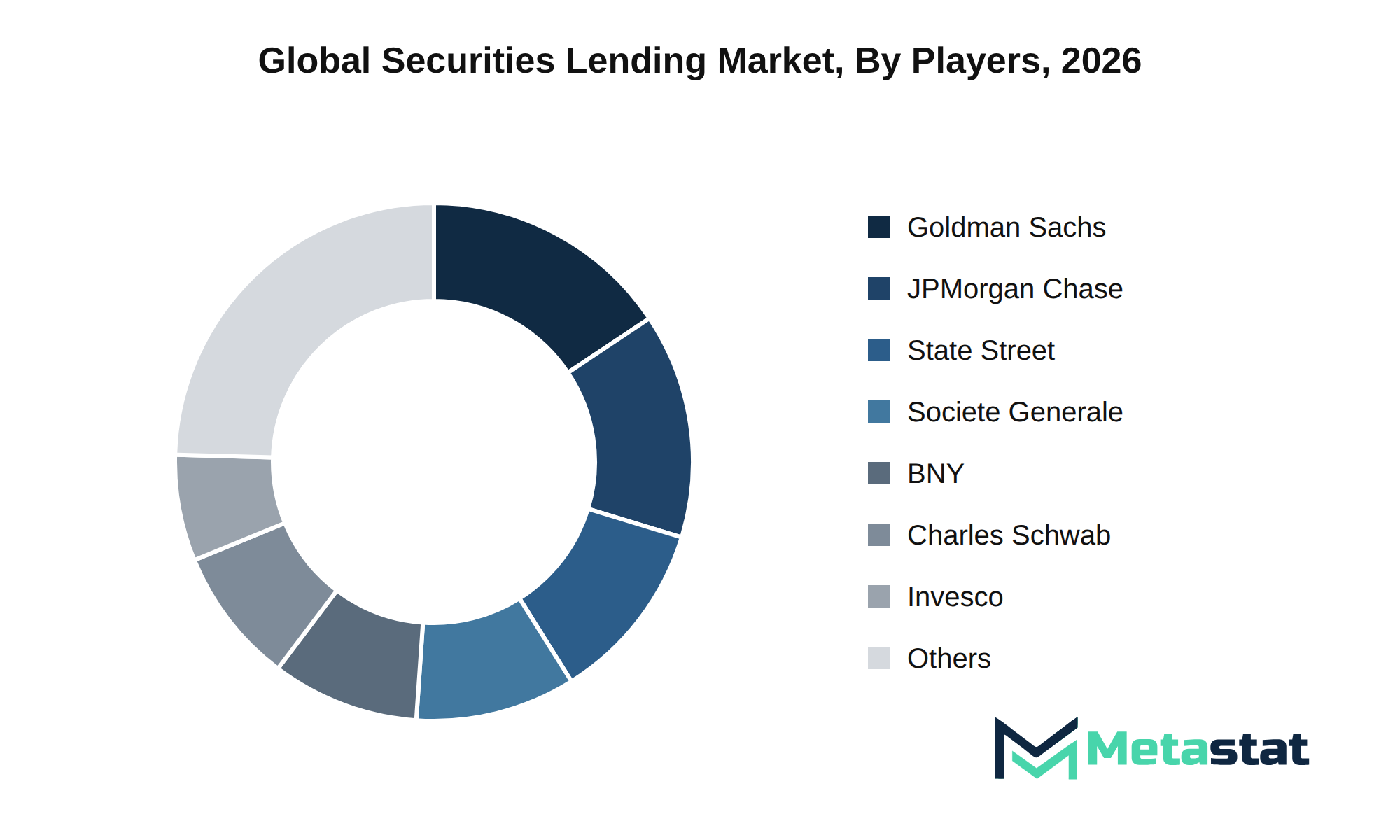
The Securities Lending market features a diverse range of participants, each employing distinct strategies to maintain competitive advantages. Mergers, acquisitions, and strategic consolidations have become prevalent among key players, enhancing their market positions and expanding service offerings. Companies including South Street Securities Holdings Inc. and Goldman Sachs engage in these activities, enabling them to leverage economies of scale and improve operational efficiencies.
Pricing architectures and commercial models exhibit variation across the market. Many players adopt flexible pricing strategies to attract a wide client base, while others focus on premium service offerings that justify higher costs. The integration of proprietary technologies allows firms including JPMorgan Chase & Co. and Citigroup Inc. to differentiate their services, creating barriers to entry for potential new entrants.
The competitive outlook for the Securities Lending market remains dynamic, driven by ongoing technological advancements and evolving customer preferences. Strategic alliances and joint ventures among firms including BNP Paribas and State Street Corporation enhance their service capabilities, allowing them to address specific market needs effectively. These collaborations strengthen their competitive positions.
Customer retention strategies, combined with strong brand equity dynamics, play a critical role in sustaining competitive positions. Companies invest heavily in developing intellectual property portfolios and patent landscapes, ensuring they maintain a technological edge over competitors. This focus on innovation and differentiation positions firms to navigate disruptions and capitalize on emerging opportunities within the market.
Market size is forecast to rise from USD 14 billion in 2025 to over USD 27 billion by 2033. The anticipated growth reflects an 8.5% compound annual growth rate (CAGR) during this period. A favorable macroeconomic climate supports steady demand in the securities lending market, driven by increasing institutional participation and innovations in financial technologies.
In a bull scenario, heightened economic activity and investor confidence could accelerate investments across various asset classes, propelling the market beyond the base projection. Conversely, a bear scenario characterized by economic uncertainty or regulatory challenges constrains growth. The overall trend remains upward due to structural shifts in investment strategies.
Strategic capital allocation toward next-generation technologies enhances operational efficiencies in securities lending. Companies focusing on research and development (R&D) commercialization are positioned to capture emerging opportunities, particularly in automated lending platforms and blockchain integration. Regulatory evolution continues to shape the market, with compliance milestones influencing market dynamics.
Geopolitical realignments and evolving trade corridors impact global supply chains, affecting securities lending arrangements. Market participants navigate these complexities while seizing high-growth pockets and addressing unmet enterprise needs. The convergence of regulatory requirements and technological advancements creates a defensibility roadmap for firms, highlighting the importance of agility in strategic planning.
The report strategically identifies and profiles the key market players and analyses their core competencies in each sub-segment of the Securities Lending market.
Report Attributes | Details |
Study Period | 2021-2033 |
Base Year | 2025 |
Estimated Year | 2026 |
Forecast Period | 2026-2033 |
Historical Period | 2021-2025 |
Growth Rate | CAGR 8.5% from 2026 to 2033 |
Revenue Unit | USD billion |
Segmentation | By Lender Type, Borrower Type, Security Type, Lending Duration, and Region |
By Region | North America (By Lender Type, Borrower Type, Security Type, Lending Duration, and Country)
|
Europe (By Lender Type, Borrower Type, Security Type, Lending Duration, and Country)
| |
Asia Pacific (By Lender Type, Borrower Type, Security Type, Lending Duration, and Country)
| |
South America (By Lender Type, Borrower Type, Security Type, Lending Duration, and Country)
| |
Middle East and Africa (By Lender Type, Borrower Type, Security Type, Lending Duration, and Country)
|
Find answers to common questions about this report
The Securities Lending market size was valued at USD 14 billion in 2025.
The Securities Lending market is projected to grow at a CAGR of 8.5% during the forecast period from 2026 to 2033.
The North America Securities Lending market size is estimated to reach USD 9.7 billion by 2033.
The leading segment in the Securities Lending market is the Borrower Type segment, with Hedge Funds projected to reach USD 20.2 billion by 2033. This figure reflects the highest anticipated value among the various borrower types.
Key drivers for the Securities Lending market include GDP growth and favorable capital investment environments, which boost demand for securities lending services. lower interest rates reduce borrowing costs, making securities lending an attractive option for borrowers, while technological integration enhances operational efficiency and service delivery, further stimulating market participation.
North America holds the dominant share of the Securities Lending market, with a value of USD 9.7 billion in 2033, representing 40.6 percent of the total market.
The Securities Lending market growth faces constraints from regulatory compliance hurdles, which increase operational costs and complexities, particularly affecting smaller firms. Macroeconomic factors, including inflationary pressures and geopolitical instability, further inhibit growth potential by creating uncertainty and complicating investment strategies. These challenges limit the market's ability to expand and innovate effectively.
Growth in the Securities Lending market is driven by macro-economic factors including GDP growth and capital investment environments. Increased economic activity boosts demand for securities lending, while lower interest rates reduce borrowing costs, making it an attractive option for borrowers. investment in digital transformation enhances operational efficiency, further stimulating adoption.
The Securities Lending market is estimated to reach a valuation of USD 27 billion by 2033.
Key players in the Securities Lending market include South Street Securities Holdings Inc., StoneX, Invesco Ltd., Societe Generale, Charles Schwab & Co., Inc., State Street Corporation, and Goldman Sachs.
The analysts below cover Banking & Finance research at Metastat Insights.
LEAD ANALYST
Utkarsh Khirodkar is a Lead Market Research Analyst at MetaStat Insight, specializing in market intelligence, technology sector assessments, and competitive strategy.

PRINCIPAL CONSULTANT - ENTERPRISE AI & EMERGING TECHNOLOGIES
Banking & Finance · Electronics and Semiconductor · Energy and Power · Healthcare IT · Information & Technology · Professional Services
Vijay Gunti is a Principal Consultant at MetaStat Insight, bringing over two decades of experience across enterprise digital transformation, technology strategy, and intelligent systems.
Evaluating sovereign cloud deployments for core banking platforms demands a clear view of data residency regulations and migration exit strategies. MetaStat Insight delivered an exhaustive review of regional latency tolerances, mainframe decommission milestones, and third-party vendor concentration risk. The regulatory compliance mapping across European and Asian financial jurisdictions gave our team a dependable baseline for multi-cloud infrastructure discussions.
Replacing petrochemical surfactants with bio-based alternatives requires realistic timelines on industrial precision fermentation scaling. The market research broke down commercialization timelines, feedstock sugar price sensitivities, and regional cosmetic ingredient regulatory approvals in Europe and East Asia. That supplier readiness mapping gave our formulations team reliable context when comparing renewable chemical sourcing roadmaps.
Tracking ceramic matrix composite adoption in high-bypass aero engines requires strict attention to material qualification cycles and FAA airworthiness testing milestones. The MetaStat Insight team provided a detailed timeline of silicon carbide fiber manufacturing capacity and commercial foundry lead times. Having clear visibility into upstream thermal barrier coating supply helped us stress-test our long-term component procurement strategy.
Explore related market intelligence reports worth reading alongside this one.
Starting from
$2950