
Explore critical factors influencing pricing in the Water and Wastewater Treatment Technology market, helping buyers make informed purchasing decisions.
The cost structure of the Water and Wastewater Treatment Technology market is influenced by various factors, each shaping pricing dynamics and operational efficiencies. Understanding these components allows buyers and operators to strategize effectively, optimizing their investments while enhancing compliance with regulations.
1. Regulatory compliance costs considerably affect pricing
Stringent regulatory requirements significantly influence operational costs and pricing strategies in the Water and Wastewater Treatment Technology market. Companies face heightened compliance expenses related to documentation, testing, and adherence to evolving environmental standards. These factors often lead suppliers to increase prices to maintain profitability while navigating these complex regulations. Buyers prioritize partners with established compliance frameworks to mitigate these costs and ensure smoother operations.
2. Investment in advanced technologies enhances operational efficiency
Integrating advanced treatment technologies is essential for enhancing efficiency and minimizing long-term operational costs. Investments in digital platforms, automation, and innovative filtration techniques, including membrane technologies, enable treatment facilities to improve performance while decreasing energy consumption. Buyers should leverage these advancements during negotiations, aiming for better pricing terms based on improved operational metrics and efficiency gains, ultimately benefiting their financial outcomes.
3. Infrastructure modernization leads to substantial investment
Aging infrastructure presents a challenge for many municipalities and industries, necessitating extensive upgrades to comply with water quality regulations. This modernization process requires significant capital investment, which directly affects treatment technology costs. Buyers should anticipate pricing adjustments because treatment facilities enhance their systems to meet regulatory demands and improve service reliability. Collaborating with suppliers focused on innovative solutions aids in minimizing upfront costs and future expenses.
4. Emphasis on energy-efficient technologies is crucial
Energy efficiency plays an important role in lowering operational costs for water treatment facilities. Technologies that optimize energy consumption, including advanced membrane systems and energy recovery solutions, are increasingly sought after. Buyers gain leverage in negotiations by emphasizing the long-term savings associated with energy-efficient technologies, ultimately reducing total ownership costs and improving budget management.
5. Growing demand for water reuse technologies affects pricing
The rising focus on sustainable water management practices drives demand for water reuse and recycling technologies. Although municipalities and industries adopt these solutions, associated costs rise due to the complexity of specialized treatment processes. Buyers should evaluate potential long-term savings that water reclamation technologies offer, considering them valuable investments that support sustainability goals and improve operational efficiency.
6. Supply chain dynamics heavily influence material costs
Fluctuations in supply chain dynamics, including raw material availability and transportation expenses, directly affect pricing strategies for water and wastewater treatment technologies. Trade policies and geopolitical tensions introduce uncertainties, leading to increased material costs for suppliers. Buyers should stay informed about these factors when negotiating contracts and consider strategic partnerships that enhance supply chain resilience to counteract rising costs.
7. Labor shortages present operational challenges
Labor shortages pose a significant challenge within the Water and Wastewater Treatment Technology market, resulting in increased operational costs and project delays. Companies struggle to find qualified personnel to implement and maintain advanced technologies, passing these costs onto buyers. Engaging service providers committed to training and retaining skilled talent helps stabilize costs while ensuring efficient project execution and continuity.
Understanding these critical factors equips buyers and operators in the Water and Wastewater Treatment Technology market to make informed decisions. By identifying areas where they optimize investments and leverage technological advancements, stakeholders mitigate costs and enhance their operational efficiencies.
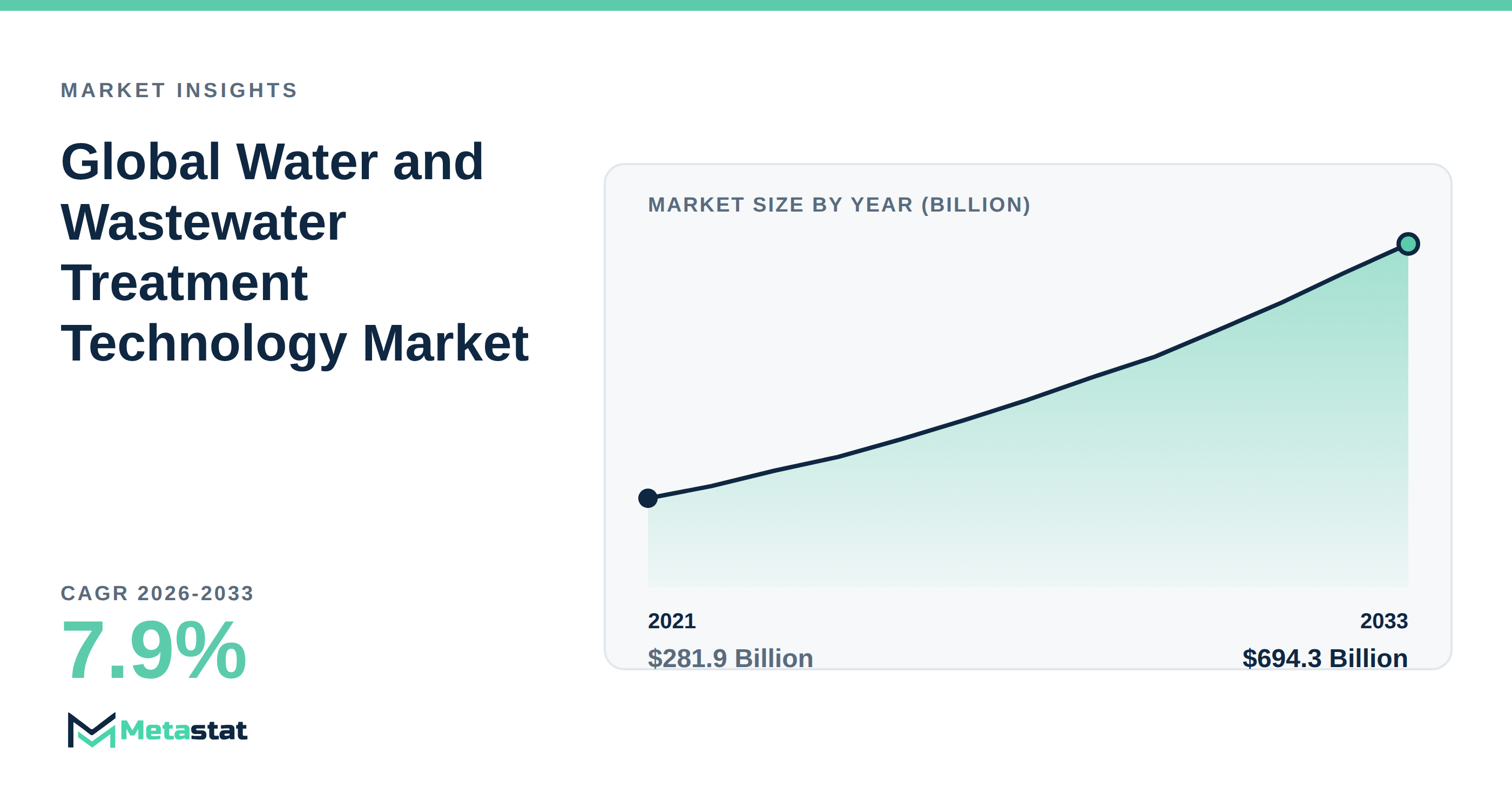
The full analysis is in Global Water and Wastewater Treatment Technology Market.
Tags
About the Authors

LEAD ANALYST
Utkarsh Khirodkar is a Lead Market Research Analyst at MetaStat Insight, specializing in market intelligence, technology sector assessments, and competitive strategy.

INDUSTRY CONSULTANT - CHEMICALS & ADVANCED MATERIALS
Chemicals and Materials · Machinery & Equipment · Packaging
Amit Gadhekar Consultant for Chemicals and Materials at MetaStat Insight, directing sector-specific intelligence, research, and strategic consulting across global chemical and processing markets.