
Explore essential questions for buyers in the Debt Recovery and Collection Services market to ensure effective supplier partnerships and successful debt recovery outcomes.
Buying services in the Debt Recovery and Collection Services market requires careful consideration and strategic questioning. Buyers should explore various aspects of a supplier's operations, compliance, and technological capabilities to ensure a successful partnership. This post outlines critical questions for buyers to ask to understand supplier capabilities and align strategies effectively.
1. What is your approach to regulatory compliance?
An understanding of a supplier's regulatory compliance approach is essential. Adhering to evolving standards not only ensures legal conformity but fosters client trust. Firms in the Debt Recovery and Collection Services sector experience rising operational costs due to compliance requirements. Suppliers who actively manage compliance navigate these complexities effectively, enhancing service offerings and appeal. Buyers should ask for evidence of proven compliance records, because this will influence the supplier's long-term sustainability and credibility within the market.
2. How do you leverage technology to enhance recovery rates?
Technological advancements are crucial in the Debt Recovery and Collection Services market. Buyers should inquire about the technologies a supplier employs, including automation and data analytics. Effective utilization of these technologies streamlines operations, improves customer interactions, and leads to enhanced recovery rates. Suppliers investing in innovative technology position themselves competitively, maximizing operational efficiency and profitability. Understanding a supplier's technology strategy provides insights into their ability to adapt and thrive in a changing market landscape.
3. What strategies do you have for customer engagement?
Customer engagement plays a significant role in recovery outcomes. Buyers should assess how suppliers interact with consumers during recovery processes. A focus on amicable and non-confrontational methods maintains customer relationships while effectively managing debt. This approach is particularly relevant in sectors like retail and healthcare, where positive customer interactions enhance loyalty. Suppliers prioritizing customer experience through effective communication are likely to achieve higher recovery rates, making them attractive partners in the Debt Recovery and Collection Services market.
4. How do you manage the costs associated with service delivery?
Cost management directly impacts profitability in Debt Recovery and Collection Services. Buyers should ask how suppliers balance operational costs driven by technology investments and compliance requirements. Gaining insights into a supplier's cost structure reveals their capacity to maintain service quality while optimizing profitability. Strategic allocation of resources allows suppliers to enhance service offerings, and buyers aligned with well-managed suppliers will likely experience better financial outcomes.
5. What are your capabilities in handling specialized debt types?
The Debt Recovery and Collection Services market includes a range of debt types, including credit card, personal, and auto finance debts. Buyers should evaluate whether suppliers have specific expertise in managing these diverse categories. The ability to cater to niche applications boosts demand and enhances operational effectiveness. Suppliers that adapt strategies to meet the unique requirements of different debt types create tailored solutions, improving recovery rates and overall revenue generation.
6. How do you address challenges in cross-border collections?
Cross-border collections entail unique challenges, including varied regulations and cultural barriers. Buyers should evaluate suppliers' strategies for navigating these complexities. Firms operating internationally face difficulties with compliance and consistent service quality. Understanding how a supplier manages these challenges highlights their operational capabilities and adaptability in a competitive environment. A supplier's experience in cross-border collections significantly impacts their effectiveness and reduces potential risks associated with international operations.
7. What is your commitment to sustainable practices?
In a market increasingly influenced by corporate responsibility, buyers should ask suppliers about their commitment to sustainability. Practices promoting environmental stewardship connect with consumers focused on social responsibility. By adopting sustainable methods, suppliers align themselves with broader societal goals and enhance brand reputation. Buyers pursuing long-term partnerships should consider suppliers prioritizing eco-friendly compliance solutions, reflecting a focus that appeals to clients and improves loyalty in the Debt Recovery and Collection Services market.
Effective engagement in the Debt Recovery and Collection Services market hinges on insightful questioning. Buyers should prioritize understanding regulatory compliance, technology capabilities, customer engagement strategies, cost management, specialized debt handling, cross-border challenges, and sustainability commitments. This approach enables buyers to select suppliers that align with their strategic goals, ultimately fostering successful partnerships and achieving better recovery outcomes.
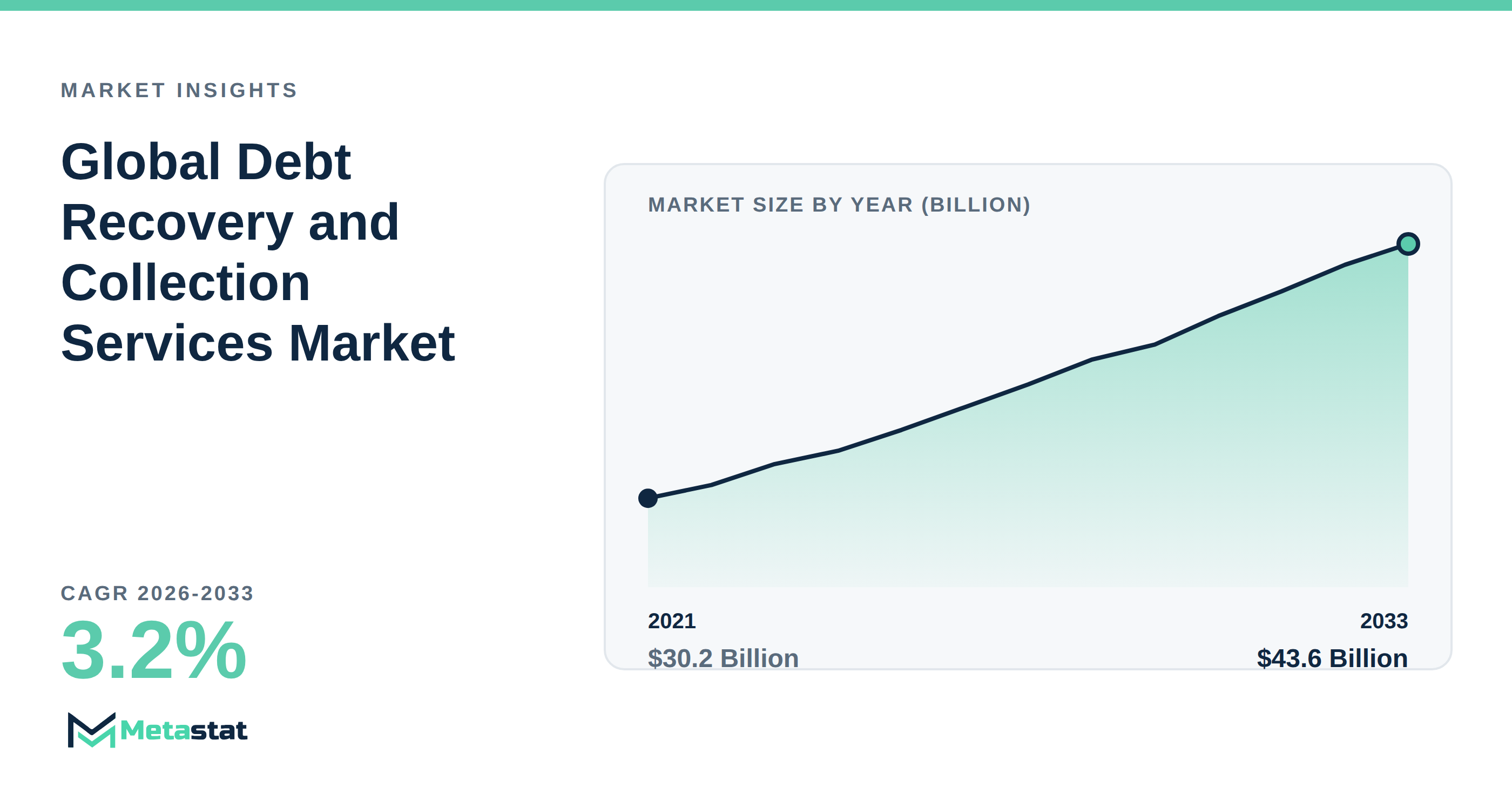
The full analysis is in Global Debt Recovery and Collection Services Market.
Tags
About the Authors

LEAD ANALYST
Utkarsh Khirodkar is a Lead Market Research Analyst at MetaStat Insight, specializing in market intelligence, technology sector assessments, and competitive strategy.

PRINCIPAL CONSULTANT - ENTERPRISE AI & EMERGING TECHNOLOGIES
Banking & Finance · Electronics and Semiconductor · Energy and Power · Healthcare IT · Information & Technology · Professional Services
Vijay Gunti is a Principal Consultant at MetaStat Insight, bringing over two decades of experience across enterprise digital transformation, technology strategy, and intelligent systems.