
In the growing Cross-Border Payments market, buyers should ask crucial questions to assess suppliers effectively. Here are seven essential inquiries to consider.
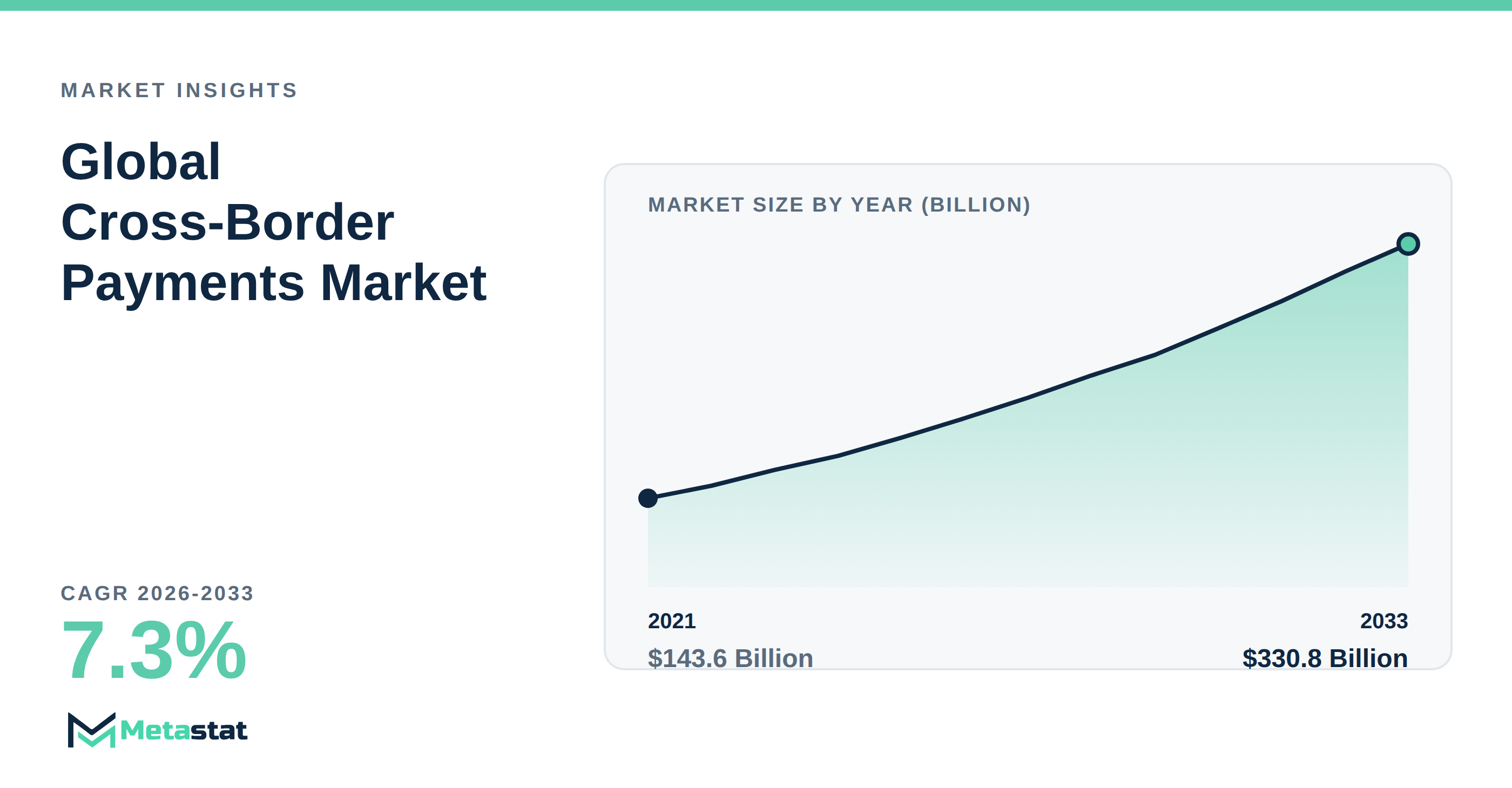
The Cross-Border Payments market is on a significant growth trajectory, projected to expand from USD 188.2 billion in 2025 to USD 330.8 billion by 2033. While businesses seek efficient international transaction solutions, key questions arise for buyers when assessing suppliers. Understanding these queries is essential to navigate the complexities and opportunities within this rapidly growing market.
1. How does your technology enhance transaction speed and security?
With advancements in technologies like ISO 20022 and SWIFT GPI reshaping transaction processes, buyers should inquire about the specific technological capabilities of suppliers. Solutions that enhance speed and security improve operational efficiency and instill confidence in users. Suppliers leveraging innovative technology are positioned to minimize risks and ensure compliant transactions, crucial for navigating complex international regulations.
2. What measures do you implement for regulatory compliance?
Regulatory challenges significantly affect the Cross-Border Payments market. Buyers should understand the compliance measures suppliers have in place, particularly concerning regulations related to anti-money laundering (AML) and customer verification. Suppliers who prioritize regulatory adherence facilitate smoother transaction processes, enhancing customer trust while reducing the risk of penalties for non-compliance.
3. How do your payment solutions cater to diverse customer needs?
With the rising importance of digital wallets and card-based transactions, buyers should assess how suppliers’ offerings align with consumer preferences. Understanding the flexibility and variety in payment methods helps businesses meet the evolving demands of their customer base. Suppliers that adapt their solutions to accommodate various transaction types are more likely to excel in the competitive market.
4. What strategies do you employ to manage currency fluctuations and transaction costs?
Currency volatility presents considerable challenges in the Cross-Border Payments market. Buyers should engage suppliers on their strategies for mitigating risks associated with exchange rate fluctuations. Effective hedging strategies and transparent pricing models significantly impact transaction cost management, enabling businesses to maintain profitability while ensuring competitive pricing for their clients.
5. Can you explain your approach to cybersecurity and data protection?
Data security remains a critical concern, because incidents of breaches severely undermine consumer trust. Buyers should inquire about the cybersecurity measures suppliers undertake to protect sensitive information during transactions. A robust security framework safeguards customer data and enhances the reliability and reputation of the payment service providers.
6. How do you adapt to the evolving market dynamics?
The Cross-Border Payments market undergoes rapid technological advancements and changing consumer behaviors. Buyers should evaluate suppliers’ adaptability to new trends, including the integration of AI and blockchain technologies. Suppliers that prioritize continuous innovation are better positioned to capitalize on emerging opportunities and provide superior transaction solutions.
7. What partnerships and collaborations do you have in place?
Strategic collaborations within the Cross-Border Payments ecosystem enhance service delivery and expand market reach. Buyers should seek insights into the partnerships suppliers maintain with financial institutions and technology firms. Such alliances lead to improved offerings and greater operational capabilities, ultimately benefiting customers through enhanced transaction experiences.
The questions outlined above represent crucial considerations for buyers in the Cross-Border Payments market. Engaging with suppliers on these aspects aids in selecting the right partners and ensures alignment with the evolving demands of global commerce. For a deeper understanding of market dynamics and growth opportunities, refer to the Global Cross-Border Payments Market report.
Tags
About the Authors

LEAD ANALYST
Utkarsh Khirodkar is a Lead Market Research Analyst at MetaStat Insight, specializing in market intelligence, technology sector assessments, and competitive strategy.

PRINCIPAL CONSULTANT - ENTERPRISE AI & EMERGING TECHNOLOGIES
Banking & Finance · Electronics and Semiconductor · Energy and Power · Healthcare IT · Information & Technology · Professional Services
Vijay Gunti is a Principal Consultant at MetaStat Insight, bringing over two decades of experience across enterprise digital transformation, technology strategy, and intelligent systems.