
Explore the key factors driving changes in the Industrial RFID Reader market, from automation investments to regulatory compliance challenges and regional demand.
The Industrial RFID Reader market is undergoing significant transformation influenced by various factors driving demand and shaping operational strategies. While businesses prioritize automation and efficiency, understanding these shifts becomes crucial for buyers and operators in this space.
1. Growing Investment in Automation Technologies
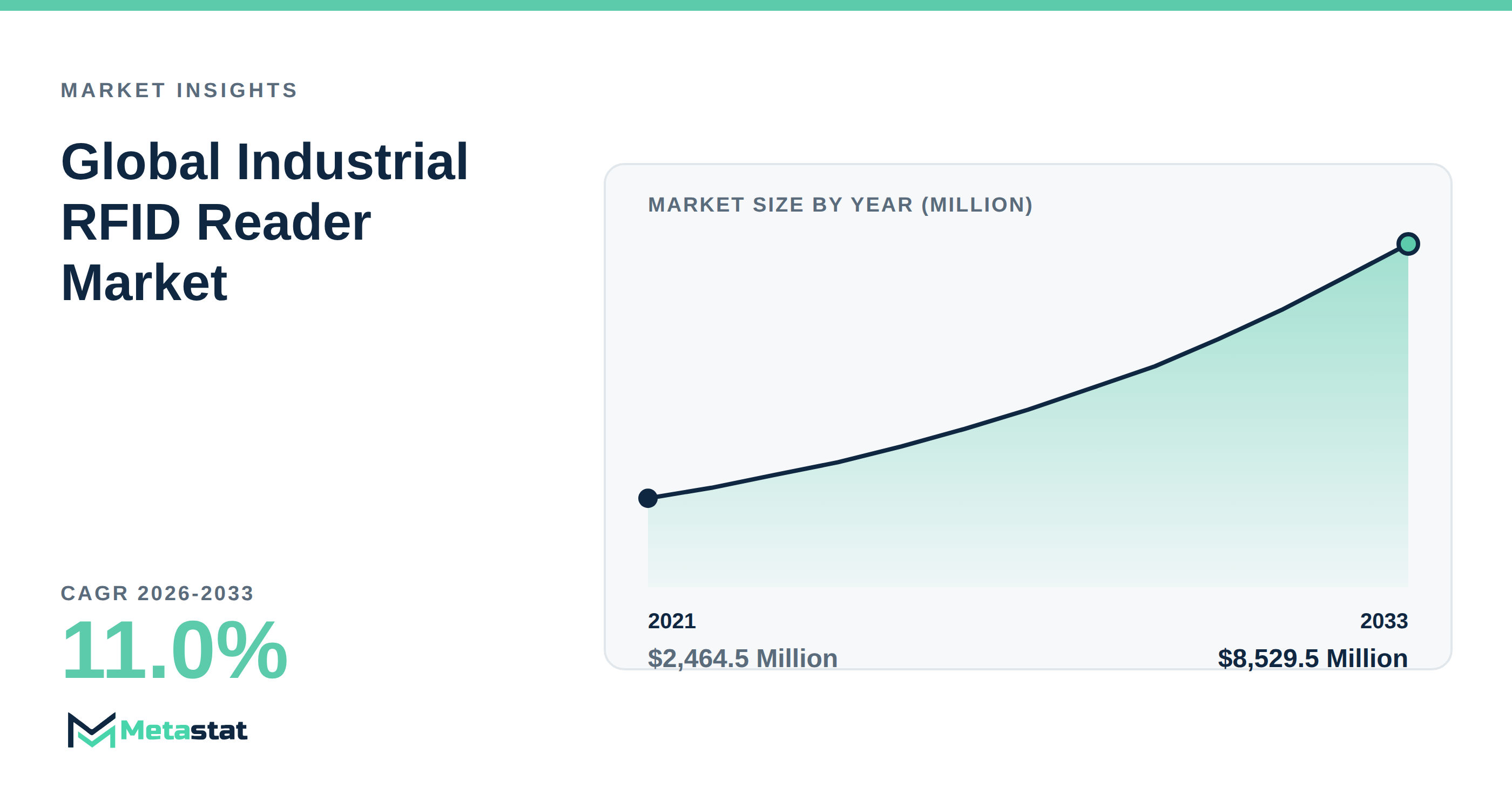
Increased investment in automation technologies advances the Industrial RFID Reader market. Organizations across logistics, manufacturing, and retail sectors recognize the enhance operational efficiency and reduce labor costs. This shift is driven by the necessity to streamline processes and improve inventory management. By adopting RFID technology, firms optimize their operations, enhancing asset tracking and supply chain management. This trend indicates a strong commitment to integrating advanced technologies, with the market expected to grow at a compound annual growth rate of 11.0% through 2033.
2. Digital Transformation Enhances Operational Efficiency
The ongoing focus on digital transformation initiatives across multiple sectors fuels growth in the Industrial RFID Reader market. Companies increasingly shift from traditional methods to digitized processes, leveraging RFID technology to improve tracking and inventory management. While automation continues to rise, industries including logistics and manufacturing benefit from improved operational productivity. Organizations see a clear alignment between investing in advanced technologies and optimizing resource management, resulting in heightened demand for RFID solutions.
3. Regulatory Compliance Hurdles Impact Adoption
Regulatory compliance hurdles pose challenges for the Industrial RFID Reader market. Heightened demands for data security and privacy protection complicate the adoption of RFID solutions. Companies navigate evolving regulations, resulting in increased operational costs and slower market adoption. The financial burden associated with integrating advanced technologies, combined with ongoing inflationary pressures, further constrains growth potential. These factors highlight the importance of understanding regulatory landscapes when considering RFID technology investments.
4. Geopolitical Tensions Disrupt Supply Chains
Geopolitical tensions create substantial obstacles within the Industrial RFID Reader market, leading to supply chain disruptions and higher operational costs. Manufacturers face challenges in sourcing materials and components due to government-imposed restrictions. This disruption affects production timelines and overall efficiency. While companies invest in complex technologies, they encounter interoperability friction, complicating operations significantly. The market is under pressure from rising costs associated with compliance and talent retention, impacting long-term growth potential.
5. Expanding Regional Demands Open New Growth Opportunities
Emerging demands from various regions drive significant growth in the Industrial RFID Reader market. North America, Europe, and Asia Pacific are witnessing increased investments in smart technologies because businesses focus on infrastructure modernization. This growth presents opportunities in sectors including logistics, healthcare, and manufacturing, where efficient tracking and identification solutions are critical. Regional expansion reflects technology's potential to improve operational capabilities, aligning with the broader trends of digital transformation.
6. Integration with Advanced Technologies Enhances Capabilities
The integration of Industrial RFID Readers with technologies like edge computing and the Internet of Things (IoT) enhances their capabilities. This integration promotes real-time data processing and analytics, improving operational decision-making. AI-enabled RFID data analytics significantly enhance tracking and traceability, supporting diverse applications across industries. Continuous innovation in RFID technology aligns with the industry's shift toward more automated and data-driven environments, reinforcing its relevance in modern supply chains.
7. Demand for Multi-Frequency and Rugged RFID Readers Grows
While customer needs evolve, the demand for multi-frequency RFID readers rises, supporting diverse industrial identification requirements. These devices enable businesses to tailor solutions to specific operational needs, enhancing efficiency in various applications. The need for rugged RFID readers capable of performing in challenging environments highlights the technology's flexibility and dependability. This demand reflects a significant opportunity for suppliers to innovate and cater to the evolving landscape of the Industrial RFID Reader market.
In summary, the Industrial RFID Reader market is positioned for substantial growth, driven by trends centered on automation, digital transformation, regulatory challenges, and regional demands. Understanding these dynamics equips businesses with the insights needed to navigate this rapidly changing landscape effectively. For further details, refer to the Global Industrial RFID Reader Market.
Tags
About the Authors

LEAD ANALYST
Utkarsh Khirodkar is a Lead Market Research Analyst at MetaStat Insight, specializing in market intelligence, technology sector assessments, and competitive strategy.

PRINCIPAL CONSULTANT - ENTERPRISE AI & EMERGING TECHNOLOGIES
Banking & Finance · Electronics and Semiconductor · Energy and Power · Healthcare IT · Information & Technology · Professional Services
Vijay Gunti is a Principal Consultant at MetaStat Insight, bringing over two decades of experience across enterprise digital transformation, technology strategy, and intelligent systems.

LEAD CONSULTANT - COMMUNICATION, TELECOM, AND IT
Electronics and Semiconductor · Information & Technology · Machinery & Equipment · Professional Services
Ravindra Sathe Consultants for Communication, Telecom, and IT at MetaStat Insight. He leads the firm's industry research initiatives across telecommunications infrastructure, digital connectivity, enterprise networking, and emerging information technology domains.