
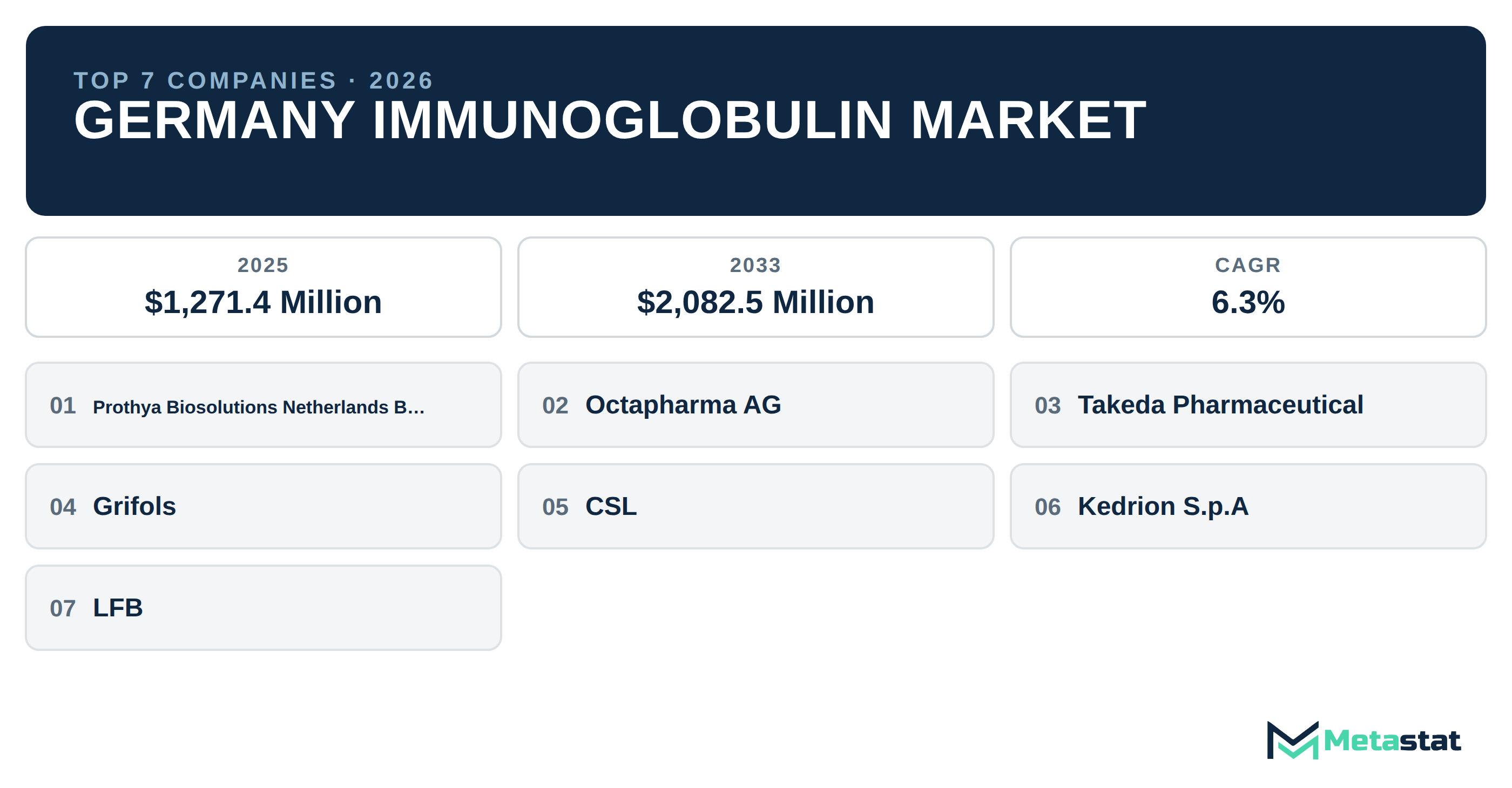
Explore key players in the Germany Immunoglobulin industry. This overview highlights seven notable companies and their contributions to immunotherapy.
The Germany Immunoglobulin industry plays a critical role in supplying essential therapies for various immunodeficiency conditions. This sector serves hospitals, clinics, and outpatient practices, providing vital treatments such as intravenous immunoglobulin and subcutaneous immunoglobulin. Ongoing advancements in manufacturing processes and an increasing emphasis on patient-centered care are driving transformation within the industry, enhancing accessibility and treatment options. For detailed insights, refer to the Germany Immunoglobulin market size and forecast report.
Top 10 Germany Immunoglobulin Trends
Focus on patient-centric treatment options
The shift towards patient-centric models in healthcare emphasizes individualized treatment plans and increased patient engagement. Companies are developing therapies tailored to specific patient needs and preferences. This trend enhances treatment adherence and outcomes, making it essential for providers to adopt a patient-first approach.
Adoption of advanced therapies
Innovations in immunoglobulin therapies are leading to the development of more effective and targeted treatments. New formulations and delivery methods are emerging, including subcutaneous routes that provide greater convenience and flexibility for patients. These advancements challenge traditional intravenous administration, expanding options in the sector.
Increasing demand for home-based care
The growing preference for home-based healthcare solutions is reshaping the immunoglobulin sector. Patients are seeking treatments that allow them to manage their care from the comfort of home, prompting companies to develop products that support home administration. This trend enhances patient autonomy and satisfaction.
Regulatory changes driving innovation
Ongoing regulatory reforms are encouraging innovation in the immunoglobulin sector. Stricter quality standards and efficiency guidelines promote the development of safer and more effective therapies. Companies are responding by investing in research and development and refining their manufacturing processes.
Expansion of global supply chains
Companies are diversifying their supply chains to enhance resilience and mitigate risks associated with global disruptions. This trend involves seeking partnerships and collaborations across various regions to ensure consistent product availability. A robust supply chain is essential for meeting the growing demand in the immunoglobulin sector.
Increased focus on rare diseases
The spotlight on rare diseases is prompting companies to invest in immunoglobulin therapies targeting these conditions. With an increasing number of patients diagnosed with rare immunodeficiencies, developing specialized treatments becomes crucial. This focus enhances the portfolio of offerings within the industry.
Integration of digital technologies
Digital technologies are becoming integral to the immunoglobulin sector, allowing companies to enhance efficiency and connectivity. Data analytics, telemedicine, and patient monitoring tools are facilitating better treatment management and patient engagement, streamlining operations across various care settings.
Sustainability initiatives gaining traction
Sustainability is becoming a priority for companies in the immunoglobulin sector. Organizations are adopting eco-friendly practices, from sourcing raw materials to packaging solutions, to reduce their environmental impact. This commitment to sustainability aligns with consumer and stakeholder expectations.
Growing importance of clinical trials
Clinical trials are crucial for validating new therapies and ensuring their safety and efficacy. The immunoglobulin sector is seeing increased investment in research initiatives, leading to advancements in treatment options. Engaging in clinical trials helps companies stay competitive and address unmet medical needs.
Strategic partnerships and collaborations
Strategic partnerships between companies and research institutions are becoming more common in the immunoglobulin sector. These collaborations promote innovation and accelerate the development of new therapies, allowing companies to leverage expertise and resources effectively.
Germany Immunoglobulin Companies Profiled
1. Prothya Biosolutions Netherlands B.V.
Founded: 2016
Prothya Biosolutions specializes in developing and manufacturing immunoglobulin therapies for patients with immunodeficiencies. The company emphasizes high-quality production processes and robust therapeutic efficacy. Its portfolio includes both intravenous and subcutaneous immunoglobulin formulations, aimed at addressing the diverse needs of patients. Prothya’s commitment to innovation and patient-centered care positions it as a notable contributor within the industry.
2. Octapharma AG
Founded: 1983
Octapharma AG is recognized for producing a wide range of human proteins, with a strong focus on immunoglobulin therapies. The company’s product lineup includes intravenous and subcutaneous immunoglobulins that cater to various immunodeficiency disorders. Octapharma invests in research and development to enhance therapeutic options and improve patient outcomes. Its international presence and commitment to quality make it a key player in the immunoglobulin sector.
3. Takeda Pharmaceutical Company Limited
Founded: 1781
Takeda Pharmaceutical Company Limited is a global leader in the biopharmaceutical industry, with a significant focus on immunoglobulin therapies. The company develops and manufactures a range of immunoglobulin products for patients with primary and secondary immunodeficiencies. Takeda’s dedication to research and innovation drives its efforts to provide effective treatment solutions tailored to patient needs, establishing its role in the industry.
4. Grifols, S.A.
Founded: 1940
Grifols, S.A. is a prominent player in the immunoglobulin sector, offering a diverse portfolio of plasma-derived therapies. The company’s immunoglobulin products serve patients with various immunological disorders. Grifols places great emphasis on quality and innovation, with multiple research initiatives aimed at developing advanced therapies. Its commitment to patient care and global outreach positions Grifols as a critical entity in the industry.
5. CSL Limited
Founded: 1916
CSL Limited is a well-established biotechnology company that focuses on developing and delivering innovative therapies, including immunoglobulin products. The company’s offerings are designed to treat patients with different immunodeficiencies and related conditions. CSL’s dedication to research and commitment to quality manufacturing processes contribute to its reputation in the industry, ensuring that it provides effective treatment options to patients globally.
6. Kedrion S.p.A.
Founded: 1966
Kedrion S.p.A. specializes in the production of plasma-derived therapies, focusing on immunoglobulin and other critical treatments. The company is known for its dedication to safety and quality in manufacturing, ensuring that its products meet high standards. Kedrion’s portfolio addresses various immunological disorders, and the company actively participates in research initiatives to expand its therapeutic offerings. Its commitment to patient-centered solutions enhances its role in the sector.
7. LFB S.A.
Founded: 1994
LFB S.A. is a biotechnology company that develops and produces immunoglobulin therapies for patients with immune deficiencies and other conditions. The company emphasizes innovation and quality in its manufacturing processes. LFB’s product offerings include both intravenous and subcutaneous immunoglobulins, aimed at providing effective treatment options for diverse patient needs. Its strategic focus on research and development reinforces LFB’s commitment to advancing patient care.
Conclusion
The Germany Immunoglobulin industry is evolving, driven by innovation, patient-centered care, and regulatory advancements. The companies profiled demonstrate a commitment to developing effective therapies that address diverse patient needs, highlighting the importance of ongoing research and collaboration in the sector. In this competitive environment, stakeholders should prioritize partnerships and innovation to enhance their offerings.
As the demand for immunoglobulin therapies rises, companies that embrace these trends will likely see success in meeting the needs of healthcare providers and patients. Engaging with the insights from the Germany Immunoglobulin market size and forecast report can further inform strategic decisions within the industry.
Tags
About the Authors

LEAD ANALYST
Utkarsh Khirodkar is a Lead Market Research Analyst at MetaStat Insight, specializing in market intelligence, technology sector assessments, and competitive strategy.

LEAD PRINCIPAL ANALYST, PHARMA AND HEALTHCARE
Food and Beverages · Healthcare · Healthcare IT · Medical Devices
Ajay Devgire is the Lead Healthcare Analyst at MetaStat Insight, leading strategic research and market intelligence initiatives across the global healthcare domain.