
Explore key trends influencing the Airport Transport and Mobility Infrastructure market and their implications for stakeholders, operators, and passengers.
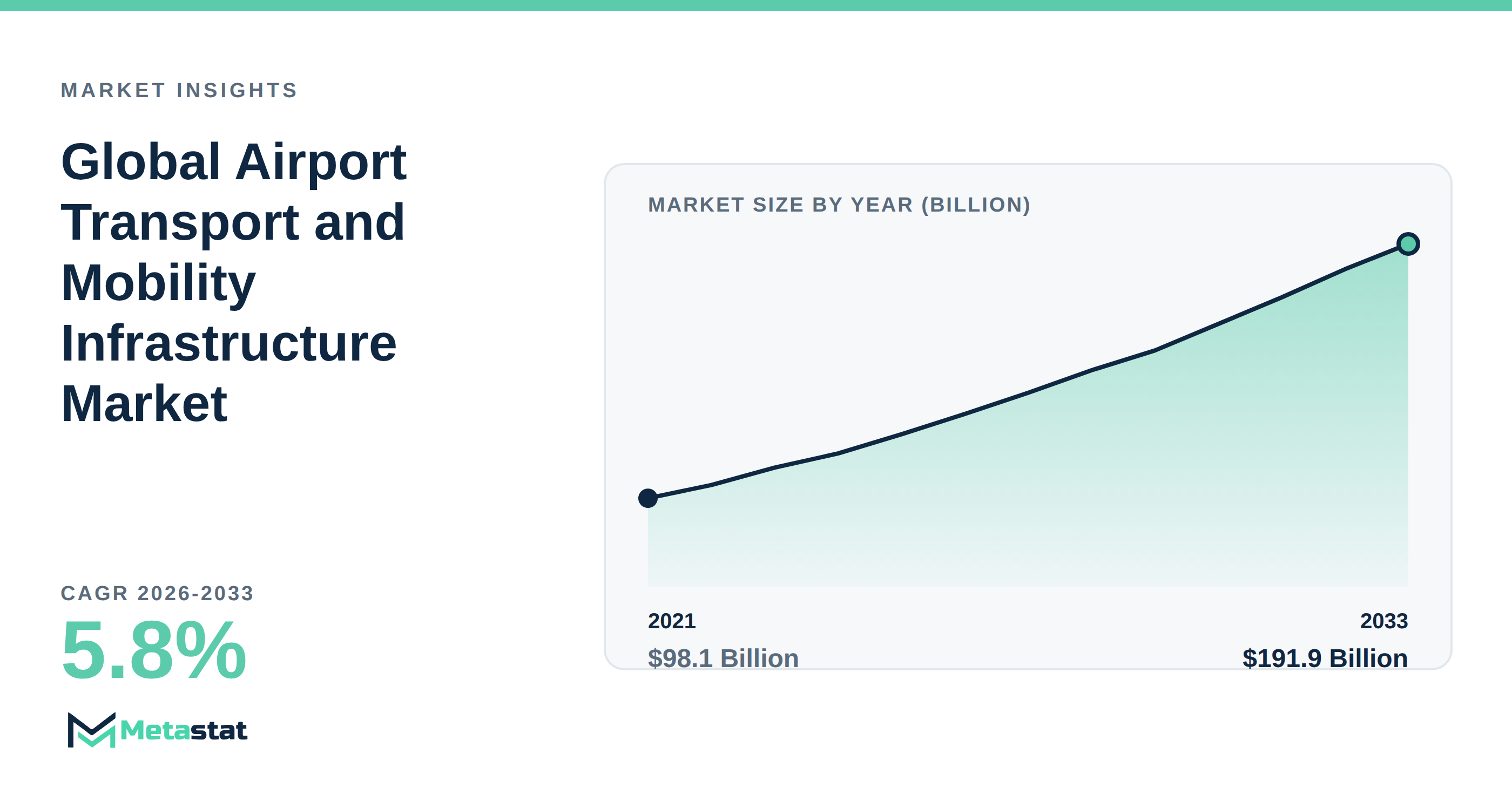
The Airport Transport and Mobility Infrastructure market is undergoing significant transformations that impact the operations and strategies of stakeholders within the industry. Valued at USD 121.7 billion in 2025 and projected to grow to USD 191.9 billion by 2033, numerous elements are driving this growth and reshaping the competitive landscape.
1. Rising Demand for Comprehensive Upgrades
The escalating need for enhanced airport facilities drives substantial investments from both public and private sectors. This demand is primarily the result of the increasing global air travel, especially within commercial airports. Projections indicate that the commercial airport segment will expand from USD 100.7 billion in 2026 to USD 145.7 billion by 2033, achieving a compound annual growth rate (CAGR) of 5.4%. To keep pace with this growth, airport operators modernize their infrastructure, ensuring they accommodate higher passenger volumes and improve overall operational efficiency.
2. Focus on Sustainable Infrastructure Development
Sustainable practices are becoming increasingly important in the Airport Transport and Mobility Infrastructure market. Stakeholders are making concerted efforts to align their operations with global climate goals and regulatory requirements. Investments are being directed toward infrastructure projects that prioritize eco-friendly initiatives, including energy-efficient technologies and sustainable materials. This shift not only enhances environmental responsibility but encourages innovation in airport design and operations.
3. Digitalization Streamlining Operations
Digital transformation significantly affects operational dynamics within the market. The integration of advanced technologies including automation and artificial intelligence (AI) enhances efficiency, leading to reductions in operational costs and improved service delivery. Airports that invest in modern digital infrastructure leverages enhanced data analytics capabilities, empowering operators to make informed decisions that drive productivity and elevate the passenger experience.
4. Geopolitical Challenges Complicating Investments
Geopolitical tensions pose substantial challenges for the Airport Transport and Mobility Infrastructure market. Issues including trade deficits, tariff barriers, and supply chain disruptions complicate operational strategies and financing for infrastructure projects. Stakeholders navigate these complexities effectively to sustain operational efficiency. In light of these challenges, adaptive strategies become essential for addressing potential risks and uncertainties that influence investment decisions.
5. Compliance with Regulatory Standards Necessitating Investments
Regulatory compliance requirements impose significant demands on airport operators. Meeting these stringent standards necessitates substantial investments in infrastructure upgrades and advanced technology. New regulations deter potential market entrants and limit the expansion plans of existing players, because compliance demands considerable resources. Addressing these challenges requires strategic planning and collaboration to ensure adherence while pursuing growth opportunities.
6. Supply Chain Evolution Impacting Cost Structures
Supply chain dynamics are evolving significantly, affecting the Airport Transport and Mobility Infrastructure market. Increasing logistical challenges, heightened competition for materials, and currency volatility present obstacles that operators address. These supply chain complexities disrupt operations and increase costs, necessitating a focus on building resilience within procurement strategies. Companies that adapt to these changes maintain their competitive positions and optimize their overall cost structures.
7. Fragmentation and Mergers Shaping Competitive Landscape
The Airport Transport and Mobility Infrastructure market remains fragmented, with numerous players vying for market share. This environment has led to increased activity surrounding mergers and acquisitions, because companies seek to consolidate resources and enhance their competitive positioning. Strategic partnerships and collaborations are becoming essential strategies for organizations aiming to leverage innovation and expand their market reach.
In summary, stakeholders within the Airport Transport and Mobility Infrastructure market adapts to modernization trends, sustainability initiatives, digital transformations, geopolitical challenges, regulatory compliance pressures, evolving supply chains, and a fragmented competitive landscape. Understanding these dynamics equips airport operators and related businesses to navigate the complexities of this evolving market successfully. For further details, please refer to the Global Airport Transport and Mobility Infrastructure Market.
Tags
About the Authors

LEAD ANALYST
Utkarsh Khirodkar is a Lead Market Research Analyst at MetaStat Insight, specializing in market intelligence, technology sector assessments, and competitive strategy.

ENERGY & INFRASTRUCTURE INDUSTRY CONSULTANT
Automotive and Transportation · Electronics and Semiconductor · Energy and Power · Machinery & Equipment
Saurabh Vasant Ganvir consults for Energy & Infrastructure Industry at MetaStat Insight, specializing in renewable energy, solar EPC, and electric vehicle (EV) infrastructure markets.