
Explore key trends influencing the market for Military Robot Dogs, highlighting advancements in technology and operational needs.
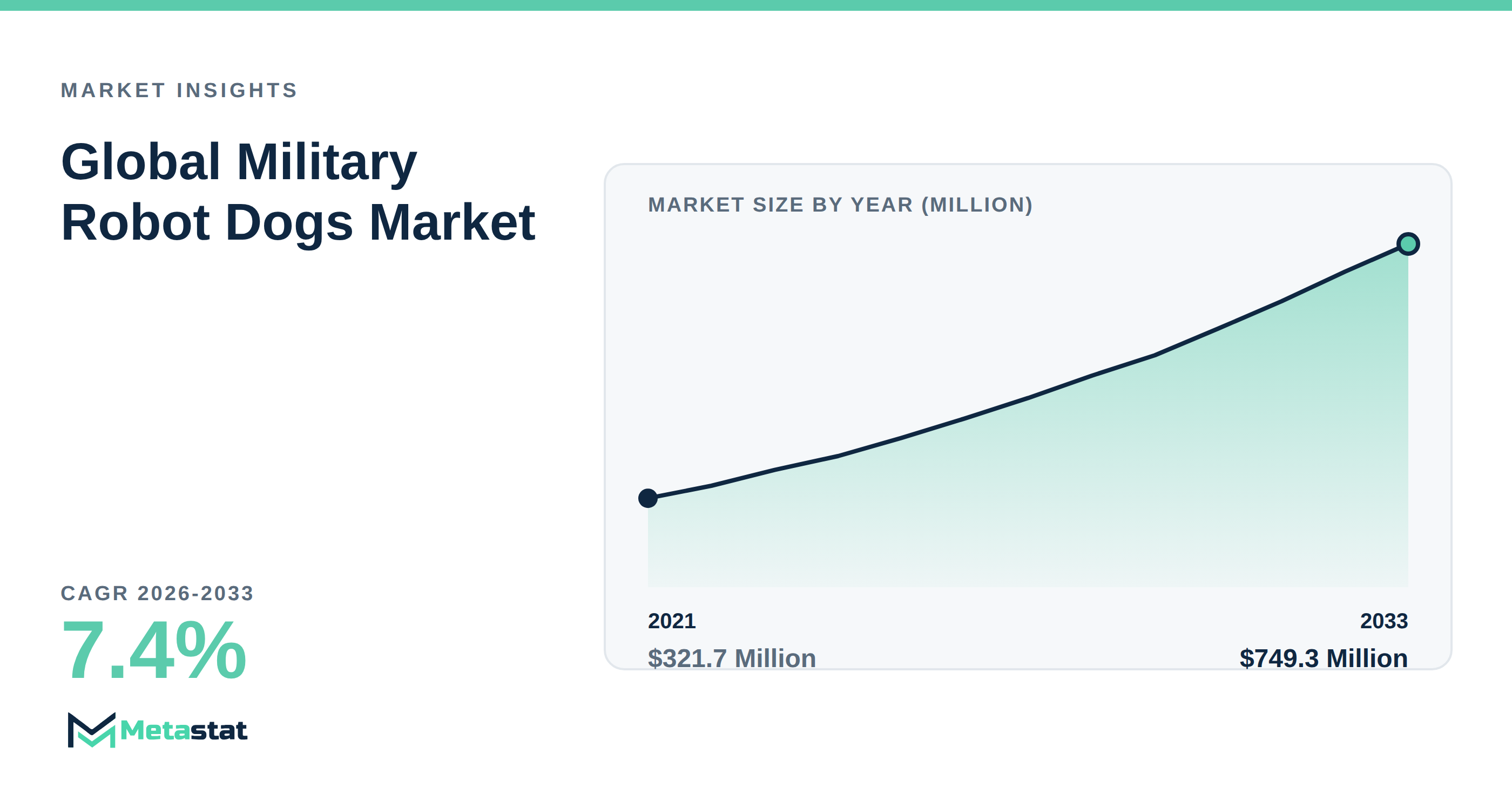
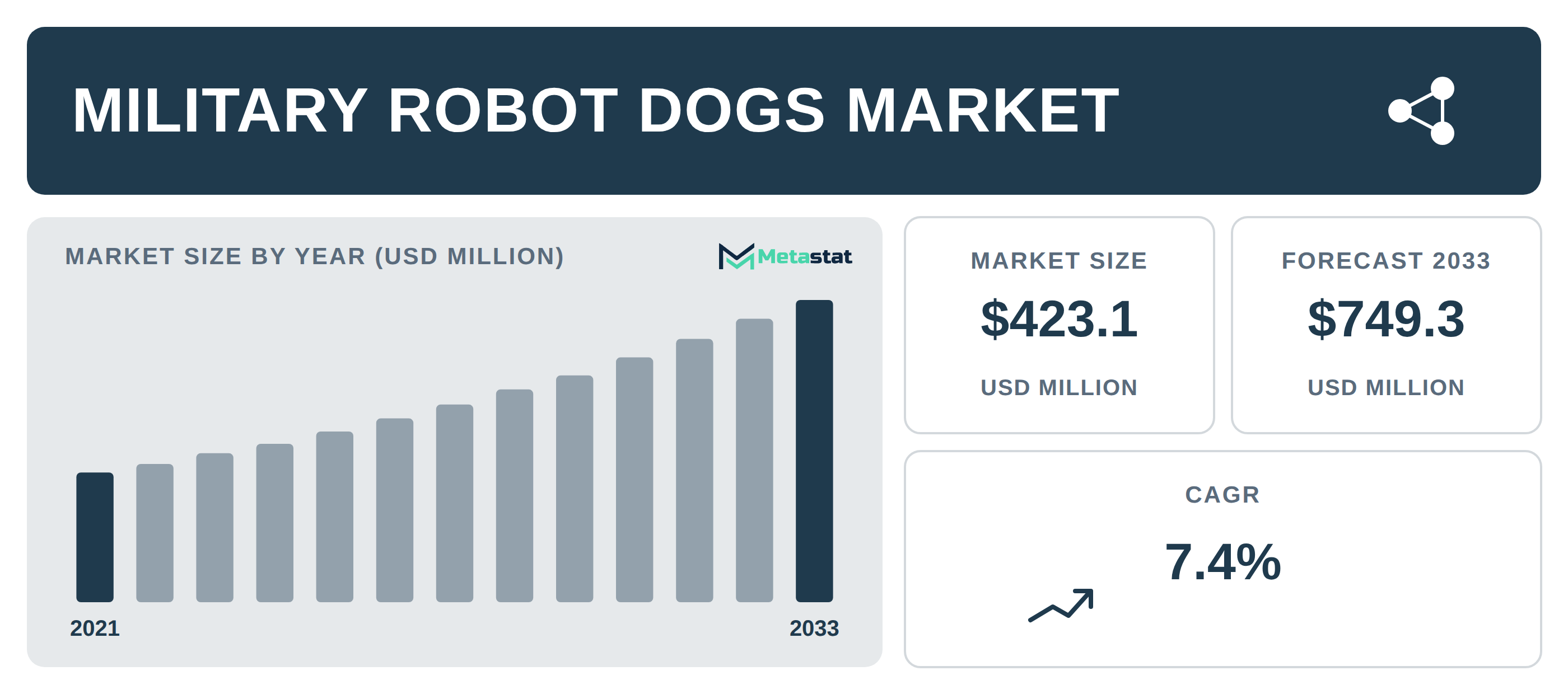
The market for Military Robot Dogs is evolving rapidly, driven by technological advancements and changing operational needs. Understanding the trends reshaping this sector is crucial for military organizations and defense contractors seeking to enhance their capabilities. This blog highlights seven key trends that influence demand and shape the future of Military Robot Dogs. The full figures are in our Military Robot Dogs market size and forecast report.
1. Enhanced AI for Target Recognition
Military organizations increasingly integrate advanced AI-based target recognition systems into military robot dogs. This technology significantly improves operational efficiency by enabling the precise identification and evaluation of threats. Automating the recognition process allows military forces to respond more quickly during reconnaissance missions. The anticipated growth of this segment indicates a shift toward more autonomous systems, decreasing dependence on human resources and optimizing costs associated with military operations.
2. Growing Demand for Explosive Ordnance Disposal Robots
The rising prevalence of explosive threats drives the demand for Explosive Ordnance Disposal (EOD) robot dogs. Projecting a growth rate of 7.8%, this segment illustrates how military organizations prioritize safety and effectiveness in managing explosive devices. Such robots minimize risks to personnel in hazardous situations, which is critical for mission success. As conflicts become increasingly complex, the need for advanced EOD technologies will continue to expand.
3. Shift Toward Fully Autonomous Systems
Fully autonomous military robot dogs are gaining traction, projected to grow at a compound annual growth rate of 11.3%. The demand for these systems stems from their ability to perform tasks independently, enhancing efficiency while reducing human involvement in perilous situations. As military entities seek to modernize their operations, the reliance on autonomous technologies will shape procurement strategies and facilitate more effective military engagements.
4. Increased Focus on Reconnaissance Capabilities
The segment for reconnaissance and surveillance robot dogs is projected to grow significantly, propelled by military organizations' emphasis on enhancing intelligence-gathering capabilities. With a valuation expected to reach USD 241 million by 2033, these technologies provide crucial up-to-date intelligence, enabling military personnel to assess threats without direct exposure to danger. The increasing complexity of modern warfare requires advanced reconnaissance capabilities that these specialized robots deliver.
5. Innovation in Tactical Logistics and Supply Chain Management
Military robot dogs are transforming logistics and supply chain management within defense operations. These robots streamline the transportation of supplies and equipment, improving operational efficiency on the battlefield. The focus on tactical logistics accentuates the growing need for efficient supply chain management, driving demand for advanced robotic solutions. As military organizations strive for operational readiness, investments in logistics-oriented robot technologies will continue to rise.
6. Increasing Importance of Autonomous Navigation
Autonomous navigation capabilities are becoming crucial for military robot dogs, allowing for operations in complex environments. As military organizations prioritize systems that navigate independently, the integration of advanced navigation systems is expected to shape procurement strategies. This trend enhances operational capabilities while ensuring that military personnel remain safe from potential threats. The rising complexity of environments in which these robots operate necessitates continuous improvements in autonomous navigation technology.
7. Emphasis on Safety Protocols and Regulations
With the growing reliance on robotic systems in military operations, there is a heightened focus on safety protocols and regulations surrounding their deployment. Buyers increasingly demand technologies that comply with strict safety standards, which influences procurement decisions. Compliance with these standards ensures effective utilization of military robot dogs while safeguarding personnel. This trend underlines the importance of integrating rigorous safety measures into the design and operation of robotic systems.
These trends illustrate the dynamic nature of the market for Military Robot Dogs. Innovations in AI, the emphasis on autonomy, and the demand for specialized operational capabilities highlight the significance of advanced robotic systems in modern military engagements. As defense organizations adapt to these changes, the integration of military robot dogs will play a crucial role in ensuring mission success.
Tags
About the Author

LEAD ANALYST
Utkarsh Khirodkar is a Lead Market Research Analyst at MetaStat Insight, specializing in market intelligence, technology sector assessments, and competitive strategy.