
Explore the top trends reshaping the taxi industry, including ride-hailing growth and electric vehicle adoption. Stay informed about future opportunities.
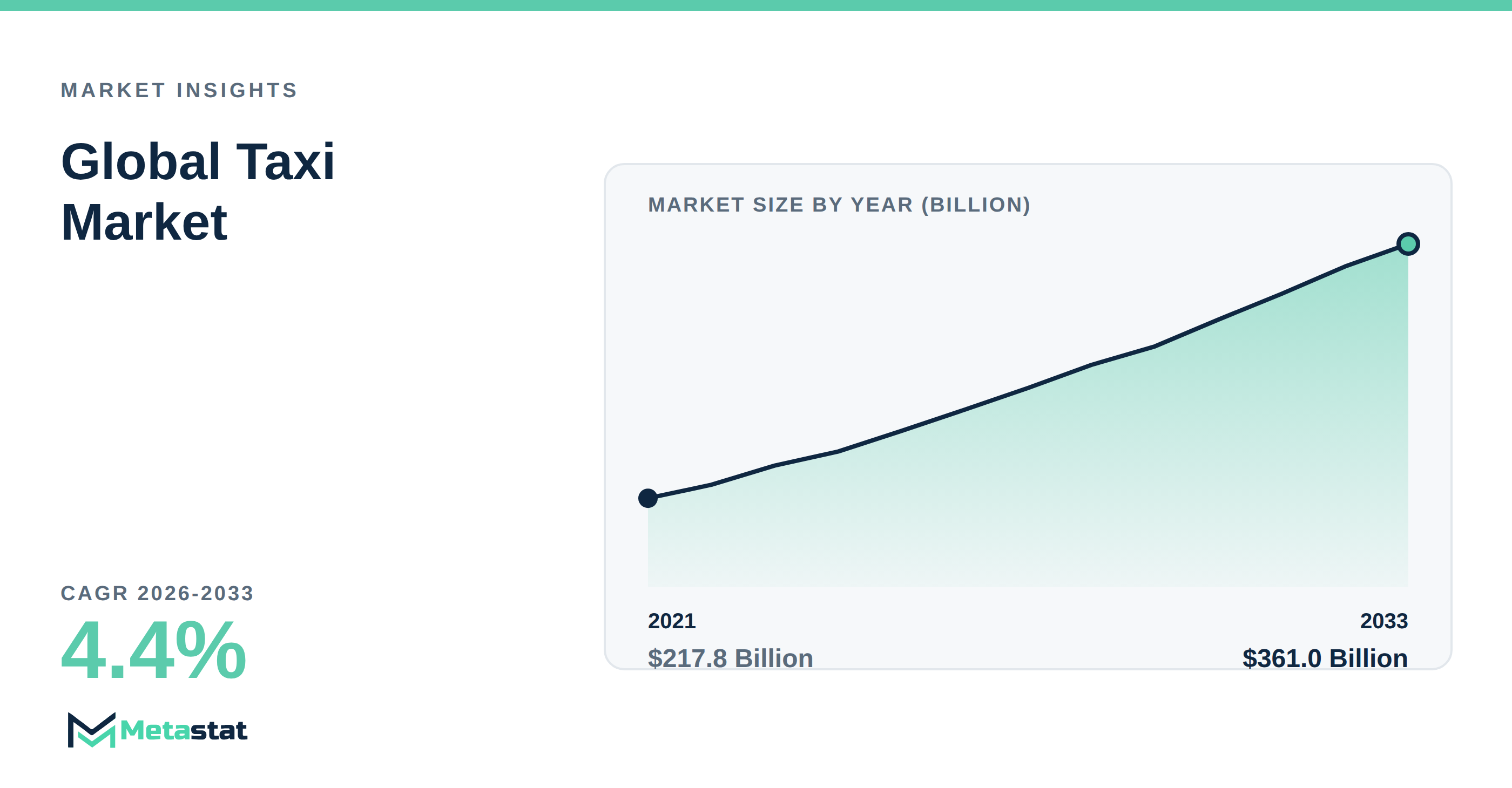
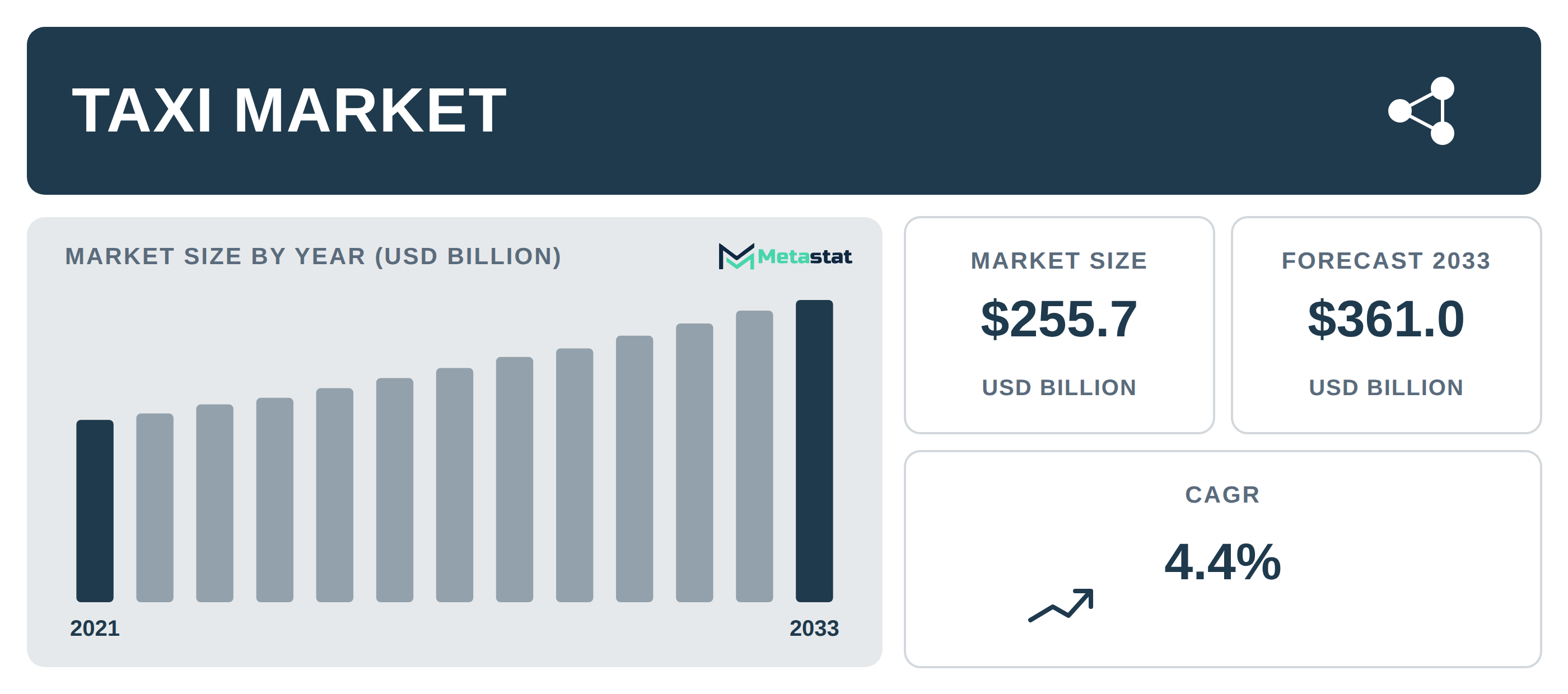
The evolution of the taxi industry reflects a dynamic response to changing consumer preferences, technological advancements, and urban challenges. The ongoing growth of the market for taxi services is shaped by various factors that affect both operators and consumers. Below are key trends that are reshaping the landscape of this sector. The full figures are in our Taxi market size and forecast report.
1. Rapid Growth of Ride-Hailing Services
Demand for ride-hailing services continues to surge as urbanization rises and consumer preferences shift. Companies like Uber Technologies, Inc. and Lyft, Inc. have been central to this transformation, offering users the convenience of booking rides through mobile applications. This trend appeals especially to millennials and younger demographics, who prioritize efficiency and ease of access in their transportation choices. Traditional taxi operators face pressure to adapt their services to remain competitive. This shift influences service dynamics and prompts operators to enhance their offerings, ensuring they meet rising consumer expectations for fast and reliable rides.
2. The Push Towards Electric Vehicle Adoption
The transition to electric vehicles is a significant trend impacting the taxi industry, driven by increasing environmental awareness and regulatory pressures. By 2033, the segment for electric taxis is projected to reach USD 70.6 billion, indicating robust demand for sustainable transportation solutions. Many taxi operators are now prioritizing the total cost of ownership when selecting vehicles, leading to the exploration of alternative financing models to facilitate the shift. This trend aligns with sustainability goals and offers a competitive advantage in attracting environmentally conscious consumers.
3. Technology Integration in Booking and Dispatch Systems
Technological advancements in mobile applications and dispatch systems are enhancing the efficiency of taxi services. The revenue for mobile application bookings is anticipated to rise significantly, indicating that consumers prefer convenient and real-time access to taxi services. This integration supports operational efficiency by enabling faster response times and optimized routing, which are crucial in a competitive environment. Companies that leverage these technologies stand to improve customer satisfaction and operational profitability, recognizing technology's importance in modern transportation.
4. Rising Interest in Corporate Taxi Contracts
Corporate taxi contracts are gaining traction as businesses seek reliable transportation solutions for employees. This demand stems from the need for timely travel logistics in urban areas, particularly where traffic congestion is prevalent. By 2033, revenue from corporate contracts is expected to reach USD 43.8 billion, highlighting the importance of organized transportation for enterprises. This trend encourages taxi operators to develop tailored service offerings that ensure reliability and safety, significantly enhancing operational efficiency for organizations.
5. Changing Consumer Preferences Toward Sustainability
Consumer preferences are increasingly leaning toward eco-friendly transportation options. The growing awareness of climate change is prompting users to seek services that align with sustainability goals, including electric and hybrid taxis. Operators are responding by investing in cleaner vehicle options and promoting the benefits of reducing carbon footprints in urban centers. This evolving dynamic reshapes consumer behavior and compels taxi services to innovate and highlight their sustainability efforts to attract a broader customer base.
6. The Effect of Rising Fuel Prices
Fluctuating fuel prices exert pressure on both consumers and taxi operators. Increased operational expenses stemming from higher fuel costs affect profitability and pricing strategies. This challenge particularly impacts ride-hailing services, where fare adjustments do not fully offset rising fuel expenses. Consequently, consumers become more cautious when opting for taxi services, seeking cost-effective alternatives. This trend leads to a slowdown in the replacement cycles of older vehicles as operators hesitate to invest in new models amid uncertain fuel price projections.
7. Enhanced Competition from Diverse Services
The market for taxi faces increasing competition from various services, including ride-sharing and corporate transportation contracts. This environment prompts operators to innovate and diversify their offerings to attract a broader customer base. Companies like Grab Holdings Limited and Bolt Technology OÜ focus on cost-efficiency and reliability, appealing to budget-conscious customers. Meanwhile, prominent players emphasize technology integration and user experience, enhancing overall service quality. The competitive landscape fosters an atmosphere of continuous improvement and adaptation, essential for success in this evolving market.
In summary, trends shaping the market for taxi services reflect broader shifts in consumer behavior, technological innovation, and sustainability priorities. Stakeholders remain agile and responsive to these dynamics to thrive in a competitive landscape.
Tags
About the Authors

LEAD ANALYST
Utkarsh Khirodkar is a Lead Market Research Analyst at MetaStat Insight, specializing in market intelligence, technology sector assessments, and competitive strategy.

ENERGY & INFRASTRUCTURE INDUSTRY CONSULTANT
Automotive and Transportation · Electronics and Semiconductor · Energy and Power · Machinery & Equipment
Saurabh Vasant Ganvir consults for Energy & Infrastructure Industry at MetaStat Insight, specializing in renewable energy, solar EPC, and electric vehicle (EV) infrastructure markets.