
Discover essential questions that buyers in the White Label Supplement Manufacturing market should ask their suppliers to ensure compliance, quality, and innovation.
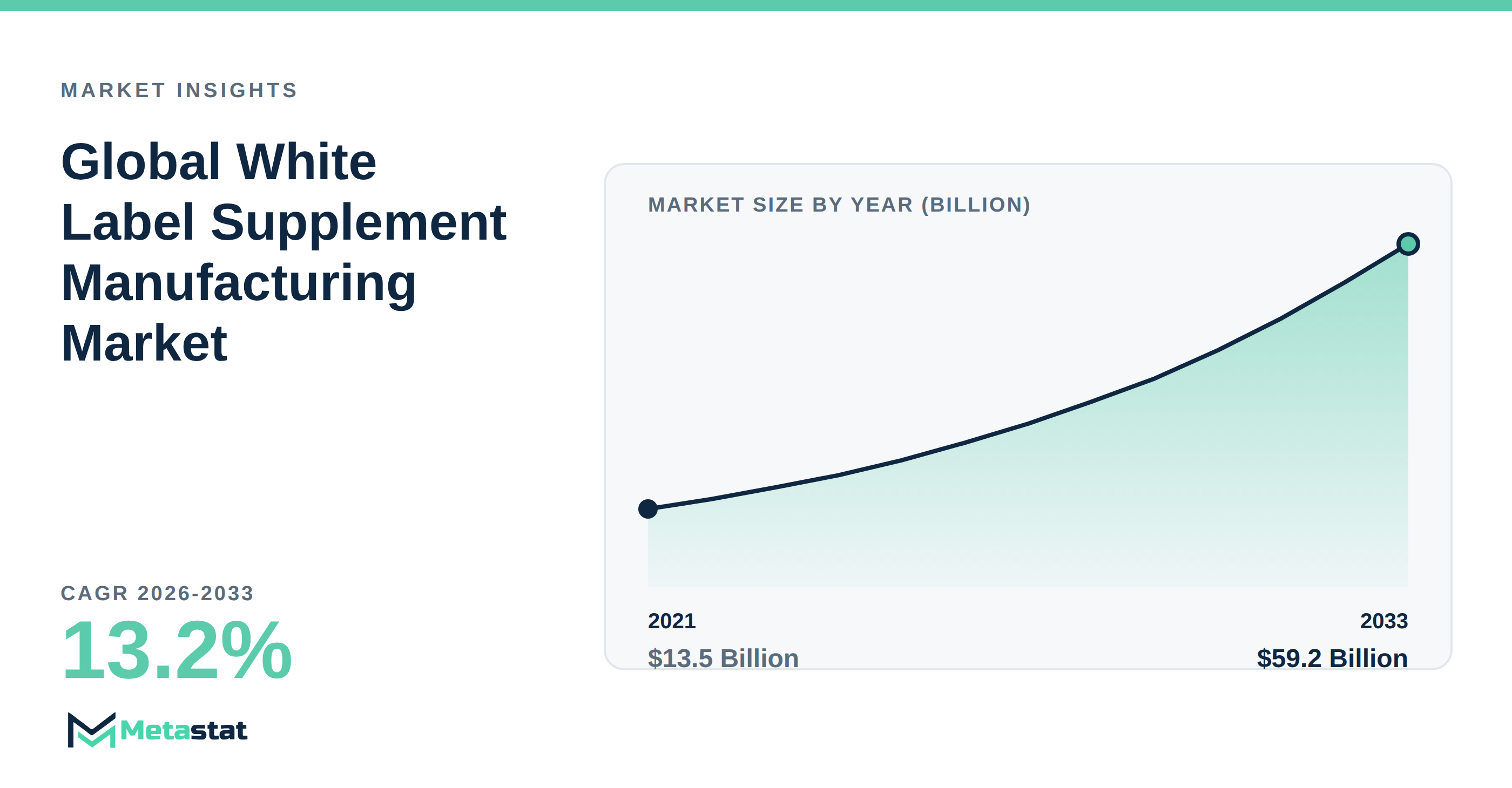
The growth of the White Label Supplement Manufacturing market shows remarkable potential, with projections indicating an increase from USD 21.9 billion in 2025 to USD 59.2 billion by 2033. This significant expansion indicates a booming interest in dietary supplements, spurred by heightened consumer health awareness and evolving lifestyle choices. While the market evolves, buyers make informed decisions when selecting suppliers. The following are critical questions that help ensure product quality and compliance while aligning with market dynamics.
1. What measures are in place for regulatory compliance?
In an environment marked by stringent regulations surrounding product safety and labeling, understanding a supplier's adherence to compliance standards is crucial. Suppliers exhibiting robust processes for meeting health and safety guidelines build consumer trust and mitigate legal risks. Buyers benefit from working with suppliers that prioritize compliance, because this streamlines the product development process and enhances responsiveness to market changes.
2. How do you ensure product quality and safety?
Quality assurance processes implemented by suppliers hold significant importance in the White Label Supplement Manufacturing market. Buyers should inquire about the supplier's approach to quality control, including sourcing ingredients, manufacturing practices, and testing protocols. Suppliers investing in rigorous quality checks are more likely to produce products that meet consumer expectations, fostering brand loyalty and encouraging sustainable growth amid increasing competition.
3. What are the lead times for production and delivery?
Understanding lead times is necessary for maintaining operational efficiency. With the White Label Supplement Manufacturing market expanding, supply chain disruptions impact delivery schedules. Buyers should discuss production timelines and logistics with suppliers to ensure they satisfy consumer demands without sacrificing quality. Suppliers with efficient logistics architectures navigate challenges effectively, leading to better overall performance in a competitive landscape.
4. How do you support product innovation?
Innovation serves because a vital component of the White Label Supplement Manufacturing market, driven by evolving consumer preferences. Buyers should evaluate suppliers' commitment to research and development. Suppliers that prioritize innovation in product formulation and delivery methods provide buyers with a competitive edge by offering differentiated products. This adaptability allows brands to capitalize on emerging trends, ensuring they remain relevant in a constantly changing marketplace.
5. What is your strategy for sustainable practices?
The increasing demand for sustainability influences consumer purchasing decisions within the market. Buyers should inquire about a supplier's dedication to eco-friendly practices and materials. Suppliers that integrate sustainability into their operations improve their market standing, because consumers tend to seek products aligned with their values. This focus on environmentally responsible practices strengthens brand loyalty and aligns supplier operations with regulatory trends favoring sustainability.
6. Can you provide insights into your supply chain resilience?
Supply chain challenges, intensified by geopolitical fragmentation and inflation, present notable risks in the White Label Supplement Manufacturing market. Buyers should assess how suppliers manage sourcing strategies and logistics to ensure reliable product availability. A resilient supply chain that employs diverse sourcing options allows suppliers to alleviate risks posed by fluctuating raw material costs. Buyers benefit from partnering with suppliers demonstrating strong supply chain management capabilities.
7. How do you adapt to changes in consumer behavior?
Market dynamics within the White Label Supplement Manufacturing sector are significantly influenced by shifts in consumer preferences. Buyers should explore how suppliers anticipate and respond to these changes. Suppliers actively engaging in understanding consumer trends are more likely to innovate effectively and meet market demands. This proactive approach enhances a buyer's ability to maintain a competitive edge in a fragmented environment.
While the White Label Supplement Manufacturing market continues to flourish, asking these critical questions enables buyers to make informed decisions when selecting suppliers. The insights gained from these inquiries not only enhance operational efficiencies but contribute to long-term strategic success. For more detailed insights, refer to the Global White Label Supplement Manufacturing Market.
Tags
About the Author

LEAD ANALYST
Utkarsh Khirodkar is a Lead Market Research Analyst at MetaStat Insight, specializing in market intelligence, technology sector assessments, and competitive strategy.