
LEAD ANALYST
Utkarsh Khirodkar is a Lead Market Research Analyst at MetaStat Insight, specializing in market intelligence, technology sector assessments, and competitive strategy.

Global White Label Supplement Manufacturing Market Size, Share, By Product Format (Powders, Tablets and Caplets, Hard Capsules, Softgels, Gummies and Chewables, Liquid Supplements and Drinks, Sachets and Stick Packs, Bars and Other Solid Formats), By Supplement Category (Vitamins and Minerals, Sports Nutrition and Performance Supplements, Protein and Meal Replacement, Herbal and Botanical Supplements, Weight Management, Beauty and Nutricosmetics, Digestive and Gut Health, Immune Health, Specialty Health Supplements), By Customer Type (Supplement and Nutrition Brands, Retail and Private-Label Brands, E-commerce and Direct-to-Consumer Brands, Distributors and Importers, Pharmacies and Healthcare Retailers), By Manufacturing Model (Ready-to-Brand / Stock Formula Manufacturing, Semi-Custom Formula Manufacturing, Fully Custom Formula Manufacturing, Contract / OEM Manufacturing), Industry Analysis, Growth, Trends, and Forecast, 2026-2033
Report ID
MSI-5093
Published
September, 2026
Updated
Pages
254 Pages
Format
Historical
Base year
Forecast
Forecast period
Report Details
Market Valuation: Valued at $21.9 Billion in 2025, projected to reach $59.2 Billion by 2033 at a 13.2% CAGR.
Dominant Segment: The Sports Nutrition and Performance Supplements segment leads the market, projected to reach USD 6.4 billion by 2033, driven by increasing athletic participation and a focus on personal health.
Geographic Lead: The Asia Pacific region is emerging as a key growth area, fueled by rising health consciousness and demand for dietary supplements among its population.
What's Inside: The report includes comprehensive competitive coverage, detailed analyses of market dynamics, and forecasts extending to 2033, providing insights into various product formats and customer types.
Emerging Trends: The shift towards personalized nutrition is reshaping product offerings, with consumers increasingly seeking tailored supplements that meet specific health needs.
Choose Your License
Global White Label Supplement Manufacturing Market
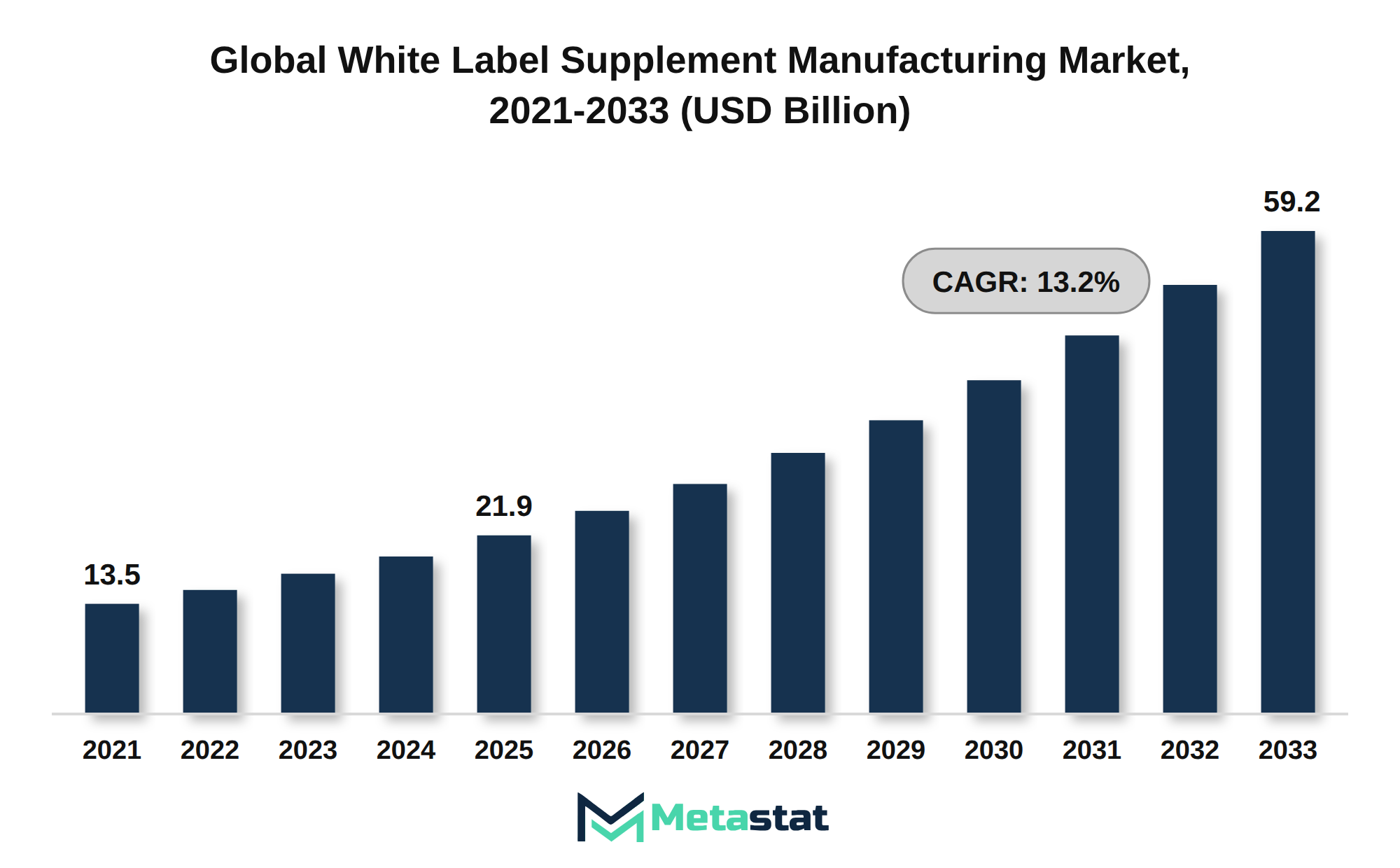
The global White Label Supplement Manufacturing market was valued at USD 21.9 billion in 2025 and is projected to reach USD 59.2 billion by 2033, growing at a CAGR of 13.2% over the forecast period.
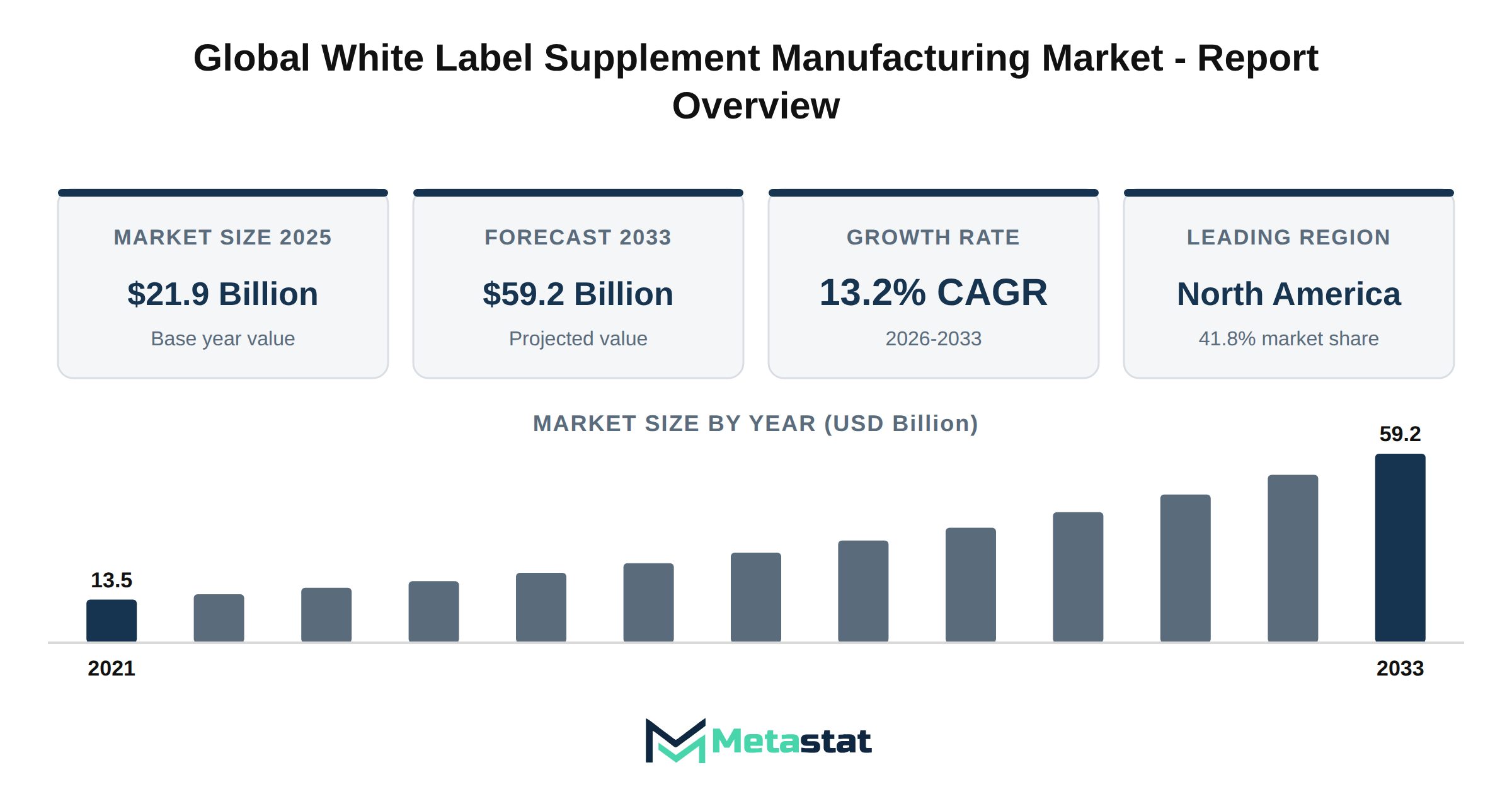
The global White Label Supplement Manufacturing market reached a value of USD 21.9 billion in 2025, following a growth trajectory from USD 13.5 billion in 2021. Projections indicate a significant increase, with expectations for the market to attain USD 59.2 billion by 2033, reflecting a compound annual growth rate (CAGR) of 13.2%. This growth is driven by rising demand for private label dietary supplements, a trend that shows no signs of slowing down.
Several factors contribute to this expanding demand. An increasing number of consumers gravitate towards personalized nutrition, leading brands to seek white label solutions that allow for flexibility in product offerings. This trend significantly benefits supplement and nutrition brands, retail and private-label brands, and e-commerce platforms that capitalize on tailored solutions for health-conscious consumers.
However, the market faces key restraints, particularly compliance bottlenecks in contract nutraceutical production. Regulatory hurdles across various regions create challenges for manufacturers, impacting their ability to scale operations efficiently. Navigating the compliance landscape, which encompasses standards set by the FDA, cGMP, FSMA, and EFSA, remains a critical factor for success within the market.
Shifts in consumer preferences significantly influence formulation demand across various delivery formats, including gummies, capsules, powders, and liquids. The growing popularity of clean-label, organic, and vegan ingredients reshapes product innovation, prompting manufacturers to adapt to these evolving consumer expectations. Companies prioritizing clean-label practices are likely to gain a competitive edge in the market.
The impact of direct-to-consumer wellness brands and e-commerce platforms on order minimums and lead times continues to grow. While these channels expand, they create new opportunities for white label supplement producers to reach broader audiences. This shift compels manufacturers to optimize their supply chains to meet the increasing demand for rapid fulfillment without compromising product quality.
Supply chain resilience is a critical aspect of the market. Challenges related to raw material sourcing and API price volatility have emerged, affecting production costs and timelines. Manufacturers adapt their strategies to ensure a consistent supply of high-quality ingredients while managing cost fluctuations.
The White Label Supplement Manufacturing market experiences significant growth driven by increasing demand for private label dietary supplements. Consumers increasingly seek personalized health solutions, prompting brands to expand their offerings through white label options. This demand is particularly evident in the sports nutrition and performance supplements segment, with a projected growth rate of 14.1% through 2033. Companies targeting health-conscious consumers benefit from adopting diverse product formats to cater to varying preferences, enhancing their market reach.
Challenges persist in the form of compliance bottlenecks within contract nutraceutical production. Regulatory requirements hinder production timelines and increase costs for manufacturers. Adherence to standards set by the FDA, cGMP, and FSMA is essential for maintaining product quality and consumer safety. Navigating these regulations demands strategic planning and investment from producers, impacting their operational efficiency and market competitiveness.
Shifts in formulation demand highlight a preference for diverse delivery formats, including gummies, capsules, powders, and liquids. The versatility of these formats appeals to different consumer segments, enhancing market reach. Companies that innovate in these areas enjoy a competitive advantage, capturing consumer interest and driving sales growth.
Clean-label, organic, and vegan ingredients increasingly shape product innovation in the market. While consumers prioritize transparency and sustainability, manufacturers adapt their formulations to include natural and ethically sourced components. This trend aligns with a growing consumer base focused on health and wellness, presenting new opportunities for brands to differentiate themselves.
Direct-to-consumer wellness brands and e-commerce platforms impact order minimums and lead times significantly. The rise of online shopping facilitates a broader reach for white label products, enabling brands to cater to niche markets effectively. Manufacturers are adjusting their supply chain strategies to accommodate the demands of online retail, optimizing inventory management and distribution processes.
Supply chain resilience faces challenges from raw material sourcing and API price volatility. Fluctuations in raw material availability create uncertainty for manufacturers, impacting production schedules and costs. Companies that develop robust sourcing strategies and diversify their supplier networks position themselves to mitigate these risks and maintain operational continuity.
The competitive landscape reflects ongoing consolidation trends among turnkey contract manufacturers. Mergers and acquisitions reshape the industry, enabling companies to enhance their capabilities, expand their product portfolios, and achieve economies of scale. These strategic moves contribute to a more competitive environment, influencing pricing strategies and market dynamics.
Private equity inflows into the supplement manufacturing sector signal confidence in future growth. Investments drive capacity expansions and fuel innovation, positioning companies to respond effectively to evolving consumer demands. This financial backing is critical for manufacturers aiming to enhance their operational capabilities and expand their market presence.
Technological advancements in automation, AI-driven formulation, and advanced packaging innovations improve contract facilities. Embracing these technologies enhances efficiency and reduces costs, enabling manufacturers to respond swiftly to market changes. The integration of advanced solutions enhances production capabilities while ensuring adherence to stringent quality standards.
Regional market opportunities arise across North America, Europe, and Asia-Pacific, with varying consumer preferences shaping demand. North America leads in market share, driven by a strong focus on health and wellness products. Europe follows closely, with increasing interest in clean and organic formulations. Asia-Pacific presents emerging growth frontiers, particularly in sectors like nootropics, gut health, and longevity supplement formulations.
Strategic roadmaps outline the long-term commercial outlook for white label supplement producers. Companies that leverage market trends and consumer insights effectively position themselves for sustained growth. Identifying and capitalizing on emerging consumer preferences remains crucial for maintaining competitive advantage within the evolving landscape.
The foundation of the white label supplement manufacturing market is built upon comprehensive end-to-end manufacturing solutions that encompass every step of the production process. These solutions include formulation development, quality assurance, and packaging, all designed to meet the specific needs of brands looking to enter the market with tailored products. The ability to provide a seamless transition from concept to market-ready product is crucial, as it allows brands to capitalize on emerging consumer trends efficiently. Companies like Stason Pharmaceutical exemplify this approach by leveraging their extensive experience in regulated drug development to enhance the quality and reliability of dietary supplements.
Central to the integrity of white label supplement manufacturing is adherence to pharmaceutical standards, which play a pivotal role in ensuring product safety and efficacy. Compliance with regulations such as ISO 22000, which focuses on food safety management systems, is essential for manufacturers aiming to establish credibility in a competitive market. These standards govern the operational processes within manufacturing facilities, ensuring that products are produced consistently and meet stringent quality benchmarks. By aligning supplement production with these rigorous pharmaceutical standards, manufacturers can enhance consumer trust and differentiate their offerings in a crowded marketplace.
The role of regulatory support cannot be overstated in facilitating market entry for new brands. Navigating the complex landscape of regulations is critical for ensuring compliance with local and international standards. Regulatory bodies, including the FDA and other relevant authorities, establish guidelines that manufacturers must follow to ensure product safety and efficacy. This regulatory framework not only protects consumers but also provides a structured pathway for brands to enter the market with confidence. Manufacturers that effectively engage with regulatory processes can streamline their operations, reduce time-to-market, and mitigate potential compliance risks that could hinder growth.
In addition to regulatory compliance, the infrastructure supporting white label supplement manufacturing is designed to accommodate a variety of product formats and delivery methods. This flexibility is vital as consumer preferences continue to evolve, with increasing demand for diverse supplement forms such as powders, capsules, and gummies. By investing in advanced manufacturing capabilities and quality control measures, companies can adapt to these changing preferences while maintaining high production standards. This adaptability allows manufacturers to respond to market dynamics swiftly, ensuring they can meet the needs of health-conscious consumers effectively.
Ultimately, the combination of robust manufacturing infrastructure, adherence to pharmaceutical standards, and proactive regulatory support creates a conducive environment for growth within the white label supplement manufacturing market. As brands seek to differentiate themselves and meet consumer demand for personalized health solutions, the ability to navigate these critical factors will determine their success in this rapidly evolving landscape.
Growing interest in personalized health and wellness solutions significantly drives the White Label Supplement Manufacturing market. Rising health consciousness, aging populations, and increasing awareness of nutritional benefits contribute to this trend. Consumers increasingly seek tailored supplements that address specific health needs, leading to higher demand for customized products.
Investment in research and development is essential for meeting this demand. Companies focusing on developing innovative, tailored formulations enhance their competitive edge within the market. The rise in e-commerce and direct-to-consumer sales channels facilitates accessibility to personalized supplements, enabling consumers to find products that align with their individual health goals.
Manufacturers capitalize on technological advancements to create efficient production processes for customized supplements. Automation and digital tools streamline operations and allow for shorter lead times, addressing consumer demand more effectively. This shift enhances operational productivity and cost efficiency, positioning firms to respond to the evolving preferences of health-conscious consumers.
Investment in health and wellness continues to expand, significantly impacting the White Label Supplement Manufacturing market. Economic growth and rising disposable incomes drive individuals and businesses to allocate more resources toward health-focused products. This trend reflects heightened consumer awareness of health benefits associated with dietary supplements. The demand for high-quality white label supplements is on the rise.
Capital investment environments play a crucial role in this dynamic. Favorable interest rates and increased venture funding enhance financial opportunities for manufacturers. With more capital available, companies invest in advanced technologies and processes, leading to improved operational efficiency and product offerings. Enhanced profitability from these investments strengthens market positioning and attracts further investment.
Changing demographic patterns, particularly aging populations, contribute to this growth. Older consumers prioritize health and wellness, driving demand for supplements tailored to their needs. The White Label Supplement Manufacturing market aligns with these shifts, offering products that cater to evolving lifestyle preferences. Urbanization trends, coupled with increased focus on personal health, further fuel this demand.
Rising investments in health and wellness, coupled with favorable economic conditions and changing demographics, create a robust environment for the White Label Supplement Manufacturing market. This expansion is expected to continue because stakeholders respond to the increasing consumer emphasis on health-oriented products and services.
Regulatory compliance presents a significant challenge within the White Label Supplement Manufacturing market, impacting operational efficiency and increasing the cost of doing business. Stricter regulations surrounding ingredient sourcing, labeling, and health claims require manufacturers to invest in extensive compliance measures. These added costs often burden smaller manufacturers, potentially limiting their ability to compete effectively. Legal mandates create an environment that necessitates rigorous adherence, which slows down product development timelines and increases the complexity of the manufacturing process.
Macroeconomic headwinds, including inflationary pressures and rising operational costs, contribute further to market constraints. Increased costs for raw materials and labor directly affect profit margins, compelling manufacturers to pass these expenses onto consumers. This situation leads to reduced demand for products in an already competitive market. Supply chain disruptions, often fueled by geopolitical instability, create challenges in sourcing ingredients and materials, thus hindering production capabilities.
Resource scarcity exacerbates these challenges, because manufacturers face difficulties securing essential raw materials necessary for supplement production. High capital investment requirements for modernizing facilities and technologies add to the financial burden, limiting opportunities for expansion and innovation. Together, these factors constrain growth potential in the White Label Supplement Manufacturing market, making it imperative for manufacturers to navigate these hurdles effectively to maintain market share and profitability.
The White Label Supplement Manufacturing market faces significant challenges due to geopolitical fragmentation and escalating trade tensions. Geopolitical fragmentation and trade tensions impact sourcing strategies and increase operational complexities, leading to potential supply chain disruptions. Trade deficits create an environment where manufacturers struggle to secure necessary raw materials at stable prices, causing fluctuations in production costs.
Technological disruptions further complicate the market landscape. Rapid advancements in manufacturing processes necessitate continuous adaptation, leading to increased research and development costs. Companies investing in complex integrations encounter interoperability friction, which slows down product deployment and innovation cycles. This scenario heightens competition among manufacturers striving to enhance their technological capabilities while managing operational expenses.
Supply chain instability arises from a combination of logistical challenges and rising input costs. Manufacturers experience margin pressures while navigating higher expenses associated with sourcing raw materials and complying with tightening global regulatory standards. Compliance overhead consumes resources, detracting from core business activities and hampering growth potential within the market.
Competitive dynamics intensify with evolving downstream demands and market saturation. Companies face substitution pressures since consumers increasingly seek alternative products that meet their health and wellness needs. This shift necessitates agile responses from manufacturers, requiring them to innovate rapidly while managing cost structures. Retaining skilled talent becomes crucial, reflecting ongoing workforce skill gaps and automation displacements within the industry.
Overall, these challenges pose significant risks and uncertainties for the White Label Supplement Manufacturing market. Companies develop strategic responses to mitigate the effects of geopolitical fragmentation, trade tensions, and supply chain instability while remaining competitive in an evolving landscape.
The growing demand for white label supplements across diverse regions presents a significant opportunity for growth within the market. Emerging markets, particularly in Asia Pacific and South America, exhibit increasing interest in dietary supplements, driven by rising health consciousness among consumers. This trend enhances the prospects for local manufacturers and brands to establish themselves in these regions, potentially leading to greater market penetration and revenue generation.
Infrastructure modernization across multiple regions contributes to the efficiency of supply chains and distribution networks, enabling faster delivery of white label products to consumers. Improved logistical frameworks facilitate market entry for new players and strengthen the competitive landscape, driving innovation and product diversity. Investments in technological disruptions, including automation and process optimization, enhance production capabilities, allowing manufacturers to respond swiftly to consumer preferences and market trends.
Digital transformation continues to reshape consumer buying behaviors, with an increase in e-commerce adoption affecting how supplements are marketed and sold. The rise of direct-to-consumer brands emphasizes the importance of digital procurement and commercial model transitions, creating new avenues for sales. This shift allows for personalized marketing strategies targeting specific consumer segments, heightening brand loyalty and driving demand within the white label supplement manufacturing market.
Strategic consolidation through mergers and acquisitions provides opportunities for companies to enhance their capabilities, expand product lines, and access new markets. Such initiatives enable firms to leverage synergies, streamline operations, and maximize overall value. Diversification into niche applications, including herbal and botanical supplements, supports revenue growth and aligns with evolving consumer preferences for natural products.
Environmental sustainability increasingly influences market dynamics. Companies adopting eco-friendly practices and aligning with environmental, social, and governance (ESG) standards attract a conscious consumer base. The commitment to sustainability reflects a broader shift in market expectations, prompting manufacturers to innovate towards greener formulations and practices. This transition addresses consumer concerns and enhances brand reputation, contributing to long-term growth in the market.
Regulatory compliance remains a critical challenge for manufacturers in the White Label Supplement Manufacturing market. The stringent requirements set forth by the FDA and adherence to cGMP (current Good Manufacturing Practices) necessitate that manufacturers implement rigorous quality control measures throughout the production process. This involves extensive documentation, ingredient sourcing verification, and compliance with labeling regulations, all of which require significant investments in both time and resources. As a result, smaller manufacturers may find it particularly difficult to navigate this landscape, potentially limiting their market presence and competitiveness. The complexities of compliance can also lead to extended product development timelines, which can hinder a manufacturer's ability to respond swiftly to changing consumer demands.
Moreover, export regulations present additional barriers to market access, impacting manufacturers' ability to reach international markets. These regulations vary significantly across regions and can include specific requirements related to ingredient approvals, labeling standards, and safety assessments. Manufacturers seeking to expand their reach into markets such as the Middle East and Southeast Asia must be prepared to navigate these diverse regulatory frameworks, which can be resource-intensive and fraught with delays. Export support services that assist with certification and documentation can be invaluable in facilitating smoother market entry, but the costs associated with compliance can still pose a challenge for many firms.
In parallel with regulatory challenges, there is a notable shift in consumer preferences towards clean label products, which emphasizes transparency and natural ingredients. This trend is driven by an increasing awareness of health and wellness, as consumers become more discerning about the products they choose to incorporate into their diets. Clean label products are perceived as healthier options, leading to heightened demand for supplements that feature simple, recognizable ingredients and minimal processing. For manufacturers, this trend necessitates a reevaluation of product formulations and sourcing strategies to align with consumer expectations.
The implications of this trend are profound for both buyers and suppliers in the White Label Supplement Manufacturing market. Manufacturers are compelled to invest in high-quality raw materials and transparent sourcing practices to meet consumer demand for clean label products. This may involve establishing stronger relationships with suppliers who can provide verified ingredient sources and engaging in more stringent quality assurance processes. Additionally, as consumers increasingly prioritize health and wellness, manufacturers must be agile in adapting their product offerings to include formulations that resonate with these values, thereby enhancing their competitive positioning in the market.
In summary, the interplay between regulatory compliance, export challenges, and evolving consumer preferences significantly shapes the landscape of the White Label Supplement Manufacturing market. Manufacturers must navigate these complexities effectively to maintain market share and respond to the dynamic demands of health-conscious consumers.
The Global White Label Supplement Manufacturing market is segmented based on Product Format, Supplement Category, Customer Type, and Manufacturing Model.
Valued at USD 5.4 billion in 2026, the Powders segment is projected to reach USD 11.5 billion by 2033, with a CAGR of 11.5% during the forecast period. This segment benefits from the rising preference for convenient and versatile supplement options among consumers. The shift towards health-conscious lifestyles and increased awareness regarding nutritional benefits significantly influences demand for powder-based supplements, particularly among fitness enthusiasts and individuals seeking weight management solutions.
Technological advancements in manufacturing processes enhance product quality and variety, driving innovation in flavoring, solubility, and ingredient selection. This evolution supports the development of specialized formulations that cater to specific dietary needs, including plant-based or organic powders. Consequently, brands that offer unique and tailored products capture consumer interest, thus promoting growth within the segment.
In addition, the Powders segment benefits from the expanding e-commerce landscape, which facilitates direct consumer access to diverse product offerings. This shift in purchasing behavior allows brands to reach a wider audience, thus enhancing their market penetration. The White Label Supplement Manufacturing market experiences a surge in opportunities driven by businesses increasingly exploring private-label solutions, enabling them to differentiate their product lines.
Regulatory compliance and safety standards remain critical in shaping the market landscape. Certifications and quality assurance processes instill consumer confidence, further driving market adoption. The increased focus on transparency in ingredient sourcing and production practices influences purchasing decisions, with consumers favoring brands that prioritize ethical and sustainable practices.
The anticipated growth within the Powders segment aligns with broader trends in the White Label Supplement Manufacturing market, reflecting a robust demand for innovative and effective dietary solutions. Overall, this sub-segment presents substantial opportunities for investment and development owing to evolving consumer preferences.
Growing consumer preference for convenient and easy-to-consume supplements drives the Tablets and Caplets segment within the White Label Supplement Manufacturing market. The format's ability to combine active ingredients while maintaining stability and efficacy appeals to various demographics, particularly among health-conscious consumers seeking tailored nutritional options.
Investment in research and development enhances innovation in tablet and caplet formulations, improving bioavailability and absorption rates. Manufacturers focus on creating specialized formulations that cater to specific health needs, including immune support and digestive health. This strategy expands market reach. Regulatory compliance is essential, with strict adherence to safety and quality standards that instills consumer confidence and enhances brand reputation.
The Tablets and Caplets segment is projected to reach USD 13.5 billion by 2033, at a CAGR of 12% during the forecast period. This growth reflects the rising trend of self-medication and the increasing popularity of dietary supplements. The focus on convenient dosing forms positions tablets and caplets favorably against liquid alternatives, appealing to consumers seeking portability and ease of use.
Strategic partnerships between manufacturers and distribution channels strengthen market presence and improve supply chain resilience. By leveraging e-commerce platforms, brands effectively reach a broader audience, capitalizing on the shift towards online purchasing. This move aligns with consumer demands for accessibility and convenience, facilitating the segment's growth within the market.
Consumer preferences for hard capsules continue to strengthen, contributing significantly to their rising popularity within the White Label Supplement Manufacturing market. This preference stems from the advantages of hard capsules, including their ability to mask unpleasant tastes and easy swallowing characteristics, appealing to a broad demographic of health-conscious consumers.
The Hard Capsules segment is projected to reach USD 10.4 billion by 2033. Factors influencing this growth include advancements in manufacturing technologies and the introduction of innovative formulations that enhance product effectiveness. The competitive landscape within the market incentivizes manufacturers to focus on the development of next-generation capsules, incorporating improved release mechanisms and functionality.
Regulatory compliance standards increasingly influence the formulation and manufacturing processes of hard capsules. Stringent regulations necessitate high-quality ingredients and manufacturing practices, which align with consumer expectations for safety and efficacy. This dynamic encourages investment in quality assurance and testing protocols, further enhancing consumer trust in the products.
Market dynamics suggest a shift toward sustainable sourcing of raw materials for hard capsules. Increasing awareness regarding environmental impact and consumer demand for eco-friendly products prompt manufacturers to explore alternatives to traditional gelatin capsules. This evolution aligns with broader industry trends toward sustainability, offering strategic opportunity windows for innovative companies.
Overall, the hard capsules segment within the White Label Supplement Manufacturing market reflects potential for growth, driven by evolving consumer preferences and technological advancements. The combination of a focus on regulatory compliance, innovative product development, and sustainable practices positions this segment advantageously for the future.
Market dynamics indicate strong growth in the Softgels segment within the White Label Supplement Manufacturing market. This segment is projected to grow at a CAGR of 13.5% during the forecast period. Factors driving this expansion include increased consumer preference for softgels due to their ease of swallowing and enhanced absorption rates compared to other formats. The evolution of softgel technology has improved product stability and bioavailability, contributing to higher demand across various consumer demographics.
End-use dynamics demonstrate a rising interest in dietary supplements, particularly among health-conscious individuals seeking convenient and effective solutions. The Softgels segment aligns well with these consumption shifts, appealing to consumers seeking effective nutritional delivery methods. While the market evolves, regulatory compliance standards will continue to play a crucial role in shaping product offerings, ensuring safety and efficacy in dietary supplements.
Investment in softgel manufacturing processes has heightened, focusing on sustainability and innovative formulations. This trend positions the Softgels segment favorably within the broader market, allowing brands to cater to diverse consumer needs while maintaining competitive pricing structures. Suppliers within the segment embrace strategic opportunities to enhance product offerings and capitalize on growing demand.
Consumer preferences for gummies and chewables in the White Label Supplement Manufacturing market reflect a shift towards more enjoyable and palatable supplement forms. This trend aligns with increasing awareness regarding health and nutrition, particularly among younger demographics who seek convenient intake methods. The segment benefits from the growing inclination towards multifunctional products, where gummies serve dual purposes, providing essential vitamins along with flavors that appeal to broader audiences.
Technological advancements facilitate the development of innovative formulations that enhance efficacy while maintaining desirable textures and tastes. Manufacturing processes have evolved to incorporate clean-label ingredients, addressing consumer demand for transparency and high-quality components. This evolution in product offerings aids brands in capturing the attention of health-conscious consumers seeking alternatives to traditional supplement forms.
Regulatory compliance shapes product development strategies within this segment. Adherence to safety standards and quality certifications builds consumer trust, enabling brands to differentiate their products in a competitive marketplace. The focus on meeting these regulatory requirements enhances brand reputation and sustains customer loyalty, which are crucial elements in the White Label Supplement Manufacturing market.
Increased investment in R&D drives continuous improvement in product offerings, ensuring that gummies and chewables align with emerging health trends. This proactive approach positions manufacturers to respond effectively to shifting consumer preferences, further expanding market opportunities. Given the rising popularity of this sub-segment, strategic investments in marketing and distribution channels enhance visibility and accessibility, contributing to overall market growth.
Consumer interest in health and wellness increasingly influences the market for liquid supplements and drinks. Shifts towards more convenient and versatile consumption formats drive adoption among various demographics. Younger consumers, particularly, favor ready-to-drink products for their portability and ease of use.
Innovation drives product evolution, with manufacturers developing enhanced formulation techniques and flavor profiles. Industry players invest in research and development to create functional beverages that address specific health concerns, including hydration, energy, and recovery. This evolution in offerings enhances consumer engagement and brand loyalty.
Regulatory compliance regarding ingredient safety and labeling standards impacts product development and market dynamics. Adherence to these regulations ensures consumer trust and satisfaction, essential for brand reputation. Manufacturers that prioritize compliance are better positioned in the competitive landscape.
Supply chain resilience remains a critical factor, driven by sourcing high-quality raw materials that directly affect production efficiency and cost structures. Fluctuations in ingredient availability or pricing pose challenges, prompting manufacturers to explore alternative sourcing strategies. Strategic partnerships with suppliers mitigate these risks, ensuring consistent product quality and availability.
The market for liquid supplements and drinks continues to expand, supported by trends favoring healthier lifestyles and preventive health measures. This segment aligns with a broader consumer shift toward functional foods and beverages, reflecting increased awareness of nutrition and wellness. Investment opportunities emerge for brands focused on innovation and market responsiveness.
Consumer interest in convenient packaging solutions drives demand for Sachets and Stick Packs within the White Label Supplement Manufacturing market. This format allows for easy portability and precise dosing, appealing to health-conscious consumers who seek hassle-free supplement consumption.
Technological advancements in packaging materials enhance product longevity and maintain ingredient integrity, supporting market growth. Innovations in biodegradable and eco-friendly materials align with sustainability trends, attracting environmentally conscious consumers.
Adoption rates among various customer types, including E-commerce and Direct-to-Consumer Brands, reflect a shift towards personalized and targeted marketing strategies. This segment's ability to cater to specific consumer preferences contributes significantly to overall market dynamics.
Regulatory compliance regarding packaging and labeling presents challenges that manufacturers navigate. Ensuring adherence to guidelines enhances product credibility and builds consumer trust within the competitive landscape.
Strategic opportunities arise from the increasing demand for on-the-go nutrition and wellness solutions. This trend positions Sachets and Stick Packs because a viable option for brands looking to capitalize on evolving consumer behaviors in the White Label Supplement Manufacturing market.
Consumer interest in Bars and Other Solid Formats reflects a growing trend towards on-the-go nutrition solutions. Increased health consciousness among consumers drives demand for convenient supplement options that offer nutritional benefits without compromising on taste or texture. This segment aligns with lifestyle preferences, allowing for easy consumption and appealing to busy individuals seeking functional snacks.
Key factors contributing to the segment's expansion include advancements in formulation technologies that enhance product quality and shelf life. Innovations in ingredient sourcing and processing techniques enable manufacturers to create bars that cater to diverse dietary needs, including plant-based, gluten-free, and low-sugar options. This evolution in product offerings attracts a broader consumer base, enhancing market penetration.
Regulatory compliance continues to impact the segment, with strict standards governing health claims and labeling. Manufacturers invest in certifications to ensure product quality and safety, enhancing brand reputation and consumer trust. Navigating these regulations requires significant resources, influencing pricing strategies and affecting profit margins.
Consumption shifts towards healthier snacking options create opportunities for new entrants and established brands alike. Strategic partnerships with retailers and online platforms facilitate broader distribution channels, enhancing visibility and accessibility. The market sees a notable increase in e-commerce adoption, enabling brands to reach consumers directly and tailor offerings based on emerging trends and preferences.
Overall, the Bars and Other Solid Formats segment of the White Label Supplement Manufacturing market presents growth potential through innovation and strategic positioning. Brands that effectively respond to consumer demands for convenient, nutritious, and compliant products strengthen their market presence and drive future success.
Growing emphasis on health and wellness drives the demand for vitamins and minerals in the White Label Supplement Manufacturing market. This segment is valued at USD 7.8 billion in 2026 and is projected to reach USD 17 billion by 2033, at a CAGR of 11.7% during the forecast period. Key factors influencing this growth include an increasing consumer focus on preventive healthcare and nutritional supplementation. The rise in chronic diseases and lifestyle-related health issues stimulates the demand for essential vitamins and minerals, encouraging consumers to pursue supplementation within their daily routine.
Technological advancements in product formulation and production processes further enhance the market. Innovations lead to the development of more effective and bioavailable supplements, appealing to health-conscious consumers. The expansion of e-commerce platforms facilitates easier access to these products, allowing consumers to purchase vitamins and minerals conveniently. Retailers and brands focusing on product differentiation and quality assurance gain an edge in this competitive landscape.
Regulatory compliance ensures the safety and efficacy of vitamins and minerals. Adherence to stringent standards builds consumer trust and drives brand loyalty. While competition intensifies, companies increasingly invest in quality certifications and transparency, further enhancing brand credibility. This focus on quality aligns with the growing consumer expectation for accountability in health and wellness products.
The vitamins and minerals segment within the White Label Supplement Manufacturing market experiences significant growth driven by health trends, technological innovations, and stringent regulatory standards. Continued investment in quality and marketing strategies will influence the future of this dynamic market segment.
Growing interest in fitness and health optimization fuels demand for Sports Nutrition and Performance Supplements within the White Label Supplement Manufacturing market. This segment is estimated to reach USD 6.4 billion by 2033, at a CAGR of 14.1% during the forecast period. Key drivers include increasing athletic participation, rising gym memberships, and heightened focus on personal health and wellness. The evolving formulation of products to include natural ingredients and innovative flavors attracts a broader consumer base.
Adoption of these supplements spans various demographics, particularly among younger consumers and athletes seeking performance enhancement. The increasing availability of these products through e-commerce platforms enhances accessibility and convenience. Market participants face challenges related to regulatory compliance and quality assurance, which require investments in certifications and testing processes to maintain market credibility.
Strategic opportunities exist in expanding product lines to include plant-based and clean-label options, aligning with consumer preferences for transparency and sustainability. Technological advancements in product formulation and marketing strategies continue to drive growth in this segment, ensuring competitiveness and relevance in the evolving market.
Interest in high-quality protein and meal replacement products drives significant growth within the White Label Supplement Manufacturing market. This segment benefits from increasing health consciousness among consumers, who seek convenient nutritional options that support active lifestyles. The market attracts consumers ranging from fitness enthusiasts to individuals aiming for weight management and overall health improvement.
Innovation in product formulations continues to shape the segment's expansion. Brands introduce diverse flavors, textures, and nutritional profiles, catering to various dietary preferences and restrictions. The rise of plant-based protein sources contributes to this evolution, appealing to vegan and vegetarian consumers. This trend influences the segment's growth, with the Protein and Meal Replacement segment projected to reach USD 9.2 billion by 2033.
Competitive pricing strategies remain essential for market players, driven by fluctuating raw material costs and consumer price sensitivity. Brands focusing on cost-efficient production methods while maintaining quality enhance their market position. Regulatory compliance around health claims and labeling influences product development and marketing strategies within the segment.
Investment in research and development promotes the evolution of innovative products. Manufacturers aligning their offerings with emerging health trends, including functional foods and personalized nutrition, capture greater market share. Consumer expectations evolve, and the Protein and Meal Replacement segment is poised for sustained growth in the White Label Supplement Manufacturing market.
Consumer trends increasingly indicate a shift towards natural and plant-based products, fueling demand for herbal and botanical supplements. This segment is projected to grow at a CAGR of 13.4% during the forecast period. The rising awareness regarding the health benefits of herbal ingredients contributes significantly to this growth. Consumers prioritize supplements derived from natural sources in their quest for health and wellness solutions.
An expanding body of research highlighting the efficacy of herbal supplements drives their adoption among various demographics. Regulatory bodies are beginning to support and promote the use of these supplements, enhancing consumer confidence. These factors align with the broader growth trajectory of the White Label Supplement Manufacturing market, where the natural supplement trend continues to gather momentum.
Manufacturers are investing in innovative product formulations that cater to evolving consumer tastes and preferences. The ability to offer customized solutions enhances competitive positioning within the market. By combining traditional herbal remedies with modern scientific validation, companies attract a growing consumer base seeking herbal and botanical options.
Increasing focus on weight management among consumers influences the demand for specialized supplements. Health-conscious individuals seek effective solutions to support their weight loss and maintenance goals. This trend increases the popularity of products formulated with effective ingredients that cater to diverse dietary preferences.
Product evolution within the weight management segment introduces innovative formulas that enhance effectiveness. Manufacturers invest in research and development to create next-generation supplements that appeal to a broader audience. This focus on continuous improvement drives competition among brands in the White Label Supplement Manufacturing market.
Regulatory compliance and certifications play a crucial role in shaping product offerings. Adherence to industry standards reassures consumers about product safety and efficacy, driving adoption among retailers and brands. Consequently, organizations that prioritize quality assurance and transparency strengthen their market presence.
Pricing volatility and cost structures significantly impact the weight management segment. Raw material sourcing fluctuations affect production costs, prompting manufacturers to optimize their supply chains for resilience. Companies that effectively manage these challenges enhance their competitive positioning.
Strategic opportunity windows arise due to consumer preferences shifting toward comprehensive health solutions. The weight management segment captures significant market share by addressing evolving consumer needs and preferences. By leveraging these insights, brands within the market position themselves for sustained growth and increased profitability.
Rising interest in beauty and health products drives demand for the Beauty and Nutricosmetics sub-segment. Consumers increasingly seek supplements that enhance not only physical appearance but overall well-being, leading to innovation and product development within this category. Significant growth in the market stems from changing consumer perceptions about health, wellness, and personal care, resulting in a surge in the adoption of beauty-related supplements.
Adoption of natural and organic ingredients continues to gain traction, influencing product formulation and marketing strategies. Brands that emphasize clean, sustainable sourcing connect strongly with consumers, contributing to increased market penetration. This trend aligns with broader consumer demand for transparency and ethical production practices.
Strategic opportunity windows emerge due to the expanding consumer base, particularly among millennials and Generation Z, who prioritize wellness and beauty in their purchasing decisions. This demographic shift encourages manufacturers to innovate and diversify their product offerings, ensuring alignment with evolving consumer preferences. The White Label Supplement Manufacturing market benefits from these emerging trends, creating a competitive landscape that encourages continuous improvement and adaptation.
Regulatory compliance and certifications play a crucial role in maintaining product integrity and consumer trust. Companies actively pursue quality assurances and adhere to industry standards, which enhance brand reputation and build customer loyalty. Effective navigation of regulatory challenges ensures sustained growth while addressing potential market headwinds.
The Beauty and Nutricosmetics sub-segment reflects a dynamic and evolving environment, characterized by a shift towards comprehensive health solutions. Market participants that successfully innovate and align with consumer values position themselves for long-term success in the competitive arena of the White Label Supplement Manufacturing market.
Growing awareness of gut health significantly influences consumer choices in supplements. Increasing concern about digestive issues prompts heightened interest in products targeting digestive and gut health. Key drivers include rising instances of gastrointestinal disorders and a growing understanding of the microbiome's role in overall health. The segment experiences strong demand due to rising health consciousness and the pursuit of comprehensive wellness solutions.
Technological advancements in formulation and delivery methods contribute to the expansion of the market. Innovative product developments, including probiotic-infused supplements and prebiotic formulations, attract consumers seeking effective digestive health solutions. The evolution of product offerings enhances consumer engagement and satisfaction.
Regulatory compliance standards play a critical role in shaping the market landscape. Manufacturers prioritize adherence to safety and efficacy guidelines, building consumer trust and confidence in their products. Increased scrutiny on ingredient sourcing and labeling practices further drives the adoption of high-quality ingredients, enhancing market credibility.
End-use dynamics reflect a shift towards preventive health measures. Consumers increasingly seek supplements that promote digestive well-being within their routine health management. This trend creates strategic opportunity windows for brands focusing on digestive and gut health products within the broader White Label Supplement Manufacturing market.
Ongoing consumption shifts indicate a preference for natural and organic ingredients. Consumers favor supplements free from artificial additives, prompting manufacturers to prioritize clean formulations that appeal to health-conscious buyers. This focus on quality reinforces brand loyalty and encourages repeat purchases.
Capital investment outlook remains positive, with brands exploring opportunities for growth in the digestive and gut health segment. Investment in research and development, alongside marketing initiatives, supports brand visibility and consumer education, ensuring sustained engagement in the evolving landscape of the market.
Growing emphasis on immune health among consumers significantly influences product development within the White Label Supplement Manufacturing market. Increasing awareness of the importance of maintaining a robust immune system drives demand for supplements specifically targeting immune support. The rise in health consciousness, accelerated by global events including pandemics, drives investment into this sub-segment.
Technological maturation enables manufacturers to formulate innovative immune health products. Advances in extraction and encapsulation technologies enhance the bioavailability of active ingredients, which attracts various customer types including supplement and nutrition brands, retailers, and e-commerce platforms. Product evolution within this segment includes the incorporation of adaptogens and probiotics, appealing to consumer preferences for comprehensive health solutions.
Regulatory compliance standards play a crucial role in shaping product offerings in the market. Certifications related to quality and efficacy reassure consumers of product safety, influencing purchasing decisions. End-use dynamics reflect a trend towards personalization, with consumers seeking tailored immune support solutions that cater to specific health needs.
Pricing volatility affects the competitive landscape, particularly with fluctuations in raw material sourcing for key ingredients. The market remains resilient, with manufacturers exploring strategic partnerships to stabilize supply chains and mitigate cost pressures. Strategic opportunity windows emerge due to consumer demand shifts towards natural and organic ingredients, aligning with a broader trend of wellness-focused consumption.
Increasing consumer awareness of overall well-being significantly influences the demand for Specialty Health Supplements. This segment encompasses a diverse range of products tailored to address specific health concerns, reflecting a growing trend towards targeted health solutions. While consumers become more health-conscious and proactive about their wellness, the market experiences a heightened focus on products that promote immune support, digestive health, and cognitive function.
Technological maturation in supplement formulation and delivery systems enhances product efficacy and consumer satisfaction. Innovations including advanced extraction methods and encapsulation techniques improve the bioavailability of active ingredients. Consumers increasingly seek products that integrate these advancements, strengthening the appeal of Specialty Health Supplements within the broader White Label Supplement Manufacturing market.
Shifts in consumption patterns highlight a growing preference for supplements that align with clean-label and natural ingredient trends. Evolving regulatory compliance standards prompt manufacturers to invest in certifications and quality assurance measures that appeal to health-conscious consumers. While brands prioritize transparency and ingredient integrity, competition intensifies within the market, driving innovation and product evolution.
The Specialty Health Supplements segment stands to benefit from strategic opportunity windows created by emerging health trends. Capital investment in research and development, coupled with robust marketing strategies, supports expansion efforts for brands entering this dynamic space. This investment focus enables companies to adapt their offerings in response to shifting consumer preferences and emerging scientific research.
Growing awareness of nutritional needs for children and pets significantly impacts the Others segment within the White Label Supplement Manufacturing market. Increasing pet ownership and spending on pet health drive demand for tailored supplements, while parents seek effective products that support their children's health and development. The expansion of e-commerce and direct-to-consumer sales channels enhances accessibility, allowing brands to reach a broader audience. Technological maturation facilitates the development of innovative formulations, including organic and allergen-free options, appealing to health-conscious consumers. Regulatory compliance standards, including those pertaining to children's health products and pet supplements, shape product development and marketing strategies. Brands prioritizing safety and quality certifications enhance consumer trust and loyalty. Shifts in consumption patterns toward preventive health measures further strengthen this segment. Emerging research highlighting the benefits of specific nutrients contributes to product evolution in this category. Strategic investment opportunities exist for brands looking to differentiate their offerings and capture new market share, particularly in the expanding health supplement sector targeting children and pets.
Driving forces behind the growth of the Supplement and Nutrition Brands segment include a heightened consumer focus on health, wellness, and nutritional supplementation. This segment is valued at USD 10.3 billion in 2026 and is projected to reach USD 22.8 billion by 2033, reflecting a CAGR of 12% during the forecast period. Increased consumer engagement with fitness, dietary supplements, and health approaches expands opportunities for brands operating in the market.
Technological advancements contribute significantly to the segment's evolution, enabling brands to innovate product formulations and enhance delivery mechanisms. Innovations in ingredient sourcing and manufacturing processes facilitate the introduction of next-generation products that align with consumer preferences. Regulatory frameworks and compliance standards further influence product formulations and marketing strategies, ensuring that brands meet consumer safety and efficacy expectations.
Adoption rates for these brands continue to rise, influenced by the proliferation of e-commerce channels, which enhance accessibility and convenience for consumers. The ongoing shift toward direct-to-consumer sales models allows brands to establish stronger connections with their customers, enhancing brand loyalty and repeat purchases. Enhanced supply chain resilience and logistics capabilities support brands in meeting fluctuating demand efficiently.
Cost structures, pricing volatility, and margin pressures remain crucial considerations for brands in this segment. Strategic pricing and cost management strategies are essential for sustaining profitability while maintaining competitive positioning in the market. Overall, the Supplement and Nutrition Brands segment reflects dynamic growth potential within the White Label Supplement Manufacturing market, driven by consumer demand for innovative, health-focused products.
Growth in the Retail and Private-Label Brands segment is driven by increasing consumer preference for personalized and branded supplements. This trend reflects a shift toward customized health solutions, prompting brands to invest in white label manufacturing options that enhance product variety and appeal. Retailers capitalize on the growing demand for dietary supplements, particularly those that align with health trends, including vitamins, minerals, and wellness products.
The Retail and Private-Label Brands segment is projected to reach USD 10.5 billion by 2033, at a CAGR of 13% during the forecast period. Expansion results from enhanced distribution channels, including e-commerce platforms, which facilitate direct access to consumers. This approach allows brands to gather insights into customer preferences, further refining their offerings and enhancing market responsiveness.
Increased competition among retailers leads to price adjustments and product innovation, driving ongoing investment in the white label supplement manufacturing market. The trend toward private-label products influences pricing strategies and impacts brand loyalty, with consumers seeking value alongside quality. The segment aligns closely with evolving consumer expectations, ensuring sustained growth in the coming years.
Significant growth in e-commerce and direct-to-consumer channels shapes the demand for white label supplements. Increasing consumer preference for online shopping influences purchasing behaviors, especially in health and wellness products. The segment is expected to reach USD 9.4 billion by 2033, highlighting its role in the white label supplement manufacturing market.
Technological advancements in online retail platforms facilitate the entry of new brands while enhancing consumer accessibility to a variety of supplement options. Direct-to-consumer brands capitalize on personalized marketing strategies, which enhance greater consumer engagement and loyalty. The ability to gather consumer data allows these brands to adapt quickly to changing preferences, further driving market expansion.
Competitive pricing strategies among e-commerce platforms create pressure to optimize product offerings and supply chain efficiencies. Direct distribution reduces costs associated with traditional retail, enabling brands to offer attractive pricing to consumers. This dynamic contributes to the overall growth outlook for the market.
Regulatory compliance remains vital, driven by brands navigating labeling, health claims, and safety standards. Adhering to these requirements enhances brand credibility and consumer trust, essential aspects in the competitive landscape of the white label supplement manufacturing market.
Strategic collaborations with logistics partners enhance supply chain resilience, ensuring timely product delivery to consumers. This operational efficiency directly influences brand reputation and customer satisfaction, critical factors for sustained growth. Overall, the e-commerce and direct-to-consumer brands segment demonstrates substantial potential within the evolving market.
Increasing demand for health and wellness products supports growth in the Distributors and Importers segment of the White Label Supplement Manufacturing market. This segment is projected to grow at a CAGR of 14% during the forecast period. Distributors and importers play a critical role in facilitating access to a wide range of supplement products across various market channels.
Shifts in consumer preferences toward convenience and diverse product offerings drive distributors and importers to broaden their portfolios. The ongoing expansion of e-commerce platforms enhances the ability of these entities to reach consumers effectively, thereby increasing sales. Compliance with evolving regulatory standards ensures that distributors maintain high-quality offerings while navigating potential challenges associated with product certifications.
Cost efficiency becomes essential for distributors, driven by the balance supply chain management and pricing volatility. Strengthened relationships with manufacturers facilitate better negotiation of terms and conditions, contributing to improved profit margins. Innovations in product formats and packaging influence the dynamics of distribution, allowing for a more customized approach that aligns with consumer expectations.
The projected growth trajectory highlights the strategic opportunity windows available for distributors and importers within the White Label Supplement Manufacturing market. While product evolution continues, these entities remain agile in adapting to emerging trends and consumer demands, ensuring sustained relevance and competitiveness in this expanding market. This adaptability will support long-term growth and investment in the sector.
Pharmacies and healthcare retailers engage in an evolving landscape characterized by increasing health consciousness among consumers. This trend influences demand for various nutritional supplements, with a notable emphasis on quality and efficacy. Retailers often prioritize stocking products that meet stringent regulatory compliance standards, ensuring that the supplements offered align with consumer expectations for safety and effectiveness.
Product evolution is significant in this segment, with an ongoing shift towards innovative formulations and convenient delivery methods. The market responds to consumer preferences for diverse supplement formats, including powders, capsules, and gummies, which facilitate greater adherence to health routines. End-use dynamics reflect a growing interest in personalized health solutions, prompting pharmacies to cater to specific consumer needs.
Cost structures and pricing volatility present challenges for pharmacies and healthcare retailers. Fluctuations in raw material prices influence overall profitability, compelling retailers to establish resilient supply chains. Strategic partnerships with manufacturers enable more favorable pricing arrangements, enhancing competitiveness in the white label supplement manufacturing market. This collaboration creates an environment conducive to offering a wider range of products tailored to unique consumer demands.
Regulatory compliance standards further shape the operational framework for pharmacies and healthcare retailers. Ensuring adherence to certifications and quality benchmarks becomes essential in maintaining consumer trust. The market's focus on transparency and traceability reflects a response to consumer demands for assurance regarding product sourcing and ingredient integrity.
Strategic opportunity windows arise from the increasing consumer shift towards health approaches. Pharmacies serving because trusted health advisors capitalize on this trend by incorporating educational resources and personalized consultations into their offerings. This integration creates additional value for consumers, reinforcing the role of pharmacies and healthcare retailers within the broader white label supplement manufacturing market.
Growing interest in health and wellness among fitness enthusiasts significantly boosts demand for supplements among gyms, fitness centers, sports organizations, and wellness and lifestyle businesses. These entities increasingly recognize the opportunity to enhance their offerings by providing high-quality nutritional products to support their customers' performance and recovery.
Investment in specialized training programs and nutritional education for trainers further strengthens the integration of supplements within fitness environments. This integration drives consumption patterns, with clients expecting to access tailored nutritional solutions alongside their fitness regimens.
Regulatory compliance and quality assurance standards play a crucial role in shaping the offerings in this segment. Meeting these standards ensures product safety and effectiveness, influencing purchasing decisions among health-conscious consumers.
In the context of the White Label Supplement Manufacturing market, companies focusing on innovation and product evolution gain a competitive advantage. Developing unique formulations and adapting to emerging trends, including plant-based or clean-label products, addresses the evolving preferences of consumers.
While the emphasis on preventative health continues to rise, partnerships between fitness facilities and supplement manufacturers become increasingly strategic. This collaboration enhances brand visibility and builds customer loyalty by providing convenient access to nutritional products that align with fitness goals.
Technological maturation in manufacturing processes facilitates the production of diverse supplement formats, meeting the specific demands of this segment. This flexibility allows businesses to cater to varying consumer preferences, creating a dynamic environment within the market.
Ultimately, the growth trajectory of this segment aligns with broader trends in health and wellness, suggesting substantial opportunities for brands operating within the White Label Supplement Manufacturing market.
Ready-to-Brand / Stock Formula Manufacturing segment is valued at USD 11.8 billion in 2026 and is projected to reach USD 26.3 billion by 2033, at a CAGR of 12.2% during the forecast period. This segment benefits from a growing inclination towards convenience among consumers, driving brands to adopt ready-to-brand solutions. The expansion of e-commerce platforms has enabled brands to efficiently market and distribute products, enhancing the segment's growth. Brands prioritizing quick entry into the market leverage stock formulas to minimize time-to-market, fulfilling the rising consumer demand for dietary supplements.
Technological advancements drive innovation in product development, enabling the creation of diverse formulations that cater to consumer preferences. Enhanced manufacturing capabilities contribute to improved product quality, appealing to a broad spectrum of consumers focused on health and wellness. While the White Label Supplement Manufacturing market evolves, the integration of sustainable practices and ingredients plays an important role in attracting eco-conscious consumers. This trend aligns with the broader movement towards sustainability across various industries.
Regulatory compliance remains a significant consideration, influencing product formulation and marketing strategies among manufacturers. Adhering to safety standards and certifications enhances brand credibility, building consumer trust. The competitive landscape for Ready-to-Brand / Stock Formula Manufacturing features several key players, intensifying the focus on innovation and quality to maintain market positioning. While brands navigate pricing volatility and margin pressures, strategic investment in research and development is essential for long-term success in the market.
Consumer preferences for personalized health solutions drive growth in the Semi-Custom Formula Manufacturing segment. This trend aligns with the increasing demand for tailored supplements that address specific health goals, enhancing the appeal of semi-custom formulations. These products cater to diverse consumer needs, including fitness, wellness, and dietary restrictions, attracting a wider audience.
Technological advancements in manufacturing processes facilitate the production of semi-custom formulations, allowing for efficient blending and personalization of supplements. Manufacturers leverage innovations to enhance product quality, ensuring compliance with regulatory standards while meeting consumer expectations for efficacy and safety. This evolution in product offerings contributes to growth in the segment.
The Semi-Custom Formula Manufacturing segment is projected to reach USD 14 billion by 2033, at a CAGR of 13% during the forecast period. This growth reflects a strategic opportunity for companies to invest in R&D, enhancing product development that aligns with market trends. Robust demand for semi-custom products positions this segment favorably within the White Label Supplement Manufacturing market.
Cost structures play a critical role in shaping the competitive landscape. Efficient supply chain management and raw material sourcing strategies enable manufacturers to mitigate pricing volatility and maintain healthy profit margins. Companies focusing on semi-custom solutions benefit from the ability to adjust formulations rapidly based on consumer feedback and market dynamics, creating a responsive manufacturing model.
Overall, the Semi-Custom Formula Manufacturing segment illustrates a shift towards adaptability and personalization in the White Label Supplement Manufacturing market, supported by evolving consumer expectations and technological enhancements. Strategic investments and innovative product strategies enhance growth prospects in this expanding market segment.
Demand for fully custom formulations within the White Label Supplement Manufacturing market is influenced by the increasing preference for personalized nutrition solutions. Brands targeting specific consumer needs drive this trend, leading to a surge in the demand for tailored products. The ongoing evolution of consumer preferences towards unique formulations significantly impacts product development strategies, compelling manufacturers to offer customized options that align with individual health goals.
Technological advancements in manufacturing processes enhance the capability to deliver high-quality, custom formulations efficiently. Innovations in ingredient sourcing and formulation techniques play a crucial role in expanding this segment. Consumer awareness regarding the benefits of tailored nutrition prompts brands to invest in research and development to create more effective products, contributing to market growth.
The Fully Custom Formula Manufacturing segment is projected to reach USD 10.5 billion by 2033. This growth reflects the competitive landscape where brands strive for differentiation through unique product offerings. A shift towards health and wellness trends, combined with the growing demand for transparency in ingredient sourcing, influences purchasing decisions across various customer demographics.
The market benefits from strategic partnerships between manufacturers and brands seeking to capitalize on the demand for customized solutions. These collaborations enhance innovation and expand distribution channels, further driving revenue growth within the fully custom formula segment. Brands seek to meet the evolving dietary preferences of consumers, positioning the market for sustained expansion and increased investment.
Contract / OEM Manufacturing serves because a critical component within the White Label Supplement Manufacturing market, projected to grow at a CAGR of 14.3% during the forecast period. Rising demand for customized and unique formulations among brands drives this growth, because businesses seek to differentiate themselves in an increasingly competitive landscape. Companies prefer outsourcing manufacturing to leverage specialized expertise, reduce overhead, and focus on core business activities, enhancing operational efficiency and brand positioning.
Technological advancements in production processes enable contract manufacturers to offer innovative solutions that align with evolving consumer preferences. This dynamic environment encourages investment in next-generation manufacturing technologies, further supporting growth prospects. Regulatory compliance shapes the operational framework, pushing companies to ensure adherence to safety and quality standards, which enhances consumer trust in the products supplied by contract manufacturers.
With the market's expansion, supply chain resilience emerges because a priority for stakeholders, influencing raw material sourcing strategies and logistics planning. The increasing complexity of product formulations leads to heightened scrutiny over ingredient sourcing, reinforcing the importance of maintaining quality throughout the supply chain. Consequently, brands that invest in robust partnerships with contract manufacturers are likely to achieve improved market penetration and revenue growth. The projected growth in the market emphasizes the strategic opportunities available for businesses that capitalize on the evolving landscape of contract manufacturing in the supplement industry.
Based on geography, the Global White Label Supplement Manufacturing market is divided into North America, Europe, Asia-Pacific, South America, Middle East, and Africa.
North America demonstrates a strong growth trajectory within the White Label Supplement Manufacturing market, driven by increasing consumer demand for health and wellness products. The region's market is projected to expand at a CAGR of 13.2% during the forecast period, reaching a market size (TAM) of USD 21.6 billion by the end of 2033. The substantial share of the global market in 2025 illustrates North America's significant contribution to overall industry performance.
Factors influencing this growth include a strong inclination towards vitamin and mineral supplementation, alongside rising interest in sports nutrition. Supplement and Nutrition Brands constitute a prominent customer segment, actively seeking innovative and high-quality formulations to meet evolving consumer preferences. Retail and Private-Label Brands are gaining traction, emphasizing the importance of brand differentiation and unique product offerings in this competitive landscape.
Infrastructure modernization enhances production capabilities and distribution efficiency. The presence of established manufacturing facilities in the United States, Canada, and Mexico supports localized production, reducing lead times and operational costs. Nearshoring initiatives further strengthen supply chain resilience, enabling companies to respond swiftly to market demands and changing consumer trends.
The regional competitive landscape highlights key players committed to innovation and quality, establishing partnerships and collaborations to enhance product portfolios. Domestic market participants leverage their expertise to tap into emerging growth segments, focusing on high-value replacement cycles and incremental growth vectors. This strategic positioning enhances market competitiveness and drives sustained revenue growth.
The European market for White Label Supplement Manufacturing experiences significant growth driven by rising consumer interest in health and wellness. Countries including Germany, France, the UK, Italy, and Spain generate demand for diverse supplement categories, particularly vitamins and minerals, which account for substantial market share.
Emerging market front-runners leverage local production capabilities to meet increasing consumer expectations for product quality and transparency. Regional manufacturers adapt to these preferences through innovative formulations and sustainable sourcing practices, positioning themselves favorably within the competitive environment.
Infrastructure modernization initiatives enhance manufacturing efficiencies and support supply chain regionalization efforts across Europe. This modernization facilitates nearshoring initiatives, enabling companies to reduce lead times and improve responsiveness to market changes.
Geopolitical factors influence market dynamics, creating opportunities for localized manufacturing densities. Trade policies and regulatory frameworks shape operational strategies, prompting suppliers to align with local compliance mandates while navigating cross-border trade corridors.
Domestic market participants, driven by cultural nuances and regional B2B buying behaviors, establish strong supplier relationships, enhancing procurement dynamics. The evolving competitive environment reflects ongoing vendor consolidation trends that impact pricing strategies and market access.
Overall, the White Label Supplement Manufacturing market in Europe demonstrates potential for continued growth through 2033, fueled by increasing consumer demand, innovative product offerings, and strategic investments in localized manufacturing capabilities.
The Asia-Pacific region holds a projected market share of 18.6% in the global White Label Supplement Manufacturing market in 2025. The increasing health consciousness among consumers in this region creates substantial demand for nutritional supplements, particularly in countries including China, Japan, and India. Growth in the sports nutrition segment experiences acceleration due to rising participation in fitness activities and sports, especially in urban areas where lifestyles are rapidly changing.
Infrastructure modernization, characterized by improved distribution networks and increased e-commerce penetration, enhances product availability across various consumer segments. Emerging markets within Southeast Asia present opportunities for expansion, driven by a youthful population that prioritizes health and wellness. Localized manufacturing initiatives support this trend, driven by brands seeking to shorten supply chains and respond promptly to consumer preferences.
Regulatory frameworks in Asia-Pacific countries are evolving to accommodate the growth of the supplement industry, with authorities implementing stricter quality and safety standards. Compliance with these regulations builds trust in local products, encouraging consumer adoption of white label supplements. The competitive environment features domestic market participants who leverage local insights and cultural nuances to tailor products effectively.
Increased foreign direct investment (FDI) flows contribute to the market's expansion, allowing international players to establish a presence in the region. This influx of investment promotes the development of innovative products that align with regional preferences, supporting the overall growth of the white label supplement segment. Continued regionalization of supply chains aligns with the shifting landscape, enhancing the market's resilience to global disruptions.
The South American market for White Label Supplement Manufacturing benefits from a growing population increasingly focused on health and wellness. Countries like Brazil and Argentina lead in demand for health supplements. Cultural nuances influence consumer preferences, driving the market toward products that align with local tastes and health needs.
Infrastructure modernization initiatives play a crucial role in enhancing distribution channels, enabling suppliers to meet rising consumer expectations efficiently. Regional players capitalize on localized manufacturing densities, which support the delivery of customized products tailored to the South American market's unique characteristics.
High-value replacement cycles within the supplement sector create opportunities for market penetration. Firms engaged in ready-to-brand solutions and custom formulations experience growth driven by consumer demand for innovative and effective products. The South American market for White Label Supplement Manufacturing is projected to expand significantly because companies navigate these evolving trends and pursue strategic entry into underpenetrated territories.
The Middle East and Africa represent an emerging segment within the White Label Supplement Manufacturing market, characterized by unique growth dynamics and specific regional attributes. A growing awareness of health and fitness among consumers in countries including Saudi Arabia, UAE, and South Africa influences demand for a diverse range of nutritional products. Gradual market expansion is driven by increasing disposable incomes and a shift toward preventive healthcare strategies.
Infrastructure modernization plays a critical role in shaping market dynamics, with investments in manufacturing facilities and distribution networks enhancing product availability. Local compliance mandates and regulatory frameworks vary across the region, necessitating adherence to quality standards for market entry. Geopolitical factors, including cross-border trade corridors, significantly impact sourcing and distribution strategies within the market.
Competitive landscapes feature a mix of established domestic companies and emerging players seeking to capture market share. Companies focus on localized procurement dynamics, tailoring products to meet cultural preferences and B2B buying behaviors. The growth of e-commerce platforms further supports market penetration, allowing brands to reach consumers directly in underpenetrated areas.
Overall, the Middle East and Africa present substantial opportunities for growth in the White Label Supplement Manufacturing market, driven by evolving consumer preferences, infrastructure improvements, and a competitive landscape that encourages innovation and responsiveness to market shifts.
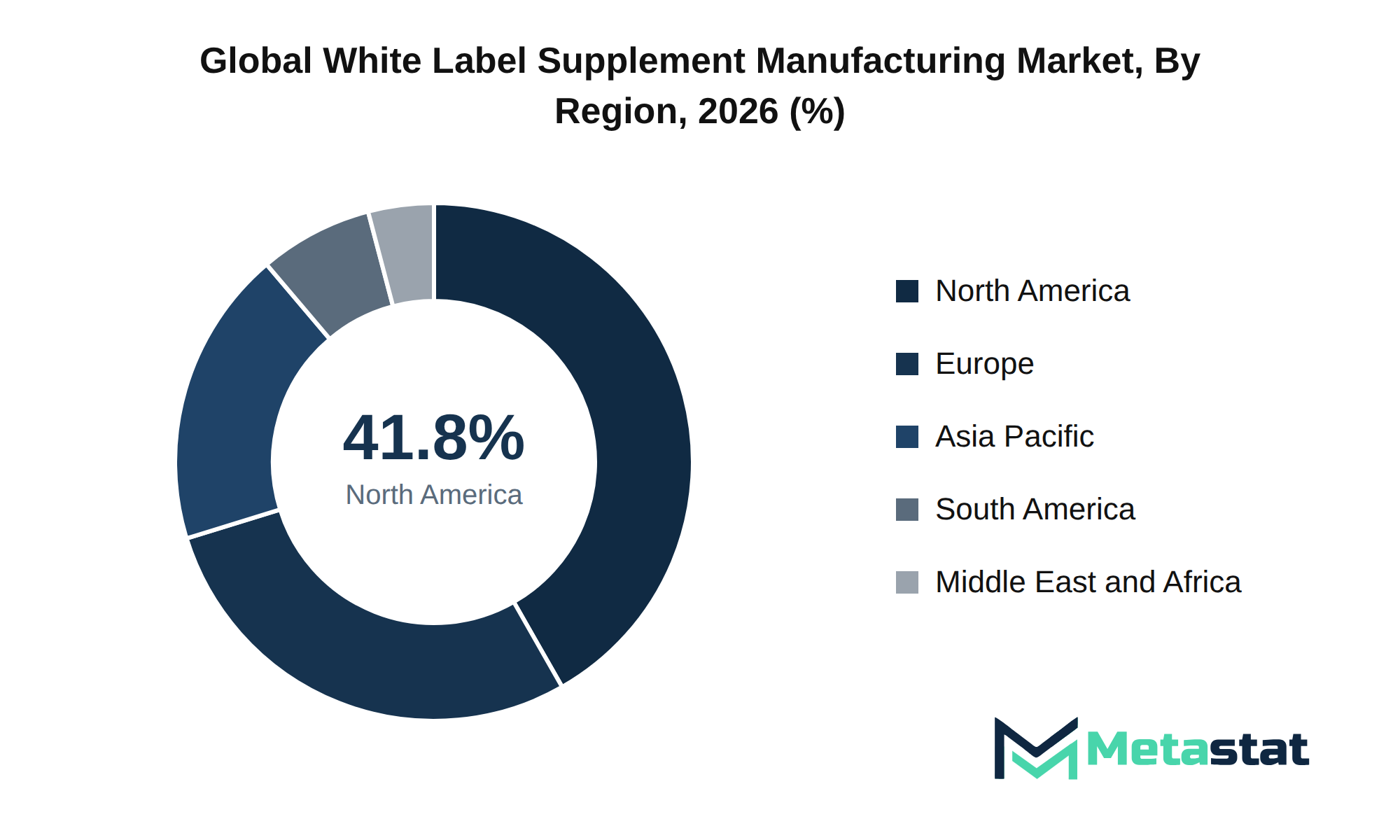
The growing trend of clean label supplements is reshaping consumer preferences within the White Label Supplement Manufacturing market. As health consciousness continues to rise, consumers are increasingly seeking products that feature natural and transparent ingredients. This movement is characterized by a heightened scrutiny of product labels, where consumers actively look for supplements devoid of artificial additives, colors, and preservatives. Millennials and Generation Z, in particular, are driving this trend, as they prioritize authenticity and transparency in product sourcing and manufacturing practices.
The demand for clean label supplements is further bolstered by the increasing prevalence of lifestyle-related diseases and the global shift towards preventive healthcare solutions. Consumers are proactively seeking ways to enhance their well-being, leading to a surge in interest for supplements such as probiotics, herbal formulations, and vitamins. These products are perceived as safer and more effective alternatives to traditional offerings, aligning with the broader movement towards natural health solutions.
As consumers become more discerning about the quality of their supplements, the preference for natural ingredients has intensified. This shift is evident across various product formats, with consumers gravitating towards formulations that emphasize recognizable and minimally processed components. The clean label movement encourages manufacturers to innovate with plant-based and allergen-free options, catering to health-conscious individuals who seek products that align with their dietary preferences.
Moreover, the integration of advanced technologies for ingredient traceability and quality assurance is essential in reinforcing consumer trust. Brands that prioritize ethical sourcing and sustainable practices are likely to capture the interest of a growing segment of eco-conscious consumers. This evolution not only enhances brand reputation but also aligns with the increasing regulatory support for cleaner formulations in the supplement industry.
Within the clean label supplements landscape, specific product formats are witnessing significant growth. Probiotics, for instance, have emerged as a high-demand segment, driven by the recognition of gut health's pivotal role in overall well-being. Clean label probiotic supplements, formulated without artificial preservatives and genetically modified organisms, cater to the needs of health-conscious consumers. The advancements in encapsulation and delivery technologies have further improved the stability and efficacy of probiotic strains, making them more appealing to a broader audience.
Herbal supplements are also experiencing a renaissance, fueled by a renewed interest in natural healing practices. Ingredients such as ashwagandha, turmeric, and ginseng are increasingly incorporated into clean label formulations, capitalizing on their perceived safety and effectiveness. Manufacturers are investing in rigorous quality control and sustainable sourcing to differentiate their products and build consumer trust, which is critical in this competitive landscape.
Overall, the rising consumer demand for clean label supplements is expected to drive innovation and diversification within the White Label Supplement Manufacturing market. As brands adapt to these evolving preferences, they will not only enhance their product offerings but also contribute to a more transparent and health-focused supplement industry.
The White Label Supplement Manufacturing market experiences significant activity driven by mergers and acquisitions, strategic consolidations, and joint ventures. Companies including Makers Nutrition, LLC and Supplement Factory White Label engage in collaborative efforts to strengthen their market positions and enhance product offerings. This strategic behaviour results in expanded capabilities and improved access to diverse customer bases.
Product differentiation remains essential for competitiveness. Firms like Aetos Life Care and Arnet Pharmaceutical focus on developing unique formulations that cater to emerging consumer preferences. Investing in proprietary technology and R&D pipelines enables these players to create barriers to entry that deter potential new entrants and establish a strong foothold within the market.
Value chain integration and procurement leverage become crucial in optimizing costs and enhancing supply chain efficiency. Companies including HiGO Biotech Group and Liquid Creations Ltd. strategically align their operations to dominate the supply chain and secure advantageous procurement terms. This positioning is vital for achieving customer retention and building brand loyalty in the market.
Future competitive dynamics will hinge on how effectively players respond to shifting consumer demands and the evolving regulatory landscape. Strategic growth vectors and defensive imperatives will shape the trajectory of companies including ENZ PHARMTECH and Nutrade, contributing to ongoing market expansion and innovation.
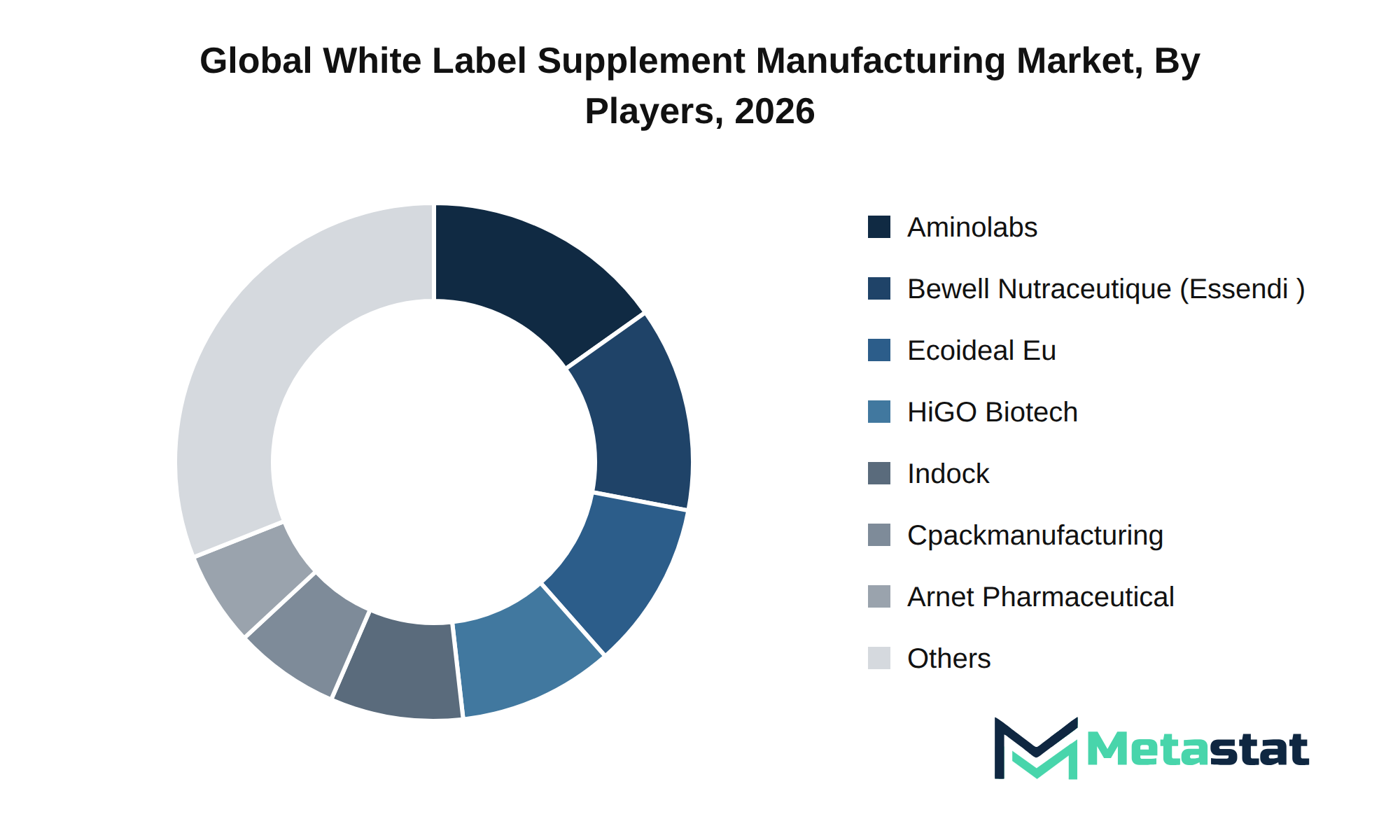
In the competitive landscape of the White Label Supplement Manufacturing market, strategic partnerships and collaborations play a pivotal role in enhancing product offerings and expanding market reach. These alliances often involve supplement brands partnering with ingredient suppliers to develop innovative formulations that meet evolving consumer preferences. For instance, collaborations between brands like Nestlé Health Science and various ingredient suppliers have resulted in the creation of high-quality, science-backed products that cater to health-conscious consumers. Such partnerships enable brands to leverage specialized knowledge and technologies, thereby enhancing their product portfolios and maintaining a competitive edge.
Moreover, companies are increasingly adopting strategies that emphasize the enhancement of their product offerings through these collaborative efforts. By forming alliances, brands can access a wider range of ingredients and technologies, allowing them to innovate and differentiate their products in a crowded marketplace. For example, NOW Foods has been known to engage in strategic partnerships that focus on sourcing unique, high-quality ingredients that align with current health trends, such as plant-based and allergen-free formulations. These strategies not only improve product diversity but also help in positioning the brand as a leader in the health and wellness sector.
The role of digital marketing and influencer partnerships is also significant in building brand loyalty within the White Label Supplement Manufacturing market. As consumers become more engaged with online content, brands are leveraging social media platforms to connect with their target audiences. Influencer partnerships, in particular, have proven effective in promoting products and fostering trust among consumers. By collaborating with trusted figures in the health and wellness community, brands can enhance their credibility and reach a broader audience. This approach not only drives sales but also cultivates a loyal customer base that values transparency and authenticity in product sourcing and formulation.
Furthermore, the integration of digital marketing strategies allows brands to gather valuable consumer insights, which can inform future product development and marketing approaches. By analyzing consumer feedback and preferences through online channels, companies can adapt their offerings to better meet market demands. This responsiveness to consumer needs is crucial in a market characterized by rapid changes in health trends and preferences.
In conclusion, the strategic partnerships and collaborations between supplement brands and ingredient suppliers are vital for enhancing product offerings and expanding market reach. These alliances, coupled with effective digital marketing and influencer strategies, play a crucial role in fostering brand loyalty and ensuring sustained competitiveness in the White Label Supplement Manufacturing market. As the landscape continues to evolve, companies that prioritize these collaborative efforts will be better positioned to capture emerging opportunities and respond to shifting consumer demands.
Market size is forecast to rise from USD 21.9 billion in 2025 to over USD 59.2 billion by 2033. The base case represents a steady growth trajectory supported by increasing consumer demand, driven by health and wellness trends. The white label supplement manufacturing market experiences upward pressure from advancements in technology, because manufacturers integrate next-generation solutions, enhancing production efficiency and product quality.
In a bullish scenario, accelerated technological integration and favorable regulatory developments lead to faster product development timelines and broader market penetration. Conversely, in a bearish outlook, potential geopolitical tensions and supply chain disruptions could hinder growth, impacting both production capabilities and market access.
Strategic capital allocation plays a critical role in the market's future, with investments directed towards infrastructure development and R&D efforts. Companies focusing on unmet enterprise needs and identifying high-growth pockets will likely strengthen their competitive position within the market. Regulatory evolution and compliance timelines will shape operational frameworks, influencing market dynamics and competitive strategies.
The white label supplement manufacturing market is poised for substantial growth, but various macroeconomic factors and strategic decisions will significantly impact its trajectory through 2033.
Technological advancements in supplement manufacturing are significantly shaping the future of the white label supplement market. The integration of automation, artificial intelligence, and data analytics in production processes enhances operational efficiency and product quality. Manufacturers are increasingly adopting advanced manufacturing technologies such as 3D printing and precision fermentation, which allow for the customization of formulations and more efficient production runs. This shift not only reduces lead times but also minimizes waste, aligning with the growing consumer demand for sustainability in product sourcing and manufacturing.
In parallel, regulatory changes are playing a pivotal role in market growth. As governments worldwide implement stricter regulations regarding ingredient transparency and safety standards, manufacturers are compelled to enhance their compliance measures. This evolution in regulations is particularly relevant to the clean label movement, where consumers are increasingly seeking products that are free from artificial additives and preservatives. Compliance with these regulations not only ensures product safety but also builds consumer trust, which is essential for brand loyalty in a competitive landscape. Companies that proactively adapt to these regulatory frameworks are likely to gain a competitive advantage, positioning themselves favorably in the market.
Looking ahead, consumer demand for clean label products is expected to continue its upward trajectory. The increasing health consciousness among consumers, particularly millennials and Generation Z, is driving a significant shift towards supplements that prioritize natural and transparent ingredients. This demographic is more likely to scrutinize product labels and seek out supplements that align with their values around health and wellness. As a result, manufacturers are reformulating their offerings to include plant-based, allergen-free, and non-GMO claims, which are becoming essential differentiators in the market.
Moreover, the rise of e-commerce platforms has democratized access to clean label supplements, enabling brands to reach a broader audience and educate consumers about the benefits of these products. Social media and digital marketing are instrumental in disseminating nutritional information and fostering a community around health and wellness, further driving consumer engagement. The demand for innovative delivery formats, such as gummies and liquid supplements, is also on the rise, as consumers seek convenient and enjoyable ways to incorporate supplements into their daily routines.
In conclusion, the interplay between technological innovations, regulatory changes, and evolving consumer preferences will significantly influence the trajectory of the white label supplement manufacturing market. Companies that embrace these trends and adapt their strategies accordingly are poised to thrive in this dynamic landscape, capitalizing on the burgeoning demand for clean label products while navigating the complexities of regulatory compliance and technological integration.
The report strategically identifies and profiles the key market players and analyses their core competencies in each sub-segment of the White Label Supplement Manufacturing market.
|
Report Attributes |
Details |
|
Study Period |
2021-2033 |
|
Base Year |
2025 |
|
Estimated Year |
2026 |
|
Forecast Period |
2026-2033 |
|
Historical Period |
2021-2025 |
|
Growth Rate |
CAGR 13.2% from 2026 to 2033 |
|
Revenue Unit |
USD billion |
|
Segmentation |
By Product Format, Supplement Category, Customer Type, Manufacturing Model, and Region |
|
By Region |
North America (By Product Format, Supplement Category, Customer Type, Manufacturing Model, and Country)
|
|
Europe (By Product Format, Supplement Category, Customer Type, Manufacturing Model, and Country)
|
|
|
Asia Pacific (By Product Format, Supplement Category, Customer Type, Manufacturing Model, and Country)
|
|
|
South America (By Product Format, Supplement Category, Customer Type, Manufacturing Model, and Country)
|
|
|
Middle East and Africa (By Product Format, Supplement Category, Customer Type, Manufacturing Model, and Country)
|
In the ever-evolving landscape of the white label supplement manufacturing market, several key companies are leading the charge. These include well-established brands known for their commitment to quality and innovation, such as Herbalife, NOW Foods, and Garden of Life. These companies not only dominate through their extensive product lines but also through their strategic partnerships and distribution networks that enhance their market presence.
Opportunities in the white label supplement market are abundant, driven by the increasing consumer demand for personalized nutrition and clean label products. The trend towards preventive healthcare is reshaping consumer preferences, pushing brands to innovate and expand their offerings. However, challenges persist, particularly concerning regulatory compliance and the need for transparency in ingredient sourcing. Brands must navigate these challenges to maintain consumer trust and loyalty, which are critical in a market where misinformation can easily sway purchasing decisions.
The distribution channels for white label supplements are diverse, reflecting the varied preferences of consumers. Online stores have emerged as a leading channel, providing convenience and a broad selection of products. This growth is fueled by the rise of e-commerce and the increasing reliance on digital platforms for health-related purchases. Additionally, supermarkets and hypermarkets remain vital, as they offer consumers the ability to physically compare products and access expert advice from staff. Specialty stores continue to cater to health-conscious consumers, providing curated selections and personalized service. Pharmacies also play a significant role, especially for supplements positioned as preventive health solutions, where trust and regulatory compliance are paramount.
As the market continues to evolve, understanding these dynamics will be essential for both buyers and suppliers. Buyers must navigate the array of options and seek out reputable brands that align with their health goals, while suppliers need to adapt to changing consumer demands and regulatory landscapes to remain competitive. The interplay between these elements will shape the future of the white label supplement manufacturing market.
Find answers to common questions about this report
The White Label Supplement Manufacturing market size was valued at USD 21.9 billion in 2025, according to the Metastat Insights study.
The White Label Supplement Manufacturing market is projected to grow at a CAGR of 13.2% during the forecast period from 2026 to 2033.
The North America White Label Supplement Manufacturing market size is estimated to reach USD 21.6 billion by 2033.
The segment of Supplement and Nutrition Brands leads the White Label Supplement Manufacturing market, with a projected value of USD 22.8 billion by 2033. This segment demonstrates a compound annual growth rate of 12 percent during the forecast period.
Growing interest in personalized health and wellness solutions significantly drives the White Label Supplement Manufacturing market. Factors including rising health consciousness, aging populations, and increasing awareness of nutritional benefits contribute to higher demand for customized products tailored to specific health needs. The rise in e-commerce and investment in research and development further enhance market growth.
North America holds the dominant share of the White Label Supplement Manufacturing market, with a projected value of USD 21.6 billion in 2033, representing 41.8 percent of the total market.
The White Label Supplement Manufacturing market faces significant challenges from regulatory compliance, which increases operational costs and complexity. macroeconomic factors like inflation and rising raw material expenses further constrain growth potential, because manufacturers struggle to maintain profit margins while navigating supply chain disruptions and geopolitical tensions.
Growing health consciousness, aging populations, and increasing awareness of nutritional benefits significantly favor product adoption in the White Label Supplement Manufacturing industry. Consumers actively seek personalized supplements that address specific health needs, driving demand for customized products. Enhanced investment in research and development further supports the creation of innovative formulations tailored to individual health goals.
The White Label Supplement Manufacturing market is estimated to reach a valuation of USD 59.2 billion by 2033.
Top players operating in the White Label Supplement Manufacturing market include Aetos Life Care, Aminolabs, Bewell Nutraceutique (Essendi Group), Makers Nutrition, LLC, Paragon Laboratories, Robinson Pharma, Inc., and Supplement Factory White Label.
The main product formats in the White Label Supplement Manufacturing market include Powders, Tablets and Caplets, Hard Capsules, Softgels, Gummies and Chewables, Liquid Supplements and Drinks, Sachets and Stick Packs, and Bars and Other Solid Formats. Each of these formats caters to different consumer preferences and needs. The report highlights that the Powders segment is particularly significant, valued at USD 5.4 billion in 2026 and projected to reach USD 11.5 billion by 2033. This diversity in product formats reflects the industry's response to the rising demand for convenient and versatile supplement options.
The white label supplement manufacturing market is seeing significant growth in several categories, particularly those that cater to specific health needs and preferences. High-growth segments include fertility supplements, which are increasingly popular due to rising awareness and employer support, and GLP-1 companion supplements that address nutrient gaps for users of weight management medications. Additionally, nootropic supplements for cognitive enhancement and gummies, which offer convenient and palatable options, are also gaining traction. These trends reflect a broader consumer shift towards specialized, condition-specific products that align with personal health goals.
The customer types driving demand in the White Label Supplement Manufacturing market include Supplement and Nutrition Brands, Retail and Private-Label Brands, E-commerce and Direct-to-Consumer Brands, Distributors and Importers, and Pharmacies and Healthcare Retailers. The growth in the Supplement and Nutrition Brands segment is particularly notable, with a projected increase from USD 10.3 billion in 2026 to USD 22.8 billion by 2033, reflecting a CAGR of 12%. This growth is fueled by a heightened consumer focus on health and wellness, increased engagement with fitness and dietary supplements, and the rise of e-commerce channels that enhance accessibility and convenience for consumers.
By 2033, the projected market shares for different regions in the White Label Supplement Manufacturing market are as follows: North America is expected to hold 41.8%, Europe 28.5%, Asia Pacific 18.6%, South America 7.1%, and the Middle East and Africa 4.1%. These figures indicate a significant contribution from North America, which is projected to be the largest market. The growth in these regions is driven by increasing consumer demand for health and wellness products and the rising popularity of private label dietary supplements.
The analysts below cover Consumer Goods research at Metastat Insights.
LEAD ANALYST
Utkarsh Khirodkar is a Lead Market Research Analyst at MetaStat Insight, specializing in market intelligence, technology sector assessments, and competitive strategy.
Last Updated: October, 2026
Enterprise zero-trust network rollouts are often slowed down by multi-cloud transit latency and proprietary hardware retirement schedules. This study provided realistic total cost of ownership models comparing cloud-delivered security edge solutions against traditional hardware refreshes. The analysis of contract renewal lengths and software maintenance fees gave us clear visibility into enterprise replacement cycles over the next three to five years.
Scaling antibody-drug conjugate manufacturing hinges on contract manufacturing availability for high-potency active ingredients. The MetaStat Insight analysis looked closely at global cleanroom slot constraints, bioconjugation batch failure rates, and supply chain redundancies between the US, Europe, and India. The supplier capability matrix proved genuinely useful for our team when mapping secondary source options across our clinical pipeline.
Floating offshore wind feasibility relies heavily on specialized installation vessel availability and port crane limits, which most broad renewable energy forecasts ignore. The report delivered a thorough analysis of dry dock capacity, mooring chain supply constraints, and raw material pricing trends for deepwater anchor installations. It served as a solid independent sanity check for our offshore project capital expenditure assumptions.
Explore related market intelligence reports worth reading alongside this one.
Starting from
$2950