
Explore essential questions for buyers in the U.S. Medicare Supplement Insurance market, informed by the latest research on coverage options, pricing, and customer satisfaction.
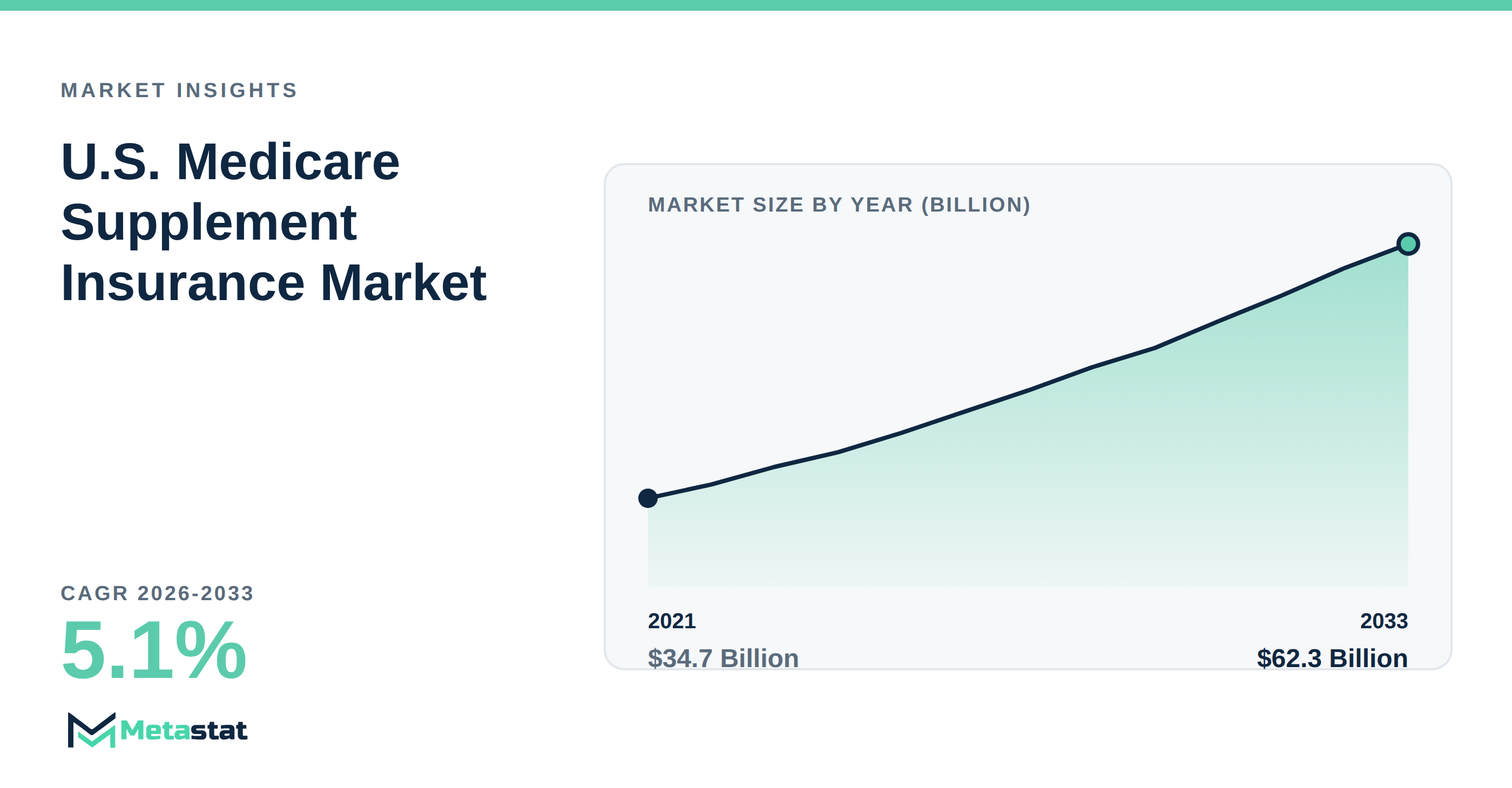
The U.S. Medicare Supplement Insurance market is on a projected trajectory to reach USD 62.3 billion by 2033, influenced by a growing aging population and increasing healthcare expenses. For buyers in this market, asking key questions when evaluating suppliers leads to informed decisions and access to better coverage options. Below are seven essential questions to consider when selecting a Medicare Supplement Insurance provider.
1. How does your coverage cater to the needs of seniors?
Understanding how a supplier’s policies reflect the unique healthcare requirements of seniors is critical. With a significant portion of the U.S. population entering retirement, insurers adjust their offerings to meet the specific needs of this demographic. Plans that offer extensive benefits, including Plan G and Plan N, are increasingly popular among consumers who prioritize comprehensive healthcare solutions. Suppliers should clearly communicate how their plans are designed to address the evolving healthcare needs of older adults, ensuring adequate coverage options that support market demand.
2. What approaches do you use for pricing and premium modifications?
Insurance pricing strategies significantly impact consumer choices. Rising healthcare costs contribute to questions around premium increases, so buyers should inquire about how suppliers plan to manage these changes. Insurers aim to strike a balance between affordability and comprehensive coverage. Understanding their pricing models, particularly regarding attained-age-rated policies, provides insights into how they meet the financial needs of seniors. This knowledge is essential for potential policyholders evaluating their affordability options.
3. How do you ensure access during open enrollment periods?
Open enrollment periods are essential for beneficiaries, allowing them to enroll in plans without the need for medical underwriting. Insurers should have specific strategies in place to enhance accessibility during these critical times, which ultimately drives participation in Medicare Supplement plans. It is vital that beneficiaries easily understand their options and navigate enrollment smoothly. A focus on enhancing access during these periods significantly impacts market dynamics, influencing both overall enrollment rates and customer retention.
4. What initiatives do you undertake to elevate customer satisfaction and retention?
In the competitive U.S. Medicare Supplement Insurance market, maintaining high levels of customer satisfaction is crucial. Insurers dedicated to building strong relationships with their policyholders and offering additional value through services tend to enjoy higher retention rates. Buyers should explore the strategies that suppliers employ to connect with their customers, including personalized service or innovative digital solutions. Effective communication of benefits and addressing the specific needs of clients enhance satisfaction and foster loyalty, which positively affects the supplier’s standing in the market.
5. How do you navigate compliance with changing regulations?
Regulatory changes significantly influence the demand for Medicare Supplement coverage. Buyers should inquire about how suppliers adapt to regulatory shifts while ensuring their products remain competitive. Navigating compliance complexities is essential for offering attractive policies that meet both market expectations and legal requirements. A supplier’s ability to incorporate regulatory considerations into their product design and marketing strategies demonstrates their commitment to consumer protection and understanding of the market landscape.
6. What strategies do you implement for effective marketing and outreach?
An effective outreach strategy is vital in attracting consumers. The U.S. Medicare Supplement Insurance market is characterized by its competitive nature, requiring suppliers to innovate their marketing approaches. Insurers should articulate how they use various channels - including agents, brokers, direct sales, and digital platforms - to enhance their reach. Understanding the effectiveness of their marketing strategies provides insights into how they connect with potential policyholders and influences overall enrollment trends.
7. How do you embrace technological advancements in your operations?
Technological integration is reshaping the U.S. Medicare Supplement Insurance market. Insurers leveraging advanced technologies, including data analytics and digital platforms, can streamline processes, improve customer experiences, and enhance operational efficiency. Buyers should inquire about how suppliers utilize technology to facilitate enrollment, improve customer service, and adapt to the evolving needs of consumers. Companies that prioritize technological advancements are positioned favorably in a competitive landscape, which translates to better offerings for policyholders.
By asking these insightful questions, buyers gain a deeper understanding of how suppliers align their policies with the demands of the U.S. Medicare Supplement Insurance market. The answers provide clarity on each supplier’s operational strategies, adaptability, and potential to cater to the needs of their clientele.
The full analysis is in U.S. Medicare Supplement Insurance Market.
Tags
About the Authors

LEAD ANALYST
Utkarsh Khirodkar is a Lead Market Research Analyst at MetaStat Insight, specializing in market intelligence, technology sector assessments, and competitive strategy.

LEAD PRINCIPAL ANALYST, PHARMA AND HEALTHCARE
Food and Beverages · Healthcare · Healthcare IT · Medical Devices
Ajay Devgire is the Lead Healthcare Analyst at MetaStat Insight, leading strategic research and market intelligence initiatives across the global healthcare domain.