
Explore the key dynamics driving the US Outbound Tourism market's transformation, including consumer preferences and technological advancements.
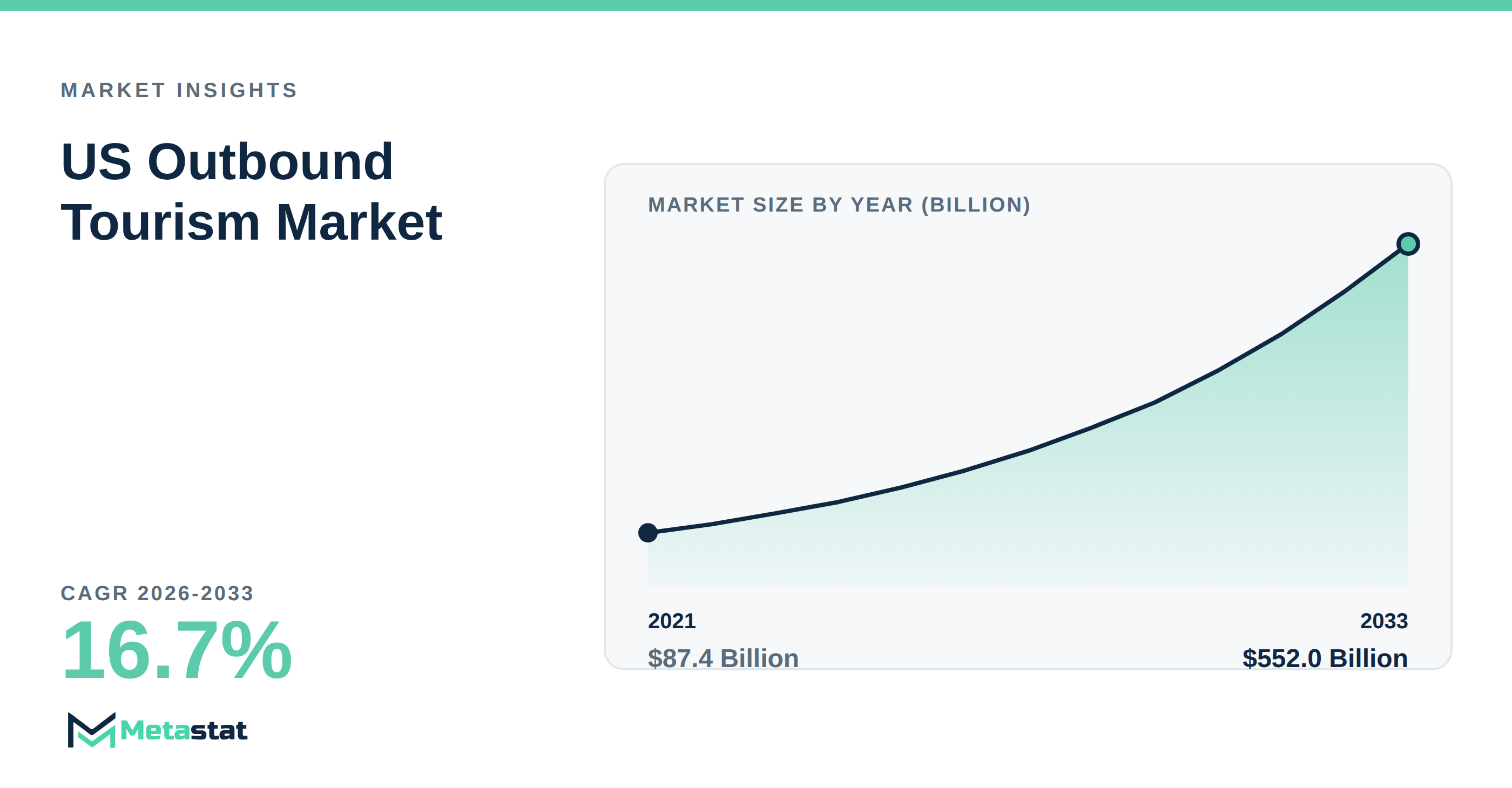
The US Outbound Tourism market is positioned for substantial growth, transitioning from a valuation of USD 160.4 billion in 2025 to an estimated USD 552 billion by 2033. This expansion reflects a compound annual growth rate (CAGR) of 16.7%. Various factors contribute to this transformation, including changing consumer preferences, advancements in technology, and the revival of international travel following the pandemic. Understanding these dynamics is vital for operators and buyers in this market.
1. Rising Demand for Unique Travel Experiences
Travelers increasingly pursue distinctive and customized experiences, shifting away from conventional packages. This trend influences operators to design offerings that cater to individual preferences, including cultural exchanges, wellness retreats, and adventure travel. The growing emphasis on authentic experiences not only enhances market penetration but encourages higher spending per trip, because consumers seek to invest in enriching travel experiences.
2. The Impact of Digital Transformation on the US Outbound Tourism Market
Technological advancements significantly reshape the US Outbound Tourism market. Enhanced online platforms and mobile applications facilitate travel planning, making it more user-friendly for consumers. This shift amplifies the demand for digital solutions within travel companies. With the market projected to see substantial growth in online travel agencies, operators prioritize investments in technology to maintain competitiveness and effectively meet customer expectations.
3. Budget-Conscious Travelers Redefining Spending
Rising inflation alters consumer behavior, forcing travelers to examine their budgets more stringently. Increased costs influence travel frequency and overall expenditure, motivating operators to adjust pricing strategies. Companies that offer competitive rates along with value-added services will be essential to retain customer loyalty. Adapting to these economic pressures empowers businesses to enhance their market resilience over time.
4. The Shift Towards Family-Oriented Travel Experiences
Families constitute a significant segment of the US Outbound Tourism market, with expectations for substantial growth in this area. This demographic seeks engaging and convenient travel options that cater to diverse age groups. Operators focusing on family-friendly experiences capitalize on this lucrative segment by providing tailored packages that promote interaction and engagement among family members during their travels.
5. Embracing Sustainability in Travel
Eco-friendly travel options gain traction because consumers prioritize sustainability. This trend influences demand for responsible tourism practices, encouraging operators to integrate sustainable initiatives into their offerings. Companies aligning their practices with eco-friendly values attract environmentally conscious travelers, strengthening their competitive standing in the market. This evolution in consumer expectations fosters long-term growth for businesses that prioritize sustainability.
6. Geopolitical Factors Influencing Travel Decisions
Geopolitical dynamics affect traveler confidence, impacting demand within the US Outbound Tourism market. Fluctuating diplomatic relations deter travelers due to uncertainties over safety and travel costs. Companies delivering assurances regarding safety and stability stand to attract more customers in this shifting environment, because addressing these concerns becomes increasingly critical to maintaining market share.
7. Growth of Niche Markets Within Outbound Tourism
Emerging niche markets, including medical tourism and volunteering opportunities, pave the way for new growth avenues. Increased consumer interest in specialized travel experiences encourages operators to diversify their offerings. By understanding these emerging trends and effectively marketing tailored experiences, businesses support sustainable growth in the US Outbound Tourism market.
Overall, the US Outbound Tourism market undergoes significant transformations driven by evolving consumer behaviors, economic pressures, and technological advancements. Adapting to these dynamics enables operators to seize emerging market opportunities and secure long-term success. For a detailed analysis, refer to the US Outbound Tourism Market.
Tags
About the Author

LEAD ANALYST
Utkarsh Khirodkar is a Lead Market Research Analyst at MetaStat Insight, specializing in market intelligence, technology sector assessments, and competitive strategy.