
Explore the evolving landscape of the Asia Pacific Super Capacitor industry, focusing on trends, technological advancements, and regional dynamics that will shape the market through 2033.
The next several years will bring significant changes to the landscape for Asia Pacific (APAC) Super Capacitor, particularly as technological advancements and increasing demand reshape how these energy solutions are applied across various industries. Understanding these shifts is vital for companies and stakeholders looking to leverage opportunities in this evolving field. For a comprehensive overview, refer to the Asia Pacific (APAC) Super Capacitor market size and forecast report.
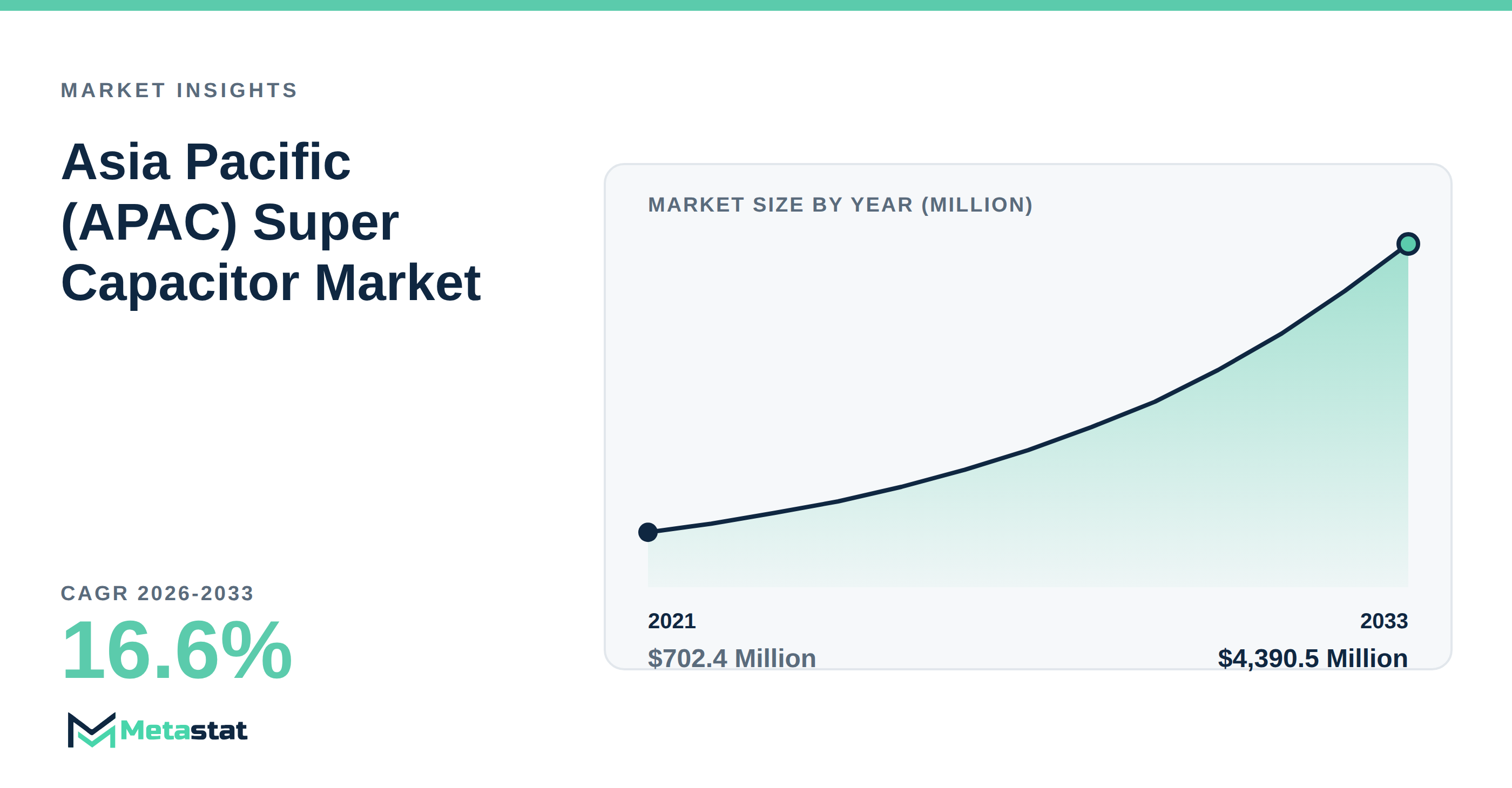
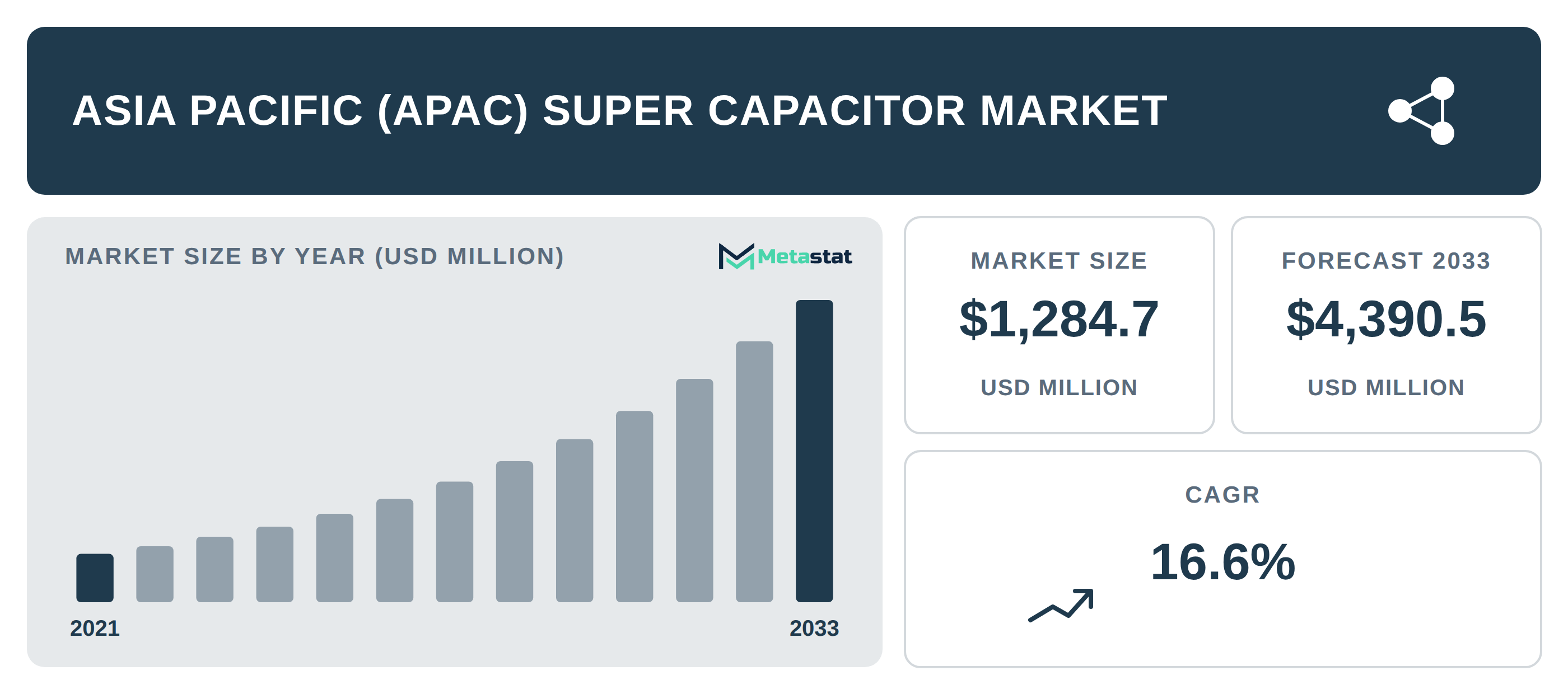
With a projected compound annual growth rate of 16.6%, the importance of Electric Double-Layer Capacitors (EDLCs) becomes clear throughout the industry. By 2033, this segment will represent a substantial portion of the sector, as manufacturers in the automotive and industrial fields focus on rapid charge and discharge capabilities. This transition reflects a broader move toward energy efficiency across these industries, driven by the need for improved vehicle performance and reduced operational costs.
Competitive pricing strategies will significantly impact the future. Automotive manufacturers are likely to negotiate bulk purchasing agreements to stabilize expenses, encouraging suppliers to provide tiered discounts based on order volume. Such arrangements optimize unit costs for buyers while ensuring a steady supply of essential components for electric vehicles (EVs) and hybrid technologies. This dynamic will lead to increased competition among suppliers, spurring innovation and reducing prices for end-users.
Meanwhile, the emergence of hybrid energy storage solutions will be critical for sectors like telecommunications and renewable energy. As hybrid supercapacitors gain traction, they will play an essential role in managing power fluctuations and ensuring a reliable energy supply in communication networks. Their capacity for rapid energy discharge aligns well with the demands for high-speed data transmission and the growing deployment of 5G technology.
Another area of focus will be the Indian segment within the broader APAC Super Capacitor environment. With a notable projected growth rate of 18.9%, India is becoming a key player, driven by substantial investments in renewable energy and a push toward electrification in transportation. As local manufacturers adopt supercapacitor technology, this growing segment highlights the potential for substantial revenue generation and deeper market penetration, especially as regulatory frameworks encourage sustainable energy solutions.
Technological advancements in supercapacitors will enhance performance characteristics, addressing the critical needs of various industries. Manufacturers are likely to invest significantly in research and development to improve energy density, cycle life, and overall efficiency. The evolution of materials used, including carbon-based and metal oxide-based solutions, promises to further improve performance metrics, making these devices formidable competitors to traditional batteries.
Focusing on sustainability, the automotive sector will continue to lead in supercapacitor adoption. The rise of EVs necessitates advanced energy storage solutions, allowing vehicles to achieve improved energy management and efficiency. This trend supports operational goals while aligning with global initiatives to reduce carbon footprints. Companies aiming to capture a share of the sector are prepared to adapt and innovate based on these evolving demands.
Nevertheless, challenges remain, particularly concerning high production costs associated with supercapacitor technologies. Manufacturers are devising strategies to mitigate these expenses while maintaining product quality and performance. Collaborations with raw material suppliers and advancements in production processes offer pathways to improve profitability without compromising standards. Addressing these cost pressures will be essential for maintaining a competitive advantage in a rapidly evolving sector.
Overall, the Asia Pacific (APAC) Super Capacitor outlook indicates a landscape poised for substantial transformation by 2033. Stakeholders remaining vigilant and adaptable in response to these trends will find themselves well-positioned to capitalize on emerging opportunities. Ultimately, the relationship between technological advancement, competitive pricing, and evolving market demands will define the direction of the supercapacitor sector in the coming years.
Tags
About the Authors

LEAD ANALYST
Utkarsh Khirodkar is a Lead Market Research Analyst at MetaStat Insight, specializing in market intelligence, technology sector assessments, and competitive strategy.

PRINCIPAL CONSULTANT - ENTERPRISE AI & EMERGING TECHNOLOGIES
Banking & Finance · Electronics and Semiconductor · Energy and Power · Healthcare IT · Information & Technology · Professional Services
Vijay Gunti is a Principal Consultant at MetaStat Insight, bringing over two decades of experience across enterprise digital transformation, technology strategy, and intelligent systems.

PRINCIPAL CONSULTANT - QUALITY SYSTEMS & COMPLIANCE
Electronics and Semiconductor · Machinery & Equipment · Professional Services
Omkar Phadtare is an Industry Consultant at MetaStat Insight, specializing in quality systems, regulatory compliance, and standards benchmarking to drive data-driven market intelligence and strategic industry research.

ENERGY & INFRASTRUCTURE INDUSTRY CONSULTANT
Automotive and Transportation · Electronics and Semiconductor · Energy and Power · Machinery & Equipment
Saurabh Vasant Ganvir consults for Energy & Infrastructure Industry at MetaStat Insight, specializing in renewable energy, solar EPC, and electric vehicle (EV) infrastructure markets.

LEAD CONSULTANT - COMMUNICATION, TELECOM, AND IT
Electronics and Semiconductor · Information & Technology · Machinery & Equipment · Professional Services
Ravindra Sathe Consultants for Communication, Telecom, and IT at MetaStat Insight. He leads the firm's industry research initiatives across telecommunications infrastructure, digital connectivity, enterprise networking, and emerging information technology domains.