
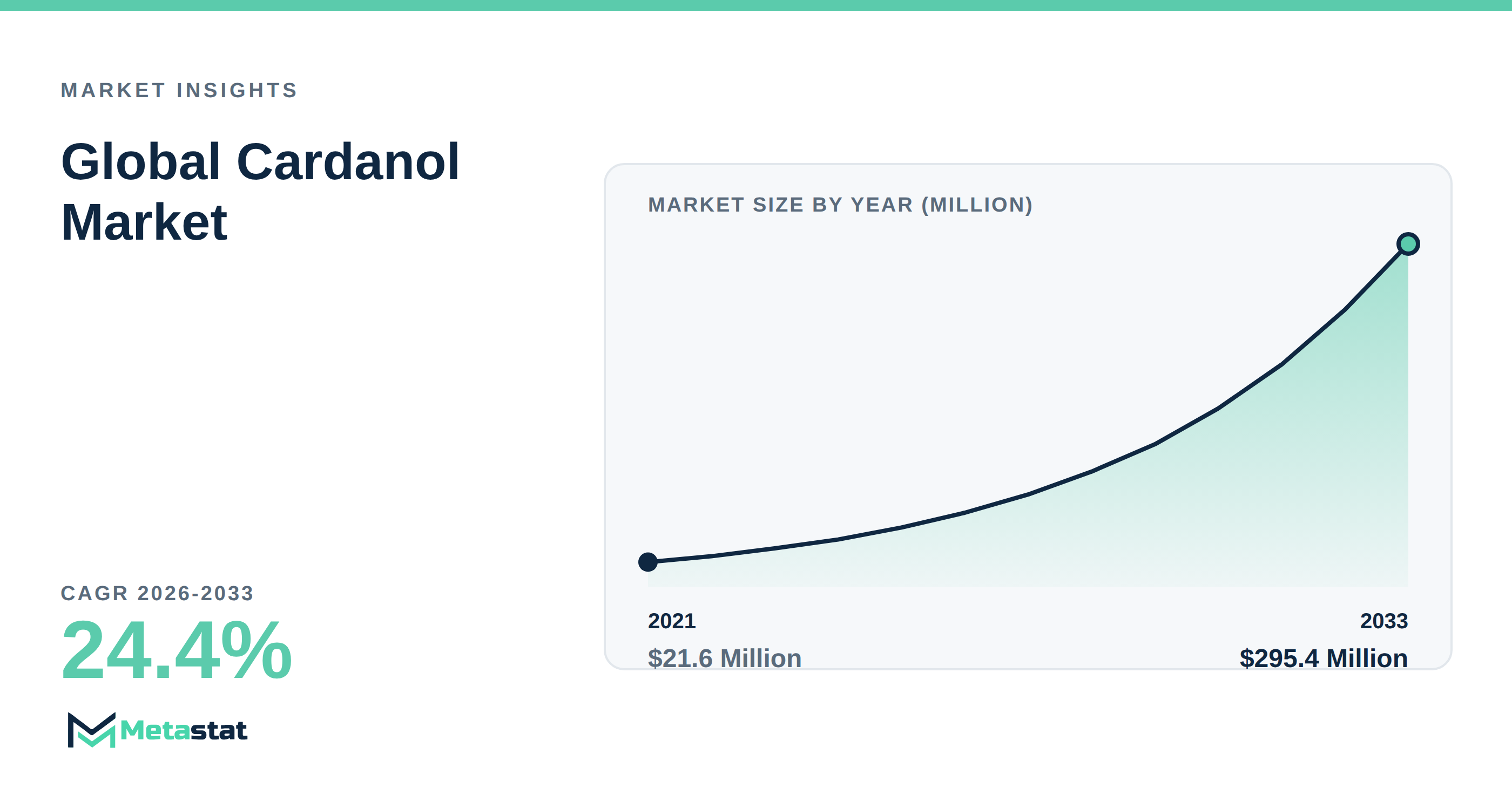
The Cardanol market is positioned for substantial growth, expected to reach USD 295.4 million by 2033. Key factors driving this growth include increasing demand for sustainable products and regulatory compliance.
The anticipated growth trajectory of the Cardanol market presents vital insights for stakeholders. By 2033, the market is expected to attain a valuation of USD 295.4 million, reflecting a notable compound annual growth rate (CAGR) of 24.4%. This growth signals a substantial shift in demand dynamics, largely influenced by increasing consumer awareness regarding environmental sustainability and urbanization trends.
What will drive demand in the Cardanol market?
Demand for Cardanol is primarily driven by the increasing trend of adopting sustainable products across various industries. Sectors including automotive and construction actively seek eco-friendly alternatives, which is evident due to their transition towards bio-based materials to meet changing consumer preferences. The rising focus on reducing carbon footprints is leading to a shift towards materials like Cardanol, derived from cashew nut shell liquid, offering a renewable solution compared to traditional petrochemicals.
Investment in Cardanol production is on the rise to align with this heightened demand. While manufacturers commit to sustainable practices, they gain competitive advantages in an evolving marketplace. This emphasis on sustainability not only enhances brand positioning but supports compliance with increasingly stringent regulatory standards.
Which regions will lead growth in the Cardanol market?
North America is projected to play a critical role in the future of the Cardanol market. With a significant market share of 34.6%, North America is anticipated to reach USD 92.4 million by 2033, maintaining a growth rate in line with the overall market. The region's strong emphasis on sustainability and environmental practices aligns well with the characteristics of Cardanol, making it a focal point for future investments.
Europe closely follows with a market share of 30.2%, reflecting similar trends in sustainability and consumer preferences. The growth in these regions highlights the importance of regulatory frameworks that favor eco-friendly materials, shaping the competitive positioning of manufacturers within the Cardanol market.
What challenges could restrict Cardanol market growth?
Despite the optimistic outlook for the Cardanol market, regulatory challenges present significant hurdles. Compliance with evolving environmental standards results in additional costs for manufacturers, impacting pricing and profit margins. Such financial strains particularly challenge smaller firms with limited resources, inhibiting overall growth rates.
Macroeconomic influences, including inflation trends and currency volatility, introduce uncertainties in the operational landscape. These conditions complicate procurement strategies and can hinder the timely availability of raw materials, negatively affecting production schedules and market competitiveness.
How will technological advancements shape the future?
Technological advancements are set to have a substantial impact on improving the Cardanol market. Innovations in production processes are enhancing quality and efficiency, encouraging adoption in various applications ranging from resins to coatings. The rise of digital transformation in procurement strategies enhances visibility and responsiveness, optimizing supply chain dynamics.
Investment in research and development is increasingly focused on high-purity Cardanol formulations, which are expected to reach USD 51.6 million by 2033. This segment's growth is driven by the demand for specialized applications in industries including automotive and construction, where performance and reliability are critical.
What opportunities exist for industry players?
The Cardanol market presents numerous opportunities for companies willing to innovate and respond to consumer demands. The growing emphasis on eco-friendly materials opens avenues for manufacturers to develop Cardanol-based products that meet diverse application needs, including adhesives, paints, and surfactants.
Strategic partnerships and mergers among players in the Cardanol market enhance technological capabilities and streamline operations, positioning firms for sustainable growth. Continuous investment in product development, particularly in high-purity and specialty-modified grades, allows companies to stay competitive while addressing evolving market needs.
In light of these prospects, stakeholders in the Cardanol market should leverage insights from this evolving landscape to inform strategic decisions. The combination of rising demand for sustainable materials, regional growth dynamics, and technological advancements sets the foundation for a significant period ahead. For a more comprehensive analysis, read the full report: Global Cardanol Market.
Tags
About the Authors

LEAD ANALYST
Utkarsh Khirodkar is a Lead Market Research Analyst at MetaStat Insight, specializing in market intelligence, technology sector assessments, and competitive strategy.

INDUSTRY CONSULTANT - CHEMICALS & ADVANCED MATERIALS
Chemicals and Materials · Machinery & Equipment · Packaging
Amit Gadhekar Consultant for Chemicals and Materials at MetaStat Insight, directing sector-specific intelligence, research, and strategic consulting across global chemical and processing markets.