
Explore how regional dynamics affect demand for digital textile printing in China, India, and Southeast Asia, highlighting key drivers and challenges.
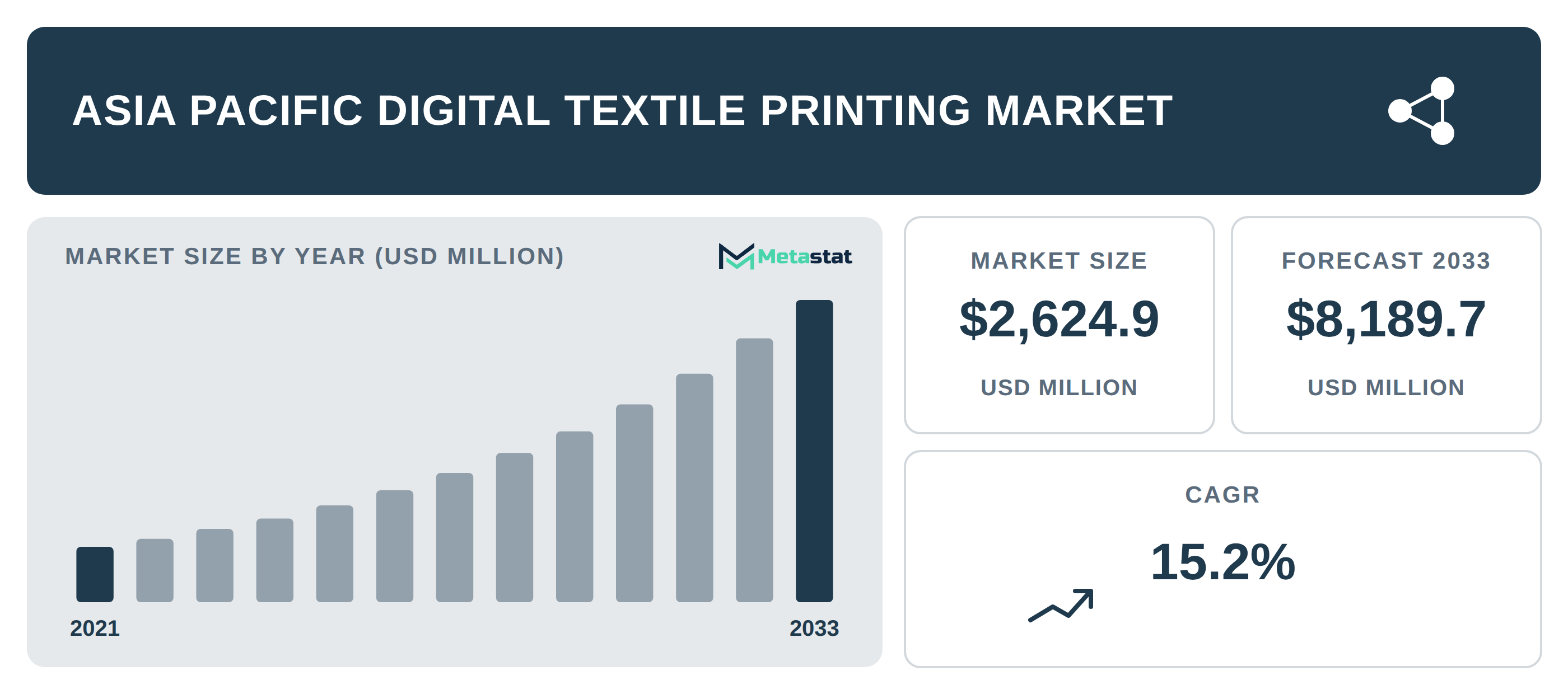
The demand for digital textile printing varies significantly across the Asia Pacific region. China and India emerge as leaders in this evolving landscape, driven by innovation and growing consumer preferences. Understanding the dynamics behind these regional differences is crucial for stakeholders looking to capitalize on opportunities within the textile printing sector. Asia Pacific Digital Textile Printing market size and forecast report
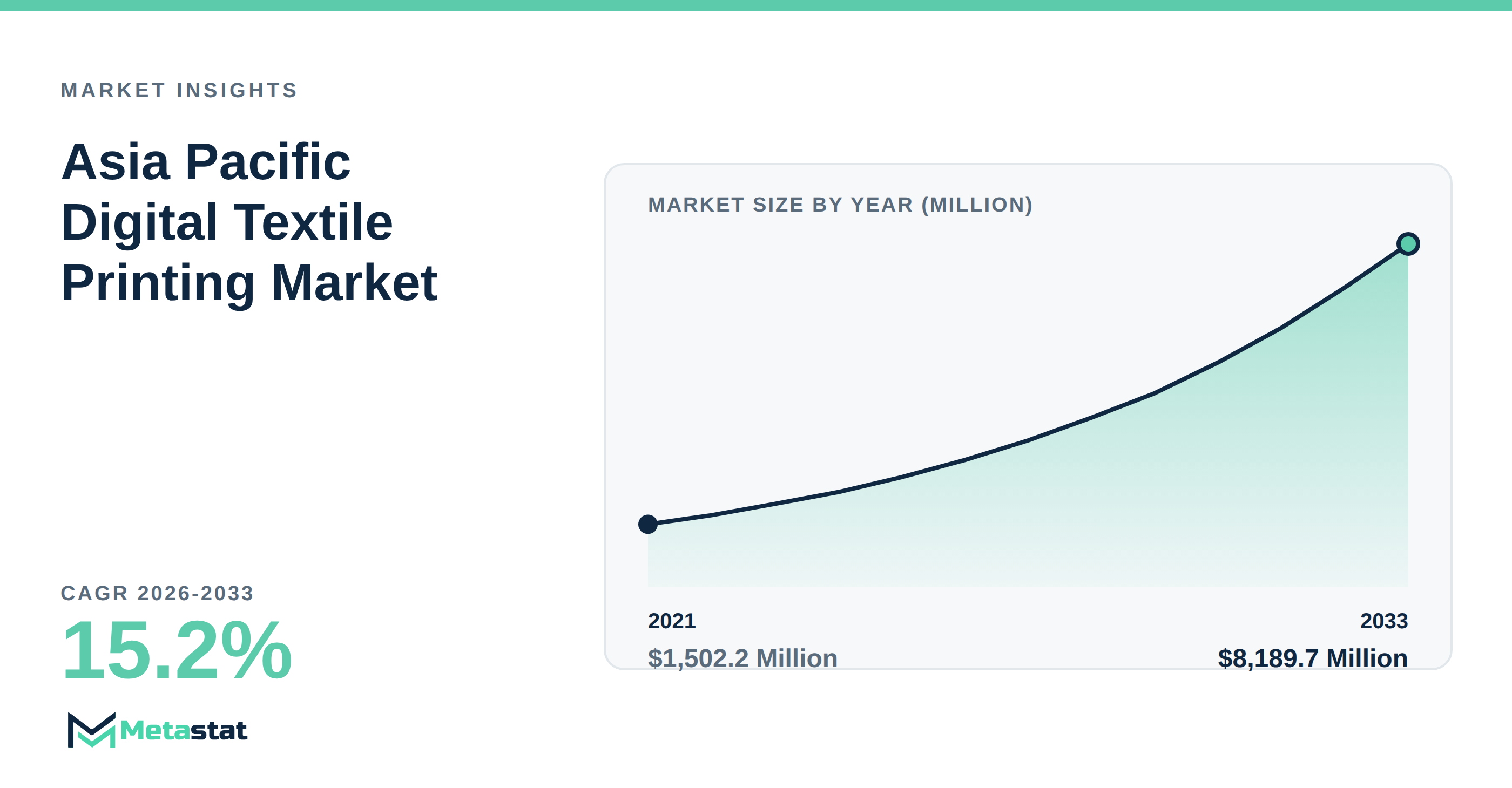
What accounts for China's dominance in digital textile printing?
China holds a commanding position in the digital textile printing landscape largely due to its extensive manufacturing capabilities and an ever-expanding consumer base. In 2026, the country is expected to generate approximately USD 1,268 million in revenue from digital textile printing, showcasing robust growth.
This demand is fueled by an appetite for customized textiles, particularly in the clothing and apparel sector where the ability to produce intricate designs is essential. The Chinese market continues to evolve, with advances in technology leading to improved production efficiency and heightened quality, enabling manufacturers to meet the increasing consumer demand. Moreover, China’s focus on sustainability aligns with global trends, making it appealing for environmentally conscious buyers.
How does India compare in the digital textile printing sector?
India is making significant strides in the digital textile printing arena, with anticipated revenue of USD 1,936 million by 2033. The Indian market is characterized by a strong emphasis on sustainable practices and digital transformation, fostering the adoption of innovative printing solutions.
Manufacturers in India increasingly focus on eco-friendly materials and processes within a broader commitment to sustainability. This commitment aligns with consumers who seek environmentally responsible options in their purchasing decisions. The growth in India is propelled by rising disposable incomes, which enable families to invest in quality, custom-designed textiles. This evolving landscape positions India as a critical player in the market for Asia Pacific digital textile printing.
What factors contribute to the lag in Southeast Asia's digital textile printing demand?
Southeast Asia presents a mixed picture. While it is seeing growth, the region lags behind giants like China and India. Several factors contribute to this slower progression; infrastructure challenges and varying levels of technological adoption create barriers for many manufacturers. Significant potential exists in the region due to its growing manufacturing capabilities, but firms face hurdles in scaling operations effectively.
Competition from established players in China and India makes it tough for Southeast Asian companies to carve out their niche. Nonetheless, the ongoing adoption of digital printing technologies across diverse applications suggests a promising opportunity for growth. As local manufacturers work to enhance their operations and address market needs, the region's position could improve considerably over time.
What role does technological advancement play in regional demand?
Technological advancements significantly shape the demand for digital textile printing. Innovations, including single-pass printing technology and the implementation of pigment inks, streamline production processes, positively impacting operational efficiency. These advancements are particularly relevant in China and India, where firms invest heavily to stay competitive.
Producing high-quality prints with faster turnaround times proves essential for manufacturers to meet the growing consumer appetite for customized textiles. Regions that effectively leverage these technologies enhance their competitive edge, leading to pronounced differences in demand across Asia Pacific.
What are the implications for businesses looking to enter the market?
Entering the market for Asia Pacific digital textile printing requires a nuanced understanding of regional dynamics. Companies recognize the distinct advantages that China and India possess, including advanced manufacturing capabilities and a strong emphasis on sustainability. By aligning their offerings with local consumer preferences and investing in technological innovations, businesses position themselves for success in these markets.
Conversely, Southeast Asia presents both challenges and opportunities. Firms looking to penetrate this market should focus on building robust supply chains and enhancing production capabilities to remain competitive. A solid grasp of the unique characteristics of each region will be vital for stakeholders aiming to capitalize on the evolving landscape of digital textile printing.
Tags
About the Authors

LEAD ANALYST
Utkarsh Khirodkar is a Lead Market Research Analyst at MetaStat Insight, specializing in market intelligence, technology sector assessments, and competitive strategy.

INDUSTRY CONSULTANT - CHEMICALS & ADVANCED MATERIALS
Chemicals and Materials · Machinery & Equipment · Packaging
Amit Gadhekar Consultant for Chemicals and Materials at MetaStat Insight, directing sector-specific intelligence, research, and strategic consulting across global chemical and processing markets.