
Explore the contrasting dynamics of the Port Services market as the Asia Pacific region outpaces North America in growth and innovation.
The Port Services market demonstrates notable regional divergence, especially between the Asia Pacific and North American regions. By 2025, the global market reached a valuation of USD 63.1 billion, with Asia Pacific commanding a significant market share of 45.3%. In contrast, North America accounts for 16.9%. Understanding the factors contributing to this gap highlights the strategic opportunities available within these regions.
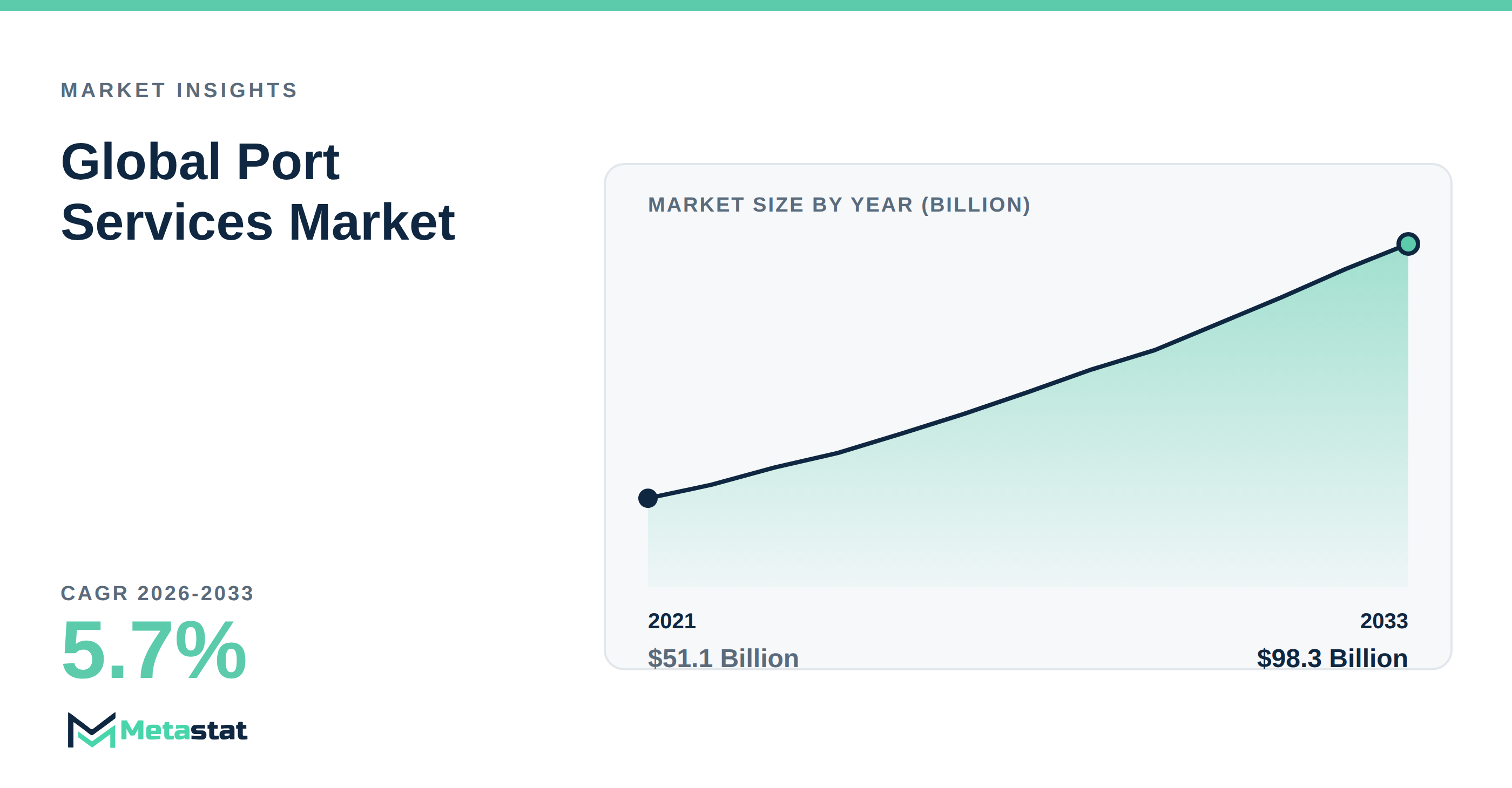
Rapid industrialization and urbanization characterize the Asia Pacific region, driving a greater demand for effective port services. The growth in this region is supported by rising GDP, which enhances public and private investments in port infrastructure. Key economies in Asia Pacific are heavily investing to modernize their port facilities, improve connectivity, and boost logistics capabilities to manage increasing trade volumes. Enhanced infrastructure fuels shipping efficiency while accommodating larger cargo capacities, creating a robust framework for the Port Services market.
Conversely, North America faces several unique challenges affecting its position in the Port Services market. Market growth remains steady, with projections indicating a value of USD 15.7 billion by 2033, yet the region struggles with regulatory compliance that raises operational costs. Stringent adherence to environmental and safety standards dissuades investments in innovative technologies necessary for the modernization of port operations.
The fragmented nature of the North American market, marked by varying investment levels across states and municipalities, exacerbates the growth disparity. While major hubs including the Port of Los Angeles and the Port of New York-New Jersey thrive with established infrastructures, smaller ports often lag behind, resulting in uneven growth rates across the region.
Technological integration sets the Asia Pacific market apart. Ports in this region prioritize the adoption of advanced technologies, including automation and digital tracking systems, which streamline their operations. These investments enhance productivity and effectively reduce overhead costs, enabling ports to manage rising cargo volumes efficiently. In contrast, North America’s embrace of technological advancement lacks the same fervor, because legacy systems still dominate certain facilities, limiting overall operational efficiency.
The surge in regional demands further solidifies the Asia Pacific region's lead in the Port Services market. The rapid expansion of e-commerce, particularly in significant markets like China, directly impacts the necessity for improved logistics and port services. While shipping volumes continue to rise, the demand for diverse port capabilities prompts stakeholders to develop modern facilities capable of supporting the ever-evolving landscape of global trade.
Macroeconomic pressures are vital in shaping the Port Services market across both regions. North America grapples with inflationary challenges and currency volatility, creating complexities that influence pricing strategies and operational costs. Such economic conditions underscore the need for strategic foresight and adaptability, ultimately enabling stakeholders to optimize service delivery amid fluctuating market dynamics.
The divergence within the Port Services market between Asia Pacific and North America is attributed to their distinct growth drivers and challenges. Asia Pacific's robust industrialization, strong investments in infrastructure, and a commitment to technological advancement create a dynamic market environment. On the other hand, North America confronts the pressures of regulatory compliance and economic factors that hinder potential growth.
Organizations navigating these complexities leverage insights from the contrasting regional dynamics to identify new opportunities for growth and innovation within the Port Services market. Strategic investments in technology and infrastructure, alongside a commitment to addressing regulatory challenges, will ultimately define future success in this evolving landscape.
For an in-depth analysis of the factors shaping the Port Services market, refer to the Global Port Services Market.
Tags
About the Authors

LEAD ANALYST
Utkarsh Khirodkar is a Lead Market Research Analyst at MetaStat Insight, specializing in market intelligence, technology sector assessments, and competitive strategy.

ENERGY & INFRASTRUCTURE INDUSTRY CONSULTANT
Automotive and Transportation · Electronics and Semiconductor · Energy and Power · Machinery & Equipment
Saurabh Vasant Ganvir consults for Energy & Infrastructure Industry at MetaStat Insight, specializing in renewable energy, solar EPC, and electric vehicle (EV) infrastructure markets.