
Explore the key factors driving semiconductor demand in the United States, Canada, and Mexico, and understand the implications for stakeholders in the technology sector.
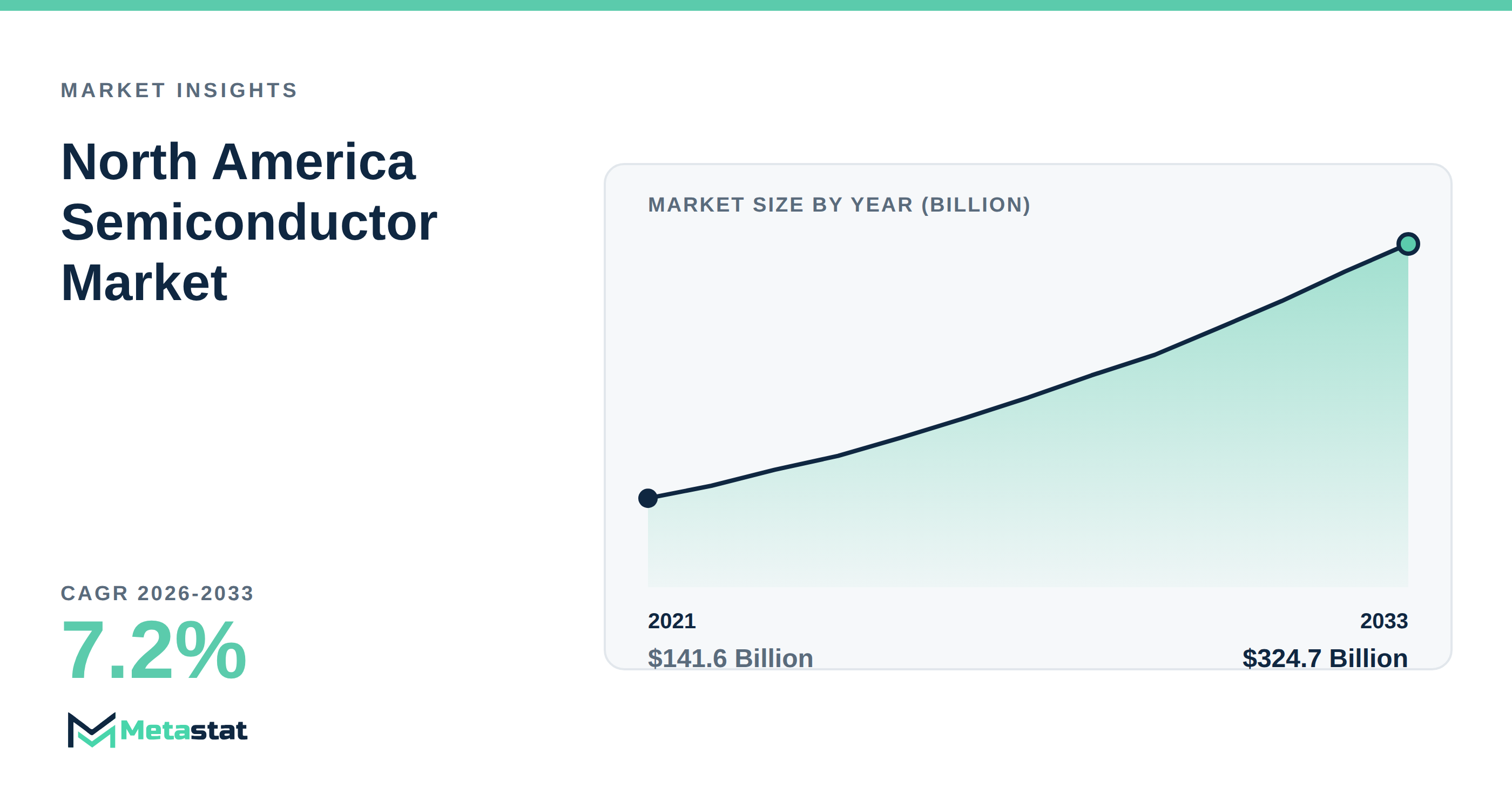
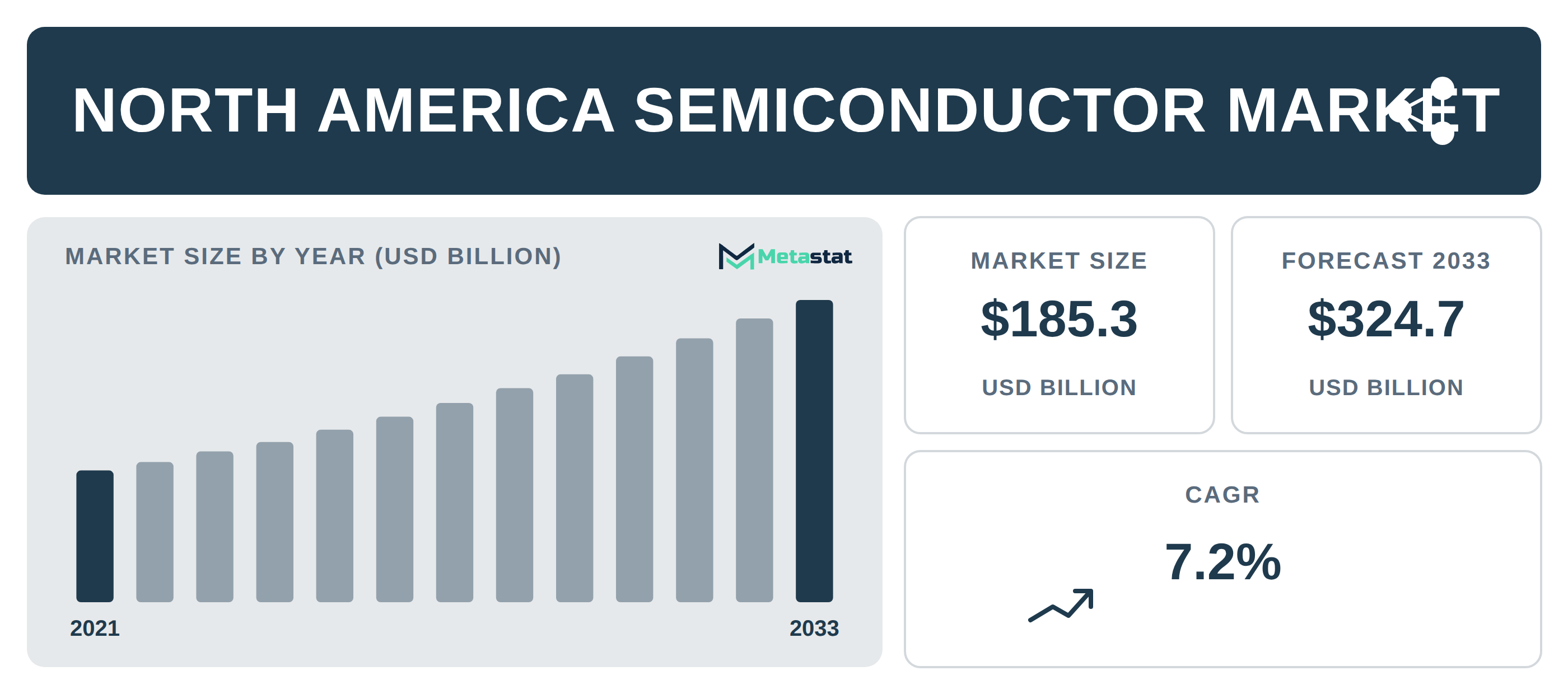
The semiconductor demand in North America demonstrates significant regional divergence, particularly between the United States, Canada, and Mexico. Understanding the underlying factors contributing to this disparity offers valuable insights for stakeholders in the technology and electronics sectors. The full figures are in our North America Semiconductor market size and forecast report.
What drives semiconductor demand in the United States?
The United States leads in semiconductor demand, largely due to its advanced technological infrastructure and concentration of major manufacturers. With investments focused on enhancing technology ecosystems, US companies create a strong need for semiconductor components to meet rising consumer expectations. A critical factor is the ongoing digital transformation across sectors including computing, automotive, and communications, which stimulates significant spending in this sector.
Among the drivers, logic integrated circuits (ICs) emerge clearly as fundamental, reflecting continuous advancements in computing power and increased reliance on data-centric applications. The surge in smart device adoption and expansion of data centers further create a competitive environment that propels US semiconductor adoption ahead of its regional counterparts.
How does Canadian demand compare?
Canada's semiconductor sector shows promising growth, influenced by advancements in computing capabilities and automotive technologies. Projects aimed at electric vehicle development and investments in environmentally friendly practices significantly enhance demand. Canadian companies actively boost semiconductor technologies to cater to both domestic and international markets. This commitment to sustainability aligns with overarching trends observed throughout North America.
However, Canadian semiconductor demand lags behind the US due to a smaller concentration of semiconductor manufacturers and lower capital investment in high-performance technology compared to the US landscape. Growth in sectors including computing and industry applications showcases Canada’s potential as an emerging hub for semiconductor demand.
What about Mexico's position in the sector?
Mexico's semiconductor demand exhibits steady growth, shaped by ongoing technological advancements. The country leverages a cost-efficient manufacturing base that attracts foreign investments, enhancing its competitiveness. Key industries driving demand include consumer electronics and automotive systems, as increasing consumer interest in smart devices and electric vehicles fuels expansion.
In comparison to Canada and the US, Mexico's semiconductor sector experiences more gradual growth, influenced by established manufacturing processes and market dynamics. Nonetheless, the region's increased focus on innovation and technology integration remains essential in determining its future demand trajectory.
What accounts for the differences across regions?
The disparity in semiconductor demand across North America arises from several factors. Economic conditions, levels of technological investment, and the presence of prominent industry players significantly shape these differences. The United States boasts a mature semiconductor ecosystem characterized by substantial research and development investments and a diverse array of applications across multiple sectors.
On the other hand, Canada and Mexico are still in the process of developing their semiconductor capabilities, with varying levels of technological adoption affecting their growth rates. Canada’s focus on sustainability positions it well for future advancements, while Mexico's efficient manufacturing base demonstrates its potential for attracting investment in semiconductor technologies.
Companies looking to navigate this regional landscape should understand the distinctive characteristics influencing semiconductor demand and adapt their strategies accordingly. By aligning with regional trends and leveraging localized strengths, stakeholders capitalize on opportunities within the North America Semiconductor landscape and stimulate growth across diverse markets.
Tags
About the Authors

LEAD ANALYST
Utkarsh Khirodkar is a Lead Market Research Analyst at MetaStat Insight, specializing in market intelligence, technology sector assessments, and competitive strategy.

PRINCIPAL CONSULTANT - ENTERPRISE AI & EMERGING TECHNOLOGIES
Banking & Finance · Electronics and Semiconductor · Energy and Power · Healthcare IT · Information & Technology · Professional Services
Vijay Gunti is a Principal Consultant at MetaStat Insight, bringing over two decades of experience across enterprise digital transformation, technology strategy, and intelligent systems.

PRINCIPAL CONSULTANT - QUALITY SYSTEMS & COMPLIANCE
Electronics and Semiconductor · Machinery & Equipment · Professional Services
Omkar Phadtare is an Industry Consultant at MetaStat Insight, specializing in quality systems, regulatory compliance, and standards benchmarking to drive data-driven market intelligence and strategic industry research.

ENERGY & INFRASTRUCTURE INDUSTRY CONSULTANT
Automotive and Transportation · Electronics and Semiconductor · Energy and Power · Machinery & Equipment
Saurabh Vasant Ganvir consults for Energy & Infrastructure Industry at MetaStat Insight, specializing in renewable energy, solar EPC, and electric vehicle (EV) infrastructure markets.

LEAD CONSULTANT - COMMUNICATION, TELECOM, AND IT
Electronics and Semiconductor · Information & Technology · Machinery & Equipment · Professional Services
Ravindra Sathe Consultants for Communication, Telecom, and IT at MetaStat Insight. He leads the firm's industry research initiatives across telecommunications infrastructure, digital connectivity, enterprise networking, and emerging information technology domains.