
LEAD ANALYST
Utkarsh Khirodkar is a Lead Market Research Analyst at MetaStat Insight, specializing in market intelligence, technology sector assessments, and competitive strategy.

North America Semiconductor Market Size, Share, By Product Type (Logic ICs, Memory ICs, Microcomponents, Analog ICs, Discrete Semiconductors, Optoelectronic Semiconductors, Non-Optical Sensors and Actuators), By End-Use Industry (Computing and Data Centers, Communications, Automotive, Industrial, Consumer Electronics, Aerospace and Defense, Medical Electronics), By Semiconductor Material (Silicon (Si), Silicon Carbide (SiC), Gallium Nitride (GaN)), By Region (United States, Canada, Mexico), Industry Analysis, Growth, Trends, and Forecast, 2026-2033
Report ID
MSI-5526
Published
October, 2026
Pages
257 Pages
Format
Historical
Base year
Forecast
Forecast period
Report Details
Market Valuation: Valued at $185.3 Billion in 2025, projected to reach $324.7 Billion by 2033 at a 7.2% CAGR.
Dominant Segment: Logic integrated circuits (ICs) lead the North America Semiconductor market, driven by the increasing demand for advanced computing capabilities and the rise of artificial intelligence applications.
Geographic Lead: The United States dominates the North America Semiconductor market, benefiting from a robust technological infrastructure and a high concentration of semiconductor manufacturers.
What's Inside: The report provides a comprehensive analysis of market dynamics, competitive coverage, and a detailed forecast from 2026 to 2033, including insights into various product types and end-use industries.
Increased Demand for Computing and Data: The Computing and Data Centers segment is set to expand significantly, reflecting a growing reliance on advanced technologies and infrastructure for enhanced data management and processing capabilities.
Rising Costs for Semiconductor Productio: Increasing production costs, driven by raw material prices and manufacturing expenses, pose challenges for buyers in the semiconductor market, particularly in the computing and data centers sector.
Choose Your License
North America Semiconductor Market
The North America Semiconductor market was valued at USD 185.3 billion in 2025 and is projected to reach USD 324.7 billion by 2033, growing at a CAGR of 7.2% over the forecast period.
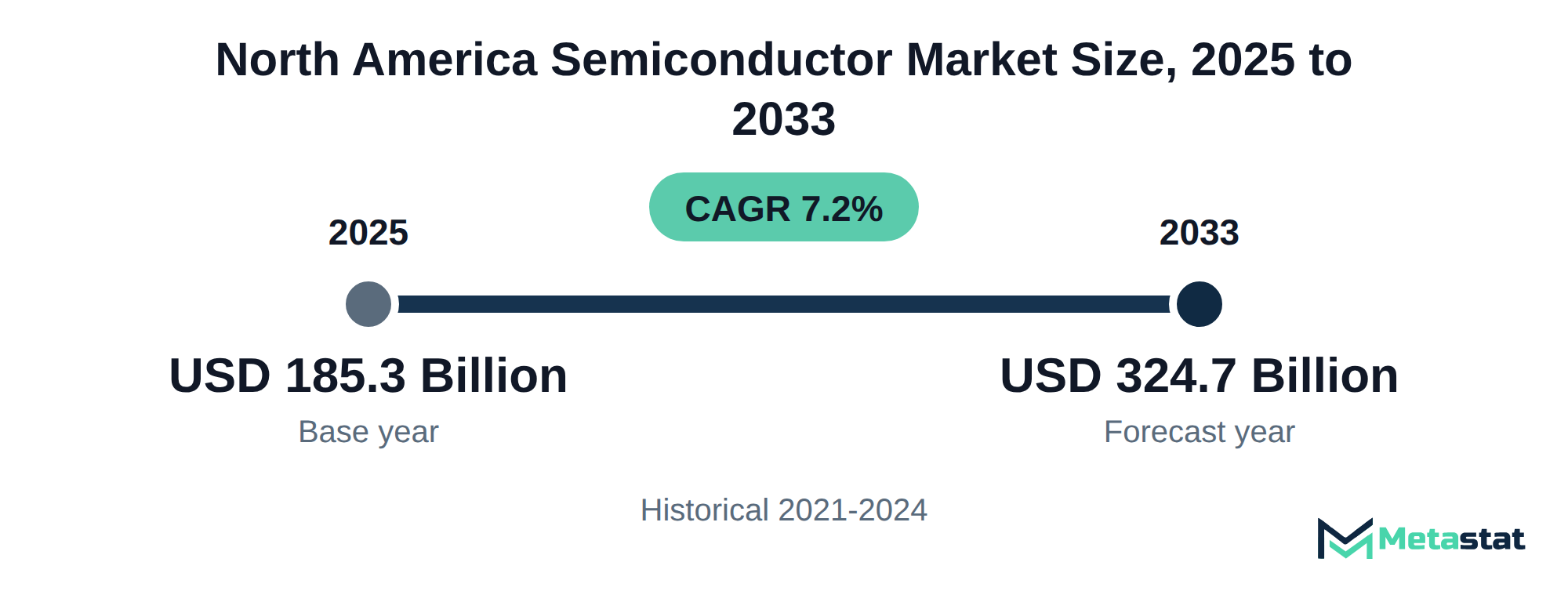
The North America Semiconductor market encompasses a wide range of products essential for various industries, including computing, automotive, and communications. Buyers invest in semiconductor components to enhance the functionality and performance of their electronic devices. The increasing reliance on advanced technologies, including artificial intelligence and the Internet of Things, drives significant spending in this sector.
Growth in the market is fueled by escalating demand for logic integrated circuits (ICs), which represent the largest segment by value. The United States holds the largest share of the market, benefiting from its robust technological infrastructure and a high concentration of semiconductor manufacturers. Rising adoption of smart devices and expansion of data centers contribute to increasing demand for semiconductors.
One primary growth driver in the market involves ongoing digital transformation across multiple sectors. Companies invest heavily in upgrading their technology ecosystems, generating a surge in demand for semiconductor products. This shift enhances operational efficiency and supports innovation in product offerings within the North America Semiconductor market.
The demand for semiconductor products in North America encompasses various applications, driven by innovations across sectors including computing, automotive, and telecommunications. Buyers invest in these products to enhance performance, efficiency, and technological advancements. The increasing reliance on data centers and computing infrastructure significantly contributes to this spending, with companies striving to utilize advanced solutions to meet growing consumer expectations.
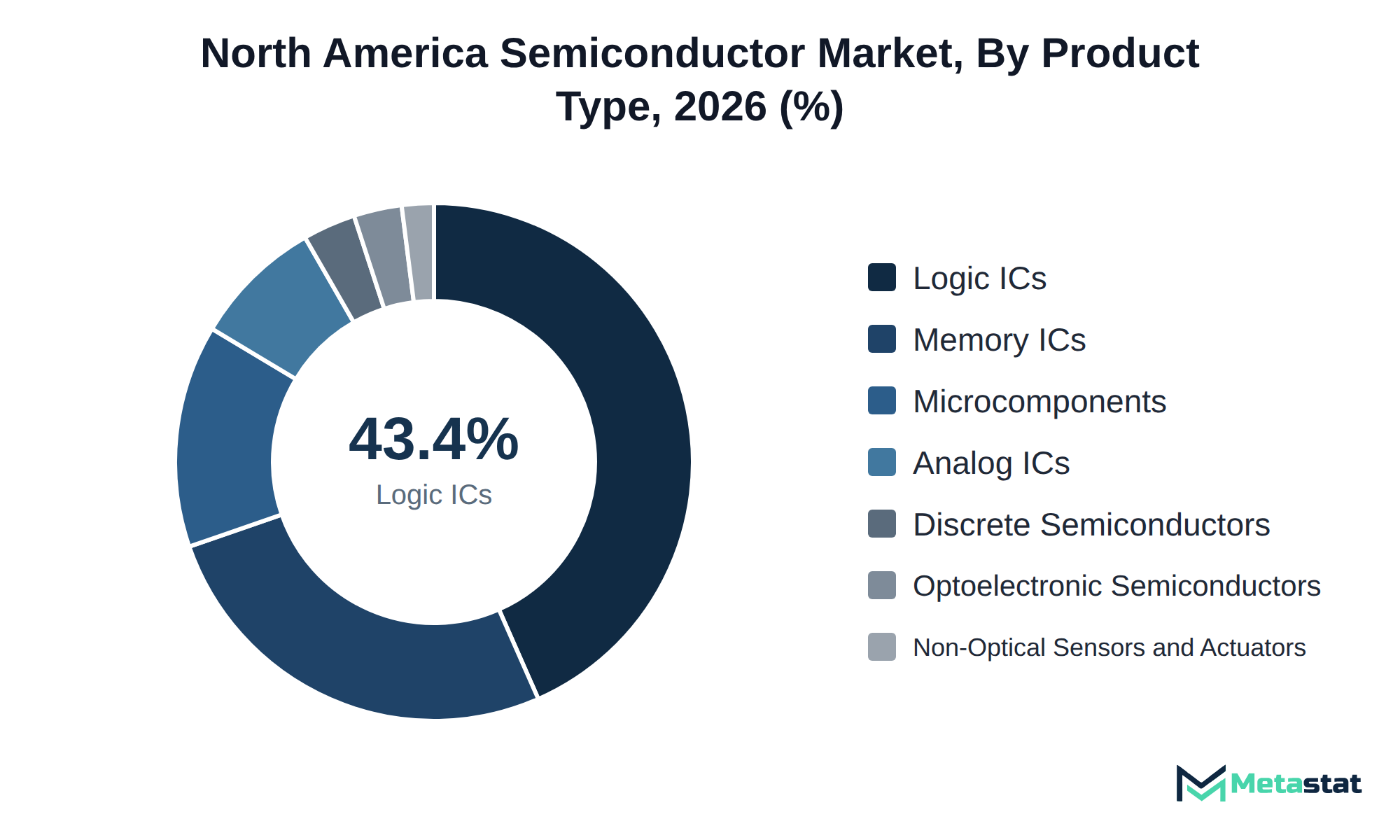
Among the product segments, Logic ICs represent the most substantial value, reflecting a compound annual growth rate (CAGR) of 8.5%. The region's largest share emerges from the United States, which serves as a hub for semiconductor development and production, creating a competitive landscape among key industry players. The growth trajectory of the market aligns with the expanding need for advanced computing capabilities, driven by digital transformation initiatives across various industries.
Market dynamics indicate a strong push toward adopting advanced semiconductor materials, with Silicon (Si) and Silicon Carbide (SiC) leading the way. The increasing shift toward electric vehicles and renewable energy solutions enhances the demand for Silicon Carbide, illustrating the market's adaptability to emerging trends. Investment in research and development further strengthens the competitive position of the North America Semiconductor market, ensuring sustained growth and innovation.
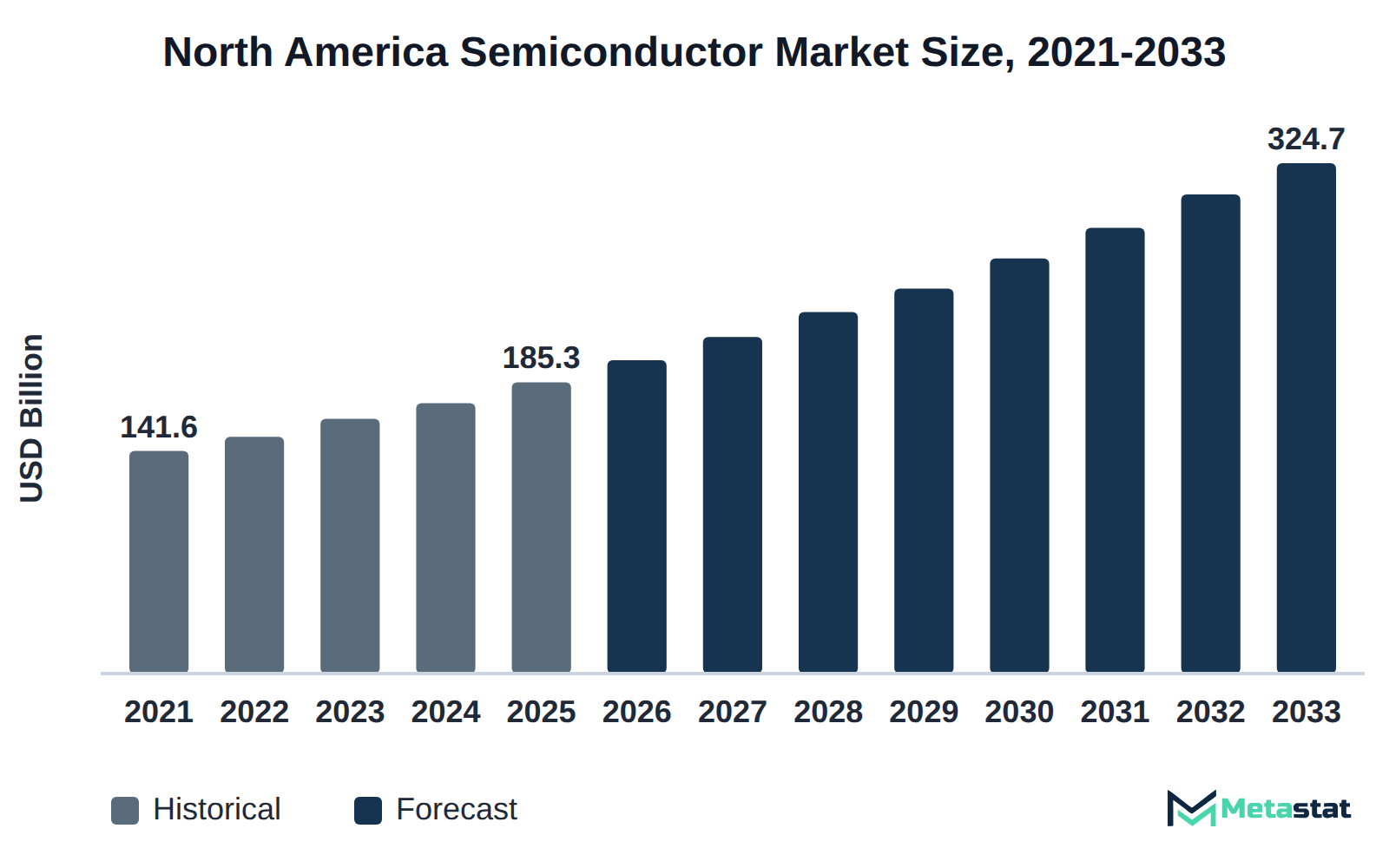
The North America Semiconductor market experiences significant shifts driven by the rising demand for artificial intelligence (AI) accelerators and high-bandwidth memory (HBM) in data centers. The transition to AI-driven applications generates a surge in processing power requirements, compelling data centers to integrate advanced hardware solutions. Currently, the Computing and Data Centers segment is expected to expand from USD 95.7 billion in 2026 to USD 167.1 billion by 2033, reflecting a compound annual growth rate (CAGR) of 8.3%. This growth indicates escalating demand for optimized computing performance.
AI accelerators, including graphics processing units (GPUs) and specialized chips, enhance data processing capabilities, enabling faster execution of complex algorithms. The incorporation of HBM technology further supports these advancements, providing the necessary bandwidth for handling large datasets efficiently. Increasing adoption of AI technologies across various industries, including finance, healthcare, and manufacturing, drives the need for robust data center infrastructure.
Investments in AI accelerators and HBM lead to competitive advantages for data center operators in the North America Semiconductor market. Enhanced processing power and bandwidth enable operators to offer improved services, attract more clients, and ultimately drive revenue growth. While the market evolves, the focus on AI technologies and their supporting components remains crucial for maintaining a leading position in data center performance and efficiency.
Advanced packaging technologies and chiplet integration strategies have become essential in the North America Semiconductor market. These methods facilitate efficient utilization of die area and improve performance without proportionately increasing costs. The overall trend towards miniaturization in semiconductor devices connects directly to the growing demand for logic integrated circuits, projected to increase from USD 87.8 billion in 2026 to USD 155.6 billion by 2033, reflecting a compound annual growth rate (CAGR) of 8.5%. Buyers prioritize advanced packaging techniques during procurement, recognizing their role in enhancing product performance and competitive positioning.
Contract models for advanced packaging services vary, often based on project scope and volume commitments. Many suppliers adopt a tiered pricing structure, incentivizing larger orders with reduced costs per unit. By integrating advanced packaging into their supply chain, businesses optimize their cost structures while improving device efficiency and performance. This evolution in pricing and contract models drives investment decisions and shapes supplier relationships within the market.
The adoption of Silicon Carbide (SiC) and Gallium Nitride (GaN) in automotive and industrial power electronics is gaining significant traction within the North America Semiconductor market. The shift towards SiC and GaN technologies is driven by their superior efficiency and thermal performance compared to traditional silicon-based devices. SiC devices are projected to reach a market value of USD 13 billion by 2033, highlighting the growing demand from the automotive sector, which increasingly requires efficient power management solutions for electric vehicles.
In industrial applications, GaN technology is becoming critical for power electronics due to its ability to operate at higher frequencies and voltages. The market for GaN expands as industries seek to enhance performance and reduce energy consumption. The integration of these semiconductor materials supports the transition to more sustainable energy solutions, directly influencing operational costs and energy efficiency across sectors. Increasing adoption of SiC and GaN in power conversion and management applications positions stakeholders for improved revenue and market competitiveness.
Pricing for semiconductors in the North America Semiconductor market is influenced by several critical factors, particularly supply chain dynamics and technological advancements. The reliance on silicon, which is expected to grow from USD 185.5 billion in 2026 to USD 292.1 billion by 2033, emphasizes the importance of material availability in determining prices. Supply chain constraints lead to price fluctuations, especially when production capacity struggles to meet rising demand.
The growth of specific segments, including Logic ICs, highlights the relationship between demand and pricing. The growing need for advanced computing power drives prices for these components, impacting overall product costs for manufacturers and electronics buyers.
Understanding these dynamics allows buyers in the market to make more informed purchasing decisions. Suppliers that effectively manage supply chains and leverage technological innovations are likely to gain a competitive edge, leading to more stable pricing and availability for their products. This landscape presents significant implications for procurement strategies and cost management in the North America Semiconductor market.
Growth in the computing and data center sectors significantly influences spending on semiconductors. Businesses in these sectors invest in advanced technologies and infrastructure, driven by the increasing need for processing power and data management capabilities. The ongoing digital transformation across industries increases demand for high-performance chips that facilitate efficient data handling. This trend highlights the essential role of semiconductor innovation in meeting the requirements of modern computing environments, contributing to overall market expansion.
Consumer electronics buyers increasingly seek enhanced functionalities, which further increases the demand for memory and logic integrated circuits. The North America Semiconductor market benefits from these trends, with a notable shift in buyer preferences driving higher investment in advanced semiconductor technologies.
Rapid advancements in semiconductor materials drive significant growth in the North America Semiconductor market. The shift towards materials including Silicon Carbide (SiC) and Gallium Nitride (GaN) enhances device performance, particularly in high-efficiency applications. Manufacturers increasingly adopt SiC and GaN to achieve better thermal conductivity and energy efficiency, leading to improved performance in the automotive and industrial sectors. This transition supports a reduction in power loss, making electronic systems more efficient and reliable. The heightened focus on sustainability prompts companies to explore these materials for their lower environmental impact compared to traditional silicon. Enhanced performance and sustainability contribute to an expanding market for power electronics and high-frequency applications. Companies investing in advanced materials position themselves competitively, capturing greater market share and addressing emerging demands across various industries. The integration of advanced materials into production processes underpins growth, ensuring the market meets rising consumer and industry expectations.
Increasing production costs represent a significant restraint in the North America Semiconductor market. Factors including rising raw material prices and manufacturing expenses contribute to the overall cost structure. The impact is particularly pronounced among buyers in the computing and data centers sector, where tighter budgets result in slower uptake of new technologies. Higher costs lead to smaller orders and delayed replacement cycles, affecting overall demand for semiconductors. In response, companies optimize their supply chains and enhance operational efficiencies to mitigate these challenges. The persistent rise in costs continues to create hurdles that restrict growth opportunities. The market's competitive landscape experiences pressures as businesses strive to balance cost constraints while delivering innovative solutions to customers.
Rising input costs challenge suppliers in the North America Semiconductor market, affecting profit margins. Fluctuations in the prices of raw materials, particularly for semiconductor materials like silicon, silicon carbide, and gallium nitride, contribute to these pressures. Suppliers respond by seeking alternative sourcing strategies and optimizing production processes to mitigate costs. Enhanced collaboration with material providers and investment in research and development of more cost-effective materials represent key approaches. Suppliers increasingly explore automation and advanced manufacturing technologies to streamline operations and reduce labor costs. Despite these efforts, the persistent increase in input costs continues to exert downward pressure on margins, influencing overall competitiveness within the market. This dynamic environment necessitates continuous adaptation and innovation from suppliers to maintain profitability and market share while navigating these economic challenges.
The logic integrated circuits segment represents a significant growth opportunity within the North America Semiconductor market. Factors driving this growth include rising demand for advanced computing capabilities across various sectors, particularly in data centers and computing applications. Customers in the computing and data centers end-use industry invest heavily in logic integrated circuits to support emerging technologies and enhance processing power. The increasing penetration of artificial intelligence and machine learning applications further boosts the need for high-performance logic ICs. This trend highlights the ongoing shift towards more sophisticated semiconductor solutions, positioning the logic integrated circuits segment as a key driver of market expansion. Continued innovation in this area is expected to lead to heightened competition among suppliers and increased investment in research and development.
The North America Semiconductor market is segmented based on Product Type, End-Use Industry, Semiconductor Material, and Region.
These integrated circuits play a crucial role in various applications, including computing, communications, and consumer electronics, serving companies aiming to enhance processing capabilities and system efficiency. The increasing demand for efficient processing power across sectors drives significant investment in this segment. Compared to Memory ICs, which are expected to see a CAGR of 7.8%, Logic ICs demonstrate faster growth, reflecting heightened adoption in data-intensive applications. This segment is gaining traction due to advancements in semiconductor technologies that improve performance and reduce energy consumption, which are vital for modern electronic devices. Such innovations enable manufacturers to produce more compact and powerful solutions, positioning Logic ICs as a key component in the evolving dynamics of the North America Semiconductor market.
Memory ICs segment is estimated to reach USD 89 billion by 2033, at a CAGR of 7.8% during the forecast period. Memory integrated circuits play a key role in storing data for various applications, primarily used in computing devices, mobile phones, and consumer electronics. The surge in demand for data storage solutions, driven by increasing reliance on cloud computing and data analytics, supports this segment's growth. Compared to other product types, Memory ICs exhibit a distinct growth trajectory, with a higher CAGR than several segments, reflecting their essential role in enabling advanced functionalities in devices. The ongoing trend of miniaturization and integration of memory solutions into compact devices enhances their appeal to manufacturers focused on performance and efficiency. This trend highlights the competitive environment, wherein suppliers emphasize innovation and cost-effectiveness to meet evolving market demands.
Microcomponents segment is expected to reach USD 36.3 billion by 2033. This segment is essential in various electronic devices including smartphones, automotive systems, and industrial applications. The increasing demand for compact, high-performance devices drives the growth of microcomponents, with manufacturers seeking to enhance functionality while reducing size. A significant driver for this segment includes advancements in miniaturization technologies, which allow for the integration of more features into smaller form factors. Compared to other product types, microcomponents exhibit slower growth, influenced by longer product life cycles in certain applications. While segments including Logic ICs and Memory ICs experience more rapid expansion, microcomponents maintain steady development due to their essential nature in existing technologies and ongoing trends toward optimization.
Analog ICs segment is projected to grow at a CAGR of 4.1% during the forecast period. These integrated circuits play a critical role in various applications like signal processing, audio equipment, and sensor interfaces, serving industries including consumer electronics, automotive, and telecommunications. Demand for Analog ICs is driven by the increasing complexity of electronic devices that require efficient signal processing capabilities. The segment's growth is comparatively slower than that of Logic ICs, which is expected to expand at a CAGR of 8.5%. This difference in growth rates is attributed to the more specialized applications of Analog ICs, which tend to have more stable pricing and require less frequent innovation compared to other semiconductor products. Manufacturers focus on optimizing efficiencies and enhancing performance, which contributes to maintaining competitive pricing in the market.
Discrete semiconductors are vital components in various electronic devices. These devices include power supplies, signal processing, and control applications across multiple industries. Growth in this segment is driven by increasing demand for energy-efficient solutions, particularly within the automotive and industrial sectors. The automotive industry increasingly adopts discrete semiconductors for electric vehicles and advanced driver-assistance systems, influencing overall market dynamics. Compared to other segments, discrete semiconductors experience relatively slower growth, reflecting their established nature in the market and strong competition from other product types. The overall market sees significant interest in higher-value integrated solutions, which could impact pricing and future adoption of discrete semiconductors by various buyer groups.
Optoelectronic semiconductors encompass components that facilitate the generation, detection, and manipulation of light. These devices find applications across various industries, including telecommunications, consumer electronics, and medical devices. Demand for optoelectronic semiconductors is driven by the increasing need for high-speed data transmission and the expansion of optical communication networks. This segment experiences growth supported by advancements in laser technology and photonic integration, which enhance the performance and efficiency of devices. Compared to other semiconductor segments, optoelectronic semiconductors carry a higher price point due to specialized manufacturing processes and materials. In the market, distinct requirements for optical components in sectors like telecommunications and consumer electronics create unique demand dynamics that set this segment apart from others.
Non-Optical Sensors and Actuators encompass critical components used in a variety of applications, including industrial automation, automotive systems, and consumer electronics. This sub-segment serves industries including aerospace, defense, and medical electronics by providing essential functionalities like motion detection and environmental sensing. Growth in automation technologies significantly influences demand, with manufacturers integrating these sensors into their devices to enhance efficiency and accuracy. Compared to other segments, non-optical sensors and actuators exhibit a slower growth trajectory, driven by the maturity of existing technologies. Pricing strategies for these components vary, with high-performance options commanding premiums, while standard products maintain competitive pricing. The North America Semiconductor market benefits from this segment's innovations, propelling advancements that meet evolving industry standards.
This segment plays a critical role in supporting cloud computing, big data analytics, and AI-driven applications, employed by technology firms and data center operators to enhance processing capabilities. Increased demand for data storage and processing power significantly drives investments in semiconductor technology, facilitating faster data transfer rates and improved energy efficiency. In comparison to other segments, computing and data centers exhibit a higher growth trajectory, reflecting the increasing reliance on digital infrastructure across various industries. The market expansion is supported by advancements in processing architectures and a growing focus on optimizing power consumption, resulting in a more effective allocation of resources to meet evolving computational demands.
Communications segment is estimated to reach USD 58.1 billion by 2033, at a CAGR of 4.9% during the forecast period. This segment encompasses technologies and systems for transmitting data and voice, widely used by telecommunications providers, internet service providers, and enterprises. The primary drivers for this segment include growing demand for high-speed internet and the rollout of 5G networks, which necessitate advanced semiconductor solutions for enhanced performance. Compared to other segments including computing and data centers, which exhibit a higher growth rate of 8.3%, communications displays steadier growth due to established market maturity. The market faces challenges related to regulatory requirements and the evolving competitive landscape, compelling companies to innovate continually to maintain market share.
The automotive segment is expected to reach USD 36.6 billion by 2033. This segment is important in the development of advanced vehicle technologies, including electric vehicles (EVs) and autonomous driving systems. Demand for semiconductor components in automotive applications is driven by the increasing integration of electronics in vehicles, enhancing functionalities including safety, navigation, and connectivity. Compared to other segments, the automotive sector experiences slower growth, reflected in its projected CAGR. This contrasts with sectors like computing and data centers, which experience more dynamic expansion rates. Regulatory pressures regarding emissions and safety standards necessitate continued innovation in semiconductor technologies, reinforcing the importance of this segment in the North America Semiconductor market.
Industrial applications in the North America Semiconductor market are projected to grow at a CAGR of 6.1% during the forecast period. Key users include manufacturers in various sectors where automation and advanced control systems enhance operational efficiency. Demand in this segment is driven primarily by the increasing adoption of smart manufacturing technologies and the need for enhanced productivity. Compared to other segments, including Computing and Data Centers, which achieve a CAGR of 8.3%, the Industrial segment experiences slower growth, reflecting the more established nature of industrial applications. This segment benefits from innovations in automation and control systems, which improve efficiency and reduce operational costs for manufacturers, thus facilitating wider adoption of semiconductor technologies.
Consumer electronics involve a wide range of devices used for entertainment, communication, and information processing. Products in this category include smartphones, tablets, televisions, and wearable technology, serving a diverse customer base that values innovation and performance. The increasing demand for advanced features and connectivity within these devices significantly shapes the segment's growth. Technological advancements drive consumer expectations for improved functionality and user experience, compelling manufacturers to invest in state-of-the-art semiconductor solutions. This segment distinguishes itself from others in the semiconductor landscape through its relatively rapid growth trajectory, influenced by consumer trends and technological developments. Unlike sectors including automotive, where demand grows more steadily, the consumer electronics segment benefits from swift consumer adoption of new technologies, creating a dynamic environment within the North America Semiconductor market.
Aerospace and Defense encompasses advanced technologies in military and civilian applications, including avionics, satellite systems, and defense communication networks. This segment serves a variety of customers, including government agencies and private aerospace firms, requiring high reliability and performance. Demand for enhanced security measures and sophisticated systems drives growth within this segment. Regulatory standards further influence development and adoption, requiring compliance with stringent safety and operational protocols. Compared to other segments, Aerospace and Defense engages with a more specialized customer base, resulting in potentially higher price points due to advanced technology and rigorous testing. In contrast with segments like Automotive or Consumer Electronics, growth in Aerospace and Defense tends to be steadier, sustained by consistent government funding and long-term contracts rather than fluctuating consumer demand. This distinct dynamic positions the Aerospace and Defense segment as a vital component of the North America Semiconductor market.
Medical electronics involve devices and systems used for diagnosing, monitoring, and treating medical conditions. Applications include imaging systems, patient monitoring equipment, and therapeutic devices. Clinicians and healthcare providers increasingly rely on these technologies to enhance patient care and improve health outcomes. Demand for advanced medical electronics is driven by an aging population requiring more healthcare services and increasing investment in healthcare infrastructure. This segment experiences different growth dynamics compared to others, with potential for higher pricing due to the specialized nature of the products. Medical electronics face unique regulatory challenges that necessitate rigorous testing and compliance, influencing time-to-market and overall cost structures. This sector highlights the intersection of technology and healthcare, emphasizing innovation in semiconductor applications.
Silicon (Si) segment is valued at USD 185.5 billion in 2026 and is projected to reach USD 292.1 billion by 2033, at a CAGR of 6.7% during the forecast period. This material acts as a foundational element in a wide range of electronics, underpinning applications in computing, telecommunications, and consumer electronics. The increasing demand for high-performance chips drives growth, particularly in computing and data centers, which are expected to expand at a CAGR of 8.3%. While Silicon (Si) demonstrates solid growth, Silicon Carbide (SiC) exhibits a faster CAGR of 15%, reflecting rising interest in high-efficiency applications. Pricing pressures stemming from raw material availability impact the silicon segment differently compared to other semiconductor materials, influencing procurement strategies for manufacturers in the North America Semiconductor market.
Silicon Carbide (SiC) segment is estimated to reach USD 13 billion by 2033, at a CAGR of 15% during the forecast period. SiC performs vital functions in high-temperature and high-voltage applications, making it a preferred choice in industries including automotive and power electronics. The growing demand for electric vehicles and renewable energy systems drives the adoption of SiC, enhancing energy efficiency and performance. Compared to other semiconductor materials, SiC exhibits a significantly higher growth rate, reflecting its increasing utility in specialized applications. This segment's rapid development contrasts with traditional materials, which experience slower growth rates due to established manufacturing processes and lower performance metrics. The North America Semiconductor market emphasizes SiC for its potential to improve the efficiency of power conversion systems and reduce overall energy consumption.
Gallium Nitride (GaN) segment is expected to reach USD 10.4 billion by 2033. This material finds applications in high-performance devices, particularly in power electronics and RF communication. Industries including telecommunications and automotive increasingly adopt GaN due to its efficiency and ability to operate at high temperatures compared to traditional silicon-based technologies. The segment experiences strong momentum driven by technological advancements, particularly in electric vehicles and renewable energy systems. Its projected growth at a CAGR of 15% outpaces other semiconductor materials, highlighting its rising importance in the North America Semiconductor market. Unlike more established segments, GaN offers enhanced performance characteristics, making it attractive for companies seeking to improve energy efficiency and reduce size in electronic designs.
Others (GaAs, InP, etc.) segment is projected to grow at a CAGR of 7.9% during the forecast period. This segment includes specialized semiconductor materials used in high-frequency applications like radio frequency (RF) and optical devices. Industries including telecommunications and aerospace frequently employ these materials due to their superior performance characteristics, particularly in devices that require high efficiency and power. The driving force for this segment involves increasing demand for advanced communication technologies, including 5G and satellite communications. Compared to Silicon (Si) and Silicon Carbide (SiC), which dominate the market, this segment experiences a unique market dynamic, characterized by faster growth attributed to technological advancements and rising investments in research and development. The North America Semiconductor market reflects a strong trend toward innovation in materials, positioning Others (GaAs, InP, etc.) as a vital component in emerging applications.
Segment is valued at USD 155.6 billion in 2026 and is projected to reach USD 250.6 billion by 2033, at a CAGR of 7% during the forecast period. This segment supports various applications across industries, including computing, data centers, and telecommunications, driven by a surge in demand for advanced technology. Key players in this segment include major semiconductor manufacturers who supply components for data processing, connectivity, and automation purposes. The growth trajectory reflects a robust demand for Logic ICs, which are anticipated to expand at a CAGR of 8.5%. This contrasts with other segments, including Communications, which is projected to grow at a slower rate of 4.9%, indicating a distinct competitive landscape within the North America Semiconductor market.
Canada is estimated to reach USD 45 billion by 2033, at a CAGR of 7.6% during the forecast period. This market segment primarily serves various industries, including computing, automotive, and industrial applications. Demand drivers include the increasing need for advanced computing capabilities and the growing adoption of electric vehicles. The segment shows faster growth compared to the automotive segment, which is expected to reach USD 36.6 billion by 2033. Manufacturers in Canada focus on enhancing semiconductor technologies to satisfy both domestic and international markets. Emphasis on sustainable practices in semiconductor production further influences market dynamics, prompting shifts towards more eco-friendly materials and processes. This segment's growth reflects broader trends observed in the North America Semiconductor market.
Mexico segment is expected to reach USD 29.1 billion by 2033. This segment includes semiconductor components widely used in consumer electronics, automotive systems, and industrial applications. Industries including automotive and consumer electronics significantly influence this segment's growth. Rising consumer demand for smart devices and electric vehicles drives expansion in semiconductor adoption. Compared to other segments, this market experiences relatively slower growth but demonstrates steady potential driven by continuous technological advancements. The market for semiconductor materials in Mexico benefits from a cost-effective manufacturing base, attracting foreign investments and enhancing competitiveness. Growth in the Mexico semiconductor segment reflects broader trends in the North America Semiconductor market, driven by innovation and increasing integration of technology across sectors.
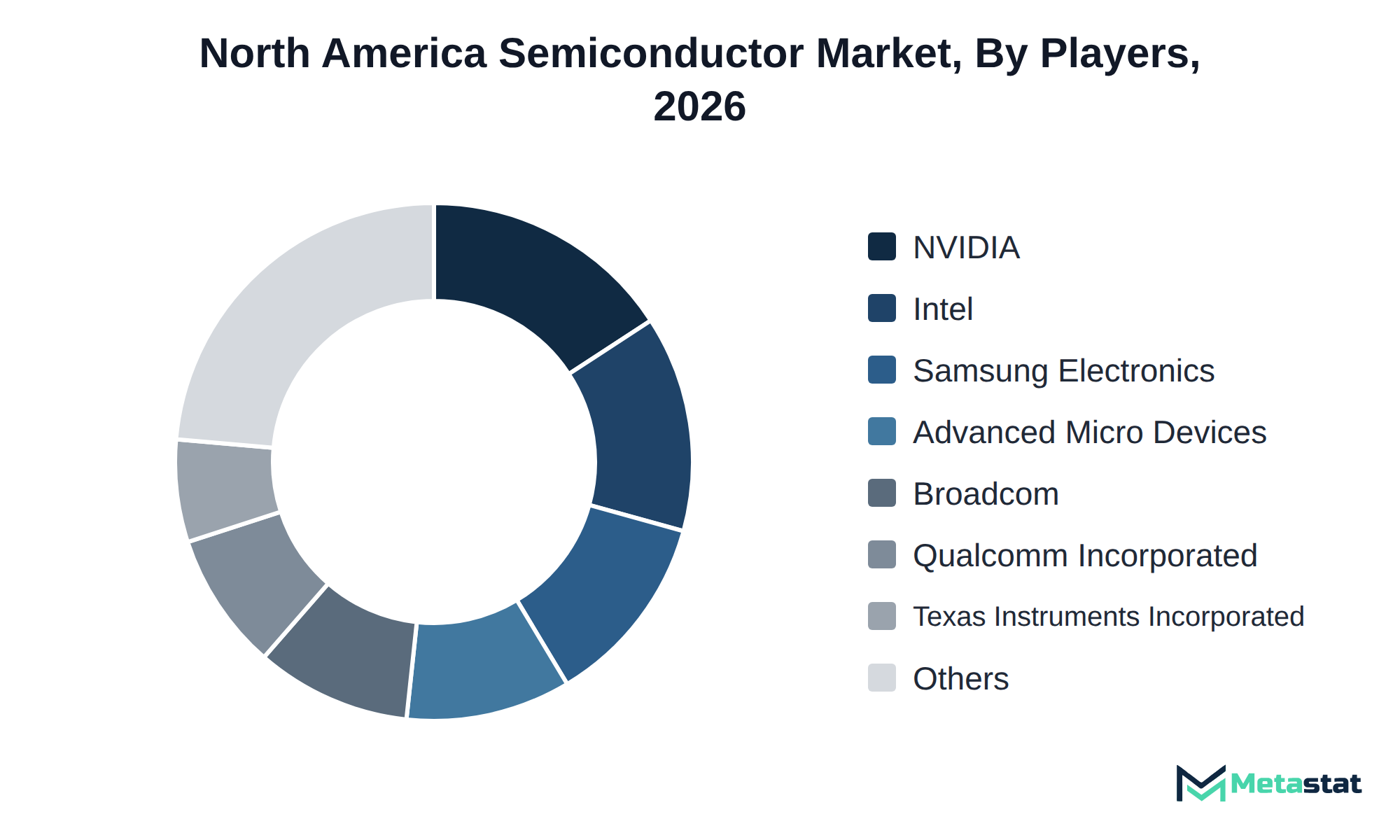
Competition within the North America Semiconductor market involves various strategies, with companies focusing on product specialization or technological innovation. Market players differentiate their offerings based on product types including Logic ICs, Memory ICs, Microcomponents, and Analog ICs, targeting sectors including Computing and Data Centers, Communications, and Automotive. Buyers prioritize factors including price, certification, customization, service quality, and the supporting ecosystem when making purchasing decisions.
NVIDIA Corporation emphasizes advanced graphical processing units and AI-driven solutions, catering primarily to the gaming and data center industries. Intel Corporation focuses on microprocessor technology, driving innovations in computing performance and efficiency across multiple sectors. Samsung Electronics Co., Ltd. excels in memory solutions, providing high-capacity chips that support consumer electronics and enterprise applications.
This growth relies on several key developments within the market. First, the expansion of Logic ICs, projected to grow from USD 87.8 billion in 2026 to USD 155.6 billion by 2033, will drive significant revenue increases. Second, the Computing and Data Centers sector, expected to rise from USD 95.7 billion in 2026 to USD 167.1 billion by 2033, significantly contributes to meeting the market's growth targets. Third, the adoption of advanced semiconductor materials, particularly Silicon Carbide (SiC), projected to achieve USD 13 billion by 2033, supports enhanced performance and efficiency in various applications. However, risks exist that could hinder this forecast. Supply chain disruptions, driven by geopolitical tensions or natural disasters, represent a primary concern. Such disruptions impact production capacity and lead to increased prices, affecting demand across segments. Overall, the North America Semiconductor market shows strong potential for growth, contingent upon successfully navigating these developments and risks.
By Product Type: Logic ICs, Memory ICs, Microcomponents, Analog ICs, Discrete Semiconductors, Optoelectronic Semiconductors, Non-Optical Sensors and Actuators
By End-Use Industry: Computing and Data Centers, Communications, Automotive, Industrial, Consumer Electronics, Aerospace and Defense, Medical Electronics
By Semiconductor Material: Silicon (Si), Silicon Carbide (SiC), Gallium Nitride (GaN), Others (GaAs, InP, etc.)
By Region: United States, Canada, Mexico
The report strategically identifies and profiles the key market players and analyses their core competencies in each sub-segment of the Semiconductor market.
Report Attributes | Details |
Study Period | 2021-2033 |
Base Year | 2025 |
Estimated Year | 2026 |
Forecast Period | 2026-2033 |
Historical Period | 2021-2025 |
Growth Rate | CAGR 7.2% from 2026 to 2033 |
Revenue Unit | USD billion |
Segmentation | By Product Type, End-Use Industry, Semiconductor Material, Region, and Region |
Find answers to common questions about this report
The Semiconductor market size was valued at USD 185.3 billion in 2025.
The market is projected to grow at a CAGR of 7.2% during the forecast period from 2026 to 2033.
Logic ICs lead the Semiconductor market with a projected value of USD 155.6 billion by 2033, reflecting the highest growth rate among product types at a CAGR of 8.5%.
Growth in the computing and data center sectors significantly influences spending on semiconductors. Rapid advancements in semiconductor materials, particularly Silicon Carbide and Gallium Nitride, enhance device performance and sustainability, driving market expansion.
Increasing production costs represent a significant restraint in the market, driven by rising raw material prices and manufacturing expenses. These higher costs lead to smaller orders and delayed replacement cycles, affecting overall demand for semiconductors.
Several factors favor adoption in the North America Semiconductor industry. The rising demand for advanced computing capabilities in data centers and computing applications drives significant investments in logic integrated circuits. The increasing penetration of artificial intelligence and machine learning applications further enhances the need for high-performance logic ICs, supporting overall market growth.
The Semiconductor market is estimated to reach a valuation of USD 324.7 billion by 2033.
Key players operating in the Semiconductor market include NVIDIA Corporation, Intel Corporation, Samsung Electronics Co., Ltd., Advanced Micro Devices, Inc., Qualcomm Incorporated, Texas Instruments Incorporated, and Micron Technology, Inc.
The automotive industry is projected to experience significant growth in the Semiconductor market, with demand driven by advancements in electrification and advanced driver-assistance systems.
The Logic ICs segment is expected to reach USD 155.6 billion by 2033, reflecting a compound annual growth rate of 8.5 percent.
The analysts below cover Electronics and Semiconductor research at Metastat Insights.
LEAD ANALYST
Utkarsh Khirodkar is a Lead Market Research Analyst at MetaStat Insight, specializing in market intelligence, technology sector assessments, and competitive strategy.

PRINCIPAL CONSULTANT - ENTERPRISE AI & EMERGING TECHNOLOGIES
Banking & Finance · Electronics and Semiconductor · Energy and Power · Healthcare IT · Information & Technology · Professional Services
Vijay Gunti is a Principal Consultant at MetaStat Insight, bringing over two decades of experience across enterprise digital transformation, technology strategy, and intelligent systems.

PRINCIPAL CONSULTANT - QUALITY SYSTEMS & COMPLIANCE
Electronics and Semiconductor · Machinery & Equipment · Professional Services
Omkar Phadtare is an Industry Consultant at MetaStat Insight, specializing in quality systems, regulatory compliance, and standards benchmarking to drive data-driven market intelligence and strategic industry research.

ENERGY & INFRASTRUCTURE INDUSTRY CONSULTANT
Automotive and Transportation · Electronics and Semiconductor · Energy and Power · Machinery & Equipment
Saurabh Vasant Ganvir consults for Energy & Infrastructure Industry at MetaStat Insight, specializing in renewable energy, solar EPC, and electric vehicle (EV) infrastructure markets.

LEAD CONSULTANT - COMMUNICATION, TELECOM, AND IT
Electronics and Semiconductor · Information & Technology · Machinery & Equipment · Professional Services
Ravindra Sathe Consultants for Communication, Telecom, and IT at MetaStat Insight. He leads the firm's industry research initiatives across telecommunications infrastructure, digital connectivity, enterprise networking, and emerging information technology domains.
Tracking maintenance cycle demand for secondary flight display units and terrain collision avoidance systems across regional jet fleets involves complex aftermarket dynamics. MetaStat Insight provided practical analysis separating airline retrofit programs from OEM forward-fit production schedules in North America and Southeast Asia. The supplier matrix highlighted component obsolescence timelines without resorting to vague generalizations. The dataset served as a dependable reference during our annual program review meetings.
Evaluating secondary resin quality across post-consumer packaging streams requires reliable technical segmentation. MetaStat Insight delivered an objective assessment that distinguished between extrusion-grade flake pricing and optical sorting throughput limitations across Western Europe. The competitive positioning breakdown for licensed depolymerization technology providers answered several questions during our feedstock feasibility audit. Their team clarified regional trade restrictions on mixed plastic scrap quickly when our team submitted follow-up requests.
Evaluating sovereign cloud deployments for core banking platforms demands a clear view of data residency regulations and migration exit strategies. MetaStat Insight delivered an exhaustive review of regional latency tolerances, mainframe decommission milestones, and third-party vendor concentration risk. The regulatory compliance mapping across European and Asian financial jurisdictions gave our team a dependable baseline for multi-cloud infrastructure discussions.
Explore related market intelligence reports worth reading alongside this one.
Starting from
$2950