
Explore the growth disparities between the booming Asia-Pacific Poultry Feed market and the mature North American sector. Discover key factors driving this divergence.
The Poultry Feed market reflects distinct regional dynamics, particularly when comparing the rapidly expanding Asia-Pacific region with the more mature North American market. This divergence arises from a combination of consumer demand, production practices, and regulatory environments that shape how each region approaches poultry nutrition and feed formulation.
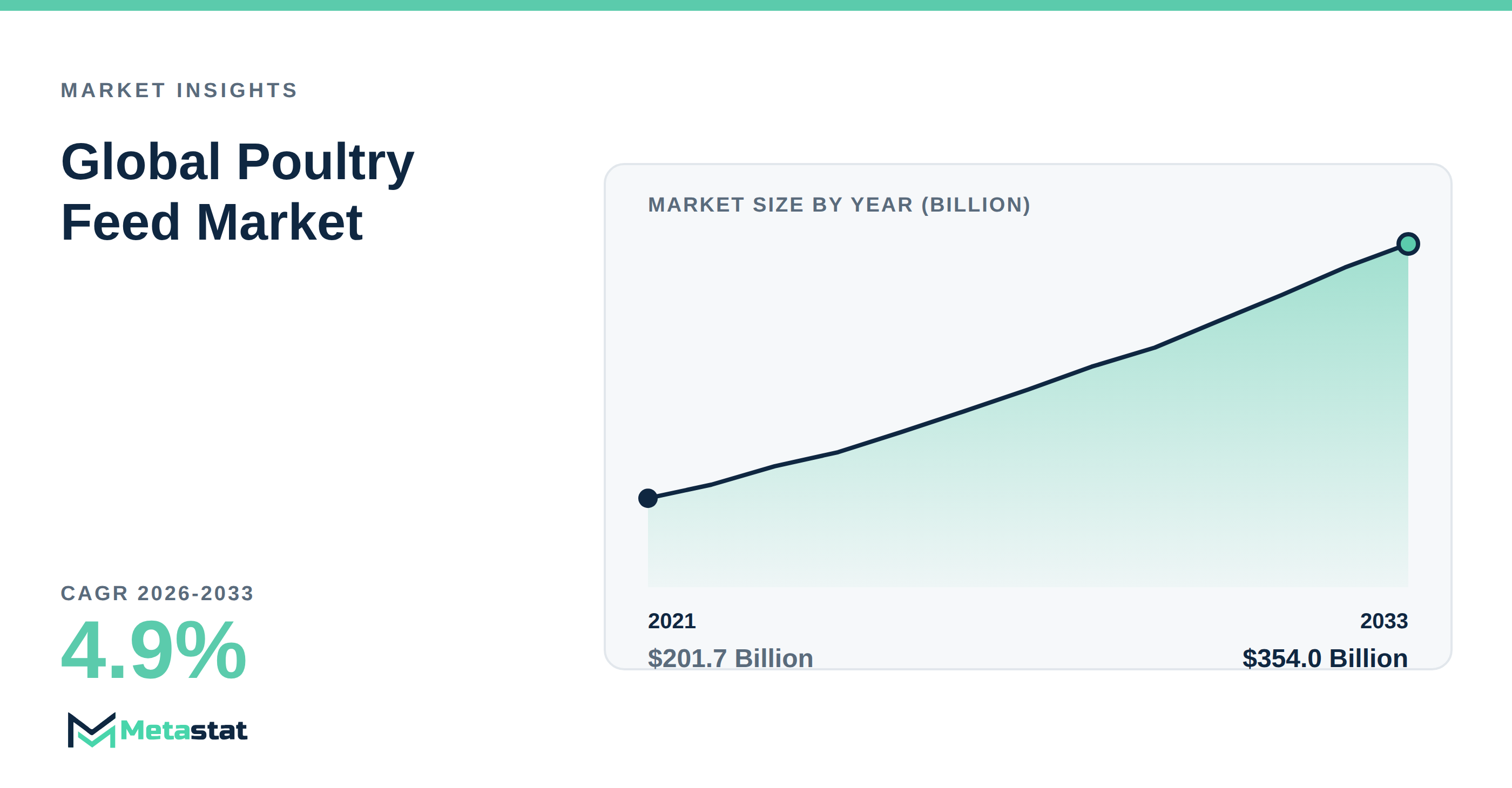
What drives growth in the Asia-Pacific Poultry Feed market?
The Asia-Pacific region emerges because a focal point for expansion within the Poultry Feed market, projected to achieve a market value of USD 354 billion by 2033. This growth is significantly influenced by population increases and heightened disposable income levels, contributing to greater protein consumption. Countries including China and India experience intensified poultry farming practices, influenced by urbanization and the need for affordable protein sources.
Investment in poultry infrastructure plays a vital role in supporting this regional growth. Enhanced feed production capacities allow suppliers to effectively meet rising demand. Technological advancements in feed formulation, including precision nutrition, improve nutrient delivery and enable producers to attain better feed conversion ratios and overall flock performance.
What characterizes the North American Poultry Feed market?
In contrast, the North American Poultry Feed market experiences slower growth, reflecting its more established status. Valued at USD 241.4 billion in 2025, the market's growth rate is hampered by regulatory pressures, compliance costs, and macroeconomic challenges. Producers in North America encounter rising operational expenses due to strict regulations on food safety and environmental impacts, which limit their competitive edge on the global stage.
The market focus is shifting towards high-performance nutrition, especially in broiler and layer feeds. Producers emphasize utilizing functional feed additives instead of traditional antibiotic growth promoters, aligning with consumer preferences for healthier poultry products. This evolution requires consistent innovation in feed formulations and adherence to changing regulations, presenting both challenges and opportunities for North American producers.
How do production practices differ across regions?
Production methodologies differ significantly between regions. In Asia-Pacific, poultry farming frequently relies on traditional practices, with small and medium-sized farms dominating the landscape. Conversely, North America showcases a more industrialized and consolidated poultry sector, where larger agribusinesses utilize advanced technologies, including digital feed mill automation, to enhance production processes.
North America's reliance on automation fosters operational efficiencies and cost savings, allowing producers to maintain competitiveness in a challenging regulatory climate. In comparison, poultry producers in the Asia-Pacific region are increasingly adopting innovative practices, including exploring alternative protein sources and sustainable ingredient commercialization, to refine feed formulations and promote environmental sustainability.
What are the regulatory challenges faced in both regions?
Regulatory landscapes significantly impact the operational dynamics of the Poultry Feed market across both regions. In North America, rigorous compliance standards raise operational costs for producers, particularly for smaller companies without the necessary resources to meet these demands. Such circumstances limit competition and market participation among family-owned operations and mini-mills.
Meanwhile, the Asia-Pacific region is transitioning towards more stringent regulatory frameworks, driven by concerns regarding food safety and environmental impact. While governments implement tighter regulations, producers adapt to comply with evolving standards while striving to maintain cost-effectiveness. Balancing compliance with profitability emerges because a critical factor for success within both markets.
What does the future hold for the Poultry Feed market?
Looking ahead, the trajectory of the Poultry Feed market hinges on how each region navigates ongoing challenges and leverages opportunities. In Asia-Pacific, the emphasis will persist on enhancing production capacities and adopting innovative technologies to fulfill increasing protein demands. The region is anticipated to continue expanding rapidly, driven by urban development and shifting dietary preferences.
Conversely, North America will confront regulatory complexities while remaining competitive in the global Poultry Feed market. Producers in this region will likely persist in innovating feed formulations and sourcing strategies to optimize costs and fulfill consumer expectations for healthier poultry products. The capability to balance compliance, operational effectiveness, and sustainability will prove crucial for growth in this mature market.
For more insights on how these dynamics play out, refer to the Global Poultry Feed Market.
Tags
About the Author

LEAD ANALYST
Utkarsh Khirodkar is a Lead Market Research Analyst at MetaStat Insight, specializing in market intelligence, technology sector assessments, and competitive strategy.