
Explore the key trends, challenges, and growth opportunities in the Electric Fan market as it is set to grow from USD 11 billion to USD 21.8 billion by 2033.
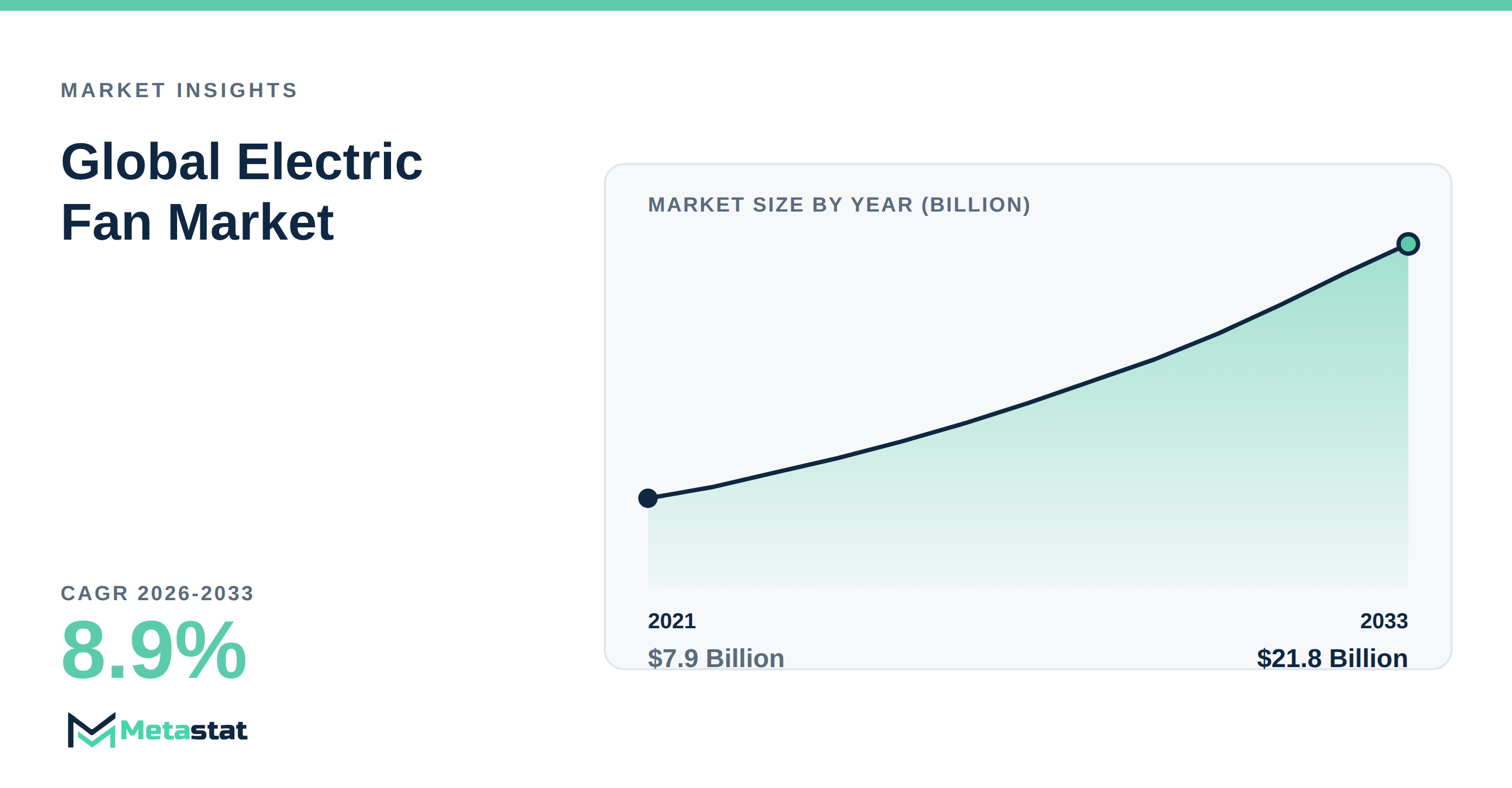
The Electric Fan market is on a clear growth trajectory, projected to increase from USD 11 billion in 2025 to USD 21.8 billion by 2033, reflecting a compound annual growth rate of 8.9%. Stakeholders should be alert to the trends shaping this transformation over the forecast period.
What factors are driving advancements in the Electric Fan market?
Multiple factors significantly influence the growth of the Electric Fan market. Urbanization and an aging population drive demand for efficient cooling solutions across residential and commercial sectors. Consumers are becoming more environmentally conscious, leading to a marked increase in the preference for energy-efficient and innovative fan designs. Manufacturers are responding to these demands by enhancing their product offerings with advanced features and designs.
The rise of online retail platforms has facilitated broader access to electric fan options, enabling consumers to choose from a diverse range of products. This ease of access encourages competition among suppliers, prompting innovations that cater to evolving consumer expectations, particularly regarding smart technology integration.
How does sustainability influence product offerings?
The emphasis on sustainability has prompted manufacturers to focus on energy-efficient fans that align with regulatory compliance and global sustainability goals. The Electric Fan market sees an increasing demand for products that minimize environmental impact, reflecting a shift toward solutions that reduce carbon footprints and energy consumption. Energy-efficient fans are expected to capture a larger market share owing to rising consumer awareness.
The anticipated growth of smart electric fans, equipped with Internet of Things (IoT) features, indicates a market inclination toward technological advancements that enhance user experience and convenience. Companies investing in research and development to innovate sustainable solutions are likely to enhance their competitive positioning.
What challenges could hinder market efficiency?
Despite the optimistic growth outlook, challenges persist that could hinder efficiency in the Electric Fan market. Supply chain disruptions, resulting from geopolitical instability and resource scarcity, contribute to production delays and increased costs. Rising inflationary pressures strain profit margins, making it difficult for manufacturers, particularly smaller firms, to compete effectively.
Technological obsolescence poses another threat, because established brands face competition from emerging players introducing novel, energy-efficient alternatives. Issues including fluctuating raw material prices affect production costs and ultimately consumer pricing. Addressing these challenges remains crucial for manufacturers aiming to maintain competitiveness and capture a larger share of the growing market.
What should stakeholders do to capitalize on growth opportunities?
To navigate the evolving Electric Fan market effectively, stakeholders should prioritize innovation and strategic partnerships. Investing in product evolution that incorporates smart technology and energy-efficient features will be vital. Manufacturers that emphasize sustainability and efficiency in their offerings are positioned to attract environmentally conscious consumers.
Expanding distribution channels, especially through online platforms, enhances visibility and accessibility for consumers. Companies that leverage competitive pricing and innovative marketing strategies will position themselves favorably in the market. With a robust understanding of consumer preferences and technological trends, businesses are better equipped to align their strategies to capitalize on the anticipated growth of the Electric Fan market.
Overall, the Electric Fan market is set for substantial growth driven by technological advancements, sustainability initiatives, and evolving consumer preferences. Stakeholders should remain vigilant to changing dynamics and seize opportunities arising from the market's progress toward 2033.
For deeper insights into market trends and forecasts, explore the Global Electric Fan Market.
Tags
About the Authors

LEAD ANALYST
Utkarsh Khirodkar is a Lead Market Research Analyst at MetaStat Insight, specializing in market intelligence, technology sector assessments, and competitive strategy.

PRINCIPAL CONSULTANT - ENTERPRISE AI & EMERGING TECHNOLOGIES
Banking & Finance · Electronics and Semiconductor · Energy and Power · Healthcare IT · Information & Technology · Professional Services
Vijay Gunti is a Principal Consultant at MetaStat Insight, bringing over two decades of experience across enterprise digital transformation, technology strategy, and intelligent systems.

PRINCIPAL CONSULTANT - QUALITY SYSTEMS & COMPLIANCE
Electronics and Semiconductor · Machinery & Equipment · Professional Services
Omkar Phadtare is an Industry Consultant at MetaStat Insight, specializing in quality systems, regulatory compliance, and standards benchmarking to drive data-driven market intelligence and strategic industry research.

ENERGY & INFRASTRUCTURE INDUSTRY CONSULTANT
Automotive and Transportation · Electronics and Semiconductor · Energy and Power · Machinery & Equipment
Saurabh Vasant Ganvir consults for Energy & Infrastructure Industry at MetaStat Insight, specializing in renewable energy, solar EPC, and electric vehicle (EV) infrastructure markets.

LEAD CONSULTANT - COMMUNICATION, TELECOM, AND IT
Electronics and Semiconductor · Information & Technology · Machinery & Equipment · Professional Services
Ravindra Sathe Consultants for Communication, Telecom, and IT at MetaStat Insight. He leads the firm's industry research initiatives across telecommunications infrastructure, digital connectivity, enterprise networking, and emerging information technology domains.