
The Enterprise Software-as-a-Service (SaaS) market is projected to grow significantly, with evolving technologies and industry trends shaping its future.
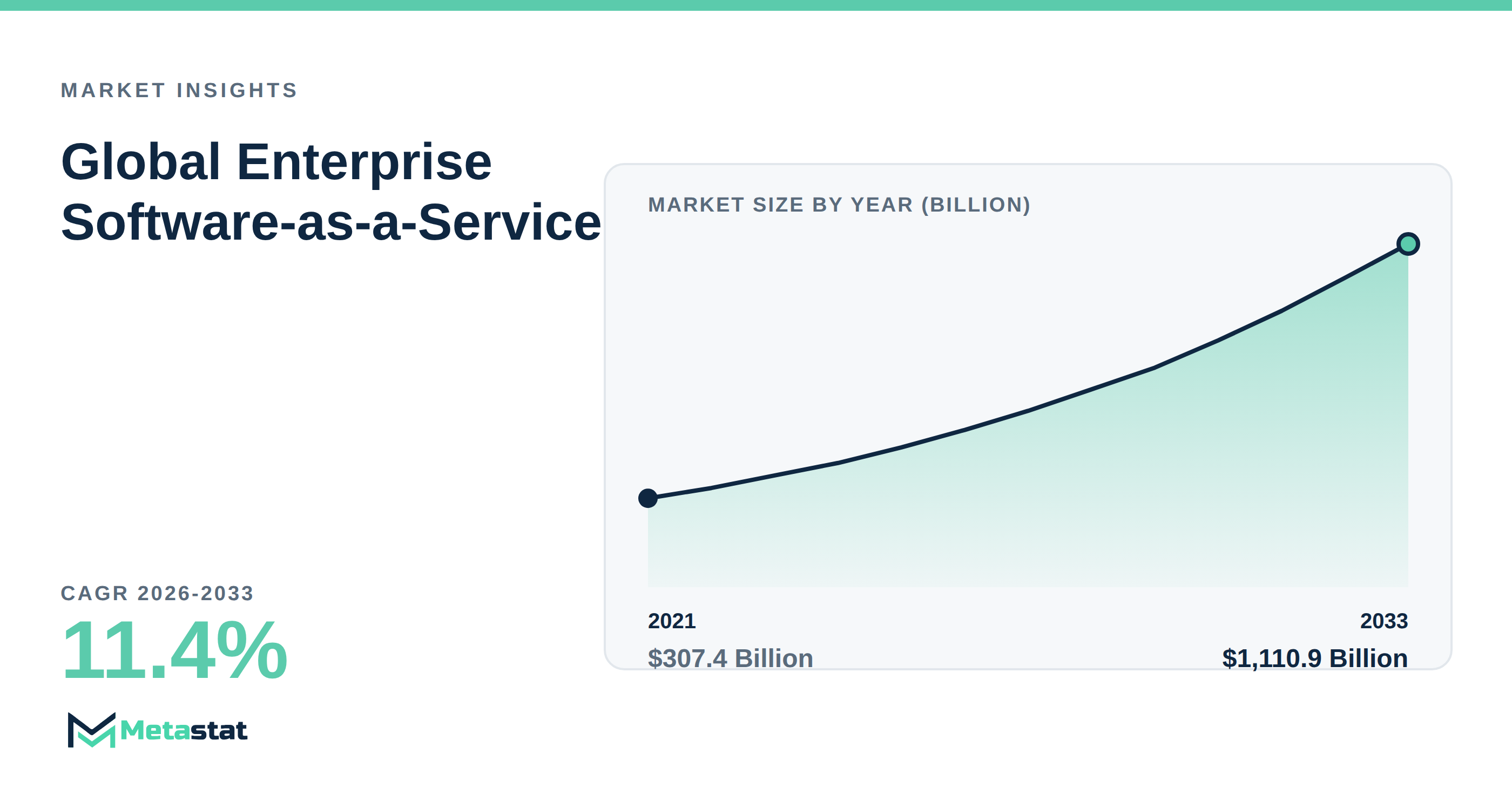
The global Enterprise Software-as-a-Service (SaaS) sector is on track for impressive growth, with current estimates indicating an increase from USD 468.2 billion in 2025 to USD 1,110.9 billion by 2033. This significant expansion, reflecting a compound annual growth rate (CAGR) of 11.4%, underscores the vital role of cloud solutions in modern business landscapes. Organizations are turning to innovative software solutions, recognizing their potential to enhance operational efficiency and respond effectively to customer needs.
What are the key factors driving the Enterprise Software-as-a-Service (SaaS) market?
Digital transformation emerges because a central factor propelling growth within the Enterprise Software-as-a-Service (SaaS) market. Organizations are increasingly seeking advanced solutions that boost operational efficiency and enhance customer engagement. A shift towards multi-tenant cloud environments allows businesses to achieve improved scalability and flexibility, which is crucial for responding to changing market dynamics swiftly. The integration of technologies including artificial intelligence into SaaS platforms enhances their functionality. This improvement stimulates demand across various sectors, because companies look for ways to leverage technology for competitive advantages.
How do cost optimization strategies influence SaaS adoption?
Cost optimization strategies play a pivotal role in shaping the trajectory of the Enterprise Software-as-a-Service (SaaS) market. Companies focus on refining labor efficiency and streamlining processes to enhance margins and improve overall performance. Small and medium enterprises show a notable interest in adopting SaaS solutions that align with their budgetary constraints, ensuring that advanced tools remain within reach. Flexible subscription models contribute to this trend, enabling firms to invest in technology while maintaining a focus on financial sustainability.
What hurdles are enterprises encountering with SaaS adoption?
Despite the promising growth outlook for the Enterprise Software-as-a-Service (SaaS) market, enterprises face significant hurdles, particularly regarding regulatory compliance and economic pressures. Increased scrutiny from regulatory bodies requires organizations to allocate substantial resources to compliance, which hinders overall operational efficiency. Smaller firms often find it challenging to compete with larger organizations that possess more extensive compliance capabilities. Economic factors like inflation and disruptions in the supply chain complicate investment decisions, creating barriers to adopting new SaaS solutions.
Which segments within the SaaS market hold the most substantial growth potential?
Key segments within the Enterprise Software-as-a-Service (SaaS) market demonstrate robust growth potential. The Customer Relationship Management (CRM) segment is projected to rise from USD 92.5 billion in 2026 to USD 178.5 billion by 2033, driven by the increasing need for improved customer interactions. The Human Capital Management sector is expected to reach USD 122.2 billion by 2033, highlighting the necessity of optimizing workforce efficiency for competitive success. Industries including banking, healthcare, and manufacturing show heightened demand for vertical SaaS solutions tailored to their specific challenges.
What does the future hold for the Enterprise Software-as-a-Service (SaaS) market?
The long-term outlook for the Enterprise Software-as-a-Service (SaaS) market appears optimistic. Organizations are set to continue investing in innovative solutions that boost productivity, streamline operations, and maintain competitiveness in an ever-evolving business environment. Staying vigilant about trends in digital transformation, cost efficiency, and regulatory compliance will be essential for stakeholders navigating this dynamic landscape. While the market progresses, awareness of technological advancements and regional demands will be critical for businesses seeking to ensure enduring success.
For those looking to dive deeper into trends, forecasts, and competitive dynamics, the Global Enterprise Software-as-a-Service (SaaS) Market offers a comprehensive examination.
Tags
About the Authors

LEAD ANALYST
Utkarsh Khirodkar is a Lead Market Research Analyst at MetaStat Insight, specializing in market intelligence, technology sector assessments, and competitive strategy.

PRINCIPAL CONSULTANT - ENTERPRISE AI & EMERGING TECHNOLOGIES
Banking & Finance · Electronics and Semiconductor · Energy and Power · Healthcare IT · Information & Technology · Professional Services
Vijay Gunti is a Principal Consultant at MetaStat Insight, bringing over two decades of experience across enterprise digital transformation, technology strategy, and intelligent systems.

LEAD CONSULTANT - COMMUNICATION, TELECOM, AND IT
Electronics and Semiconductor · Information & Technology · Machinery & Equipment · Professional Services
Ravindra Sathe Consultants for Communication, Telecom, and IT at MetaStat Insight. He leads the firm's industry research initiatives across telecommunications infrastructure, digital connectivity, enterprise networking, and emerging information technology domains.