
The AI in Asset Management market is set for substantial growth by 2033, driven by technological advancements and regulatory compliance, impacting investment strategies.
AI technologies are becoming essential in the asset management sector, because firms seek to enhance operational efficiency and maximize investment returns. The AI in Asset Management market reflects this trend, projected to expand from USD 113 billion in 2025 to USD 809.3 billion by 2033, representing a compound annual growth rate (CAGR) of 27.9%. Significant factors underpin this growth, particularly the adoption of machine learning (ML) and natural language processing (NLP) technologies.
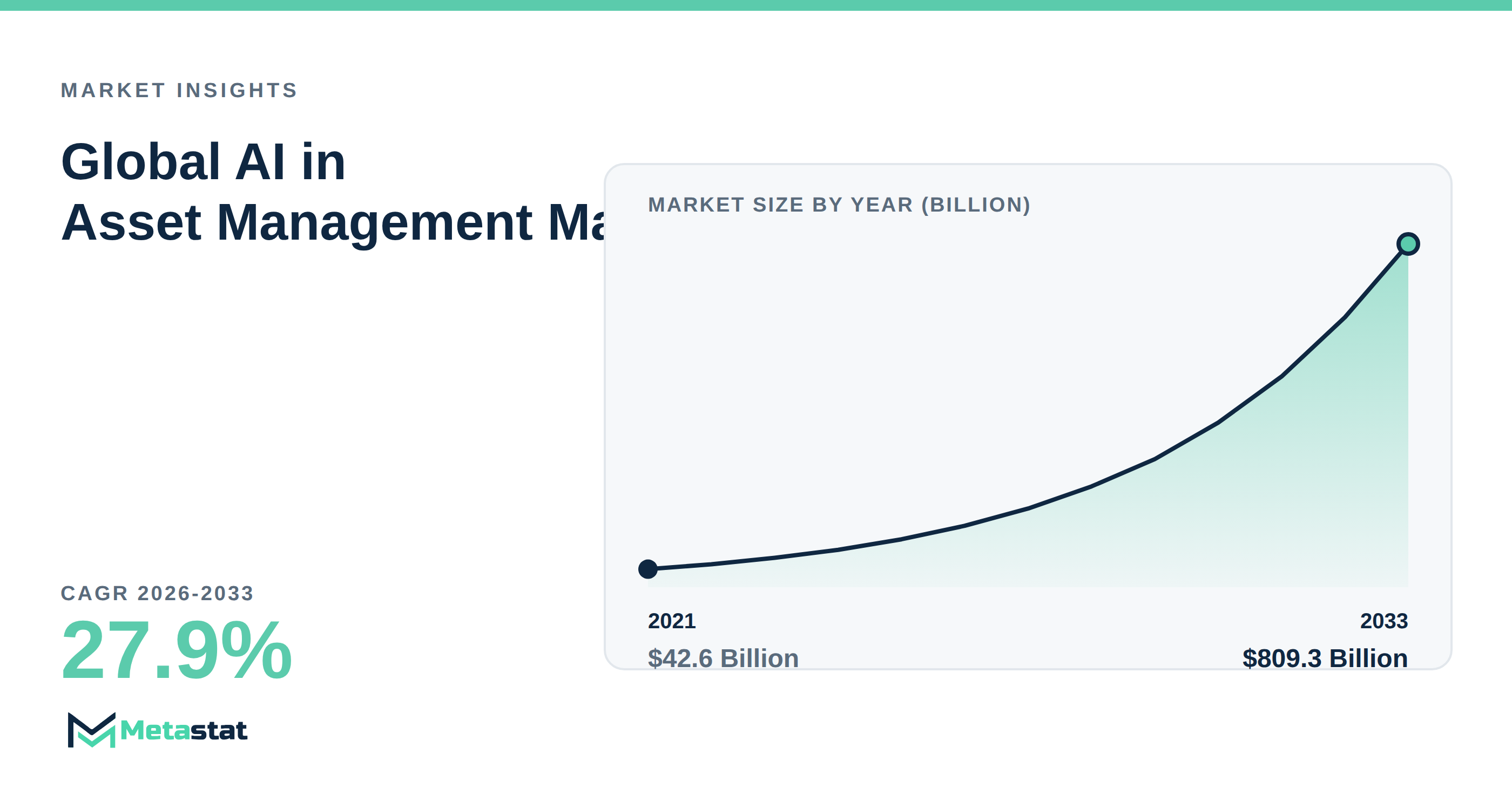
What drives the growth in AI technology adoption?
Organizations increasingly recognize the advantages of integrating AI into their operations. The demand for data-driven decision-making and enhanced operational efficiency drives the adoption of AI technologies, allowing asset management firms to effectively analyze vast datasets. Investment in AI not only improves portfolio optimization but refines risk management strategies, ensuring firms respond to rapidly evolving market conditions. Firms prioritize AI-driven solutions to maintain competitiveness.
How does machine learning impact asset management?
Machine learning, estimated to be valued at USD 78.1 billion in 2026, is expected to rise to USD 378.6 billion by 2033, reflecting a CAGR of 25.3%. This technology enables firms to extract valuable insights from historical data, thus supporting improved decision-making processes. The reliance on sophisticated algorithms allows asset managers to identify market trends and assess potential risks with greater efficiency. Consequently, investment in machine learning becomes a strategic priority for firms striving to enhance performance and improve investor confidence.
What role does regulatory compliance play in AI adoption?
Regulatory compliance remains a critical factor influencing AI adoption in asset management practices. The growing scrutiny regarding data privacy and security compels firms to adhere to evolving legal standards. This focus on compliance increases operational costs and complicates processes related to data management and reporting. However, organizations utilizing AI technologies streamline their compliance efforts, minimizing liabilities while enhancing overall efficiency. Therefore, compliance-driven AI solutions represent significant growth opportunities for firms within the sector.
How do geopolitical dynamics affect the market?
Geopolitical fragmentation and trade deficits present challenges for the AI in Asset Management market. Trade tensions disrupt the flow of components and technology, leading to uncertainties impacting firms' operational stability. These disruptions contribute to increased costs and hinder the adoption of new technologies. Firms navigate these challenges strategically, optimizing supply chains and investing in technologies that withstand geopolitical shocks.
What is the outlook for the AI in Asset Management market?
The AI in Asset Management market outlook appears optimistic, characterized by ongoing innovation and strategic investments. Firms focus on enhancing technological capabilities to meet evolving market demands and investor expectations. The integration of generative AI and advanced technologies will likely play a crucial role in shaping the future of asset management strategies. With sustainable investing gaining traction, firms that adopt AI solutions addressing environmental, social, and governance (ESG) factors will improve their market positions.
For a deeper dive into the trends shaping the market, access the full report: Global AI in Asset Management Market.
Tags
About the Authors

LEAD ANALYST
Utkarsh Khirodkar is a Lead Market Research Analyst at MetaStat Insight, specializing in market intelligence, technology sector assessments, and competitive strategy.

PRINCIPAL CONSULTANT - ENTERPRISE AI & EMERGING TECHNOLOGIES
Banking & Finance · Electronics and Semiconductor · Energy and Power · Healthcare IT · Information & Technology · Professional Services
Vijay Gunti is a Principal Consultant at MetaStat Insight, bringing over two decades of experience across enterprise digital transformation, technology strategy, and intelligent systems.