
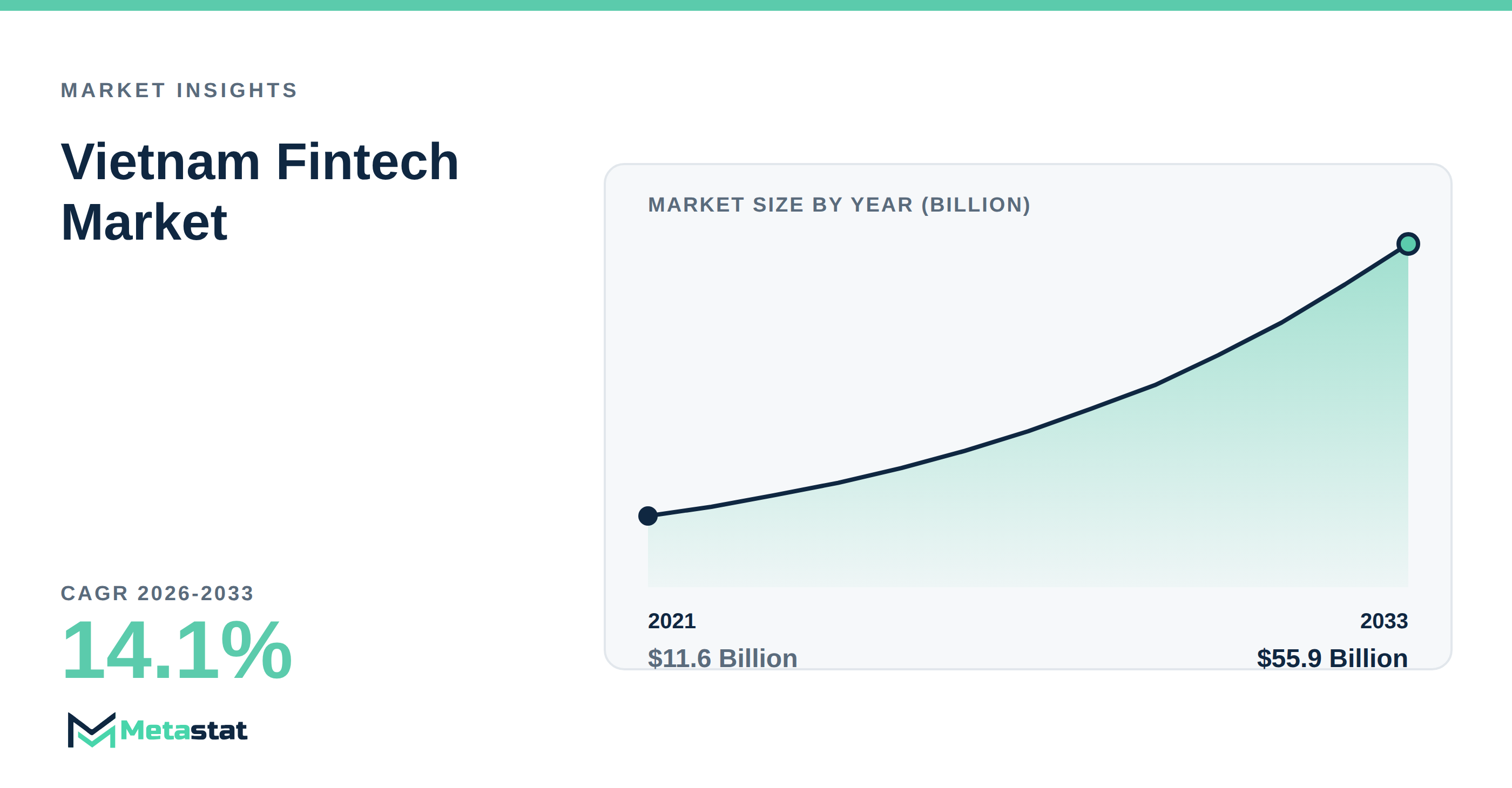
Discover how digital transformation and technological advancements drive the Vietnam Fintech market's growth, projecting a value of USD 55.9 billion by 2033.
The evolution of digital technologies is significantly shaping the financial landscape in Vietnam, driving the Vietnam Fintech market towards remarkable growth. By 2033, the market is projected to expand to USD 55.9 billion, influenced by a surge in smartphone usage and greater internet access. This blog delves into critical factors contributing to this growth and offers strategic insights for stakeholders navigating the dynamic fintech environment.
What drives the demand for digital payments and neobanking?
The increasing appetite for digital payments and neobanking services arises from evolving consumer behaviors and preferences. A higher penetration of smartphones, coupled with enhanced internet connectivity, allows users to seamlessly interact with financial services through digital channels. This trend resonates particularly well with younger demographics who prioritize speed and convenience in their transactions.
Substantial investments in technological infrastructure are propelling the enhancement of digital financial services. The digital payments segment, estimated at USD 7.3 billion in 2026, is poised to grow to USD 15.3 billion by 2033, representing a compound annual growth rate (CAGR) of 11.2 percent. The incorporation of advanced solutions including digital wallets and peer-to-peer payment systems is essential for addressing the changing needs of consumers and small enterprises.
How does regulatory compliance affect market dynamics?
Regulatory compliance brings both challenges and avenues for growth within the Vietnam Fintech market. While shifting regulations elevate operational costs, they simultaneously provide a framework that cultivates innovation. Policymakers strive to harmonize consumer protection with a competitive atmosphere that encourages fintech development.
While the environment transforms, businesses maneuver through a complex array of standards and compliance mandates. This adherence becomes notably vital in segments like digital lending and neobanking, where consumer trust is heavily reliant on transparency and security. Consistent investment in compliance-related technologies boosts operational efficiencies while ensuring that regulations are met.
What role do technological advancements play in market expansion?
Technological progress significantly impacts the trajectory of the Vietnam Fintech market. The adoption of artificial intelligence (AI), for example, is enhancing operational efficiencies across various financial services. Projections forecast that AI technologies within the sector will reach USD 17.3 billion by 2033, underscoring their role in driving innovation.
Integrating AI enables financial institutions to optimize processes, improve fraud detection, and automate customer service interactions. Implementing application programming interfaces (APIs) and open banking solutions cultivates a collaborative environment wherein traditional banks and fintech companies unite to deliver diverse and comprehensive offerings.
What challenges hinder market growth?
Despite the optimistic outlook, the Vietnam Fintech market encounters several hurdles that affect its growth momentum. Economic challenges, including inflation and currency fluctuations, escalate operational expenses, thereby squeezing profitability for fintech businesses. These economic elements complicate pricing strategies for services and may curtail consumer spending.
Infrastructure deficits in rural and underserved areas restrict access to digital financial services. This divide poses barriers to wider adoption of fintech solutions, because numerous potential users remain beyond the reach of current offerings. Addressing these disparities necessitates strategic investments in both digital and physical infrastructures to enhance service delivery across the country.
Conclusion: Strategic implications for stakeholders in the Vietnam Fintech market
The Vietnam Fintech market is set for significant expansion, backed by digital transformation, technological advancements, and shifting consumer expectations. Stakeholders, including financial institutions and fintech startups, should concentrate on leveraging innovative technologies to elevate their service offerings while adhering to regulatory mandates. A strategic focus on customer journey dynamics and operational efficiencies provides a competitive edge in this evolving sector.
For a more comprehensive understanding of the market dynamics, trends, and growth forecasts, explore the Vietnam Fintech Market.
Tags
About the Authors

LEAD ANALYST
Utkarsh Khirodkar is a Lead Market Research Analyst at MetaStat Insight, specializing in market intelligence, technology sector assessments, and competitive strategy.

PRINCIPAL CONSULTANT - ENTERPRISE AI & EMERGING TECHNOLOGIES
Banking & Finance · Electronics and Semiconductor · Energy and Power · Healthcare IT · Information & Technology · Professional Services
Vijay Gunti is a Principal Consultant at MetaStat Insight, bringing over two decades of experience across enterprise digital transformation, technology strategy, and intelligent systems.