
The Fleet Management market will experience significant growth, driven by digital transformation and infrastructure investment. This blog outlines the expected changes, opportunities, and challenges through 2033.
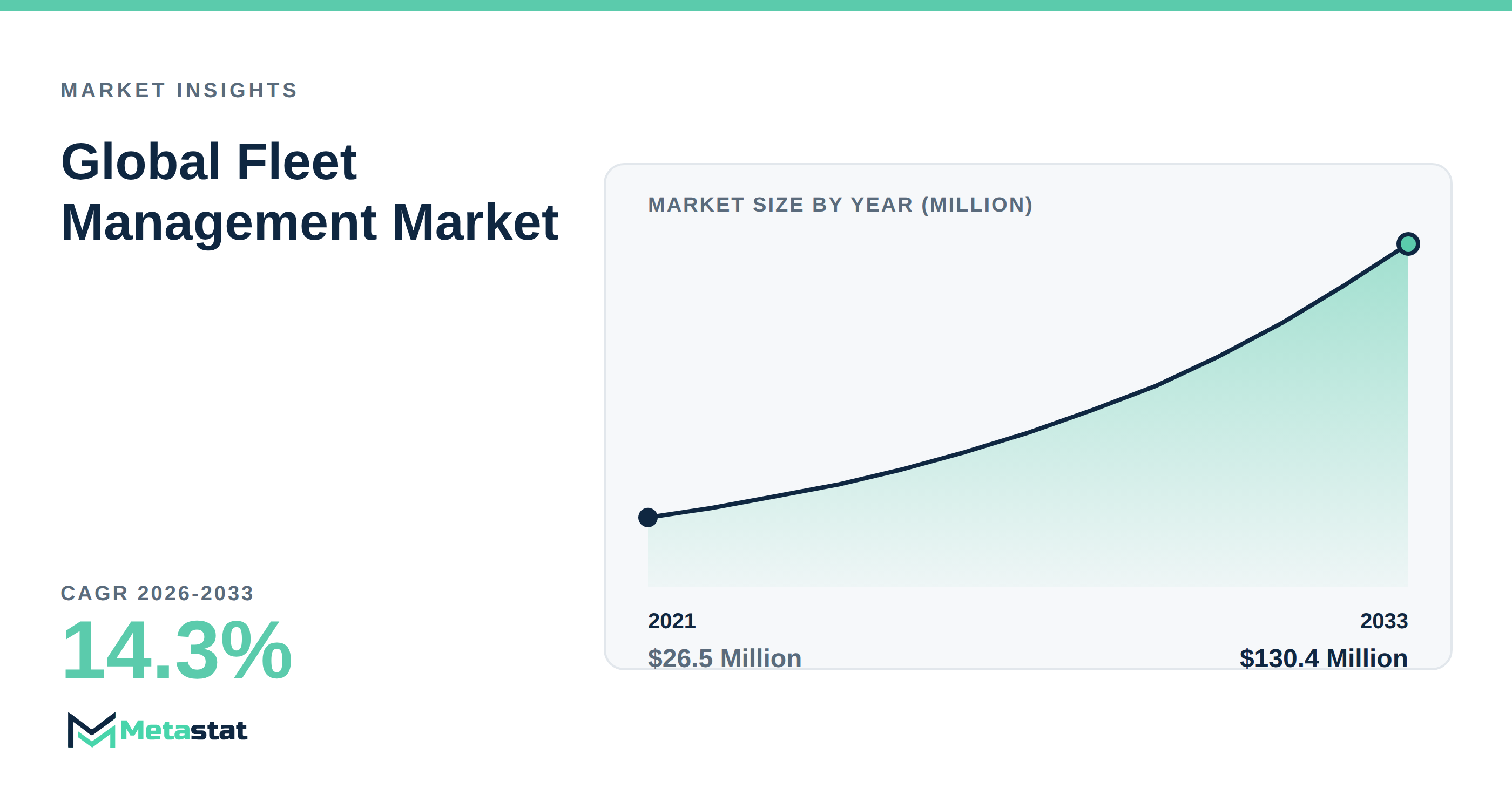
The Fleet Management market is set for considerable expansion over the next decade, with its value anticipated to increase from USD 44.7 million in 2025 to reach USD 130.4 million by 2033. This marks a notable CAGR of 14.3% during this period. Stakeholders be informed about the influencing factors of this growth, along with the challenges and opportunities present in the market.
What are the key factors driving growth in the Fleet Management market?
Investment in digital transformation significantly impacts the growth trajectory of the Fleet Management market. Organizations are prioritizing the adoption of innovative technologies aimed at enhancing operational efficiency, driven by increasing consumer expectations for immediate data access and improved decision-making capabilities. Favorable conditions for capital investment further encourage businesses to modernize their fleet management systems, supported by positive economic indicators.
Automation, artificial intelligence, and the integration of advanced software solutions lead to substantial enhancements in productivity. While organizations embrace these technologies, they attract a variety of new entrants focused on technology-based solutions, thus intensifying competition in the market. Enhanced data analytics related to vehicle performance, maintenance requirements, and fuel consumption patterns through telematics and analytics improve cost efficiency, allowing organizations to optimize labor and minimize overhead costs.
How do infrastructure advancements influence Fleet Management?
Infrastructure development is essential for boosting operational efficiency within the Fleet Management sector. Upgrading both physical and digital infrastructures, including facilities and network capabilities, creates valuable opportunities for enhanced productivity. The growing focus on asset modernization reflects a wider trend across transportation and logistics industries, prompting stakeholders to adopt advanced fleet management solutions that promote cost efficiencies.
Companies in the transportation and logistics sectors are honing their capabilities to effectively respond to changing consumer behaviors and demographic trends. By investing in modern infrastructure, these firms significantly enhance their operational capacities while reducing disruption risks. This modernization aligns with the increasing demand for efficient fleet management solutions, which supports sustained growth within the market.
What regulatory challenges impede progress in the Fleet Management market?
Despite abundant opportunities, regulatory hurdles present significant challenges for the Fleet Management market. Compliance with evolving legal requirements often necessitates substantial resource allocation, creating obstacles particularly for smaller businesses. Macroeconomic factors including inflation and ongoing supply chain disruptions negatively affect operational costs and profitability, complicating the ability of firms to invest in fleet management solutions adequately.
Gaps in infrastructure hinder the implementation of advanced telematics and connected devices, which are crucial for effective fleet management. Insufficient network infrastructure delays the transition towards digital solutions, while a persistent shortage of skilled labor to manage fleet operations exacerbates operational challenges. Collectively, these issues create a complex environment for fleet operators, necessitating strategic navigation to ensure continued growth.
What emerging trends should stakeholders monitor in the Fleet Management market?
Emerging regional demands are anticipated to drive growth opportunities in the Fleet Management sector. Rapidly developing economies in regions including Asia Pacific and South America are increasingly recognizing the importance of fleet optimization, opening new avenues for service providers. Investments in modernizing infrastructure will further enable the integration of advanced technologies, enhancing operational capabilities and efficiency.
The integration of telematics and software platforms is crucial for improved vehicle tracking and overall efficiency. Organizations are progressively adopting environmentally friendly practices, driven by a shift towards sustainability and the comply with evolving environmental regulations. The increasing focus on electric vehicle adoption and related infrastructure will result in a significant rise in demand for innovative solutions regarding EV fleet management and charging systems.
While regulatory compliance standards continue to shape market dynamics, fleet operators are increasingly seeking integrated solutions that not only facilitate adherence but optimize operational efficiency because well. Strategic partnerships and collaborations among companies are likely to arise because firms leverage complementary strengths to enhance customer service and broaden market reach.
For a comprehensive understanding of the Fleet Management market and its potential for growth, the full report provides extensive insights and analysis. Stakeholders that align with shifting market trends are better positioned for sustained success in this competitive environment.
Explore the full details in the Global Fleet Management Market.
Tags
About the Authors

LEAD ANALYST
Utkarsh Khirodkar is a Lead Market Research Analyst at MetaStat Insight, specializing in market intelligence, technology sector assessments, and competitive strategy.

ENERGY & INFRASTRUCTURE INDUSTRY CONSULTANT
Automotive and Transportation · Electronics and Semiconductor · Energy and Power · Machinery & Equipment
Saurabh Vasant Ganvir consults for Energy & Infrastructure Industry at MetaStat Insight, specializing in renewable energy, solar EPC, and electric vehicle (EV) infrastructure markets.