
Explore the diverse segments driving the growth of the Ghana automobile market, focusing on light commercial vehicles, electric models, and local assembly trends.
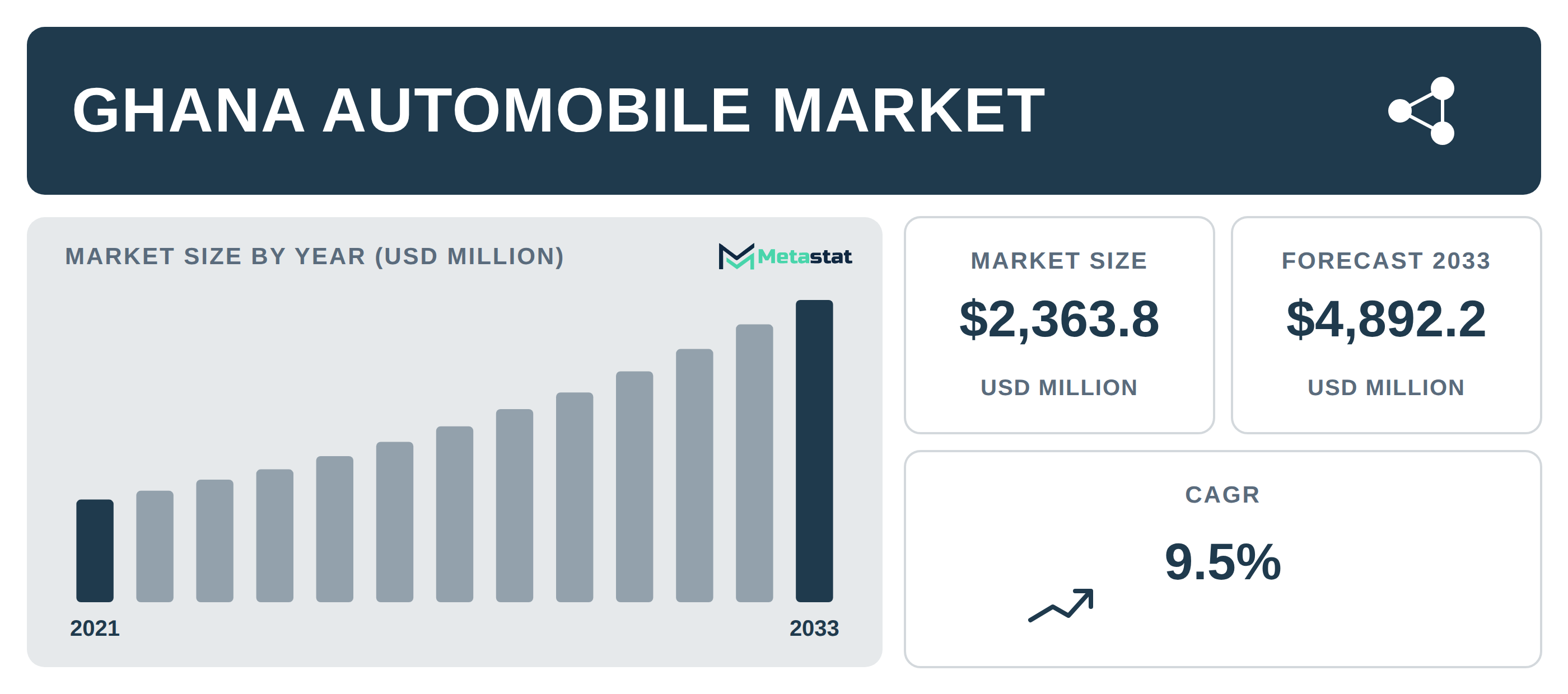
Many stakeholders misunderstand the drivers of growth in the automobile sector for Ghana Automobile, often viewing the market through a narrow lens focused solely on passenger vehicles. However, this perspective overlooks critical trends shaping the broader landscape of vehicle ownership and usage in the country. A deeper analysis reveals that multiple segments, including commercial vehicles, electric models, and local assembly initiatives, are vital to the future of this market. The full figures are in our Ghana Automobile market size and forecast report.
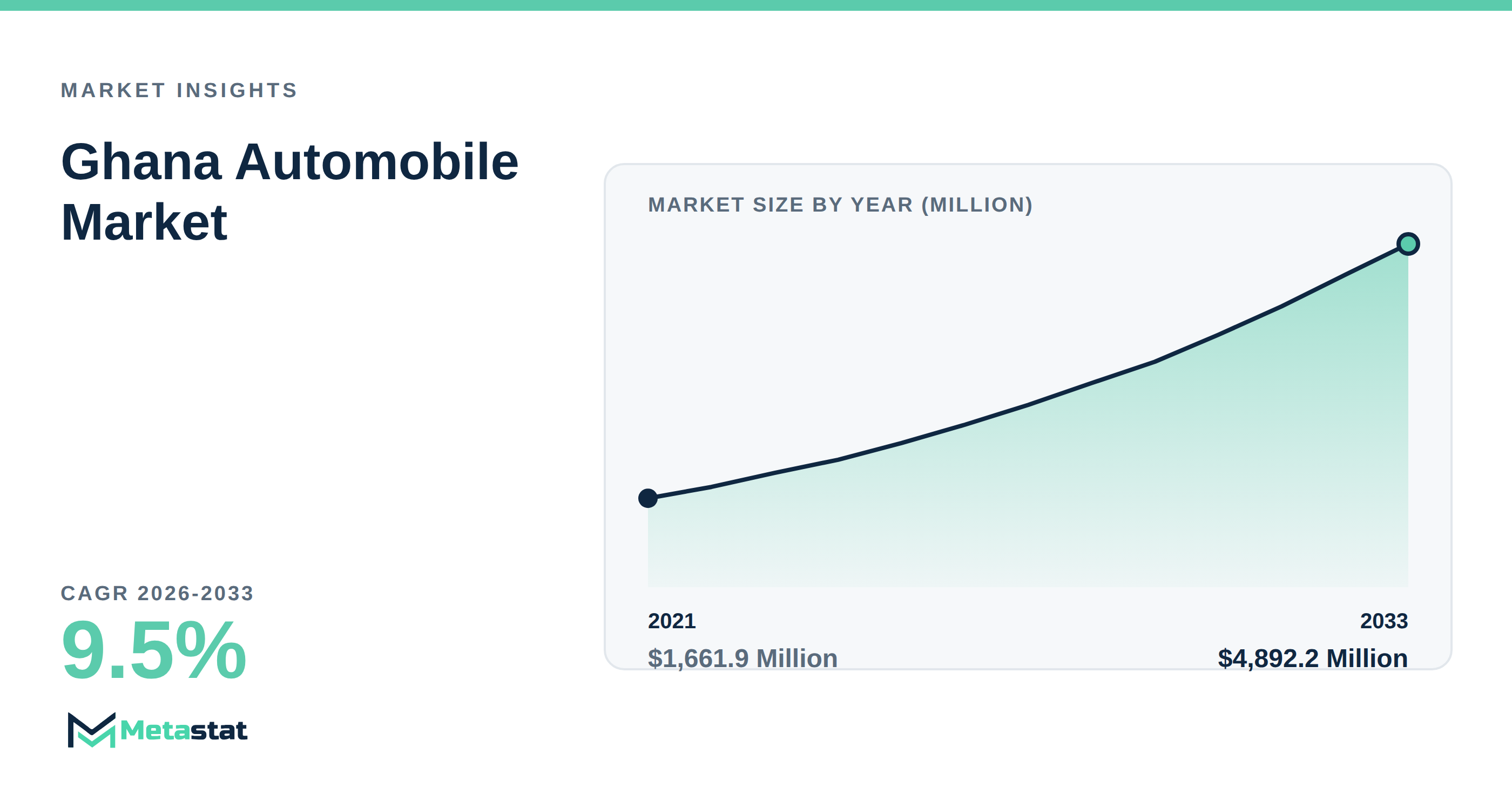
One common misconception is that the market for personal vehicles drives the entire industry in Ghana. While passenger cars represent a significant share, other vehicle types are increasingly prominent. Light commercial vehicles, for example, are anticipated to achieve a valuation of USD 692.7 million by 2033, reflecting a robust growth trajectory of 11%. This expansion underscores the necessity for businesses, particularly small and medium enterprises, to seek efficient transport solutions for goods and services. As urban populations grow and logistics requirements become more intricate, light commercial vehicles will serve an essential role in addressing these demands.
The rise of electric vehicles, especially two- and three-wheelers, is transforming urban transportation in Ghana. As cities confront congestion and air quality issues, the market for battery electric vehicles is expected to flourish, growing at a remarkable rate of 28.9%. This trend toward electrification signifies not only a shift in consumer preferences toward environmentally sustainable options but aligns with governmental initiatives focusing on promoting sustainable transportation solutions. With improvements in charging infrastructure and maintenance facilities, an increasing number of consumers are likely to consider electric options, further diversifying the vehicle mix on the roads.
Another significant trend relates to local vehicle assembly and production. The establishment of assembly plants within Ghana supports economic development while reducing reliance on imported vehicles. Several manufacturers have recognized the benefits of local assembly, which enables them to cater effectively to consumer preferences while establishing partnerships with local suppliers. As local assembly grows, it encourages the development of a supply chain that improves vehicle affordability and availability.
Affordability challenges influence the market landscape. The increasing costs associated with vehicle ownership restrict demand, particularly in low-to-middle income segments. Although new vehicles hold their appeal, many consumers turn to used imports due to their lower upfront costs. The used vehicle segment is poised to reach a value of USD 3,279.8 million by 2033, indicating robust demand driven by budget-conscious buyers. This shift toward used vehicle purchases prompts manufacturers and dealers to adapt their strategies to align with these varying consumer needs.
Understanding the multifaceted nature of Ghana Automobile insights equips stakeholders to make informed decisions. Emphasizing light commercial vehicles, electric models, and local assembly highlights emerging opportunities that extend beyond traditional passenger cars. By recognizing these dynamics, businesses better position themselves in a market that is evolving and respond effectively to the diverse needs of consumers.
Tags
About the Authors

LEAD ANALYST
Utkarsh Khirodkar is a Lead Market Research Analyst at MetaStat Insight, specializing in market intelligence, technology sector assessments, and competitive strategy.

ENERGY & INFRASTRUCTURE INDUSTRY CONSULTANT
Automotive and Transportation · Electronics and Semiconductor · Energy and Power · Machinery & Equipment
Saurabh Vasant Ganvir consults for Energy & Infrastructure Industry at MetaStat Insight, specializing in renewable energy, solar EPC, and electric vehicle (EV) infrastructure markets.