
The Industrial Mats market is set for significant growth driven by ergonomic solutions and safety regulations. Explore key market dynamics and investment strategies.
The Industrial Mats market is projected to reach USD 8 billion by 2033, up from USD 4.9 billion in 2025. This growth reflects increasing emphasis on workplace safety and ergonomic solutions, particularly in key sectors including manufacturing, healthcare, and logistics.
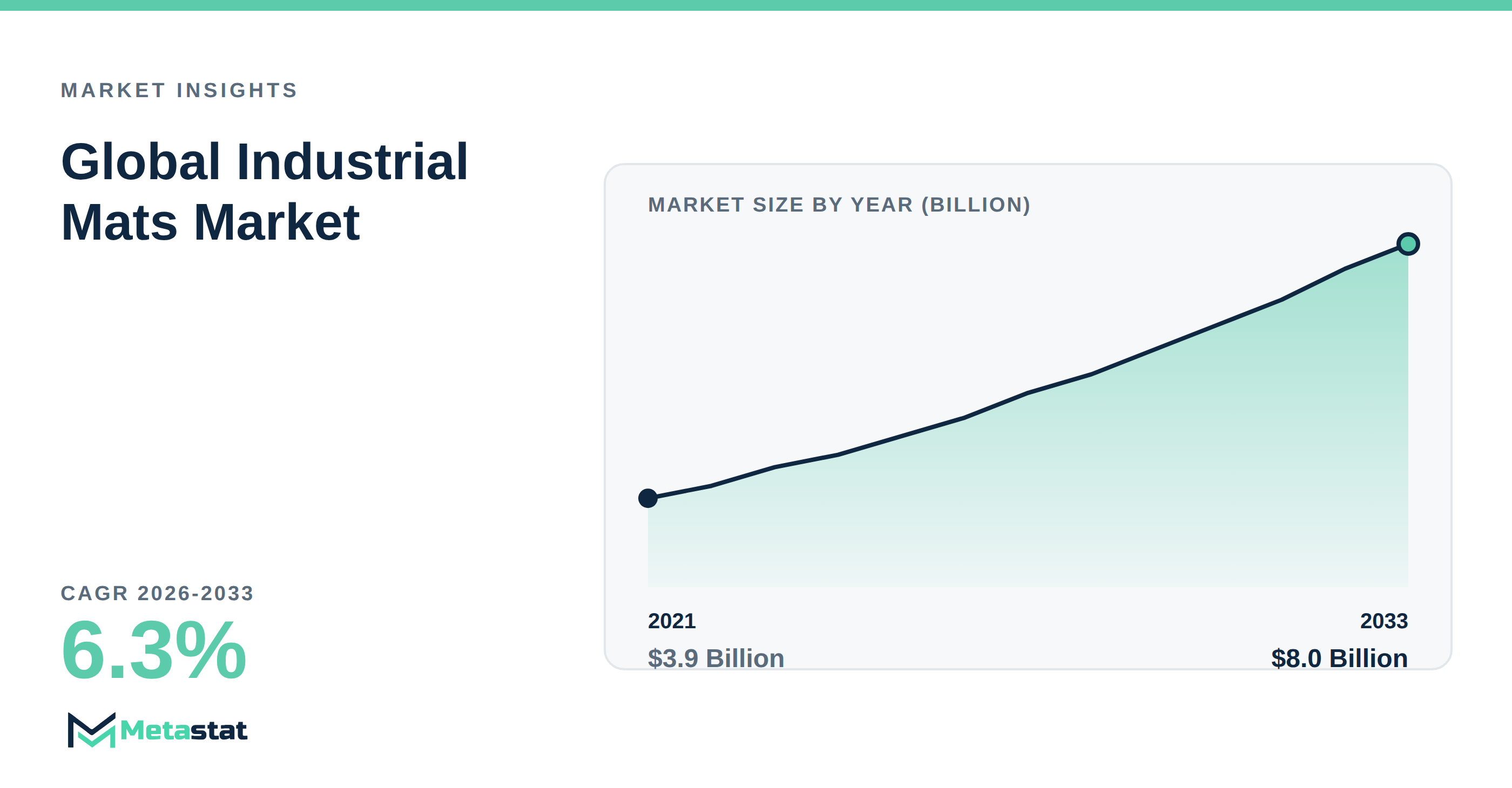
Understanding the dynamics behind this growth helps stakeholders make informed decisions in an evolving market landscape.
What drives demand for anti-fatigue mats?
Anti-fatigue mats represent a significant portion of the Industrial Mats market, expected to increase from USD 1.6 billion in 2026 to USD 2.3 billion by 2033. This growth is attributed to a heightened focus on employee well-being and productivity, because businesses recognize the benefits of comfort in enhancing performance. Sectors like manufacturing, healthcare, and warehousing are particularly focused on these ergonomic solutions, which are essential for employees who spend long hours standing.
By reducing fatigue, anti-fatigue mats lead to an increase in worker productivity and contribute to overall job satisfaction, resulting in lower turnover rates. This trend is evident because organizations prioritize investments in ergonomic solutions, aligning with global trends emphasizing workplace health and safety.
How are regional trends shaping the Industrial Mats market?
Regional dynamics play a crucial role in the Industrial Mats market. The North American market leads with a share of 26%, while Europe follows with 25%, and Asia Pacific accounts for 30%. The differences in regional demands correlate with varying industrial needs, safety regulations, and consumer preferences.
In North America, a strong emphasis on employee safety significantly drives the demand for anti-fatigue mats. Conversely, the rapid industrialization in Asia Pacific leads to an increasing need for effective workplace safety solutions, affecting product demand across various sectors. This regional uniqueness not only influences market penetration strategies but presents opportunities for companies to tailor their products to meet specific local requirements.
What are the implications of regulatory compliance on the market?
Regulatory compliance has emerged because a vital challenge for the Industrial Mats market. Increasing environmental regulations necessitate significant investments in technology and processes to meet compliance standards, impacting production costs and timelines. Manufacturers navigate these complexities while balancing quality and cost efficiency.
Compliance drives demand for mats that adhere to rigorous safety protocols, ensuring they meet industry standards. However, supply chain disruptions resulting from geopolitical tensions complicate access to essential raw materials, further influencing production costs. Companies that strategically streamline their operations and adopt advanced technologies are better positioned to mitigate these challenges effectively.
What role does technological advancement play in market growth?
Technological advancements are transforming the Industrial Mats market by enabling innovative solutions that enhance product performance. The adoption of automation and digital transformation across industries encourages companies to implement specialized mats that improve operational efficiency.
Research and development efforts are increasingly focused on creating mats with superior functionalities, including enhanced slip resistance and simplified cleaning features. Innovative designs respond to consumer wants for higher quality while aligning with sustainability initiatives, because businesses seek environmentally friendly materials for mat production.
How should stakeholders approach investment in the Industrial Mats market?
Maintaining agility in operations is essential for stakeholders navigating the evolving dynamics of the Industrial Mats market. Investment strategies should emphasize understanding regional demands, regulatory requirements, and technological advancements. Companies that invest in research and development to create innovative, high-quality products for specific applications are likely to see success.
Identifying emerging markets with unmet needs presents significant opportunities for growth. Strategic partnerships and collaborations enhance product offerings, ensuring businesses remain competitive in an actively fragmented market.
The Industrial Mats market is on a strong growth trajectory, driven by heightened awareness regarding workplace safety and shifting consumer preferences. By leveraging insights into market dynamics, stakeholders better position themselves for success in this expanding sector. For deeper insights and detailed analysis, readers are encouraged to explore the Global Industrial Mats Market.
Tags