
Explore the driving factors, emerging opportunities, and regulatory challenges impacting the Steel Pipes and Tubes market's growth trajectory. Gain insights into how companies navigate this evolving landscape.
Understanding the driving factors behind the growth of the Steel Pipes and Tubes market requires a nuanced examination of underlying trends. While statistics indicate a stable market, the deeper dynamics illustrate the intricate elements influencing this sector. The market is expected to rise from USD 137.9 billion in 2025 to USD 223.3 billion by 2033, highlighting an impressive compound annual growth rate (CAGR) of 6.2% over the forecast period.
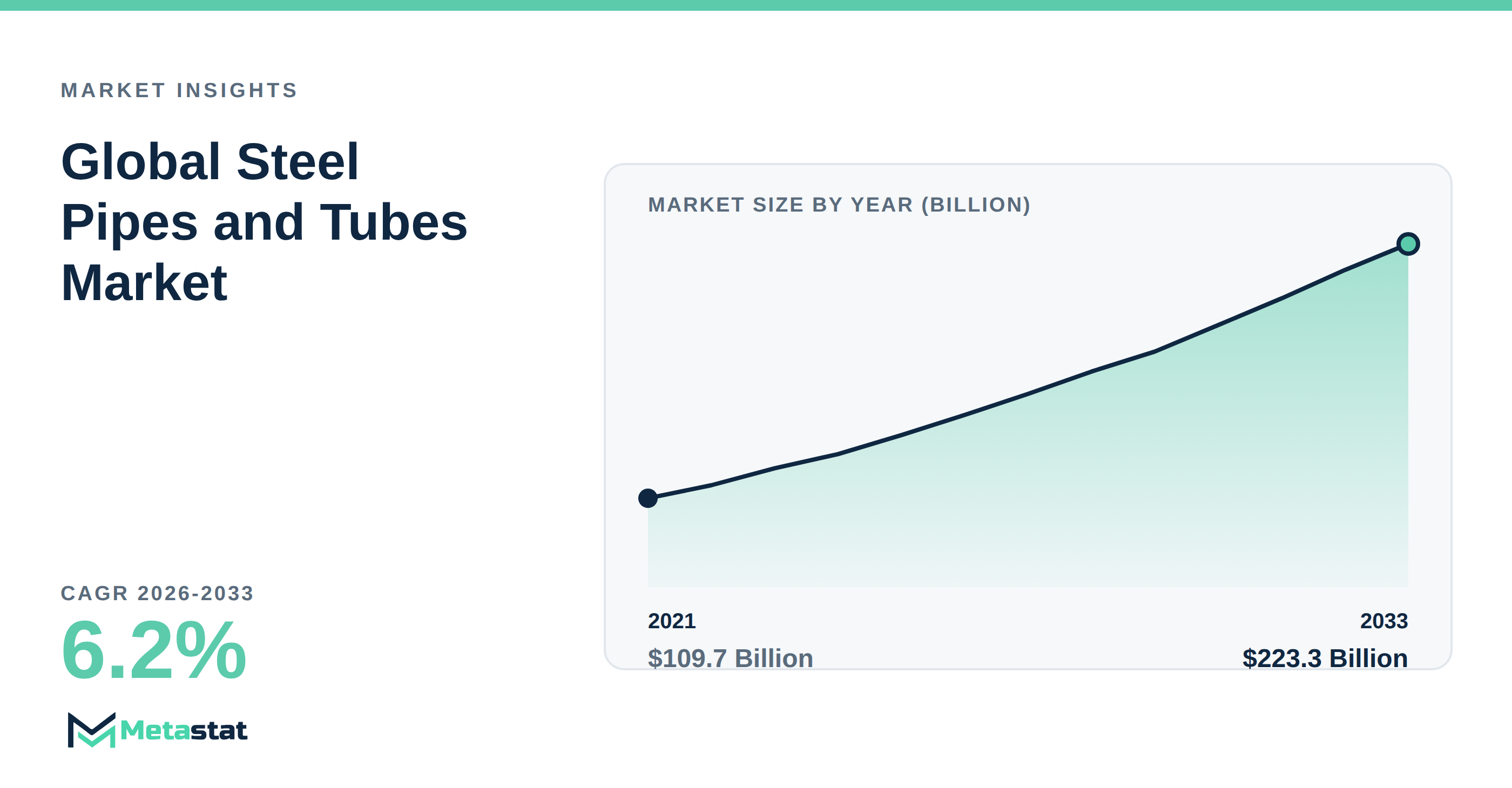
What is driving the growth in the Steel Pipes and Tubes market?
The projected growth in the Steel Pipes and Tubes market is primarily fueled by increasing demand from key industries including oil and gas, construction, and power generation. These sectors are prioritizing substantial investments in infrastructure projects, which significantly elevate the consumption of steel pipes and tubes. For example, the market value in North America is anticipated to reach USD 28.9 billion by 2033, bolstered by ongoing construction and expansion initiatives in the region.
The manufacturing process segment is diverse, particularly with Electric Resistance/High-Frequency Welded (ERW/HFW) pipes, which are expected to attain a market value of USD 81.1 billion by 2033. The growth of this segment reflects a transition toward efficient production methods and a rising demand for high-quality piping solutions.
How do regulatory challenges impact the market?
Regulatory compliance poses notable challenges that significantly influence the Steel Pipes and Tubes market dynamics. The increasing legal requirements surrounding environmental standards compel manufacturers to invest in technologies and processes that align with these guidelines. Consequently, this pressure particularly impacts smaller market players who struggle to compete against larger firms benefiting from economies of scale.
Fluctuations in raw material costs, driven by geopolitical factors, create uncertainty in pricing strategies. Suppliers continuously adjust their pricing in response to these market shifts, complicating operational strategies and affecting overall profitability. In light of these pressures, companies that prioritize robust compliance strategies enhance their market positioning while minimizing risks associated with regulatory non-compliance.
What opportunities are emerging in the market?
Significant opportunities are emerging for the Steel Pipes and Tubes market, particularly with the growing focus on sustainable energy solutions. The increasing demand for hydrogen and CO₂ pipelines signifies the industry's evolving landscape, driven by decarbonization efforts and the transition to cleaner energy sources. Companies developing specialized technologies for these pipelines are positioned to capitalize on a rapidly expanding market segment.
Investment in innovation is crucial, with advancements in coating and connection technologies improving product performance and longevity. This innovation not only addresses current market demands but aligns manufacturers with future trends, establishing them because competitive leaders.
How does market fragmentation affect competition?
The Steel Pipes and Tubes market is characterized by considerable fragmentation, showcasing numerous players that offer diverse products and services. This fragmentation fosters innovation, with companies striving to differentiate themselves while addressing varied customer needs. For instance, manufacturers that invest in research and development enhance their ability to introduce next-generation steel products tailored for specific applications.
Mergers and acquisitions significantly influence competitive positioning within the industry. Strategic acquisitions enable companies to bolster their capabilities and broaden their market reach, thereby fortifying their standing in the Steel Pipes and Tubes market. Companies navigating this fragmented environment effectively leverage their strengths to capitalize on emerging opportunities.
What is the future outlook for the Steel Pipes and Tubes market?
The future outlook for the Steel Pipes and Tubes market hinges on strategic investments, technological advancements, and a commitment to sustainability. Demand from key industries is anticipated to continue its upward trajectory, and companies aligning their long-term investments with emerging trends - including eco-friendly practices and innovative manufacturing processes - will position themselves for future success.
Maintaining robust supply chain networks and adapting to regulatory shifts will be essential for companies aiming to stay competitive. The industry appears well-positioned for ongoing growth, with strategic opportunities arising from evolving consumer behaviors and the persistent focus on infrastructure development. For more detailed insights, refer to the Global Steel Pipes and Tubes Market.
Tags
About the Authors

LEAD ANALYST
Utkarsh Khirodkar is a Lead Market Research Analyst at MetaStat Insight, specializing in market intelligence, technology sector assessments, and competitive strategy.

INDUSTRY CONSULTANT - CHEMICALS & ADVANCED MATERIALS
Chemicals and Materials · Machinery & Equipment · Packaging
Amit Gadhekar Consultant for Chemicals and Materials at MetaStat Insight, directing sector-specific intelligence, research, and strategic consulting across global chemical and processing markets.