
LEAD ANALYST
Utkarsh Khirodkar is a Lead Market Research Analyst at MetaStat Insight, specializing in market intelligence, technology sector assessments, and competitive strategy.

Global Steel Pipes and Tubes Market Size, Share, By Manufacturing Process (Seamless, Electric Resistance/High-Frequency Welded, Longitudinal Submerged Arc Welded, Helical/Spiral Submerged Arc Welded, Other Welded Processes), By Material (Carbon Steel, Non-Stainless Alloy Steel, Stainless Steel), By Product Category (OCTG, Drill Pipe, Line Pipe, Standard & Pressure Pipe, Boiler & Heat Exchanger Tubes, Mechanical & Precision Tubing, Structural Tubes & Hollow Sections, Other Specialty Tubulars), By End-Use Industry (Oil & Gas, Chemical & Petrochemical, Power Generation, Construction & Infrastructure, Water & Wastewater, Automotive & Transportation, Industrial Machinery & Equipment), Industry Analysis, Growth, Trends, and Forecast, 2026-2033
Report ID
MSI-5250
Published
September, 2026
Pages
258 Pages
Format
Historical
Base year
Forecast
Forecast period
Report Details
Market Valuation: Valued at $137.9 Billion in 2025, projected to reach $223.3 Billion by 2033 at a 6.2% CAGR.
Dominant Segment: Carbon Steel leads the market, projected to grow from USD 102.1 billion in 2026 to USD 151 billion by 2033, driven by its strength and versatility across various industries.
Geographic Lead: Asia Pacific, particularly China and India, shows the fastest growth due to rapid industrialization and significant investments in infrastructure development.
What's Inside: The report provides a comprehensive analysis of market segmentation by manufacturing process, material, product category, and end-use industry, along with competitive coverage and forecast insights.
Emerging Regional Demands: Emerging regional demands are significantly influenced by urbanization and infrastructure modernization, particularly in Asia Pacific, driving the consumption of steel pipes and tubes.
Choose Your License
Global Steel Pipes and Tubes Market
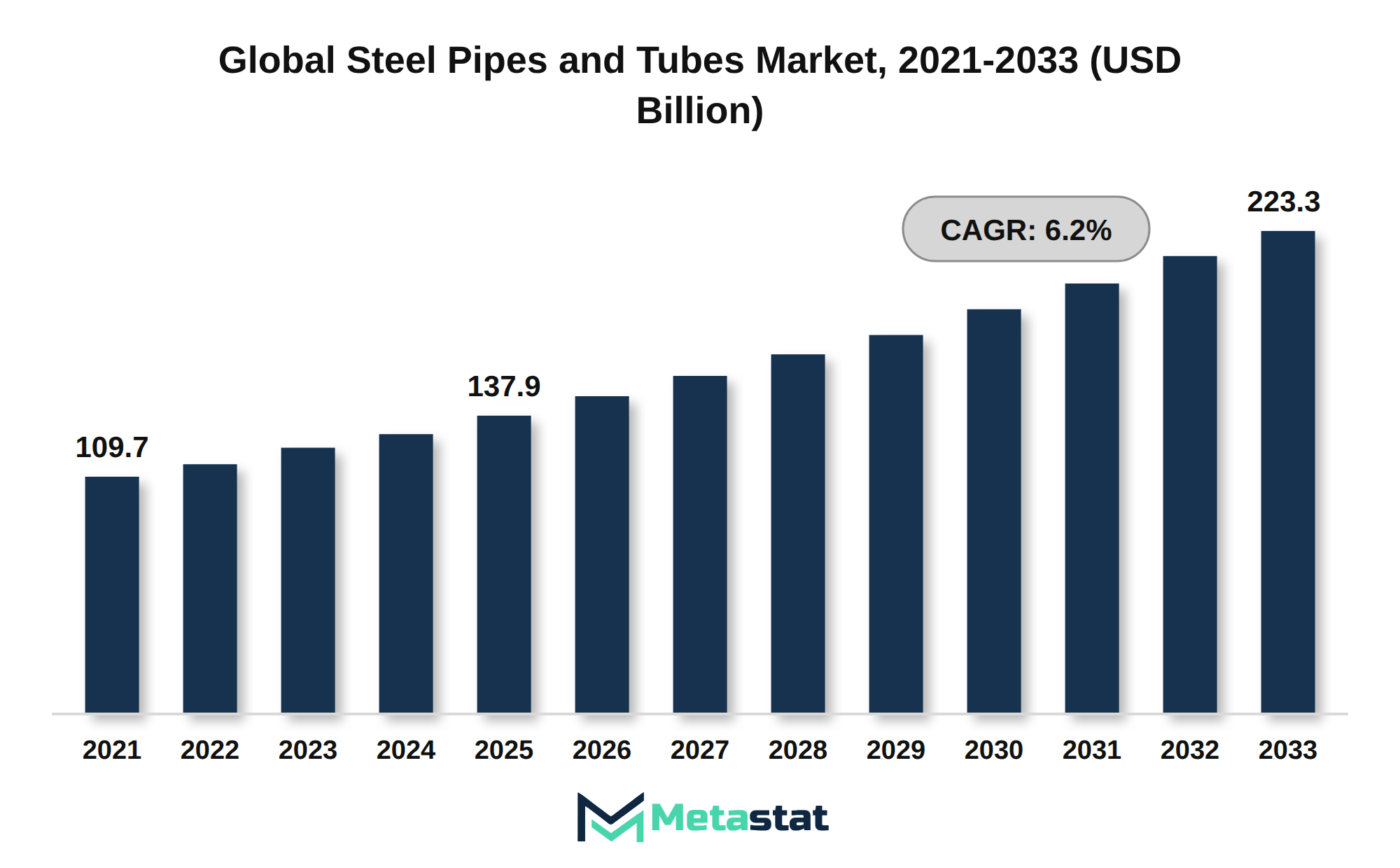
The global Steel Pipes and Tubes market was valued at USD 137.9 billion in 2025 and is projected to reach USD 223.3 billion by 2033, growing at a CAGR of 6.2% over the forecast period.
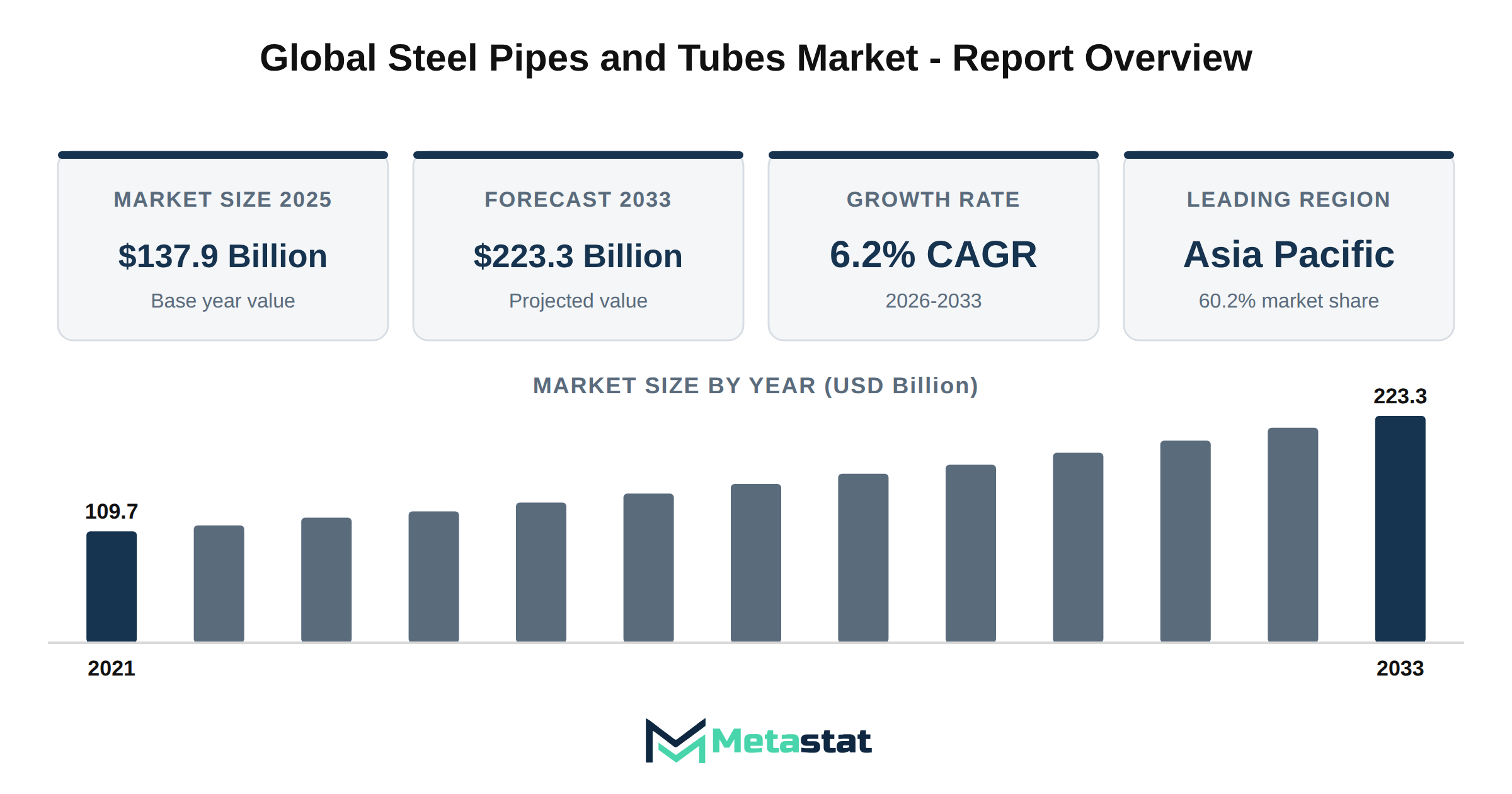
The Steel Pipes and Tubes market shows significant growth potential, with the base value recorded at USD 137.9 billion in 2025. Projections indicate a rise to USD 223.3 billion by 2033, reflecting a compound annual growth rate (CAGR) of 6.2%. This upward trend is supported by various factors, including increased demand from key industries including oil and gas, construction, and power generation.
North America represents a notable segment of the market, holding a share of 13.9%. By 2033, the region's value is expected to reach USD 28.9 billion, with a CAGR of 6.2%. The manufacturing process segment is diverse, featuring pipes projected to grow from USD 53.3 billion in 2026 to USD 83.2 billion in 2033, indicating a CAGR of 6.6%. The Electric Resistance/High-Frequency Welded (ERW/HFW) segment will contribute to market expansion, with a target value of USD 81.1 billion by 2033.
The material segment sees Carbon Steel leading the market, with an anticipated increase from USD 102.1 billion in 2026 to USD 151 billion in 2033 (CAGR of 5.8%). Non-Stainless Alloy Steel follows closely, expected to reach USD 27.9 billion by 2033, with a CAGR of 6.6%. Stainless Steel retains a significant market presence, projecting a target value of USD 44.4 billion by the same year.
In the context of product categories, OCTG (Casing & Tubing) will expand from USD 20.8 billion in 2026 to USD 32.5 billion in 2033, achieving a CAGR of 6.6%. The demand for drill pipes and line pipes remains strong, with line pipes targeting a value of USD 57.6 billion by 2033. Regulatory compliance and standards shape market dynamics, influencing pricing and trade practices.
Trade tariffs and import exposure impact the Steel Pipes and Tubes market, particularly in regions with stringent regulations. Opportunities for hydrogen and CO₂ pipelines evolve, driven by increasing focus on sustainable practices and decarbonization efforts. Innovations in coating and premium connection technologies contribute to enhanced performance and longevity of products, aligning with market requirements.
The dynamics of the North American OCTG inventory remain critical to the Steel Pipes and Tubes market. Fluctuations in inventory levels directly influence pricing strategies and supply chain management across the region. Robust demand from the oil and gas sector drives the necessity for efficient inventory management, ensuring that distributors maintain adequate stock levels to meet customer needs without incurring excess costs.
Compliance with API, ASTM, and ASME standards continues to shape the operational landscape for suppliers in the market. Companies investing in quality assurance and regulatory compliance gain a competitive edge, building trust and reliability among end-users. This focus on standards not only enhances product quality but aids in mitigating risks associated with regulatory non-compliance.
Pricing dynamics for steel and alloys are under pressure due to fluctuations in raw material costs and geopolitical factors. Suppliers actively monitor market trends and adjust pricing strategies accordingly to maintain profitability while ensuring competitiveness. The volatility in pricing influences purchasing decisions among buyers, impacting overall market growth.
Trade tariffs and import exposure significantly affect the market landscape. Tariffs imposed on steel imports create challenges for suppliers relying on foreign materials, leading to increased costs and potential supply shortages. Companies strategically navigating these tariffs find opportunities to strengthen domestic supply chains, enhancing market resilience.
Hydrogen and CO₂ pipeline opportunities are emerging trends that impact the market's future. The shift toward cleaner energy sources creates demand for specialized pipelines capable of transporting hydrogen and managing CO₂ emissions. Companies developing technologies and materials for these applications position themselves advantageously in an evolving energy landscape.
Distributor lead-time and stocking benchmarks directly influence operational efficiency within the market. Suppliers optimizing lead-times enhance customer satisfaction and strengthen client relationships. Adherence to effective stocking strategies enables distributors to respond promptly to market demands, minimizing delays in project execution.
Innovation in coating and premium connection technologies remains essential for maintaining competitiveness. Advances in coating solutions enhance corrosion resistance, extending the lifespan of pipes and tubes in challenging environments. Premium connections provide enhanced reliability, crucial for high-pressure applications in the oil and gas sector.
Regulatory compliance and risk frameworks require ongoing attention from market participants. Companies prioritizing adherence to regional regulations minimize liability and enhance their reputation among clients. The landscape of compliance is evolving, necessitating continuous adaptation to emerging standards and practices.
Disruptions in global supply chains impact sourcing strategies for suppliers in the market. Fluctuations in logistics architecture, including transportation and warehousing costs, necessitate agile responses from companies aiming to maintain operational continuity. Strategic partnerships and local sourcing initiatives play a vital role in mitigating risks associated with supply chain disruptions.
The market's fragmentation presents both challenges and opportunities. Numerous players compete, each offering distinct products and services. This fragmentation encourages innovation, driven by companies striving to differentiate themselves while addressing diverse customer needs.
M&A dynamics within the market influence competitive positioning and resource allocation. Strategic acquisitions enable companies to enhance their capabilities and expand their market reach. Investment in infrastructure remains crucial for supporting growth initiatives and meeting increasing demand from key end-use industries.
The future strategic outlook for the Steel Pipes and Tubes market emphasizes the importance of capital allocation and long-term planning. Companies aligning their investments with emerging trends, including sustainability and technological advancements, position themselves for success. High-value recommendations for market participants include promoting innovation, enhancing compliance measures, and strategically managing supply chains to navigate the evolving landscape.
The Steel Pipes and Tubes market benefits from heightened globalization and a focus on supply chain resilience. Governments and companies prioritize localized production strategies and risk mitigation to ensure consistent material supply, especially in critical industries including oil and gas and construction. This drive for resilience influences sourcing decisions, leading industries to seek reliable suppliers closer to their operations, resulting in increased domestic production capacities.
Investment flows into modernizing facilities and expanding manufacturing capabilities strengthen this trend. Regional collaborations and trade corridors enhance market access, creating opportunities for suppliers and manufacturers to optimize logistics and distribution networks. The integration of advanced technologies into production processes streamlines operations, reduces costs, and improves competitive positioning.
Consequently, the emphasis on globalization and resilience in supply chains increases demand for steel pipes and tubes. Industries adapt to shifting dynamics and strive for sustainability, with growth driven by innovative approaches and strategic partnerships, establishing a solid foundation for future expansion.
Regulatory tightening poses significant challenges for the Steel Pipes and Tubes market, impacting operational costs and compliance strategies. Increasing legal mandates related to environmental standards necessitate investment in technology and processes that meet compliance requirements. These investments often lead to higher capital expenditures, straining the financial resources of manufacturers and suppliers operating within the market.
Macroeconomic headwinds further restrict these constraints, with inflationary pressures affecting raw material costs and production expenses. Rising costs create hurdles for smaller players, who struggle to remain competitive against larger firms that benefit from economies of scale. The financial strain on these companies inhibits innovation and limits their ability to invest in new technologies.
Supply chain disruptions have emerged due to a critical issue, impacting the procurement of essential materials and components needed for production. Geopolitical instability in key regions exacerbates these supply chain risks, leading to delays and unpredictable costs. This uncertainty diminishes confidence in market growth prospects, affecting investment decisions across the sector.
Resource scarcity, particularly in critical raw materials, threatens production capabilities. This scarcity results from both regulatory constraints and the complex geopolitical landscape, limiting the availability of essential inputs. The Steel Pipes and Tubes market faces heightened competition for these resources, which leads to volatile pricing and availability challenges.
In addition, technological obsolescence presents a risk for manufacturers unable to keep pace with industry advancements. Firms that fail to adopt new technologies encounter difficulties in maintaining operational efficiency and product quality. Competition from alternative materials and product offerings complicates the landscape, requiring continuous adaptation to changing customer preferences.
Infrastructure gaps and connectivity deficits limit accessibility to markets and raw materials. These issues hinder the operational efficiency of companies, leading to deployment bottlenecks that stall growth. Workforce challenges, including skilled labor deficiencies, exacerbate these issues, impacting the ability of firms to meet production demands.
Finally, rising workforce overhead and data security vulnerabilities introduce additional uncertainties. Companies invest in training and securing their operations, diverting resources from other critical areas. Together, these factors create a challenging environment for the Steel Pipes and Tubes market, affecting overall growth and profitability.
Geopolitical fragmentation significantly impacts the Steel Pipes and Tubes market, leading to increased trade deficits and tariff friction. Companies face challenges in sourcing materials and components due to fluctuating international relations, complicating the logistics of supply chains. Emerging trade barriers result in rising costs and extended lead times, affecting profitability and market competitiveness.
Technological disruptions introduce complexity, necessitating significant investments in research and development. Companies encounter interoperability friction between legacy systems and new technologies, resulting in inefficiencies and delays in production processes. These technological gaps hinder the ability to respond rapidly to market changes, negatively impacting overall demand.
Rising input costs constrain market dynamics. Volatility in feedstock prices translates to higher production costs for steel pipes and tubes, squeezing margins. Companies implement cost-control measures that lead to reduced investment in innovation and expansion, adversely affecting long-term growth potential.
Environmental concerns and sustainability demands shape market operations, introducing compliance overhead and evolving legal liabilities. Tightening global regulatory standards necessitate adjustments in production practices, potentially leading to increased operational costs. Companies striving to meet these standards face challenges in maintaining a competitive edge while adhering to environmental mandates.
Workforce skill gaps contribute to operational challenges. The industry requires a skilled labor force capable of managing advanced technologies; however, a shortage of qualified workers persists. This gap results in delays in project execution and raises training costs, pressuring margins in the Steel Pipes and Tubes market.
Emerging regional demands represent a significant opportunity for the Steel Pipes and Tubes market. The rapid industrialization and urbanization in regions including Asia Pacific, particularly in countries like China and India, create a surge in demand for infrastructure development. This growth is driven by extensive investments in construction, energy, and transportation sectors, leading to increased consumption of steel pipes and tubes in various applications.
Infrastructure modernization continues to shape the dynamics of the market. Countries prioritize upgrading utility networks and transportation systems, which necessitates the use of advanced and durable steel solutions. The push towards sustainability and eco-friendly practices influences the adoption of innovative manufacturing processes and materials, further driving investments in steel pipes and tubes.
Technological disruptions and digital transformation contribute to enhanced production efficiencies and supply chain optimization. Advanced manufacturing technologies and automation improve operational yield, allowing producers to meet the rising demands effectively. These advancements enable the development of next-generation steel products that cater to niche applications, expanding the market's reach.
Strategic consolidation within the industry facilitates cross-industry mergers and acquisitions, enhancing competitive positioning. Companies that align their offerings with evolving buyer behaviors and digital procurement shifts strengthen their market presence. This trend encourages innovation and diversifies product portfolios, contributing to market growth.
Supply chain localization and asset life-cycle extensions serve to mitigate external risks while ensuring steady availability for growing sectors. The integration of eco-friendly compliance measures aligns with shifting market preferences, promoting a sustainable approach to operations. These factors collectively enhance the operational landscape, propelling the market's growth trajectory in the coming years.
The Global Steel Pipes and Tubes market is segmented based on Manufacturing Process, Material, Product Category, and End-Use Industry.
Valued at USD 53.3 billion in 2026, the seamless segment is projected to reach USD 83.2 billion by 2033, reflecting a CAGR of 6.6% during the forecast period. Key demand drivers include the ongoing expansion of the oil and gas sector, where smooth pipes play a vital role in high-pressure applications. The increasing need for corrosion-resistant materials in various industries further strengthens the demand for smooth steel pipes. Rapid technological advancements lead to the development of new manufacturing processes, enhancing the performance and efficiency of these products.
Adoption rates are influenced by the shift towards precision engineering and the need for safer, more reliable piping solutions. End-use industries, particularly in oil and gas, construction, and infrastructure, increasingly prioritize smooth options due to their structural integrity and ability to withstand extreme conditions. The market experiences substantial investments in capacity expansion and innovation, driven by the growing recognition of smooth pipes’ advantages over alternative manufacturing processes.
Cost structures remain a critical factor, because fluctuations in raw material prices impact margin stability. The segment’s resilience in the face of supply chain vulnerabilities stems from established relationships with key suppliers, ensuring access to critical materials required for production. Regulatory compliance continues to shape product specifications, while certifications enhance marketability and build trust among consumers.
The seamless segment represents a significant area of growth within the Steel Pipes and Tubes market, because industries seek effective solutions to meet evolving demands. Strategic opportunity windows arise because manufacturers align production capabilities with emerging trends, positioning themselves favorably against disruptive alternatives.
Demand for Electric Resistance/High-Frequency Welded (ERW/HFW) products in the Steel Pipes and Tubes market is driven by the growing need for efficient and cost-effective solutions across various industries. The segment's unique advantages include rapid production rates, lower material waste, and the ability to produce a wide range of pipe sizes and configurations. These attributes position ERW/HFW pipes because a favorable choice for applications in energy, construction, and infrastructure, aligning with global development trends.
The segment is estimated to reach USD 81.1 billion by 2033, at a CAGR of 5.6% during the forecast period. Continuous advancements in welding technology contribute to better performance and reliability, further enhancing market attractiveness. Manufacturers focus on upgrading equipment and processes, which aligns with increasing demands for higher quality and precision in piping solutions.
End-use industries including oil and gas, chemical and petrochemical, and construction show significant consumption shifts towards ERW/HFW products due to their high strength-to-weight ratio and corrosion resistance. Regulatory compliance standards promoting eco-friendly practices increase the segment's appeal, making ERW/HFW pipes an essential component in modern infrastructure development.
Cost structures remain a critical factor, with competitive pricing enabling broader adoption across various applications. Pricing volatility related to raw materials poses challenges but encourages manufacturers to seek innovative solutions. The strategic opportunity window for ERW/HFW pipes centers on expanding applications in renewable energy sectors, indicating the potential for growth within the Steel Pipes and Tubes market.
Increasing investments in infrastructure development drive notable demand for Longitudinal Submerged Arc Welded (LSAW/UOE/JCOE) pipes. These pipes find extensive applications in oil and gas, construction, and power generation sectors, where their capacity to withstand high pressure and extreme conditions attracts buyers. Technological advancements enhance manufacturing processes, enabling the production of higher quality and more durable pipes. Innovations in welding techniques contribute to operational efficiencies and lower production costs.
Market growth is supported by rising energy demands and the ongoing emphasis on energy exploration. Countries with significant oil and gas reserves, including those in the Middle East and North America, prioritize investments in pipeline infrastructure, driving the market's expansion. By 2033, the Longitudinal Submerged Arc Welded (LSAW/UOE/JCOE) segment is projected to reach USD 25.9 billion, reflecting a strong compound annual growth rate.
Regulatory compliance regarding environmental standards and safety protocols influences market dynamics. Manufacturers adapt to these regulations by investing in sustainable practices and materials, enhancing their competitive edge. Buyers increasingly favor suppliers demonstrating commitment to sustainability.
Supply chain resilience significantly influences the market, particularly in raw material sourcing. Fluctuations in raw material prices create margin pressures, prompting producers to develop strategic partnerships to secure reliable supplies. This strategy mitigates risks associated with price volatility and enhances production planning. The focus on innovation and adaptability positions the market for continued growth in the coming years.
Growing interest in cost-effective construction techniques and project execution drives demand for Helical/Spiral Submerged Arc Welded (HSAW/SSAW) products within the Steel Pipes and Tubes market. This manufacturing process offers advantages including efficient production speeds and the ability to produce larger diameter pipes, which aligns with trends in infrastructure development and energy sector expansions. The segment is projected to grow at a CAGR of 6.6% during the forecast period.
Adoption of HSAW/SSAW technology benefits from advancements in welding techniques and equipment, enhancing quality and production efficiency. Industries including oil and gas and construction increasingly integrate these products into their operations, leading to increased investments in relevant technologies. This heightened engagement within the market creates an environment conducive to innovation, resulting in new applications and improved product offerings.
Regulatory compliance standards continue to influence manufacturing processes, pushing companies to adopt HSAW/SSAW methods that meet stringent quality and safety requirements. These factors contribute to a robust market outlook, where growing consumer awareness of product reliability and performance further strengthens the segment's position within the Steel Pipes and Tubes market.
Demand for Other Welded Processes, including TIG, Laser, and Continuous Welded methods, reflects the evolution of manufacturing technologies within the Steel Pipes and Tubes market. Advances in welding technology enable superior precision and efficiency, catering to industries with stringent quality standards. Adoption of these processes prevails in applications requiring high-performance materials, including aerospace and advanced automotive sectors, where traditional welding methods do not suffice.
Technological maturation in welding techniques contributes to enhanced product evolution, ensuring compatibility with modern design requirements. Innovations in automation and robotics support increased production speeds while maintaining quality, thereby influencing downstream applications. Industries continue to demand higher quality and durability, leading to investment in next-generation upgrades for manufacturers aiming to remain competitive in the market.
Environmental considerations shape consumption shifts, driven by industries seeking to reduce waste and energy consumption. Regulatory compliance standards increasingly favor processes that demonstrate lower environmental impact, positioning Other Welded Processes favorably in light of these trends. End-use industries grow more focused on sustainability, and manufacturers adopting these advanced techniques experience significant strategic opportunity windows.
Challenges exist, including potential substitution risks from alternative materials or methods, while the resilience of the supply chain for steel pipes and tubes underpins the segment's stability. Overall, the Other Welded Processes sub-segment continues to carve a niche within the broader Steel Pipes and Tubes market, driven by technological advancements and evolving customer demands.
Valued at USD 102.1 billion in 2026, the Carbon Steel segment is projected to reach USD 151 billion by 2033, at a CAGR of 5.8% during the forecast period. Continuous demand for carbon steel in various industries drives this growth, particularly due to its advantageous properties including strength and versatility. Increased utilization in construction, automotive, and oil and gas sectors reinforces demand dynamics.
Technological advancements in manufacturing processes enhance the quality and efficiency of carbon steel production. Innovations in welding techniques and coating technologies improve the performance of carbon steel pipes and tubes, facilitating adoption across diverse applications. Downstream industries increasingly favor carbon steel for its durability and cost-effectiveness, contributing to market expansion.
Regulatory compliance standards focusing on safety and environmental impact influence product specifications within the market. Compliance with these regulations results in the development of higher-quality products aimed at meeting customer requirements. Strategic investment in research and development supports the evolution of carbon steel products, aligning with changing industry needs. This investment is essential for maintaining competitiveness in a dynamic market.
Fluctuations in raw material prices impact cost structures within the market. The pricing volatility of iron ore and scrap metal affects overall production costs, pressing manufacturers to optimize operations. Consequently, firms pursue cost-effective sourcing strategies to maintain competitive pricing while ensuring product quality.
Supply chain resilience plays a critical role in carbon steel distribution networks. Firms investing in robust logistics and supplier relationships benefit from enhanced operational efficiency and reduced lead times. This strategic focus on supply chain management positions stakeholders favorably to capitalize on growth opportunities in the market and respond effectively to demand shifts.
Non-Stainless Alloy Steel segment is estimated to reach USD 27.9 billion by 2033, at a CAGR of 6.6% during the forecast period. Rising demand for cost-effective materials in applications including construction and automotive drives the increasing adoption of non-stainless alloy steel products. The segment benefits from the growing focus on enhancing performance characteristics at competitive price points, particularly in industries where cost efficiencies play a crucial role.
The expansion of the segment aligns with broader trends in the Steel Pipes and Tubes market, where technological advancements and product evolution enhance material properties. Innovations in manufacturing processes and the introduction of next-generation upgrades contribute to the segment’s growth potential. Increasing investments in infrastructure and industrial projects further stimulate demand, creating strategic opportunity windows for suppliers targeting this segment.
Cost structures present unique challenges, with fluctuations in raw material prices impacting profit margins. Regulatory compliance regarding material specifications influences production practices, necessitating adherence to quality standards. Consequently, stakeholders in the non-stainless alloy steel segment focus on maintaining supply chain resilience to mitigate risks associated with sourcing and logistics vulnerabilities.
Strategic capital investments in technological enhancements and production capacity become essential. Intensifying competition drives ongoing demand for non-stainless alloy steel and reinforces its significance within the broader Steel Pipes and Tubes market. This environment attracts increased interest from both manufacturers and investors aiming to capitalize on growth opportunities in this evolving landscape.
Increasing demand for stainless steel products stems from their superior corrosion resistance and strength characteristics, making them essential in diverse industries. The Oil and Gas sector significantly influences this segment, particularly in applications demanding durability and reliability in challenging environments. Regulatory compliance standards favor the incorporation of corrosion-resistant materials, enhancing the attractiveness of stainless steel in construction and infrastructure projects.
The Stainless Steel segment is expected to reach USD 44.4 billion by 2033. Continuous technological maturation and product evolution fuel innovations in manufacturing processes, leading to enhanced product performance and a broader range of applications. Strategic opportunity windows emerge due to industries seeking materials that meet stringent quality requirements while optimizing cost structures.
Shifts in consumption patterns towards sustainable materials further increase the appeal of stainless steel. The market faces nominal substitution risks, given the unique properties of stainless steel that make it irreplaceable in many applications. Consequently, capital investment in stainless steel production facilities aligns with anticipated growth trajectories in the Steel Pipes and Tubes market, reinforcing the segment's resilience and capacity to meet future demand.
Valued at USD 20.8 billion in 2026, the OCTG (Casing & Tubing) segment is projected to reach USD 32.5 billion by 2033, reflecting a CAGR of 6.6% during the forecast period. This segment experiences robust demand driven primarily by the ongoing expansion of oil and gas exploration and production activities, particularly in offshore and unconventional resources. Increased drilling activities and the need for enhanced recovery techniques further increase the consumption of OCTG products in the market.
The evolution of technologies in drilling and completion processes necessitates advanced materials and product designs, influencing the growth of OCTG offerings. Adoption of high-strength materials, which improve performance and reduce operational costs, enhances the segment's attractiveness. Regulatory compliance standards around safety and environmental impacts emphasize the need for quality and reliability in casing and tubing products, contributing to market growth.
End-use dynamics, particularly in the oil and gas sector, remain significant. The sector's shift toward sustainable practices and energy-efficient technologies increases the demand for high-performance OCTG solutions. Rising investments in renewable energy sources and infrastructure projects align with the segment's expansion, presenting strategic opportunities for market participants. Cost structures and pricing volatility remain critical, where fluctuations in raw material prices impact profitability and pricing strategies across the industry.
Overall, the OCTG segment within the Steel Pipes and Tubes market presents a compelling growth trajectory, driven by technological advancements, regulatory influences, and evolving end-use requirements. The strategic focus on innovation and quality will continue to shape market dynamics, presenting substantial investment opportunities.
Investment in the oil and gas sector drives demand for drill pipes, which are essential for drilling operations. The evolving energy landscape, particularly the focus on sustainable practices, influences the need for more efficient drilling solutions. Increased exploration activities in offshore and unconventional resources further boost the consumption of drill pipes, enabling efficient extraction. The Drill Pipe segment is estimated to reach USD 8.9 billion by 2033, at a CAGR of 6.1% during the forecast period. The market benefits from advancements in manufacturing techniques and materials, which enhance performance and durability while reducing operational costs. Strict regulatory compliance standards in drilling practices increase the need for high-quality drill pipes, ensuring safety and reliability in operations. Growing competition in energy markets compels companies to adopt innovative technologies, creating a strategic opportunity for advancements in drill pipe design and functionality.
Increasing infrastructure projects and energy demands drive growth in the Line Pipe segment of the Steel Pipes and Tubes market. The segment is expected to reach USD 57.6 billion by 2033. Enhanced technological advancements in manufacturing processes improve efficiency and reduce production costs, enhancing competitiveness in various applications. The ongoing transition towards renewable energy sources influences the demand for line pipes in projects related to oil and gas transportation, constituting a significant portion of overall consumption.
Shifts in regulatory compliance standards ensure that line pipes meet specific quality and safety criteria, stimulating continuous investment in innovative production techniques. This regulatory landscape influences industry dynamics and encourages manufacturers to adopt advanced materials and designs. The growing focus on sustainability and environmental impact further emphasizes the need for efficient and durable line pipes, shaping product evolution and market strategies.
Increased capital investments in energy and construction sectors present strategic opportunity windows for expansion. Suppliers are actively exploring new markets and applications to leverage increasing demand, particularly in Asia Pacific. Overall, the Line Pipe segment benefits from significant growth driven by evolving end-use dynamics, technological maturation, and the ongoing demand for efficiency in supply chain operations.
Increasing adoption of Standard & Pressure Pipe products across various industries drives growth in this segment of the Steel Pipes and Tubes market. The primary demand stems from rising construction activities, particularly in infrastructure development, which require robust piping solutions for pressure applications. Evolving regulatory compliance standards prompt manufacturers to enhance product quality and durability, ensuring these pipes meet stringent requirements. The segment is projected to grow at a CAGR of 5.1% during the forecast period.
Cost pressures associated with raw material sourcing and production processes present challenges for suppliers. Fluctuations in pricing impact overall profitability, necessitating strategic adjustments in procurement and inventory management. Advancements in manufacturing technologies enhance operational efficiencies, enabling producers to offer competitive pricing while maintaining quality standards. End-use dynamics, particularly in the construction and industrial sectors, influence consumption patterns, indicating a shift towards more efficient and reliable piping solutions.
Demand for Standard & Pressure Pipes reflects broader trends in the Steel Pipes and Tubes market, where innovation and adaptation to market needs remain crucial. Continued investment in technology and product evolution will support future growth, allowing manufacturers to meet evolving customer expectations and regulatory demands. The segment is poised for expansion, driven by both existing applications and emerging opportunities in diverse sectors.
Investment in energy-efficient technologies significantly impacts the demand for Boiler & Heat Exchanger Tubes. Stricter environmental regulations encourage industries to adopt products that enhance energy conservation and reduce emissions. This shift aligns with broader trends in the Steel Pipes and Tubes market, where sustainability influences product selection. The growing focus on heat recovery systems and improved thermal efficiencies drives interest in innovative tube designs and materials, enhancing long-term demand.
Technological maturation in manufacturing processes enables advancements in Boiler & Heat Exchanger Tubes. Emerging technologies enhance material properties and production efficiency, allowing for lighter, stronger, and more corrosion-resistant products. These developments cater to diverse applications across industries including oil and gas, power generation, and chemical processing, expanding the market's reach and enhancing product performance, which supports increased adoption.
Economic growth in developing regions shifts consumption patterns, with increasing demand from emerging markets. Expansion in industrial activities, coupled with urbanization, leads to heightened requirements for effective heating and cooling solutions. This trend generates opportunities for manufacturers to introduce tailored products that meet specific regional needs, further strengthening the position of Boiler & Heat Exchanger Tubes within the broader Steel Pipes and Tubes market.
Regulatory compliance standards drive innovation and product refinement in the Boiler & Heat Exchanger Tubes segment. Compliance with industry certifications ensures that products meet safety and performance benchmarks, building trust among end-users. Adherence to these regulations enhances market competitiveness while reducing the risk of legal challenges, thereby influencing manufacturers' strategies for product development and marketing, ultimately supporting market growth.
Investment in advanced manufacturing techniques significantly influences the Mechanical & Precision Tubing segment within the Steel Pipes and Tubes market. Demand arises from industries requiring high-precision tubing for applications including automotive, aerospace, and medical devices. These industries prioritize quality and durability, leading to a preference for specialized tubing solutions that meet stringent specifications.
Technological maturation drives innovation in the production processes of mechanical and precision tubes, enhancing product quality and performance. Next-generation upgrades focus on reducing manufacturing costs while maintaining high standards, allowing manufacturers to penetrate new markets. Product evolution introduces novel designs and materials, catering to the diverse needs of end-use sectors.
Growth in the market closely aligns with shifting consumption patterns, especially in high-performance applications where precision and reliability are critical. Regulatory compliance standards demand that products adhere to rigorous safety and quality benchmarks, driving manufacturers to invest in certifications and quality assurance processes.
Cost structures present challenges, particularly regarding raw material sourcing and pricing volatility, which impact profit margins. Strategic opportunities arise from advancements in material technology and manufacturing capabilities, enabling firms to address substitution risks and remain competitive. Supply chain resilience becomes crucial, particularly in managing logistics vulnerabilities that affect timely delivery and product availability.
Growing urbanization and infrastructure development fuel demand for Structural Tubes and Hollow Sections within the Steel Pipes and Tubes market. These products find extensive applications in construction, offering strength and versatility for various structural needs. Increased environmental consciousness encourages the use of lightweight materials, enhancing energy efficiency in construction projects.
Technological advancements in manufacturing processes contribute significantly to product evolution. Innovations in welding techniques and material science improve the performance and durability of these tubular products, attracting new buyers across sectors. End-use dynamics reflect a shift towards more sustainable construction practices, promoting the adoption of Structural Tubes and Hollow Sections.
Regulatory compliance standards influence the market. Manufacturers adapt to meet safety and sustainability regulations. Certifications related to environmental impact and material sourcing enhance market credibility, enabling suppliers to access broader markets. Pricing volatility in raw materials impacts the cost structures associated with these products, prompting manufacturers to seek effective sourcing strategies.
Strategic opportunity windows emerge due to the construction industry seeking to optimize supply chain resilience. Disruptive alternatives, including composite materials, pose substitution risks; however, the established track record of Structural Tubes and Hollow Sections ensures their position in the market. Investment in research and development furthers the potential for next-generation upgrades, maintaining supplier competitiveness and driving growth.
Technological advancements drive demand for Other Specialty Tubulars, particularly in hydraulic and aerospace applications. Increased focus on efficiency and precision in these sectors necessitates high-performance materials that meet strict operational standards. The emergence of next-generation upgrades enhances product quality, addressing the evolving needs of industries reliant on specialized tubulars. End-use dynamics indicate a growing trend toward lightweight, durable solutions that optimize performance in challenging environments.
Regulatory compliance standards dictate stringent requirements for safety and reliability in hydraulic and instrumentation applications. Adhering to these standards becomes crucial for manufacturers aiming to penetrate or expand in this segment. Fluctuations in raw material pricing introduce cost pressures, compelling producers to refine their sourcing strategies and optimize manufacturing processes. Strategic opportunity windows arise from increasing investments in innovative technologies within the Steel Pipes and Tubes market.
Consumption shifts toward sustainable practices reinforce the demand for advanced materials with lower environmental impact. This shift encourages manufacturers to explore disruptive alternatives that enhance operational efficiency while meeting regulatory expectations. The focus on sustainability drives growth in the adoption of Other Specialty Tubulars, impacting the overall market.
Investment in the oil and gas sector drives demand for steel pipes and tubes, particularly in exploration, drilling, and production activities. Valued at USD 39.9 billion in 2026, this segment is projected to reach USD 61.8 billion by 2033, reflecting a CAGR of 6.5% during the forecast period. Expanding operations in offshore drilling and the need for efficient transportation of hydrocarbons fuel growth in the market. Enhanced safety regulations and technological advancements in drilling techniques further increase the demand for high-quality and durable pipes and tubes. The transition towards cleaner energy sources and the adoption of innovative technologies in upstream oil and gas activities influence the evolving dynamics of this critical segment.
Investment in the chemical and petrochemical industries supports the increasing demand for steel pipes and tubes, driven by the need for efficient transportation and storage of various fluids and gases. The growing emphasis on safety and reliability in these applications creates an environment conducive to the adoption of high-quality steel products. Regulatory compliance standards play a critical role in shaping demand, with stringent safety regulations prompting companies to invest in durable and resistant materials that meet industry benchmarks.
This segment is estimated to reach USD 20.5 billion by 2033, at a CAGR of 6.4% during the forecast period. The ongoing shift towards sustainable practices in the chemical sector further drives the market, influenced by organizations seeking solutions that minimize environmental impact. Advancements in technology and material science enhance product offerings, enabling the development of next-generation steel pipes that cater to evolving industry requirements.
Increased capital investment in the chemical and petrochemical sectors drives the need for robust supply chain resilience, while raw material sourcing influences cost structures. Pricing volatility for raw materials, along with margin pressures, affects profitability across the supply chain. Strategic opportunity windows exist for manufacturers that innovate and provide specialized solutions tailored to the unique needs of chemical and petrochemical applications, positioning themselves favorably in the competitive landscape of the steel pipes and tubes market.
Investment in renewable energy initiatives drives significant growth in the Power Generation segment of the Steel Pipes and Tubes market. Increasing focus on sustainable energy sources, including wind and solar, necessitates the use of high-quality steel pipes and tubes to support infrastructure development. Strategic partnerships between energy providers and manufacturers enhance product offerings, resulting in advanced piping solutions that meet regulatory compliance standards.
Technological maturation in the production processes of steel pipes and tubes contributes to improved performance characteristics, which is critical for the demanding applications in power generation. Enhanced durability and resistance to corrosion in modern materials attract investments in this segment, aligning with industry trends towards efficiency and reliability.
The Power Generation segment is expected to reach USD 17.9 billion by 2033. Increasing energy consumption across global markets leads to heightened demand for reliable and efficient energy solutions, directly influencing consumption patterns in this segment. Ongoing upgrades in existing power plants and the construction of new facilities create opportunities for expansion, reinforcing the position of manufacturers in the competitive landscape.
Increased capital investments in energy infrastructure, driven by the need for modernization, play a significant role in shaping market dynamics. While global focus shifts towards cleaner energy sources, steel pipes and tubes serve because essential components in the transition, enabling the effective delivery of energy while adhering to stringent environmental regulations. This segment's growth trajectory reflects the broader trends within the market, underlining the critical role of steel pipes and tubes in facilitating advancements in power generation technology.
Growing investments in construction and infrastructure projects significantly influence demand for steel pipes and tubes. Robust urbanization trends and ongoing development initiatives drive the need for high-strength, durable piping solutions that withstand various environmental conditions. The construction and infrastructure segment is projected to grow at a CAGR of 5.8% during the forecast period. Expansion of residential, commercial, and industrial infrastructures continues to create a favorable environment for manufacturers targeting this segment. Increasing regulatory compliance standards and sustainability objectives shape the product specifications required by industry players, prompting advancements in manufacturing techniques.
Construction and infrastructure sectors emphasize the importance of efficient, reliable, and cost-effective piping systems, enhancing revenue potential across the steel pipes and tubes market. The introduction of next-generation upgrades, including corrosion-resistant coatings and improved fabrication methods, enhances product performance and longevity. These enhancements contribute to consumer satisfaction and align with industry demands for quality and sustainability. Rising raw material costs and pricing volatility require strategic planning by manufacturers to maintain competitive pricing while ensuring product integrity.
Overall, momentum generated by construction and infrastructure projects cements the segment's role within the steel pipes and tubes market, driving investment opportunities and encouraging innovation among key players within the industry.
Investment in water infrastructure projects drives demand for steel pipes and tubes in the Water & Wastewater segment. Urbanization and population growth necessitate enhanced systems for water distribution and wastewater management. Regulatory compliance standards related to water quality and environmental preservation influence the selection and use of materials in this segment, supporting long-term market growth.
Technological advancements in manufacturing processes improve the performance and durability of products, contributing to market confidence. Increased focus on sustainability continues to push demand for innovative solutions within the market. The need for upgrades and replacements of aging infrastructure generates consistent demand across the segment, reinforcing the importance of efficient and reliable piping systems for water management.
Cost structures associated with raw materials and production influence pricing strategies across the market. Suppliers face margin pressures stemming from fluctuating raw material prices, necessitating effective cost management strategies to maintain competitiveness. Strategic investment in supply chain resilience contributes to stability in product availability, further supporting growth in the Water & Wastewater segment.
Growing interest in fuel-efficient vehicles drives demand for steel pipes and tubes in the automotive and transportation sector. Increased production of electric vehicles emphasizes the necessity for lightweight, durable materials, leading to an uptick in the use of high-strength steel pipes. Regulatory compliance standards regarding emissions and safety further encourage manufacturers toward adopting advanced piping solutions.
Technological maturation within the automotive sector leads to next-generation upgrades, enabling manufacturers to explore innovative uses for steel pipes and tubes. Enhanced design capabilities and product evolution allow for integration into various automotive applications, improving structural integrity while reducing weight. Consumption shifts toward sustainable materials encourage vehicle manufacturers to prioritize eco-friendly options, influencing market dynamics.
Investment in research and development creates opportunities for strategic advancements in the usage of steel pipes within transportation. Supply chain resilience remains vital, driven by manufacturers seeking to mitigate risks associated with raw material sourcing and logistics vulnerabilities. Increasing competitiveness in the market compels suppliers to optimize production processes while managing cost structures and pricing volatility.
Strategic opportunity windows arise from the demand for high-performance materials, leading to potential growth within the steel pipes and tubes market. The exploration of disruptive alternatives and substitution risks emphasizes the importance of continuous innovation. Capital investment outlook remains positive, with industry players focusing on expanding their capabilities to meet evolving market needs.
Investment in industrial machinery and equipment plays a critical role in the Steel Pipes and Tubes market. Demand for high-quality pipes and tubes arises from the need for durable and efficient machinery across various sectors. Factors including technological maturation and the push for next-generation upgrades drive this demand, compelling manufacturers to innovate and adapt their offerings to enhance performance and reliability.
Downstream applications significantly shape the market, because various industries incorporate advanced equipment that incorporates steel pipes and tubes. This integration creates a need for enhanced product evolution, catering to specific requirements in industries including construction and automotive. Compliance with regulatory standards further influences design and material selection, ensuring that products meet safety and quality benchmarks.
Recent trends indicate shifts in consumption patterns, with an increasing focus on sustainability and energy-efficient solutions. This shift compels manufacturers to explore alternative materials and innovative production techniques, addressing both environmental concerns and operational efficiencies. Supply chain resilience remains a vital aspect, enabling companies to secure raw material sourcing while managing potential vulnerabilities in logistics and distribution.
Strategic opportunities arise within this sector because capital investment continues to flow into advanced manufacturing technologies. These investments support growth in the industrial machinery and equipment segment, positioning companies to capture emerging market demand. The evolving landscape of the market reflects a dynamic relationship of technological advancements and industry needs, ensuring sustained growth and adaptation.
Demand for steel pipes and tubes in the marine, mining, aerospace, and defense sectors relies on various factors, including increased investments in infrastructure and technological advancements. The ongoing development of offshore and subsea projects significantly boosts the requirement for reliable and robust piping solutions, ensuring optimal performance in harsh environments.
Technological maturation in applications associated with aerospace and defense presents unique challenges, leading to a demand for specialized materials and manufacturing processes. These industries require tailored solutions to meet stringent regulatory compliance standards, enhancing the need for innovation in product development.
Shifts in consumption patterns, driven by the pursuit of lighter and more durable materials, create strategic opportunities for manufacturers. Capital investment outlooks for these sectors encourage research and development initiatives, driving advancements in the market.
In response to these dynamics, companies within the steel pipes and tubes market invest in enhancing supply chain resilience and raw material sourcing strategies. Addressing logistics vulnerabilities and substitution risks remains critical for maintaining competitive pricing structures and ensuring quality standards.
Overall, the combination of evolving end-use dynamics and regulatory frameworks shapes the future trajectory of the marine, mining, aerospace, and defense segments within the steel pipes and tubes market.
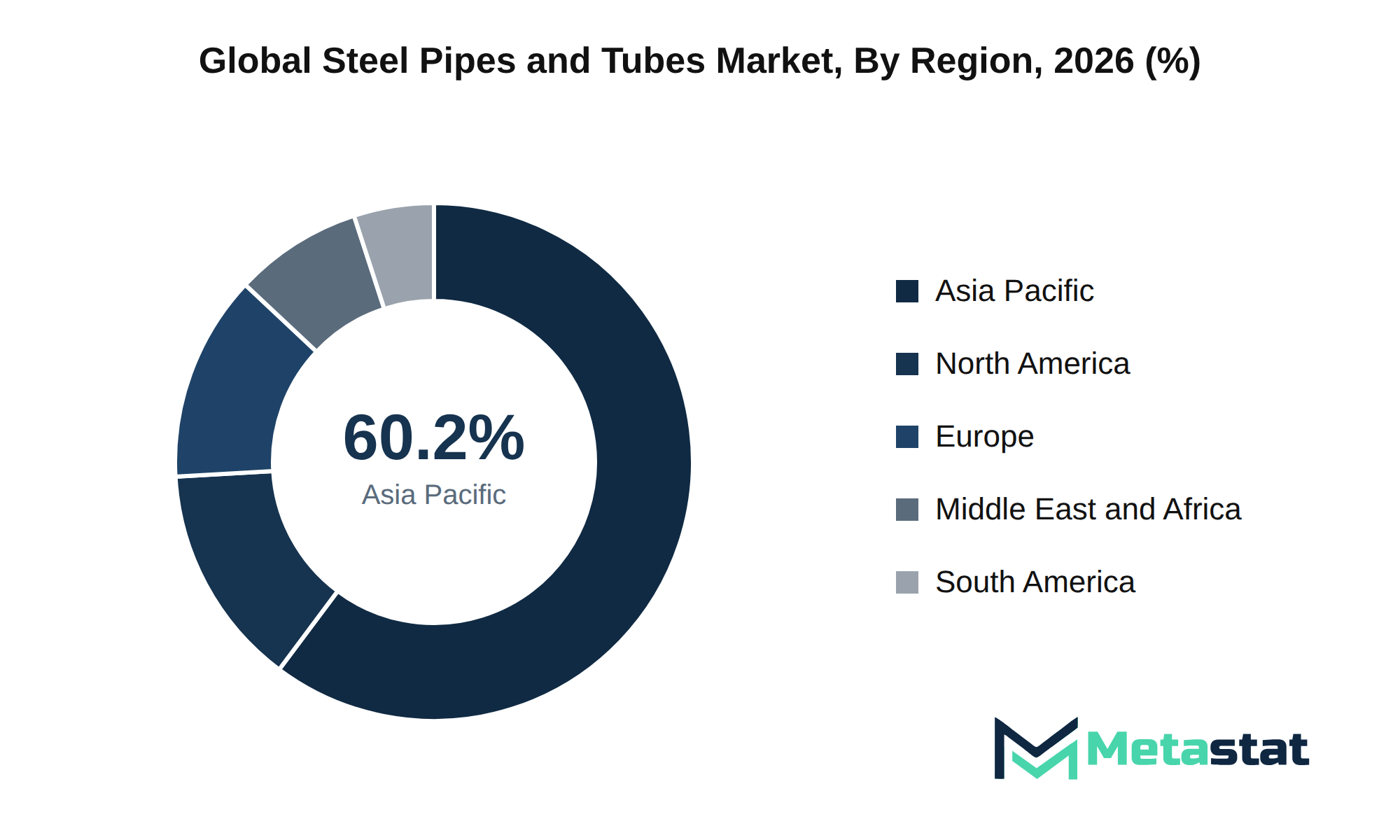
Based on geography, the Global Steel Pipes and Tubes market is divided into North America, Europe, Asia-Pacific, South America, Middle East, and Africa.
North America shows strong potential for growth in the Steel Pipes and Tubes market, driven by robust demand in key sectors including oil and gas, construction, and manufacturing. Infrastructure modernization initiatives across the United States, Canada, and Mexico create a favorable environment for market expansion, enhancing the need for high-quality steel products. A focus on local manufacturing densities and supply chain regionalization supports increased production capabilities, which aligns with the evolving preferences of buyers in the region.
The market is projected to expand at a CAGR of 6.2% during the forecast period, reaching a market size (TAM) of USD 28.9 billion by the end of 2033. Key drivers include incremental growth vectors influenced by high-value replacement cycles and the growing emphasis on energy-efficient and resilient infrastructure. Investment in local compliance mandates and regulatory frameworks further shapes market dynamics, ensuring that suppliers align with stringent quality and safety standards.
Geopolitical factors influence cross-border trade corridors, impacting procurement strategies among regional buyers. The presence of domestic companies enhances competition, creating a landscape where innovative solutions thrive. Local purchasing behaviors reflect cultural nuances, emphasizing the importance of tailored offerings to meet specific regional needs. Overall, North America's market remains poised for significant development, supported by favorable economic conditions and strategic investments.
The Steel Pipes and Tubes market in Europe exhibits significant dynamics influenced by various factors. Countries like Germany, France, the UK, Italy, and Spain together contribute to 12.9% of the global market share in 2025. A robust industrial base supports the manufacturing of steel pipes, driven by investments in infrastructure modernization and energy projects.
Adoption of advanced manufacturing technologies and localized production capabilities plays a critical role in enhancing supply chain efficiencies. Regional demand is supported by increasing investments in renewable energy and automotive sectors, aligning with the push for sustainable practices across European industries.
Strategic initiatives within Europe focus on cross-border trade corridors, which strengthen regional supply chain resilience. Domestic market participants continue to expand their operations, capitalizing on incremental growth vectors and replacement cycles within the high-value segments of the market.
Geopolitical considerations significantly impact trade policies, influencing regional competitive landscapes. Local compliance mandates and energy grid resiliency further shape procurement dynamics, with regional players adapting to evolving market demands.
Overall, the Steel Pipes and Tubes market in Europe reflects a blend of mature market dynamics and emerging opportunities, positioning itself for sustained growth during the forecast period.
The Asia-Pacific region plays an important role in the Steel Pipes and Tubes market, accounting for a significant share of the global market. Rapid industrialization, particularly in China and India, drives robust demand across various segments, including manufacturing and construction. Countries like Japan and South Korea contribute to technological advancements, facilitating innovative production processes and materials utilization.
Infrastructure modernization initiatives present significant growth opportunities, particularly in urban areas. Governments in Southeast Asia focus on enhancing transportation and energy infrastructures, which boosts the demand for high-quality steel pipes. The region experiences an influx of foreign direct investment, strengthening local manufacturing capabilities and enhancing supply chain efficiencies.
Emerging market front-runners in the region exhibit diverse needs, influencing the adoption of specific product categories. For instance, the oil and gas sector demonstrates increased demand for specialized pipes, while the construction industry seeks durable materials for infrastructure projects. Competitive dynamics highlight domestic leaders who adapt to local market conditions and preferences.
Localized procurement dynamics reflect cultural nuances, where traditional buying behaviors impact vendor selection and relationship management. This trend highlights the importance of localized manufacturing densities, enabling companies to respond swiftly to regional demands and minimize logistical challenges. The Asia-Pacific region's significant market share stems from strong industrial growth, infrastructure investments, and a focus on localized production strategies within the Steel Pipes and Tubes market.
Investment in infrastructure development remains a significant factor influencing the Steel Pipes and Tubes market in South America. Brazil and Argentina prioritize modernization efforts, leading to an expected rise in demand for steel pipes and tubes. These countries focus on enhancing transportation and energy infrastructure, which directly supports market growth.
In Brazil, substantial investments in the oil and gas sectors drive notable demand for specific product categories, including OCTG and line pipes. Argentina's growing energy sector, particularly renewable projects, contributes to expanding market opportunities. The Rest of South America exhibits similar patterns, with emerging projects stimulating interest in steel pipes and tubes.
Supply chain dynamics play a critical role in market performance. Localized manufacturing capabilities and nearshoring initiatives enhance regional production efficiency. The availability of raw materials within the region supports sustainable market growth.
Regional market participants emerge in response to increasing competition within South America. Companies consolidate operations to capture market share and address local procurement dynamics effectively. This competitive landscape encourages innovation and investment in advanced production techniques, improving product quality and operational efficiency.
Overall, the Steel Pipes and Tubes market in South America is poised for growth, driven by infrastructure investments, localized manufacturing, and emerging opportunities across various sectors.
The Middle East and Africa region presents unique dynamics contributing to the growth of the Steel Pipes and Tubes market. Countries like Saudi Arabia and the UAE invest heavily in oil and gas exploration and production, driving demand for various steel pipe products. South Africa's ongoing infrastructure development initiatives further enhance demand, particularly for construction and industrial applications.
Local manufacturing capabilities evolve in response to increasing regional demand, promoting supply chain regionalization and localized procurement. Foreign direct investment flows into the region support the establishment of manufacturing facilities, enabling faster access to a growing market. With the increasing focus on energy grid resiliency and local infrastructure readiness, the region experiences a gradual shift toward modernization, addressing underpenetrated territories.
Geopolitical factors and cross-border trade corridors influence market dynamics, where regional players aim to consolidate their positions. Domestic market participants adapt to local compliance mandates and trade policy shifts, reinforcing their competitive edge. These developments create high-value replacement cycles and incremental growth vectors within the market.
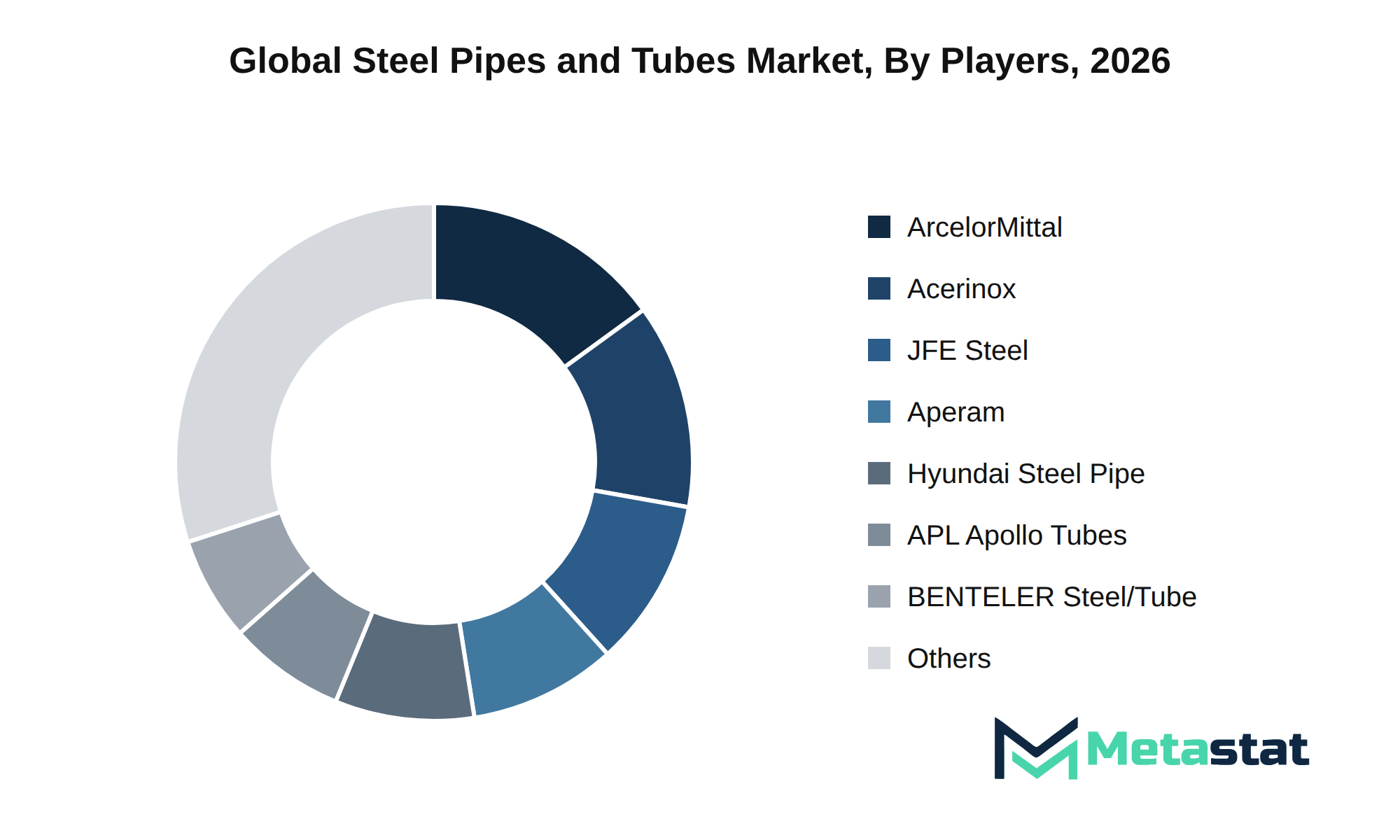
The Steel Pipes and Tubes market features a diverse array of players engaged in various strategies to strengthen their market positions. Companies including ArcelorMittal, Nippon Steel Corporation, and Tata Steel Limited focus on product differentiation through advanced manufacturing processes and innovative materials. Their investments in R&D pipelines enhance their technological capabilities and address specific customer needs in the market.
Strategic alliances and joint ventures play a significant role in shaping the competitive dynamics. For instance, partnerships among firms like BENTELER Steel/Tube and JFE Steel Corporation enable them to leverage combined expertise and expand market reach. These collaborations facilitate cost-effective production methods and broaden product offerings, enhancing competitiveness in a changing environment.
Barriers to entry persist in the market, driven by established players with significant brand equity and intellectual property portfolios. New entrants face challenges in gaining market share due to high capital requirements and the need for advanced technological advancements. Companies including Nucor Corporation and Vallourec S.A. secure their procurement leverage and supply chain dominance to secure advantageous positions, further complicating entry for potential disruptors.
Future competitive outlook suggests sustained growth in the Steel Pipes and Tubes market, driven by increasing demand across end-use industries including oil and gas, construction, and infrastructure. The focus on customer retention strategies and switching costs will influence brand loyalty, supported by firms that continue to innovate and adapt to changing market conditions.
Market size is forecast to rise from USD 137.9 billion in 2025 to over USD 223.3 billion by 2033. The base case reflects a steady growth trajectory, with a compound annual growth rate (CAGR) of 6.2%. This growth stems from strong downstream demand across key industries, particularly oil and gas, construction, and manufacturing. Increasing infrastructure investments and rising urbanization support the market's expansion, leading to higher consumption of steel pipes and tubes.
The bull case anticipates accelerated growth, driven by rapid technological advancements and the integration of next-generation materials and processes. This scenario includes successful commercialization timelines for innovative manufacturing techniques and enhanced product performance, which aligns with evolving customer needs. Conversely, the bear case envisions potential disruptions from geopolitical tensions and trade corridor shifts, which could challenge supply chains and impact pricing dynamics.
Structural consumption shifts reflect changing industry demands, where sectors including renewable energy and environmental applications gain prominence. Regulatory evolution, along with compliance milestones, influences operational strategies for market participants. Strategic capital allocation directives and infrastructure commitments present emerging white-space opportunities, allowing businesses to address unmet enterprise needs and tap into high-growth pockets.
Executives in the steel pipes and tubes market prioritize defensibility roadmaps to navigate economic cycles and prepare for imminent challenges. Future growth recommendations emphasize the importance of innovation and adaptability. The market's ability to respond to these factors will define its trajectory and overall health in the coming years.
The report strategically identifies and profiles the key market players and analyses their core competencies in each sub-segment of the Steel Pipes and Tubes market.
Report Attributes | Details |
Study Period | 2021-2033 |
Base Year | 2025 |
Estimated Year | 2026 |
Forecast Period | 2026-2033 |
Historical Period | 2021-2025 |
Growth Rate | CAGR 6.2% from 2026 to 2033 |
Revenue Unit | USD billion |
Segmentation | By Manufacturing Process, Material, Product Category, End-Use Industry, and Region |
By Region | North America (By Manufacturing Process, Material, Product Category, End-Use Industry, and Country)
|
Europe (By Manufacturing Process, Material, Product Category, End-Use Industry, and Country)
| |
Asia Pacific (By Manufacturing Process, Material, Product Category, End-Use Industry, and Country)
| |
South America (By Manufacturing Process, Material, Product Category, End-Use Industry, and Country)
| |
Middle East and Africa (By Manufacturing Process, Material, Product Category, End-Use Industry, and Country)
|
Find answers to common questions about this report
The Steel Pipes and Tubes market size was valued at USD 137.9 billion in 2025, according to the Metastat Insights study.
The Steel Pipes and Tubes market is projected to grow at a CAGR of 6.2% during the forecast period from 2026 to 2033.
The North America Steel Pipes and Tubes market size is estimated to reach USD 28.9 billion by 2033.
The segment with the highest value in the Steel Pipes and Tubes market is the type without welded seams, projected to reach USD 83.2 billion by 2033. This segment shows the strongest growth potential among manufacturing processes.
Key drivers for the Steel Pipes and Tubes market include the rising focus on sustainability, which encourages investments in efficient manufacturing processes, and the demand for infrastructure driven by urbanization. the emphasis on supply chain resilience and technological advancements further stimulates growth opportunities across various sectors.
Regulatory tightening poses significant challenges for the Steel Pipes and Tubes market, impacting operational costs and compliance strategies. Increasing legal mandates related to environmental standards necessitate investment in technology, straining the financial resources of manufacturers. supply chain disruptions, geopolitical instability, and resource scarcity further complicate the market landscape, hindering overall growth and profitability.
The growing focus on sustainability and resource stewardship drives product adoption, because investors prioritize projects that enhance efficiency and reduce carbon footprints. Urbanization and demographic shifts create significant demand for infrastructure, further stimulating the steel pipes and tubes market. Strategic investments and technological advancements support continuous growth in this sector.
The Steel Pipes and Tubes market is estimated to reach a valuation of USD 223.3 billion by 2033.
Key players operating in the Steel Pipes and Tubes market include ArcelorMittal, JFE Steel Corporation, Tata Steel Limited, Tenaris S.A., Vallourec S.A., and Nucor Corporation (Nucor Tubular Products).
The Steel Pipes and Tubes market is projected to grow at a CAGR of 6.2% from 2026 to 2033.
The analysts below cover Chemicals and Materials research at Metastat Insights.
LEAD ANALYST
Utkarsh Khirodkar is a Lead Market Research Analyst at MetaStat Insight, specializing in market intelligence, technology sector assessments, and competitive strategy.

INDUSTRY CONSULTANT - CHEMICALS & ADVANCED MATERIALS
Chemicals and Materials · Machinery & Equipment · Packaging
Amit Gadhekar Consultant for Chemicals and Materials at MetaStat Insight, directing sector-specific intelligence, research, and strategic consulting across global chemical and processing markets.
Assessing 200mm wafer transition schedules and substrate supply bottlenecks requires precise technical intelligence. MetaStat Insight supplied an actionable breakdown comparing planar and trench MOSFET architectures across automotive and industrial drive markets. The regional capacity estimates for Asia-Pacific foundries helped clarify lead-time uncertainties during our strategic planning session. When we needed additional clarification on high-purity raw material sourcing, their analyst team responded with helpful context within twenty-four hours.
Tracking maintenance cycle demand for secondary flight display units and terrain collision avoidance systems across regional jet fleets involves complex aftermarket dynamics. MetaStat Insight provided practical analysis separating airline retrofit programs from OEM forward-fit production schedules in North America and Southeast Asia. The supplier matrix highlighted component obsolescence timelines without resorting to vague generalizations. The dataset served as a dependable reference during our annual program review meetings.
Evaluating secondary resin quality across post-consumer packaging streams requires reliable technical segmentation. MetaStat Insight delivered an objective assessment that distinguished between extrusion-grade flake pricing and optical sorting throughput limitations across Western Europe. The competitive positioning breakdown for licensed depolymerization technology providers answered several questions during our feedstock feasibility audit. Their team clarified regional trade restrictions on mixed plastic scrap quickly when our team submitted follow-up requests.
Explore related market intelligence reports worth reading alongside this one.