
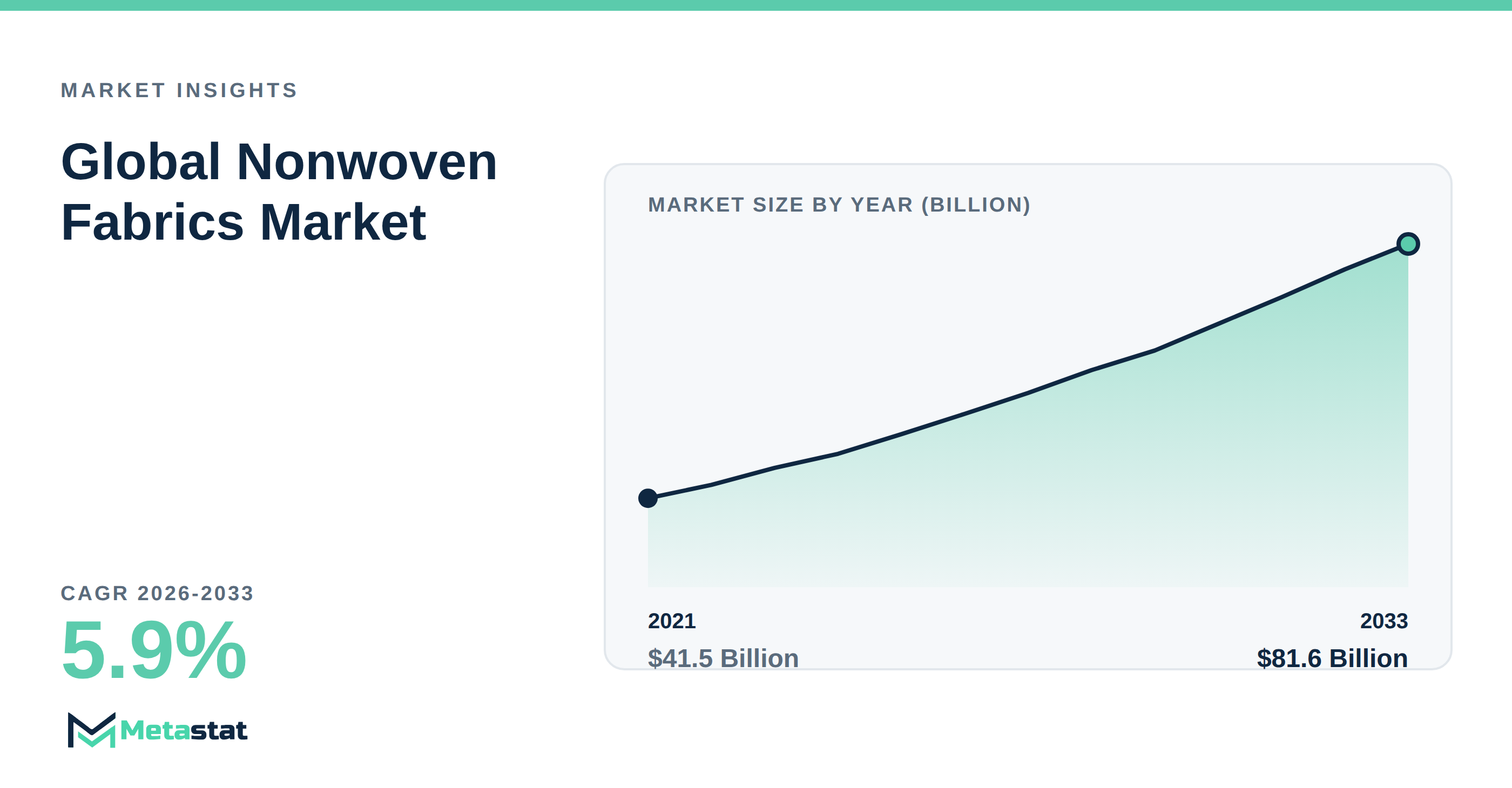
The Nonwoven Fabrics market is projected to grow from USD 51.6 billion in 2025 to USD 81.6 billion by 2033. This blog explores key trends and factors shaping this growth.
The global Nonwoven Fabrics market is set for significant growth, projected to increase from USD 51.6 billion in 2025 to USD 81.6 billion by 2033, representing a compound annual growth rate of 5.9%. The expected expansion reflects shifting industry dynamics and highlights the importance of understanding the factors at play for stakeholders aiming to make informed decisions.
How will technological advancements affect market growth?
Technological advancements are crucial in influencing the Nonwoven Fabrics market. The integration of automation and digital technologies enhances production efficiency, reducing costs while increasing output. Spunbond technology, for instance, is projected to grow from USD 21.9 billion in 2026 to USD 32.3 billion by 2033, underscoring the impact of innovation on performance and efficiency across various applications.
Leading companies like Freudenberg Performance Materials and Kimberly-Clark Corporation are investing significantly in research and development. These investments aim to pursue next-generation product innovations that align with market demand. While technology advances, manufacturers will likely explore new applications in diverse sectors, further driving market expansion.
What are the key drivers fueling this market?
Growth within the Nonwoven Fabrics market is primarily fueled by rising demand for hygiene products, medical supplies, and filtration materials. The global focus on health and safety, especially regarding infection control and sanitation, drives the increasing utilization of nonwoven fabrics across various industries.
Another significant driver is the increasing emphasis on sustainability. Consumers and regulators alike are shifting toward eco-friendly practices, urging manufacturers to adopt sustainable methods. Companies are now prioritizing the development of biodegradable and recyclable nonwoven materials, aligning with consumer preferences for environmentally responsible products. This focus on sustainability is expected to create lasting growth and open new avenues for innovation.
What challenges could constrain market growth?
Despite the promising prospects, the Nonwoven Fabrics market faces several challenges. Regulatory measures concerning environmental impact impose constraints on manufacturers, necessitating investments in cleaner technologies. Smaller firms, in particular, may struggle to navigate these compliance challenges, thereby restricting their growth potential.
External economic factors like inflation and currency fluctuations introduce uncertainties that influence production costs and pricing strategies. Companies strategically manage their capital and operational expenditures while adhering to sustainability practices to remain competitive in a changing economic environment.
How is competition evolving within the Nonwoven Fabrics market?
The competitive environment in the Nonwoven Fabrics market is increasingly dynamic. Companies are forming strategic partnerships and mergers to strengthen their capabilities and respond to customer needs effectively. Collaborations enable firms to optimize their resource allocation and enhance their market presence.
New market entrants are continually innovating and bringing next-generation products to the forefront. This escalating competition compels established players to refine their strategies and adapt to evolving market conditions. Staying attuned to competitive movements will be essential for stakeholders striving to maintain their competitive edge in this evolving market.
How should market participants adapt to future changes?
For stakeholders navigating the Nonwoven Fabrics market, remaining aware of the trends and challenges shaping its trajectory is essential. Companies should concentrate on technological innovations, sustainability initiatives, and strategic collaborations to stay relevant and competitive.
A solid grasp of market dynamics will enable participants to make informed decisions, optimize their operations, and capitalize on emerging opportunities. The anticipated growth to USD 81.6 billion by 2033 highlights the necessity for agility and innovation in adapting to market changes. For more in-depth insights into trends and forecasts, explore the Global Nonwoven Fabrics Market.
Tags
About the Authors

LEAD ANALYST
Utkarsh Khirodkar is a Lead Market Research Analyst at MetaStat Insight, specializing in market intelligence, technology sector assessments, and competitive strategy.

INDUSTRY CONSULTANT - CHEMICALS & ADVANCED MATERIALS
Chemicals and Materials · Machinery & Equipment · Packaging
Amit Gadhekar Consultant for Chemicals and Materials at MetaStat Insight, directing sector-specific intelligence, research, and strategic consulting across global chemical and processing markets.