
Explore the contrasting growth trajectories of the Recycled Textile market in North America and Asia-Pacific, driven by consumer awareness, regulations, and technology.
The Recycled Textile market is experiencing notable divergence between regions, particularly evident in North America and Asia-Pacific. This divide highlights differences in sustainability practices, consumer awareness, and technological progress that influence market dynamics.
What accounts for the regional differences in the Recycled Textile market?
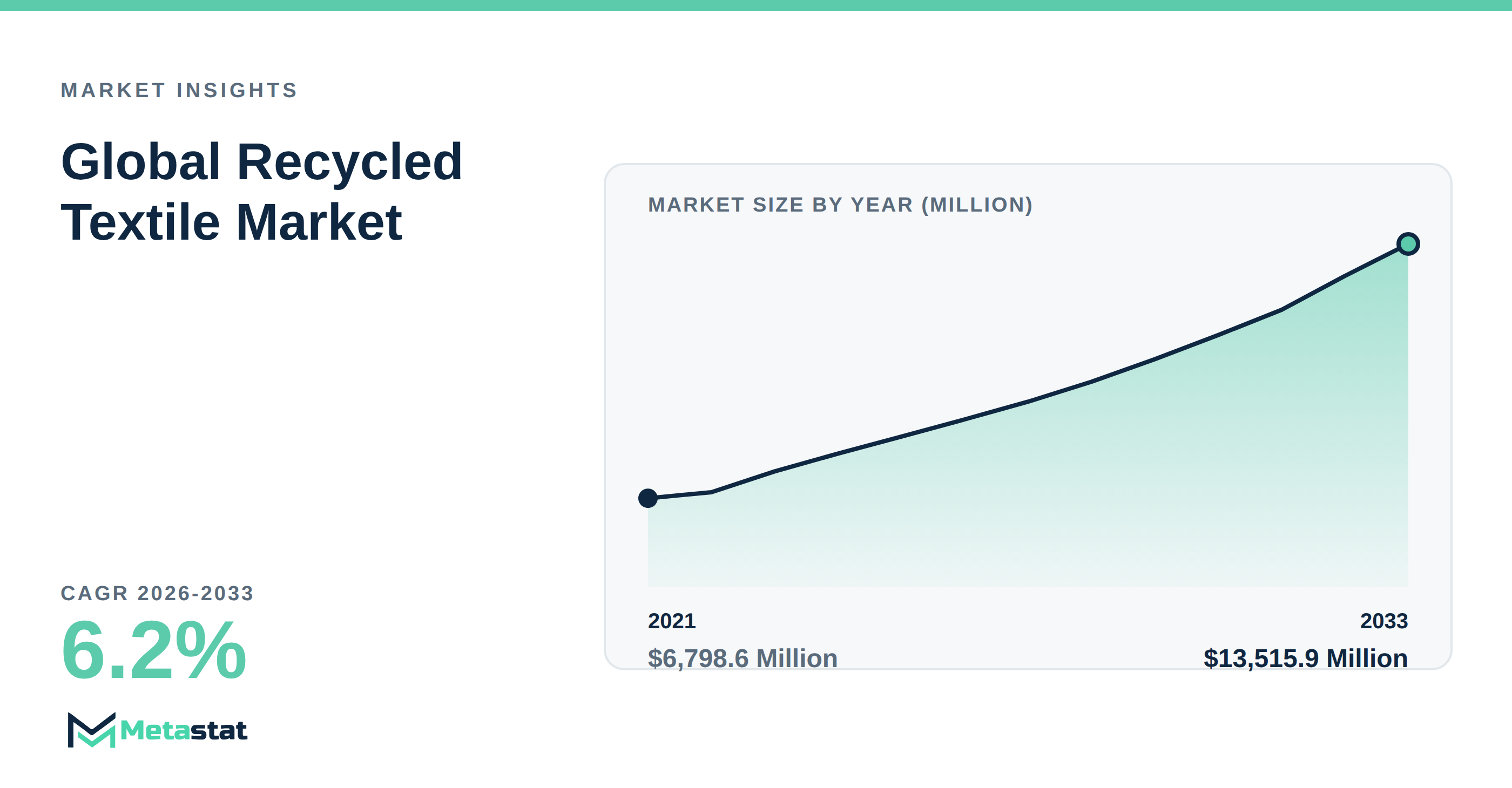
Asia-Pacific currently leads the Recycled Textile market with a prominent share of 41.7%. This dominance arises from a combination of industrial growth, urbanization, and increasing consumer awareness of sustainable practices. In contrast, while North America is an established key player, its growth trajectory is relatively slower. Several factors contribute to this divergence, including regional policies, investment in technology, and differing consumer behaviors.
How consumer awareness impacts market growth
Consumer awareness is a significant driver of demand for recycled textiles in both regions. In Asia-Pacific, heightened environmental consciousness prompts brands to incorporate recycled materials into their offerings. This trend is especially pronounced in the fashion industry, where sustainability has become a fundamental consideration. North American consumers demonstrate varying levels of awareness and commitment, which impacts the pace of market advancement in this region.
The influence of regulatory frameworks
Regulatory initiatives play a pivotal role in shaping the growth of the Recycled Textile market across both regions. The European Union’s extended producer responsibility policies act because a model for North America, encouraging circular economy practices. However, the adoption of similar policies in North America has been inconsistent. Stricter regulations in Asia-Pacific promote the use of recycled content, aligning with consumer demand and creating a more supportive market environment.
Technological advancements driving the market forward
Advancements in recycling technologies significantly influence the dynamics of the Recycled Textile market. In Asia-Pacific, there has been rapid adoption of innovative technologies, including AI-powered optical sorting, which enhance the efficiency of recycling operations. These innovations enable manufacturers to meet rising demand while maintaining high-quality outputs. In North America, although investments are being made in technology, the pace of adoption lags behind that of Asia-Pacific, resulting in variations in operational efficiency and market competitiveness.
Opportunities for growth in the Recycled Textile market
Despite the regional divergence, both North America and Asia-Pacific present unique growth opportunities within the Recycled Textile market. In North America, investments in sustainable practices and compliance with evolving regulations facilitate market expansion. Companies focusing on developing resilient supply chains capitalize on the growing demand for recycled textiles. Conversely, Asia-Pacific leverages its technological advancements to further enhance its market position, exploring new applications for recycled materials and expanding into emerging economies.
Overall, understanding the factors driving divergence in the Recycled Textile market aids businesses in navigating these dynamics. Companies that adapt to regional trends and invest in sustainable initiatives are likely to thrive in this evolving landscape. For a comprehensive analysis and insights, the Global Recycled Textile Market report offers detailed projections and evaluations.
Tags
About the Authors

LEAD ANALYST
Utkarsh Khirodkar is a Lead Market Research Analyst at MetaStat Insight, specializing in market intelligence, technology sector assessments, and competitive strategy.

INDUSTRY CONSULTANT - CHEMICALS & ADVANCED MATERIALS
Chemicals and Materials · Machinery & Equipment · Packaging
Amit Gadhekar Consultant for Chemicals and Materials at MetaStat Insight, directing sector-specific intelligence, research, and strategic consulting across global chemical and processing markets.