
Explore the contrasting dynamics of the Trenchless Pipeline Rehabilitation market in North America and Europe, focusing on growth drivers and challenges.
The current dynamics of the Trenchless Pipeline Rehabilitation market illustrate significant regional disparities, particularly between North America and Europe. North America leads the market, benefitting from substantial investment and favorable conditions, while Europe faces unique challenges that affect its rehabilitation strategies and investments.
What accounts for North America's market leadership?
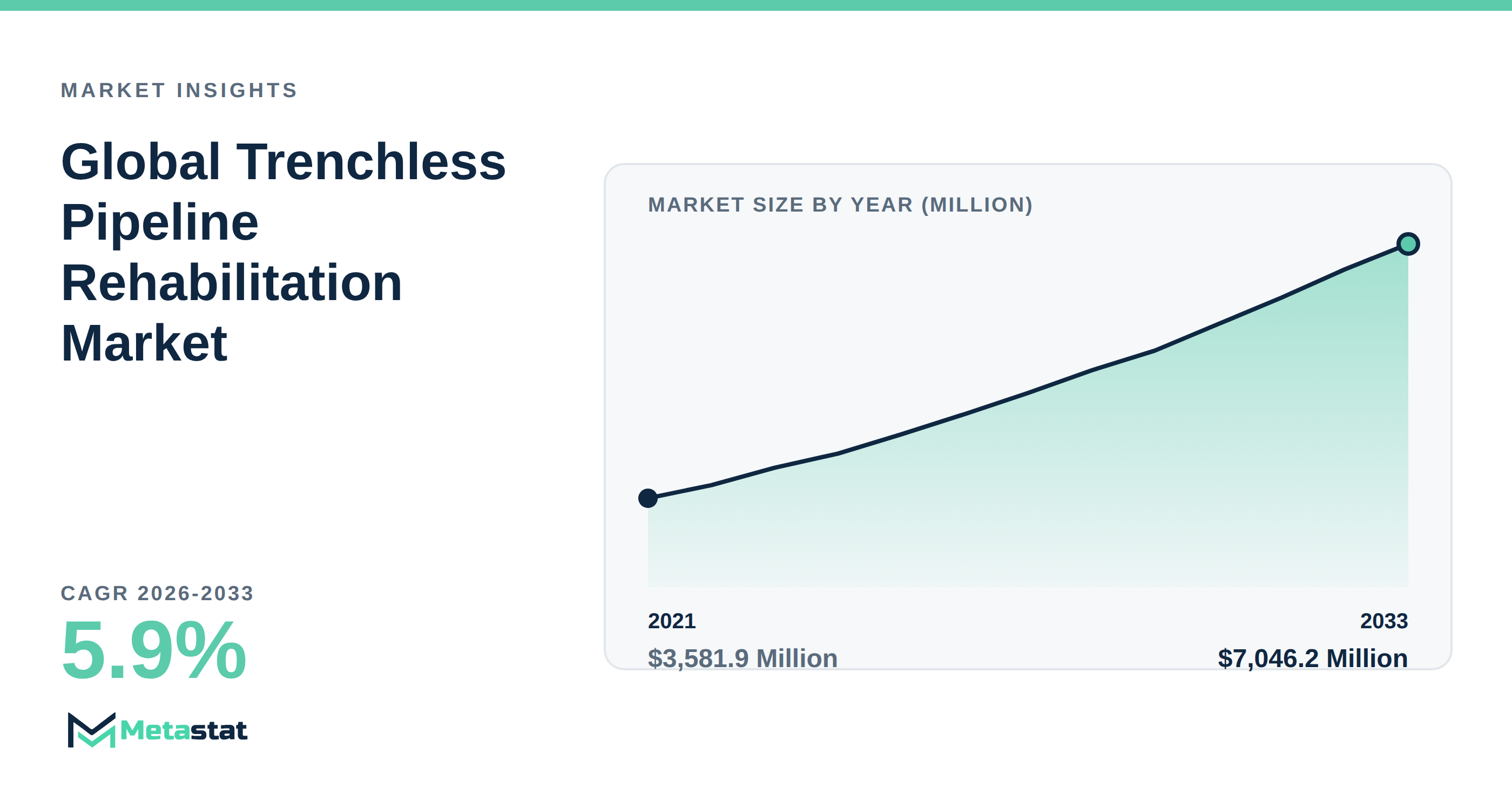
North America commands the largest share of the Trenchless Pipeline Rehabilitation market, projected to achieve a value of USD 2,519 million by 2033, representing 37.8% of the global market. This dominance is attributed to several factors, including robust infrastructure investments, a growing urban population, and an aging pipeline system requiring prompt action. Municipalities and utility companies in this region prioritize trenchless technologies due to their ability to minimize disruption compared to traditional excavation, making these methods a cost-effective and socially responsible choice.
Stringent regulatory compliance in North America has encouraged the adoption of advanced rehabilitation solutions, fueling further growth in the market. The emphasis on sustainable practices, driven by governmental regulations and corporate responsibility, has increased investments in innovative technologies. For example, the Cured-in-Place Pipe (CIPP) segment is expected to expand, moving from a valuation of USD 2,102.2 million in 2026 to USD 2,967.1 million by 2033, achieving a compound annual growth rate (CAGR) of 5%. These combined factors create a favorable environment for trenchless rehabilitation, establishing a strong foundation for market growth.
Why is Europe falling behind?
In contrast, Europe accounts for 26.9% of the global Trenchless Pipeline Rehabilitation market, lagging behind North America. Several factors contribute to this disparity. Regulatory challenges in Europe often delay project approvals, complicate implementation, and increase operational costs. Companies frequently encounter stringent compliance requirements, leading to financial burdens that restrict investments in new rehabilitation technologies.
Supply chain disruptions negatively impact the availability of materials and equipment necessary for implementing trenchless solutions effectively. Labor shortages further complicate project execution, because many companies in the market struggle to recruit and retain skilled professionals. This combination of regulatory constraints and resource limitations has slowed infrastructure upgrades, preventing Europe from keeping pace with North America's advancements.
The impact of urbanization on regional trends
Urbanization plays a critical role in shaping the future of the Trenchless Pipeline Rehabilitation market in both North America and Europe. North American cities are rapidly expanding, which amplifies the demand for efficient utility systems and necessitates significant capital investments in rehabilitation technologies to ensure reliability. The trend toward urbanization supports modernizing existing infrastructures, enhancing the overall effectiveness of trenchless rehabilitation.
In Europe, the urbanization trend appears less aggressive. Many European cities have reached a saturation point, resulting in slower population growth and infrastructure challenges, including aging systems in need of repair. Consequently, the focus has shifted from extensive expansion to maintaining and upgrading existing pipelines. Regulatory hurdles and public resistance to significant structural changes further inhibit the pace of rehabilitation efforts.
Future prospects and strategies for growth
Looking forward, the Trenchless Pipeline Rehabilitation market is anticipated to evolve, with emerging opportunities driven by increased investment in research and development. Both North America and Europe benefits from innovative trenchless technologies that enhance efficiency and sustainability. Companies prioritizing solutions aligned with decarbonization goals are likely to succeed in this environment.
Strategic partnerships and collaborations among industry players help address regional disparities, fostering shared innovations and resources. Companies that adapt to changing regulatory landscapes, invest in digital transformation, and embrace sustainability will be well-positioned to meet future challenges.
While North America continues to lead, Europe has the potential to catch up if it addresses its regulatory challenges and enhances its commitment to infrastructure modernization. For deeper insights into the Trenchless Pipeline Rehabilitation market, refer to the Global Trenchless Pipeline Rehabilitation Market.
Tags
About the Authors

LEAD ANALYST
Utkarsh Khirodkar is a Lead Market Research Analyst at MetaStat Insight, specializing in market intelligence, technology sector assessments, and competitive strategy.

SENIOR RESEARCH ANALYST
Biotechnology · Food and Beverages · Medical Devices · Packaging
Snehal Pasalkar is a Research Analyst at MetaStat Insight, operating at the intersection of life sciences research, competitive strategy, and market intelligence.

INDUSTRY CONSULTANT - CHEMICALS & ADVANCED MATERIALS
Chemicals and Materials · Machinery & Equipment · Packaging
Amit Gadhekar Consultant for Chemicals and Materials at MetaStat Insight, directing sector-specific intelligence, research, and strategic consulting across global chemical and processing markets.