
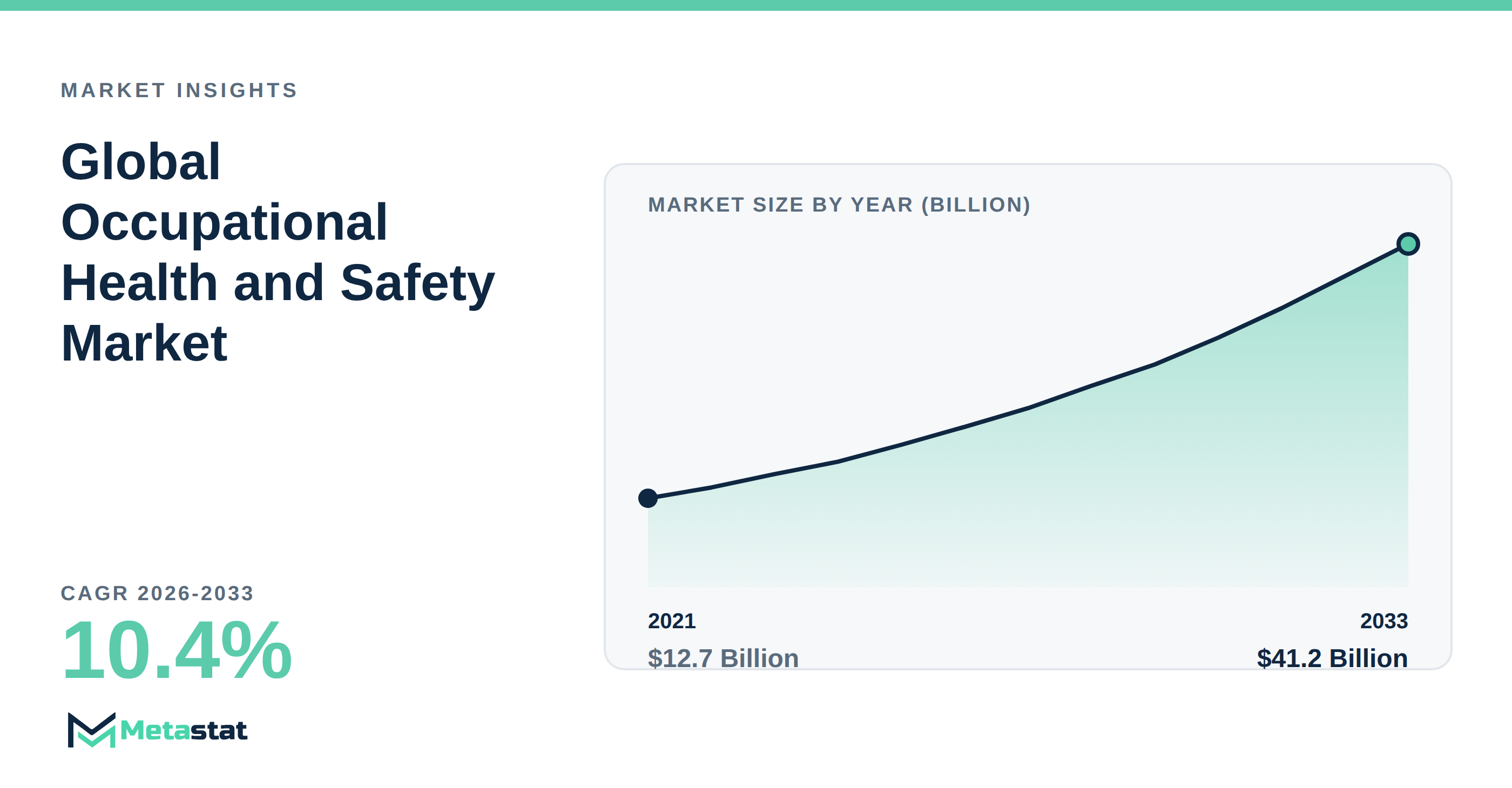
The Occupational Health and Safety market is expected to grow significantly, reaching USD 41.2 billion by 2033. Key trends include regulatory changes, technological advancements, and workforce training initiatives.
The Occupational Health and Safety market is undergoing substantial transformation, anticipated to increase from USD 18.7 billion in 2025 to USD 41.2 billion by 2033. This growth presents both opportunities and challenges for stakeholders navigating this evolving landscape.
What regulatory changes should be monitored?
Regulatory frameworks are a significant factor shaping the Occupational Health and Safety market. Governments across various jurisdictions are tightening safety regulations, compelling organizations to reassess their approaches to workplace safety. Such regulatory developments lead to increased compliance costs for companies. However, investments in safety measures often yield long-term benefits, including decreased accident rates and enhanced employee morale, ultimately contributing to improved financial performance.
Organizations should keep an eye on local regulatory changes, which vary considerably. Compliance with these regulations require tailored solutions and dedicated resources, impacting operational strategies and overall market positioning. Stakeholders prepared for regulatory shifts better leverage market opportunities stemming from the evolving safety landscape.
How are technological advancements influencing the market?
Technological innovation is transforming the Occupational Health and Safety market, particularly through the integration of artificial intelligence and IoT solutions. AI-driven predictive safety tools are changing the dynamics of workplace safety management by enabling organizations to identify potential hazards proactively. This capability enhances workplace safety and boosts operational efficiency, positively impacting profitability.
Connected worker technologies are becoming increasingly important, allowing for real-time assessments of worker safety and environmental conditions. The integration of such advanced systems promotes enhanced communication and collaboration in safety management, ultimately improving safety outcomes across various industries. Organizations should invest in technology-based solutions to maintain leadership in safety practices and operational efficiency.
What role does training play in market growth?
Investing in modern training initiatives is crucial for developing a skilled workforce equipped to confront safety challenges. Organizations are recognizing that effective training programs correlate with reduced accident rates and a robust safety culture. This trend aligns with increasing regulatory demands and an emphasis on compliance.
Employers should focus on training solutions that leverage contemporary learning platforms, supporting continuous skill enhancement. Engaging training experiences contribute to a strong safety culture, essential for driving market growth and securing employee well-being.
What emerging markets are significant for growth?
North America presents substantial growth opportunities, expected to capture 36.5% of the Occupational Health and Safety market share by 2033. The region's strong regulatory framework and ongoing investments in safety technologies play a critical role in its market dominance. Regions like Asia Pacific are witnessing notable expansion, spurred by heightened safety awareness and compliance with regulations.
Companies focusing on these high-growth regions should develop strategies tailored to local needs and regulatory contexts. This targeted approach fosters better market penetration and growth in developing industrial sectors.
What challenges should companies prepare for in the future?
Despite the positive outlook for the Occupational Health and Safety market, companies face several challenges, particularly around regulatory compliance. The complexity of compliance mandates often leads to extensive documentation and stringent monitoring, which stretches resources and delay implementation. Macroeconomic factors, including inflation and disruptions in supply chains, further complicate compliance efforts.
Organizations adopt proactive strategies to effectively navigate these challenges. Strategic investments in compliance management and innovative safety measures will be essential to maintaining safety standards while optimizing operational flexibility. Successfully addressing these issues positions companies to capitalize on the growth opportunities present in the market.
In summary, the Occupational Health and Safety market is set for considerable expansion by 2033, driven by regulatory evolution, technological improvements, and a focus on workforce training initiatives. Stakeholders who remain vigilant and adaptable in response to these changes will find themselves better positioned for success in this growing market. For a detailed analysis of the Occupational Health and Safety market, including trends and forecasts, visit Global Occupational Health and Safety Market.
Tags
About the Authors

LEAD ANALYST
Utkarsh Khirodkar is a Lead Market Research Analyst at MetaStat Insight, specializing in market intelligence, technology sector assessments, and competitive strategy.

LEAD PRINCIPAL ANALYST, PHARMA AND HEALTHCARE
Food and Beverages · Healthcare · Healthcare IT · Medical Devices
Ajay Devgire is the Lead Healthcare Analyst at MetaStat Insight, leading strategic research and market intelligence initiatives across the global healthcare domain.