
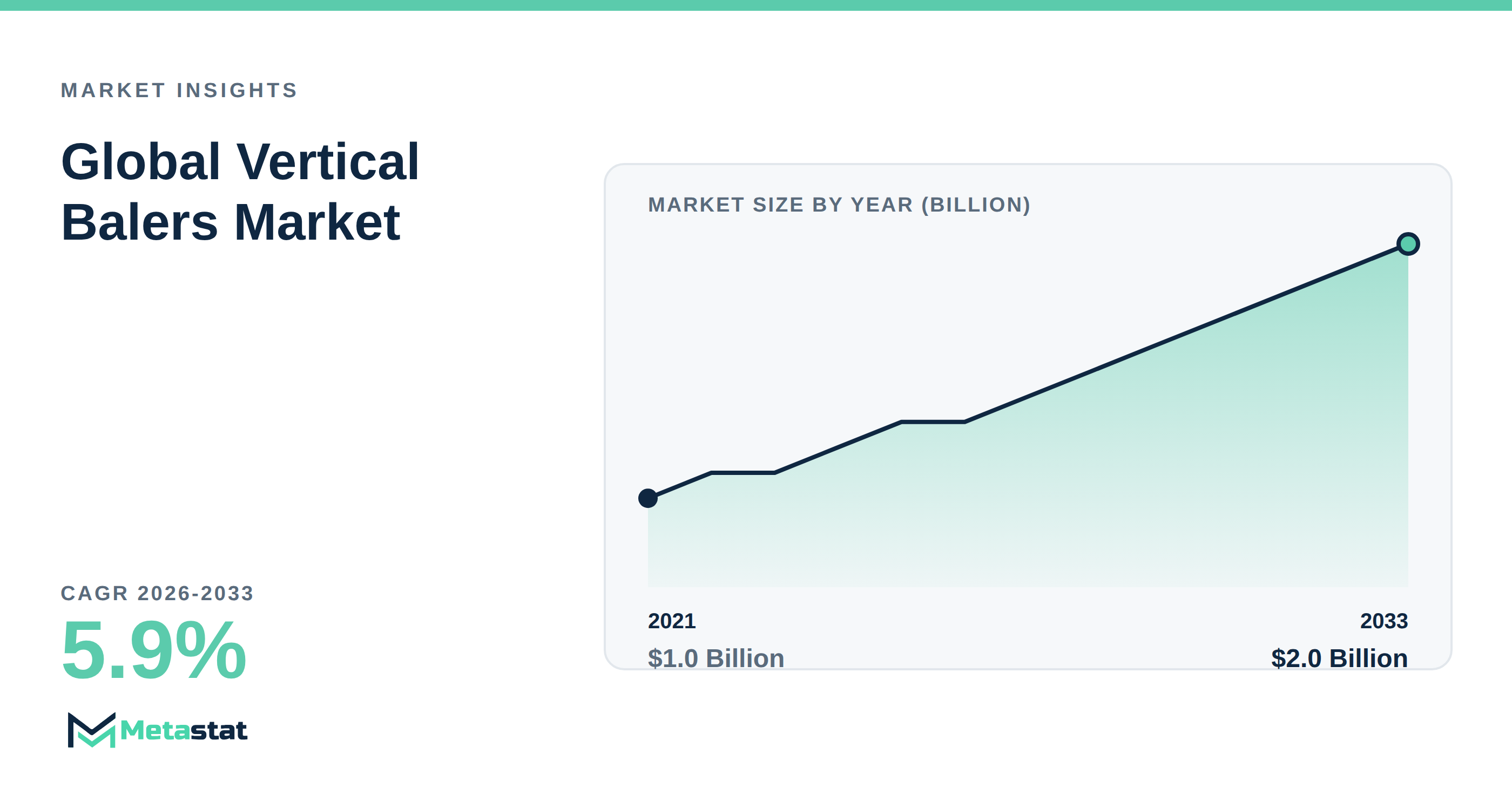
The Vertical Balers market is set to reach USD 2 billion by 2033, driven by economic growth, sustainability trends, and technological advancements. Explore key factors shaping its future.
The Vertical Balers market is on a path to significant growth, with an estimated value of USD 2 billion by 2033, up from USD 1.3 billion in 2025. This transformation indicates a compound annual growth rate of 5.9%, influenced by various pivotal trends that decision-makers should monitor closely.
What factors will drive the Vertical Balers market expansion?
Economic growth acts because a primary catalyst for the Vertical Balers market. Elevated consumer spending and increased industrial activity compel sectors, including manufacturing and recycling, to invest in advanced waste management solutions. The urban population's growth exacerbates waste generation, creating a pressing need for effective baling technologies to enhance operational efficiency and resource optimization.
Heightened awareness of sustainability initiatives drives businesses to adopt eco-friendly practices. Such a transition aligns with consumer preferences for environmentally responsible products and services, resulting in increased demand for balers that promote effective recycling and waste reduction strategies.
How will technological advancements influence market growth?
Technological innovations significantly shape the Vertical Balers market's future. The integration of automation and smart technologies into baling solutions enhances operational efficiency and reduces labor costs. These advancements appeal to industries striving to maximize productivity while minimizing their environmental impact.
Manufacturers are investing in research and development aimed at improving bale density and energy efficiency. Enhancements in these areas contribute to cost reductions and streamline operational processes, allowing businesses to achieve greater profitability while adhering to sustainability objectives.
What challenges could hinder market growth?
While the outlook for the Vertical Balers market appears promising, several challenges affect growth. Notably, significant capital investment requirements create obstacles, particularly for smaller businesses or startups. The initial costs involved in acquiring and setting up vertical balers deter adoption because organizations evaluate the practicality of these investments against their expected returns.
Compounding this issue are market fragmentation and technological obsolescence. Many suppliers with varying capabilities complicate the decision-making process for buyers, while rapid technological advancements render existing equipment outdated. These factors collectively contribute to operational constraints that inhibit market growth.
Which segments are expected to drive market growth?
The Vertical Balers market is diverse, featuring segments including Manual, Semi-Automatic, Fully Automatic, Multi-Chamber, and Specialized Vertical Balers, each offering unique growth opportunities. For example, the Semi-Automatic Vertical Balers segment is anticipated to reach USD 0.7 billion by 2033, propelled by the increasing demand for effective waste management solutions across various industries.
The Multi-Chamber Vertical Balers segment is expected to grow at a CAGR of 7.7% during the forecast period, reflecting the rising need for advanced recycling technologies. Industries increasingly seek these balers for their versatility in processing diverse materials, spotlighting a trend towards improved waste management practices.
How will regional dynamics shape market trends?
Regional trends significantly influence the Vertical Balers market trajectory. North America showcases notable growth, driven by strong recycling initiatives and commitments to sustainable waste management practices. In Europe, the circular economy underlines demand for balers, while the Asia Pacific region presents ample opportunities for manufacturing and waste management solutions, fueled by rapid industrialization and urbanization.
Emerging markets for vertical balers and waste compaction equipment signify growth potential because businesses increasingly appreciate the importance of sustainable waste management. While the need for effective waste handling solutions intensifies, stakeholders across various regions will gain advantages by aligning their offerings with evolving market demands.
In conclusion, the Vertical Balers market offers numerous avenues for growth, driven by economic, technological, and regional factors. Stakeholders should stay alert to these trends and adapt to capitalize on emerging opportunities. For more in-depth insights, the full report titled Global Vertical Balers Market provides a comprehensive analysis of the market landscape and its dynamics.
Tags
About the Authors

LEAD ANALYST
Utkarsh Khirodkar is a Lead Market Research Analyst at MetaStat Insight, specializing in market intelligence, technology sector assessments, and competitive strategy.

SENIOR RESEARCH ANALYST
Biotechnology · Food and Beverages · Medical Devices · Packaging
Snehal Pasalkar is a Research Analyst at MetaStat Insight, operating at the intersection of life sciences research, competitive strategy, and market intelligence.

INDUSTRY CONSULTANT - CHEMICALS & ADVANCED MATERIALS
Chemicals and Materials · Machinery & Equipment · Packaging
Amit Gadhekar Consultant for Chemicals and Materials at MetaStat Insight, directing sector-specific intelligence, research, and strategic consulting across global chemical and processing markets.