
The Textile-to-Textile Recycling market is poised for significant expansion driven by sustainability trends, technological advancements, and evolving consumer preferences.
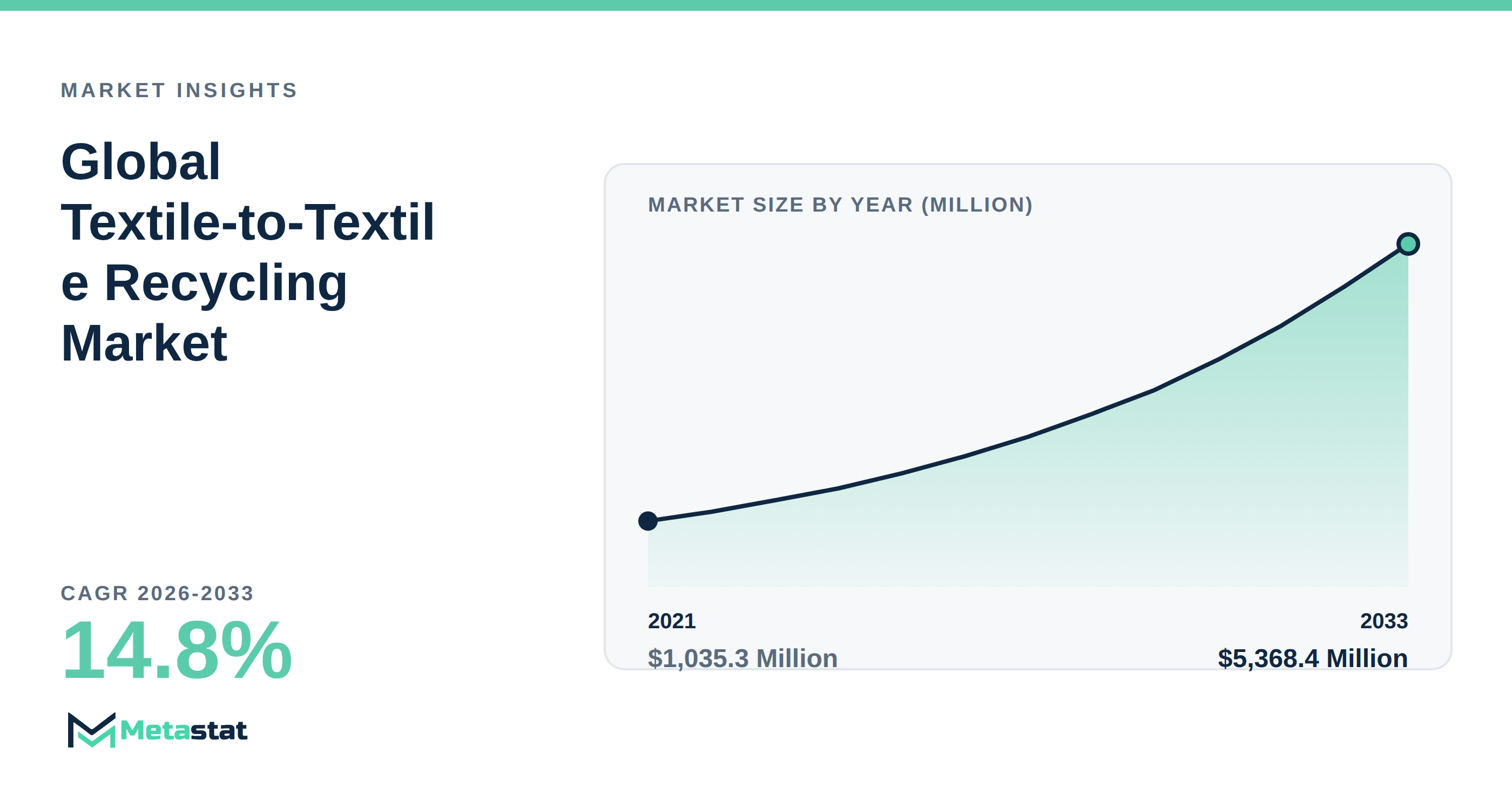
The Textile-to-Textile Recycling market is positioned for substantial growth, forecasted to increase from USD 1,779 million in 2025 to USD 5,368.4 million by 2033, showcasing a compound annual growth rate (CAGR) of 14.8%. This upward trajectory reflects transformative shifts in consumer expectations, technological progress, and an evolving regulatory environment impacting the industry.
What are the key factors driving growth in textile-to-textile recycling?
Consumer preference for sustainable products is a significant factor catalyzing expansion in the Textile-to-Textile Recycling market. Brands are increasingly attuned to a societal shift prioritizing environmental responsibility, intensifying the focus on circular fashion practices. In response, manufacturers seek innovative recycling solutions to address the rising volume of textile waste, particularly that generated from post-consumer apparel. This shift is bolstered by advancements in recycling technologies that enhance efficiency and output of recycled materials, thereby aligning with consumer expectations for sustainability.
How are technological advancements shaping the market?
Technological advancements within recycling processes play an influential role in the Textile-to-Textile Recycling market's evolution. Mechanical recycling has established a strong foothold, while chemical and enzymatic recycling methodologies are gaining prominence for their effectiveness with complex materials. For example, innovations in polyester recycling facilitate the retrieval of high-quality fibers, aligning with industry demands for sustainable and premium products. Such advancements not only elevate material recovery rates but enable the conversion of waste into usable fibers, essential for the production of new apparel.
What challenges are currently affecting market development?
Despite a favorable outlook, the Textile-to-Textile Recycling market faces several challenges. Stringent regulatory requirements complicate operational processes and elevate compliance costs, particularly impacting smaller enterprises that struggle to navigate these demands. Geopolitical tensions disrupt supply chains, leading to inconsistencies in recycled material availability. The complexities involved in processing blended and multi-fiber textiles hinder recycling efforts, often resulting in decreased recycling rates. This highlights the ongoing need for innovation and collaboration among industry stakeholders.
What should stakeholders focus on to capitalize on growth opportunities?
To effectively leverage growth opportunities, stakeholders should emphasize investments in advanced recycling infrastructure and technology. Developing partnerships among brands, recyclers, and fiber producers fosters a more cohesive and resilient recycling ecosystem. Companies should actively communicate their sustainability initiatives to strengthen consumer trust and brand loyalty, ensuring their product offerings reflect the increasing demand for eco-friendly alternatives. Establishing efficient collection and sorting systems will remain vital for maintaining a steady feedstock supply for recycling processes.
What does the future hold for the textile-to-textile recycling market?
The future of the Textile-to-Textile Recycling market appears promising, propelled by escalating regulatory pressures and rising consumer consciousness surrounding sustainability. Anticipated investments in advanced recycling technologies capable of processing diverse materials are likely to gain traction. The increasing integration of recycled fibers into product lines signifies a shift towards sustainable practices across the fashion industry. Companies that adapt to these trends and invest in innovative solutions will not only enhance their competitive positioning but contribute positively to environmental sustainability.
In conclusion, the Textile-to-Textile Recycling market stands at a critical juncture. Significant growth is projected through 2033; therefore, understanding the primary drivers, technological advancements, and challenges will be essential for stakeholders aiming to navigate this evolving landscape effectively. For further insights, refer to the Global Textile-to-Textile Recycling Market report.
Tags
About the Authors

LEAD ANALYST
Utkarsh Khirodkar is a Lead Market Research Analyst at MetaStat Insight, specializing in market intelligence, technology sector assessments, and competitive strategy.

INDUSTRY CONSULTANT - CHEMICALS & ADVANCED MATERIALS
Chemicals and Materials · Machinery & Equipment · Packaging
Amit Gadhekar Consultant for Chemicals and Materials at MetaStat Insight, directing sector-specific intelligence, research, and strategic consulting across global chemical and processing markets.