
Explore the evolving Brazil Telecom Tower industry and discover the top 15 companies shaping its future from 2026 to 2033.
The Brazil Telecom Tower industry plays a critical role in supporting communication infrastructure, enabling connectivity across urban and rural areas. Major buyers include mobile network operators and telecommunication service providers, all seeking innovative solutions to enhance service reliability and coverage. As technology evolves, the sector is experiencing shifts in ownership models and tower types, which are reflected in the Brazil Telecom Tower Market Research Report, 2026-2033 market size and forecast report.
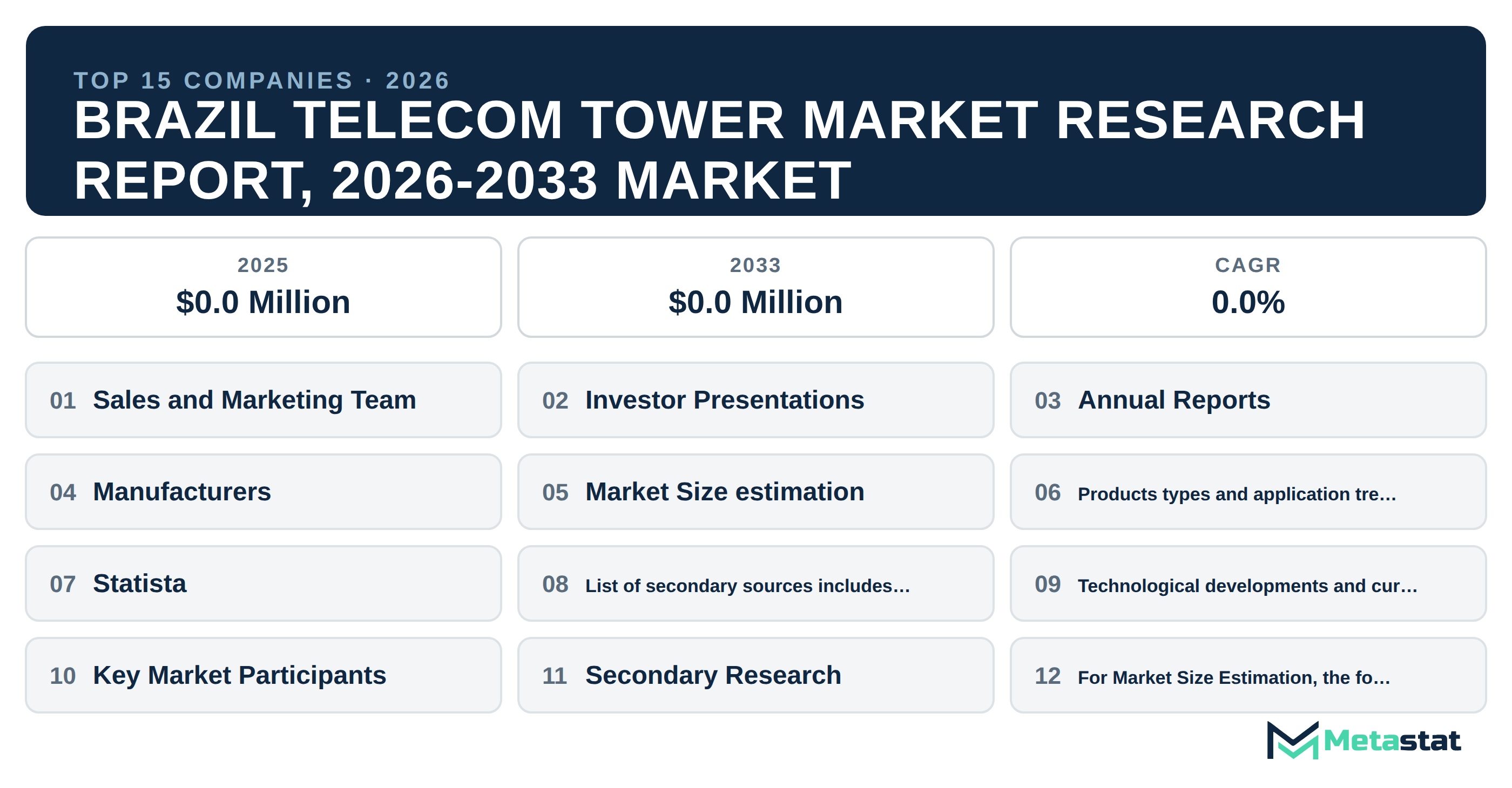
Top 10 Brazil Telecom Tower Market Research Report, 2026-2033 Trends
Inline metrology moves onto the production line
Incorporating inline metrology into production processes enhances quality control and reduces defects. This trend allows manufacturers to ensure that towers meet stringent specifications without delay, leading to faster deployment and improved customer satisfaction. Buyers benefit from the increased reliability of structures and reduced long-term maintenance costs.
Adoption of renewable energy sources for tower operations
Telecom companies increasingly turn to renewable energy solutions, such as solar and wind, to power their towers. This shift not only helps in reducing operational costs but also aligns with sustainability goals. Clients gain the advantage of lower energy expenses and improved public perception by supporting green initiatives.
Emergence of small cell technology for urban coverage
Small cell technology is gaining traction in densely populated urban areas to address coverage gaps. These compact units facilitate better data transfer speeds and connectivity, especially in high-traffic locations. Clients in urban environments benefit from enhanced service reliability and user experience as a result of this trend.
Growth of fiber optic connections to cell towers
The integration of fiber optic connections with telecom towers is expanding, enhancing data transmission speeds and network reliability. This development allows service providers to meet the growing demand for high-speed internet and mobile data services. Buyers benefit from improved service quality and network performance.
Increased focus on cybersecurity for telecom infrastructure
With rising cyber threats, telecom companies are prioritizing cybersecurity measures for their tower infrastructure. This focus involves implementing advanced security protocols and technologies to safeguard sensitive data. Clients gain peace of mind knowing that their operations are protected against potential cyberattacks.
Shift towards multi-tenant tower ownership models
A growing number of telecom towers operate under multi-tenant ownership, allowing multiple service providers to share infrastructure. This trend reduces capital expenditures for individual companies and promotes competition in the sector. Buyers experience benefits through lower costs and improved service options.
Implementation of advanced analytics for performance optimization
Telecom companies are leveraging advanced analytics tools to optimize tower performance and operational efficiency. By analyzing data on usage patterns, these firms can make informed decisions on tower placements and upgrades. Clients reap the rewards of enhanced operational effectiveness and service reliability.
Development of smart towers with integrated technology
Smart towers equipped with integrated technology are being developed to support IoT applications and enhanced connectivity. These structures enable real-time monitoring and management of network resources, leading to improved performance. Clients gain the advantage of innovative solutions that cater to evolving connectivity needs.
Expansion of tower leasing arrangements
Tower leasing arrangements are expanding, allowing telecom operators to focus on core services without the burden of ownership. This trend enables companies to scale their operations more rapidly while reducing upfront investment costs. Buyers benefit from flexibility and access to a wider range of services.
Collaboration between telecom companies and urban planners
Involving urban planners in telecom tower placements is becoming common practice, ensuring better integration into city landscapes. This collaboration helps address community concerns regarding tower installations. Clients see the benefits of improved stakeholder engagement and more strategic deployment of infrastructure.
Brazil Telecom Tower Market Research Report, 2026-2033 Companies Profiled
1. Sales and Marketing Team
Sales and Marketing Team focuses on crafting effective promotional strategies for telecom infrastructure services. This company specializes in connecting telecommunications firms with clients seeking innovative tower solutions. By leveraging market insights and trends, the team enhances its clients' visibility and outreach, creating tailored marketing approaches that address specific customer needs.
2. Investor Presentations
Investor Presentations excels in delivering comprehensive insights into telecom infrastructure investments. This company provides critical data and analyses that support investor decision-making processes within the telecom sector. By focusing on clear communication of value propositions and market dynamics, Investor Presentations helps clients navigate investment opportunities effectively.
3. Company Annual Reports
Company Annual Reports provides detailed assessments of telecommunications companies' performances, focusing on their operational and financial health. This company serves as a vital resource for stakeholders needing in-depth reports that reflect the state of the telecom industry. These reports equip clients with information necessary for informed strategic planning and investment assessments.
4. Manufacturers
Manufacturers within the telecom tower sector produce essential components that ensure reliable network service. They supply a range of products, including tower structures, antennas, and support equipment. By focusing on quality and compliance with industry standards, these manufacturers contribute to the overall reliability and effectiveness of telecom infrastructure.
5. Market Size estimation
Market Size estimation specializes in analyzing the telecommunications sector, offering insights into the scale and scope of the industry. This company assists clients in understanding demand trends and overall market dynamics, providing valuable information that supports strategic decision-making. Clients benefit from precise assessments that guide their investment choices.
6. Products types and application trends and dynamics
Products types and application trends and dynamics focuses on tracking innovations in telecom products and their applications. This company provides insights into emerging technologies and their potential influence on service delivery. By highlighting trends, the company aids clients in adapting to changes and optimizing their product offerings.
7. Statista
Founded: 2007.
Statista is a leading provider of market and consumer data across various industries, including telecommunications. The company offers comprehensive statistics and insights, allowing clients to make data-driven decisions. With its extensive database, Statista supports businesses by providing reliable and relevant information that enhances their competitive advantage.
8. List of secondary sources includes but is not limited to
This company specializes in compiling a diverse array of secondary sources for market research. By aggregating information from various reputable publications, it supports clients in gaining a broad view of the telecommunications landscape. Clients benefit from access to a wealth of knowledge that informs their strategic initiatives.
9. Technological developments and current status with expected developments
Technological developments and current status with expected developments focuses on tracking advancements in telecommunications technology. This firm provides clients with insights into the latest innovations and their implications for the industry. By staying updated on technological trends, clients can adapt their strategies to maintain competitiveness.
10. Key Market Participants
Key Market Participants offers detailed profiles of companies operating within the telecommunications sector. By analyzing their roles and contributions, this company provides clients with insights into potential partnerships and competitive positioning. Clients gain valuable knowledge that aids in strategic planning and market engagement.
11. Secondary Research
Secondary Research specializes in gathering and analyzing existing data to provide insights into the telecommunications sector. This firm aids clients in understanding industry trends and dynamics through a thorough examination of available materials. By leveraging secondary data, clients can make informed decisions based on established findings.
12. For Market Size Estimation, the following parameters were considered
This company focuses on defining key parameters for estimating the telecommunications sector's size. By analyzing a variety of metrics, it provides clients with a foundational understanding of industry dynamics. Clients are equipped with essential information that supports their strategic decision-making processes.
13. Hoover's
Founded: 2004.
Hoover's is a well-known business research company that provides information on companies, industries, and markets. By offering extensive profiles and analyses, Hoover's helps clients understand the competitive landscape within telecommunications. Clients gain insights that inform their market engagement strategies and investment decisions.
14. Unmet need analysis and demand forecasting
Unmet need analysis and demand forecasting focuses on identifying gaps in the telecommunications sector and forecasting future demand. By examining market conditions and consumer behavior, this company provides clients with insights that support strategic positioning and product development. Clients benefit from data-driven recommendations that help address emerging needs.
15. Factiva
Founded: 2001.
Factiva is a global business information and research tool that provides access to an extensive collection of news and data. Its resources enable clients in the telecommunications sector to track industry developments and competitive dynamics. By utilizing Factiva’s insights, clients can make informed decisions and stay updated on market trends.
Conclusion
The Brazil Telecom Tower industry is evolving rapidly, with significant advancements in technology, ownership models, and service delivery. The companies profiled highlight the diverse approaches and innovations within this sector, demonstrating the commitment to improving infrastructure and connectivity. Adopting new technologies and strategies will be crucial for businesses aiming to thrive in this competitive environment.
Companies engaging in the Brazil Telecom Tower sector must stay informed about industry trends and developments to capitalize on emerging opportunities. The insights provided in the Brazil Telecom Tower Market Research Report, 2026-2033 can guide decision-making and strategic planning in this dynamic sector.
Tags
About the Authors

LEAD ANALYST
Utkarsh Khirodkar is a Lead Market Research Analyst at MetaStat Insight, specializing in market intelligence, technology sector assessments, and competitive strategy.

PRINCIPAL CONSULTANT - ENTERPRISE AI & EMERGING TECHNOLOGIES
Banking & Finance · Electronics and Semiconductor · Energy and Power · Healthcare IT · Information & Technology · Professional Services
Vijay Gunti is a Principal Consultant at MetaStat Insight, bringing over two decades of experience across enterprise digital transformation, technology strategy, and intelligent systems.

LEAD CONSULTANT - COMMUNICATION, TELECOM, AND IT
Electronics and Semiconductor · Information & Technology · Machinery & Equipment · Professional Services
Ravindra Sathe Consultants for Communication, Telecom, and IT at MetaStat Insight. He leads the firm's industry research initiatives across telecommunications infrastructure, digital connectivity, enterprise networking, and emerging information technology domains.