
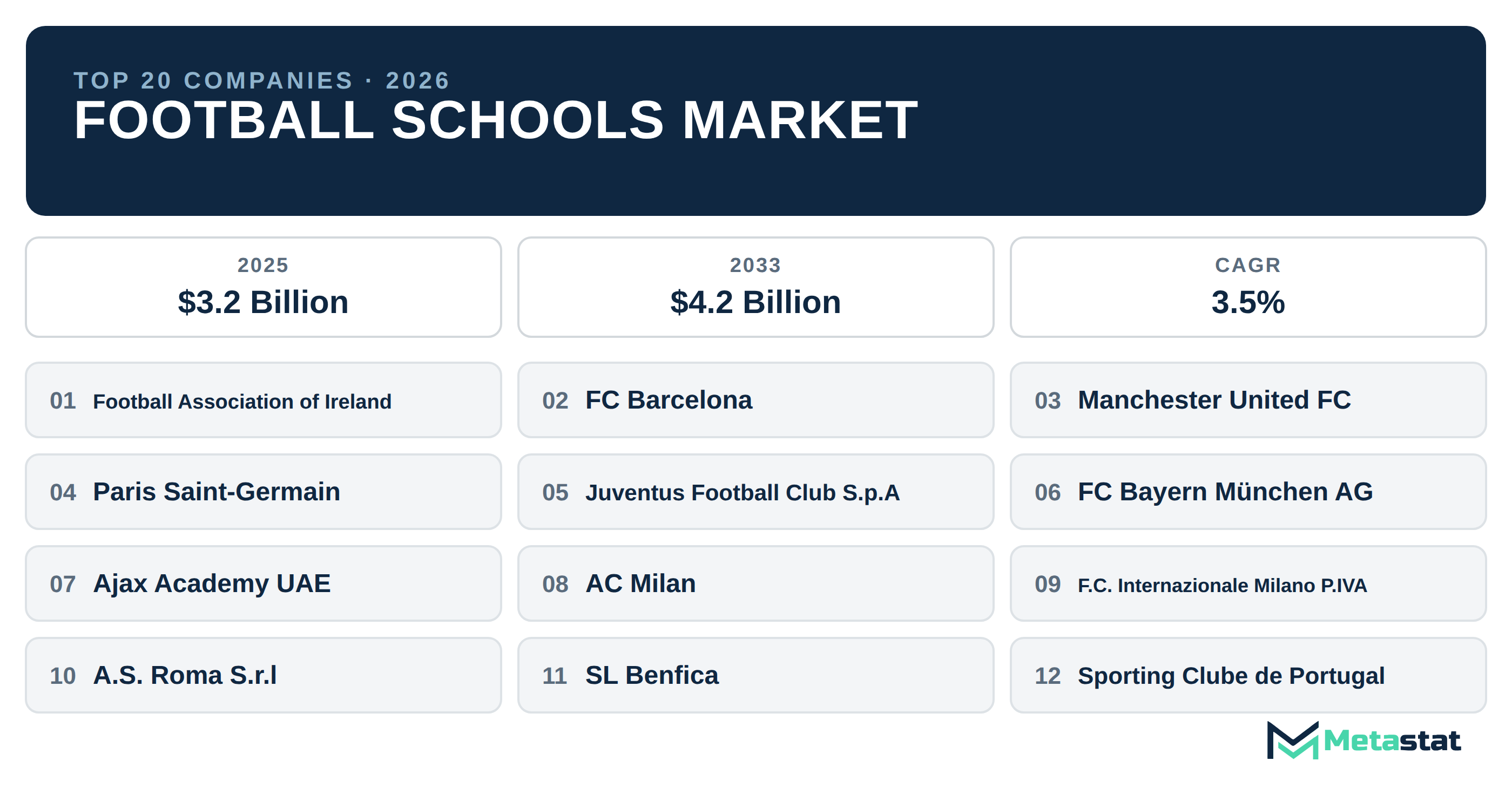
The Global Football Schools Market is set to reach USD 4.2 Billion by 2033. Explore the top 20 companies shaping this growing industry.
The Global Football Schools Market is valued at USD 3.2 Billion in 2025 and is projected to reach USD 4.2 Billion by 2033, growing at a CAGR of 3.5%. This market covers a variety of programs and academies designed to train young athletes and enhance their skills in football. Factors driving growth include increasing youth participation in football, rising popularity of professional clubs, and the demand for structured training programs.
Football schools offer a range of services from coaching young talent to creating pathways for amateur players to transition into professional leagues. As urbanization increases and more youth engage in sports, the demand for football training facilities and academies expands.
Global Football Schools Market Size, Data, & Statistics
The Global Football Schools Market was valued at USD 2.8 Billion in 2021. This figure rose to USD 2.9 Billion in 2022, and then to USD 3 Billion in 2023. Projections indicate a growth to USD 3.1 Billion in 2024, and USD 3.2 Billion in 2025.
Forecasts suggest that the market will reach USD 3.3 Billion in 2026, USD 3.4 Billion in 2027, and USD 3.5 Billion in 2028. The market is expected to continue its upward trend, hitting USD 3.6 Billion in 2029, USD 3.8 Billion in 2030, and USD 3.9 Billion in 2031.
By 2032, the Global Football Schools Market is anticipated to reach USD 4.1 Billion, ultimately totaling USD 4.2 Billion by 2033. The compound annual growth rate (CAGR) during the period from 2025 to 2033 is projected at 3.5%.
The regional distribution of the market is significant, with North America holding 23.9%, Europe at 29.7%, Asia Pacific at 20.4%, South America at 16%, and the Middle East and Africa at 10.1%.
Top 10 Trends in the Global Football Schools Market
Increased investment in youth programs
Investment in youth football programs continues to rise as clubs and federations recognize the importance of developing future talent. This trend leads to greater resources being allocated for training, facilities, and coaching, enhancing the overall quality of player development.
Technological integration in training
Football schools are adopting advanced technology for training purposes, which includes performance analytics and virtual coaching. The integration of technology supports tailored training approaches, helping young athletes improve their skills more effectively.
Growing partnerships with professional clubs
Many football academies establish partnerships with professional clubs, which allows young players access to better training resources and opportunities. This trend supports the development of the sport at grassroots levels and provides promising athletes pathways to professional careers.
Rise of women's football
The increasing popularity of women's football has resulted in a similar rise in women's football schools and academies. This trend signifies a shift toward inclusivity and broader participation in the sport, encouraging talent across genders.
Focus on comprehensive development
Football schools are shifting focus to encompass not just athletic training but also personal and psychological development. This approach prepares players for the demands of professional sports beyond just physical skills.
Expansion into emerging markets
Football schools are exploring opportunities in emerging markets, where demand for football training is on the rise. This expansion allows institutions to tap into new talent pools, contributing to the overall growth of the sport.
Community-based initiatives
Many football schools are implementing community outreach programs to promote the sport among local youth. This trend enhances community engagement while encouraging a love for football at younger ages.
Short-term clinics gaining popularity
Short-term clinics and camps are gaining traction among players seeking intensive training experiences. These programs allow athletes to rapidly develop their skills in focused environments, catering to a growing demand for accelerated learning.
Emphasis on mental health awareness
A greater emphasis is being placed on mental health awareness within football training environments. Schools are incorporating mental resilience training into their programs, acknowledging the psychological challenges young players face.
Collaboration with educational institutions
Football schools increasingly collaborate with schools and universities to provide integrated education and training programs. This collaboration supports athletes in balancing academics and sports, ensuring a well-rounded development.
Top 20 Companies in the Global Football Schools Market
1. Football Association of Ireland
Headquarters: Dublin, Ireland · Founded: 1921. The Football Association of Ireland (FAI) oversees football regulation and promotion in Ireland. It operates several youth programs aimed at developing young talent, ensuring a structured pathway for players to reach their full potential. The FAI's initiatives include coaching clinics and competitions that enhance the grassroots level of the sport.
By providing access to quality coaching and facilities, the FAI supports youth participation and skill development. Their involvement in the Global Football Schools Market shapes the future of football in Ireland.
2. FC Barcelona
Headquarters: Barcelona, Spain · Founded: 1899. FC Barcelona operates a renowned football academy, La Masia, which is recognized for producing world-class talent. The academy emphasizes a holistic approach to player development, focusing on technical skills, tactical understanding, and personal growth.
La Masia's success in nurturing players such as Lionel Messi and Xavi Hernandez exemplifies the club's commitment to developing youth talent. FC Barcelona’s football school initiatives extend globally, promoting the club's values and training methodologies to aspiring young athletes.
3. Manchester United FC Ltd
Headquarters: Manchester, England · Founded: 1878. Manchester United FC Ltd is not only a prominent football club but also operates a highly successful academy that focuses on youth development. The academy’s approach combines elite coaching with comprehensive education and personal development.
Manchester United's youth programs have produced some of the finest players in football history. The club's commitment to nurturing young talent is crucial for its long-term success, ensuring a continuous flow of skilled players into the first team.
4. Paris Saint-Germain
Headquarters: Paris, France · Founded: 1970. Paris Saint-Germain (PSG) is known for its significant investment in youth development through its academy, which aims to cultivate talent capable of competing at the highest levels. PSG’s academy focuses on providing a comprehensive education alongside exceptional football training.
The club's approach includes international partnerships and programs that enhance the global reach of its academy. By emphasizing both athletic and personal growth, PSG prepares young players for successful careers in football and beyond.
5. Juventus Football Club S.p.A.
Headquarters: Turin, Italy · Founded: 1897. Juventus Football Club S.p.A. is committed to developing young football talent through its academy, which combines technical training with life skills education. The club's philosophy promotes well-rounded development for aspiring athletes.
Juventus’ academy has produced numerous players who have made significant contributions to both the club and international football. The club’s dedication to youth development ensures a consistent influx of skilled players into its ranks.
6. FC Bayern München AG
Headquarters: Munich, Germany · Founded: 1900. FC Bayern München AG operates a prestigious academy that focuses on developing players through a structured training regimen. The academy emphasizes both physical and mental aspects of player development, ensuring a comprehensive approach to training.
The club’s success in cultivating talent is evident by its numerous academy graduates who have excelled in professional football. FC Bayern’s commitment to education and training strengthens its reputation as a leader in youth football development.
7. Ajax Academy UAE
Headquarters: Dubai, UAE · Founded: 2015. Ajax Academy UAE brings the renowned Ajax youth development philosophy to the Middle East. The academy focuses on nurturing local talent while promoting the values of teamwork and skill development.
By following Ajax's successful blueprint, the academy aims to develop players who can compete at higher levels. The emphasis on technical skills and tactical awareness prepares young athletes for future challenges in their football careers.
8. AC Milan
Headquarters: Milan, Italy · Founded: 1899. AC Milan operates a respected youth academy that integrates football training with personal development. The academy focuses on cultivating technical skills, teamwork, and discipline among its players.
AC Milan's dedication to youth development is evident in the number of successful players who have emerged from its ranks. The club’s investment in training facilities and coaching staff supports its mission of nurturing the next generation of football talent.
9. F.C. Internazionale Milano P.IVA
Headquarters: Milan, Italy · Founded: 1908. F.C. Internazionale Milano P.IVA operates a comprehensive youth academy that emphasizes technical skill development and tactical education. The academy aims to instill a strong understanding of the game in its young players.
Inter’s commitment to youth development has produced numerous players who have achieved success in professional football. The club's focus on education and training supports its strategy to create a sustainable pipeline of talent for the first team.
10. A.S. Roma S.r.l.
Headquarters: Rome, Italy · Founded: 1927. A.S. Roma S.r.l. emphasizes youth development through its academy, which combines football training with life skills education. The academy aims to prepare players not only for the game but also for life outside of football.
Roma's focus on a comprehensive approach to training develops well-rounded athletes who can adapt to the demands of professional sports. The club’s dedication to youth programs underlines its commitment to long-term success.
11. SL Benfica
Headquarters: Lisbon, Portugal · Founded: 1904. SL Benfica operates one of the largest football academies in Europe, focusing on the comprehensive development of young athletes. The academy is renowned for its structured training programs that blend football education with academic support.
Benfica’s commitment to youth development has resulted in numerous successful players who have moved on to professional careers. The club's approach ensures a steady stream of talent capable of fulfilling the demands of top-level football.
12. Sporting Clube de Portugal
Headquarters: Lisbon, Portugal · Founded: 1906. Sporting Clube de Portugal places significant emphasis on youth development through its academy, which is known for producing talented players who compete at the professional level. The academy focuses on technical skills, tactical understanding, and physical conditioning.
Sporting’s dedication to nurturing young talent plays an important role in the club’s long-term strategy, ensuring a consistent influx of skilled players who can contribute to the success of the first team.
13. FC Porto
Headquarters: Porto, Portugal · Founded: 1893. FC Porto operates a prestigious academy that is recognized for its successful youth programs. The club focuses on developing players through rigorous training and educational initiatives that foster both athletic and personal growth.
FC Porto's youth academy has produced many notable players who have excelled in professional football. The club's investment in youth development aligns with its strategy to maintain a competitive edge in the football environment.
14. Manchester City FC Ltd
Headquarters: Manchester, England · Founded: 1880. Manchester City FC Ltd is well-known for its innovative approach to youth development through its academy, which integrates advanced training techniques and educational support. The academy aims to produce technically skilled players who can thrive in the professional environment.
The club’s commitment to nurturing young talent is evident in its numerous successful graduates who have progressed to the first team. Manchester City’s emphasis on a comprehensive approach to player development supports its long-term success.
15. The Liverpool Football Club and Athletic Grounds Limited
Headquarters: Liverpool, England · Founded: 1892. The Liverpool Football Club and Athletic Grounds Limited operates a well-respected academy that focuses on the development of young footballers. The academy emphasizes technical training, tactical awareness, and personal growth.
Liverpool’s commitment to youth development has resulted in numerous players successfully transitioning to the first team. The club’s comprehensive approach to training prepares young athletes for the demands of professional football.
16. Chelsea FC
Headquarters: London, England · Founded: 1905. Chelsea FC operates a comprehensive youth academy known for producing talented players. The academy’s approach to development combines high-quality coaching with educational support and life skills training.
Chelsea’s investment in youth development has yielded significant success, with many academy graduates making their mark in professional football. The club’s focus on comprehensive training ensures that players are well-prepared for their careers.
17. Real Madrid Foundation
Headquarters: Madrid, Spain · Founded: 1994. The Real Madrid Foundation focuses on promoting football education and values through its various programs. The foundation operates football schools worldwide, emphasizing the importance of teamwork and discipline.
By nurturing a love for the game and instilling values, the Real Madrid Foundation contributes significantly to youth development. The foundation’s programs provide valuable opportunities for young players across the globe.
18. IMG Academy
Headquarters: Bradenton, Florida, USA · Founded: 1978. IMG Academy is a premier sports training facility that offers extensive football training programs alongside academic education. The academy emphasizes player development through rigorous training and personalized coaching.
IMG Academy's reputation for excellence attracts young athletes from around the world. The institution's comprehensive approach prepares athletes for both the physical and mental challenges of professional sports.
19. Coerver Coaching (Sportsmethod USA Inc.)
Headquarters: Campbell, California, USA · Founded: 1984. Coerver Coaching specializes in football training programs that focus on skill development and tactical understanding. The organization promotes innovative coaching techniques to enhance the performance of young athletes.
Coerver Coaching’s methodology emphasizes individual skill development, enabling players to improve their game effectively. Their programs have gained popularity among youth footballers, making a significant impact on player development.
20. Soccer Shots
Headquarters: Harrisburg, Pennsylvania, USA · Founded: 2006. Soccer Shots focuses on introducing children to the sport of football through enjoyable and engaging programs. The organization emphasizes skill development while promoting a love for the game.
Soccer Shots aims to nurture young talent by providing structured training in a fun environment. Their approach fosters a lifelong passion for football among participants, contributing positively to youth development.
Conclusion
The Global Football Schools Market is expected to experience steady growth through 2033, driven by rising participation rates and increased investment in youth programs. The presence of esteemed Football Schools companies highlights the importance of nurturing talent from a young age.
Recognizing the impact of these companies can help stakeholders make informed decisions regarding investments in youth development programs. Engaging with these Football Schools presents opportunities for aspiring players, coaches, and investors alike.
Tags
About the Author

LEAD ANALYST
Utkarsh Khirodkar is a Lead Market Research Analyst at MetaStat Insight, specializing in market intelligence, technology sector assessments, and competitive strategy.