
LEAD ANALYST
Utkarsh Khirodkar is a Lead Market Research Analyst at MetaStat Insight, specializing in market intelligence, technology sector assessments, and competitive strategy.

Global Football Schools Market Size, Share, By Operating Model (Club-Affiliated Football Schools, Federation / Association-Run Programs, Private Football Academies, Community-Based Programs and School / Education-Based Programs), By Age Group (Under-15 Programs, Under-10 Programs, Under-18 Programs and Adult Training), By Program Format (Year-Round Football Schools, Football Camps, Short-Term Clinics / Development Courses and Residential Football Academies), Industry Analysis, Growth, Trends, and Forecast, 2026-2033
Report ID
MSI-4890
Published
August, 2026
Pages
290 Pages
Format
Historical
Base year
Forecast
Forecast period
Report Details
Choose Your License
Global Football Schools Market
The global Football Schools market was valued at USD 3.2 billion in 2025 and is projected to reach USD 4.2 billion by 2033, growing at a CAGR of 3.5% over the forecast period.
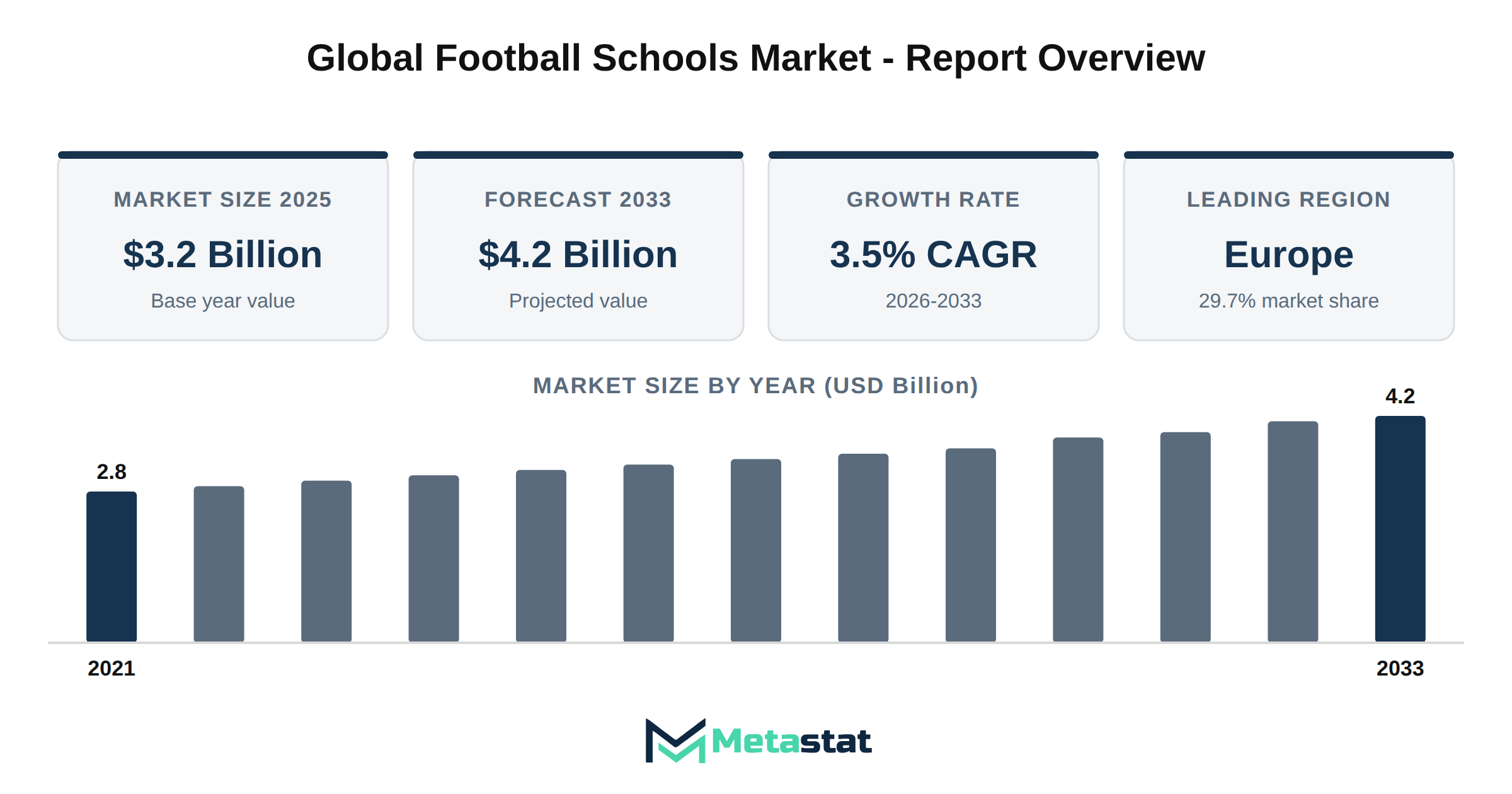
The Football Schools market reached a value of USD 3.2 billion in 2025, marking a significant increase from USD 2.8 billion in 2021. This growth trajectory reflects a compound annual growth rate (CAGR) of 3.5%, indicating steady demand for football education and training programs worldwide. The market is projected to expand to USD 4.2 billion by 2033, driven by increasing interest in football among youth and the professionalization of coaching methods.
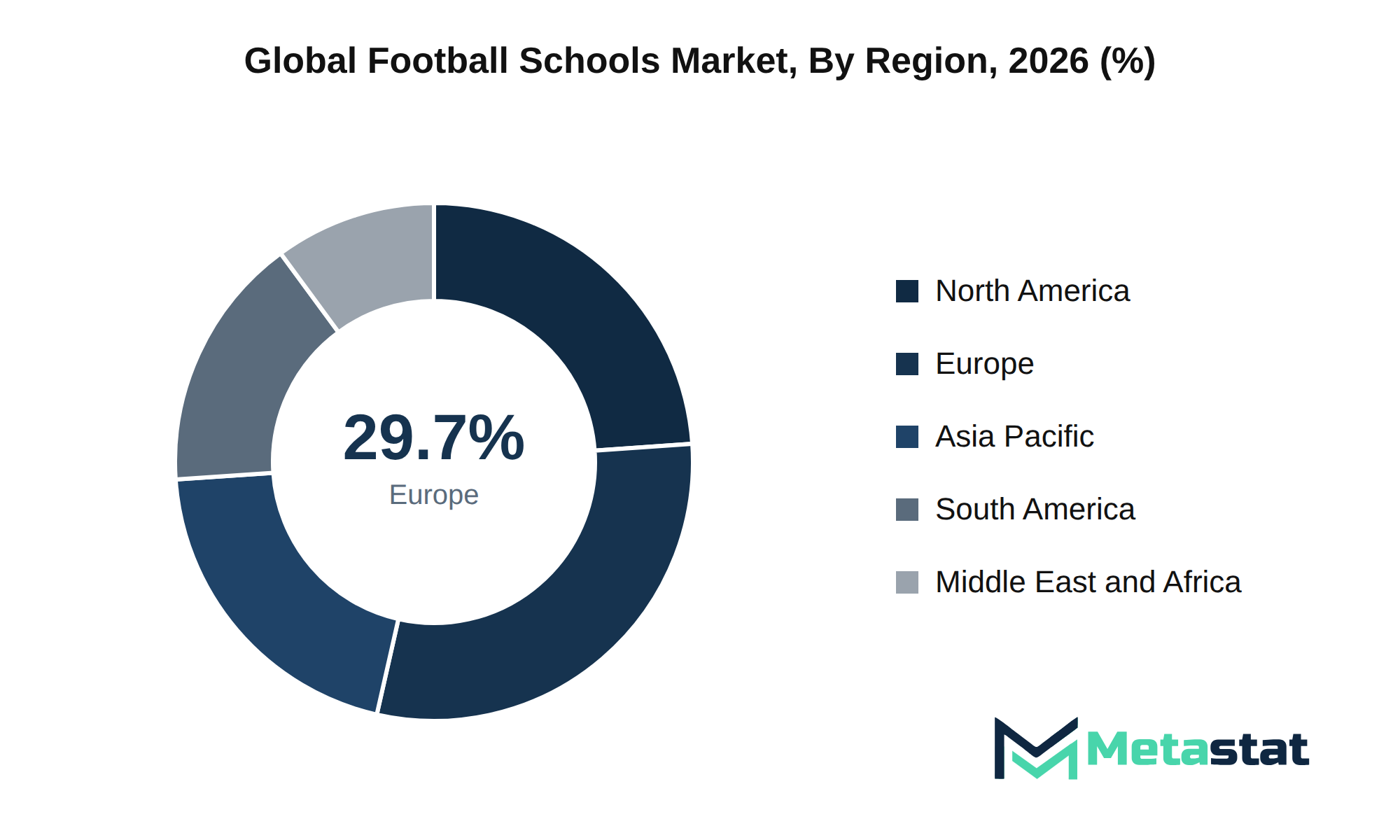
Regional dynamics play a crucial role in shaping the market. Europe holds the largest market share at 29.7%, followed by North America at 23.9% and Asia Pacific at 20.4%. Growth within these regions is influenced by cultural affinity for football, investment in youth development, and increasing participation rates. South America and the Middle East and Africa contribute 16% and 10.1% respectively, driven by local talent development initiatives and international partnerships.
In terms of operational models, Club-Affiliated Football Schools and Private Football Academies are key segments. Club-Affiliated models are expected to grow from USD 1.3 billion in 2026 to USD 1.5 billion by 2033, indicating a CAGR of 2.2%. Meanwhile, Federation/Association-Run Programs will experience a CAGR of 4.3%, reaching USD 0.4 billion by 2033. The market demonstrates a trend towards more structured and professionally run programs, aligning with the demand for higher quality training and development.
The age group segment reveals significant insights. Under-18 Programs are projected to reach USD 1.5 billion by 2033. Adult Training areas show a CAGR of 4.5%. This increase reflects the growing recognition of lifelong learning in sports and the importance of skill development at all ages. Programs targeting younger demographics, particularly Under-10 and Under-15 Programs, will see positive growth, with anticipated values of USD 1 billion and USD 1.2 billion respectively.
The Football Schools market experiences various dynamics shaping its growth trajectory. Regulatory compliance and standards across regions impact operational frameworks, compelling organizations to adapt their strategies. Geopolitical risks introduce challenges for market players, affecting international collaborations and expansion efforts.
Disruption in traditional training methodologies drives innovation within the sector. Investment in research and development trajectories enhances the quality of training programs and facilities, increasing competition among providers. Next-generation innovations, including advanced training technologies and data analytics, significantly influence the market, enhancing the learning experience for participants.
Sustainable transformation remains a pressing imperative, with organizations increasingly prioritizing decarbonization and circular economy dynamics. Market players actively seek to implement eco-friendly practices within their operations, aligning with global sustainability goals while enhancing brand image.
The supply chain landscape experiences shifts due to evolving sourcing strategies and logistics architecture. Enhanced procurement processes and customer journey dynamics play critical roles in delivering tailored experiences to participants, thereby improving retention rates and overall satisfaction. These developments create a more responsive environment for stakeholders.
Capital allocation towards infrastructure investments becomes essential for market growth. Organizations focus on balancing capital expenditures and operational expenditures, ensuring efficient resource allocation to maintain competitiveness. Macroeconomic headwinds, including inflationary pressures and currency volatility, impact financial planning and operational strategies, necessitating agile responses from market players.
The future strategic outlook for the Football Schools market emphasizes the need for corporate imperatives that align with industry trends and consumer expectations. High-value recommendations for stakeholders highlight the importance of innovation, sustainability, and customer-centric approaches to drive long-term growth and profitability.
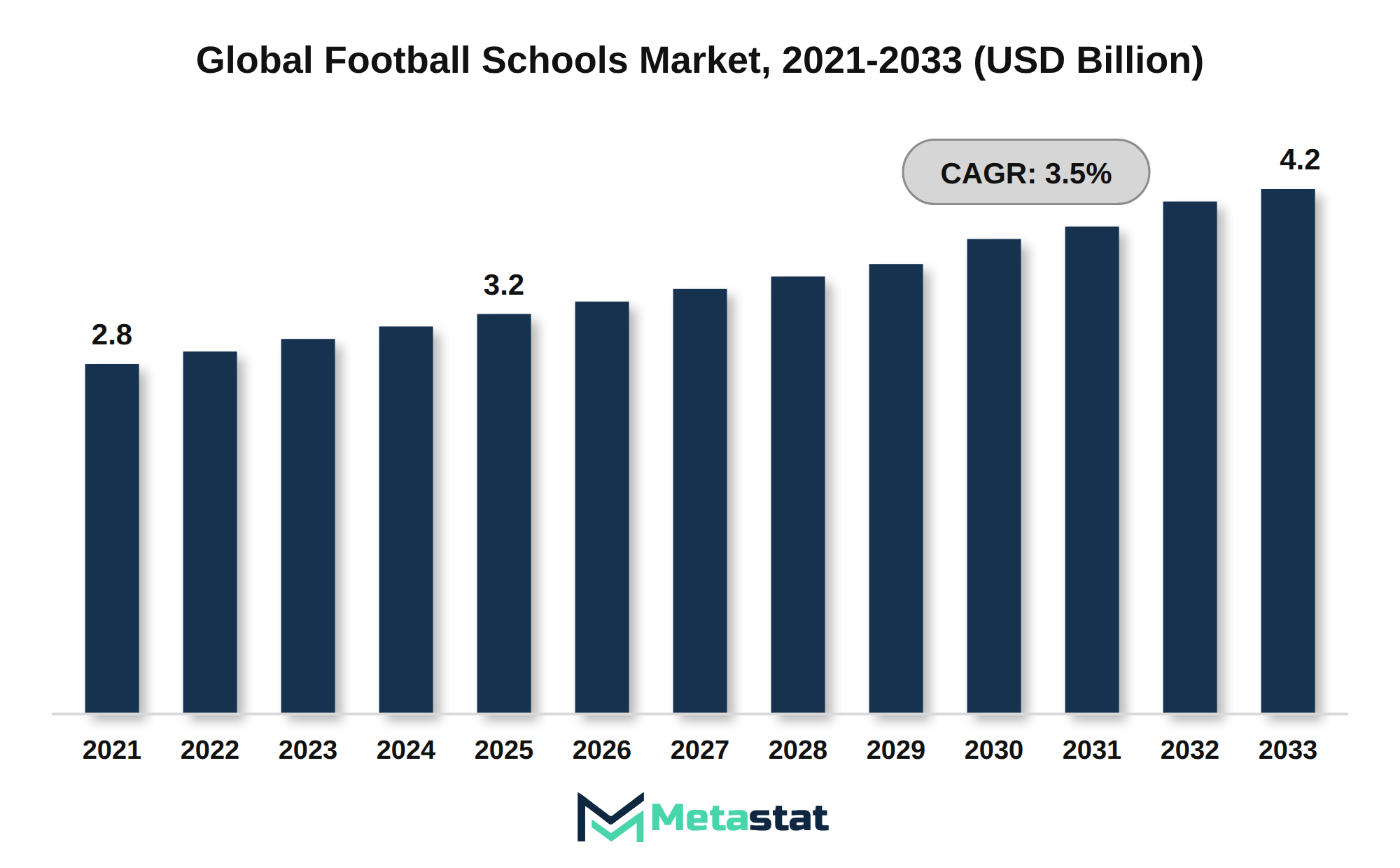
Economic growth significantly influences the Football Schools market by creating a capital investment environment conducive to expansion. Rising GDP levels correlate with increased disposable income among families, prompting higher enrollment in football programs. This trend stems from parents prioritizing extracurricular activities that enhance their children's skills and physical well-being, reflecting a cultural shift towards sports participation.
Investment in infrastructure and facilities enhances the quality of education provided by football schools. Increased funding from public and private sectors supports the development of modern training centers, improving the overall attractiveness of programs. This enhancement in facilities promotes the market’s growth, driven by better resources that lead to higher enrollment numbers and retention rates.
The digital transformation within the sports education sector drives innovation in training methodologies. The integration of technology into training regimens and administrative tasks streamlines operations, making football schools more efficient and accessible. This advancement contributes to a projected CAGR of 3.5 percent for the market, indicating steady growth through 2033.
Increasing awareness of the benefits of sports participation further drives demand. Parents recognize the physical, social, and psychological advantages of enrolling their children in football schools. This shift in consumer behavior enhances the market's appeal, encouraging investment in various program formats, including year-round football schools and specialized training camps.
Overall, the combination of economic growth, strategic investment in infrastructure, and evolving consumer preferences positions the Football Schools market for continued expansion, with expected value reaching USD 4.2 billion by 2033.
Growing consumer interest in football has led to a surge in enrollment across the Football Schools market. Factors driving this trend include rising awareness of football's global appeal and increased investment in youth development programs. Parents recognize the benefits of football education for their children, including improved physical fitness, teamwork skills, and discipline.
This heightened interest results in more families seeking professional training for their children, which expands the market significantly. The emergence of community-based football programs and private academies caters to this demand, providing various training formats and schedules that accommodate busy lifestyles. These programs attract diverse demographics, including urban populations and families with varying income levels.
The Football Schools market is projected to experience steady growth, with forecasts indicating a rise in market value from USD 3.2 billion in 2025 to USD 4.2 billion by 2033. This growth reflects an expanding base of participants and increased spending on youth sports education. Market operators should anticipate further developments in program offerings to meet evolving preferences of consumers.
The Football Schools market faces several restraints that hinder growth and expansion. Regulatory compliance presents a significant barrier, with increasing legal mandates requiring schools to meet specific standards, which raises operational costs. This burden particularly affects smaller institutions that struggle to allocate resources for compliance, thus limiting their competitiveness in the market.
Macroeconomic headwinds, including inflationary pressures, add another layer of complexity. Rising costs related to staffing, materials, and facility maintenance strain budgets, forcing schools to reconsider pricing structures. These adjustments lead to reduced enrollment, impacting revenue generation and market stability.
Supply chain disruptions contribute to the challenges, resulting in delays for essential equipment and materials. This situation affects the ability of football schools to deliver high-quality programs, impacting their reputation and attractiveness to prospective students.
Skilled labor deficiencies create further obstacles. The market relies heavily on qualified coaches and staff to provide effective training, yet shortages in this area lead to operational difficulties. Schools struggle to attract and retain talent, which diminishes the quality of education provided and limits market growth.
Infrastructure gaps and connectivity deficits hinder the establishment of new programs and facilities. In regions lacking sufficient sports infrastructure, football schools face difficulties in operation and expansion, affecting their ability to capitalize on enrollment opportunities. Cultural barriers and regional adoption resistors further complicate market penetration, driven by attitudes toward football education that vary significantly across different areas.
Overall, these restraints collectively challenge the Football Schools market, affecting growth projections and limiting the ability to meet rising demand for football education and training programs.
Geopolitical fragmentation presents a significant challenge for the Football Schools market, impacting operational strategies and market dynamics. Trade deficits and tariff friction contribute to fluctuating costs, complicating financial planning for schools. The situation becomes complex, particularly for international programs that rely on cross-border collaborations and talent exchange. This fragmentation influences consumer sentiment and investment, limiting overall growth in the market.
Technological disruptions complicate the situation by creating demands for advanced training methodologies. Schools adapt to new technologies while facing pressures related to infrastructure gaps and retrofitting barriers. These challenges create implementation bottlenecks that hinder the agility required to respond to evolving market needs.
Rising input cost structures exert additional pressure on profit margins within the market. Workforce skill gaps and talent retention pressures arise, impacting the ability to deliver high-quality training programs. The demand for skilled coaches and trainers intensifies, requiring football schools to invest in talent development and retention strategies.
Increasing sustainability demands and environmental lifecycle footprints necessitate a shift towards greener practices. Compliance overhead related to tightening global regulatory standards influences operational costs, requiring schools to navigate complex legal liabilities. Adapting to these challenges remains crucial for maintaining competitiveness in the Football Schools market.
Emerging regional demands for quality football training expand opportunities within the Football Schools market. Increased interest in football across various demographics stimulates enrollment, particularly in areas where football culture is developing. Infrastructure modernization facilitates the establishment of new facilities, enhancing access for aspiring young athletes and meeting growing demand.
Geographical expansion into underserved regions presents significant potential for growth. Efforts to promote football in countries with a growing interest, including those in Asia Pacific and South America, position the market for increased revenue. Technological disruptions, including the integration of digital training platforms, enhance training effectiveness and attract tech-savvy players.
Digital transformation in the Football Schools market leads to innovative training solutions that engage participants effectively. Next-generation innovations in coaching methodologies and training equipment improve the overall experience, driving enrollment and retention rates in programs. Sustainability imperatives influence consumers, driving demand for eco-friendly operations and practices within football schools.
Commercial model transitions reflect evolving buying behaviors, with parents and guardians increasingly seeking personalized training solutions for their children. Supply chain localization supports the timely delivery of resources, improving operational efficiency and responsiveness to local market demands. Strategic consolidation through partnerships and collaborations enhances service offerings, contributing to market resilience.
Asset life-cycle extensions, particularly in training facilities and equipment, reduce costs and improve profitability for stakeholders. Maintenance upgrades and retrofitting dynamics ensure that existing structures meet modern standards, providing safe and effective training environments. Value-chain optimization through process automation leads to improved operational yield, benefiting both providers and participants.
The combined effect of these factors positions the Football Schools market for significant growth from USD 3.2 billion in 2025 to USD 4.2 billion by 2033, with a compound annual growth rate (CAGR) of 3.5%. The market's potential continues to attract investment and innovation, creating opportunities for a dynamic future.
The Global Football Schools market is segmented based on Operating Model, Age Group, and Program Format.
Valued at USD 1.3 billion in 2026, the Club-Affiliated Football Schools segment is projected to reach USD 1.5 billion by 2033, representing a compound annual growth rate (CAGR) of 2.2% during the forecast period. This segment thrives on the integration of professional football clubs into training programs, enhancing exposure and credibility among aspiring football players. The affiliation with established clubs attracts participants and parents seeking quality training experiences aligned with professional standards.
Growing recognition of the importance of football training in developing talent fuels demand for club-affiliated programs. Clubs leverage their brand equity to promote training opportunities, contributing to increased enrollment. Collaboration with local schools and community organizations enhances accessibility, expanding the reach of these programs to a wider audience.
Investment in advanced training facilities and coaching staff further strengthens the appeal of club-affiliated football schools. Continuous development of coaching methods and techniques aligns with evolving trends in football, ensuring that programs remain competitive. These advancements support participant skill enhancement and retention, ultimately benefiting the overall market for football schools.
Awareness of youth development pathways drives parents to enroll their children in club-affiliated football schools. Programs emphasize athletic skills, personal growth, teamwork, and discipline, appealing to families seeking well-rounded development for their children. This focus on comprehensive training experiences positions club-affiliated schools because attractive options within the Football Schools market.
Growth in the Federation / Association-Run Programs segment is driven by several factors, including increased participation in football at the grassroots level and enhanced support from governing bodies. These programs provide structured training pathways and resources for young athletes, supporting talent development and ensuring a steady influx of skilled players into the sport. This environment attracts investments and sponsorships, contributing to the segment's expansion.
Regulatory compliance and alignment with national and international football standards significantly influence the segment. While football associations promote youth development initiatives, the focus on certified training programs ensures quality and uniformity across various regions. Increased awareness of the importance of youth development enhances enrollment in these programs, further supporting market growth.
Technological advancements, including data analytics and performance tracking tools, enhance training effectiveness within this segment. The integration of these technologies into training curricula allows programs to offer personalized coaching experiences, appealing to both players and parents. This trend is expected to improve operational efficiency within programs, leading to improved outcomes and heightened participant satisfaction.
The Federation / Association-Run Programs segment is projected to reach USD 0.4 billion by 2033, at a CAGR of 4.3% during the forecast period. This growth trajectory highlights the increasing recognition of the role that structured programs play in developing future football talent and the overall sustainability of the sport.
Growth in the Private Football Academies segment is driven by increasing investments in youth football training and the rising popularity of football worldwide. Parents prioritize quality training for their children, leading to heightened demand for specialized academies that focus on skill development, fitness, and tactical understanding of the game. This trend highlights a shift in consumer behavior towards structured training programs, which enhances the overall appeal of private academies.
Technological advancements significantly impact the evolution of training methodologies within private academies. The integration of data analytics, virtual coaching, and performance tracking tools enables personalized training regimens, attracting aspiring footballers. Academies leveraging technology to enhance player development stand out in the competitive landscape, driving further investment and interest.
Investment in infrastructure and facilities remains a critical factor for growth within this segment. Private academies invest in state-of-the-art training environments that include artificial turf fields, fitness centers, and video analysis rooms. These enhancements attract more students and provide a comprehensive training experience, reinforcing the segment's market position.
The Private Football Academies segment is projected to reach USD 1.3 billion by 2033. Increased enrollment and retention rates reflect strong consumer confidence in the quality and effectiveness of training provided by these institutions.
Competitive pressures shape the operational strategies of private academies. To differentiate themselves, academies develop unique training programs, engage with prominent coaches, and establish partnerships with professional clubs. Such strategies enhance brand recognition and establish a loyal customer base, positioning these academies for sustained success within the Football Schools market.
Growth in community-based programs within the Football Schools market reflects a significant trend towards localized and accessible football training initiatives. These programs often focus on grassroots engagement, encouraging community involvement in football and promoting healthy lifestyles among youth. The increasing emphasis on youth development and community cohesion drives demand for these initiatives, which cater to diverse age groups and skill levels.
Community-based programs are projected to grow at a CAGR of 4.3% during the forecast period. This growth stems from various factors, including rising awareness of the benefits of physical activity and the role of football in community development. Local organizations, schools, and non-profit entities contribute to this expansion, providing training resources and facilities for young athletes.
Adoption of community-based programs is evident in various regions, particularly in areas with a strong football culture. Increased collaboration among local governments, schools, and community organizations facilitates the establishment of these programs, enhancing their reach and impact. The market experiences heightened interest from parents seeking structured activities for their children, which drives participation and enrollment.
Regulatory compliance and community engagement play vital roles in shaping these programs. Partnerships with established football clubs and associations provide credibility and resources, while adherence to safety standards ensures a secure training environment. Communities prioritize youth sports, and investment in football training infrastructure continues to rise, further propelling growth in this sub-segment.
Overall, the community-based programs segment within the Football Schools market demonstrates strong potential for expansion, driven by societal trends favoring youth engagement in sports and local development. This growth trajectory positions community initiatives because a key contributor to the overall success of the football training landscape.
Adoption of School / Education-Based Programs within the Football Schools market reflects a tailored approach to youth development through structured training and education. This segment emphasizes skill enhancement and physical fitness among students, contributing to increased participation in football at an early age. Educational institutions increasingly recognize the benefits of incorporating football programs, leading to a more engaged student body and a healthier lifestyle.
Segment expansion relies on several catalysts, including rising awareness of the importance of sports in education and the establishment of partnerships between schools and football academies. Curriculum integration of football training enhances student engagement, which drives demand for comprehensive educational programs. Enhanced funding from governmental and private sectors facilitates the implementation of these initiatives, ensuring consistent growth in the segment.
Technological maturation influences program delivery through the incorporation of digital tools for training and assessment. Innovations including virtual coaching and performance analytics provide educators with new methods to monitor student progress and improve training outcomes. This evolution creates a more competitive environment, pushing schools to adopt advanced methodologies in their football programs.
Downstream application of these programs extends beyond the educational sphere. Successful engagement through school-based football initiatives leads to increased participation in local clubs and associations, further promoting the sport within communities. This connection between education and grassroots football strengthens the overall football ecosystem and encourages a culture of active participation.
Regulatory compliance standards play an important role in shaping the structure and delivery of School / Education-Based Programs. Adherence to safety and training regulations ensures that programs not only promote skill development but prioritize the well-being of participants. Such compliance enhances the credibility of educational institutions and attracts more students to these programs.
Capital investment in School / Education-Based Programs remains critical for long-term sustainability. Schools and academies that prioritize football education experience improved enrollment numbers and heightened community support. This financial backing, coupled with strategic partnerships, drives the segment forward, aligning with the growing global interest in football.
Valued at USD 1 billion in 2026, the Under-15 Programs segment is projected to reach USD 1.2 billion by 2033, at a CAGR of 2.8% during the forecast period. Strong interest in youth sports, particularly football, fuels demand for structured training programs tailored to this age group. Increased participation rates in youth football leagues contribute to higher enrollment in football schools, enhancing overall market growth.
Investment in coaching quality and facilities plays a critical role in segment expansion. Parents and guardians increasingly seek programs offering professional training and development pathways for young athletes, leading to a competitive landscape among football schools. The focus on early talent identification and skills development attracts families looking for long-term benefits for their children in the sport.
Technological advancements, including digital training aids and performance tracking tools, enhance training experiences, attracting a younger demographic. Such innovations result in improved skill acquisition and engagement among participants, creating a favorable environment for growth. The incorporation of these technologies supports the market by raising training standards and making programs more appealing to both players and parents.
Regulatory compliance and certifications for coaching staff contribute to market credibility, ensuring safety and quality in programs. Compliance with recognized standards creates trust among stakeholders, including parents, which is vital for enrollment increases. Segment players that demonstrate adherence to these standards often experience higher demand, resulting in improved market positioning and revenue growth.
Strategic partnerships between football schools and professional clubs present significant opportunities. Collaborations provide young players access to professional resources, mentorship, and scouting, enhancing their development and market appeal. Such partnerships drive enrollment, driven by families seeking programs that offer pathways into professional football.
Growing interest in football among young children drives the Under-10 Programs segment in the Football Schools market. This segment focuses on training and skill development for children under the age of ten, creating a foundation for their future athletic pursuits. Parents increasingly recognize the value of early sports involvement, leading to rising demand for structured programs. Organizations that offer tailored coaching and engaging activities for this age group attract a larger participant base.
The Under-10 Programs segment is estimated to reach USD 1 billion by 2033, at a CAGR of 3.3% during the forecast period. Initiatives from various football clubs and academies targeting grassroots engagement directly influence market dynamics. Programs emphasize skill development, teamwork, and physical fitness, appealing to both parents and children. This focus on comprehensive development encourages long-term participation in the sport.
Technological advancements in training methods, including interactive apps and online tutorials, enhance program delivery and engagement. Coaches leverage these tools to provide personalized feedback and progress tracking, thereby increasing the appeal of the programs. Innovations attract investment from various stakeholders, further supporting segment growth.
The abundance of grassroots programs and community initiatives enhances accessibility to football training, resulting in greater participation rates. Local and national governing bodies promote regulations that facilitate the establishment of youth programs, ensuring safety and quality standards. These efforts contribute to a strong foundation within the market, enhancing long-term sustainability and growth.
Growing interest in youth football drives the demand for under-18 programs, reflecting a strong commitment from parents and communities to develop young talent. Increased participation rates and evolving training methodologies enhance the appeal of these programs, ensuring that children receive quality coaching and access to professional football frameworks. The market is projected to reach USD 1.5 billion by 2033, highlighting the financial significance of this segment. The emphasis on comprehensive development, including physical fitness, teamwork, and discipline, contributes to the growing popularity of under-18 programs across various regions.
Technological advancements in training techniques and equipment facilitate improved coaching standards and player development. Innovations including data analytics for performance tracking and virtual training platforms enable coaches to tailor programs to individual needs, further attracting participants. The competitive landscape includes prominent players including FC Barcelona, Manchester United FC Ltd, and Juventus Football Club S.p.A., which enhance their offerings through established partnerships and community engagement initiatives.
Shifts in consumption patterns highlight a trend towards year-round training, with many parents prioritizing consistent development over seasonal play. Regulatory frameworks emphasizing youth sports safety and coaching certifications enhance consumer confidence, driving enrollment in under-18 programs. The market's growth trajectory reflects these dynamics, with continued investment in infrastructure and training facilities expected to support expansion in the coming years.
Adult training within the Football Schools market is projected to grow at a CAGR of 4.5% during the forecast period. This segment attracts adults seeking to enhance their skills and fitness levels through structured football programs. The growing emphasis on health and fitness among adults drives participation, leading to increased enrollment in training programs. The rise of recreational leagues and amateur competitions increases demand for adult training, driven by individuals aiming to improve their performance and social engagement through football.
Technological advancements in training techniques and equipment enhance the training experience, making programs more appealing to potential participants. Innovations in coaching methodologies and performance analytics support skill development, encouraging adults to engage more actively in football activities. The flexibility of training schedules accommodates the busy lifestyles of adult participants, promoting higher attendance rates in football schools.
Investment in facilities and resources by football schools contributes to the attractiveness of adult training programs. Enhanced facilities provide a better environment for learning and practice, enabling schools to offer diverse training options. This focus on quality training infrastructure positions football schools competitively within the market.
While adult training continues to grow, football schools expect increased revenue opportunities. The segment's expansion not only supports the broader Football Schools market but creates strategic partnerships with local recreational leagues and health organizations, further driving enrollment and community engagement.
Valued at USD 1.4 billion in 2026, the Year-Round Football Schools segment is projected to reach USD 1.7 billion by 2033, at a CAGR of 2.8% during the forecast period. This segment benefits from an increasing commitment to continuous training and skill development among young players. Year-round training programs provide consistent exposure to coaching, which enhances player performance and competitiveness. The growing emphasis on structured football development drives interest in these programs, particularly among parents seeking comprehensive training solutions for their children.
Competition among various football academies and clubs intensifies, leading to innovations in training methodologies and curriculum design. Organizations focus on incorporating technology, analytics, and modern coaching techniques into their programs, thereby attracting a wider audience. This trend reflects a shift in consumer preferences toward more specialized and sustained training options, allowing academies to capitalize on emerging market dynamics.
Investment in infrastructure and facilities contributes significantly to the growth of the Year-Round Football Schools segment. Enhanced training venues and resources enable organizations to deliver high-quality programs, attracting aspiring footballers dedicated to improving their skills. While the market for football schools develops, a focus on quality and results becomes essential, ensuring that programs remain competitive and appealing to potential participants.
Regulatory compliance and adherence to standards in youth coaching further influence market dynamics. Organizations that prioritize certifications and meet regulatory requirements enhance their credibility, making them more attractive to parents and participants. This focus on quality assurance drives demand for established and reputable football schools within the market.
Growing interest in youth engagement with football drives the demand for Football Camps within the Football Schools market. This segment is estimated to reach USD 1.2 billion by 2033, at a CAGR of 3.8% during the forecast period. Enhanced training methodologies and increased accessibility to quality coaching contribute to segment growth. The popularity of football-related activities during school breaks and holidays increases participation among children and adolescents.
Technological advancements in coaching techniques, including video analysis and performance tracking, enhance the training experience at Football Camps. These innovations attract parents seeking specialized training for their children, reinforcing demand in this segment. Collaborations among football clubs and educational institutions support the expansion of football camps, providing professional coaching in a structured environment.
Market dynamics indicate that regional variations impact the adoption of Football Camps. North America and Europe show a strong inclination toward organized football training programs, while Asia Pacific and South America exhibit rapid growth in youth camps. Increasing awareness of physical fitness and the benefits of team sports fuels the market's upward trajectory.
Investment in marketing and outreach campaigns raises awareness and encourages enrollment in Football Camps. While competition intensifies, providers that emphasize unique training experiences and personalized coaching capture a larger share of the market. The overall growth trajectory of the Football Schools market indicates robust potential, driven predominantly by the Football Camps segment.
Increasing participation in football among youth drives demand for short-term clinics and development courses. These programs attract individuals seeking to enhance their skills quickly, aligning with a growing emphasis on youth sports development globally. Various stakeholders, including educational institutions and private organizations, emphasize the importance of structured training, which increases engagement in football. Market players capitalize on this trend by offering diverse training modules tailored to different skill levels and age groups.
The short-term clinics and development courses segment is projected to reach USD 0.9 billion by 2033. This growth reflects the rising popularity of football, supported by regional initiatives promoting youth engagement in sports. The focus on skill development drives investment in these courses, enabling participants to gain professional-level training in condensed timeframes. Consequently, the market anticipates continued expansion, reinforcing interest in football worldwide.
Growth in the Residential Football Academies segment is supported by increasing awareness of football, driven by a viable career pathway for youth. Parents and guardians prioritize structured training environments that offer professional coaching and personal development, leading to higher enrollment rates. This trend occurs particularly in regions with strong football cultures, leveraging the popularity of the sport and its professional leagues.
Investment in advanced training facilities and partnerships with professional clubs enhances the credibility of residential academies, attracting more participants. The segment is projected to grow at a CAGR of 3.7% during the forecast period, reflecting a steady demand for comprehensive football education that combines athletic training with academic support.
Consumer preferences shift towards immersive experiences, driving the development of residential facilities that provide a full-time commitment to football training. These institutions often serve because feeder programs for professional clubs, creating pathways for aspiring athletes while strengthening ties within the Football Schools market.
Challenges including rising operational costs and competitive pricing pressure impact profitability, necessitating strategic adjustments by academy operators. Adapting to market demands through innovation and enhanced service offerings positions residential academies favorably for future growth.
The appeal of residential football academies remains robust, with ongoing investment in infrastructure and coaching talent ensuring their relevance within the broader Football Schools market. The commitment to nurturing young talent will drive continued interest and enrollment, reinforcing the segment's growth trajectory.
Based on geography, the Global Football Schools market is divided into North America, Europe, Asia-Pacific, South America, Middle East, and Africa.
North America represents a significant portion of the Football Schools market. The market is set to expand at a CAGR of 3.5% within the forecast period, reaching a market size (TAM) of USD 0.9 billion by the end of 2033.
In the United States, Canada, and Mexico, various factors drive the growth of football schools. Increasing participation in youth football results in a higher demand for programs targeting younger demographics. A surge in interest from parents seeking structured training for their children enhances enrollment in football-related programs.
Club-affiliated football schools gain traction due to renowned clubs establishing training academies, promoting their brand and developing local talent. Federation-run programs experience growth, driven by initiatives aimed at enhancing player development and grassroots engagement. Private football academies continue to attract students seeking specialized coaching, contributing to the overall market expansion.
Mature market dynamics characterize the region, with established facilities and a robust coaching infrastructure. The presence of well-known football clubs and academies supports a competitive landscape, encouraging innovation and investment. Regional players focus on enhancing their offerings to meet evolving consumer preferences, which drives continued development.
The combination of increasing youth engagement, strong institutional support, and a commitment to player development positions North America because a key player in the Football Schools market. This region's growth trajectory reflects a strong commitment to nurturing football talent and expanding the reach of football education.
Europe holds a significant share of the Football Schools market, accounting for 29.7% of the global total in 2025. Countries including Germany, France, the UK, Italy, and Spain exhibit strong demand for football training programs, influenced by high youth participation and a rich football culture. Russia and the rest of Europe contribute to the market's growth, creating an environment for various training models, including club-affiliated schools and private football academies.
Infrastructure modernization across Europe supports the development of football schools, with government and private investments enhancing facilities and training resources. The emphasis on youth football development drives the expansion of programs tailored for different age groups, including under-10, under-15, and under-18 categories. Competition among established clubs and associations in the region promotes innovative training methodologies and increases the appeal of football schools.
Regional dynamics reflect a mature market, characterized by a mix of established players and emerging academies. Local compliance mandates and cultural nuances influence procurement processes and consumer behavior, shaping the offerings within the market. Potential for incremental growth remains strong, particularly in underpenetrated territories where demand for quality football training continues to rise.
Investment in localized manufacturing and nearshoring initiatives enhances the supply chain resilience of football schools, ensuring that quality training equipment and resources are readily available. Foreign direct investment flows toward football academies signal confidence in the region's growth potential. With a projected increase in market value, the European Football Schools market presents opportunities for expansion and innovation in the coming years.
The Asia-Pacific region represents a significant share of the global Football Schools market. This market has seen a surge in participation driven by the growing popularity of football among youth in countries including China, Japan, India, South Korea, and Australia. The increasing investment in sports infrastructure and youth development programs supports adoption across these nations.
China leads the market in terms of enrollment and program variety, with numerous private football academies and community-based programs catering to different age groups. Japan benefits from well-established football traditions, focusing on both grassroots and elite training programs. In India, the increasing interest in football translates to a growing number of football schools aimed at enhancing skills from a young age.
South Korea prioritizes youth training initiatives, investing in football schools that emphasize tactical and technical development. Australia features a diverse range of football programs, including year-round football schools, while Southeast Asia exhibits potential for growth in under-penetrated territories. Increased awareness of football because a career option creates an environment conducive to the expansion of the market.
Competitive dynamics in the region feature a mix of local and international players, with partnerships between established clubs and local academies enhancing program quality. The rising demand for tailored training and development within football schools promotes a gradual shift towards specialized offerings that cater to various skill levels. Future growth in the Asia-Pacific market hinges on continued investments in infrastructure, strategic partnerships, and the alignment of programs with local cultural preferences.
South America holds a share of the global Football Schools market, representing 16.00% in 2025. Countries including Brazil and Argentina drive growth through increasing youth participation in football and the establishment of various football academies and training programs. The presence of well-known clubs and associations further enhances the attractiveness of these schools, creating a competitive environment that encourages skill development.
Brazil, with its rich football culture, contributes significantly to the market through numerous club-affiliated football schools and community-based programs. Argentina follows closely, demonstrating strong youth engagement through educational initiatives centered on football. The Rest of South America exhibits potential for growth, driven by rising interest in football among younger demographics and the expansion of private football academies.
Investments in infrastructure, coupled with cultural passion for football, create an environment conducive to market growth. The increasing establishment of year-round programs and football camps provides additional avenues for youth participation. These factors position South America because a dynamic region within the global Football Schools market, with ongoing potential for development and increased engagement in football among youth.
The Football Schools market in the Middle East and Africa is projected to capture a share of 10.1% of the global market by 2025. Countries including Saudi Arabia, the UAE, and South Africa are increasing investment in sports infrastructure, which supports the expansion of football schools. Rising participation rates among youth contribute to the interest in educational programs focused on football, driving demand across various age groups and program formats within the market.
In Saudi Arabia and the UAE, robust government initiatives to promote sports engagement lead to the establishment of football schools. These initiatives enhance local youth development through structured training and competitive opportunities, which are vital for nurturing future talent. South Africa demonstrates a strong commitment to youth sports, with various programs aimed at improving access to football education and facilities.
The region benefits from a growing cultural enthusiasm for football, which encourages participation in community-based programs and private academies. The increasing popularity of international football clubs in this region results in youth aspiring to emulate their favorite players, thereby boosting demand for specialized training programs. This sentiment further drives the market, leading to a notable focus on under-15 and under-10 programs.
Investment in sports facilities and education leads to a diversification of offerings within the Football Schools market. The introduction of year-round football schools and development courses aligns with rising demand for comprehensive training solutions. While local populations prioritize sports education, market players capitalize on these trends to expand service offerings and enhance competitive positioning.
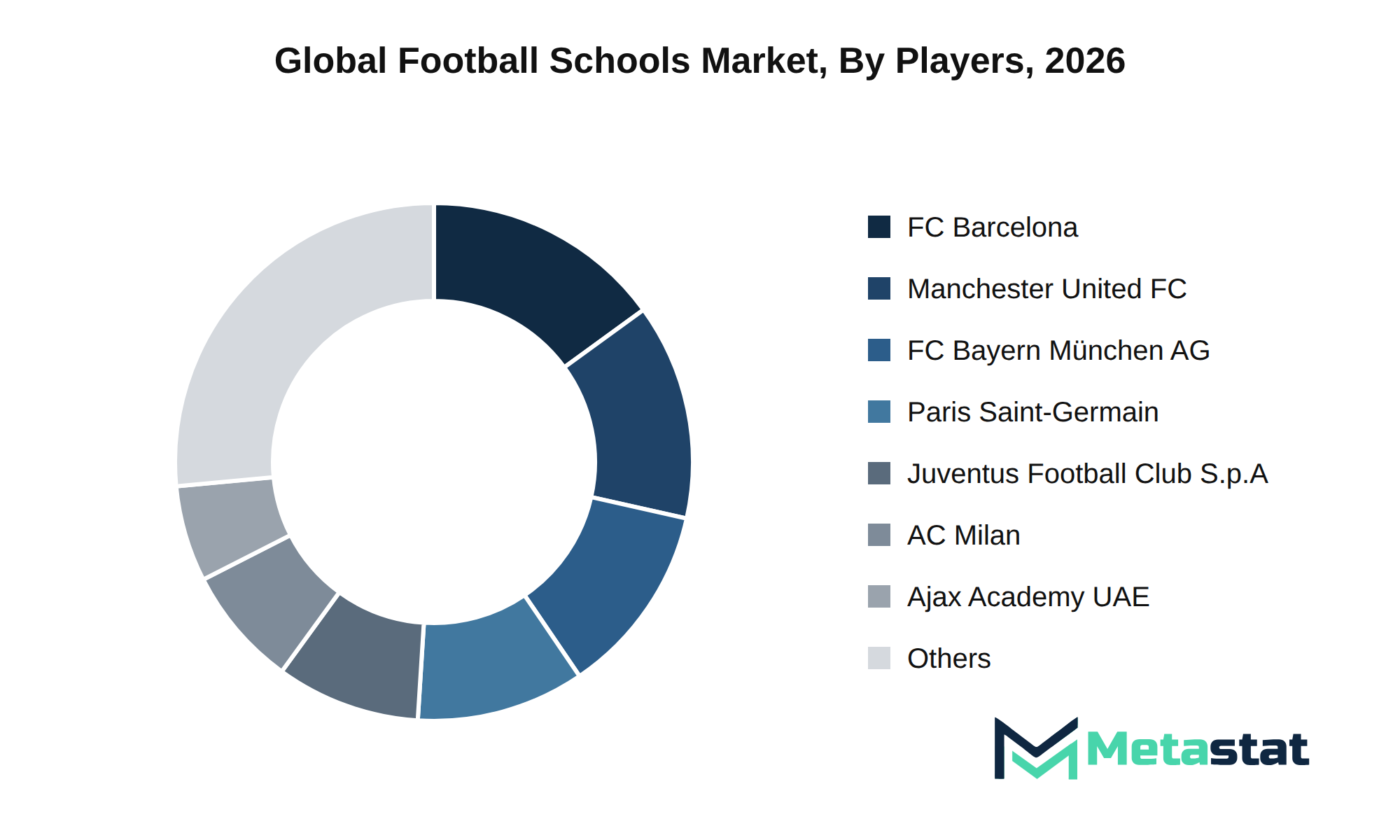
The competitive landscape of the Football Schools market features a diverse range of players, including globally recognized football clubs and specialized training academies. Key organizations including FC Barcelona, Manchester United FC Ltd, and Paris Saint-Germain actively enhance brand equity and customer retention strategies through club-affiliated football schools, which strengthen connections within their fan base and local communities.
Several players pursue strategic alliances and partnerships to extend their reach. For instance, IMG Academy and Coerver Coaching (Sportsmethod USA Inc.) leverage their reputations to attract aspiring players through high-quality training programs. Clubs like Juventus Football Club S.p.A. and FC Bayern München AG focus on product differentiation by offering unique training experiences that emphasize football philosophies and methodologies.
Intellectual property remains a vital aspect of competition, with organizations establishing proprietary training techniques and curriculums. This differentiation creates technological defensibility while enhancing market positions against potential new entrants. Overall, the Football Schools market shows signs of growth driven by these strategic behaviors.
Market size is forecast to rise from USD 3.2 billion in 2025 to over USD 4.2 billion by 2033, reflecting a compound annual growth rate (CAGR) of 3.5%. This growth is driven by an increase in interest in football globally, rising participation rates among youth, and expanding investment in football infrastructure and training programs.
The base case scenario outlines steady growth. In the bullish case, heightened investment from private academies and increased collaboration with professional clubs could accelerate expansion beyond current projections. Conversely, the bearish case highlights risks from economic downturns impacting disposable income, which could constrain enrollment and spending in football schools.
Regional dynamics play a crucial role in shaping the Football Schools market. North America and Europe hold significant shares, accounting for 23.9% and 29.7%, respectively, in 2025. Investment in football development programs and stronger partnerships between club-affiliated schools and professional teams are expected to further influence market growth.
Emerging white-space opportunities exist in underrepresented regions, particularly in Asia Pacific and South America. While football continues to gain popularity in these areas, additional investment in local training facilities and community programs will lead to increased participation. The overall market is characterized by evolving consumer preferences, which drive demand for innovative training methods and modernized program formats.
The report strategically identifies and profiles the key market players and analyses their core competencies in each sub-segment of the Football Schools market.
Report Attributes | Details |
Study Period | 2021-2033 |
Base Year | 2025 |
Estimated Year | 2026 |
Forecast Period | 2026-2033 |
Historical Period | 2021-2025 |
Growth Rate | CAGR 3.5% from 2026 to 2033 |
Revenue Unit | USD billion |
Segmentation | By Operating Model, Age Group, Program Format, and Region |
By Region | North America (By Operating Model, Age Group, Program Format, and Country)
|
Europe (By Operating Model, Age Group, Program Format, and Country)
| |
Asia Pacific (By Operating Model, Age Group, Program Format, and Country)
| |
South America (By Operating Model, Age Group, Program Format, and Country)
| |
Middle East and Africa (By Operating Model, Age Group, Program Format, and Country)
|
Find answers to common questions about this report
The Football Schools market size was valued at USD 3.2 billion in 2025, according to the Metastat Insights study.
The Football Schools market is projected to grow at a CAGR of 3.5% during the forecast period from 2026 to 2033.
The North America Football Schools market size is estimated to reach USD 0.9 billion by 2033.
Club-Affiliated Football Schools lead the Football Schools market with a value of USD 1.5 billion projected for 2033. This segment surpasses others in the Operating Model category.
Economic growth, rising disposable income, and increasing awareness of the benefits of sports participation drive the Football Schools market. Strategic investments in infrastructure and the digital transformation of training methodologies further enhance market appeal, contributing to a projected market value of USD 4.2 billion by 2033.
Europe holds the dominant share of the Football Schools market, accounting for 29.7 percent. This figure reflects the regional distribution of market share at 2025.
The Football Schools market faces several restraints that hinder growth, including regulatory compliance costs, macroeconomic pressures including inflation, and supply chain disruptions. These factors limit operational capabilities, reduce enrollment, and challenge financial planning, ultimately impacting the market's ability to meet rising demand for football education and training programs.
Economic growth, rising disposable incomes, and increased investment in infrastructure favor product adoption in the Football Schools market. Parents prioritize football education for their children, recognizing its benefits, which leads to higher enrollment and diverse program formats that accommodate various lifestyles. The integration of technology in training enhances operational efficiency and accessibility.
The Football Schools market is estimated to reach a valuation of USD 4.2 billion by 2033.
Key players operating in the Football Schools market include FC Barcelona, Manchester United FC Ltd, Paris Saint-Germain, Juventus Football Club S.p.A., FC Bayern München AG, Ajax Academy UAE, and IMG Academy.
The analysts below cover Consumer Goods research at Metastat Insights.
LEAD ANALYST
Utkarsh Khirodkar is a Lead Market Research Analyst at MetaStat Insight, specializing in market intelligence, technology sector assessments, and competitive strategy.
Assessing 200mm wafer transition schedules and substrate supply bottlenecks requires precise technical intelligence. MetaStat Insight supplied an actionable breakdown comparing planar and trench MOSFET architectures across automotive and industrial drive markets. The regional capacity estimates for Asia-Pacific foundries helped clarify lead-time uncertainties during our strategic planning session. When we needed additional clarification on high-purity raw material sourcing, their analyst team responded with helpful context within twenty-four hours.
Tracking maintenance cycle demand for secondary flight display units and terrain collision avoidance systems across regional jet fleets involves complex aftermarket dynamics. MetaStat Insight provided practical analysis separating airline retrofit programs from OEM forward-fit production schedules in North America and Southeast Asia. The supplier matrix highlighted component obsolescence timelines without resorting to vague generalizations. The dataset served as a dependable reference during our annual program review meetings.
Evaluating secondary resin quality across post-consumer packaging streams requires reliable technical segmentation. MetaStat Insight delivered an objective assessment that distinguished between extrusion-grade flake pricing and optical sorting throughput limitations across Western Europe. The competitive positioning breakdown for licensed depolymerization technology providers answered several questions during our feedstock feasibility audit. Their team clarified regional trade restrictions on mixed plastic scrap quickly when our team submitted follow-up requests.
Explore related market intelligence reports worth reading alongside this one.