
Explore the top 40 companies in the Global Textile-to-Textile Recycling Market, valued at USD 1,779 Million in 2025 and projected to reach USD 5,368.4 Million by 2033.
The Global Textile-to-Textile Recycling Market is valued at USD 1,779 Million in 2025 and is projected to reach USD 5,368.4 Million by 2033, growing at a CAGR of 14.8%. This market focuses on recycling materials such as polyester, cotton, and nylon into new textile products, significantly reducing waste while promoting sustainability in the fashion and textile industries.
Factors driving the market include increasing environmental awareness, regulatory pressures, and the demand for sustainable products. Consumers and businesses alike are becoming more conscious of the environmental impact of textile waste, leading to innovative recycling technologies and processes that enable the transformation of discarded textiles into valuable resources.
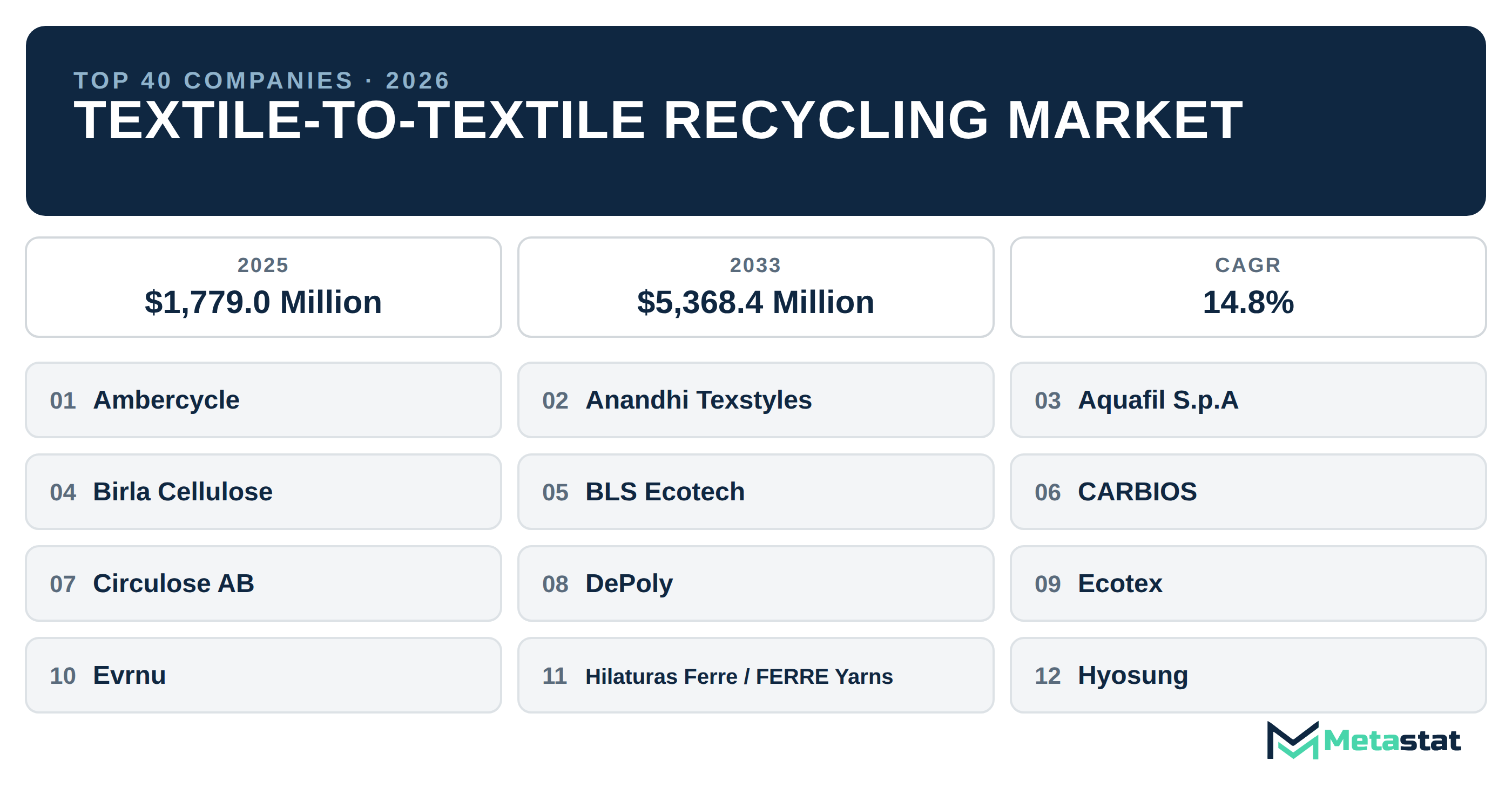
Global Textile-to-Textile Recycling Market Size, Data, & Statistics
The Global Textile-to-Textile Recycling Market size in 2021 was USD 1,035.3 Million, reflecting the growing recognition of the importance of recycling in reducing textile waste. In 2022, the market saw an increase to USD 1,179.2 Million, indicating a continued upward trajectory in the sector.
By 2023, the market reached USD 1,358.4 Million, showcasing the rising investment and interest in textile recycling technologies. In 2024, the size further increased to USD 1,544.7 Million as more companies adopted sustainable practices.
Forecasts for 2025 predict the market will reach USD 1,779 Million, while by 2026, it is expected to grow to USD 2,047.6 Million. The market is projected to rise significantly, reaching USD 5,368.4 Million by 2033, indicating a growth trend.
The compound annual growth rate (CAGR) from 2025 to 2033 is 14.8%, highlighting the dynamic expansion of the textile-to-textile recycling sector. The market's growth is supported by the increasing demand for recycled textiles and sustainable production practices.
Regional shares show North America accounts for 23.4%, Europe for 34.7%, Asia Pacific for 31.6%, South America for 5.8%, and the Middle East and Africa for 4.6%, illustrating a diverse global market.
Top 10 Trends in the Global Textile-to-Textile Recycling Market
Inline metrology moves onto the production line
Advancements in inline metrology technologies are becoming increasingly prominent on production lines. These innovations enhance the quality control of recycled fibers, ensuring that manufacturers meet stringent quality standards while increasing efficiency in the recycling process.
Increased focus on biodegradable materials
Manufacturers are exploring biodegradable materials to complement recycling efforts. This trend supports the creation of textiles that can decompose, reducing landfill waste and further promoting sustainable practices within the industry.
Expansion of take-back programs
Companies are expanding take-back programs to encourage consumers to return used textiles for recycling. This initiative increases recycling rates and engages consumers in sustainability efforts.
Development of new recycling technologies
Innovations in recycling technologies are transforming how textiles are processed. From chemical to enzymatic recycling, these technologies improve yield and quality, making recycling a more viable option for various textile types.
Collaboration between brands and recyclers
Collaborations between fashion brands and recycling companies are on the rise. These partnerships facilitate a more sustainable supply chain, ensuring that recycled materials are effectively integrated back into production.
Government incentives for recycling initiatives
Governments are increasingly offering incentives for companies implementing recycling initiatives. These programs encourage businesses to adopt sustainable practices, driving growth in the textile-to-textile recycling market.
Consumer demand for sustainable products
As consumers become more environmentally conscious, demand for recycled and sustainably produced textiles is rising. This trend compels manufacturers to prioritize sustainability in their strategies.
Focus on circular economies
The shift towards circular economies is influencing textile production and recycling practices. Companies are designing products with end-of-life considerations, ensuring materials can be reused or recycled effectively.
Integration of artificial intelligence in sorting
Artificial intelligence is being integrated into the textile sorting process, enhancing efficiency. AI technologies improve the accuracy and speed of sorting recycled materials, which is crucial for effective recycling operations.
Rise of closed-loop systems
Closed-loop recycling systems are gaining traction as companies strive to minimize waste. These systems ensure that products are created and recycled within the same cycle, promoting sustainability and resource efficiency.
Top 40 Companies in the Global Textile-to-Textile Recycling Market
1. Ambercycle, Inc.
Headquarters: Los Angeles, USA · Founded: 2015. Ambercycle focuses on transforming textile waste into high-quality fibers using its proprietary technology. The company's innovative approach emphasizes sustainability by providing solutions for recycling polyester and other synthetic fibers.
By developing a circular system, Ambercycle aims to reduce the environmental impact of the fashion industry. Their technologies allow for the extraction and regeneration of fibers, contributing to a more sustainable textile production process.
2. Anandhi Texstyles Private Limited
Headquarters: Tamil Nadu, India. Anandhi Texstyles specializes in the production of recycled textiles. The company is committed to sustainable practices, focusing on the recycling of industrial textile waste into new fabric products.
Their innovative recycling methods enable the conversion of waste into valuable resources, promoting both environmental responsibility and economic growth in the textile sector.
3. Aquafil S.p.A.
Headquarters: Arco, Italy · Founded: 1980. Aquafil is a leading company in the field of nylon recycling, particularly known for its ECONYL® brand. This innovative material is made from regenerated nylon sourced from waste.
The company’s commitment to circular economy principles is evident in its recycling processes that contribute to reducing plastic pollution and minimizing landfill waste, thus supporting sustainable fashion initiatives.
4. Birla Cellulose
Headquarters: Mumbai, India. Birla Cellulose, a part of the Aditya Birla Group, focuses on producing sustainable fibers for the textile industry. Their commitment to recycling aims to create eco-friendly fibers from waste materials.
By promoting the use of renewable resources, Birla Cellulose supports the transition towards more sustainable textile production methods, emphasizing their dedication to environmental responsibility.
5. BLS Ecotech
Headquarters: Chennai, India. BLS Ecotech specializes in the recycling of textiles and is dedicated to sustainable practices. The company recycles post-consumer and post-industrial textile waste to create new fibers for the fashion industry.
Their innovative approach ensures that valuable resources are recovered from waste, promoting a circular economy in textiles while minimizing environmental impact.
6. CARBIOS
Headquarters: Clermont-Ferrand, France · Founded: 2011. CARBIOS focuses on developing enzymatic processes for the recycling of plastics and textiles. Their innovative technology converts PET fibers back into raw materials through a sustainable process.
This approach significantly reduces the environmental footprint of textile waste and aligns with global sustainability goals by promoting closed-loop recycling systems.
7. Circulose AB
Headquarters: Sweden. Circulose specializes in producing high-quality dissolving pulp from textile waste. Their focus on recycling cotton and other cellulosic fibers contributes to the circular economy in the textile industry.
By creating new materials from discarded textiles, Circulose supports sustainability and helps reduce reliance on virgin resources in textile manufacturing.
8. DePoly SA
Headquarters: Switzerland. DePoly is known for its innovative recycling technology that transforms polyester waste back into raw materials. Their approach emphasizes sustainability and aims to significantly reduce plastic pollution.
The company's commitment to circular economy principles drives its efforts in recycling, contributing to the growing market for sustainable textiles.
9. Ecotex Group
Headquarters: Germany. Ecotex Group specializes in the recycling of textile waste into new fibers. The company’s focus on innovative recycling processes promotes environmental sustainability while meeting the demands of the textile industry for high-quality materials.
By transforming waste into valuable resources, Ecotex contributes to reducing the overall impact of textile waste on the environment.
10. Evrnu, Inc.
Headquarters: Seattle, USA · Founded: 2014. Evrnu is known for its groundbreaking technology that recycles cotton waste into new fibers. The company's innovative process focuses on creating high-quality materials for the fashion industry.
Through its sustainable practices, Evrnu contributes to reducing textile waste and supports a circular economy, demonstrating a commitment to environmentally responsible production.
11. Hilaturas Ferre / FERRE Yarns
Headquarters: Spain. Hilaturas Ferre specializes in producing yarns from recycled textile waste. The company emphasizes sustainability in its operations, focusing on sourcing post-consumer materials for its products.
Their commitment to recycling aligns with industry trends towards sustainability, making them a key player in the textile-to-textile recycling market.
12. Hyosung Group
Headquarters: Seoul, South Korea. Hyosung Group is a major player in the textile industry, focusing on sustainable practices and innovative recycling technologies. The company is involved in producing recycled fibers that contribute to reducing environmental impact.
By integrating sustainability into their business model, Hyosung Group supports the transition towards a more sustainable textile industry.
13. Infinited Fiber Company Oy
Headquarters: Finland. Infinited Fiber Company specializes in transforming textile waste into new, high-quality fibers. Their technology focuses on recycling cotton-rich textiles, promoting the circular economy in the textile sector.
By providing innovative solutions for recycling, the company supports sustainable practices and reduces reliance on virgin materials in fiber production.
14. Leigh Fibers, Inc.
Headquarters: South Carolina, USA. Leigh Fibers is committed to recycling textile waste into high-quality fibers for various industries. The company focuses on sustainability and reducing waste through innovative recycling processes.
Leigh Fibers emphasizes the importance of resource recovery, contributing to the overall growth of the textile recycling market.
15. Lenzing Group
Headquarters: Lenzing, Austria · Founded: 1931. Lenzing Group is renowned for its production of sustainable fibers from renewable resources. The company focuses on recycling processes that convert textile waste into valuable products.
By promoting sustainability in the textile industry, Lenzing Group supports the shift towards more eco-friendly production methods and the circular economy.
16. Loop Industries, Inc.
Headquarters: Montreal, Canada · Founded: 2010. Loop Industries is dedicated to sustainability through its innovative technology that converts waste PET into new, high-quality PET resin. The company's focus supports the recycling of textiles into valuable materials.
By advancing its recycling processes, Loop Industries contributes to reducing plastic waste and promoting sustainable practices in the textile industry.
17. Manteco S.p.A.
Headquarters: Italy. Manteco specializes in recycling textile waste into new fibers. The company's commitment to sustainable practices emphasizes the importance of eco-friendly production methods in the textile sector.
Through innovative recycling processes, Manteco contributes to the circular economy, promoting the recovery of valuable resources from discarded textiles.
18. Marchi & Fildi S.p.A.
Headquarters: Italy. Marchi & Fildi focuses on producing yarns and fabrics from recycled materials. The company is committed to sustainability and innovative recycling practices that reduce waste in the textile industry.
This commitment to eco-friendly production methods supports the growth of the textile-to-textile recycling market.
19. Martex Fiber
Headquarters: South Carolina, USA. Martex Fiber is focused on recycling textile waste into new fibers and products. Their operations promote sustainability by recovering resources from discarded textiles.
By contributing to the circular economy, Martex Fiber supports the overall growth of the textile recycling industry.
20. Patagonia, Inc.
Headquarters: Ventura, USA · Founded: 1973. Patagonia is a leader in sustainable fashion, known for its commitment to environmental responsibility. The company's initiatives include recycling used materials to create new products.
Patagonia's focus on sustainability and ethical practices positions it as a key player in the textile-to-textile recycling market.
21. Pistoni S.r.l.
Headquarters: Italy. Pistoni specializes in recycling textile waste into new materials. The company's innovative processes contribute to reducing textile waste and promoting sustainability in the industry.
Through its commitment to recycling, Pistoni supports the transition towards more sustainable textile production practices.
22. Prokotex
Headquarters: El Salvador. Prokotex focuses on recycling post-consumer textiles into new fibers. The company's sustainable practices aim to reduce waste and promote eco-friendly solutions within the textile industry.
Through innovation and commitment to recycling, Prokotex contributes to the overall growth of the textile-to-textile recycling market.
23. RE TEXTIL Deutschland GmbH.
Headquarters: Germany. RE TEXTIL specializes in the recycling of textile waste into new products. The company's focus on sustainability emphasizes the importance of resource recovery in the textile sector.
By promoting innovative recycling methods, RE TEXTIL contributes to reducing the environmental impact of textile waste.
24. RE&UP Technologies Holding B.V.
Headquarters: Netherlands. RE&UP Technologies focuses on innovative recycling solutions for textiles. Their commitment to sustainability drives the development of processes that transform waste into valuable resources.
The company's approach supports the overall growth of the textile recycling market and promotes eco-friendly practices in the industry.
25. Recover Textile Systems, S.L.
Headquarters: Spain. Recover Textile Systems specializes in recycling textile waste into new fibers. The company's innovative approach emphasizes sustainability and resource recovery in the textile sector.
By promoting eco-friendly practices, Recover Textile Systems contributes to the circular economy and the overall growth of the textile-to-textile recycling market.
26. Reju (Technip Energies N.V.)
Headquarters: France. Reju focuses on recycling textile waste through innovative processes. The company is dedicated to sustainability and reducing the environmental impact of the textile industry.
Through its commitment to recycling, Reju supports the overall growth of the textile recycling market and promotes eco-friendly practices.
27. Renewcell AB
Headquarters: Sweden. Renewcell specializes in recycling cotton textiles into new fibers. The company is known for its Circulose® product, which is made from recycled cotton waste.
By providing sustainable solutions for the textile industry, Renewcell contributes to the circular economy and reduces reliance on virgin materials.
28. Rester Oy
Headquarters: Finland. Rester Oy focuses on recycling textile waste into new raw materials. The company's commitment to sustainability emphasizes innovative recycling methods.
Through its practices, Rester Oy supports the growth of the textile-to-textile recycling market and promotes eco-friendly solutions.
29. Samsara Eco
Headquarters: USA. Samsara Eco specializes in sustainable textile solutions, focusing on recycling and upcycling materials. The company's commitment to environmental responsibility drives its operations.
By promoting innovative recycling practices, Samsara Eco supports the overall growth of the textile recycling market.
30. Säntis Textiles
Headquarters: Switzerland. Säntis Textiles specializes in the recycling of textile waste into new materials. The company emphasizes sustainability and resource recovery in its practices.
By promoting eco-friendly solutions, Säntis Textiles contributes to the circular economy in the textile sector.
31. SaXcell B.V.
Headquarters: Netherlands. SaXcell focuses on recycling cotton textiles into new fibers. Their innovative processes promote sustainability and resource recovery within the textile industry.
By supporting eco-friendly practices, SaXcell contributes to the growth of the textile-to-textile recycling market.
32. Södra
Headquarters: Sweden. Södra specializes in producing sustainable fibers from recycled materials. The company's commitment to environmental responsibility drives its operations in the textile sector.
Through innovative recycling practices, Södra supports the overall growth of the textile-to-textile recycling market.
33. Syre
Headquarters: Italy. Syre focuses on sustainable practices in textile recycling. The company emphasizes innovative recycling methods that reduce waste and promote resource recovery.
By prioritizing eco-friendly solutions, Syre contributes to the overall growth of the textile-to-textile recycling market.
34. Textil Santanderina, S.A.
Headquarters: Spain. Textil Santanderina specializes in producing textiles from recycled materials. The company is committed to sustainability and reducing the environmental impact of textile waste.
Through its innovative approaches, Textil Santanderina supports the growth of the textile-to-textile recycling market.
35. Textile Recycling International
Headquarters: USA. Textile Recycling International focuses on recycling textile waste into new products. The company emphasizes innovative processes that promote sustainability in the textile sector.
By contributing to resource recovery, Textile Recycling International supports the overall growth of the textile-to-textile recycling market.
36. The Boer Group
Headquarters: Netherlands. The Boer Group specializes in textile recycling, focusing on sustainable practices and innovative processes. The company's commitment to sustainability drives its operations.
Through its initiatives, The Boer Group supports the overall growth of the textile-to-textile recycling market and promotes eco-friendly solutions.
37. Unifi, Inc.
Headquarters: North Carolina, USA · Founded: 1971. Unifi is a leader in producing recycled fibers, known for its REPREVE® brand. The company's focus on sustainability emphasizes the importance of recycling in the textile industry.
Through its innovative practices, Unifi contributes to reducing waste and supporting the circular economy, positioning itself as a key player in the textile-to-textile recycling market.
38. Usha Yarns Limited
Headquarters: India. Usha Yarns focuses on producing sustainable yarns from recycled materials. The company's commitment to eco-friendly practices drives its operations within the textile sector.
By promoting innovative recycling methods, Usha Yarns supports the growth of the textile-to-textile recycling market.
39. Wolkat Group
Headquarters: Netherlands. Wolkat Group specializes in the recycling of textiles into new materials. Their focus on sustainability emphasizes the importance of resource recovery in the textile industry.
By promoting innovative recycling solutions, Wolkat Group contributes to the overall growth of the textile-to-textile recycling market.
40. Worn Again Technologies
Headquarters: UK. Worn Again Technologies specializes in recycling textiles using innovative technologies. The company focuses on creating new fibers from post-consumer waste.
Through its sustainable practices, Worn Again Technologies supports the circular economy in the textile sector and contributes to reducing textile waste.
Conclusion
The Global Textile-to-Textile Recycling Market is on an upward trajectory, driven by the increasing demand for sustainable solutions and the need for effective waste management. The growing list of companies in this sector demonstrates a commitment to innovation and environmental responsibility, with each player contributing unique technologies and approaches to recycling.
For businesses and consumers interested in sustainable textiles, understanding the developments and players in the textile-to-textile recycling companies can inform better decisions and support the transition to a circular economy in the fashion industry.
Tags
About the Authors

LEAD ANALYST
Utkarsh Khirodkar is a Lead Market Research Analyst at MetaStat Insight, specializing in market intelligence, technology sector assessments, and competitive strategy.

INDUSTRY CONSULTANT - CHEMICALS & ADVANCED MATERIALS
Chemicals and Materials · Machinery & Equipment · Packaging
Amit Gadhekar Consultant for Chemicals and Materials at MetaStat Insight, directing sector-specific intelligence, research, and strategic consulting across global chemical and processing markets.