
The Turkey Cloud Gaming Services and Platforms market is set to grow significantly, driven by advancements in infrastructure and evolving consumer preferences.
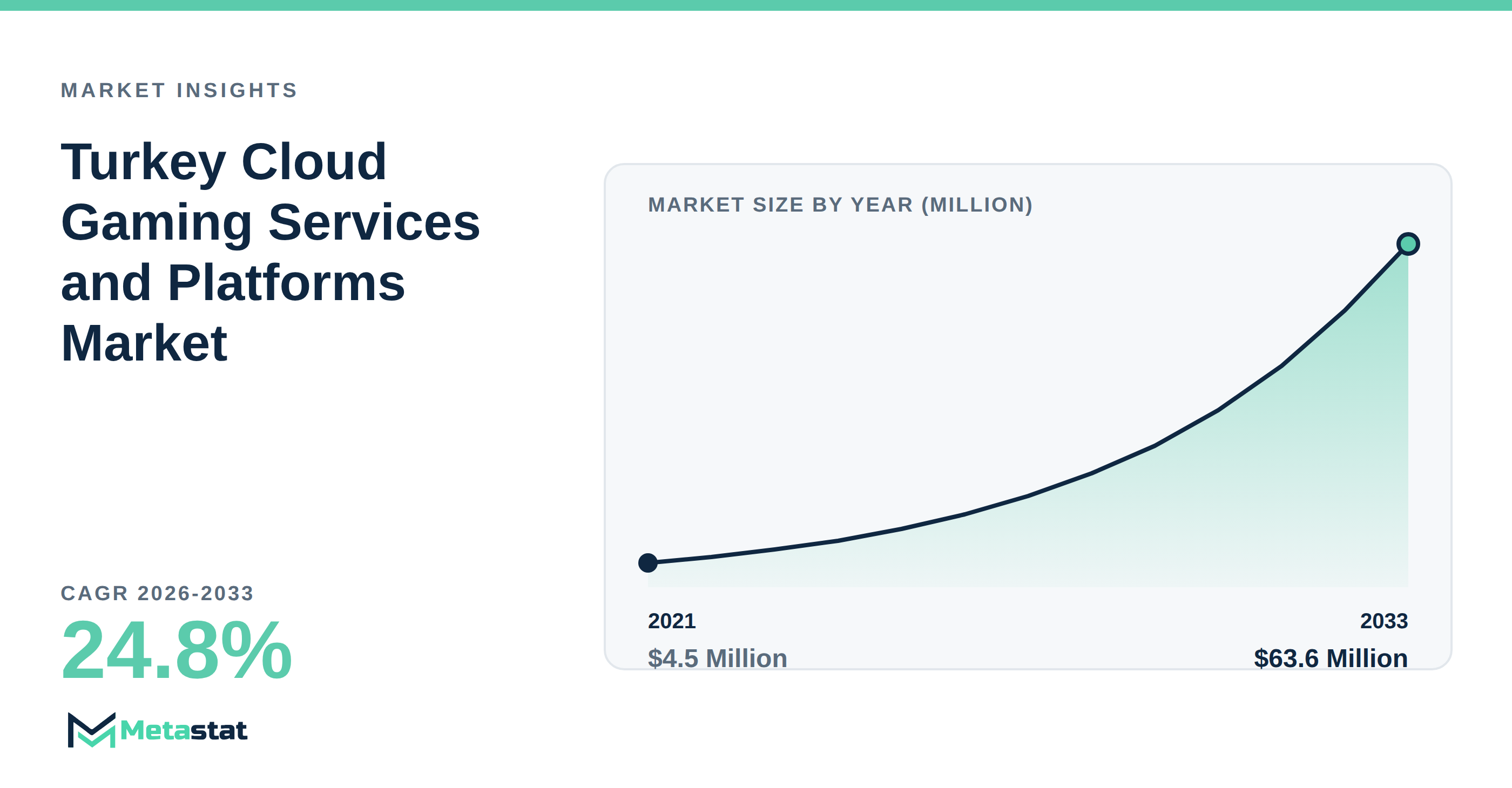
The Turkey Cloud Gaming Services and Platforms market is on track for substantial development, with an expected surge to USD 63.6 million by 2033, a significant rise from USD 10.8 million in 2025. This growth, at a CAGR of 24.8%, indicates a substantial transformation in the delivery and consumption of gaming experiences throughout the region.
Infrastructure improvements will notably influence cloud gaming dynamics. The rollout of advanced 5G networks and enhanced fiber broadband will boost connectivity, providing low-latency gaming experiences that are essential for maintaining user satisfaction. By the end of the forecast period, these improved network capabilities will play a critical function in supporting more sophisticated gaming applications, facilitating smoother interactions and real-time engagement. Stakeholders in the gaming sector should monitor these infrastructure advancements closely, because they will directly impact user engagement and overall service quality.
In addition to infrastructure changes, shifting consumer preferences significantly influence the market trajectory. Younger demographics, particularly those aged 18 to 34, are increasingly gravitating toward subscription models that offer flexible payment arrangements. This demographic shift illustrates a heightened demand for accessible gaming experiences, leading to an uptick in subscription-based services that provide extensive libraries of games without the necessity of large upfront costs. Companies focusing on developing attractive subscription options will likely capture this emerging audience.
The prevalence of mobile gaming is redefining the Turkey Cloud Gaming Services and Platforms market. With smartphones and tablets leading the charge in gaming consumption, the integration of cloud gaming experiences into mobile devices is enhancing both accessibility and convenience. Projections indicate that the smartphone and tablet segment will reach USD 21.7 million by 2033, underscoring a significant shift towards portable gaming solutions. Developers who prioritize optimizing their games for mobile platforms are poised to capitalize on this trend.
Focusing on user-centric offerings is essential for driving market engagement. Trends including Bring-Your-Own-Game cloud access allow gamers to connect their existing game libraries to cloud platforms, enhancing personalization in gaming experiences. This shift elevates consumer satisfaction and fosters loyalty. Companies in the sector should invest in technologies that support user-friendly experiences while appealing to a diverse range of gaming preferences.
The competitive environment within the Turkey Cloud Gaming Services and Platforms market is becoming increasingly intense. Established players, including NVIDIA Corporation and Microsoft Corporation, are facing heightened competition from local services like Lifecell Dijital Servisler ve Çözümler A.Ş. / GAME+. This competitive landscape encourages service providers to innovate constantly, compelling them to refine their offerings and adapt to evolving consumer demands. Observing competitive strategies will be crucial for stakeholders aiming to retain a competitive edge.
Telecom operators are beginning to recognize the advantages of integrating cloud gaming services into their existing offerings. Bundled services create strategic opportunities, enabling providers to expand their market share by adding gaming options to their telecommunications packages. By leveraging their established customer bases, telecom companies effectively market cloud gaming services, enhancing accessibility for a wider audience.
While the market evolves, regulatory compliance will continue to pose challenges. Service providers face stringent regulations that necessitate significant investments in data privacy and security measures. Navigating these local regulatory requirements impact operational flexibility and market entry strategies. Companies should develop proactive compliance strategies to ensure that their services align with legal expectations, which is essential for sustained growth.
The future landscape for cloud gaming in Turkey is expected to be shaped by technological advancements, changing consumer behaviors, and competitive dynamics. Stakeholders should pay close attention to these developments to seize growth opportunities and effectively navigate market challenges. For further insights into these trends, industry players access the Turkey Cloud Gaming Services and Platforms Market report, which provides comprehensive analysis and projections for the sector.
Tags
About the Authors

LEAD ANALYST
Utkarsh Khirodkar is a Lead Market Research Analyst at MetaStat Insight, specializing in market intelligence, technology sector assessments, and competitive strategy.

PRINCIPAL CONSULTANT - ENTERPRISE AI & EMERGING TECHNOLOGIES
Banking & Finance · Electronics and Semiconductor · Energy and Power · Healthcare IT · Information & Technology · Professional Services
Vijay Gunti is a Principal Consultant at MetaStat Insight, bringing over two decades of experience across enterprise digital transformation, technology strategy, and intelligent systems.

LEAD CONSULTANT - COMMUNICATION, TELECOM, AND IT
Electronics and Semiconductor · Information & Technology · Machinery & Equipment · Professional Services
Ravindra Sathe Consultants for Communication, Telecom, and IT at MetaStat Insight. He leads the firm's industry research initiatives across telecommunications infrastructure, digital connectivity, enterprise networking, and emerging information technology domains.