
Explore the differences between the North America Cosmetology and Beauty Schools market in the U.S., Canada, and Mexico. Understand what drives these divergent trends.
The North America Cosmetology and Beauty Schools market displays significant regional divergence, particularly among the United States, Canada, and Mexico. Analyzing these differences sheds light on the unique factors influencing each market's dynamics, including cultural trends, economic conditions, and educational infrastructure.
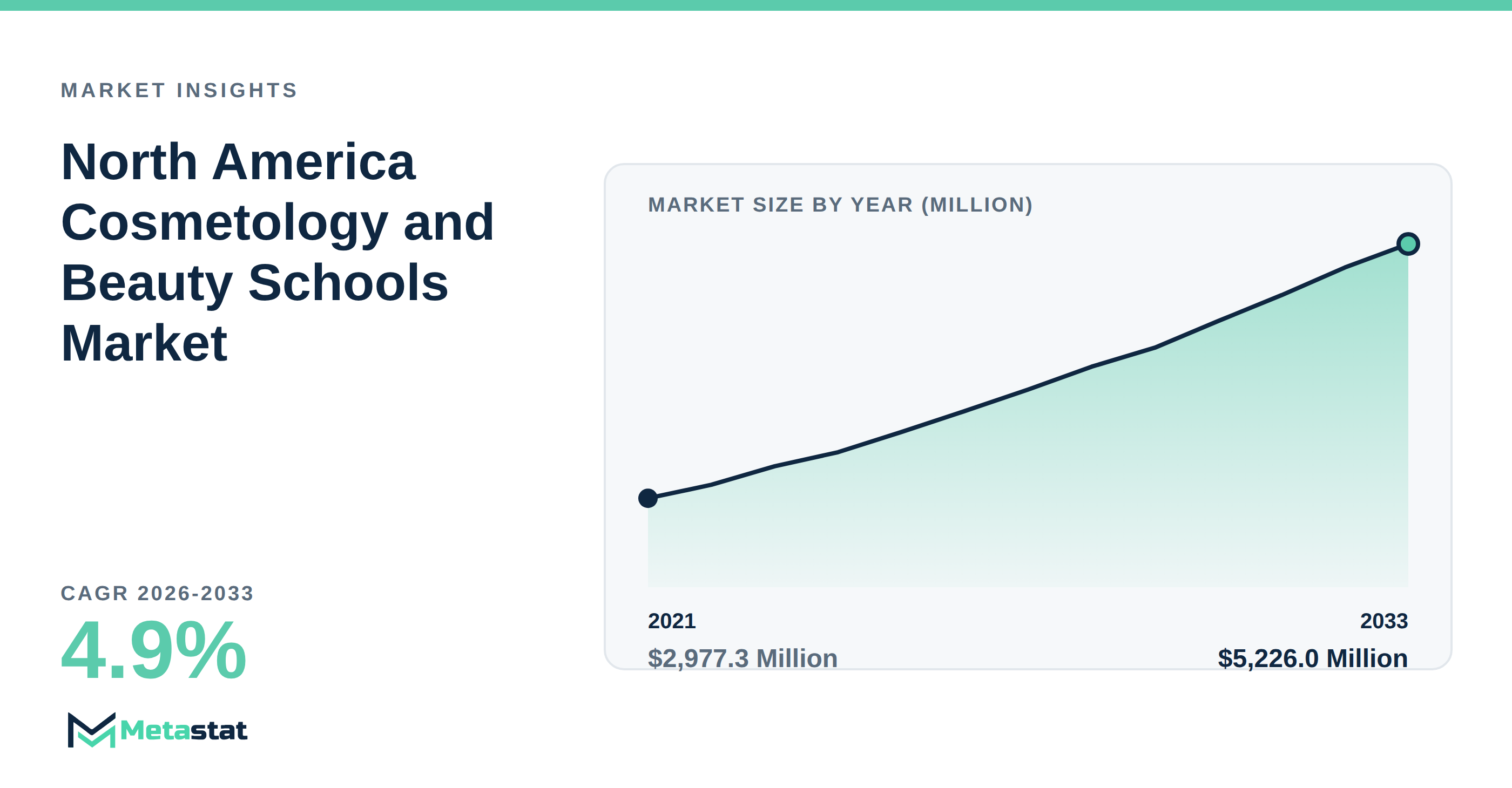
How the U.S. leads the North America cosmetology and beauty schools market
The United States stands because the frontrunner in the North America Cosmetology and Beauty Schools market. With a valuation of USD 3,563.1 million anticipated in 2025, the U.S. market is set to expand to USD 5,226 million by 2033, reflecting a compound annual growth rate (CAGR) of 4.9%. This upward trajectory is fueled by various factors, particularly the growing importance placed on personal grooming and aesthetics.
Cultural shifts play a pivotal role in this trend, because the rise of social media platforms fosters a greater awareness of beauty services. Young audiences increasingly engage with beauty influencers, leading to heightened enrollment in cosmetology programs. U.S. institutions actively adapt their educational offerings to align with these trends, incorporating contemporary teaching methods and innovative technologies.
What accounts for Canada’s slower growth
Conversely, Canada experiences a more gradual expansion within the North America Cosmetology and Beauty Schools market. Despite a rising interest in beauty education, the market faces challenges, including regulatory compliance and economic volatility. Educational institutions contend with complex licensing requirements that divert resources from crucial program development and marketing efforts.
Canadian beauty schools are gradually enhancing their program offerings to attract a more diverse student body, particularly in niche markets including men's grooming and wellness therapies. However, fluctuations in the economy and regional disparities pose obstacles to investment, potentially hindering growth opportunities. Collaborations with industry leaders are pivotal in increasing visibility and credibility while addressing regional market concerns.
Mexico's emerging market potential in beauty education
Mexico represents a burgeoning opportunity within the North America Cosmetology and Beauty Schools market. The demand for beauty education is rising, leading Mexican institutions to expand their programs to meet the increasing interest in cosmetology and personal grooming. The surge in disposable incomes among younger demographics contributes to this shift, because more individuals seek careers in profitable beauty-related fields.
Despite these promising trends, Mexican educational institutions encounter challenges regarding infrastructure and available resources. To attract students and enhance educational quality, investments in technology and digital learning platforms are essential. Establishing partnerships with recognized beauty brands facilitate knowledge transfer, equipping students with practical, industry-relevant skills.
Key drivers shaping the North America cosmetology and beauty schools market
Several forces contribute to the differing growth trajectories seen across the North America Cosmetology and Beauty Schools market. The increasing focus on personal grooming and wellness careers is reshaping enrollment patterns throughout the region. Cultural trends emphasizing self-care highlight the necessity for professional training, prompting institutions to improve program accessibility.
Technological advancements are critical drivers of change within the market. The integration of digital curricula and hybrid learning formats allows institutions to cater to a broader audience, accommodating various student needs. Consequently, both traditional and online learning modalities thrive, appealing to diverse preferences and enhancing the overall educational landscape.
Conclusion: Adapting to regional differences for future success
To seize the growth potential within the North America Cosmetology and Beauty Schools market, educational institutions adopt strategies that reflect their region's unique characteristics. U.S. schools should focus on continuous innovation and expansion to maintain their competitive edge, while Canadian institutions work to overcome regulatory barriers to facilitate growth. Conversely, Mexican beauty schools should leverage their emerging status by investing in technology and fostering strong industry partnerships.
Understanding these regional differences and tailoring strategies accordingly will enable educational institutions to thrive in the evolving beauty education landscape. With the ongoing demand for skilled beauty professionals, the market presents significant opportunities for growth and development in the coming years.
The full analysis is in North America Cosmetology and Beauty Schools Market.
Tags
About the Authors

LEAD ANALYST
Utkarsh Khirodkar is a Lead Market Research Analyst at MetaStat Insight, specializing in market intelligence, technology sector assessments, and competitive strategy.

PRINCIPAL CONSULTANT - ENTERPRISE AI & EMERGING TECHNOLOGIES
Banking & Finance · Electronics and Semiconductor · Energy and Power · Healthcare IT · Information & Technology · Professional Services
Vijay Gunti is a Principal Consultant at MetaStat Insight, bringing over two decades of experience across enterprise digital transformation, technology strategy, and intelligent systems.

PRINCIPAL CONSULTANT - QUALITY SYSTEMS & COMPLIANCE
Electronics and Semiconductor · Machinery & Equipment · Professional Services
Omkar Phadtare is an Industry Consultant at MetaStat Insight, specializing in quality systems, regulatory compliance, and standards benchmarking to drive data-driven market intelligence and strategic industry research.

LEAD CONSULTANT - COMMUNICATION, TELECOM, AND IT
Electronics and Semiconductor · Information & Technology · Machinery & Equipment · Professional Services
Ravindra Sathe Consultants for Communication, Telecom, and IT at MetaStat Insight. He leads the firm's industry research initiatives across telecommunications infrastructure, digital connectivity, enterprise networking, and emerging information technology domains.