
LEAD ANALYST
Utkarsh Khirodkar is a Lead Market Research Analyst at MetaStat Insight, specializing in market intelligence, technology sector assessments, and competitive strategy.

North America Cosmetology and Beauty Schools Market Size, Share, By Program Type (Cosmetology and Hairdressing, Barbering and Men's Grooming, Esthetics and Skin Care, Nail Technology, Makeup Artistry, Massage, Spa and Wellness Therapy), By Delivery Mode (In-Person Training, Live Online Training, Self-Paced Online Learning and Blended and Hybrid Learning), By Institution Type (Independent Beauty Schools and Academies, Vocational and Technical Education Institutions, Salon and Salon-Chain Academies, Beauty Brand and Manufacturer Academies), By Region (U.S., Canada and Mexico), Industry Analysis, Growth, Trends, and Forecast, 2026-2033
Report ID
MSI-5402
Published
September, 2026
Pages
265 Pages
Format
Historical
Base year
Forecast
Forecast period
Report Details
Market Valuation: Valued at $3,563.1 Million in 2025, projected to reach $5,226 Million by 2033 at a 4.9% CAGR.
Dominant Segment: The Cosmetology & Hairdressing segment leads the market, driven by increasing consumer focus on personal grooming and technological advancements in educational methods.
Geographic Lead: The U.S. is the leading region, with a growing demand for trained beauty professionals fueled by rising disposable incomes and a cultural shift towards self-care.
What's Inside: This report provides a comprehensive analysis of the North America Cosmetology and Beauty Schools market, covering competitive landscape, market dynamics, and detailed forecasts from 2026 to 2033.
Emerging Trends: The rise of digital learning methods, including live online and self-paced training, is reshaping educational delivery, attracting a broader audience seeking flexible learning options.
Regulatory Impact: Regulatory compliance and economic pressures are shaping operational strategies for beauty schools, influencing curriculum development and institutional standards.
Choose Your License
North America Cosmetology and Beauty Schools Market
The North America Cosmetology and Beauty Schools market was valued at USD 3,563.1 million in 2025 and is projected to reach USD 5,226 million by 2033, growing at a CAGR of 4.9% over the forecast period.
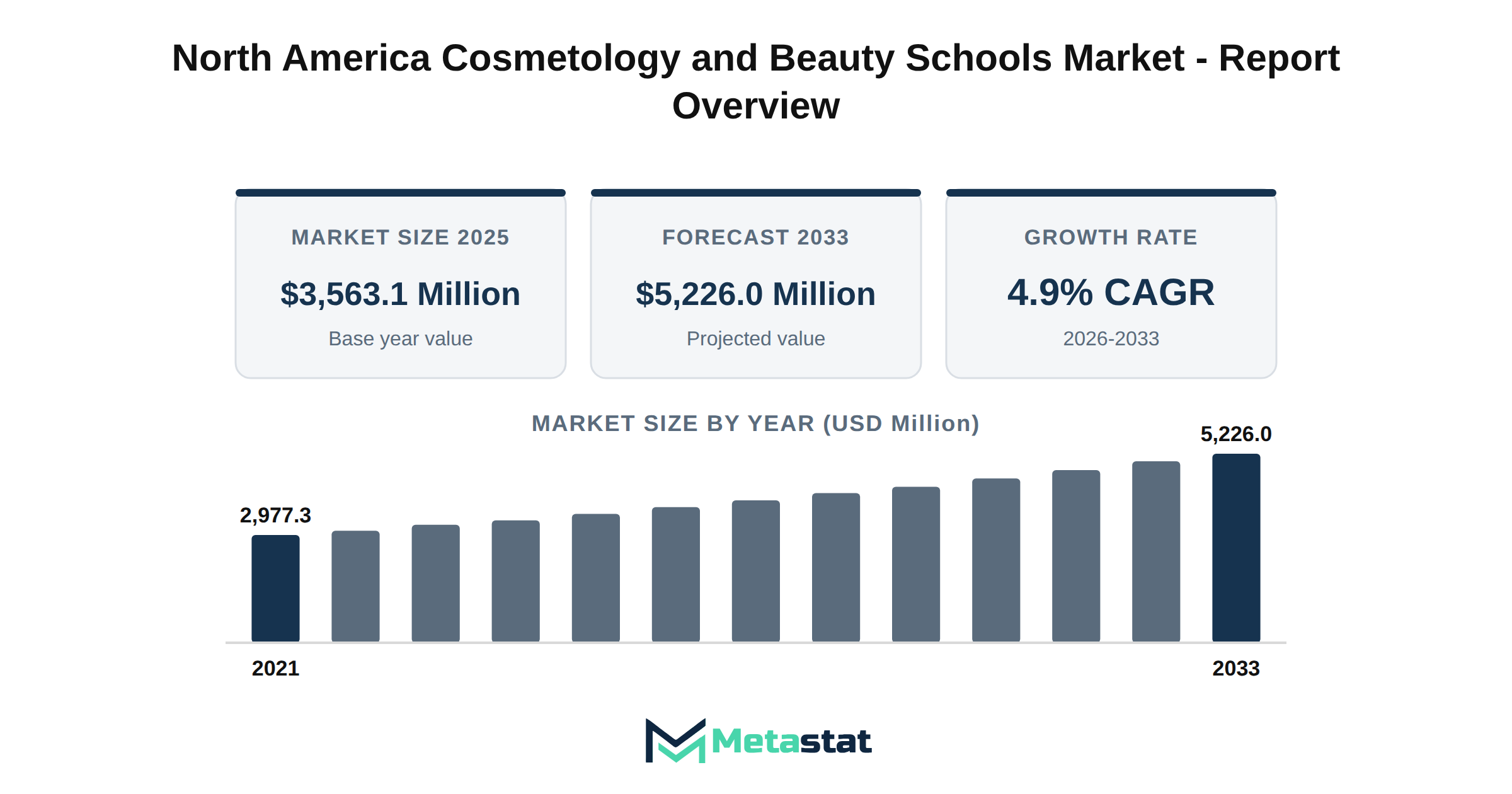
The North America Cosmetology and Beauty Schools market reached a value of USD 3,563.1 million in 2025, with expectations for growth to USD 5,226 million by 2033, representing a compound annual growth rate (CAGR) of 4.9%. This upward trend reflects significant developments within the sector, driven by various factors that enhance educational offerings and student engagement.
Enrollment numbers for cosmetology and beauty schools in North America have experienced an upward trajectory, resulting from the increasing recognition of beauty professions. This heightened interest stems from a growing emphasis on personal grooming and aesthetics among consumers, leading to a stronger demand for trained professionals. Programs in cosmetology, hairdressing, and esthetics attract a diverse range of students eager to enter the beauty industry.
Education in barbering and men's grooming has expanded, reflecting changing societal norms regarding male grooming habits. This segment's growth aligns with rising consumer spending on men's personal care products and services, prompting beauty schools to enhance their program offerings. The focus on specialized training in this area positions institutions to better cater to evolving market demands.
Hybrid and online beauty education models have gained traction, driven by technological advancements and the need for flexible learning options. Institutions are increasingly adopting live online training and self-paced online learning to accommodate a broader audience. This shift allows schools to reach students who prefer remote education without compromising the quality of training received.
The adoption of digital curricula enhances the learning experience within cosmetology schools. Incorporating technology into education facilitates interactive learning environments and provides students with access to a wealth of resources. This modernization aligns with industry trends and equips graduates with the skills required to excel in a competitive job market.
Demand for advanced beauty and specialty skills training is on the rise, driven by consumers seeking personalized services and unique experiences. Schools that offer specialized programs in fields including makeup artistry, massage therapy, and wellness training position themselves advantageously within the market. This focus on niche skill development attracts a diverse student base, further driving enrollment growth.
Licensing and accreditation trends shape beauty school operations, influencing curriculum development and institutional standards. Schools that prioritize compliance with regulatory requirements enhance their reputations and attract students who value recognized credentials. This trend builds trust among prospective students and the wider community.
The workforce demand for skilled beauty professionals supports enrollment in cosmetology and beauty schools. While the beauty industry continues to grow, employers seek qualified graduates to fill various roles, creating a robust job market for new entrants. This increasing demand encourages more individuals to pursue careers in beauty, further stimulating market growth.
Curriculum modernization in cosmetology and esthetics education enhances the relevance of training programs. Institutions that regularly update their course offerings to reflect industry trends ensure that students acquire the latest skills necessary for success. This proactive approach to education positions schools because leaders in the market.
The expansion of independent beauty schools and salon academies contributes to the diversity of educational options available to aspiring beauty professionals. These institutions often focus on personalized training experiences and cater to local market needs more effectively than larger chains. Their growth enhances competition within the North America Cosmetology and Beauty Schools market, benefiting students through diverse program offerings.
Rising enrollment trends in North America Cosmetology and Beauty Schools reflect a growing interest in beauty education, driven by a strong demand for skilled professionals in the industry. Increased awareness of career opportunities and the potential for financial success attract students to various programs, including cosmetology, hairdressing, and esthetics. This surge in enrollment positively influences the market's expansion and overall growth.
The demand for cosmetology, hairdressing, and esthetics programs continues to grow, fueled by changing beauty standards and the increasing importance of personal grooming. Consumers seek specialized services, prompting prospective students to pursue education in these fields, ultimately supporting the market's development.
Expansion of barbering and men's grooming education represents a significant trend within the beauty sector. With a rise in male grooming awareness, educational institutions are adapting their programs to cater to this demographic, thereby enhancing their offerings and attracting a broader student base. This shift contributes to the overall growth of the market.
The growth of hybrid and online beauty education models significantly influences the future of cosmetology training. Institutions are increasingly adopting digital platforms, providing students with flexible learning options that fit their schedules. This trend enhances accessibility and encourages more individuals to pursue beauty education, driving enrollment and market growth.
Digital curriculum adoption across cosmetology schools enhances the educational experience for students. Institutions are integrating technology into their programs, offering interactive learning tools and resources that improve skill acquisition and knowledge retention. This modernization aligns with industry demands and prepares graduates for successful careers in the competitive beauty landscape.
Increasing demand for advanced beauty and specialty skills training shapes the educational offerings within the market. Students seek to differentiate themselves through specialized courses, prompting institutions to expand their program portfolios. This trend reflects the market's evolution, ensuring that graduates possess the skills necessary to excel in various beauty domains.
Licensing and accreditation trends significantly influence beauty school operations. Regulatory bodies are imposing stricter requirements, which compel schools to maintain high educational standards. Compliance with these regulations enhances the credibility of institutions and assures prospective students of the quality of education provided, ultimately benefiting the market.
Workforce demand strongly supports beauty school enrollment, driven by employers seeking qualified professionals to fill positions in salons, spas, and other beauty establishments. This alignment between educational outcomes and industry needs creates a positive environment for students, resulting in increased interest in pursuing careers in cosmetology and related fields.
Curriculum modernization in cosmetology and esthetics education ensures that programs remain relevant and aligned with current industry practices. Schools are continually updating their curricula to incorporate the latest techniques, trends, and technologies, which enhances the employability of graduates and strengthens the market's growth potential.
The expansion of independent beauty schools and salon academies contributes to the diverse educational landscape in North America. These institutions often offer specialized training and personalized attention, attracting students who prefer a tailored learning experience. This trend supports the overall development of the market by catering to varying student needs.
Growth of beauty brand and manufacturer training academies reflects the increasing collaboration between educational institutions and industry leaders. These academies provide students with unique insights into product knowledge and application techniques, enhancing their skill sets and employability. This partnership strengthens the market by encouraging innovation and excellence in beauty education.
Rising adoption of self-paced online beauty education accommodates the diverse learning preferences of students. Flexible online programs allow individuals to progress at their own pace, making beauty education more accessible. This trend positively impacts enrollment figures and enhances the overall growth of the market.
Student career outcomes and employability in cosmetology education significantly influence enrollment decisions. Institutions that demonstrate high job placement rates and successful alumni create a compelling case for prospective students, driving interest in programs and ultimately supporting market expansion.
Competitive dynamics among North American beauty schools shape the market. Institutions strive to differentiate themselves through innovative programs, skilled instructors, and superior student experiences. This competition fosters improvements across schools, enhancing overall educational quality and benefiting students and the market alike.
Technology integration in beauty training and skills assessment enhances the learning experience and prepares students for real-world applications. Schools are leveraging advanced tools and technologies to improve training methodologies, ensuring that graduates are equipped with the necessary skills to thrive in the evolving beauty industry.
U.S. leadership in North America beauty education demand highlights the country's prominence in shaping industry trends and standards. The strong presence of established schools and innovative programs positions the U.S. because a key player in the market, influencing educational practices across the region.
Canada and Mexico present growth opportunities in cosmetology training, driven by increasing interest in beauty education emerging in these markets. Institutions in both countries are expanding their offerings to meet the rising demand for skilled professionals. This development enhances the overall market potential and encourages investment in beauty education.
Emerging specializations are reshaping beauty school program portfolios, reflecting institutions adapting to the evolving preferences of consumers. Programs focusing on niche areas including eyelash extensions, electrolysis, and wellness therapies gain traction, reflecting the industry's diversification. This trend supports the market by attracting a wider range of students interested in specialized beauty careers.
The future growth of the North America Cosmetology and Beauty Schools market remains promising, driven by the aforementioned trends and factors. Continued investment in education, technological advancements, and evolving consumer preferences will support the ongoing development of the market, ensuring its relevance and sustainability in the coming years.
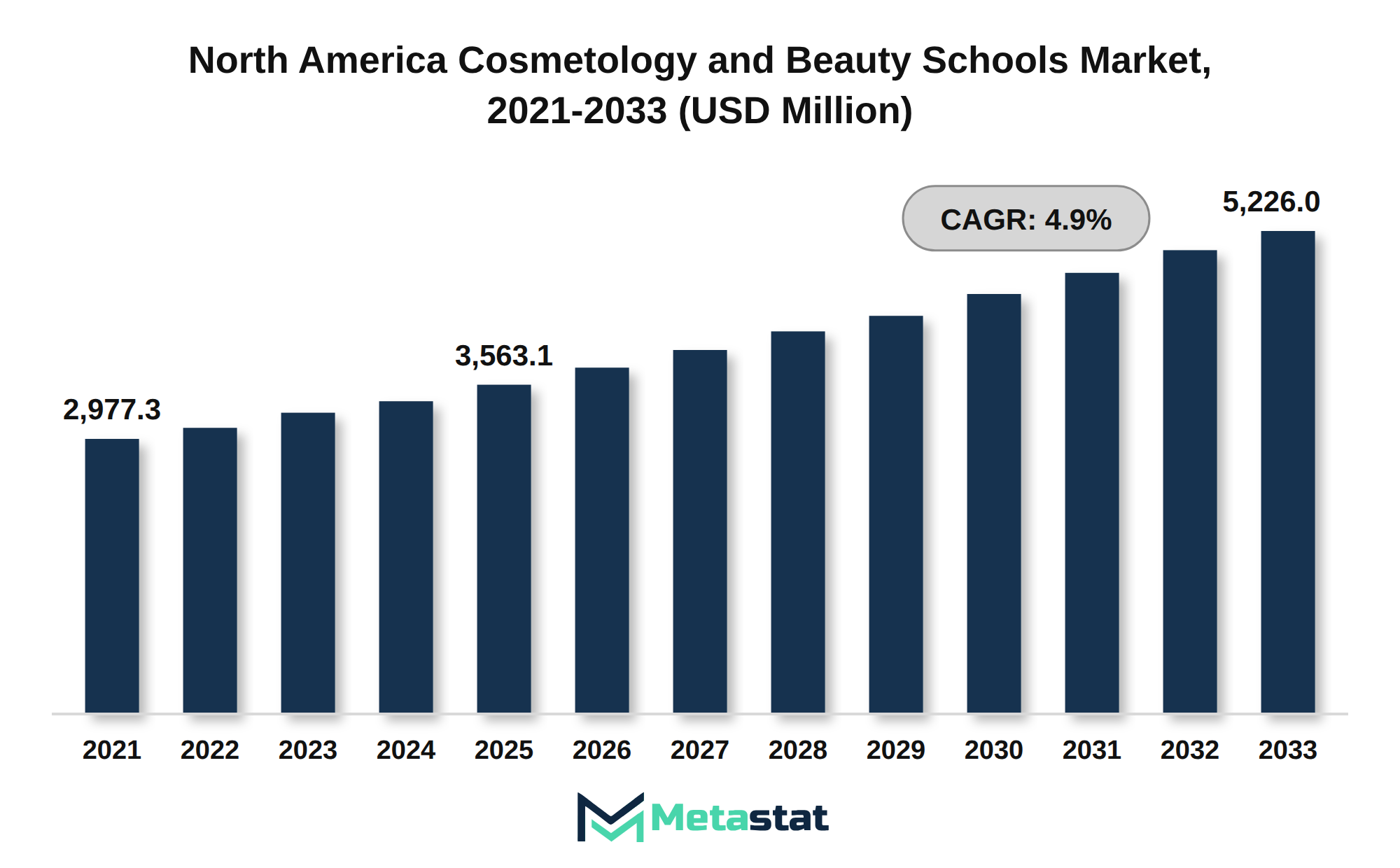
Transformations in consumer behaviors significantly influence the North America Cosmetology and Beauty Schools market. An increasing focus on personal grooming and wellness reshapes preferences, particularly among aging populations and urban dwellers. Lifestyle changes prompt individuals to seek professional training in beauty and wellness services, driving demand for enrollment in beauty schools.
The rise of social media platforms creates a culture of beauty awareness, leading consumers to prioritize services that enhance their appearance. This phenomenon results in a heightened interest in innovative beauty techniques and treatments, compelling educational institutions to adapt their offerings. Programs in areas including cosmetology, hairdressing, and esthetics are expanding to meet evolving consumer demands.
Digital transformation in the market further accelerates enrollment growth. Institutions leverage technology to provide diverse learning modalities, including live online training and self-paced online learning. This flexibility attracts a wider range of students, particularly those balancing work and education. Consequently, educational institutions enhance their competitive positioning, responding to the changing landscape of consumer expectations.
The combination of shifting demographics and technological integration positions the market for sustained growth. Enrollment trends reflect a growing inclination towards vocational education in beauty and wellness, driven by changing consumer preferences and advancements in instructional delivery. These dynamics establish a robust foundation for future expansion in the North America Cosmetology and Beauty Schools market.
Challenges associated with regulatory compliance and economic pressures impact the North America Cosmetology and Beauty Schools market. Regulatory environments create barriers to entry and operational hurdles for educational institutions. Compliance with evolving standards necessitates significant investment in training, technology, and infrastructure, diverting resources from growth-oriented initiatives.
Macroeconomic headwinds, including inflationary pressures and rising operational costs, complicate financial planning for beauty schools. Increased costs for supplies, utilities, and wages limit profitability and restrict the ability to reinvest in programs or facilities. Economic fluctuations influence consumer spending habits, generating uncertainty in enrollment levels.
Supply chain disruptions and geopolitical instability strain the market. Institutions rely on consistent access to materials and educational resources; disruptions hinder program delivery and compromise educational quality. These factors create operational challenges that stifle growth potential and deter investment in the North America Cosmetology and Beauty Schools market.
Talent gaps and skilled labor deficiencies present additional barriers. The need for qualified instructors and industry professionals affects the capacity of schools to offer comprehensive training programs. Ineffective recruitment strategies and competition for talent increase workforce overhead, contributing to higher operational costs and limiting enrollment.
While the market matures, fragmentation and cultural barriers slow growth. Diverse consumer preferences and regional disparities complicate the standardization of curricula and service offerings. Schools operating in fragmented markets face challenges in attracting students and achieving operational efficiency, impacting their competitive positioning in the North America Cosmetology and Beauty Schools market.
Geopolitical fragmentation contributes to challenges within the North America Cosmetology and Beauty Schools market. Trade deficits lead to increased costs for educational institutions and suppliers, impacting operational budgets and program offerings. Tariff friction complicates the procurement of essential materials and equipment, resulting in heightened financial burdens. This situation affects the affordability and accessibility of quality education for prospective students.
Technological disruptions present another obstacle for the market. Rapid advancements require educational institutions to continuously adapt their curriculum and training programs. This ongoing need for updates strains resources and complicates efforts to maintain instructional quality. Workforce skill gaps hinder the ability of institutions to meet the evolving demands of the beauty industry, creating a mismatch between available talent and market requirements.
Pricing compression and margin pressures further challenge the North America Cosmetology and Beauty Schools market. Rising input costs for materials and operational expenses compel institutions to reassess their pricing strategies. This situation leads to reduced profitability for schools and limited investment in facility upgrades and student resources. Talent retention pressures exacerbate these challenges, because institutions struggle to attract and maintain qualified instructors in a competitive environment.
Logistical disruptions and supply chain instability add another layer of complexity to market operations. Interruptions in the supply chain delay the availability of critical educational materials and equipment, affecting program delivery and student experience. Institutions face challenges in ensuring that students receive hands-on training with the latest tools and techniques, which is essential for their success in the beauty industry.
Addressing these multi-faceted challenges will be crucial for the continued growth and sustainability of the North America Cosmetology and Beauty Schools market. Educational institutions will innovate and streamline operations to navigate these barriers effectively.
Rapid advancements in technology significantly influence the North America Cosmetology and Beauty Schools market. Digital transformation within educational frameworks allows institutions to offer diverse learning modes, enhancing accessibility and engagement. The transition to live online training and self-paced online learning formats attracts a broader range of students, enabling institutions to capitalize on emerging markets and diverse demographics.
Strategic consolidation among educational providers encourages collaboration, resulting in enriched curricula and resource sharing. This approach creates opportunities for niche application growth in specialized beauty therapies and skills. The market benefits from innovations in learning methodologies, improving operational efficiency and educational outcomes. Value-chain optimization and process automation contribute to improved training delivery and resource management.
Increased importance on sustainability aligns with consumer expectations, prompting institutions to integrate eco-friendly practices into their programs. This trend drives the development of green transformations, positioning the market to meet the rising demand for environmentally conscious beauty professionals. Consequently, the North America Cosmetology and Beauty Schools market is set to experience growth driven by these technological disruptions and evolving consumer preferences.
The North America Cosmetology and Beauty Schools market is segmented based on Program Type, Delivery Mode, Institution Type, and Region.
Valued at USD 1,406.4 million in 2026, the Cosmetology & Hairdressing segment is projected to reach USD 1,827 million by 2033, reflecting a CAGR of 3.8% during the forecast period. The increasing consumer focus on personal grooming and beauty maintenance fuels demand for education in this area. Transformations in societal norms surrounding beauty standards drive enrollment in cosmetology programs, leading to a rise in new professionals entering the market.
Technological advancements contribute significantly to the segment's growth, with institutions adopting innovative teaching methods and tools. The integration of digital resources and online training platforms enhances accessibility, particularly in light of shifting consumer preferences towards flexible learning solutions. This evolution reflects broader trends within the North America Cosmetology and Beauty Schools market, where a diverse array of delivery methods caters to varying student needs.
The regulatory environment surrounding cosmetology education mandates adherence to specific standards and certifications, impacting program development and institutional operations. Compliance with these regulations ensures that graduates possess the necessary qualifications, enhancing their employability in a competitive job market. This focus on quality education aligns with the ongoing demand for skilled professionals in personal care sectors.
The Cosmetology & Hairdressing segment represents a vital component within the North America Cosmetology and Beauty Schools market, benefiting from evolving consumer preferences and technological integration. Continued investment in curriculum and infrastructure supports its expansion, reflecting a robust outlook for the future driven by the industry's adaptation to emerging trends and consumer expectations.
Demand for the Barbering & Men's Grooming segment reflects a notable shift in consumer preferences, emphasizing personal grooming and style. This segment is projected to achieve a market value of USD 934.4 million by 2033, at a CAGR of 5.6% during the forecast period. Key factors driving adoption include an increase in male grooming awareness and the influence of social media trends on male aesthetics.
Educational institutions have responded by expanding course offerings related to barbering and men's grooming, aligning with industry growth. The curriculum now includes advanced techniques and modern styling, catering to evolving consumer expectations. Enhanced training in these areas supports the segment's expansion, creating a skilled workforce equipped to meet market demands.
Technological advancements have introduced innovative tools and techniques in the barbering industry, enhancing service efficiency and client satisfaction. These innovations include modern barbering equipment and digital platforms for appointment scheduling, which streamline operations and improve customer experience. Such developments contribute to the segment's competitiveness within the North America Cosmetology and Beauty Schools market.
Changing lifestyle dynamics, including increased disposable income among younger demographics, further increase demand for specialized grooming services. Young professionals increasingly view grooming because an essential aspect of personal care, driving enrollment in barbering programs. Consequently, educational institutions are adapting their marketing strategies to attract this demographic, ensuring relevance in a competitive environment.
The Barbering & Men's Grooming segment establishes a robust foundation for future growth within the overall North America Cosmetology and Beauty Schools market. With increasing investments in training programs and technological integration, the segment is positioned to thrive amid shifting consumer preferences and market dynamics.
Increasing interest in skin care and wellness drives demand for educational programs in the Esthetics & Skin Care segment. This growing consumer focus on personal grooming and aesthetic treatments promotes enrollment in beauty schools offering specialized training. The segment is projected to reach USD 1,036.8 million by 2033, reflecting a structural shift in consumer preferences toward advanced skin care routines and procedures.
The expansion of the Esthetics & Skin Care segment benefits from technological advancements in treatments and products. Innovations in skin care techniques, including laser therapy and advanced chemical peels, require skilled professionals trained in these methods. Beauty schools emphasize updated curricula that incorporate the latest techniques and technologies, enhancing the attractiveness of their programs within the North America Cosmetology and Beauty Schools market.
Regulatory compliance shapes educational content for esthetics programs. Increased scrutiny in health and safety regulations prompts educational institutions to ensure that their programs meet industry standards. Meeting these requirements not only attracts students but enhances the credibility of the institutions within the market.
The combination of heightened consumer awareness, technological growth, and strict regulatory frameworks positions the Esthetics & Skin Care segment for continued expansion. These factors collectively contribute to a positive outlook, assuring stakeholders of significant investment opportunities in the North America Cosmetology and Beauty Schools market.
Nail Technology segment is projected to grow at a CAGR of 4.4% during the forecast period. Demand for this segment arises from a heightened focus on personal grooming and nail aesthetics among consumers, driven by social media influence and celebrity endorsements. Students pursuing Nail Technology programs are increasingly attracted to the potential for lucrative careers in both salon settings and independent business ventures.
Expansion catalysts include the rising popularity of nail art and innovative nail care products, which necessitate specialized training. Schools offering comprehensive curricula in Nail Technology equip students with essential skills, creating a new generation of professionals ready to meet industry demands. Diverse delivery modes, including live online training and blended learning, enhance accessibility and flexibility for students pursuing careers in this field.
Regulatory compliance standards, particularly around health and safety practices, significantly shape curriculum development. Institutions that adhere to these standards enhance their credibility and better prepare graduates for real-world challenges, thus improving job readiness. The market for Nail Technology within the North America Cosmetology and Beauty Schools market reflects ongoing trends toward specialization, reinforcing the segment's growth trajectory.
Investments in advanced training technologies, including virtual reality, provide opportunities for innovative learning experiences, appealing to tech-savvy students. This technological maturation encourages the development of next-generation skills that align with current industry trends. Overall, the combination of rising consumer interest, effective training programs, and evolving market dynamics positions the Nail Technology segment for sustained growth within the North America Cosmetology and Beauty Schools market.
Interest in Makeup Artistry within the North America Cosmetology and Beauty Schools market reflects broader trends in beauty and self-expression. Consumers increasingly seek personalized beauty services, leading to heightened demand for training programs specializing in makeup techniques. This segment benefits from the rise of social media influencers and beauty content creators who promote various makeup styles and products. Educational institutions respond by incorporating contemporary techniques and technologies into their curricula, aligning training with industry standards and trends.
Investment in innovative teaching methodologies, including live online training and self-paced online learning, enhances accessibility for aspiring makeup artists. These advancements cater to diverse learning preferences, attracting a broader demographic into the field. Regulations surrounding beauty services, including certifications and hygiene standards, shape curriculum development, ensuring students receive relevant and compliant training. Such alignment prepares graduates for a competitive employment landscape, enhancing their marketability to prospective employers in salons and beauty establishments.
Industry dynamics reflect a shift toward experiential learning, where practical application of makeup artistry techniques takes precedence in educational settings. The focus on hands-on experiences, combined with evolving trends in product usage and application, supports the growth of specialized programs. These developments contribute to the ongoing evolution of the Makeup Artistry segment, positioning it for sustained relevance in the North America Cosmetology and Beauty Schools market.
Increasing consumer focus on well-being drives interest in the Massage, Spa and Wellness Therapy segment within the North America Cosmetology and Beauty Schools market. Growing awareness of physical and mental health benefits associated with massage therapy has led to a rise in demand for skilled practitioners. This segment experiences strong adoption among consumers seeking relaxation and therapeutic treatments, further emphasizing the importance of trained professionals in this field.
The expansion of the wellness industry serves because a catalyst for growth, with consumers actively seeking services that promote both physical and emotional health. Institutions offering specialized programs equip students with essential skills and knowledge, preparing them for successful careers. Technological advancements, including innovative treatment techniques and equipment, enhance educational offerings. This makes training more appealing to prospective students.
Market dynamics reflect a shift toward personalized experiences. Clients increasingly desire customized treatment plans tailored to their unique needs. This trend encourages educational institutions to update curricula and incorporate advanced techniques, ensuring they remain competitive. The regulatory landscape influences training requirements, with evolving standards necessitating that schools adapt their programs to align with industry regulations.
While competition intensifies, maintaining high quality in training programs becomes essential for institutions. Emphasizing hands-on experience and practical knowledge equips students to meet the demands of an evolving market. Investment in infrastructure and resources will enhance institutions' ability to deliver comprehensive training, ultimately benefiting students and improving their employability in the growing Massage, Spa and Wellness Therapy segment.
Consumer interest in specialized beauty treatments has intensified, driving demand for training in areas including eyelash extensions, electrolysis, and other specialized therapies. This trend reflects a broader cultural shift towards personalized beauty solutions, where consumers seek unique services tailored to their individual preferences. Educational institutions are responding by adapting their curricula to include these modern offerings, ensuring graduates possess the necessary skills to meet market demands.
The growth of this sub-segment aligns with advancements in beauty technologies, which have increased the effectiveness and safety of specialized treatments. While techniques evolve, ongoing education becomes essential for practitioners to remain competitive. The North America Cosmetology and Beauty Schools market recognizes the importance of continuous learning, leading to a more skilled workforce capable of delivering innovative services.
Increased awareness regarding safety and hygiene standards has positioned regulatory compliance because a priority for beauty schools. Programs focused on certification in specialized therapies enhance credibility and consumer trust. Educators emphasize not only technical skills but the importance of regulatory knowledge, which ultimately benefits graduates entering a competitive job market.
Investment in marketing and outreach further supports the visibility of specialized therapies within the beauty education landscape. Schools promoting these programs effectively attract a diverse student base, eager to capitalize on emerging trends. This strategic positioning encourages growth opportunities within the market and enhances collaboration with industry partners, improving the overall educational experience.
Enrollment in in-person training programs within the North America Cosmetology and Beauty Schools market reflects increasing interest among aspiring beauty professionals. This growth stems from the desire for hands-on experience and direct interaction with instructors, which develops essential skills applicable in the industry. Valued at USD 2,053 million in 2026, the segment is projected to reach USD 2,540.9 million by 2033, reflecting a CAGR of 3.1% during the forecast period.
Factors driving enrollment include the demand for skilled practitioners in various beauty disciplines. In-person training enhances the learning experience, allowing students to practice techniques under professional supervision, which aligns with industry standards. This segment's expansion reflects a preference for traditional learning methods over digital alternatives, particularly among those seeking personal mentorship and feedback.
The rise of specialized beauty services encourages institutions to adapt their curricula to meet evolving market demands. By incorporating contemporary techniques and trends, schools improve their offerings, appealing to a broader range of students. Consequently, the in-person training segment contributes significantly to the overall growth of the market.
While the North America Cosmetology and Beauty Schools market evolves, continuous investment in training facilities and educator expertise will enable further development. This commitment to quality education ensures graduates are well-equipped to meet the diverse needs of consumers, positioning them for success in a competitive environment.
Growing acceptance of digital learning methods contributes to the expansion of the Live Online Training segment within the North America Cosmetology and Beauty Schools market. The convenience of accessing training from any location appeals to a broader audience, including those balancing work and education. This segment is expected to reach USD 656.4 million by 2033, with a CAGR of 6.5% during the forecast period. Increasing investment in technology and digital resources enhances the quality of online training programs, leading to improved learning outcomes. Adoption of next-generation tools, including virtual reality and interactive platforms, enriches the educational experience, attracting more students to this mode of learning. The trend toward flexibility in education aligns with consumer expectations, creating an environment where Live Online Training thrives. Rising awareness of the importance of certifications and skills relevant to the beauty industry supports the segment's growth. Overall, the Live Online Training segment is projected for advancement within the North America Cosmetology and Beauty Schools market.
Growing adoption of digital learning solutions drives interest in Self-Paced Online Learning within the North America Cosmetology and Beauty Schools market. This segment responds to the increasing number of individuals seeking flexible education options that allow them to learn at their own pace. Factors including the demand for convenience and accessibility have positioned self-paced learning because a preferred choice among aspiring beauty professionals.
The Self-Paced Online Learning segment is expected to reach USD 827.3 million by 2033. This growth reflects a shift in consumer preferences toward online education, which enables students to balance their studies with personal or professional commitments. Institutions are enhancing their offerings through advanced technology and user-friendly platforms, thereby creating engaging and interactive learning experiences.
Technological maturation has led to the development of sophisticated e-learning tools, contributing to an increase in enrollment in self-paced courses. Institutions leverage these technologies to create comprehensive curricula that cater to various beauty disciplines, including cosmetology, esthetics, and makeup artistry. Strategic investments in marketing and partnerships with industry experts further enhance the appeal of self-paced learning programs.
Consumer behavior shifts indicate a growing inclination toward online education, driven by the desire for personalized learning experiences. This trend creates a competitive environment among institutions within the North America Cosmetology and Beauty Schools market, pushing them to innovate and refine their digital offerings. While the market continues to evolve, institutions focusing on self-paced online learning stand to benefit from increased enrollment and expanded market share.
Growing preference for flexible learning environments significantly influences the adoption of blended and hybrid learning methodologies within the North America Cosmetology and Beauty Schools market. The segment is projected to grow at a CAGR of 6.4% during the forecast period, reflecting a shift toward digital education formats that cater to diverse learner needs. Increased accessibility to training programs, combined with advancements in digital tools, enables institutions to offer more engaging and interactive content.
Technological maturation contributes to the expansion of blended and hybrid learning, with platforms facilitating real-time interaction between instructors and students. This enhancement of the learning experience accommodates varying schedules, particularly appealing to working individuals pursuing cosmetology and beauty education. The integration of next-generation upgrades in curriculum delivery allows institutions to remain competitive and relevant in a changing market.
End-use dynamics indicate a notable increase in demand for hybrid learning formats, aligning with consumer preferences for convenience and flexibility. Regulatory compliance and accreditation standards shape program offerings, ensuring that graduates meet industry expectations. Institutions that successfully navigate these requirements position themselves favorably within the market, ultimately driving enrollment and investment.
Pricing volatility and margin pressures specific to this segment necessitate strategic planning and investment in technology and resources. Institutions focusing on blending traditional and online learning modalities enhance their attractiveness to potential students while maintaining operational efficiency. The changing nature of the market highlights the importance of adaptive learning solutions that meet contemporary educational demands.
Enrollment in Independent Beauty Schools & Academies exhibits strong demand, driven by the increasing recognition of professional training in the beauty industry. Valued at USD 1,591.9 million in 2026, this segment is projected to reach USD 2,059.6 million by 2033, reflecting a CAGR of 3.7% during the forecast period. Growing consumer interest in beauty and personal care certifications fuels enrollment, attributed to individuals seeking to enhance their skills and qualifications in a competitive job market.
The North America Cosmetology and Beauty Schools market experiences significant growth in this segment due to the rise in disposable income and spending on beauty services. Trends in self-care and grooming raise the profile of beauty education, encouraging potential students to pursue training at independent institutions. The expansion of online learning options complements traditional classroom experiences, enhancing access for a broader audience.
Technological advancements in educational tools contribute to the segment's growth, making it easier for institutions to deliver high-quality training. With the implementation of innovative teaching methods, students benefit from enhanced learning experiences and practical applications. These developments attract more individuals to the beauty schools, leading to increased enrollment and revenue generation. This trend reflects a shift in consumer priorities toward professional development in the beauty sector.
Regulatory compliance remains a critical aspect for Independent Beauty Schools & Academies, influencing curriculum development and operational standards. Institutions adapt to evolving regulations, ensuring graduates meet industry requirements. This commitment to compliance enhances the reputation of these schools, attracting students who prioritize accredited programs. Overall, the segment's growth aligns with changing consumer behavior and educational trends within the North America Cosmetology and Beauty Schools market.
Vocational & Technical Education Institutions represent a significant segment in the North America Cosmetology and Beauty Schools market. This segment is estimated to reach USD 1,159.1 million by 2033, at a CAGR of 4.1% during the forecast period. Increased demand for skilled professionals in the beauty industry drives enrollment in vocational programs, emphasizing practical training and industry-relevant certifications. Regulatory compliance and industry standards shape the curriculum, ensuring that graduates meet market expectations and client needs.
This segment benefits from evolving consumer preferences toward advanced beauty services, which necessitate well-trained professionals. Technological advancements enhance educational methodologies, incorporating digital tools and resources for effective learning experiences. The integration of next-generation upgrades in training facilities promotes a better understanding of contemporary beauty techniques, ensuring students are prepared for a competitive job market. These factors collectively contribute to the growth trajectory of the Vocational & Technical Education Institutions segment within the market.
Growing recognition of the importance of practical skills in the beauty industry increases interest in Salon & Salon-Chain Academies. These institutions focus on delivering hands-on training that aligns closely with the expectations of potential employers. A solid curriculum, combined with industry insights, enhances the employability of graduates, attracting a steady stream of students eager to enter the workforce. With an expected market value of USD 781.8 million by 2033, this segment of the North America Cosmetology and Beauty Schools market demonstrates substantial growth potential.
Technological advancements contribute to the evolution of training programs within Salon & Salon-Chain Academies. Integration of state-of-the-art equipment and educational tools supports students in developing contemporary skills suitable for the modern beauty landscape. The growing emphasis on certifications and compliance with industry standards represents a strategic opportunity for these institutions to differentiate themselves. In a market characterized by robust competition, the ability to offer specialized training programs plays a significant role in attracting students and enhancing institutional reputations.
Investment in Beauty Brand & Manufacturer Academies reflects a response to the evolving landscape of the North America Cosmetology and Beauty Schools market. This segment benefits from partnerships with leading beauty brands, which enhances curriculum relevance and attracts prospective students. Industry growth is fueled by increasing consumer awareness of professional beauty education, driving enrollment in specialized programs that align with market demand.
Beauty Brand & Manufacturer Academies segment is projected to grow at a CAGR of 5.7% during the forecast period. This growth stems from rising interest in product innovation and specialized training that meets industry standards. The emphasis on certifications and compliance with regulatory requirements strengthens the segment's appeal, ensuring graduates possess sought-after credentials.
Technological advancements contribute to evolving training methods within this segment, facilitating the integration of digital education tools. Enhanced learning experiences result in improved student engagement, preparing graduates for current trends and demands in the beauty sector. The North America Cosmetology and Beauty Schools market benefits significantly from this advancement.
Strategic opportunities arise from the increasing focus on personalized beauty solutions, prompting academies to adapt their offerings. By addressing consumer preferences for tailored beauty experiences, these institutions enhance their relevance in a competitive landscape. The favorable regulatory environment supports growth, driven by institutions maintaining compliance with educational standards and quality benchmarks.
Market dynamics are significantly influenced by the increasing shift towards digital education solutions among beauty schools. The demand for flexibility in learning environments drives interest in innovative delivery methods, allowing students to access educational resources remotely. This flexibility appeals to working professionals seeking to enhance their skills without disrupting their current employment. The emphasis on practical skills in beauty services attracts a diverse audience, including individuals from various backgrounds eager to transition into the beauty industry.
Investment in digital platforms enhances the learning experience, incorporating advanced technology to simulate real-world scenarios. The incorporation of interactive elements and practical training modules further enriches the educational journey, facilitating better retention of skills and knowledge. Regulatory compliance standards and certifications play a vital role in ensuring that digital programs meet industry expectations, providing students with the necessary credentials to excel in the market.
The North America Cosmetology and Beauty Schools market shows a promising outlook driven by curriculum and digital education providers adapting to changing consumer preferences. Strategic opportunity windows appear owing to industry players investing in next-generation technologies and innovative educational methodologies. This evolution in delivery methods positions curriculum and digital education providers because a key component of the overall market, driving growth and enhancing educational access for aspiring beauty professionals.
Interest in professional cosmetology education continues to rise in Canada, contributing to a growth trajectory within the North America Cosmetology and Beauty Schools market. The segment is estimated to reach USD 748.4 million by 2033, at a CAGR of 5.4% during the forecast period. Heightened consumer awareness of beauty trends drives increased enrollment in cosmetology programs. The demand for skilled professionals in specialized fields like Esthetics and Skin Care influences training programs offered by institutions.
Technological advancements in teaching methodologies enhance the learning experience, supporting the effectiveness of educational programs. Live online training and blended learning options become more prevalent, aligning with the preferences of modern learners. These formats facilitate access to education and accommodate diverse learning styles, ensuring comprehensive training for aspiring beauty professionals.
Regulatory compliance and certification requirements in the beauty industry enhance the credibility of training programs, attracting students seeking recognized qualifications. Increased investment in equipment and training resources reflects the commitment of institutions to provide quality education. Economic factors, including job growth in the beauty sector, contribute to favorable market conditions, promoting increased enrollment and program offerings. The Canadian segment stands poised for sustained growth within the North America Cosmetology and Beauty Schools market.
Favorable market conditions in Mexico contribute to the anticipated growth of the North America Cosmetology and Beauty Schools market, expected to reach USD 513.2 million by 2033. Increasing interest in beauty and grooming services among consumers drives demand for various training programs, enhancing enrollment in cosmetology, barbering, and esthetics. The expanding middle class, coupled with rising disposable incomes, fuels investment in personal appearance, supporting growth in education and specialized training.
Technological advancements in delivery modes, particularly the rise of online learning platforms, transform traditional education in the sector. Live online training and self-paced online learning options attract a broader demographic, making cosmetology and beauty education more accessible. This trend reinforces the importance of flexibility in training delivery, creating a strategic opportunity for institutions aiming to cater to diverse learner preferences.
Regulatory compliance standards and certification requirements in Mexico further shape the market dynamics. Institutions adhering to these standards enhance their credibility, attracting students seeking recognized qualifications. Increased focus on regulatory adherence ensures that graduates possess the necessary skills and knowledge for successful careers, ultimately contributing to the segment's expansion.
Investment in marketing and outreach initiatives strengthens brand presence and increases student enrollment across various programs. Institutions that effectively communicate the value of their offerings experience higher demand, enhancing their competitive position within the North America Cosmetology and Beauty Schools market. The combination of demand drivers, technological maturation, and strategic investments supports a positive outlook for the segment.
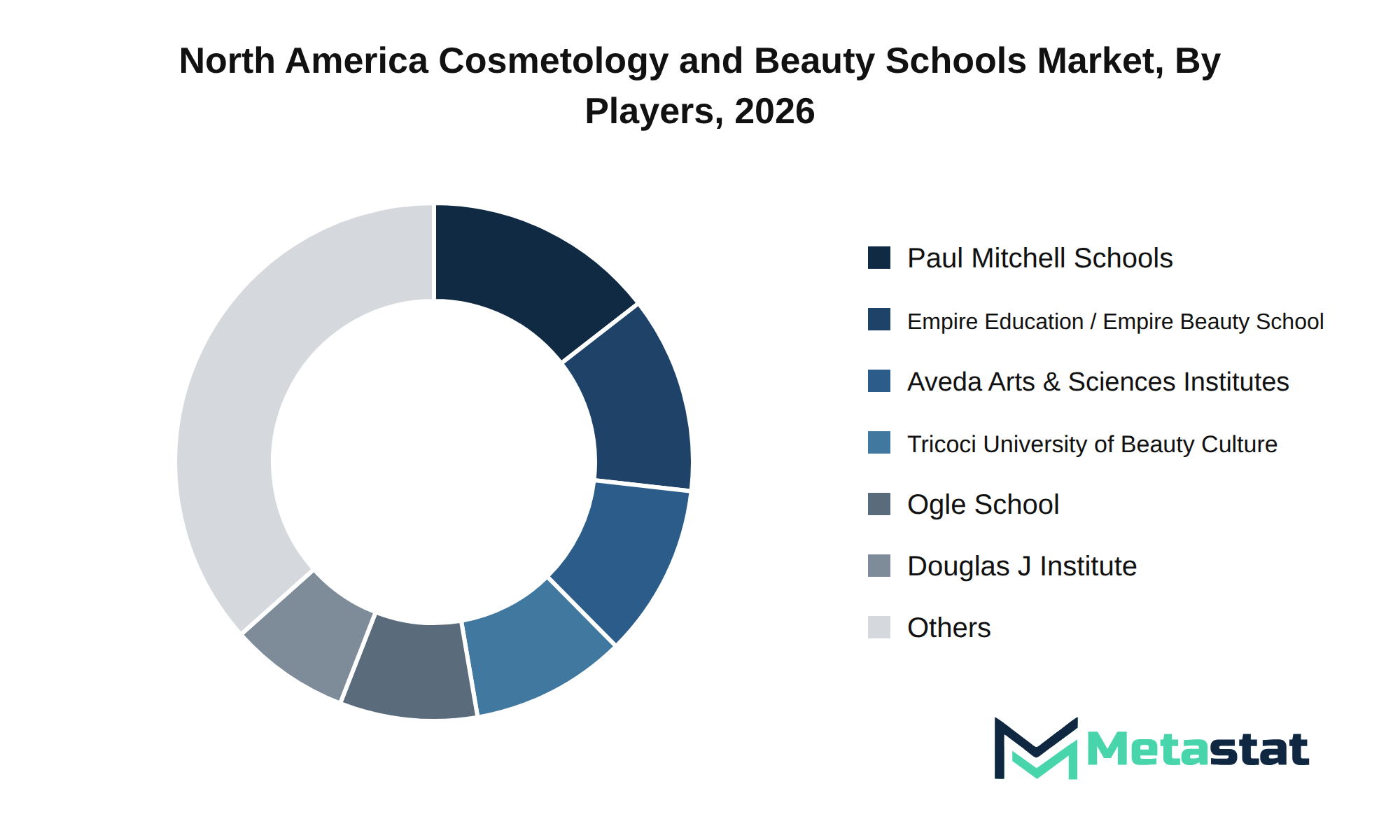
Competitive dynamics within the North America Cosmetology and Beauty Schools market revolve around several key players, including Paul Mitchell Schools, Empire Education Group / Empire Beauty School, and Aveda Arts & Sciences Institutes. These institutions emphasize strategic alliances and partnerships to enhance educational offerings and expand market reach, thereby increasing brand equity and customer loyalty.
Notable activity in mergers and acquisitions contributes to a consolidation trend among educational institutions. Tricoci University of Beauty Culture and Douglas J Institute focus on integrating curricula and resources, enhancing competitive positioning through differentiated service offerings. Innovative delivery modes, including live online training and self-paced online learning, gain traction. Ogle School and Bellus Academy adopt these approaches to cater to diverse learner preferences.
Research and development investments shape competitive strategies. Players like Kenneth Shuler School of Cosmetology and Raphael's School of Beauty Culture prioritize proprietary technology and modern teaching methodologies, allowing for a unique educational experience. Emphasizing product differentiation in program types, including cosmetology, esthetics, and nail technology, supports sustained growth and adaptability within the evolving market.
The North America Cosmetology and Beauty Schools market is characterized by strong barriers to entry, driven by established brand loyalty and customer retention strategies. Players including Robert Fiance Beauty Schools and Pivot Point International, Inc. leverage longstanding reputations and extensive alumni networks to maintain competitive advantages. The future competitive outlook suggests continued growth through innovative offerings and strategic collaborations.
Market size is forecast to rise from USD 3,563.1 million in 2025 to over USD 5,226 million by 2033. The base case reflects a steady growth trajectory with a compound annual growth rate (CAGR) of 4.9%. Bull case scenarios indicate a potential for accelerated growth driven by increased investments in technology integration, enhanced training methodologies, and a robust recovery in downstream demand. Bear cases suggest risk factors including regulatory changes and geopolitical shifts that impact market dynamics.
Macroeconomic trends will influence the North America Cosmetology and Beauty Schools market, particularly owing to evolving economic cycles. Structural shifts in consumption patterns, driven by changing consumer preferences towards personalized and experiential beauty services, create growth opportunities. Integration of next-generation technologies, including augmented reality and artificial intelligence in training programs, aims to enhance learning outcomes and attract new students.
Investment in research and development accelerates the commercialization of innovative training solutions, thereby impacting product life cycles within the market. Regulatory evolution plays a significant role, with upcoming compliance milestones shaping operational strategies for educational institutions. These developments necessitate strategic capital allocation directives to ensure alignment with industry standards and consumer expectations.
Emerging white-space opportunities are evident in niche segments including online learning and specialized beauty therapies. Addressing unmet enterprise needs, particularly among students seeking flexible learning options, is critical for market expansion. Executive-level strategic imperatives focused on adaptability and resilience guide institutions toward future growth, ensuring they remain competitive in a rapidly changing environment.
The report strategically identifies and profiles the key market players and analyses their core competencies in each sub-segment of the Cosmetology and Beauty Schools market.
Report Attributes | Details |
Study Period | 2021-2033 |
Base Year | 2025 |
Estimated Year | 2026 |
Forecast Period | 2026-2033 |
Historical Period | 2021-2025 |
Growth Rate | CAGR 4.9% from 2026 to 2033 |
Revenue Unit | USD million |
Segmentation | By Program Type, Delivery Mode, Institution Type, Region, and Region |
Find answers to common questions about this report
The North America Cosmetology and Beauty Schools market size was valued at USD 3,563.1 million in 2025, according to the Metastat Insights study.
The Cosmetology and Beauty Schools market is projected to grow at a CAGR of 4.9% during the forecast period from 2026 to 2033.
The Cosmetology and Hairdressing segment leads the North America Cosmetology and Beauty Schools market, with a projected value of USD 1,827 million by 2033. This segment holds the largest share compared to other segments in the market.
Key drivers for the North America Cosmetology and Beauty Schools market include rising disposable incomes, increasing consumer focus on personal grooming and wellness, and demographic shifts including urbanization and aging populations. Educational institutions adapt by expanding curricula and leveraging technology to meet the growing demand for beauty services.
Challenges associated with regulatory compliance and economic pressures impact the North America Cosmetology and Beauty Schools market. Regulatory environments create barriers to entry, while inflationary pressures and rising operational costs limit profitability and restrict investment in programs. talent gaps and skilled labor deficiencies hinder the capacity of schools to offer comprehensive training programs.
The Cosmetology and Beauty Schools market is estimated to reach a valuation of USD 5,226 million by 2033.
Key players in the North America Cosmetology and Beauty Schools market include Paul Mitchell Schools, Empire Education Group / Empire Beauty School, Aveda Arts & Sciences Institutes, Tricoci University of Beauty Culture, Ogle School, and Douglas J Institute.
Live online training is experiencing the fastest growth, projected to reach USD 656.4 million by 2033, with a CAGR of 6.5%.
Barbering & Men's Grooming is expected to reach USD 934.4 million by 2033, growing at a CAGR of 5.6%.
Cosmetology schools encounter challenges including regulatory compliance, economic pressures, and talent gaps, which impact operational efficiency and enrollment.
The analysts below cover Professional Services research at Metastat Insights.
LEAD ANALYST
Utkarsh Khirodkar is a Lead Market Research Analyst at MetaStat Insight, specializing in market intelligence, technology sector assessments, and competitive strategy.

PRINCIPAL CONSULTANT - ENTERPRISE AI & EMERGING TECHNOLOGIES
Banking & Finance · Electronics and Semiconductor · Energy and Power · Healthcare IT · Information & Technology · Professional Services
Vijay Gunti is a Principal Consultant at MetaStat Insight, bringing over two decades of experience across enterprise digital transformation, technology strategy, and intelligent systems.

PRINCIPAL CONSULTANT - QUALITY SYSTEMS & COMPLIANCE
Electronics and Semiconductor · Machinery & Equipment · Professional Services
Omkar Phadtare is an Industry Consultant at MetaStat Insight, specializing in quality systems, regulatory compliance, and standards benchmarking to drive data-driven market intelligence and strategic industry research.

LEAD CONSULTANT - COMMUNICATION, TELECOM, AND IT
Electronics and Semiconductor · Information & Technology · Machinery & Equipment · Professional Services
Ravindra Sathe Consultants for Communication, Telecom, and IT at MetaStat Insight. He leads the firm's industry research initiatives across telecommunications infrastructure, digital connectivity, enterprise networking, and emerging information technology domains.
Evaluating sovereign cloud deployments for core banking platforms demands a clear view of data residency regulations and migration exit strategies. MetaStat Insight delivered an exhaustive review of regional latency tolerances, mainframe decommission milestones, and third-party vendor concentration risk. The regulatory compliance mapping across European and Asian financial jurisdictions gave our team a dependable baseline for multi-cloud infrastructure discussions.
Replacing petrochemical surfactants with bio-based alternatives requires realistic timelines on industrial precision fermentation scaling. The market research broke down commercialization timelines, feedstock sugar price sensitivities, and regional cosmetic ingredient regulatory approvals in Europe and East Asia. That supplier readiness mapping gave our formulations team reliable context when comparing renewable chemical sourcing roadmaps.
Tracking ceramic matrix composite adoption in high-bypass aero engines requires strict attention to material qualification cycles and FAA airworthiness testing milestones. The MetaStat Insight team provided a detailed timeline of silicon carbide fiber manufacturing capacity and commercial foundry lead times. Having clear visibility into upstream thermal barrier coating supply helped us stress-test our long-term component procurement strategy.
Explore related market intelligence reports worth reading alongside this one.
Starting from
$2950