
LEAD ANALYST
Utkarsh Khirodkar is a Lead Market Research Analyst at MetaStat Insight, specializing in market intelligence, technology sector assessments, and competitive strategy.

Global Professional Hair Care Market Size, Share, By Product Type (Shampoos and Hair Cleansers, Conditioners, Hair Masks and Deep Conditioning Treatments, Leave-In Conditioners and Detanglers, Hair Serums and Oils, Styling and Finishing Products, Professional Hair Colorants and Lighteners, Relaxers and Smoothing Systems), By Sales Channel (Professional Salons and Salon Chains, Professional Beauty Distributors and Beauty Supply Stores, Specialty Beauty Retailers, Brand-Owned DTC and E-Commerce, Online Marketplaces, Pharmacies and Drugstores), By Application (Hair Cleansing and Maintenance, Hair Conditioning and Moisturization, Hair Repair and Damage Treatment, Scalp Care and Treatment, Hair Styling and Finishing, Hair Coloring and Color Maintenance, Hair Straightening and Smoothing), By Price Point (Entry-Level Professional, Mid-Market Professional, Premium Professional, Luxury/Prestige Professional), Industry Analysis, Growth, Trends, and Forecast, 2026-2033
Report ID
MSI-5392
Published
September, 2026
Pages
280 Pages
Format
Historical
Base year
Forecast
Forecast period
Report Details
Market Valuation: Valued at $38.7 Billion in 2025, projected to reach $59.6 Billion by 2033 at a 5.5% CAGR.
Dominant Segment: The Professional Hair Colorants and Lighteners segment leads the market, driven by consumer preferences for self-expression through hair color and the demand for lasting results.
Geographic Lead: The Asia Pacific region is emerging as the fastest-growing area for the Professional Hair Care market, fueled by rising disposable incomes and a growing focus on premium products.
What's Inside: This report provides a comprehensive analysis of market dynamics, competitive landscape, and detailed forecasts from 2026 to 2033, covering various product types, sales channels, and applications.
Investment Trends: Investment in digital transformation is reshaping the market, enhancing customer engagement and operational efficiency, while driving brands to innovate and adopt advanced technologies.
Consumer Behavior: Shifting consumer behaviors, particularly towards premiumization and self-care, are significantly influencing market growth, with increasing demand for specialized hair care solutions.
Choose Your License
Global Professional Hair Care Market
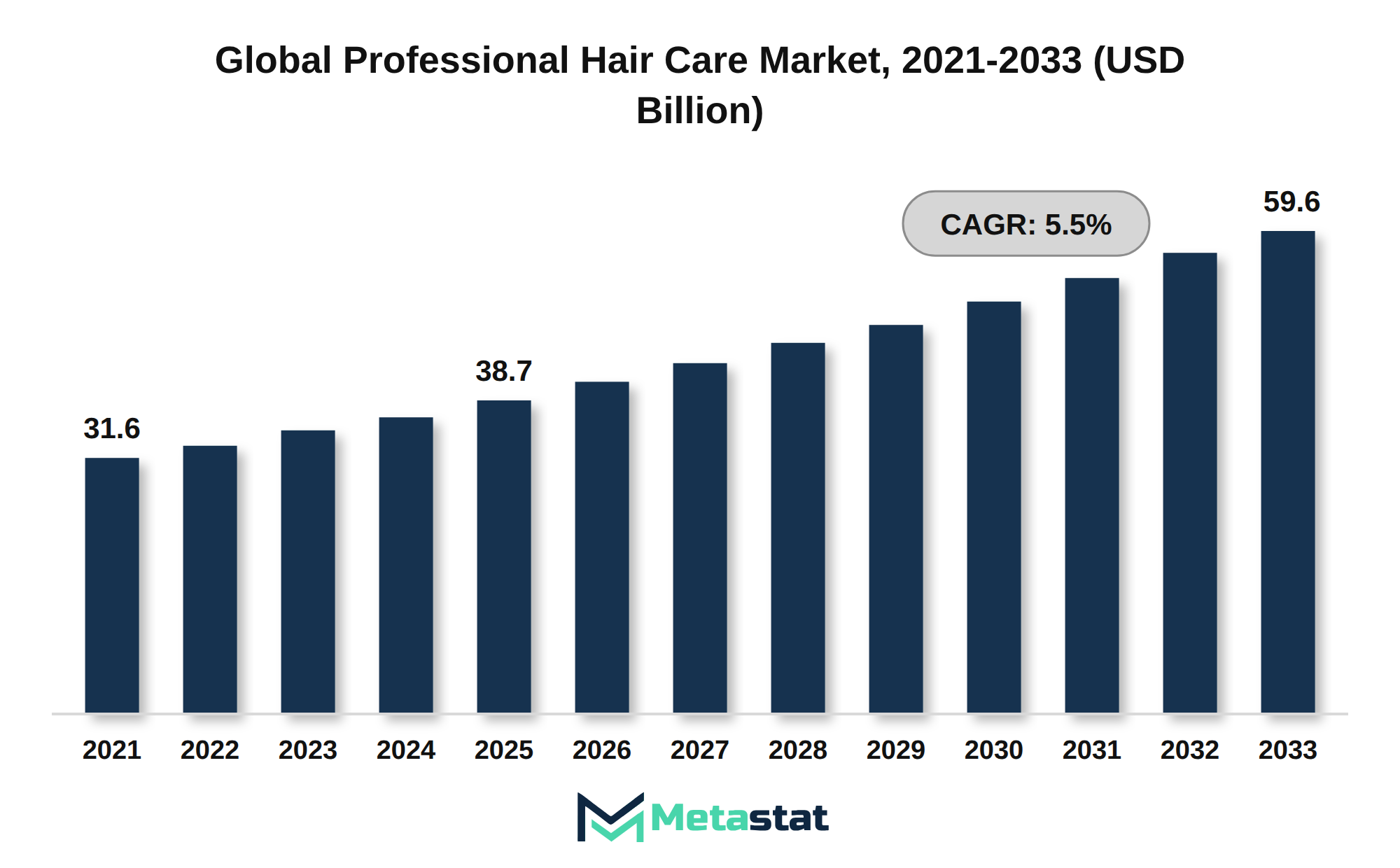
The global Professional Hair Care market was valued at USD 38.7 billion in 2025 and is projected to reach USD 59.6 billion by 2033, growing at a CAGR of 5.5% over the forecast period.
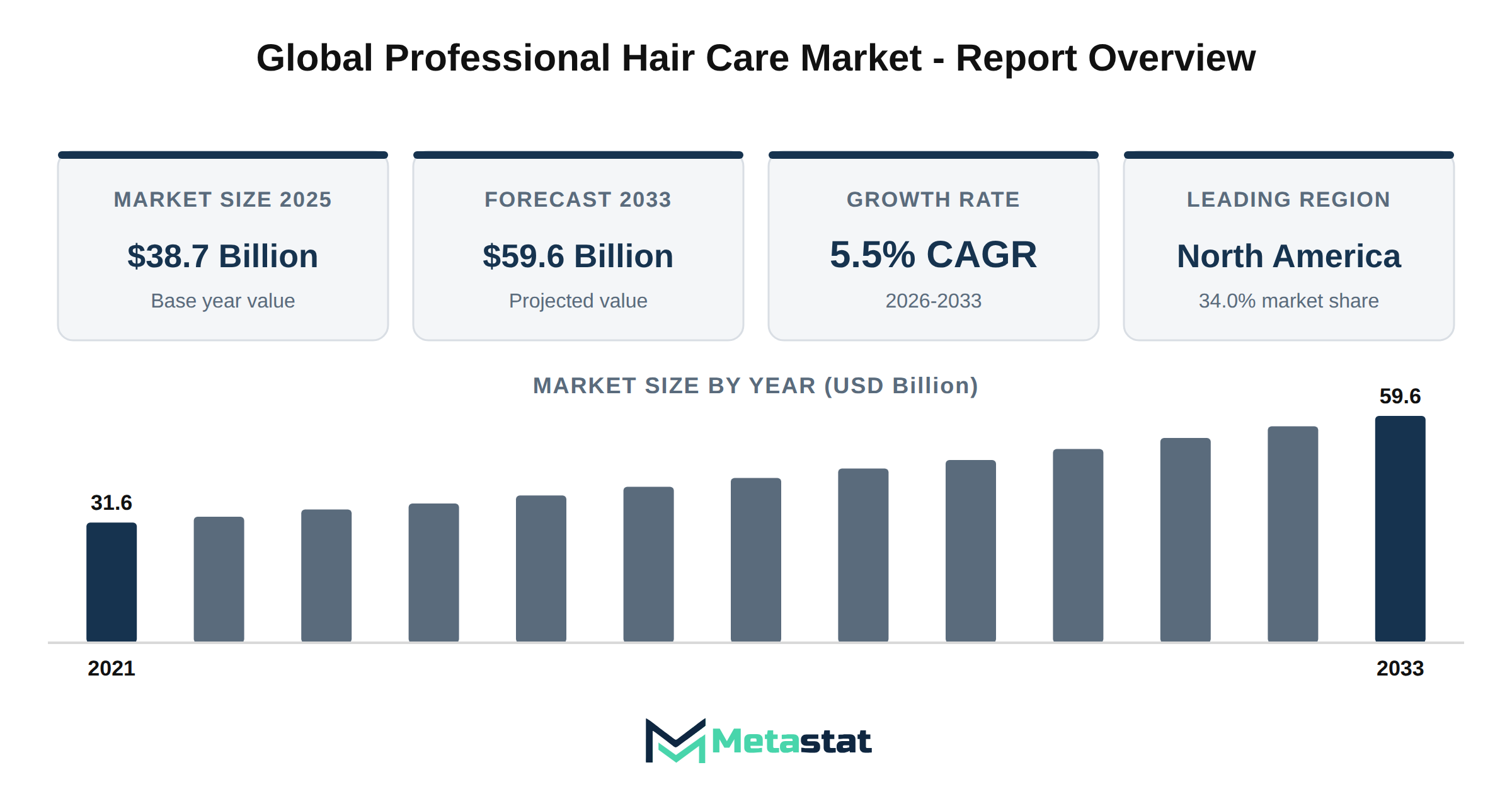
The Professional Hair Care market reached a valuation of USD 38.7 billion in 2025, demonstrating a strong growth trajectory since its historical value of USD 31.6 billion in 2021. Projections indicate that the market will expand to USD 59.6 billion by 2033, reflecting a compound annual growth rate (CAGR) of 5.5%. This growth is driven by increased consumer interest in premium salon products and specialized treatments, along with a rising demand for professional hair repair, scalp care, and damage treatment solutions.
Premiumization continues to reshape the product mix within the Professional Hair Care market. High-value segments, including professional hair colorants and lighteners, remain core revenue generators while expansive growth occurs in hair serums, oils, masks, and intensive conditioning treatments. The growing focus on scalp health and targeted professional hair treatments further supports market expansion.
Market dynamics are significantly influenced by salon chains and professional beauty distributors, which play a crucial role in shaping demand. The growth of direct-to-consumer channels and e-commerce platforms transforms sales strategies within the Professional Hair Care market. Online marketplaces are expanding access to professional hair care brands, enabling consumers to explore a wider range of products.
Clean beauty initiatives and ingredient transparency are increasingly influencing innovation in professional hair care. Bond-building and hair repair technologies drive product development, while personalized hair care and diagnostic technologies gain traction among professionals. Trends toward sustainable packaging and responsible formulation practices further align with consumer preferences, promoting growth in premium and luxury segments of the market.
Professional hair styling and finishing products are evolving in response to changing consumer preferences, with notable trends in hair straightening, smoothing, and texture management shaping offerings in professional salons. Supply chain shifts across salons, distributors, and specialty retail channels reflect the industry's adaptability to evolving market conditions.
Regulatory scrutiny surrounding hair colorants, smoothing systems, and cosmetic ingredients impacts product formulation and marketing strategies among global brands. Competitive strategies among these brands focus on innovation and differentiation, driving their presence in a dynamic market environment.
The Asia Pacific region emerges because a high-growth area for the Professional Hair Care market, while North America and Europe maintain strong demand for professional salon products. Emerging opportunities in South America and the Middle East and Africa highlight the global potential for market expansion, supported by service innovation and salon premiumization trends.
Future growth opportunities in the Professional Hair Care market will likely revolve around personalization and advanced formulations, ensuring that consumer needs are met through tailored solutions.
The Professional Hair Care market experiences significant growth driven by premium salon products and specialized treatments. Consumers increasingly seek high-quality solutions that enhance their hair health, leading to a rise in demand for professional hair repair, scalp care, and damage treatment options. This trend reflects a broader movement towards premiumization, reshaping the product mix within the market.
Professional hair colorants and lighteners represent a core revenue segment, attracting consumers seeking long-lasting results. The expansion of hair serums, oils, masks, and intensive conditioning treatments further signifies a shift towards specialized hair care solutions that address diverse needs, including hydration and repair.
Growing interest in scalp health and targeted professional hair treatments highlights a shift in consumer priorities, with an emphasis on overall hair wellness. Salon chains and professional beauty distributors play a crucial role in shaping market demand, ensuring that innovative products reach consumers effectively.
The rise of direct-to-consumer and e-commerce channels transforms professional hair care sales, providing brands with new avenues for engagement. Online marketplaces facilitate access to various professional hair care brands, allowing consumers to explore and purchase products conveniently.
Clean beauty and ingredient transparency increasingly influence professional hair care innovation, with consumers prioritizing products that align with their values. Bond-building and hair repair technologies drive product development, meeting the demand for effective solutions that restore hair health.
Personalized hair care and diagnostic technologies gain professional adoption, creating a tailored experience for consumers. Trends in sustainable packaging and responsible formulation further reflect the evolving market, with brands focusing on eco-friendly practices.
Premium and luxury professional hair care brands are gaining market share, appealing to consumers willing to invest in high-quality products. Professional hair styling and finishing products evolve alongside consumer preferences, adapting to new trends and demands.
Hair straightening, smoothing, and texture management trends within professional salons highlight the versatility of product offerings. Shifts in the professional hair care supply chain emerge across salons, distributors, and specialty retail, enhancing overall market dynamics.
Regulatory scrutiny surrounding hair colorants, smoothing systems, and cosmetic ingredients adds a layer of complexity to the market. Competitive strategies among global professional hair care brands focus on differentiation and innovation, positioning companies to capitalize on emerging opportunities.
The Asia Pacific region emerges because a high-growth market within the professional hair care segment, driven by increasing consumer awareness and demand. North America and Europe maintain strong professional salon product demand, ensuring robust market performance.
Emerging opportunities in South America and the Middle East and Africa professional hair care markets indicate potential for expansion. Salon premiumization and service innovation support demand, creating future growth opportunities through personalization and advanced formulations.
The Professional Hair Care market experiences growth driven by evolving consumer behaviors, particularly in relation to lifestyle changes and urbanization. The population increasingly prioritizes personal grooming and self-care routines, leading to a heightened demand for professional-grade hair care products. Urban consumers often seek products that align with their lifestyles, prompting brands to innovate and deliver solutions that enhance convenience and effectiveness.
Aging populations influence market dynamics, resulting from older consumers focusing on maintaining healthy hair and scalp conditions. This demographic shift creates opportunities for specialized products designed to address the unique needs of mature hair types. Manufacturers concentrate on developing formulations that promote hair vitality and address concerns including thinning and dryness.
The market is further supported by rising awareness of sustainability and ethical consumption. Consumers increasingly prefer products that align with their values, emphasizing the importance of environmental responsibility. Brands that adopt sustainable practices and offer eco-friendly packaging attract discerning customers, enhancing their market positioning. These shifting consumer behaviors significantly impact product demand and shape the competitive dynamics within the Professional Hair Care market.
Investment in digital transformation significantly influences the Professional Hair Care market, reshaping operations and enhancing customer engagement. Companies invest in automation, artificial intelligence, and advanced software solutions to streamline processes and improve service quality. This digital shift improves operational efficiency and reduces costs, enabling businesses to allocate resources more effectively.
Enhanced customer experiences through digital platforms strengthen brand loyalty and repeat purchases. Brands that adopt innovative technologies create personalized marketing strategies, resulting in increased sales and market penetration. The integration of digital tools and online retail channels expands consumer access to products, driving overall market growth. While the Professional Hair Care market evolves, the emphasis on digital transformation will continue to influence industry dynamics and profitability.
The Professional Hair Care market faces challenges due to high capital investment requirements. Developing and deploying new products necessitates significant financial resources, restricting smaller players from entering the market or expanding their offerings. Larger companies typically dominate due to their capital strength, creating a barrier for innovative startups and niche brands aiming to gain market traction.
Escalating operating costs further exacerbate these hurdles. Fluctuations in raw material prices and increased labor costs contribute to an environment where maintaining profit margins becomes challenging. Suppliers and manufacturers experience pressure to pass these costs onto consumers, suppressing market demand.
Infrastructure gaps within certain regions inhibit the effective distribution of products, impacting overall market reach. Connectivity deficits and deployment bottlenecks delay the introduction of new products and limit access to innovative solutions, affecting customer satisfaction and loyalty. These factors contribute to market fragmentation, with varying levels of penetration across different regions.
Consequently, the market faces a complex set of financial, operational, and infrastructural constraints, all of which impede growth trajectories and influence strategic planning for stakeholders in the Professional Hair Care market.
The Professional Hair Care market confronts significant challenges stemming from geopolitical fragmentation and trade friction. These factors contribute to rising tariff barriers and trade deficits, impacting the flow of goods and raw materials essential for production. Disruptions in international trade routes lead to increased costs and delays in sourcing ingredients and components, affecting supply chain stability. This environment creates uncertainty for manufacturers and distributors, who adapt to rapidly changing conditions and regulatory hurdles.
Technological disruptions create complexities in research and development integrations. Companies face pressures to innovate while managing the costs associated with advanced technologies and compliance with evolving global standards. Tightening regulations around sustainability and environmental impacts necessitate investment in compliance measures, further straining operational budgets. This financial pressure compresses pricing strategies, affecting margins across the market.
Workforce skill gaps present another challenge, since the industry requires specialized knowledge to implement new technologies and maintain a competitive edge. The ongoing need for talent retention in an environment of increased automation and digital transformation complicates workforce dynamics. These challenges collectively influence the competitive landscape, slowing growth and affecting the overall trajectory of the Professional Hair Care market.
The Professional Hair Care market experiences growth driven by the increasing demand for premium products across various regions. Emerging markets in Asia Pacific and South America present significant opportunities owing to rising disposable incomes and changing consumer preferences stimulating demand for high-quality hair care solutions. The expansion of urban areas facilitates greater access to professional salons, enhancing product visibility and consumer engagement.
Infrastructure modernization across regions supports the distribution and availability of professional hair care products. Enhanced retail channels and e-commerce platforms allow brands to reach a wider audience, driving sales growth. Technological disruptions, including advancements in product formulations and packaging, lead to the development of innovative solutions that cater to specific hair types and conditions, attracting diverse consumer segments.
Digital transformation acts because a catalyst for market dynamics, with businesses increasingly adopting online sales and digital marketing strategies to engage consumers effectively. The shift towards e-commerce enables companies to streamline operations and optimize marketing efforts, ensuring that products reach consumers promptly. Evolving buying behaviors reflect a preference for convenience and accessibility, pushing retailers to enhance their online presence.
Sustainability imperatives influence product development and purchasing decisions within the market. Brands focusing on eco-friendly formulations and packaging attract consumers who prioritize environmentally-conscious choices. This trend encourages the integration of green technologies and practices in production, enhancing brand loyalty and driving growth.
Strategic consolidation through mergers and acquisitions enables companies to enhance their market position and broaden product portfolios. By combining resources and expertise, firms strengthen their competitive advantage, positioning themselves to meet the diverse needs of consumers in various regions. Downstream market diversification further expands product offerings, catering to niche segments including organic and cruelty-free products.
Overall, the Professional Hair Care market shows strong potential for growth, driven by emerging regional demands, technological advancements, and a shift towards sustainable practices. These factors contribute to a dynamic market environment where businesses capitalize on evolving consumer preferences and market opportunities.
The Global Professional Hair Care market is segmented based on Product Type, Sales Channel, Application, and Price Point.
Valued at USD 6.4 billion in 2026, the Shampoos & Hair Cleansers segment is projected to reach USD 8.9 billion by 2033, representing a CAGR of 4.7% during the forecast period. Growing consumer awareness regarding hair health drives demand within this segment, leading to increased sales of specialized shampoos and cleansers formulated for specific hair types and concerns, including color protection and scalp health. Innovations in product formulation, including natural and organic ingredients, enhance appeal among health-conscious consumers, contributing to segment expansion. The shift toward sustainable and eco-friendly products influences purchasing decisions, compelling manufacturers to adopt greener practices in production and packaging. Competitive pricing strategies among leading brands support market penetration, allowing for a broader consumer base. E-commerce platforms play a significant role in driving sales, providing consumers with convenient access to a diverse range of products. Within the broader Professional Hair Care market, the focus on product efficacy and premium offerings shapes consumer preferences, ensuring sustained growth in the Shampoos & Hair Cleansers segment.
Growth in the conditioners segment reflects shifting consumer preferences toward hair care products that promote health and aesthetics. Increasing awareness regarding hair damage and the importance of hydration drives demand for effective conditioning solutions. Consumers prioritize products that offer nourishing benefits and cater to diverse hair types. This trend aligns with the broader emphasis on personal grooming and wellness, propelling market expansion.
The conditioners segment is estimated to reach USD 7.1 billion by 2033, at a CAGR of 5.9% during the forecast period. The focus on product evolution leads to innovations in formulations, enhancing efficacy and catering to specific consumer needs. Emerging trends, including the integration of natural ingredients and sustainable practices, contribute to expanding market offerings.
Regulatory compliance regarding cosmetic safety standards influences product formulations. Stricter regulations encourage manufacturers to invest in research and development, creating a competitive environment that drives innovation. Market players face pressures related to pricing volatility and ingredient sourcing, necessitating strategic approaches to maintain margins while meeting consumer demands.
While the market evolves, strategic opportunity windows arise for brands that emphasize transparency and sustainability. Capital investment in new technologies facilitates the introduction of next-generation conditioners that address specific hair concerns, further enhancing market attractiveness. Overall, the conditioners segment reflects a market characterized by consumer-driven innovation and evolving product standards.
Growing consumer awareness surrounding hair health significantly drives demand for hair masks and deep conditioning treatments within the Professional Hair Care market. These products address specific concerns including dryness, damage, and the need for intense hydration, appealing to a broad demographic that prioritizes hair care. Enhanced formulations, including natural and organic ingredients, contribute to product evolution, catering to the rising preference for clean beauty among consumers.
Market expansion is further supported by the increasing prevalence of styling practices that require intensive care solutions, especially among professionals and home users alike. Salons heavily incorporate these treatments, thereby increasing their visibility and usage within the market. Consumers increasingly seek salon-quality results at home, creating opportunities for product innovation and targeted marketing strategies.
The hair masks and deep conditioning treatments segment is expected to reach USD 5.6 billion by 2033. The segment's growth trajectory aligns with a broader trend of sustainable and ethical sourcing practices, influencing customer loyalty and purchase decisions. Price points reflect varying market segments, allowing for a diverse array of products appealing to budget-conscious consumers and luxury buyers.
Technological advancements facilitate the development of next-generation upgrades, including formulations that deliver enhanced efficacy. Effective marketing strategies that emphasize the benefits of these treatments play a critical role in driving consumption shifts. Consumer education on proper application techniques and product benefits is essential for maximizing market penetration.
Demand for Leave-In Conditioners & Detanglers continues to increase owing to rising consumer preference for hair products that offer convenience and effectiveness in maintenance. This segment is projected to grow at a CAGR of 7.2% during the forecast period. The market benefits from innovations in formulation, including the introduction of natural and organic ingredients that appeal to health-conscious consumers. Enhanced product efficacy, including improved detangling properties and moisturizing benefits, drives adoption among various demographics, including children and adults facing daily hair care challenges.
Shifts in end-use dynamics further influence the segment, with consumers prioritizing quick and efficient solutions to hair care. Trends toward multitasking products that provide conditioning, styling, and protection increase interest in Leave-In Conditioners & Detanglers. Regulatory compliance standards surrounding product safety and ingredient transparency encourage manufacturers to invest in quality formulations, positioning themselves favorably in a competitive landscape. The resulting rise in brand loyalty among consumers supports ongoing growth, reflecting a robust outlook for the Professional Hair Care market.
Increasing consumer focus on hair health drives demand for hair serums and oils within the Professional Hair Care market. Rising awareness surrounding the benefits of these products enhances their appeal, particularly among millennials and Gen Z consumers who prioritize hair care routines. Innovations in formulation, including the incorporation of natural and organic ingredients, attract buyers seeking effective yet gentle solutions.
The adoption of hair serums and oils is influenced by the growing trend of personalized beauty regimens. Customized products that cater to specific hair types and concerns enhance user satisfaction and loyalty. Retailers and beauty salons expand their offerings to include a range of serums and oils, addressing diverse consumer preferences and promoting brand loyalty.
Next-generation hair care technologies, including micro-encapsulation and advanced delivery systems, improve product performance and efficacy. These advancements contribute to the evolution of hair serums and oils, creating opportunities for brands to differentiate themselves in a competitive market. Consumers seek high-quality, result-oriented products. Brands investing in research and development capture a larger market share.
Pricing strategies remain vital in maintaining competitiveness within this segment. The balance between premium pricing and perceived value influences consumer purchasing decisions. Retailers leverage promotional activities to increase visibility and attract attention to hair serums and oils, enhancing overall market dynamics.
Supply chain resilience plays a critical role in ensuring product availability and maintaining competitive pricing. Manufacturers face challenges related to raw material sourcing and logistics vulnerabilities, impacting production schedules and delivery timelines. Strategic partnerships with suppliers mitigate risks associated with material shortages, enabling companies to maintain operational efficiency.
While the market evolves, regulatory compliance standards shape product formulation and marketing strategies. Adherence to safety and quality regulations builds consumer trust and enhances brand reputation. Companies prioritizing compliance and transparency gain a competitive edge, aligning with consumer expectations for ethical and safe beauty products.
Growing interest in personal grooming and appearance enhances demand for styling and finishing products. Innovations in formulations and packaging contribute to market expansion, offering consumers products that deliver enhanced results and convenience. Increased social media engagement influences consumer purchasing decisions, with influencers promoting various styling products that cater to diverse hair types and styles. The shift toward premium and specialized products reflects changing consumer preferences, driving investment in research and development across the market.
Technological advancements in hair care formulations include the incorporation of botanical ingredients and advanced polymers, which improve product efficacy. Companies prioritize sustainability in product development, with eco-friendly packaging and formulations appealing to environmentally conscious consumers. Regulatory compliance standards surrounding ingredient safety and environmental impact necessitate continuous adaptation by manufacturers. These factors collectively shape the competitive landscape of the styling and finishing products sub-segment, influencing overall dynamics in the Professional Hair Care market.
Trends in consumer behavior highlight a preference for multifunctional products that simplify routines while delivering desired results. This shift creates opportunities for market participants to innovate and differentiate their offerings. Supply chain resilience becomes increasingly important, with manufacturers exploring alternative sourcing strategies and strengthening relationships with suppliers to mitigate risks associated with raw material availability. Strategic investment in emerging technologies, including personalized hair care solutions, positions companies to capture untapped market potential and enhance customer loyalty.
Consumer preference for hair color has evolved significantly, driving demand for innovative solutions in the Professional Hair Care market. The growing trend of self-expression through hair color and styles encourages consumers to seek products that offer lasting results. This shift influences manufacturers to invest in advanced formulations and technologies, enhancing the performance of hair colorants and lighteners.
Technological maturation influences the evolution of colorants, with brands increasingly prioritizing user-friendly applications and effective performance. Innovations in formulations, including cleaner ingredients and longer-lasting results, boost consumer confidence and adoption rates. The increasing focus on hair health alongside coloration leads to the development of products that provide nourishment while delivering desired shades.
Regulatory compliance standards impact product development within the market, pushing brands to meet safety and effectiveness criteria. Certifications from recognized organizations enhance product credibility, building trust among consumers. The awareness surrounding these standards drives brands to prioritize transparency and sustainability in their offerings, aligning with the growing consumer demand for eco-friendly products.
Pricing volatility remains a challenge in the market, influenced by fluctuations in raw material costs and shifting consumer expectations. Brands navigate these pressures while maintaining product quality and affordability. Strategic opportunity windows arise for companies that effectively manage these cost structures while introducing innovative products that meet evolving consumer demands.
Supply chain resilience emerges because a critical aspect for manufacturers, especially in sourcing quality raw materials for colorants. Disruptive alternatives from new entrants in the market challenge established players to innovate and adapt. Ongoing competition requires brands to continually assess their offerings and respond to the dynamic needs of consumers seeking effective and reliable hair color solutions.
Consumer interest in versatile hairstyling options drives demand for perming and waving products within the Professional Hair Care market. The trend towards unique and personalized hairstyles boosts consumption. Beauty professionals increasingly adopt these solutions to meet client expectations. Enhanced formulations that minimize damage while providing long-lasting results have emerged, driven by key selling points, appealing to both stylists and end-users.
Technological innovations in perming and waving techniques facilitate improved product performance, leading to better results and increased customer satisfaction. Growing awareness of hair health prompts manufacturers to invest in safer, more effective ingredients, further supporting market growth. Regulatory compliance regarding safety and ingredient transparency influences product development, ensuring offerings align with consumer safety expectations.
Shifts towards sustainable sourcing of raw materials reflect broader consumer trends favoring eco-friendly products. This trend encourages companies to explore alternative formulations that reduce environmental impact while maintaining effectiveness. Strategic opportunities arise from ongoing demand for innovative solutions in hair care, positioning perming and waving products because vital components in the evolving market.
Interest in Relaxers & Smoothing Systems stems from consumer desires for sleek, manageable hair. Rising styling trends and the influence of social media drive this demand, fostering innovation within the sector. Manufacturers focus on developing high-performance formulations that provide long-lasting results while minimizing damage, aligning with consumer preferences for healthier hair care solutions.
Technological advancements play a critical role in segment evolution. The introduction of advanced ingredients enhances product efficacy and safety, appealing to a wider range of consumers. Manufacturers increasingly emphasize the development of formulations that integrate natural and organic components, meeting the growing demand for clean beauty products.
End-use dynamics illustrate a shift toward professional applications within salons, where trained stylists apply advanced products for optimal results. This professional focus supports the segment's growth and ensures consumers receive tailored solutions suited to their individual hair types and conditions. Increased collaboration between brands and salons raises product awareness and drives consumer interest.
Regulatory compliance standards impact product formulations and marketing strategies, compelling brands to innovate while adhering to safety guidelines. Brands investing in certifications and sustainable practices strengthen their market positioning and appeal to environmentally conscious consumers. This strategic approach supports long-term growth within the Professional Hair Care market.
Price volatility remains a concern for manufacturers. Fluctuations in raw material costs affect pricing strategies and profit margins, compelling companies to reassess their supply chain resilience. Brands that adapt quickly to these changes position themselves favorably in a competitive environment, enabling them to maintain market share and capitalize on emerging opportunities.
Growing interest in scalp health drives demand for scalp tonics and lotions, which address various hair and scalp issues. These products contribute to maintaining overall hair wellness by providing targeted treatments for scalp conditions including dryness and irritation. Increased consumer awareness regarding the importance of scalp care results in higher adoption rates within the Professional Hair Care market.
The emergence of pre/post-service protectors enhances the consumer experience during salon treatments, ensuring hair integrity during coloring and styling procedures. These products fill an essential gap in hair care by safeguarding against damage and optimizing treatment outcomes. The shift in consumer behavior toward preventive care rather than reactive solutions encourages investment and innovation within this product sub-segment.
The regulatory landscape surrounding personal care products influences formulation standards, compelling manufacturers to innovate with safer and more effective ingredients. This regulatory compliance builds consumer trust and satisfaction, further driving market growth. Product evolution, including the introduction of natural and organic formulations, aligns with current consumer trends, enhancing market appeal and demand.
Valued at USD 12.1 billion in 2026, the Professional Salons & Salon Chains segment is projected to reach USD 16.2 billion by 2033, at a CAGR of 4.2% during the forecast period. This growth experience reflects a combination of factors driving strong demand within the Professional Hair Care market. Increased consumer spending on salon services contributes to the segment's expansion, driven by more individuals seeking professional treatments for hair health and aesthetics.
Changing consumer preferences for high-quality hair products further drive growth in this segment. Salons increasingly offer a variety of premium hair care products, leading to higher average transaction values. The rise of social media influencers promoting professional hair care techniques enhances awareness and encourages salon visits, increasing demand for professional services.
Technological advancements in hair care treatments create opportunities for salons to introduce innovative services. New formulations and application techniques provide improved results, encouraging clients to seek out professional treatments. Regulatory compliance regarding product safety and efficacy strengthens consumer trust in salon services, promoting a shift towards professional care over DIY alternatives.
Competition among salons drives continuous improvement in service offerings, encouraging salons to adapt to emerging trends and consumer desires. This dynamic enhances the overall value proposition for customers, reinforcing the Professional Salons & Salon Chains segment's role in the Professional Hair Care market.
Growth in the Professional Beauty Distributors & Beauty Supply Stores segment reflects robust demand for high-quality professional hair care products. This segment is projected to reach USD 11 billion by 2033, at a CAGR of 4.5% during the forecast period. Enhanced distribution networks and increasing collaborations between brands and distributors facilitate the availability of diverse product ranges, catering to evolving consumer preferences.
Factors driving expansion include rising consumer grooming habits and increasing popularity of professional hair care brands. These distributors connect manufacturers with salons and beauty professionals, ensuring that innovative products reach the market effectively. The demand for premium and specialized products continues to shape purchasing decisions, leading to increased sales through these channels.
Investment in marketing strategies and educational programs for salon professionals enhances product knowledge and boosts sales for distributors. Effective training equips beauty supply stores with the expertise to recommend suitable products, driving end-user adoption and satisfaction. This dynamic contributes positively to overall market growth.
Increasing demand for specialty beauty retailers emphasizes their role in the Professional Hair Care market. This segment is expected to reach USD 7.7 billion by 2033, reflecting heightened consumer interest in premium and niche hair care products. The demand for unique offerings and personalized shopping experiences drives retailers to provide an extensive range of products, catering to specific hair types and concerns. The rise in social media influence promotes brand awareness and encourages consumers to explore specialized beauty products, enhancing market growth.
Technological advancements in e-commerce and online shopping facilitate the expansion of specialty beauty retailers. Many retailers leverage digital platforms to reach a broader audience, optimizing customer engagement and increasing sales. Changing consumer behaviors, particularly among younger demographics, support the shift toward shopping in specialty retail environments, where personalized attention and expert advice are readily available. This trend contributes positively to the overall performance of the market.
Competition among specialty beauty retailers intensifies owing to established brands and new entrants seeking to capture market share. Retailers invest in innovative marketing strategies, including collaborations with influencers and targeted promotions, to differentiate themselves. Such initiatives enhance brand loyalty and encourage repeat purchases, reinforcing their position in the market. Ultimately, specialty beauty retailers play a significant role in shaping consumer preferences and driving growth within the Professional Hair Care market.
Department Stores serve because a critical channel within the Professional Hair Care market, providing a diverse range of products to consumers. The segment is projected to grow at a CAGR of 2.8% during the forecast period. Increased consumer foot traffic in these retail environments enhances exposure to various hair care products, driving sales. Strategic partnerships between brands and department stores improve product visibility, leading to higher consumer engagement and impulse purchases.
Shifting consumer preferences towards premium and high-quality products influence purchasing decisions in department stores. Retailers often incorporate exclusive product lines and promotions that attract consumers seeking tailored solutions for their hair care needs. This customization strengthens brand loyalty and repeat purchases, contributing to market growth.
Pricing volatility poses challenges for the Department Stores segment, with fluctuations in raw material costs impacting retail pricing strategies. Retailers navigate these pressures through strategic pricing models that balance competitiveness with profitability. Maintaining a diverse product offering allows department stores to cater to varying consumer segments, ultimately supporting sustained growth in the Professional Hair Care market.
Growing emphasis on online shopping significantly influences the Brand-Owned DTC & E-Commerce segment within the Professional Hair Care market. Consumers increasingly prefer the convenience and accessibility offered by direct-to-consumer platforms, allowing brands to cultivate stronger relationships and enhance customer loyalty. This shift toward e-commerce is supported by technological advancements that facilitate online transactions and improve customer experiences.
The emergence of social media and influencer marketing significantly shapes consumer preferences and drives sales in this segment. Brands leverage digital platforms to promote their products, engage with potential customers, and share user-generated content, effectively boosting brand visibility. This digital transformation results in heightened competition in the market, prompting brands to innovate and diversify their product offerings to meet evolving consumer demands.
Strategic opportunities arise through the integration of data analytics and personalized marketing strategies. By analyzing consumer behavior, brands tailor their marketing efforts and improve product recommendations, leading to enhanced customer satisfaction and increased sales. The growing trend toward sustainability encourages brands to adopt eco-friendly practices and offer sustainable product options, further attracting environmentally conscious consumers.
The evolution of supply chain management and logistics solutions supports the rapid growth of this segment. Efficient fulfillment processes enable brands to deliver products quickly and reliably, thus meeting consumer expectations for swift service. Cost structures related to e-commerce operations require careful management to maintain profitability while competing with other sales channels in the market.
Overall, the Brand-Owned DTC & E-Commerce segment positions itself for sustained growth within the Professional Hair Care market, driven by evolving consumer behaviors, technological advancements, and strategic marketing initiatives.
Growth in online shopping continues to transform the Professional Hair Care market. Increased internet penetration and the proliferation of e-commerce platforms enhance customer access to a wide range of hair care products. Consumers increasingly prefer the convenience of shopping from home, leading to a surge in sales through online marketplaces. This shift enhances market competitiveness, driven by brands adapting their marketing strategies to emphasize online visibility and engagement.
Adoption of digital marketing strategies by brands significantly influences the online marketplaces segment. Brands invest in social media campaigns and influencer partnerships to attract consumers and highlight product offerings. Such marketing initiatives drive brand loyalty and encourage repeat purchases, contributing to growth within the market.
Technological advancements in logistics and supply chain management facilitate effective order fulfillment in online marketplaces. Improved distribution networks enable faster shipping times and enhance customer satisfaction. These developments play a crucial role in driving consumer preferences and expanding the segment's reach within the Professional Hair Care market.
Shifts in consumer behavior, particularly among younger demographics, contribute to the growing importance of online marketplaces. Millennials and Generation Z prioritize convenience and variety, favoring platforms that offer easy shopping experiences. Their engagement with online platforms encourages brands to enhance their digital presence and optimize offerings for these key consumer segments.
Regulatory compliance and standards shape product offerings in online marketplaces. Brands prioritize transparency and authenticity to meet consumer expectations and regulatory requirements. This emphasis on compliance builds trust and enhances brand reputation, leading to increased demand within the Professional Hair Care market.
In the Professional Hair Care market, Pharmacies & Drugstores play a key role in distribution, providing consumers with easy access to a wide range of hair care products. This segment benefits from the increasing trend of self-care and personal grooming, prompting consumers to seek products that cater to their specific hair needs. The growing awareness of product ingredients further drives demand, because consumers gravitate toward formulations that emphasize natural and effective components.
Technological maturation within product development enhances the offerings available in pharmacies and drugstores. Innovations in formulations, packaging, and marketing strategies contribute to the evolution of hair care products, ensuring they remain relevant in the competitive environment. This segment's expansion aligns with consumer preferences for convenience and accessibility, illustrating an essential shift in purchasing behavior.
Regulatory compliance standards impact product offerings, ensuring safety and efficacy in hair care products available at pharmacies and drugstores. The increased focus on certifications enhances the credibility of brands in this segment, building consumer trust. Consequently, pricing volatility affects various product categories, creating opportunities for strategic positioning within the market.
The Professional Hair Care market illustrates significant potential for growth, driven by evolving consumer preferences and the increasing importance of health-conscious formulations. Pharmacies & Drugstores, because a trusted channel, are well-positioned to capitalize on these trends, reinforcing their relevance in the dynamic hair care market.
Consumer preferences for convenience and unique shopping experiences significantly impact demand within the Others (Travel Retail, Selective Lifestyle Retail) sub-segment. This channel attracts consumers seeking specialized products, often unavailable in traditional retail settings. The Professional Hair Care market benefits from the increasing trend of personal grooming and the willingness of consumers to invest in high-quality hair care products while traveling or engaging in lifestyle activities. Retailers within this sub-segment create curated offerings that appeal to niche markets, enhancing customer loyalty and driving overall market growth.
Travel retail environments, including airports and high-end hotels, provide opportunities for brands to present innovative products that cater to discerning travelers. In addition, selective lifestyle retailers emphasize experiential shopping, allowing consumers to engage with products in a manner that influences their purchasing decisions. These factors contribute to establishing a distinctive presence for the Professional Hair Care market within the broader retail landscape.
Valued at USD 6.6 billion in 2026, the Hair Cleansing & Maintenance segment is projected to reach USD 9.2 billion by 2033, at a CAGR of 4.8% during the forecast period. Growing consumer awareness of hair health significantly drives demand for cleansing products, highlighting the importance of effective hair maintenance solutions. The increasing influence of social media and beauty trends impacts consumption patterns, prompting customers to seek products that not only cleanse but contribute to overall hair vitality.
Technological advancements in formulation enhance product effectiveness, leading to more innovative cleansing options in the Professional Hair Care market. The rise of natural and organic ingredients attracts health-conscious consumers, resulting in a shift towards gentle and eco-friendly hair cleansing solutions. This trend aligns with broader consumer preferences for sustainable beauty products, encouraging brands to invest in environmentally responsible sourcing and production practices.
Market dynamics reflect evolving consumer behavior, with preferences shifting towards multifunctional products that combine cleansing with conditioning benefits. This change stimulates product evolution, with manufacturers developing formulations that cater to diverse hair types and concerns. The segment's growth trajectory is further supported by increased distribution through professional salons, beauty supply stores, and online platforms, creating strategic opportunities for players in the market.
Cost structures and pricing strategies remain critical aspects affecting market growth. Fluctuations in raw material prices impact profit margins, prompting brands to optimize supply chains and explore alternative sourcing options. This focus on cost management ensures competitive pricing, enhancing accessibility for a broader customer base. Overall, the Hair Cleansing & Maintenance segment experiences significant growth, driven by a combination of consumer trends, technological advancements, and strategic market positioning.
Increasing consumer awareness regarding hair health drives the demand for effective hair conditioning and moisturization products within the Professional Hair Care market. This segment is projected to reach USD 8.2 billion by 2033, growing at a CAGR of 5.8% during the forecast period. Consumers seek products that provide moisture while repairing and maintaining hair integrity, reflecting a growing understanding of the connection between hair quality and overall health.
Technological advancements play a crucial role in product evolution, enabling the development of innovative formulations that enhance moisture retention and improve hair texture. Ingredients including natural oils and scientifically engineered compounds contribute to the effectiveness of these products, attracting a diverse consumer base. The trend toward clean and sustainable beauty influences purchasing decisions, leading to increased demand for products that align with these values.
End-use dynamics highlight a shift toward personalized hair care solutions, where consumers seek tailored products based on their unique hair types and concerns. This transition creates opportunities for brands to differentiate themselves through targeted marketing and product formulations. Regulatory compliance standards shape the landscape, prompting manufacturers to prioritize the safety and efficacy of their products.
The Professional Hair Care market expands, and the hair conditioning and moisturization segment benefits from these evolving trends, positioning itself for sustained growth in the coming years. Strategic opportunity windows arise for brands that adapt to changing consumer preferences and leverage advancements in technology to meet the demands of the market.
Increasing awareness of hair health contributes to the demand for effective hair repair solutions. Factors including environmental stressors, heat styling, and chemical treatments lead to significant hair damage, increasing the need for specialized products focused on repair and restoration. Consumers prioritize products that deliver visible improvements and improve hair resilience, propelling investments in research and development within the Professional Hair Care market.
The Hair Repair & Damage Treatment segment is expected to reach USD 8.1 billion by 2033. Innovations in formulation and technology continue to drive the development of these products, with brands exploring advanced ingredients known for their restorative properties. This trend encourages manufacturers to expand their offerings, addressing various consumer needs and preferences in hair care.
Growing competition among brands enhances product availability and diversifies options for consumers. The segment's expansion reflects shifts in consumer behavior toward premium and luxury products, which promise superior efficacy. In response, suppliers adopt strategic marketing initiatives to highlight the benefits of their formulations, ensuring alignment with consumer expectations in the market.
Regulatory compliance regarding ingredient safety and efficacy has become increasingly important. Meeting these standards influences product development timelines and cost structures, necessitating careful planning and investment. While awareness of these regulations rises, brands aligning with compliance standards position themselves favorably within the competitive landscape.
Strategic opportunity windows emerge because brands explore partnerships with salons and beauty professionals to enhance product visibility and credibility. Collaborations with influencers and experts further increase consumer trust in hair repair products. Leveraging insights from customer feedback enables brands to refine their offerings, ensuring that they meet the specific needs of their target demographics in the Professional Hair Care market.
Growing focus on scalp health drives significant advances in the Scalp Care & Treatment segment of the Professional Hair Care market. Increasing prevalence of scalp-related issues, including dryness and dandruff, influences consumers to seek effective solutions, resulting in higher demand for specialized products. Technological maturation enables the introduction of next-generation formulations that enhance product efficacy and consumer experience. Innovations in product development highlight the importance of natural and organic ingredients, appealing to health-conscious consumers. Newer formulations and advanced delivery systems contribute to the overall growth of the segment.
The Scalp Care & Treatment segment is projected to grow at a CAGR of 7.1% during the forecast period. This segment benefits from a shift towards comprehensive hair care, where consumers recognize the significance of scalp health in achieving optimal hair condition. Regulatory compliance standards increasingly support the use of safe and effective ingredients, enhancing product credibility. Strategic opportunity windows arise from rising awareness of scalp health's impact on overall hair vitality, leading companies to invest in research and development initiatives to create innovative offerings.
Consumer consumption patterns increasingly favor products that promise not only immediate results but long-term scalp health benefits. This trend prompts brands to expand their product portfolios and tap into emerging markets. Pricing strategies reflect heightened competition, with premium products commanding higher margins due to their effective formulations and branding. The ongoing evolution of the market supports growth in this segment, driven by the need for effective scalp treatments that cater to diverse consumer needs.
Consumer demand for innovative hair styling and finishing products is driven by trends in personal grooming and self-expression. The rising popularity of various hairstyles and the influence of social media on beauty standards drive the market. Technological advancements enhance product formulation, allowing for improved performance and greater convenience, which attracts more consumers. Brands continuously introduce next-generation products that offer unique features, including long-lasting hold, frizz control, and heat protection, catering to diverse styling preferences.
This segment experiences expansion due to shifting consumer preferences toward premium and professional-grade products. Increased awareness regarding the benefits of using specialized styling products influences purchasing decisions, particularly among salon professionals and beauty enthusiasts. Regulatory compliance and certification standards play a crucial role in ensuring product safety and efficacy, thereby enhancing consumer confidence in the market.
Supply chain resilience remains important for the segment, with brands focusing on sustainable raw material sourcing to address environmental concerns. Pricing volatility linked to raw materials impacts the cost structures of manufacturers and affects profit margins. Strategic opportunity windows arise from innovative formulations and packaging, enabling brands to differentiate themselves in a competitive environment. The Professional Hair Care market continues to evolve, reflecting the dynamic nature of consumer demands and industry trends.
Growing consumer interest in hair coloring techniques significantly drives the demand for products in this sub-segment. Innovative formulations and enhanced color retention technologies contribute to the growing preference for high-performance color maintenance products. Increased consumer awareness regarding the importance of hair care in the coloring process supports growth in this area. The rise of social media and influencer marketing influences trends in hair coloring, inspiring consumers to seek new shades and maintenance solutions. The expansion of professional salons that offer specialized hair coloring services enhances product visibility and accessibility, increasing demand in the Professional Hair Care market.
Next-generation upgrades in formulations focus on natural ingredients and sustainability, attracting environmentally conscious consumers. Regulatory compliance standards around safety and efficacy influence product development timelines, ensuring that offerings align with consumer expectations. Key players in the market invest in research and development to deliver innovative solutions that promise excellent color results while minimizing damage. Enhanced supply chain resilience ensures consistent product availability despite disruptions, supporting market growth. Ongoing shifts in consumer consumption patterns favor at-home coloring solutions, creating strategic opportunities for brands to enhance their product ranges and marketing strategies.
Consumer interest in hair straightening and smoothing treatments continues to rise, driven by trends in personal grooming and self-care. This growing attention reflects a shift towards maintaining healthy and stylish hair, influencing product development and marketing strategies within the Professional Hair Care market. Innovations in formulations and delivery methods contribute to enhanced consumer experiences, strengthening brand loyalty.
The demand for effective hair straightening solutions aligns with broader trends in beauty and wellness, highlighting the significance of this sub-segment. Advances in technology create opportunities for next-generation products that address varying hair types and concerns. Product evolution remains vital, with brands investing in research to develop formulations that deliver both aesthetic and health benefits.
Shifts in consumer preferences highlight the importance of quality and performance in hair straightening and smoothing products. End-use dynamics reflect a diverse customer base, from everyday consumers to professional stylists seeking reliable solutions for their clients. This diversity drives manufacturers to adopt tailored marketing approaches, enhancing product visibility within the Professional Hair Care market.
Regulatory compliance remains crucial for manufacturers, ensuring that products meet safety and efficacy standards. The segment navigates these regulations effectively to maintain consumer trust and market share. Cost structures play a role in shaping pricing strategies, driven by manufacturers balancing high-quality ingredients against competitive pricing to maximize their margins.
Ultimately, opportunities for growth in the hair straightening and smoothing sub-segment abound, driven by strategic investments in innovation and an increasingly health-conscious consumer base. The commitment to sustainability and clean ingredients further influences product development, aligning with the values of modern consumers. These factors position the segment for strong performance within the expanding Professional Hair Care market.
The segment focusing on curling, waving, and texture management addresses a growing consumer interest in versatile styling options. This interest drives the development of products designed to enhance hair volume and density while offering protection and frizz control. Innovations in formulation and application techniques enable the evolution of these products, allowing brands to cater to diverse hair types and styling preferences.
Adoption of these specialized products reflects a shift in consumer behavior toward personalized hair care solutions. With increasing exposure to various styling options through social media, consumers actively seek products that deliver specific results, including enhanced curl definition and improved texture. These trends create strategic opportunities for brands to introduce next-generation products that align with contemporary consumer demands.
Within the Professional Hair Care market, regulatory compliance and safety standards shape the development of products in this segment. Brands invest in research and development to ensure their offerings align with consumer safety expectations and industry certifications. This focus on compliance mitigates risks associated with product formulation and enhances brand trust and consumer loyalty.
Pricing strategies for this segment remain critical, influenced by fluctuating raw material costs and market competition. Brands address these pressures by optimizing their supply chains and sourcing high-quality ingredients that meet consumer expectations for performance and safety. Emphasizing value through quality and performance becomes essential for maintaining competitive positioning within the market.
Valued at USD 9.7 billion in 2026, the Entry-Level Professional segment is projected to reach USD 12.6 billion by 2033, at a CAGR of 3.8% during the forecast period. This segment experiences growth driven by increasing consumer interest in affordable yet high-quality hair care solutions. The expansion of budget-conscious consumers seeking effective products fuels demand, particularly among younger demographics and individuals seeking premium results at lower price points.
Technological advancements in product formulation enhance the effectiveness of entry-level offerings, attracting a wider customer base. Innovations in ingredients and sustainable practices contribute to the appeal of these products, aligning with consumer trends favoring eco-friendly options. Retailers emphasize education and marketing strategies that highlight product benefits, enhancing consumer engagement and driving sales within the market.
Regulatory compliance and certifications play a crucial role in shaping consumer trust and product acceptance. Brands investing in quality assurance and transparency regarding sourcing and ingredient safety improve market positioning. The balance between cost structures and pricing strategies remains vital, ensuring that products remain competitive while maintaining margins. This segment's resilience against economic fluctuations reflects its adaptability to changing consumer preferences, reinforcing its relevance within the Professional Hair Care market.
Valued at USD 22.8 billion by 2033, the Mid-Market Professional segment exhibits a CAGR of 5% during the forecast period. Growth in this segment aligns with shifting consumer preferences toward affordable yet high-quality hair care solutions, appealing to a broad demographic. Heightened demand arises from an increasing focus on self-care and personal grooming rituals.
Investment in marketing efforts and collaborations with influencers enhances brand visibility within the market. Technological maturation enables the introduction of innovative formulas and eco-friendly packaging, aligning with consumer trends emphasizing sustainability. This evolution stimulates consumer interest, resulting in a more engaged customer base.
End-use dynamics evolve alongside product offerings, with consumers increasingly seeking multifunctional solutions that address multiple hair issues simultaneously. This trend encourages brands to enhance their portfolios, integrating advanced ingredients that deliver higher efficacy. Regulatory compliance standards shape product development, ensuring safety and efficacy in formulations.
Pricing volatility presents challenges for manufacturers, necessitating strategic cost management to maintain profitability amid rising raw material costs. Stable demand for mid-market products supports revenue growth. The continuous evolution of consumer consumption patterns creates strategic opportunity windows for brands within this segment, encouraging ongoing investment and innovation in the Professional Hair Care market.
Growth in the Premium Professional segment reflects increasing consumer demand for high-quality, effective hair care products. This demand arises from the escalating awareness of hair health and personal grooming standards, driving customers to invest in high-performance products. The segment is expected to reach USD 18.4 billion by 2033, highlighting its significant role within the Professional Hair Care market.
Adoption of innovative technologies and formulations enhances the appeal of premium products. Manufacturers continuously seek advancements that contribute to hair health, including natural and organic ingredients, which attract health-conscious consumers. This trend generates strong competition among brands, driven by the differentiate themselves while maintaining product efficacy and safety.
Price positioning plays a critical role in this segment, with consumers willing to pay a premium for products that deliver tangible benefits. Brands focusing on luxury and prestige offerings benefit from this willingness, allowing for strategic pricing that aligns with perceived value. The market exhibits significant growth in the Premium Professional segment, supported by evolving consumer preferences and rising disposable incomes.
Supporting this segment's growth are emerging trends in sustainability and ethical sourcing. Brands that emphasize eco-friendly practices and social responsibility attract a dedicated customer base, further fueling demand. Emerging markets present new opportunities, with increasing urbanization and rising middle-class populations, contributing to the expansion of the segment on a global scale.
Growing consumer interest in high-quality hair care products contributes to the demand for the Luxury/Prestige Professional segment. Valued at USD 12.6 billion in 2033, this segment is projected to grow at a CAGR of 7.4% during the forecast period. Increasing willingness to invest in premium hair care products reflects a shift in consumer behavior, where high-quality ingredients and branding play a vital role in purchasing decisions. This trend aligns with the broader movement toward luxury and prestige beauty products across various segments.
Brand reputation significantly influences consumer choices in this segment, with established brands gaining competitive advantages. Emphasis on ethical sourcing and sustainability strengthens consumer loyalty, driving higher demand for products that align with these values. The market experiences a growing trend toward personalization, enhancing the appeal of luxury offerings that cater to specific hair types and concerns.
Pricing strategies within the Luxury/Prestige Professional segment reflect the perceived value associated with premium products. The ability to command higher price points directly impacts profit margins, creating opportunities for companies to invest in marketing and product development. Segment growth is supported by the expansion of distribution channels, including specialty retailers and online platforms, allowing brands to reach a broader audience.
While competition intensifies, innovation in product formulations becomes essential to capture market share. Advances in technology and ingredient research enable the development of next-generation products that address evolving consumer needs. This ongoing evolution within the segment is expected to drive further investment and strategic partnerships, enhancing overall market growth.
Based on geography, the Global Professional Hair Care market is divided into North America, Europe, Asia-Pacific, South America, Middle East, and Africa.
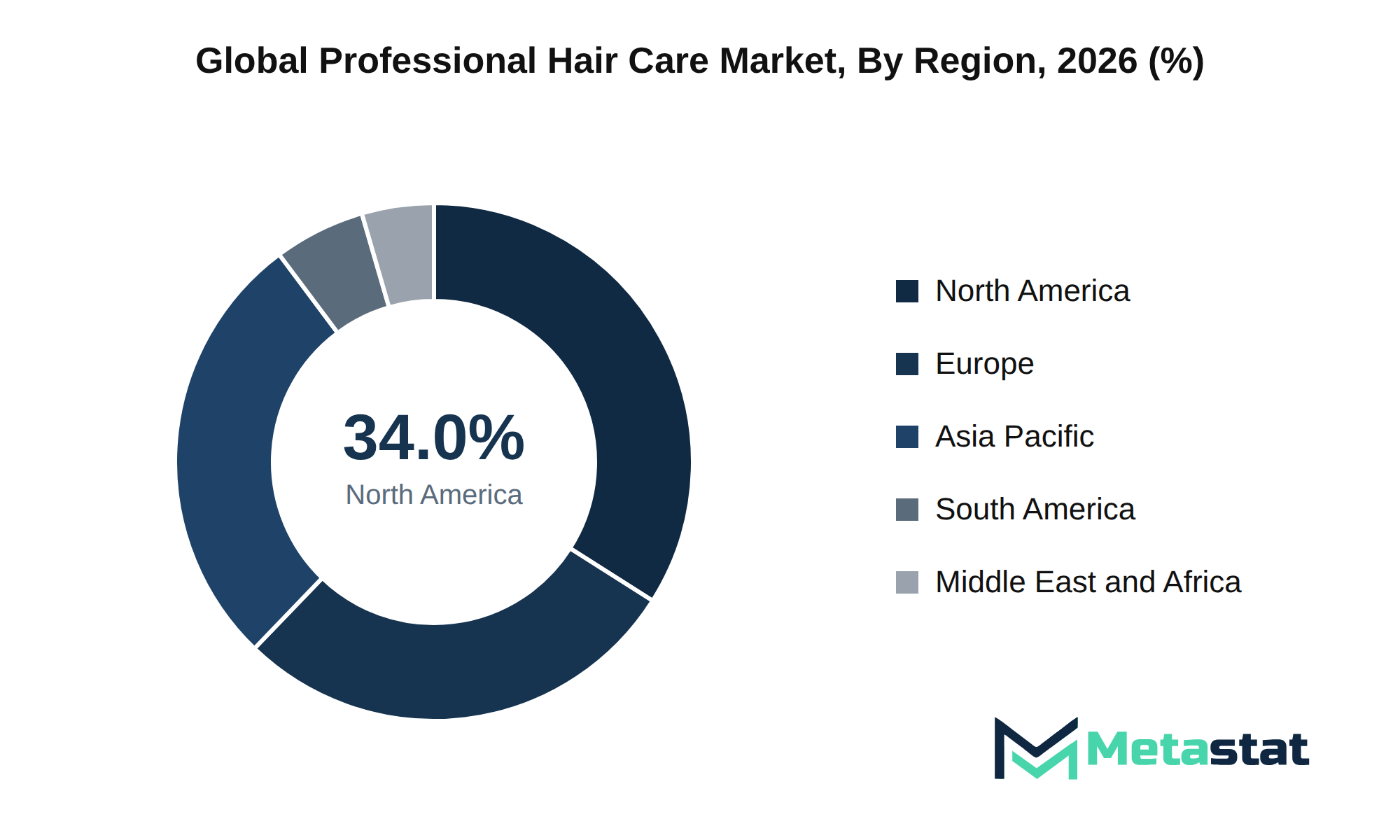
North America holds a significant position in the Professional Hair Care market, representing 34.00% of the global market share in 2025. The region is set to expand at a CAGR of 5.5% within the forecast period, reaching a market size (TAM) of USD 19 billion by the end of 2033. Several factors contribute to this growth, including rising demand for high-quality hair care products and innovative solutions tailored to diverse consumer needs.
Consumer preferences in North America increasingly favor premium and luxury hair care offerings, driving demand for specialized shampoos, conditioners, and styling products. The proliferation of professional salons and beauty retailers enhances accessibility to these products, fostering market expansion. Regional market dynamics reflect a mature landscape with established brands and emerging players navigating competition through product differentiation and improved customer experiences.
Infrastructure modernization and localized manufacturing densities support the distribution of professional hair care products across the United States, Canada, and Mexico. Supply chain regionalization strategies enable companies to respond to market trends swiftly, positioning them to capitalize on incremental growth vectors. The competitive landscape features domestic market participants, creating a robust environment for innovation and investment in new product development.
Regional cultural nuances influence buying behaviors, with consumers increasingly seeking products that reflect their individual styles and hair care needs. This trend promotes a shift toward personalized hair care solutions, further stimulating market growth. Overall, the North America Professional Hair Care market demonstrates strong potential for expansion, characterized by evolving consumer preferences and a dynamic competitive environment.
The Professional Hair Care market in Europe benefits from a diverse consumer base with varying preferences across countries including Germany, France, the UK, Italy, Spain, and Russia. This region accounts for 28.2% of the global market in 2025, reflecting strong purchasing power and a keen interest in premium hair care products.
Shifting consumer habits favor higher-quality products, prompting brands to enhance their offerings. The increasing prevalence of beauty salons and specialized retailers, particularly in urban areas, supports growth in professional hair care sales. Emerging trends in hair health and styling techniques drive demand for innovative solutions.
Competitive dynamics highlight the presence of several domestic leaders, including well-established brands that dominate the market. Regional players focus on localized manufacturing and tailored product development to meet specific consumer needs, leading to higher customer loyalty and brand recognition. This competitive environment creates an ecosystem where both new entrants and existing brands thrive.
Market growth relies on strategic investments in marketing and distribution channels to reach a broader audience. The ability of brands to adapt to changing consumer preferences and innovate determines their long-term success within the Professional Hair Care market in Europe.
The Asia-Pacific region represents a dynamic component of the Professional Hair Care market, accounting for a significant 27.6% share in 2025. A rising middle class, particularly in countries like China, India, and Southeast Asia, fuels demand for premium and luxury hair care products. Increased disposable incomes and a shift toward high-quality hair care solutions drive consumers to seek products that enhance hair health and appearance.
Emerging front-runners including China and India contribute to the region’s growth trajectory through a combination of urbanization and evolving consumer preferences. The infusion of innovative product offerings, specifically those targeting hair repair, conditioning, and styling, enhances segment expansion across various channels, including professional salons and specialty retailers.
Infrastructure modernization in key markets supports efficient distribution and access to advanced hair care products. Growing local manufacturing capacities enable brands to meet increasing demand while promoting regional supply chain resilience. Domestic players leverage these resources alongside strategic foreign direct investment flows to establish a competitive advantage.
Local compliance mandates and regulatory frameworks shape market operations, necessitating adherence to specific standards across different countries. Cultural nuances influence B2B buying behaviors, with a preference for brands that align with regional identities and values. This localized approach enhances customer loyalty and brand recognition.
Overall, the Asia-Pacific region presents substantial opportunities for growth within the Professional Hair Care market, characterized by evolving consumer trends, competitive dynamics, and significant investment potential. The alignment of product innovation with regional demands plays a critical role in shaping market advancements throughout the forecast period.
With a market share of 5.7% in 2025, South America presents unique opportunities within the Professional Hair Care market. Brazil and Argentina serve because key players, driving demand through a combination of cultural appreciation for hair aesthetics and increasing disposable incomes. The region experiences growth in consumer preferences for premium and specialized hair care products, reflecting shifts towards quality and functionality.
Localized manufacturing initiatives and increased investment in supply chain regionalization enhance market accessibility, supporting the expansion of both international and domestic brands. The emergence of specialty beauty retailers and salon chains facilitates better distribution channels, allowing consumers to access a wider range of products.
Strategic entry barriers continue to diminish due to rising foreign direct investment flows, attracting brands that seek to establish a foothold in this expanding market. Cultural nuances influence purchasing behaviors, with consumers increasingly prioritizing products that align with local preferences and values.
Overall, the South American market for Professional Hair Care continues to evolve, driven by factors including localized procurement dynamics and the demand for high-quality products. Growth opportunities remain significant because brands adapt to regional trends and consumer expectations.
The Professional Hair Care market in the Middle East and Africa experiences unique growth drivers, attributed to the rising demand for premium hair care products among affluent consumers. Emerging market front-runners, particularly in Saudi Arabia and the UAE, demonstrate increased spending on personal grooming, influencing market expansion. Localized manufacturing densities are gradually improving, supported by foreign direct investment flows aimed at establishing production facilities within the region. Cultural nuances significantly impact buying behaviors, with consumers exhibiting preferences for products that align with traditional and contemporary beauty standards.
Geopolitical fragmentation introduces challenges in cross-border trade corridors, yet the market benefits from strategic entry barriers that enable local brands to establish dominance. Supply chain regionalization trends enhance product accessibility, while established domestic market leaders strengthen their presence through innovative marketing strategies. Incremental growth vectors, including high-value replacement cycles for premium products, contribute to the market's overall value. The Professional Hair Care market is set to gain traction, driven by infrastructure modernization initiatives that improve local compliance with international standards.
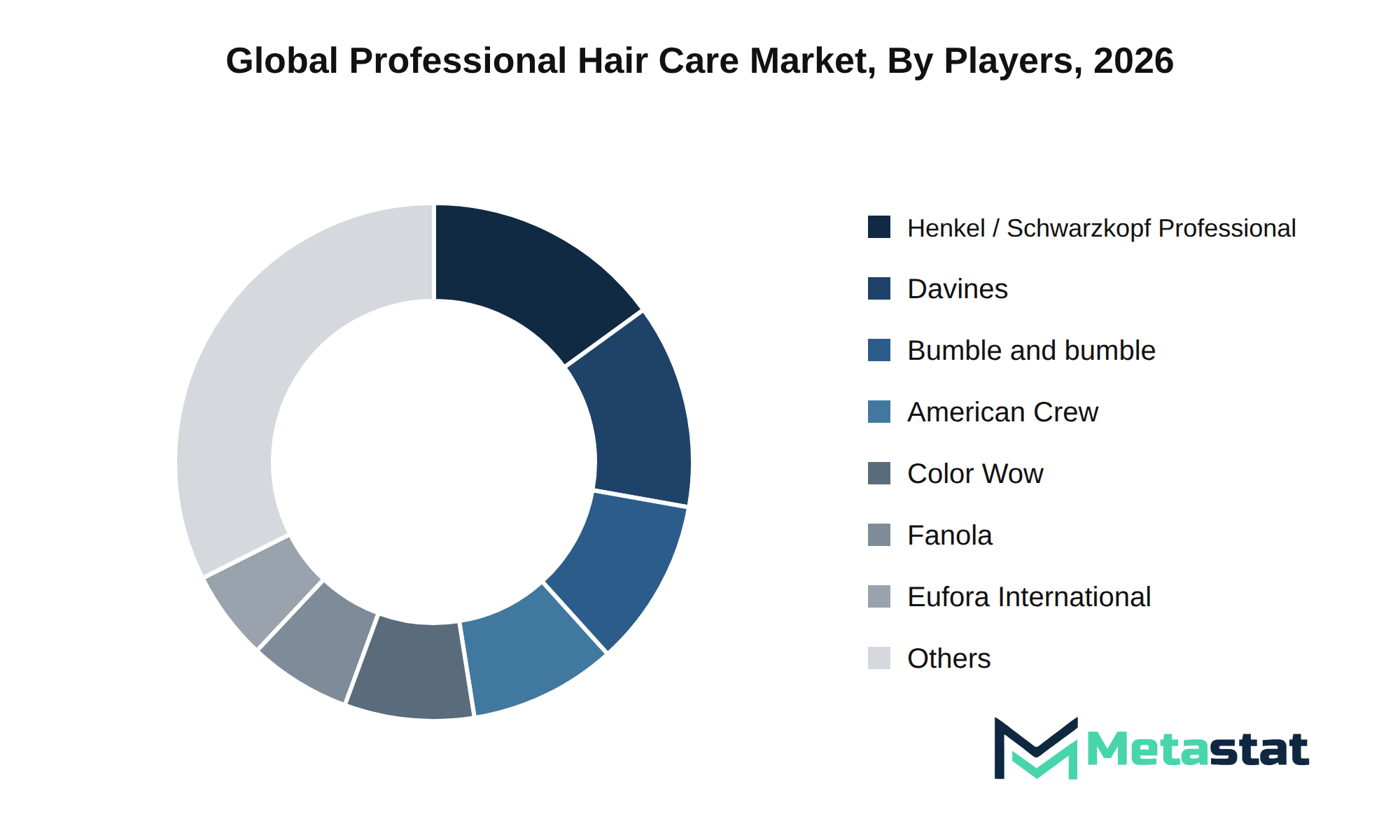
The Professional Hair Care market features a diverse range of players, including both established brands and emerging companies. Major companies including L'Oréal Groupe, Unilever PLC, and Henkel / Schwarzkopf Professional leverage extensive distribution networks and robust marketing strategies to maintain market presence. These organizations invest significantly in research and development to enhance product differentiation and establish proprietary technology moats, which strengthen their market position.
Strategic alliances and partnerships characterize the market dynamics, with firms like ALFAPARF Milano Professional and Davines Group collaborating to enhance their product offerings. These collaborations facilitate access to new markets and resources, enabling participants to fulfill evolving consumer preferences effectively. Emerging companies including K18 Hair and Color Wow capitalize on innovative formulations and niche marketing strategies to create competitive advantages.
Pricing architectures in the Professional Hair Care market vary widely across different segments, from entry-level professional products to luxury offerings. Firms employ value chain integration strategies to optimize procurement and supply chain dynamics, contributing to cost efficiencies. The high brand equity associated with prominent players influences consumer loyalty, creating barriers to entry for new entrants and startup disruptions.
Future competitive outlooks indicate a growing emphasis on sustainability and the incorporation of clean beauty formulations, presenting opportunities for both established and emerging players to adapt their product lines. While the market evolves, companies focus on customer retention strategies and enhance switching costs to strengthen their positions.
Market size is forecast to rise from USD 38.7 billion in 2025 to over USD 59.6 billion by 2033. This growth reflects a compound annual growth rate (CAGR) of 5.5%. In the base case scenario, steady consumer demand for professional hair care products drives expansion across various segments. Economic conditions, including disposable income levels and consumer confidence, influence this growth trajectory.
In a bull case scenario, heightened interest in premium products and innovative solutions drives the Professional Hair Care market to greater levels, supported by advancements in technology and a robust R&D pipeline. The introduction of next-generation hair care solutions enhances performance and consumer satisfaction, further stimulating demand.
Conversely, the bear case scenario highlights potential challenges. Economic downturns or shifts in consumer behavior toward budget-friendly options could hinder market expansion. Regulatory changes introduce compliance costs that impact profitability across the industry.
Strategic capital allocation and infrastructure commitments will play crucial roles in addressing evolving market dynamics. Businesses prioritizing investments in high-growth pockets and emerging opportunities position themselves for success. Continuous evaluation of unmet enterprise needs will guide product development and marketing strategies within the Professional Hair Care market.
The report strategically identifies and profiles the key market players and analyses their core competencies in each sub-segment of the Professional Hair Care market.
Report Attributes | Details |
Study Period | 2021-2033 |
Base Year | 2025 |
Estimated Year | 2026 |
Forecast Period | 2026-2033 |
Historical Period | 2021-2025 |
Growth Rate | CAGR 5.5% from 2026 to 2033 |
Revenue Unit | USD billion |
Segmentation | By Product Type, Sales Channel, Application, Price Point, and Region |
By Region | North America (By Product Type, Sales Channel, Application, Price Point, and Country)
|
Europe (By Product Type, Sales Channel, Application, Price Point, and Country)
| |
Asia Pacific (By Product Type, Sales Channel, Application, Price Point, and Country)
| |
South America (By Product Type, Sales Channel, Application, Price Point, and Country)
| |
Middle East and Africa (By Product Type, Sales Channel, Application, Price Point, and Country)
|
Find answers to common questions about this report
The Professional Hair Care market size was valued at USD 38.7 billion in 2025.
The Professional Hair Care market is projected to grow at a CAGR of 5.5% during the forecast period from 2026 to 2033.
The North America Professional Hair Care market size is estimated to reach USD 19 billion by 2033.
The segment "Professional Salons & Salon Chains" leads the Professional Hair Care market with a projected value of USD 16.2 billion by 2033, based on its growth from USD 12.1 billion in 2026.
Key drivers for the Professional Hair Care market include evolving consumer behaviors that prioritize personal grooming and self-care, along with the increasing demand for premium products. Urbanization and aging populations further stimulate demand, while rising awareness of sustainability influences consumer preferences for eco-friendly products.
North America holds the dominant share of the Professional Hair Care market, with a value of USD 19 billion projected for 2033, representing 34% of the total market.
High capital investment requirements and escalating operating costs significantly restrain growth in the Professional Hair Care market. Smaller players struggle to enter due to financial constraints, while larger companies dominate, creating barriers for innovation. geopolitical fragmentation and trade friction contribute to increased costs and supply chain instability, further impacting market dynamics.
Evolving consumer behaviors, particularly related to lifestyle changes and urbanization, favor product adoption in the Professional Hair Care market. Increased prioritization of personal grooming and self-care routines, along with rising awareness of sustainability, enhances demand for professional-grade products that align with consumer values and busy lifestyles.
The Professional Hair Care market is estimated to reach a valuation of USD 59.6 billion by 2033.
Key players in the Professional Hair Care market include ALFAPARF Milano Professional, American Crew, Bumble and bumble, Davines Group, Henkel / Schwarzkopf Professional, John Paul Mitchell Systems, Moroccanoil, and OLAPLEX, Inc.
The analysts below cover Consumer Goods research at Metastat Insights.
LEAD ANALYST
Utkarsh Khirodkar is a Lead Market Research Analyst at MetaStat Insight, specializing in market intelligence, technology sector assessments, and competitive strategy.
Tracking capacity expansion in single-use bioprocessing requires dependable data on raw material availability and cleanroom-grade polymer supply chains. The competitive landscape chapter gave a grounded evaluation of secondary component suppliers across North America and Asia-Pacific rather than simply reprinting press releases. Having that level of supplier benchmarking helped clarify dual-sourcing considerations for our clinical pipeline planning.
When evaluating distributed energy resource management systems, standard research summaries tend to gloss over the operational differences between front-of-the-meter utility deployments and behind-the-meter industrial sites. The MetaStat Insight report addressed those distinctions directly, especially regarding software interoperability standards and grid interconnection backlogs. The five-year market sizing across regional transmission organizations provided actionable context for our grid modernization strategy.
Most industry reports on warehouse automation bundle autonomous mobile robots and fixed conveyor installations into the same top-level numbers, which complicates advisory work. This study split the market cleanly by payload tiers, navigation technology, and fleet management software layers. The regional forecast for Western Europe gave our team defensible adoption benchmarks when evaluating capital allocation for logistics clients, saving us days of secondary data scrubbing.
Explore related market intelligence reports worth reading alongside this one.