
LEAD ANALYST
Utkarsh Khirodkar is a Lead Market Research Analyst at MetaStat Insight, specializing in market intelligence, technology sector assessments, and competitive strategy.

Latin America Color Cosmetics and Makeup Accessories Market Size, Share, By Product Type (Face Makeup, Eye Makeup, Lip Makeup, Nail Makeup, False Eyelashes and Lash Enhancements, Makeup Brushes, Makeup Sponges, Puffs and Applicators, Eyelash Curlers, Tweezers and Precision Tools, Makeup Organizers, Mirrors and Other Accessories), By Price Tier (Mass, Masstige, Premium and Luxury), By Distribution Channel (Specialty Beauty Stores, Department Stores, Pharmacies and Drugstores, Supermarkets and Hypermarkets, Brand-Owned Stores, Direct Selling, E-commerce Marketplaces, Brand and Retailer E-commerce), By Region (Chile, Peru, Colombia, Brazil, Mexico, Argentina, Ecuador, Central America, Caribbean and Rest of Latin America), Industry Analysis, Growth, Trends, and Forecast, 2026-2033
Report ID
MSI-5300
Published
September, 2026
Pages
289 Pages
Format
Historical
Base year
Forecast
Forecast period
Report Details
Market Valuation: Valued at $7.4 Billion in 2025, projected to reach $12.6 Billion by 2033 at a 6.9% CAGR.
Dominant Segment: The Face Makeup segment leads the market, projected to grow from USD 2.3 billion in 2026 to USD 3.5 billion by 2033, driven by increasing consumer awareness and demand for high-quality products.
Geographic Lead: Brazil is expected to be the fastest-growing region, benefiting from rising disposable incomes and a growing trend towards personal grooming and beauty standards.
What's Inside: The report includes comprehensive analyses of market dynamics, segmentation by product type, price tier, and distribution channels, along with competitive coverage and forecasts through 2033.
E-commerce Growth: The rapid expansion of e-commerce is transforming distribution channels, providing consumers with greater access to a diverse range of color cosmetics and enhancing overall market engagement.
Clean Beauty Trends: Increasing consumer preference for clean beauty and vegan formulations is reshaping product offerings, as brands focus on transparency and sustainability to attract a dedicated customer base.
Choose Your License
Latin America Color Cosmetics and Makeup Accessories Market
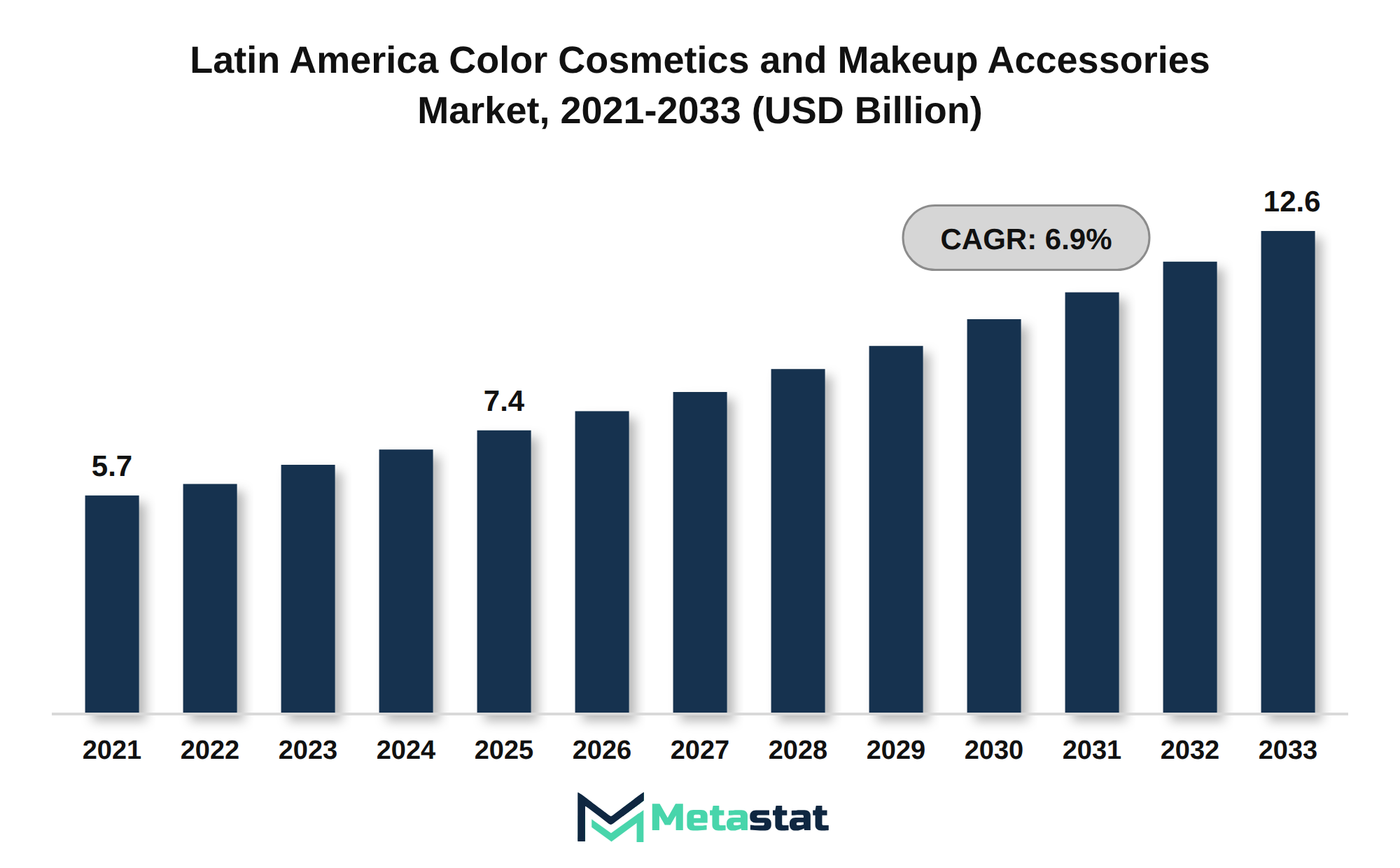
The Latin America Color Cosmetics and Makeup Accessories market was valued at USD 7.4 billion in 2025 and is projected to reach USD 12.6 billion by 2033, growing at a CAGR of 6.9% over the forecast period.
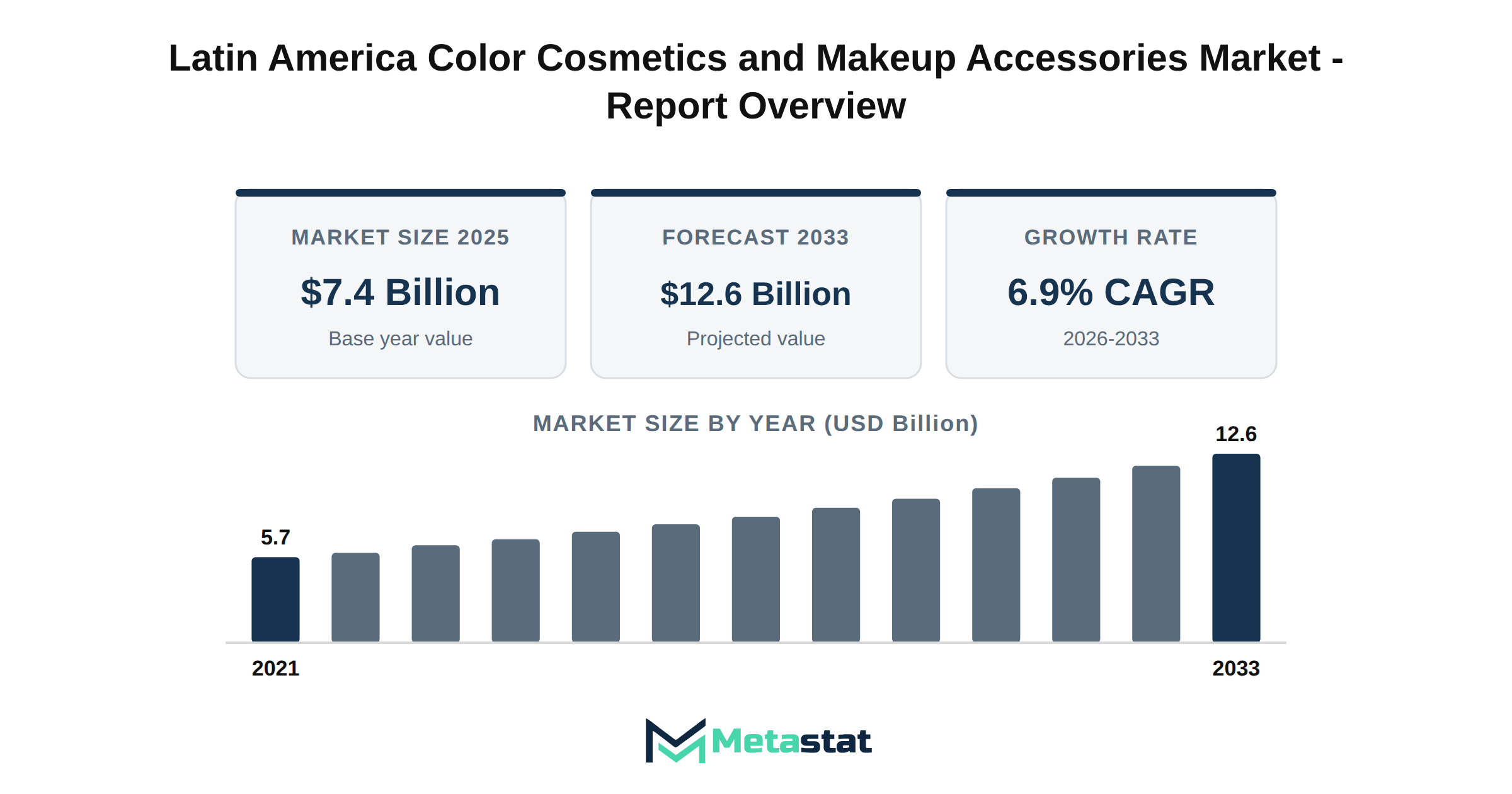
The Latin America Color Cosmetics and Makeup Accessories market is poised for growth, transitioning from a base value of USD 7.4 billion in 2025 to an anticipated USD 12.6 billion by 2033, reflecting a compound annual growth rate (CAGR) of 6.9%. This upward trajectory indicates strong demand for color cosmetics and makeup accessories, driven by various market trends and consumer preferences. Historical data shows that the market expanded from USD 5.7 billion in 2021 to USD 6.9 billion in 2024, demonstrating consistent growth and a solid foundation for future expansion.
Demand trends within the market highlight a shift towards premium products, with consumers increasingly willing to invest in higher-quality makeup items. This premiumization reshapes spending patterns across Latin America, driven by buyers prioritizing brands that deliver superior performance and unique formulations. The trend towards premium products is complemented by the growing popularity of clean beauty and vegan makeup options, which align with consumer values around sustainability and health.
The rise of premium color cosmetics significantly influences purchasing behaviors, especially among younger consumers. Brands that incorporate eco-friendly practices and ethically sourced ingredients attract a loyal customer base, enhancing brand reputation and driving sales. This trend demonstrates a fundamental change in consumer expectations, where quality and ethical considerations play important roles in influencing buying decisions.
The rapid growth of e-commerce transforms distribution channels in the Latin America Color Cosmetics and Makeup Accessories market. Online shopping provides convenience and wider access to diverse product ranges, enabling consumers to explore brands that not be available in physical stores. This shift towards digital platforms facilitates product discovery and enhances consumer engagement, ultimately boosting sales across various segments.
Social commerce emerges because a powerful tool for brands in the market, facilitating product promotion and direct sales through social media platforms. Influencer marketing plays an important role in shaping consumer preferences and driving purchases, with beauty influencers leveraging their platforms to highlight new products and trends. This dynamic interaction between brands and consumers creates a lively marketplace where recommendations and reviews significantly impact buying behavior.
Mass and masstige makeup segments experience growing adoption among consumers seeking affordable yet high-quality options. These segments cater to a broad audience, appealing to budget-conscious shoppers without compromising on quality. While competition intensifies, brands within these categories emphasize innovation and unique offerings to capture market share.
Trends towards clean beauty and vegan formulations increasingly connect with consumers in Latin America. Brands focusing on transparency regarding ingredient sourcing and environmental impact attract a dedicated following. This shift reflects broader societal changes, where consumers prioritize health, wellness, and sustainability in their purchasing decisions, reinforcing the importance of ethical practices in the beauty industry.
Inclusive shade offerings significantly enhance face makeup demand within the market. Brands that cater to a diverse range of skin tones build greater consumer loyalty and satisfaction. Expanding product lines to include various shades reflects a commitment to inclusivity, allowing consumers to find products that match their individual needs and preferences.
Innovation in long-wear and multifunctional makeup products drives consumer interest and purchasing behavior. Products that offer durability and versatility appeal to modern consumers seeking efficiency in their beauty routines. This focus on performance and convenience supports sustained growth in the market.
Demand trends in the Latin America Color Cosmetics and Makeup Accessories market reflect a shift towards premiumization, influencing consumer spending across various demographics. Brands increasingly focus on high-quality ingredients and innovative formulations to cater to discerning customers seeking products that meet their expectations. This trend aligns with the growing preference for premium and masstige products, which evidence suggests are gaining wider consumer acceptance.
The growth of e-commerce significantly transforms the distribution of beauty products in the market. Online platforms enable consumers to access a broader range of products and brands, enhancing convenience and personalized shopping experiences. Social commerce further drives the discovery and purchase of color cosmetics, leveraging social media to connect brands with potential buyers effectively.
Innovations in makeup products, including long-wear and multifunctional options, are enhancing category growth. The revival of lip makeup demonstrates strong consumer interest, while eye makeup and lash enhancement products consistently attract attention. The rising adoption of makeup brushes, sponges, and beauty tools complements these trends, driven by consumers seeking to improve their application techniques.
Influencer marketing significantly shapes brand preferences within the market, particularly among Gen Z and millennial consumers. Their beauty spending patterns indicate a willingness to explore new brands and products, creating an environment where direct-to-consumer beauty brands expand their regional reach. Specialty beauty retailers strengthen their omnichannel strategies, effectively integrating online and offline experiences for customers.
Competitive dynamics among global and Latin American makeup brands intensify because they adapt to shifting consumer preferences and market demands. Opportunities in Chile, Peru, Colombia, Brazil, and Mexico highlight regional variations in beauty consumption. Pricing dynamics across mass, premium, and luxury makeup tiers further complicate market competition, because brands strive to balance quality and affordability.
Innovation in sustainable packaging appeals to environmentally conscious consumers, driving demand for eco-friendly cosmetic solutions. Regulatory compliance across Latin America plays a critical role in shaping product offerings and market dynamics, influencing how brands approach ingredient sourcing and labeling. The beauty supply chain shows a degree of import dependence, necessitating strategic decisions regarding local production and sourcing to meet consumer expectations.
Future growth opportunities in the Latin America Color Cosmetics and Makeup Accessories market hinge on brands’ ability to adapt to evolving consumer preferences and technological advancements, ensuring sustained relevance and competitiveness in a diverse marketplace.
Growing disposable incomes in Latin America significantly contribute to the expansion of the Latin America Color Cosmetics and Makeup Accessories market. Rising economic conditions facilitate increased consumer spending on beauty products, particularly among young adults and urban populations. The trend toward personal grooming and self-expression fuels demand for various cosmetic products, including face makeup, eye makeup, and lip products.
Demographic shifts, including urbanization and changes in lifestyle, enhance the attractiveness of color cosmetics. Consumers increasingly prioritize personal care and appearance, leading to higher investment in cosmetic products. The influence of social media and beauty influencers drives these trends, directing consumers toward diverse cosmetic offerings.
The projected compound annual growth rate (CAGR) of 6.9 percent from 2026 to 2033 highlights the significant growth potential of the market. Rising purchasing power enables suppliers and brands to capitalize on this opportunity, resulting in intensified competition and innovation within the industry.
Urbanization trends in Latin America significantly shape the growth trajectory of the Latin America Color Cosmetics and Makeup Accessories market. The influx of consumers into urban areas heightens demand for beauty products due to increased exposure to beauty trends and improved accessibility to retail channels. Urban populations prioritize personal grooming and aesthetics, leading to a shift in purchasing behavior that supports market expansion.
The rise of digital platforms enhances consumer engagement in urban environments. E-commerce expansion facilitates convenient access to a diverse range of color cosmetics and makeup accessories. Digital marketing influences buying decisions, allowing brands to reach targeted demographics more effectively. This increased connectivity contributes to a dynamic market atmosphere, driving revenue growth and fostering brand loyalty.
Demographic shifts related to urbanization, including a younger population with evolving beauty standards, align with the market's expansion. Increased competition among brands encourages innovation and product diversification, catering to the diverse preferences of urban consumers. This environment supports sustained growth within the market, creating numerous opportunities for established players and new entrants.
Macroeconomic headwinds present significant challenges for the Latin America Color Cosmetics and Makeup Accessories market. Inflationary pressures, alongside increasing operating costs, impact consumer purchasing power and reduce discretionary spending on cosmetics. These economic constraints disproportionately affect lower-income segments, leading to an overall decline in market demand.
Supply chain disruptions complicate the market, affecting product availability and consistency. Geopolitical instability in the region exacerbates these issues, creating uncertainty that impacts both suppliers and consumers. The result is a fragmented market, where regional differences in adoption rates hinder uniform growth.
High capital investment requirements for new product development and marketing deter smaller brands from entering the market. Larger companies dominate due to their resources, leaving fewer opportunities for innovation among emerging players. This lack of competition stagnates market growth, limiting the introduction of new offerings and keeping consumers tied to established brands.
Infrastructure gaps play a critical role, particularly in remote areas where access to beauty products remains limited. Connectivity deficits in these regions hinder the ability of consumers to engage with e-commerce channels, preventing a rise in online sales that has become integral to overall market expansion. These factors collectively present a formidable barrier to sustained growth in the market.
Geopolitical fragmentation introduces significant challenges for the Latin America Color Cosmetics and Makeup Accessories market by creating trade deficits and increasing tariff friction. These tensions disrupt established supply chains, leading to delays and additional costs for manufacturers and distributors. Companies operating within this market face heightened compliance overhead from evolving legal liabilities and tightening regional regulatory standards, which complicate operational efficiency.
The market experiences technological disruptions that impact research and development integrations. The complexity of aligning new technologies with existing systems creates interoperability friction, further straining resources. This operational burden influences pricing strategies, causing compression that pressures profit margins across the sector.
Another challenge stems from fluctuating feedstock and component volatility, which complicates production planning. Logistics disruptions and supply chain instability from geopolitical factors contribute to increased input cost structures. Together, these elements create an environment where companies struggle to maintain competitiveness while addressing rising operational costs.
Talent retention pressures emerge owing to skilled workers seeking opportunities elsewhere resulting from uncertainties in the market. Workforce skill gaps become pronounced, affecting the ability to innovate and adapt to changing consumer demands. These challenges necessitate strategic adjustments among players in the Latin America Color Cosmetics and Makeup Accessories market, highlighting the importance of resilience and adaptability in navigating this complex environment.
Growing emphasis on sustainability and eco-friendly practices influences the dynamics of the Latin America Color Cosmetics and Makeup Accessories market. Consumer awareness regarding environmental impacts has surged, prompting manufacturers to adopt green transformations and align with environmentally sustainable practices. This shift drives demand for eco-conscious products, compelling brands to innovate in formulations and packaging, thereby enhancing product appeal and market reach.
The increasing penetration of digital channels reshapes consumer engagement and purchasing behavior within the market. Online platforms are becoming significant distribution channels, allowing brands to reach a broader audience and adapt to evolving buying behaviors. This transition to digital procurement provides opportunities for innovative marketing strategies and personalized customer experiences. This shift drives sales growth.
Technological disruptions including advancements in product development and manufacturing processes allow for greater efficiency and cost-effectiveness. Automation and process optimization enhance operational yields for companies, increasing competitiveness within the market. Such technological innovations streamline production and support rapid responses to changing consumer preferences.
Geographic expansion strategies play a critical role in tapping into emerging markets within Latin America. Companies are increasingly focusing on regions with untapped potential, including countries like Peru and Chile. This approach diversifies revenue streams and strengthens brand presence in promising markets, contributing positively to overall growth.
The Latin America Color Cosmetics and Makeup Accessories market stands to benefit from strategic consolidations and cross-industry mergers. These initiatives facilitate resource sharing, knowledge transfer, and enhanced supply chain capabilities, positioning firms to leverage collective strengths. Collaborations enable companies to navigate market challenges effectively while exploiting new growth avenues.
The Latin America Color Cosmetics and Makeup Accessories market is segmented based on Product Type, Price Tier, Distribution Channel, and Region.
Valued at USD 2.3 billion in 2026, this segment is projected to reach USD 3.5 billion by 2033, at a CAGR of 6.5% during the forecast period. Increasing consumer awareness about personal grooming and beauty standards significantly drives demand for face makeup products. Young consumers in urban areas tend to prioritize face makeup, reflecting a staple in their daily routines, contributing to robust market growth.
Technological advancements in product formulation enhance the performance and appeal of face makeup items. Innovations including long-lasting wear, skin-friendly ingredients, and diverse shade ranges cater to various skin tones and preferences, ensuring a wider consumer base. The growing trend of online beauty tutorials and influencer marketing fuels interest, encouraging consumers to experiment with different products.
Increased investments in advertising and promotional activities by key players play a significant role in shaping the segment's landscape. Major brands actively engage in social media campaigns and collaborations with influencers, broadening their reach and attracting new customers. The Latin America Color Cosmetics and Makeup Accessories market benefits from these strategies, leading to increased brand loyalty and customer retention.
The rising popularity of clean and sustainable beauty products influences purchasing decisions. Consumers increasingly seek products that align with their values, prompting brands to reformulate and reposition their offerings. Regulatory compliance with safety and environmental standards continues to shape the segment, compelling manufacturers to innovate while adhering to guidelines.
This focus on sustainability, along with continuous product evolution, reinforces the segment's growth trajectory. With increasing awareness regarding ingredients and packaging, demand for eco-friendly face makeup options is anticipated to rise, presenting strategic opportunities for brands that prioritize sustainability in their product lines.
Eye Makeup holds a significant position within the Latin America Color Cosmetics and Makeup Accessories market, estimated to reach USD 2.8 billion by 2033, at a CAGR of 6.6% during the forecast period. Increased consumer awareness regarding personal grooming and aesthetics drives demand for innovative eye products. The rising popularity of social media influencers and beauty content on platforms including Instagram and TikTok stimulates trends in eye makeup, leading consumers to seek diverse and appealing product offerings.
Product evolution introduces advanced formulations, including long-lasting and waterproof options that appeal to consumers. Brands focus on incorporating high-quality ingredients to enhance performance and safety, aligning with shifting consumer preferences toward health-conscious products. Eye makeup brands increasingly adopt eco-friendly practices and sustainable packaging, responding to the growing demand for environmentally responsible products.
The expansion of distribution channels, particularly through e-commerce platforms, enhances accessibility for consumers across various demographics. Specialty beauty stores continue to play a crucial role by offering personalized shopping experiences and expert advice, contributing to the market's growth. Emerging markets in Latin America, including Brazil and Colombia, present significant opportunities for eye makeup brands due to their expanding middle class and increasing beauty expenditure.
Eye makeup's resilience against economic fluctuations highlights its vital role within personal care routines. This segment's growth trajectory reflects broader trends in the Latin America Color Cosmetics and Makeup Accessories market, supported by rising consumer engagement and the continuous influx of innovative products. Successful brands focus on strategic marketing and collaboration with influencers to maintain relevance and capture market share. This strategic approach enhances competitive positioning in the market.
Growing interest in beauty among consumers significantly drives the Lip Makeup segment within the Latin America Color Cosmetics and Makeup Accessories market. This demand stems from a shift in consumer behavior, with individuals increasingly seeking innovative, high-quality lip products that align with personal aesthetics and self-expression. Products including lipsticks, glosses, and stains see heightened preference, particularly among younger demographics who actively engage with beauty trends through social media platforms.
The Lip Makeup segment is expected to reach USD 2.6 billion by 2033. This growth results from the introduction of next-generation formulations and packaging that enhance user experience while ensuring sustainability. Brands focus on evolving product offerings to cater to diverse consumer preferences, including clean beauty products and those featuring multifunctional benefits.
Pricing strategies within the segment adapt to capture various market segments, ranging from mass-market products to luxury offerings. Competitive dynamics intensify because brands leverage unique selling propositions including cruelty-free certifications and eco-friendly packaging, which appeal to environmentally conscious consumers. These strategic initiatives position the Lip Makeup segment for significant growth, aligning with overall trends in the market.
Nail Makeup segment is projected to grow at a CAGR of 5.8% during the forecast period. Increased consumer interest in nail art and innovative product offerings drive demand in this segment. Trends including customization and personalization enhance consumer engagement and product experimentation. The proliferation of social media platforms has further increased awareness of nail care and design, influencing consumer preferences toward a variety of nail products.
Investment from brands in product development and marketing strategies strengthens the growth of the Nail Makeup segment within the Latin America Color Cosmetics and Makeup Accessories market. New formulations and eco-friendly products align with changing consumer preferences, creating opportunities for brands to expand their offerings. Collaborations with influencers and beauty professionals create a direct link to target demographics, enhancing market reach.
Shifts in consumer purchasing behavior, with a noticeable move toward e-commerce and digital platforms, support segment expansion. Access to a wider array of products via online channels enables consumers to explore diverse options, ultimately increasing sales. Promotions and exclusive online offers further incentivize purchases, driving market growth.
Raw material sourcing remains a critical consideration for companies in the Nail Makeup sector. Maintaining quality while managing costs presents challenges that influence pricing strategies. Brands that effectively navigate these complexities achieve competitive advantages, enhancing margins and profitability within the growing market.
The popularity of False Eyelashes and Lash Enhancements in the Latin America Color Cosmetics and Makeup Accessories market stems from evolving beauty standards and increasing consumer interest in enhancing eye aesthetics. The trend towards more dramatic and personalized eye makeup looks fuels demand for products that improve the appearance of lashes. This sub-segment benefits from the influence of social media and beauty influencers, who promote innovative lash styles and application techniques, encouraging wider adoption among consumers.
Technological advancements in product formulation and application tools have further enhanced this segment's growth potential. Innovations in materials and adhesive technologies increase product performance and user satisfaction, allowing for easier application and longer-lasting wear. While consumers seek high-quality products, brands that invest in research and development to deliver superior false eyelashes and lash enhancements encounter significant opportunities for market expansion.
Shifts in consumption patterns, particularly among younger demographics, highlight the growing importance of eye makeup in daily beauty routines. This demographic increasingly prioritizes self-expression and individuality, driving interest in customizable lash solutions. In response, brands that offer a diverse range of styles, lengths, and volume options position themselves effectively to capture this emerging demand.
Regulatory compliance and safety standards have become increasingly significant in the development and marketing of false eyelashes and lash enhancements. Brands that adhere to stringent safety guidelines enhance consumer trust, leading to stronger brand loyalty and repeat purchases. This compliance ensures that products meet consumer expectations for both performance and safety, further reinforcing their place in the broader market.
The False Eyelashes and Lash Enhancements segment within the Latin America Color Cosmetics and Makeup Accessories market demonstrates a dynamic growth trajectory driven by technological innovation, changing consumer preferences, and adherence to regulatory standards. Brands that proactively address these factors are likely to succeed in navigating the competitive environment and capitalizing on emerging trends.
Growth in the Makeup Brushes segment aligns with the increasing consumer focus on makeup application techniques and the rising popularity of beauty tutorials across various platforms. This trend creates opportunities for brands to innovate, enhancing product offerings with advanced materials and ergonomic designs that improve usability and appeal to both professionals and everyday users. The segment benefits from high demand among beauty enthusiasts seeking quality tools for precise application, which contributes to its expansion within the Latin America Color Cosmetics and Makeup Accessories market.
Increasing awareness of makeup hygiene and maintenance further enhances the popularity of makeup brushes. Brands introducing features that simplify cleaning and maintenance improve customer satisfaction and loyalty, thereby driving sales. Consumer preferences shift towards eco-friendly products, prompting manufacturers to explore sustainable materials, a strategy that aligns with broader industry trends toward sustainability.
Future developments within the segment include technological advancements, including smart brushes that integrate digital features for improved user experience. These innovations represent a strategic opportunity window for companies eager to capture a share of the evolving consumer market. Overall, the dynamics surrounding Makeup Brushes play a crucial role in shaping the growth trajectory of the market, reflecting shifts in consumer preferences and ongoing innovations.
Consumer interest in innovative beauty tools drives growth within the Makeup Sponges, Puffs & Applicators sub-segment of the Latin America Color Cosmetics and Makeup Accessories market. A shift towards high-quality application products enhances user experience, resulting in increased adoption among beauty enthusiasts. The rising influence of social media and beauty influencers encourages consumers to explore diverse makeup application techniques, propelling demand for specialized tools. Strong competition among brands drives product evolution, leading to the introduction of next-generation applicators that cater to specific makeup styles and user preferences.
Increased focus on hygiene and convenience underpins purchasing decisions, with consumers prioritizing tools that simplify the makeup process. Growth in the e-commerce sector facilitates wider accessibility to a variety of applicators, enabling consumers to select products that align with their individual needs. Regulatory standards governing product safety and material quality significantly influence brand strategies, with compliance ensuring consumer trust. These dynamics highlight the evolving market, where innovation and consumer engagement are critical to sustainable growth.
Consumer interest in beauty tools, particularly Eyelash Curlers, Tweezers, and Precision Tools, significantly influences market dynamics within the Latin America Color Cosmetics and Makeup Accessories market. Increasing adoption of these tools reflects a shift toward more sophisticated beauty routines among consumers, driven by the desire for precision and enhanced aesthetics. The segment benefits from the broader trend of beauty personalization, where consumers seek tools that complement their individual makeup techniques and styles.
Product evolution continues to play a crucial role in segment growth. Innovations in design and materials enhance user experience, with brands focusing on ergonomic designs and durable materials that appeal to consumers seeking quality and effectiveness. The expansion of this segment aligns with the market's overall trajectory, highlighting the increasing importance of beauty accessories in daily routines.
Consumer education and engagement strategies, including tutorials and social media influences, have heightened awareness of the benefits of using Eyelash Curlers, Tweezers, and Precision Tools. This heightened visibility contributes to changing consumption patterns, leading to more consumers incorporating these tools into their beauty regimens. The segment's growth reflects the evolving landscape of beauty care, where tools are regarded because essential components of makeup application.
Pricing strategies specific to this segment reflect its positioning within the broader market. Competitive pricing among brands enhances accessibility, catering to diverse consumer demographics and encouraging higher penetration rates. The market's outlook remains optimistic, supported by ongoing trends in beauty care and consumer preferences for precision tools that enhance makeup application.
Consumer preferences increasingly reflect a demand for organization and functionality within cosmetic collections. Enhanced interest in personal grooming and beauty routines drives the need for effective storage solutions, contributing to the growth of the Makeup Organizers, Mirrors & Other Accessories segment. The rise in social media beauty influencers and tutorials prompts consumers to invest in products that facilitate their makeup application process, leading to a shift toward more organized beauty spaces.
While beauty products become more sophisticated, the incorporation of advanced features into makeup organizers and mirrors enhances consumer appeal. Innovations including lighted mirrors and multifunctional organizers meet the evolving needs of consumers, creating strategic opportunities for brands in the Latin America Color Cosmetics and Makeup Accessories market. This segment captures attention through design aesthetics and functionality, promising improved user experience.
Increased awareness of personal grooming standards drives the importance of makeup accessories that complement beauty routines. The integration of eco-friendly materials into product designs aligns with sustainability trends, capturing the interest of environmentally conscious consumers. This shift enhances brand loyalty and supports market penetration, aiding companies prioritizing responsible sourcing and production practices.
Competition within the segment creates a dynamic environment, encouraging brands to differentiate through product innovation and unique offerings. Emerging brands challenge established players by targeting niche markets, while larger companies expand their portfolios to include diverse accessory options. This competitive landscape incentivizes continuous improvement and responsiveness to consumer trends, ensuring sustained growth within the market.
Valued at USD 4.3 billion in 2026, the Mass segment is projected to reach USD 6.4 billion by 2033, at a CAGR of 5.8% during the forecast period. This segment's growth results from increasing consumer demand for affordable beauty products that maintain quality and performance. The ongoing trend towards inclusivity in beauty encourages brands to offer a wider range of shades and formulations, appealing to diverse consumer preferences.
Consumer spending patterns reflect a shift towards versatile products that cater to multiple uses, further driving the demand for Mass cosmetics. Retail strategies, including promotional discounts and value bundles, enhance accessibility for budget-conscious consumers. These initiatives align with the broader market trend of offering competitive pricing while maintaining product efficacy.
Technological advancements contribute significantly to the evolution of Mass products, with innovations in formulation and packaging enhancing user experience. Trends towards clean and cruelty-free products connect with consumers, encouraging brands within the Latin America Color Cosmetics and Makeup Accessories market to adopt more sustainable practices. This shift meets consumer expectations and creates strategic opportunities for brand differentiation in a competitive environment.
Overall, dynamics within the Mass segment emphasize the importance of adaptability and innovation, positioning it for sustained growth within the market. Enhanced consumer engagement through digital platforms supports brand visibility and influences purchasing decisions, reinforcing the segment's role in the broader market context.
In the Latin America Color Cosmetics and Makeup Accessories market, the Masstige segment is projected to reach USD 2.5 billion by 2033, at a CAGR of 8.1% during the forecast period. This growth is driven by changing consumer perceptions that prioritize quality and affordability, attracting a broad demographic seeking luxury-like experiences without premium pricing. Rising disposable incomes among consumers in Latin America significantly contribute to the expansion of this segment, with increased spending on beauty products that offer both prestige and value.
Technological advancements play a crucial role in product evolution within the Masstige segment. Brands increasingly leverage innovative formulations and packaging to enhance user experience, catering to consumer demands for convenience and effectiveness. The emergence of e-commerce platforms facilitates wider accessibility, allowing consumers greater access to masstige offerings, which further fuels demand.
Shifting consumer preferences toward ethical and sustainable beauty products significantly impact the Masstige segment. Brands that prioritize sustainable sourcing and eco-friendly practices attract conscientious consumers, aligning with broader market trends. Regulatory compliance regarding ingredient transparency and safety standards enhances brand credibility, driving growth in this segment.
The combination of evolving consumer expectations, technological maturation, and a focus on sustainability shapes the trajectory of the Masstige segment within the Latin America Color Cosmetics and Makeup Accessories market.
Growth in the Premium segment reflects shifting consumer preferences toward high-quality products in the Latin America Color Cosmetics and Makeup Accessories market. Increasing disposable income among consumers facilitates the demand for luxury beauty products, with a significant focus on brand reputation and product efficacy. By 2033, this segment is expected to reach USD 2.3 billion, highlighting the increasing consumer willingness to invest in premium offerings.
Technological maturation and next-generation upgrades in product formulations enhance performance and appeal within this segment. Innovations in skin-friendly ingredients and sustainable packaging attract environmentally conscious consumers, further driving segment expansion. The rising trend of personalization in beauty products contributes to the Premium segment's growth, encouraging brands to offer tailored solutions that meet individual consumer needs.
Regulatory compliance and certifications maintain an important role, ensuring product safety and quality in the market. While consumers become more informed about ingredient transparency and ethical sourcing, brands that uphold these standards gain a competitive edge. Pricing volatility remains a challenge; however, strong brand loyalty and perceived value help mitigate margin pressures within the Premium segment.
The strategic opportunity windows for brands in this segment involve capitalizing on emerging markets and expanding distribution channels. E-commerce growth presents a significant platform for reaching broader audiences, facilitating greater accessibility to premium products. While the market evolves, the Premium segment stands because a key driver of revenue and innovation in the Latin America Color Cosmetics and Makeup Accessories market.
Interest in high-end beauty products continues to shape the Luxury segment within the Latin America Color Cosmetics and Makeup Accessories market. Consumers increasingly prioritize premium quality, resulting in a projected growth rate of 8.6% CAGR during the forecast period. This trend signals an ongoing shift towards products that emphasize luxury formulations and exclusive branding.
The rise in disposable incomes across various demographics enhances demand for luxury cosmetics, reflecting a growing willingness to invest in premium beauty products. This segment benefits from heightened consumer awareness regarding the significance of skincare and makeup innovations that deliver superior results.
Luxury brands focus on unique packaging and exclusive collections to attract discerning consumers, further driving segment expansion. Innovation in product formulations, including the incorporation of natural and organic ingredients, plays an important role in appealing to health-conscious buyers seeking luxury experiences.
The Luxury segment's anticipated expansion aligns with the overall growth of the market, with more consumers gravitating towards high-quality, aspirational products. Brands position themselves to capitalize on strategic opportunities, enhancing their market presence within the evolving environment of the Latin America Color Cosmetics and Makeup Accessories market.
Valued at USD 1.6 billion in 2026, the Specialty Beauty Stores segment is projected to reach USD 2.4 billion by 2033, at a CAGR of 6.2% during the forecast period. Growth in this segment reflects increasing consumer preferences for curated beauty experiences and personalized service that specialty beauty stores provide. Factors contributing to this growth include a heightened focus on product quality and the desire for unique offerings that cater to individual beauty needs.
While consumers seek more specialized and luxurious shopping experiences, these stores benefit from the ability to present a broad variety of high-quality color cosmetics and makeup accessories. The market for color cosmetics continues to evolve, driven by innovation in product formulations and packaging that appeals to discerning consumers. A strategic focus on enhancing customer service and immersive shopping experiences strengthens loyalty and drives repeat visits, further supporting the segment's growth potential.
The expansion of specialty beauty stores contributes to increased accessibility of niche and premium brands within the Latin America Color Cosmetics and Makeup Accessories market. This segment serves because a vital channel for emerging brands aiming to establish a foothold in the competitive landscape. While consumer interest in beauty continues to rise, the alignment of specialty beauty stores with trends including cruelty-free and sustainable products enhances their appeal, ensuring ongoing growth into the next decade.
Department Stores represent a vital distribution channel within the Latin America Color Cosmetics and Makeup Accessories market. This segment is estimated to reach USD 1.3 billion by 2033, at a CAGR of 4.6% during the forecast period. Increasing consumer footfall in department stores enhances the visibility of color cosmetics, supporting brand engagement and driving sales. The convenience of shopping across multiple brands in one location appeals to consumers, facilitating higher purchase volumes.
Consumer preferences reflect a growing demand for premium and masstige products, further benefiting department stores. Enhanced in-store experiences, including product demonstrations and personalized consultations, build customer loyalty and repeat purchases. Retailers continuously innovate their merchandising strategies to optimize product placement, ensuring cosmetics are easily accessible to shoppers.
Rising disposable incomes across the region contribute to increased spending on beauty and personal care products, strengthening the department stores segment. Enhanced marketing strategies focusing on beauty trends effectively capture consumer attention and encourage impulse buying. The segment's resilience during economic fluctuations underscores its significance in the market.
Consumer demand for color cosmetics within pharmacies and drugstores in Latin America reflects a shift toward convenience and accessibility. This retail channel offers a wide range of affordable products, appealing to price-sensitive consumers while ensuring product availability across various demographics. The Pharmacies & Drugstores segment is projected to reach USD 1.4 billion by 2033, highlighting the increasing reliance on this distribution channel for cosmetic purchases.
Several factors contribute to the expansion of this segment, including the rising trend of self-care and personal grooming. Consumers prioritize health and wellness, prompting interest in beauty products that enhance appearance. Pharmacies and drugstores serve convenient locations for consumers seeking quality color cosmetics and makeup accessories, reinforcing their position in the market.
Pricing strategies within this segment emphasize value, aligning with consumer expectations for affordability without compromising quality. The Pharmacies & Drugstores segment, influenced by competitive pricing, attracts budget-conscious buyers while maintaining a focus on brand reputation and product efficacy. Ongoing consumer education and engagement will drive growth within the Pharmacies & Drugstores distribution channel.
Growth in the Supermarkets & Hypermarkets segment reflects expanding retail opportunities within the Latin America Color Cosmetics and Makeup Accessories market. This segment is projected to grow at a CAGR of 5.1% during the forecast period. Factors contributing to this growth include increasing consumer accessibility to a diverse range of beauty products and the shift towards one-stop shopping experiences. Retailers are enhancing their cosmetic offerings to attract a broader customer base, promoting both established and emerging brands.
The prevalence of promotional activities and discounts within supermarkets and hypermarkets effectively drives consumer spending. These venues often serve because convenient locations for shoppers, leading to substantial impulse purchases of color cosmetics and makeup accessories. The evolving retail environment, combined with heightened competition among brands, results in continuous product innovation and marketing strategies designed to capture consumer attention.
Market dynamics indicate that strategic investments in merchandising and in-store experiences significantly impact sales performance. Retailers focusing on product placement, aesthetic displays, and interactive promotional events contribute positively to consumer engagement. This approach aligns with broader trends within the market, where enhancing customer experiences transforms shopping into an experiential activity rather than a transactional one.
Consumer preferences for convenience and product variety further strengthen the position of supermarkets and hypermarkets within the market. The availability of exclusive brands and limited-edition products within these retail formats entices consumers, driving loyalty and repeat purchases. This segment reinforces its significance while adapting to shifting consumer preferences, positioning itself because an important player within the Latin America Color Cosmetics and Makeup Accessories market.
Brand-Owned Stores play a significant role in shaping consumer experiences within the Latin America Color Cosmetics and Makeup Accessories market. This segment reflects a shift in consumer behavior towards direct engagement with brands, creating a deeper connection and enhancing customer loyalty. Increased investment in branding and store aesthetics drives the expansion of this channel, allowing brands to present product diversity and provide personalized shopping experiences.
Technological advancements support the evolution of Brand-Owned Stores, with integrations including augmented reality and interactive displays enhancing customer interaction. These innovations create immersive shopping environments, promoting product exploration and encouraging purchases. The growing trend towards e-commerce has influenced Brand-Owned Stores, leading to the integration of online and offline experiences, which increases overall consumer engagement.
Regulatory compliance related to product safety and labeling standards influences operations within this segment. Brands actively ensure adherence to regulations, building consumer trust and safeguarding brand reputation. The focus on sustainability and ethical sourcing has emerged because an essential aspect of brand strategy, driven by consumer demand for environmentally conscious products.
Strategic opportunity windows arise because brands expand their presence in emerging markets, capitalizing on increasing disposable incomes and changing consumer preferences. Investments in marketing campaigns and collaborations with influencers strengthen brand visibility and attract diverse customer segments. This approach contributes to the overall growth trajectory of the market, enhancing brand positioning and competitive advantage.
Direct selling has gained traction because a significant distribution channel within the Latin America Color Cosmetics and Makeup Accessories market. This segment benefits from the growing trend of personalized beauty consultations and the convenience of purchasing products directly from representatives. Consumers increasingly prefer the face-to-face interaction that direct selling offers, allowing for tailored recommendations based on individual needs and preferences.
The segment experiences expansion owing to rising consumer interest in beauty products that align with personal values, including sustainability and ethical sourcing. Representatives often emphasize these product attributes, enhancing brand loyalty and trust. This connection creates a deeper relationship with consumers, leading to enhanced sales and customer retention.
Technological advancements in mobile applications and social media platforms facilitate the growth of direct selling. Representatives leverage these tools to reach consumers effectively, promoting products and building a community around shared beauty goals. The integration of digital strategies into traditional direct selling models enhances operational efficiency and broadens market reach.
Potential shifts in consumer behavior, influenced by ongoing trends toward wellness and self-care, present strategic opportunities for this segment. Consumers become more health-conscious and increasingly seek products with natural ingredients. This trend aligns with the offerings of many direct sellers, positioning them favorably within the competitive landscape.
Overall, the direct selling segment holds significant potential within the Latin America Color Cosmetics and Makeup Accessories market, driven by evolving consumer preferences, technological advancements, and opportunities for personalized engagement.
Growing consumer engagement with online shopping has significantly transformed the distribution dynamics within the Latin America Color Cosmetics and Makeup Accessories market. The rise of e-commerce marketplaces has provided consumers with convenient access to a variety of beauty products, enhancing the overall shopping experience. This shift reflects a broader trend toward digitalization in retail, influenced by changing shopping habits and the increasing preference for online purchasing.
Technological advancements in e-commerce platforms facilitate transactions and personalized shopping experiences, driving further engagement. Enhanced mobile applications and user-friendly interfaces support consumer interactions, promoting brand loyalty and repeat purchases. The segment benefits from a younger demographic that prioritizes online channels for beauty product discovery, contributing to a more competitive marketplace.
Increased investment in digital marketing strategies, including influencer partnerships and targeted advertising, supports brand visibility within e-commerce environments. Such strategies enable brands to reach wider audiences, enhancing their market presence and driving sales growth. The ongoing evolution of product offerings and consumer preferences in the market reinforces the importance of e-commerce marketplaces because a vital distribution channel.
Regulatory compliance and certification standards within e-commerce platforms play a crucial role in ensuring product safety and consumer trust. Adherence to these standards not only protects consumers but enhances brand reputation, further supporting the segment's growth potential. The relationship between regulatory frameworks and e-commerce practices will continue to shape the Latin America Color Cosmetics and Makeup Accessories market.
Growth in the Brand & Retailer E-commerce channel reflects a shift in consumer behaviors toward online shopping for color cosmetics and makeup accessories. The convenience of online platforms allows beauty brands to reach a broader audience, enhancing customer engagement through personalized marketing strategies. Increasing smartphone penetration and improved internet connectivity in Latin America enable consumers to access a wider range of products, driving demand in the market.
Technological advancements facilitate online shopping experiences, including augmented reality tools for virtual try-ons, which enhance consumer confidence in purchasing decisions. While brands invest in robust e-commerce infrastructures, competition intensifies among sellers, emphasizing the importance of brand loyalty and customer satisfaction. The market benefits from strategic collaborations between brands and retailers, optimizing the online shopping experience and expanding product availability.
Emerging trends indicate a growing preference for sustainable and ethically sourced cosmetics, influencing product offerings within the e-commerce space. Brands that successfully align their values with consumer expectations capture significant market share. The focus on inclusive beauty and diverse product ranges further supports the segment's expansion, responding to a broader spectrum of consumer needs across demographics.
Consumer interest in color cosmetics within duty-free and convenience stores aligns with evolving shopping behaviors in the Latin America Color Cosmetics and Makeup Accessories market. Shoppers increasingly seek quick and accessible beauty solutions, leading to a rise in impulse purchases in these channels. The convenience of obtaining cosmetics while traveling or in everyday shopping environments enhances overall consumer engagement with the market.
Regulatory compliance standards specific to cosmetics play an important role in shaping product offerings in these retail environments. Brands prioritize formulations that meet safety regulations and ingredient transparency, improving consumer trust and satisfaction. This focus on compliance drives innovation in product formulations, meeting the demands of informed consumers.
Technological advancements in retail, including mobile payment systems and enhanced inventory management, facilitate smoother transactions in convenience stores and duty-free locations. These innovations streamline the shopping experience, attracting consumers seeking efficiency alongside their beauty purchases. The integration of digital tools enhances brand presence and improves marketing strategies within this segment.
Changes in consumer consumption patterns indicate a growing preference for on-the-go beauty solutions, particularly among younger demographics. Brands that adapt their offerings to cater to this trend will likely increase their market share. Strategic opportunity windows exist for brands focusing on travel-friendly products and multipurpose cosmetics, enhancing appeal to modern consumers navigating busy lifestyles.
Chile's market segment is valued at USD 0.5 billion in 2026 and is projected to reach USD 0.7 billion by 2033, at a CAGR of 5.9% during the forecast period. This growth aligns with increasing consumer engagement in beauty products, driven by changing preferences toward premium offerings. Factors contributing to this trend include rising disposable income and a growing emphasis on personal grooming and aesthetics among consumers in Chile.
The demand for color cosmetics in Chile reflects broader shifts occurring within the Latin America Color Cosmetics and Makeup Accessories market. E-commerce channels gain traction, enhancing accessibility and convenience for consumers. The influence of social media and beauty influencers plays an important role in shaping consumer choices, supporting a dynamic cosmetics culture.
Investment in innovative product formulations and sustainable packaging solutions defines the competitive landscape. Brands focusing on clean beauty and ethically sourced ingredients connect with environmentally conscious consumers, driving market expansion. The anticipated growth in the Chilean segment marks a strategic opportunity for companies looking to establish or enhance their presence in the evolving cosmetic marketplace.
Market analysis for Peru indicates significant growth in the color cosmetics and makeup accessories sector, projected to reach USD 0.7 billion by 2033, at a CAGR of 7.6% during the forecast period. The increasing influence of beauty trends, driven by social media and local influencers, enhances consumer engagement with color cosmetics. Adoption of innovative products, particularly in the face and eye makeup categories, reflects changing consumer preferences toward versatile and high-quality offerings.
Segment expansion in Peru benefits from a rising middle class with increasing disposable income, allowing more consumers to invest in cosmetics. Demand for cosmetics that incorporate natural ingredients aligns with global trends, contributing to the growth of this segment. Regulatory compliance with health and safety standards supports consumer confidence and promotes market expansion by ensuring product safety.
Pricing strategies within the mass and masstige categories play an important role in attracting a broader audience. Affordable product lines appeal to price-sensitive consumers while maintaining quality, driving demand across various income brackets. Technological advancements in product formulation enhance the performance and appeal of cosmetics, creating opportunities for new product launches.
The evolving situation of retail channels in Peru, particularly through e-commerce and specialty beauty stores, influences purchasing behavior. Increased online shopping accessibility facilitates consumer access to a wider range of products, enhancing convenience and choice. Distribution channels that focus on customer experience and product education strengthen brand loyalty, which is vital in a competitive market environment.
The Latin America Color Cosmetics and Makeup Accessories market is expected to continue expanding in Peru, with strategic investments and innovation driving growth. Brands that successfully leverage emerging beauty trends while addressing the unique needs of Peruvian consumers position themselves for success in a competitive environment.
Colombia's market segment is expected to reach USD 1.3 billion by 2033. Demand for color cosmetics in Colombia derives from a growing middle class with increased disposable income, contributing to broader acceptance of makeup products across various demographics. Cultural influences and social media trends significantly drive consumer preferences, with younger consumers particularly attracted to innovative and diverse product offerings. This dynamic consumer base creates a competitive environment among brands, leading to frequent product launches and marketing campaigns aimed at engaging target audiences.
Investment in product innovation and technology positions the market for consistent growth. Manufacturers focus on developing formulations that reflect local preferences and usage, ensuring both quality and relevance in their offerings. Consumer awareness regarding skin health and ingredient transparency influences purchasing decisions, prompting brands to highlight natural and sustainable components in their products. This trend aligns with a global shift towards clean beauty, impacting the types of products launched and the marketing strategies employed.
While the market evolves, distribution channels adapt to changing consumer behavior. E-commerce solutions become increasingly vital, with online platforms experiencing a surge in sales driven by convenience and varied product choices. Brick-and-mortar stores remain crucial, particularly among consumers who prefer experiencing products firsthand. The growth of Colombian brands alongside international players enriches the competitive landscape, offering consumers a wider range of options in the Latin America Color Cosmetics and Makeup Accessories market.
Significant growth in Brazil's color cosmetics market derives from rising consumer interest in beauty and personal care. The expansion of digital platforms supports accessibility and convenience in purchasing. Brazil's segment is projected to grow at a CAGR of 6.4% during the forecast period, reflecting the increasing popularity of both mass and premium products.
Consumption patterns indicate a shift toward eco-friendly and sustainable beauty options, aligning with global trends. Competitive brands invest in marketing strategies targeting younger demographics, enhancing brand loyalty and driving new customer acquisition. The Latin America Color Cosmetics and Makeup Accessories market shows a strong upward trajectory, supported by innovative product launches and evolving consumer preferences.
Brand penetration in Brazil is intensifying, with established players and new entrants competing for market share. A continued focus on product diversification, including specialized formulations and inclusive shade ranges, addresses the diverse needs of consumers. The market's dynamic nature presents numerous opportunities for growth and investment.
Growing interest in beauty and personal care among Mexican consumers fuels demand for color cosmetics and makeup accessories. Factors contributing to this trend include a rising middle class, increased disposable income, and heightened awareness of beauty trends through social media and influencer marketing. These elements drive a shift towards premium products, with consumers seeking high-quality formulations and innovative features.
Expansion in the retail landscape, particularly through e-commerce platforms and specialty beauty stores, enhances accessibility for consumers. This shift supports the growth of the Latin America Color Cosmetics and Makeup Accessories market, providing diverse product offerings that cater to evolving consumer preferences. While digital retail continues to gain traction, brands increasingly invest in their online presence to capture this expanding market segment.
Technological advancements play a vital role in product evolution, with brands continuously developing next-generation formulations that emphasize sustainability, inclusivity, and personalization. The market sees a growing focus on clean beauty and eco-friendly packaging, appealing to environmentally conscious consumers. This trend aligns with broader consumption shifts, where buyers prioritize brands that demonstrate social responsibility and ethical practices.
Regulatory compliance remains a significant factor in the market, influencing product formulations and ingredient sourcing. Brands actively engage in ensuring compliance with safety standards and certifications to build consumer trust and loyalty. Maintaining high-quality standards during pricing volatility and margin pressures represents a challenge for manufacturers, driving the need for efficient cost management strategies.
Strategic opportunity windows arise because brands identify white-space areas within the market, particularly in niche segments and underrepresented demographics. Investment in product lines that cater to these segments enhances market penetration and supports overall growth. Leveraging these insights positions brands favorably within the competitive environment while meeting the diverse needs of consumers in Mexico.
Argentina's color cosmetics market is driven by growing interest in beauty products among its consumers, with a particular emphasis on eco-friendly and sustainable options. The increasing influence of social media serves because a catalyst for product adoption, encouraging consumers to explore diverse makeup styles and brands. This trend reflects a rising demand for innovative products that prioritize both aesthetics and environmental responsibility.
Expansion catalysts within the market include collaborations between local brands and international players, enhancing product availability and variety. Technological advancements in product formulation and manufacturing processes contribute to the development of high-quality cosmetics, aligning with consumer preferences for effective and long-lasting solutions. The trend toward personalization in beauty products further supports market growth, because brands offer customized options to cater to individual customer needs.
Consumption shifts demonstrate an increasing preference for online shopping, with e-commerce platforms providing convenient access to a wide range of cosmetics. This shift significantly influences purchasing behaviors, particularly among younger consumers who prioritize digital experiences. Regulatory compliance regarding product ingredients and safety standards plays an essential role in shaping the market landscape, with brands striving to meet consumer expectations and legal requirements.
Pricing volatility remains a concern for the market, because fluctuations in raw material costs impact profit margins for manufacturers. Strategic opportunity windows emerge for brands that innovate and offer competitively priced products without compromising quality. The evolving landscape of the Latin America Color Cosmetics and Makeup Accessories market positions Argentina because a dynamic player, creating opportunities for growth and investment.
In Ecuador, the color cosmetics market faces evolving dynamics driven by diverse consumer preferences and increasing health consciousness. Growing interest in sustainable and natural beauty products contributes to the demand for innovative formulations that align with these values. Brands actively responding to this trend provide eco-friendly options, appealing to an expanding segment of environmentally aware consumers. The influence of social media and beauty influencers significantly shapes purchasing decisions, driving the adoption of new products and trends across various demographics.
Adoption of color cosmetics in Ecuador benefits from enhanced accessibility through various retail channels. Specialty beauty stores, supermarkets, and e-commerce platforms enable consumers to explore a broad range of products. This accessibility facilitates experimentation with different looks and products, creating a dynamic consumer culture centered around personal expression. Increased marketing efforts focused on local beauty standards enhance brand recognition and build loyalty among consumers.
Technological advancements play a role in product evolution within the market. Brands increasingly invest in research and development, resulting in the introduction of high-performance cosmetics that cater to specific skin types and preferences. Innovations in formulation technology improve product texture, longevity, and overall consumer experience. The combination of these factors positions Ecuador because a notable participant in the Latin America Color Cosmetics and Makeup Accessories market.
Color cosmetics in Central America exhibit a growing interest among consumers, driven by evolving beauty standards and an increased emphasis on personal grooming. The rise of social media influencers significantly shapes consumer choices, with makeup tutorials and product reviews influencing purchasing decisions. This dynamic environment encourages the adoption of various makeup products, contributing to broader market expansion across Central America.
Technological advancements facilitate product evolution, allowing brands to introduce innovative formulations that cater to diverse consumer needs. Next-generation upgrades include the development of long-lasting, hypoallergenic, and sustainable products, aligning with consumer preferences for quality and ethical sourcing. End-use dynamics reflect a shift towards premium and masstige segments, driven by consumer prioritization of quality and brand reputation over low-cost alternatives.
Regulatory compliance standards surrounding cosmetic ingredients and labeling influence market operations, prompting brands to ensure adherence to local regulations. Pricing volatility arises from fluctuating raw material costs and supply chain challenges, compelling brands to adopt strategic pricing models. In response, market players focus on enhancing supply chain resilience to mitigate risks associated with disruption.
Strategic opportunity windows exist for brands that invest in localized marketing campaigns and collaborations with regional retailers. This approach allows for deeper market penetration and encourages consumer loyalty. Overall, the Latin America Color Cosmetics and Makeup Accessories market benefits from a competitive environment, with Central America representing a significant growth area driven by evolving consumer preferences and market dynamics.
Consumer interest in color cosmetics within the Caribbean reflects a shift towards premium and high-quality product offerings. This region experiences a growing demand for innovative formulations and diverse shades that cater to a wide variety of skin tones, aligning with global beauty trends. Social media influencers and local beauty enthusiasts actively promote these products, further driving engagement and brand loyalty among consumers.
Technological maturation influences the evolution of makeup products in the Caribbean. Advances in formulation science enable brands to develop long-lasting, high-performance products that appeal to consumers seeking quality. This evolution leads to increased competition among players in the Latin America Color Cosmetics and Makeup Accessories market, where brands aim to differentiate themselves through unique product features and marketing strategies.
Regulatory compliance standards influence product offerings, with brands needing to adhere to local safety and labeling requirements. Stricter regulations enhance consumer confidence in product safety, encouraging purchases. The Caribbean faces specific challenges related to raw material sourcing, owing to local suppliers lacking the capacity to meet the growing demand for high-quality ingredients.
Pricing volatility presents a challenge for brands, particularly those relying on imported materials, which fluctuate based on global market conditions. Brands strategically manage costs to maintain profitability while ensuring competitive pricing. This dynamic environment provides opportunities for companies willing to innovate and adapt their product lines to meet changing consumer preferences within the Caribbean region.
Emerging trends in the Rest of Latin America segment highlight a shift toward enhanced consumer engagement with color cosmetics. Factors influencing this shift include evolving beauty standards and increased exposure to global beauty trends. These developments lead to a growing demand for innovative products that cater to local preferences.
The Latin America Color Cosmetics and Makeup Accessories market observes a notable increase in the popularity of eco-friendly and sustainable packaging. Consumers increasingly favor brands that demonstrate a commitment to environmental sustainability. This trend presents opportunities for companies that invest in sustainable practices and product formulations.
Digital marketing strategies play a crucial role in driving customer engagement in the region. Brands that optimize their online presence attract more consumers, particularly among younger demographics who prioritize social media and influencer endorsements. A strong digital footprint enhances brand visibility and aids in capturing market share.
Regulatory compliance remains a significant factor in product formulation and marketing strategies. Brands ensure adherence to safety standards and labeling regulations to maintain consumer trust. This emphasis on compliance not only influences product development but shapes marketing narratives within the market.
Challenges including pricing volatility and margin pressures impact the competitive landscape. Fluctuations in raw material costs require companies to adjust pricing strategies while maintaining profitability. This scenario emphasizes the importance of supply chain resilience to navigate potential disruptions.
Investment in next-generation product upgrades continues to act because a catalyst for market expansion. Companies that innovate and introduce new products enhance their competitive edge, driving consumer interest and loyalty. Continuous product evolution remains essential in meeting changing consumer needs and preferences.
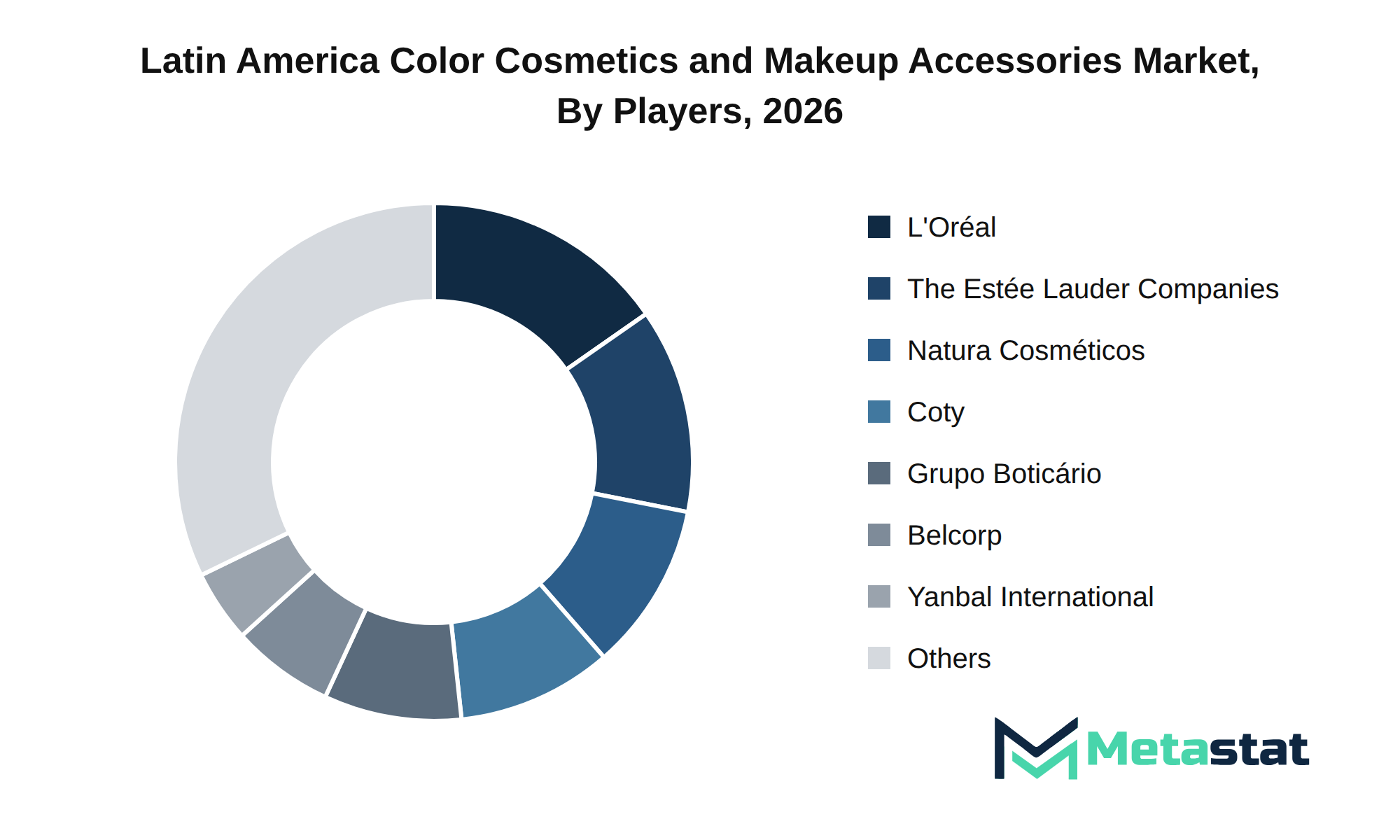
Competitive dynamics in the Latin America Color Cosmetics and Makeup Accessories market reflect a diverse array of strategies among key players. Companies including L'Oréal S.A. and The Estée Lauder Companies Inc. focus on product differentiation, leveraging extensive R&D pipelines to introduce innovative formulations and packaging that cater to regional preferences. These organizations prioritize premium and masstige segments, appealing to consumers seeking quality and brand prestige.
Strategic alliances and joint ventures characterize the competitive landscape. Collaborations between regional brands like Natura Cosméticos S.A. and Grupo Boticário highlight the importance of localized marketing strategies and distribution networks. Such partnerships enhance market penetration by providing access to broader customer bases and shared resources.
Price architectures play a vital role in shaping competitive positioning. Companies like Coty Inc. and Belcorp emphasize value-driven offerings in mass and premium tiers, addressing diverse consumer needs. The competitive environment remains challenging due to barriers to entry posed by established brand equity and significant switching costs for consumers, complicating efforts for new entrants to gain traction.
Overall, the Latin America Color Cosmetics and Makeup Accessories market continues to evolve, with established players investing in technological advancements and proprietary technologies to maintain competitive edge. The focus on customer retention strategies, combined with emerging trends in sustainability and inclusivity, positions these companies favorably for growth.
Market size is forecast to rise from USD 7.4 billion in 2025 to over USD 12.6 billion by 2033. This growth trajectory reflects a compound annual growth rate (CAGR) of 6.9% during the forecast period. The base case indicates steady demand driven by changing consumer preferences and increasing disposable income in Latin America. Bull cases suggest accelerated growth driven by emerging brands innovating within the color cosmetics and makeup accessories market, tapping into unmet consumer needs. Conversely, bear cases highlight potential economic challenges, including fluctuating raw material prices and regulatory hurdles, which could stifle growth momentum.
Structural consumption shifts toward sustainability and clean beauty products influence market dynamics. Next-generation technology integration for product development and R&D commercialization timelines will shape competitive landscapes, driving differentiation among brands. Regulatory evolution, particularly in labeling and ingredient transparency, enforces compliance milestones, shaping consumer trust and loyalty in the Latin America Color Cosmetics and Makeup Accessories market.
Geopolitical realignments and evolving trade corridors impact supply chains, affecting product availability and pricing strategies. Strategic capital allocation directives by key players focus on enhancing manufacturing capabilities and expanding distribution networks. Infrastructure commitments and capital expenditures in emerging markets create high-growth pockets, presenting opportunities for brands to penetrate underserved segments.
Executive-level strategic imperatives center on safeguarding market share while exploring innovation avenues. Defensibility roadmaps prioritize customer engagement and brand loyalty, ensuring sustained growth in a competitive landscape. Future growth recommendations involve a keen focus on meeting evolving consumer preferences and expanding product lines to cater to diverse demographics within the region.
The report strategically identifies and profiles the key market players and analyses their core competencies in each sub-segment of the Color Cosmetics and Makeup Accessories market.
Report Attributes | Details |
Study Period | 2021-2033 |
Base Year | 2025 |
Estimated Year | 2026 |
Forecast Period | 2026-2033 |
Historical Period | 2021-2025 |
Growth Rate | CAGR 6.9% from 2026 to 2033 |
Revenue Unit | USD billion |
Segmentation | By Product Type, Price Tier, Distribution Channel, Region, and Region |
Find answers to common questions about this report
The Color Cosmetics and Makeup Accessories market size in Latin America was valued at USD 7.4 billion in 2025.
The Color Cosmetics and Makeup Accessories market is projected to grow at a CAGR of 6.9% during the forecast period from 2026 to 2033.
Face Makeup leads the Latin America Color Cosmetics and Makeup Accessories market, with a projected value of USD 3.5 billion by 2033, representing the largest share among product types.
Growing disposable incomes, urbanization, and a shift toward personal grooming drive the expansion of the Latin America Color Cosmetics and Makeup Accessories market. Increased consumer spending and the influence of social media enhance demand for diverse cosmetic products. The projected compound annual growth rate of 6.9 percent from 2026 to 2033 indicates significant growth potential.
Macroeconomic headwinds, including inflationary pressures and rising operating costs, significantly restrain market growth by impacting consumer purchasing power and reducing discretionary spending on cosmetics. Supply chain disruptions and geopolitical instability further complicate the landscape, leading to product availability issues and increased operational costs for manufacturers and distributors.
Growing disposable incomes and urbanization significantly favor product adoption in the Latin America Color Cosmetics and Makeup Accessories market. Increased consumer spending on beauty products, coupled with heightened exposure to beauty trends in urban areas, drives demand, particularly among young adults. Enhanced access to retail channels and e-commerce further supports this trend.
The Color Cosmetics and Makeup Accessories market is estimated to reach a valuation of USD 12.6 billion by 2033.
Key players in the Latin America Color Cosmetics and Makeup Accessories market include L'Oréal S.A., The Estée Lauder Companies Inc., Coty Inc., Natura Cosméticos S.A., Grupo Boticário, and Mary Kay Inc.
Brazil leads the Latin America Color Cosmetics and Makeup Accessories market, driven by its large consumer base and increasing disposable incomes.
Key trends include the rise of sustainability-driven ingredient transparency and the influence of social media on consumer purchasing decisions.
The analysts below cover Consumer Goods research at Metastat Insights.
LEAD ANALYST
Utkarsh Khirodkar is a Lead Market Research Analyst at MetaStat Insight, specializing in market intelligence, technology sector assessments, and competitive strategy.
Enterprise zero-trust network rollouts are often slowed down by multi-cloud transit latency and proprietary hardware retirement schedules. This study provided realistic total cost of ownership models comparing cloud-delivered security edge solutions against traditional hardware refreshes. The analysis of contract renewal lengths and software maintenance fees gave us clear visibility into enterprise replacement cycles over the next three to five years.
Scaling antibody-drug conjugate manufacturing hinges on contract manufacturing availability for high-potency active ingredients. The MetaStat Insight analysis looked closely at global cleanroom slot constraints, bioconjugation batch failure rates, and supply chain redundancies between the US, Europe, and India. The supplier capability matrix proved genuinely useful for our team when mapping secondary source options across our clinical pipeline.
Floating offshore wind feasibility relies heavily on specialized installation vessel availability and port crane limits, which most broad renewable energy forecasts ignore. The report delivered a thorough analysis of dry dock capacity, mooring chain supply constraints, and raw material pricing trends for deepwater anchor installations. It served as a solid independent sanity check for our offshore project capital expenditure assumptions.
Explore related market intelligence reports worth reading alongside this one.