
LEAD ANALYST
Utkarsh Khirodkar is a Lead Market Research Analyst at MetaStat Insight, specializing in market intelligence, technology sector assessments, and competitive strategy.

Online Cosmetics Market Size, Share, By Product Type (Skincare, Makeup, Haircare, Fragrances, Bath, and Body Products), By Category (Organic and Conventional), By End-user (Women, Men, and Unisex), By Distribution Channel (Brand Website, E-commerce Platforms, Social Media Platforms, and Subscription Boxes), Industry Analysis, Growth, Trends, and Forecast, 2026-2033
Report ID
MSI-4573
Published
April, 2026
Pages
333 Pages
Format
Report Details
Choose Your License
Online Cosmetics Market
The Global Online Cosmetics market size was valued at USD 92.6 billion in 2025. The market is projected to grow from USD 98.7 billion in 2026 to USD 155.5 billion by 2033, exhibiting a CAGR of 6.7% during the forecast period.
Global Online Cosmetics Market: Comprehensive Data-Driven Market Analysis and Strategic Outlook
The global online cosmetics market was valued at USD 92.6 billion in 2025 and is projected to reach USD 155.5 billion by 2033, registering a CAGR of 6.7% during 2026 to 2033.
North America held 24.9% in 2025, led by the United States.
The skincare segment accounts for a market share of 33.1% in 2025.
Key trends driving growth: Increased Smartphone and Internet Penetration, Expansion of Social Commerce and Influencer-Led Discovery.
Opportunities include AI-Led Personalization and Virtual Try-On for Conversion Uplift.
Key insight: Digital-first engagement, personalization technology, and evolving consumer values are reshaping competitive dynamics across the global online cosmetics landscape.
The global online cosmetics market within beauty and personal care will extend beyond conventional e-commerce boundaries and reshape how brand value is created, communicated, and experienced. In the coming years, online cosmetics commerce will evolve beyond a transaction channel into a curated environment where personalization, cultural nuance, and data-driven creativity will guide purchasing behavior.
Digital beauty platforms will increasingly position themselves as discovery destinations rather than catalogue-driven storefronts. Brand narratives will be delivered through immersive formats, interactive consultations, and virtual try-on tools that replicate in-store engagement without physical presence.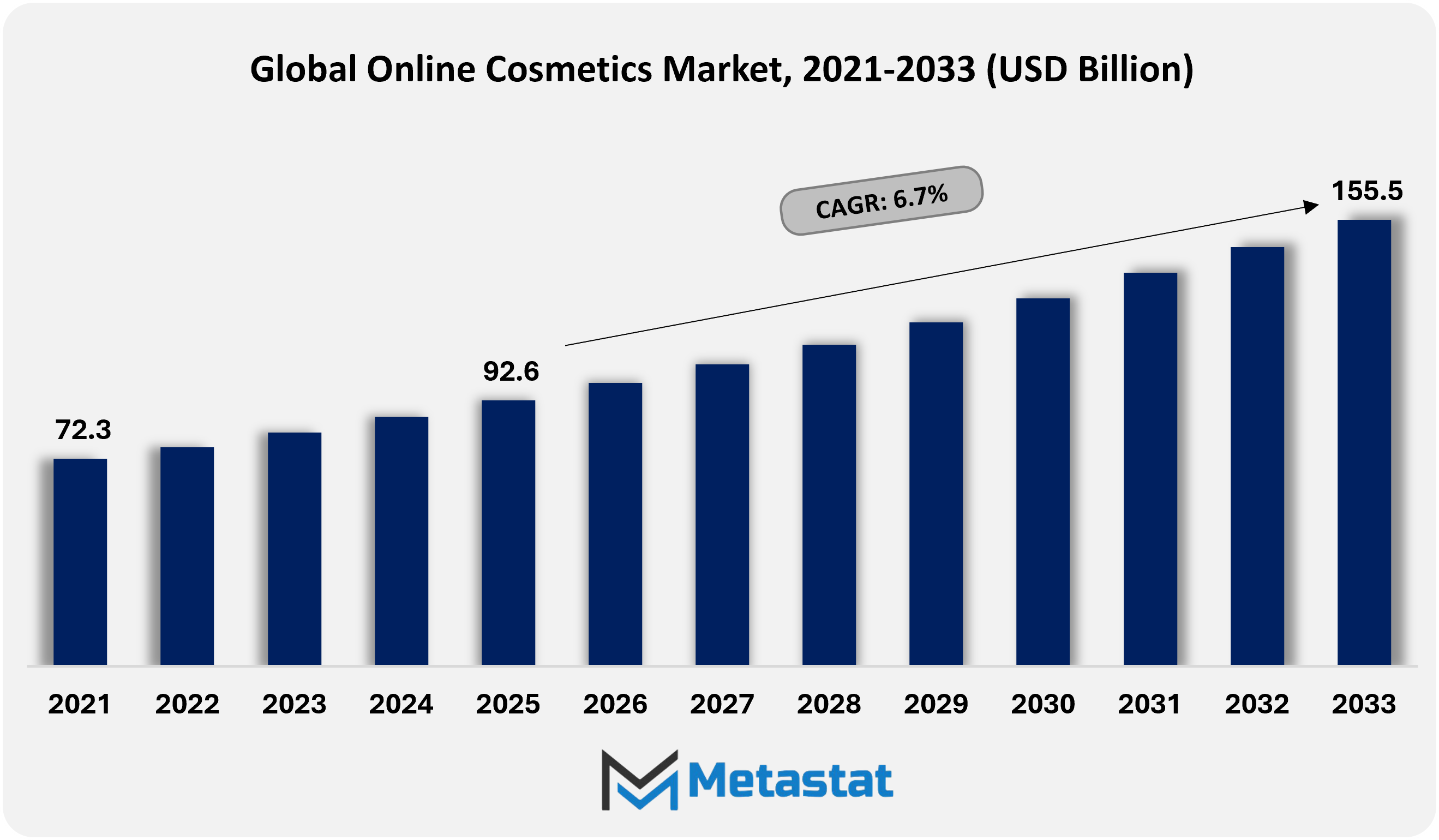
Rising smartphone ownership and broadband availability will expand digital access for beauty consumers, supporting continuous engagement across mobile-first platforms. Secure payment layers and improved logistics visibility will reinforce confidence in online purchasing, enabling the global online cosmetics market to scale transaction frequency and geographic reach. Faster networks will assist high-resolution content and stay consultations, encouraging knowledgeable choices and repeat shopping conduct.
Social systems will evolve into incorporated storefronts, allowing discovery-to-checkout journeys through brief-form video and live demonstrations. Creator-led narratives will shape logo belief and demand signals, accelerating conversion pace via community belief, interactive comments loops, and real-time launches. Data-driven attribution will refine campaign performance and stock making plans throughout categories.
Restraints and Challenges:
Counterfeit exposure will stress platform credibility and regulatory compliance across cross-border trade. Robust verification frameworks, serialization, and transparent seller governance will become vital safeguards, protect brand equity and consumer safety while sustaining long-term value creation within the global online cosmetics market. Failure to cope with threats will increase returns, disputes, and reputational harm.
Digital storefronts face constraints in conveying colour accuracy, texture sense, and perfume perception before checkout. Enhanced imaging standards, calibrated displays, and standardized descriptors will reduce mismatch rates, improve satisfaction outcomes, and lower reverse logistics costs across online beauty retail ecosystems. Continued gaps will slow adoption for top-class segments.
Advanced algorithms will supply customized exercises, predictive replenishment, and context-aware guidelines at scale. Virtual strive-on technologies will simulate colour and end effects with precision, raising self-belief and conversion overall performance while supporting inclusive product development, green assortment making plans, and sustained growth trajectories.
The Global Online Cosmetics market is classified based on Product Type, Category, End-user, and Distribution Channel.
By Product Type, the market is further segmented into:
The skincare segment is valued at USD 32.7 billion in 2026 and is projected to reach USD 53.8 billion by 2033, at a CAGR of 7.4% during the forecast period.
Skincare will progress through data-driven formulation visualization and ingredient education within the global online cosmetics market. The digital shelves will highlight routine-based solutions, climate-responsive care, and preventive maintenance. The brand will prioritize communication transparency, long-term skin health, and adaptive regimens to suit changing lifestyles and environmental exposures.
The makeup segment is valued at USD 27 billion in 2026 and is projected to reach USD 40.9 billion by 2033, at a CAGR of 6.1% during the forecast period.
Makeup ranges will advance through virtual try-on systems, shade intelligence and personalization engines. Online shopping will encourage experimentation without physical samples. Product narratives will focus on multi-functional benefits, comfortable wear, and adaptive shade matching, supporting growth supported by social commerce and creator-led product validation.
The haircare segment is valued at USD 18.7 billion in 2026 and is projected to reach USD 31.3 billion by 2033, at a CAGR of 7.6% during the forecast period.
Hair care offerings will expand through diagnostic tools addressing texture, scalp condition and regional water quality. Online platforms will support the adoption of care plans and refills. The innovation will emphasize repair, nourishment and protection, positioning hair health as a continuous care practice supported by subscription-driven purchasing behavior.
The fragrances segment is valued at USD 11.4 billion in 2026 and is projected to reach USD 19.4 billion by 2033, at a CAGR of 7.8% during the forecast period.
Fragrance sales will move towards storytelling, mood mapping and sensory descriptions through digital content. Sampling programs and discovery kits will reduce hesitation in purchasing. Personal expression and occasion-based selection will influence demand, encouraging curated collections to suit changing consumer preferences.
The Bath and Body Products segment is valued at USD 8.9 Billion in 2026 and is projected to reach USD 10.2 billion by 2033, at a CAGR of 2% during the forecast period.
Bath and body products will be driven through wellness positioning and daily self-care integration. The online assortment will promote aromatherapy benefits, skin nourishment and ritual-based use. The growth will reflect the growing interest in holistic care routines supported by convenient replenishment models.
By Category, the market is divided into:
The organic segment is projected to reach USD 44.4 billion by 2033, at a CAGR of 8% during the forecast period.
The growth of the organic category will depend on ingredient traceability, ethical sourcing, communication and clean formulation standards. Online platforms will educate buyers about certification value and long-term benefits. Demand will be strengthened through trust-building stories and transparent production practices in line with sustainability expectations.
The conventional segment is projected to reach USD 111.1 billion by 2033, at a CAGR of 6.2% during the forecast period.
Traditional products will maintain relevance through performance consistency, affordability and wide availability. Digital channels will increase visibility through promotions and bundled offers. Continuous improvements and compliance updates will maintain competitiveness within the expanding online cosmetic ecosystem.
By End-user, the market is further divided into:
Women segment is projected to reach USD 107.8 Billion by 2033 with a share of 69.5% in 2025.
Women-centric segments will grow through personalization, life-stage targeting, and routine customization. Online engagement will support diverse needs such as care, growth, and well-being. Brand strategies will align innovation pipelines with lifestyle changes and digital-first shopping preferences.
Men segment is projected to reach USD 27.0 Billion by 2033 with a share of 17.2% in 2025.
Male-oriented categories will expand through simplified routines, functional messaging and education-driven content. Online platforms will normalize grooming adoption and use. Growth will be driven by increased awareness about skin and hair health, supported by discerning shopping experiences.
Unisex segment is projected to reach USD 20.7 Billion by 2033 with a share of 13.2% in 2025.
The unisex offering will be strengthened through inclusive branding and neutral formulation positioning. Digital merchandising will emphasize versatility and shared usage scenarios. Demand will grow through minimal routine and value-driven purchases across broad demographic groups.
By Distribution Channel, the Global Online Cosmetics market is divided as:
Brand Website segment is projected to grow at a CAGR of 6.1% during the forecast period.
Brand websites will act as experience hubs integrating education, loyalty programs, and customization tools. Direct engagement will support data collection and product development feedback loops. Conversion growth will depend on seamless navigation and credible brand storytelling.
E-commerce Platforms segment is projected to grow at a CAGR of 6.4% during the forecast period.
E-commerce platforms will accelerate scale through assortment expansion, competitive pricing, and faster fulfilment. Algorithm-driven recommendations will improve search efficiency. The expansion of the marketplace will reflect partnerships between brands and large digital marketplaces that provide logistics reliability.
Social Media Platforms segment is projected to grow at a CAGR of 9.4% during the forecast period.
Social media platforms will influence purchases through live commerce, creator endorsements, and interactive content. Product awareness will spread through visual storytelling and peer validation. Conversion paths will become shorter through integrated checkout features.
Subscription Boxes segment is projected to grow at a CAGR of 7.1% during the forecast period.
Subscription boxes will encourage trial, retention, and regular adherence. Curated selections will feature emerging products and seasonal variations. Predictable delivery models will strengthen brand exposure while supporting long-term customer value within the global online cosmetics market.
Based on geography, the Global Online Cosmetics market is divided into North America, Europe, Asia-Pacific, South America, Middle East, and Africa.
North America Online Cosmetics Market is set to expand at a CAGR of 6.7% within the forecast period, reaching a market size (TAM) of USD 36.9 billion by the end of 2033.
North America is experiencing robust growth owing to strong online spending power, frequent product launches, and rapid adoption of virtual-first shopping behavior.
North America is gaining momentum from strong logistics networks, influencer-led promotions, and high consumer trust in online beauty retail channels.
Asia-Pacific presents major opportunities through rising smartphone usage, an expanding middle-income population, and an increased preference for online beauty shopping.
Asia Pacific offers growth potential driven by social commerce expansion, local beauty trends and growing acceptance of international cosmetic labels.
In the Middle East and Africa and South America, the global online cosmetics market continues to expand, driven by improving internet penetration, younger consumer demographics, and a gradual shift from offline beauty shopping to digital channels.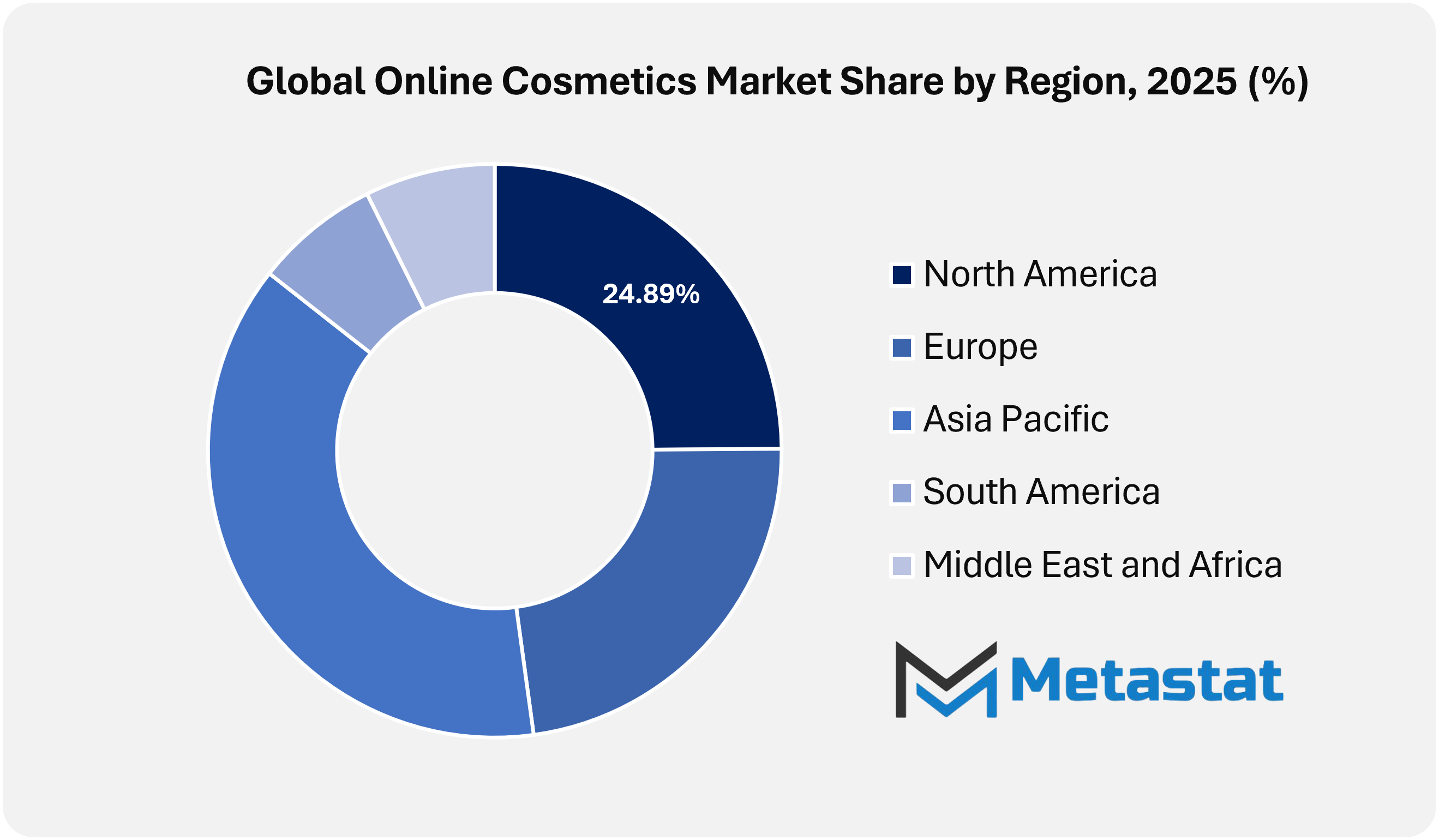
The Global Online Cosmetics Market has grown into an area in which digital presence, and patron trust form shopping choices. Large multinational corporations strive to anchor the market via their robust portfolios and wide online attain. L’Oréal S.A., Unilever PLC, The Estée Lauder Companies Inc., and The Procter & Gamble Company have built deep connections with online customers by way of presenting varied product lines across skincare, haircare, and make-up. The capability to conduct product launches for digital systems and keep consistent logo visibility will aid sustained engagement in online channels.
Luxury and top-class brands additionally hold a sturdy position inside online cosmetics, pushed through aspirational enchantment and curated digital storytelling. Companies such as Chanel S.A., Dior Beauty, LVMH Moët Hennessy Louis Vuitton SE, Hermès Beauty, La Prairie, Sisley Paris, Chantecaille Beauté, Augustinus Bader, and Clarins Group have extended their retail experience into digital formats. The manufacturers' attention to visuals, customized consultations, and restricted online releases is a good way to keep attracting clients looking for exclusivity through e-commerce systems.
Asian and international background manufacturers make contributions to consistent growth by mixing subcultures with online techniques. Shiseido Company, Limited, Kao Corporation, KOSÉ Corporation, Sulwhasoo, AmorePacific Corporation, and Tatcha leverage strong skincare expertise and aspect-centered messaging to connect with digital audiences. At the identical time, Beiersdorf AG, Johnson & Johnson, Neutrogena Corporation, Caudalie, and ALASTIN Skincare, Inc. Strengthen trust through science-backed positioning and dermatologist-aligned communication, which resonates well with online buyers learning products earlier than purchase.
Direct-to-consumer and digitally native manufacturers add strength and pace to the market. Huda Beauty LLC, Charlotte Tilbury Beauty Limited, Kylie Cosmetics, e.L.F. Beauty, ColourPop Cosmetics, Drunk Elephant, and SUGAR Cosmetics depend closely on social media, influencer partnerships, and speedy product cycles to maintain relevance. The robust engagement fashions continue to persuade buying behavior, particularly among younger purchasers who opt for discovery-led buying experiences.
Regional structures and dating-driven manufacturers whole the broader marketplace shape. Avon Products, Inc., Mary Kay Inc., Oriflame, Natura & Co Holding S.A., Nykaa, Sephora, Puig, Revlon, Inc., Coty Inc., and H.S.A. Hair Styling Applications S.P.A. Guide accessibility, distribution intensity, and localized engagement. These gamers make stronger the web environment by combining brand familiarity with evolving digital retail formats, ensuring the Global Online Cosmetics Market will remain competitive and patron-focused over the coming years.
Market size is forecast to rise from USD 92.6 billion in 2025 to over USD 155.5 billion by 2033.
The global online cosmetics marketplace can even witness a redefinition of brand loyalty. Algorithms will anticipate purchaser needs earlier than clean demand alerts emerge, at the same time as subscription fashions and adaptive pricing systems will reinforce long-term engagement. Smaller digital-local brands will stand shoulder to shoulder with legacy names by means of leveraging velocity, authenticity, and platform intelligence. In the future, online beauty trade will not only promote beauty merchandise; It will curate reports, shape preferences, and affect global beauty conversations through interconnected digital touchpoints.
|
Report Attributes |
Details |
|
Study Period |
2021-2033 |
|
Base Year |
2025 |
|
Estimated Year |
2026 |
|
Forecast Period |
2026-2033 |
|
Historical Period |
2021-2025 |
|
Growth Rate |
CAGR 6.7% from 2026 to 2033 |
|
Revenue Unit |
USD billion |
|
Sales Volume Unit |
Units |
|
Segmentation |
By Product Type, Category, End-user, Distribution Channel, and Region |
|
By Region |
North America (By Product Type, Category, End-user, Distribution Channel, and Country)
|
|
|
Europe (By Product Type, Category, End-user, Distribution Channel, and Country)
|
|
|
Asia Pacific (By Product Type, Category, End-user, Distribution Channel, and Country)
|
|
|
South America (By Product Type, Category, End-user, Distribution Channel, and Country)
|
|
|
Middle East and Africa (By Product Type, Category, End-user, Distribution Channel, and Country)
|
This research report categorizes the Online Cosmetics market based on key segments and regions, forecasts revenue growth, and analyses trends in each submarket. The report analyses the key growth drivers, opportunities, and challenges influencing the Online Cosmetics market. Recent market developments and competitive strategies such as expansion, product launch, development, partnership, merger, and acquisition have been included to draw the competitive landscape in the market.
The report strategically identifies and profiles the key market players and analyses their core competencies in each sub-segment of the Online Cosmetics market.
Find answers to common questions about this report
The Metastat Insights study shows that the Global Online Cosmetics market size was USD 92.6 billion in 2025.
The Global Online Cosmetics market is likely to grow at a CAGR of 6.7% over the forecast period (2026-2033).
Skincare is the leading product type segment in the global market.
Increased Smartphone and Internet Penetration and Expansion of Social Commerce and Influencer-Led Discovery are key driving factors, boosting the market.
The Metastat Insights analysis shows that the North America Online Cosmetics market size is estimated to be USD 36.9 billion by 2033.
Product Authenticity and Counterfeit Risk in Online Channels will hamper market growth within the forecast period.
Global Online Cosmetics market is estimated to reach USD 155.5 billion by 2033.
Top players operating in the Online Cosmetics industry include L’Oréal S.A., Unilever PLC, The Estée Lauder Companies Inc., The Procter & Gamble Company, Shiseido Company Limited, and Beiersdorf AG.
Asia Pacific region dominates the market.
The analysts below cover Consumer Goods research at Metastat Insights.
LEAD ANALYST
Utkarsh Khirodkar is a Lead Market Research Analyst at MetaStat Insight, specializing in market intelligence, technology sector assessments, and competitive strategy.
Scaling antibody-drug conjugate manufacturing hinges on contract manufacturing availability for high-potency active ingredients. The MetaStat Insight analysis looked closely at global cleanroom slot constraints, bioconjugation batch failure rates, and supply chain redundancies between the US, Europe, and India. The supplier capability matrix proved genuinely useful for our team when mapping secondary source options across our clinical pipeline.
Floating offshore wind feasibility relies heavily on specialized installation vessel availability and port crane limits, which most broad renewable energy forecasts ignore. The report delivered a thorough analysis of dry dock capacity, mooring chain supply constraints, and raw material pricing trends for deepwater anchor installations. It served as a solid independent sanity check for our offshore project capital expenditure assumptions.
Assessing commercial microgrid software adoption requires looking past top-level installation numbers and examining utility interconnection queues. The research provided verifiable data on average permitting timelines, tariff structures, and battery storage integration costs across regional utility territories. That grounded perspective was valuable for our team when building five-year demand projections for industrial microgrid controllers.
Explore related market intelligence reports worth reading alongside this one.