
LEAD ANALYST
Utkarsh Khirodkar is a Lead Market Research Analyst at MetaStat Insight, specializing in market intelligence, technology sector assessments, and competitive strategy.

Global Sheepskin Boots Market Size, Share, By Boot Height (Ankle and Mini Boots, Mid-Calf Boots, Knee-High Boots), By Upper Material (Twinface Sheepskin, Suede Leather, Smooth Leather, Textile), By End User (Women, Men, Children), By Distribution Channel (Online Stores, Specialty Footwear Stores, Department Stores, Supermarkets and Hypermarkets), Industry Analysis, Growth, Trends, and Forecast, 2026-2033
Report ID
MSI-5644
Published
October, 2026
Pages
273 Pages
Format
Historical
Base year
Forecast
Forecast period
Report Details
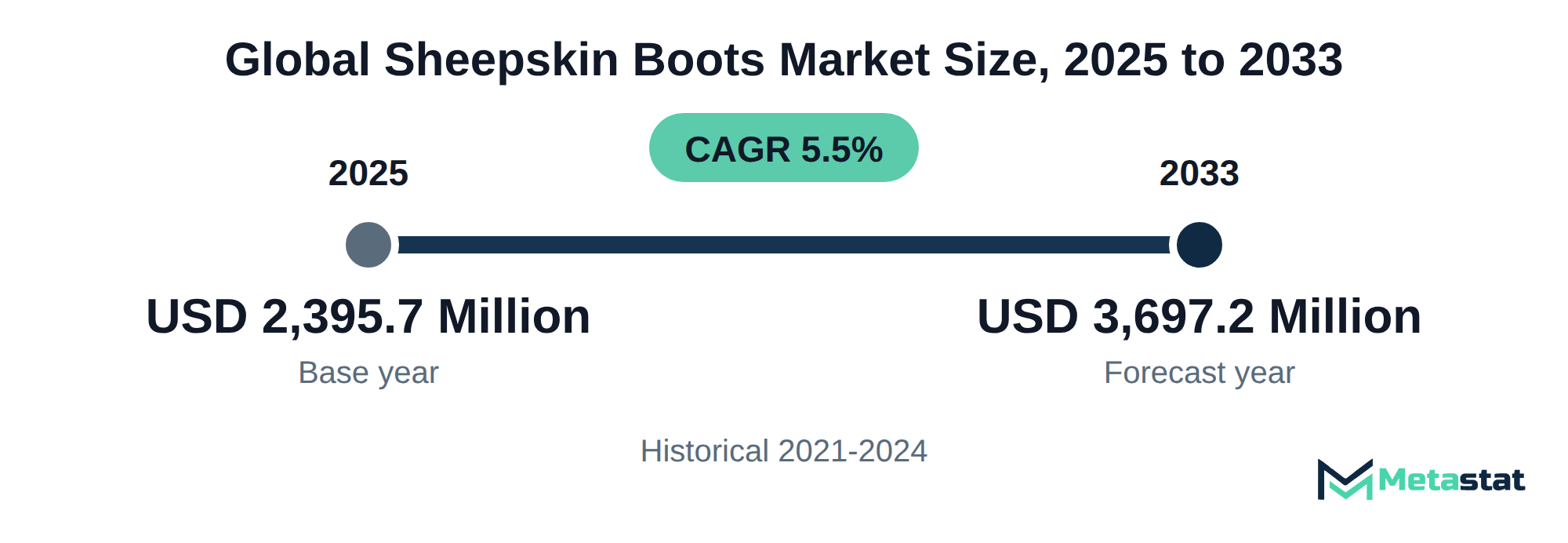
Market Valuation: Valued at $2,395.7 Million in 2025, projected to reach $3,697.2 Million by 2033 at a 5.5% CAGR.
Dominant Segment: The Ankle and Mini Boots segment leads the market, driven by consumer preferences for versatile styles that combine comfort and aesthetics.
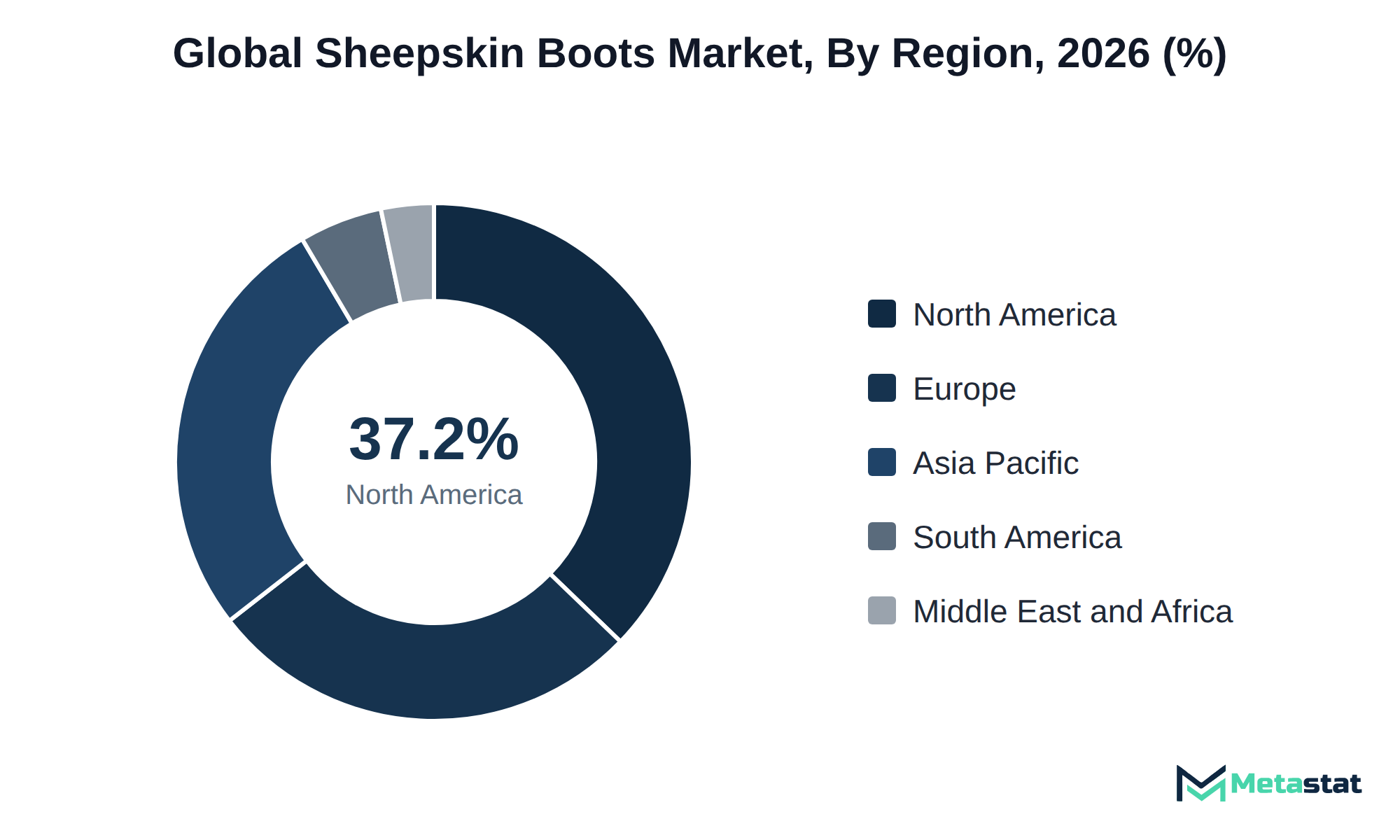
Geographic Lead: North America is the leading region, holding 37.2% of the market in 2025, with strong purchasing power in the US significantly contributing to growth.
What's Inside: The report provides comprehensive coverage of market segmentation by boot height, upper material, end user, and distribution channels, along with detailed competitive analysis and growth forecasts.
Growth in Online Sales: The online sales channel is expected to grow at a CAGR of 7.7%, reflecting a significant shift in consumer purchasing behavior towards digital platforms.
Innovation in Sustainable Materials: The market is increasingly influenced by advancements in sustainable materials, as consumers seek eco-friendly options and brands adapt to meet these preferences.
Choose Your License
Global Sheepskin Boots Market
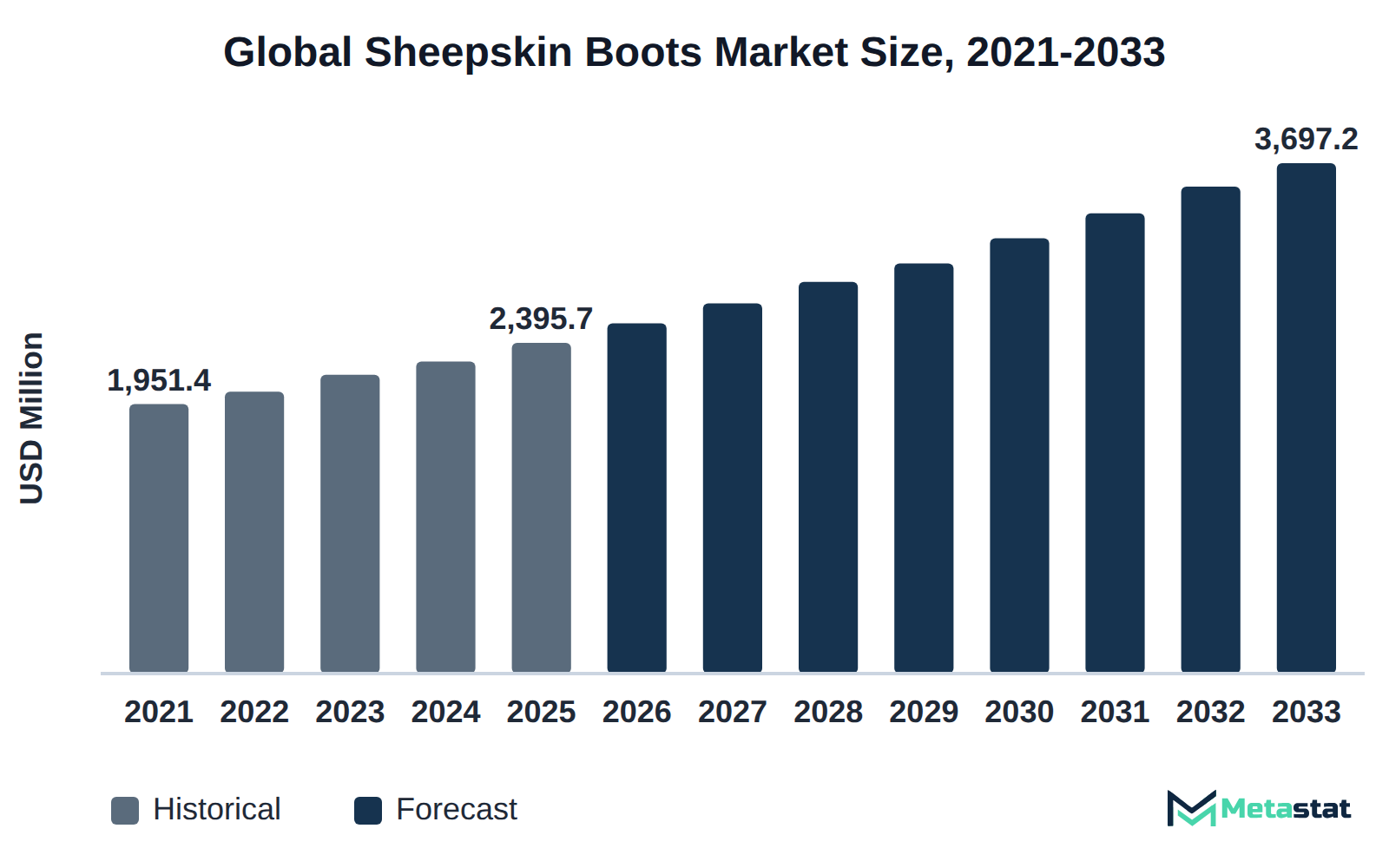
The global Sheepskin Boots market was valued at USD 2,395.7 million in 2025 and is projected to reach USD 3,697.2 million by 2033, growing at a CAGR of 5.5% over the forecast period.
The Sheepskin Boots market covers footwear made from sheepskin, which is known for its warmth and comfort. Buyers invest in these products primarily due to their durability and style, appealing to various consumer segments including women, men, and children. The market features several segments, including variations in boot height, upper material, and distribution channels, each catering to distinct preferences and needs.
Growth in the market is supported by rising consumer interest in fashionable and functional footwear. The segment generating the highest value is the Ankle and Mini Boots, which benefits from trends favoring versatile styles that suit various occasions. North America holds 37.2% of the market in 2025, with the US leading in 2026. The region's strong purchasing power contributes significantly to the overall expansion of the market.
Consumer preferences for online shopping have significantly influenced market dynamics, resulting in increased sales through digital platforms. The online stores segment is projected to achieve the highest growth rate within the distribution channels. Retailers are strengthening their e-commerce capabilities to capture this growing demand and keep a competitive edge in the Sheepskin Boots market.
The demand for sheepskin boots stems from their luxurious feel and ability to provide warmth and comfort in colder climates. Buyers invest in these products for their durability and style, making them suitable for various occasions. The versatility of sheepskin boots appeals to diverse consumer preferences, resulting in consistent spending across multiple demographics.
The increasing popularity of ankle and mini boots, which capture the largest share of revenue, is the main driver of market growth. Europe and Asia Pacific follow closely, reflecting strong interest in fashionable, high-quality footwear within these regions.
Rising online sales channels significantly contribute to market expansion. Consumers increasingly prefer the convenience of purchasing footwear through digital platforms. The growth of e-commerce aligns with changing shopping habits, enhancing accessibility for buyers and driving demand for sheepskin boots in various styles and materials.
Mini and platform sheepskin boots increasingly reshape demand within the Sheepskin Boots market. These styles appeal to fashion-conscious consumers seeking both comfort and aesthetic appeal. The growing trend toward casual yet stylish footwear has driven significant interest in ankle and mini boots, which are expected to expand from USD 1,097.3 million in 2026 to USD 1,711.4 million by 2033, reflecting a compound annual growth rate (CAGR) of 6.6%. This segment’s growth is influenced by evolving consumer preferences, where versatility and ease of wear become priorities.
The rise of platforms offers an alternative to traditional boot heights, allowing for enhanced comfort without sacrificing style. This shift caters to diverse customer bases, including younger demographics eager for trendy options in everyday footwear. With online stores projected to grow from USD 1,084.2 million in 2026 to USD 1,818.7 million by 2033, the market for mini and platform styles flourishes through digital channels offering convenient shopping experiences.
These developments point to a broader shift in the Sheepskin Boots market, where design and functional innovation match consumer expectations and support sustained growth and investment opportunities in this specialized footwear segment.
The materials selected for sheepskin boots significantly influence purchasing decisions. Twinface sheepskin, which combines smooth and fuzzy surfaces, provides both aesthetics and comfort, resulting in heightened consumer interest. This segment's anticipated growth is reflected in its projected value increase from USD 1,546.1 million in 2026 to USD 2,191.3 million by 2033, with a compound annual growth rate (CAGR) of 5.1%. This upward trend demonstrates the premium placed on quality materials in the sheepskin boots market.
Buyers often seek high-quality materials, ensuring maximum durability and comfort. Pricing models vary, with many manufacturers implementing tiered pricing strategies based on material quality and design complexity. Consumers who prioritize luxury gravitate towards boots featuring shearling linings, which enhance warmth and provide a soft texture. This demand for premium materials impacts purchasing patterns, pushing buyers towards brands that emphasize craftsmanship and material authenticity.
The growing focus on quality materials strengthens competition among brands in the market. Companies specializing in Twinface sheepskin use their material differentiation to attract discerning customers and reinforce brand loyalty. Emphasizing material quality drives sales and builds long-term relationships with customers, ultimately benefiting the market's overall growth trajectory.
The growing trend of direct-to-consumer (DTC) e-commerce reshapes the distribution of sheepskin boots, particularly influencing how brands engage with consumers. In 2026, online stores are projected to generate USD 1,084.2 million in revenue, highlighting the significant transition towards digital purchasing. This shift allows brands to communicate directly with buyers, catering to specific demands including customization and exclusive product lines.
Women, a primary end user group for sheepskin boots, demonstrate a strong preference for online purchases due to convenience and the ability to browse a wider range of styles compared to traditional retail environments. The forecasted growth of USD 1,084.2 million from online channels reflects this consumer behavior, driving brands to enhance their digital presence and streamline logistics. Such adaptations facilitate speedier courier, express, and parcel delivery and increase customer loyalty through targeted marketing strategies.
The increased focus on e-commerce allows companies to gather crucial data on purchasing patterns and preferences, enabling more effective inventory and warehouse management. For firms in the sheepskin boots market, understanding these dynamics enhances competitiveness and profitability, establishing a closer connection with consumers while optimizing operational efficiency.
Consumers often face a decision between Twinface and sheepskin-lined boots when selecting their footwear, with each option offering distinct features. Twinface sheepskin boots provide a combination of soft, plush texture on the outside and a durable, warm lining that enhances comfort. This specific upper material appeals to buyers prioritizing both style and insulation, providing a luxurious feel while ensuring warmth during colder months. Consumer preference for this material is expanding.
On the other hand, sheepskin-lined boots offer a classic option characterized by their traditional construction and reliable warmth. The decision often hinges on individual priorities. Buyers who value innovative styles and versatility gravitate toward Twinface options, while those seeking time-honored designs prefer sheepskin-lined alternatives. Understanding these distinctions allows consumers to align their footwear choices with personal preferences, which significantly impacts purchasing decisions within the Sheepskin Boots market.
The increasing preference for sheepskin boots among women significantly influences market demand. Shifting fashion trends emphasize comfort and practicality, encouraging female consumers to invest in stylish yet functional footwear. This demographic prioritizes warmth and quality, particularly in colder climates, leading to higher sales volumes. In 2026, the revenue generated from women's sheepskin boots is projected to reach USD 1,597.8 million, reflecting a strong growth trajectory through the forecast period. The expansion of online retail channels enhances accessibility, further driving purchases among women. The market benefits from this demographic trend, resulting in increased competitive dynamics and heightened emphasis on product quality and style to meet evolving consumer preferences.
Comfort and quality remain significant factors reshaping the Sheepskin Boots market. This prompts manufacturers to focus on delivering products that align with these preferences.
Advancements in sustainable materials significantly influence the Sheepskin Boots market. Suppliers increasingly focus on eco-friendly practices, driven by consumer preferences for ethically sourced products. The shift toward sustainable sheepskin production involves using environmentally responsible tanning methods and sourcing sheepskin from certified farms. This approach aligns with a growing awareness of environmental concerns among consumers, particularly within the women's segment.
Suppliers adopting these sustainable practices strengthen their brand image and attract environmentally conscious buyers, which raises market growth potential. Cost implications arise due to the need for investment in newer technologies and sourcing practices; however, the long-term benefits include increased customer loyalty and market differentiation. In the context of rising competition, companies that prioritize sustainability stand out, shaping the future dynamics of the market. Consumer demand for transparency in production processes ensures that suppliers who embrace sustainable materials secure a competitive advantage, driving further innovation within the segment.
The high price point of sheepskin boots limits demand among budget-conscious consumers, particularly affecting the children's segment. Families often seek more affordable alternatives, resulting in slower uptake of premium offerings. Off-price retail offers one alternative channel for families seeking lower-priced footwear. This price sensitivity leads to smaller orders and delayed purchases, especially during economic downturns. In a competitive retail environment, customers prioritize cost-effective options, impacting overall market growth. While consumers increasingly focus on value, brands face challenges attracting price-sensitive buyers. This trend emphasizes the importance of balancing quality and affordability to enhance market penetration. Without addressing these pricing concerns, the market experiences constrained growth potential, specifically within the children's and men's segments. Understanding these dynamics remains crucial for manufacturers and retailers aiming to improve their market position.
Rising raw material costs pressure profitability in the sheepskin boots market. Increased demand for quality materials, particularly for durable and comfortable designs, leads to higher expenses for manufacturers. Suppliers respond by exploring alternative sourcing strategies, including collaborating with local sheepskin producers to reduce transportation costs and improve supply chain efficiency. Several companies invest in vertical integration, allowing them to control more stages of footwear manufacturing, thereby minimizing reliance on external suppliers and protecting margins. Price adjustments for end consumers occur to reflect increased production costs, which could impact market competitiveness. These strategies aim to maintain product quality while addressing financial pressures, ultimately influencing suppliers' ability to adapt to market demands.
The online sales channel presents a significant opportunity for expansion within the Sheepskin Boots market. The channel is projected to experience a compound annual growth rate (CAGR) of 7.7% due to growing consumer preference for convenience and accessibility. This shift highlights a willingness among buyers to explore digital platforms for purchasing footwear, particularly in regions with developed e-commerce infrastructure. The rise of direct-to-consumer brands facilitates enhanced engagement with customers, allowing for tailored marketing strategies and personalized experiences that connect with consumers. Brands invest in digital advertising and user-friendly online shopping experiences, increasing the potential for market penetration. The competitive landscape in online retail continues to evolve, with established players and new entrants focusing on innovative product offerings and promotional strategies to attract buyers. This trend indicates significant growth potential, contributing to overall revenue increases in the market.
The Global Sheepskin Boots market is segmented based on Boot Height, Upper Material, End User, and Distribution Channel.
Ankle and Mini Boots segment is valued at USD 1097.3 million in 2026 and is projected to reach USD 1711.4 million by 2033, at a CAGR of 6.6% during the forecast period. This segment primarily caters to women seeking stylish yet practical footwear options, particularly during colder months. The increasing demand for versatile boot styles, which combine aesthetics with comfort, drives this growth. The Ankle and Mini Boots segment experiences faster growth compared to Mid-Calf and Knee-High Boots segments, which have CAGRs of 4.7% and a defined target audience. Fashion trends further impact purchasing decisions, with consumers increasingly inclined towards shorter boot styles, thus differentiating Ankle and Mini Boots within the Sheepskin Boots market. This segment's appeal aligns with the priorities of younger consumers who value both style and warmth in their footwear choices.
Mid-Calf Boots segment is estimated to reach USD 1,348.4 million by 2033, at a CAGR of 4.7% during the forecast period. This category appeals to diverse consumer groups, including those seeking stylish yet functional footwear suitable for moderate climates. Increasing demand stems from the versatility and easy pairing with various outfits, attracting both men and women. The segment distinguishes itself from others in the Boot Height category by offering a balance between style and practicality, appealing to a broader audience. While Ankle and Mini Boots exhibit a higher growth rate at 6.6%, Mid-Calf Boots maintain a steady trajectory, driven by growing acceptance among fashion-conscious consumers. Competitive pricing in this segment contributes to its stable demand, particularly among casual wear consumers, enhancing market positioning.
Knee-High Boots segment is expected to reach USD 557.5 million by 2033. This category of footwear provides extended coverage and warmth, appealing to consumers in colder climates. Women predominantly drive the demand for knee-high boots, seeking fashionable yet functional options for winter wear. The growth in this segment is influenced by a rising trend toward stylish cold-weather footwear, differentiating it from lower-coverage options like ankle and mini boots, which are projected to grow at a CAGR of 6.6%. Higher price points associated with knee-high boots reflect quality materials and design, creating a unique appeal for discerning buyers who prioritize both aesthetics and functionality. The strategic positioning of brands that focus on high-quality craftsmanship supports this segment's growth trajectory, making it a competitive player in the Sheepskin Boots market.
Others (over-the-Knee Boots) segment is projected to grow at a CAGR of 5.3% during the forecast period. This segment appeals to consumers seeking stylish and warm footwear options that extend beyond the knee, making it a popular choice for fashion-conscious individuals. The market for over-the-knee boots benefits from trends in outdoor and winter fashion, with women primarily driving demand for this style. Compared to other boot height segments, this category experiences moderate growth, influenced by its unique aesthetic appeal and the rising popularity of layered clothing styles in colder climates. The higher price point associated with these boots reflects their fashion-forward design, differentiating them from traditional ankle or mid-calf styles. This segment's growth supports the overall expansion of the Sheepskin Boots market, catering to individuals seeking versatility in winter footwear.
This material is primarily used for creating boots that provide comfort and insulation, appealing to consumers seeking both style and functionality. Women frequently purchase Twinface Sheepskin boots, influenced by trends emphasizing luxury and warmth. The segment distinguishes itself through its growth compared to other upper material segments, driven by increasing consumer awareness of quality and craftsmanship. The rising preference for sustainable and ethically sourced materials contributes to this demand, positioning Twinface Sheepskin as a leading choice among eco-conscious consumers. This segment's performance contrasts with others like Suede Leather, which experiences a slower growth rate of 6.1% CAGR, indicating a shift toward materials perceived as more durable and fashionable.
Suede Leather segment is estimated to reach USD 921 million by 2033, at a CAGR of 6.1% during the forecast period. This material is popular for its softness and stylish appearance, attracting a diverse customer base. Suede leather boots represent a fashionable choice for both casual and formal occasions, appealing particularly to women. The rising demand for stylish yet comfortable footwear enhances growth in this segment. Compared to other segments, the growth rate of Suede Leather is higher than that of Mid-Calf Boots, which has a CAGR of 4.7%. This segment benefits from increasing consumer preference for unique materials that provide both comfort and aesthetic appeal, reinforcing its presence in the market.
Smooth Leather segment is expected to reach USD 398.9 million by 2033. This material is popular among consumers seeking a sleek and polished aesthetic in their footwear. Primarily targeted at fashion-conscious buyers, these boots appeal to individuals looking for stylish options without sacrificing comfort. The expected growth in this segment is driven by rising consumer demand for diverse styles, with an emphasis on premium materials. This contrasts with other upper materials, including Twinface Sheepskin, which shows a stronger CAGR of 5.1%. Smooth Leather offers a unique proposition, aligning more closely with seasonal fashion trends, thus attracting buyers who prioritize style. This segment tends to have a higher price point, appealing to a more affluent customer base. It competes with suede options that are expected to reach USD 921 million by 2033 but show a slightly slower growth trajectory.
Textile, valued at USD 398.9 million in 2026, is projected to grow at a CAGR of 6.4% during the forecast period. This segment primarily finds usage among consumers seeking lightweight, breathable, and affordable options for footwear. Demand for textile-based sheepskin boots is driven by changing fashion trends and a growing emphasis on sustainability among environmentally conscious buyers. Compared to other upper material segments, including Twinface Sheepskin, which has a CAGR of 5.1%, the textile segment benefits from a lower price point, appealing to budget-conscious consumers. This affordability positions textile boots as a popular choice for informal settings, distinguishing them from higher-priced leather alternatives that cater to premium markets. The growth trajectory reflects increasing adoption of innovative fabrics and the willingness of manufacturers to explore diverse materials, diversifying the overall product offerings in the market.
Others (Synthetic Leather and Mixed-Material Uppers) include alternative materials that appeal to a diverse customer base seeking functional and fashionable options. This segment often attracts buyers focused on sustainability and performance, contributing to its relevance in the Sheepskin Boots market. Demand for synthetic and mixed materials arises from consumers looking for cost-effective alternatives, enabling wider accessibility among budget-conscious shoppers. While the segment does not reflect the same premium pricing associated with Twinface Sheepskin and Suede Leather, its competitive appeal lies in style and versatility. Growth for this segment faces challenges, including perceptions around durability compared to natural materials. However, ongoing advancements in synthetic materials enhance product performance, ensuring their place among consumers who prioritize practicality without sacrificing aesthetics.
Valued at USD 1,597.8 million in 2026, this segment is projected to reach USD 2,266 million by 2033, at a CAGR of 5.1% during the forecast period. Predominantly used by female consumers, sheepskin boots offer both comfort and style, making them a preferred choice for casual and winter wear. Increased fashion consciousness among women drives demand within this segment, alongside a growing emphasis on comfort and functionality in footwear. Compared to other segments, the women's category reflects a stronger growth trajectory due to these evolving consumer preferences. In contrast, the men and children segments exhibit slower growth rates, with respective CAGRs of 6.0% and lower figures. The market's focus on quality materials, reflected in the choice of upper materials and craftsmanship, further differentiates this segment from others.
The Men segment is estimated to reach USD 908.4 million by 2033, at a CAGR of 6% during the forecast period. This segment primarily caters to male consumers seeking stylish and comfortable footwear options. Factors driving demand include the increasing focus on fashion trends among men and the growing preference for casual and versatile footwear. Compared to other segments, this one experiences faster growth, particularly due to a stronger inclination toward online shopping channels that offer a wide variety of styles and brands. The market benefits from rising awareness of sheepskin boots’ comfort and insulation properties, appealing to consumers seeking both functionality and style. Competitive pricing strategies adopted by several brands enhance the attractiveness of this segment, providing a distinct edge over others.
The children segment is expected to reach USD 522.8 million by 2033. This segment primarily caters to younger consumers, emphasizing both comfort and durability. Growing demand for stylish yet practical footwear among children drives interest, with parents seeking options that balance quality and pricing. This segment exhibits a distinct growth trajectory, with a projected compound annual growth rate (CAGR) of 6.0% throughout the forecast period. Compared to other segments, the children's category often necessitates adaptations in design and marketing to appeal to both kids and their guardians. Pricing strategies differ, as parents prioritize affordability while ensuring that quality remains uncompromised. In contrast, adult-focused segments accommodate higher price points due to brand loyalty and fashion trends. The children's segment illustrates the trends influencing the Sheepskin Boots market, where family-oriented purchasing decisions significantly shape demand.
This segment caters to a diverse audience seeking convenient purchasing options for sheepskin boots. Consumer preference for online shopping, fueled by the accessibility of e-commerce platforms, drives this growth. The growing trend of digital shopping facilitates product comparisons and enhances customer engagement. Compared to other distribution channels, including Specialty Footwear Stores, which achieve a CAGR of 4.3%, Online Stores exhibit faster growth. This shift toward online retailing represents a significant opportunity for brands to expand market reach and capture a larger share of the sheepskin boots market.
Specialty Footwear Stores segment is estimated to reach USD 1,048.9 million by 2033, at a CAGR of 4.3% during the forecast period. This distribution channel caters to consumers seeking specific footwear options, often focusing on quality and expert advice, which appeals to discerning buyers. Demand for sheepskin boots from this segment is driven by a growing interest in fashionable and comfortable footwear. Compared to other channels, Specialty Footwear Stores offer a more curated selection, often at higher price points, which attracts customers prioritizing quality over price. The segment's growth, while steady, differs from online channels that exhibit faster expansion rates, reflecting shifts in consumer purchasing preferences. While the market evolves, the appeal of specialty stores remains strong among consumers valuing personalized service and unique product offerings.
Department Stores segment is expected to reach USD 528.3 million by 2033. This channel serves consumers seeking immediate access to a variety of sheepskin boots, appealing to a broad demographic that includes all genders and age groups. Consumer preferences for tactile experiences, including trying on footwear before purchase, drive traffic to this segment. The growing trend of casual and comfortable footwear supports sales within Department Stores. Compared to online channels, which are projected to grow at a CAGR of 7.7%, this segment experiences a slower growth rate with a CAGR of 4.3%. The market's reliance on physical retail locations distinguishes this segment from others, particularly in terms of customer engagement and brand loyalty.
Supermarkets and Hypermarkets segment is projected to grow at a CAGR of 3.2% during the forecast period. This segment caters to consumers seeking convenient and accessible options when purchasing sheepskin boots, appealing to a wide demographic that includes families and individuals seeking quality footwear. The increasing trend of online shopping influences traditional shopping choices, shifting demand towards supermarkets and hypermarkets. This segment typically features lower pricing compared to others, attracting budget-conscious buyers. The market for these boots experiences steady growth driven by consumer preferences for in-person shopping experiences and instant product availability. Compared to Online Stores segment, which has a higher CAGR of 7.7%, the growth rate for Supermarkets and Hypermarkets is relatively slower, reflecting distinct shopping behaviors and preferences among consumers.
Catalog and TV Shopping serve alternative distribution channels for sheepskin boots. This segment appeals to consumers seeking convenient purchasing options from the comfort of their homes. Shifts in consumer behavior toward online engagement and television advertising promotions influence this segment's growth. Unlike online stores, which encompass a broader range of products and styles, this sub-segment focuses on targeted marketing strategies that attract niche buyers. The audience often includes consumers who prefer to see product demonstrations before making a purchase. This channel's unique positioning creates opportunities to engage various demographics, contributing to evolving dynamics in the sheepskin boots market.
Based on geography, the Global Sheepskin Boots market is divided into North America, Europe, Asia-Pacific, South America, Middle East, and Africa.
Projected growth in the Sheepskin Boots market within North America is driven by increasing consumer demand for comfort and style, particularly among fashion-conscious buyers. In the United States, Canada, and Mexico, a growing trend toward online shopping facilitates access to a wide range of sheepskin products, enhancing market penetration. Cold climate conditions in these countries sustain demand for warm footwear options. The ability of retailers to offer competitive pricing and promotions significantly influences consumer purchasing decisions within the region. Overall, evolving consumer preferences and the strategic positioning of retailers contribute to anticipated market growth.
Increasing consumer interest in sustainable and high-quality footwear drives demand within the Sheepskin Boots market in Europe. Countries like Germany, France, and the UK represent several buyer groups, prioritizing style and comfort while favoring products made from natural materials. The presence of strong retail infrastructures facilitates the growth of both online and physical stores, enhancing accessibility for consumers. Tax incentives aimed at promoting sustainable products contribute to favorable market conditions. Regional brands and global players adapt their offerings to meet the unique preferences of European consumers, ensuring continued growth and innovation within the market.
Asia Pacific holds a significant share in the Sheepskin Boots market, accounting for 27.0% of the global market in 2025. The demand in this region is driven primarily by rising consumer spending and increasing fashion consciousness, particularly in countries like China and India. E-commerce growth plays a critical role in expanding market reach, facilitating access to diverse consumer bases. Australia, known for its sheepskin production, serves an important role in the supply chain, focusing on high-quality materials. The market benefits from a growing trend towards sustainable and ethically sourced fashion, aligning with consumer preferences for natural materials. Increasing urbanization in Southeast Asia contributes to a higher demand for fashionable footwear choices, driving growth in the region.
The demand for sheepskin boots in South America is influenced by fashion trends and an increasing preference for comfortable and high-quality footwear. Brazil and Argentina serve the primary markets, where consumers prioritize both style and functionality. The market benefits from a growing online shopping culture, which provides easier access to various brands and styles. The share of the global market for this region is projected at 5.2% in 2025. Rising purchasing power among consumers, particularly in urban centers, supports growth in the overall market. Local manufacturers continue to adapt offerings to meet regional preferences, enhancing the appeal of sheepskin boots through varied designs and styles. The market evolves with an emphasis on sustainability and ethical production practices.
The Sheepskin Boots market in the Middle East and Africa accounts for 3.3% of the global market share in 2025. Consumer preferences for luxury and high-quality footwear drive demand across this region. Key markets include Saudi Arabia, the UAE, and South Africa, where climatic conditions favor the use of sheepskin products. Rising disposable income among consumers in these countries enhances purchasing power, contributing to market growth. Limited local production capabilities create opportunities for imported sheepskin boots, stimulating competitive dynamics. Retail channels in this region include specialty stores and online platforms, facilitating access to a broader customer base. Cross-border eCommerce is one route through which imported sheepskin boots reach buyers. The market is projected to grow, fueled by increasing interest in comfort-related footwear options.
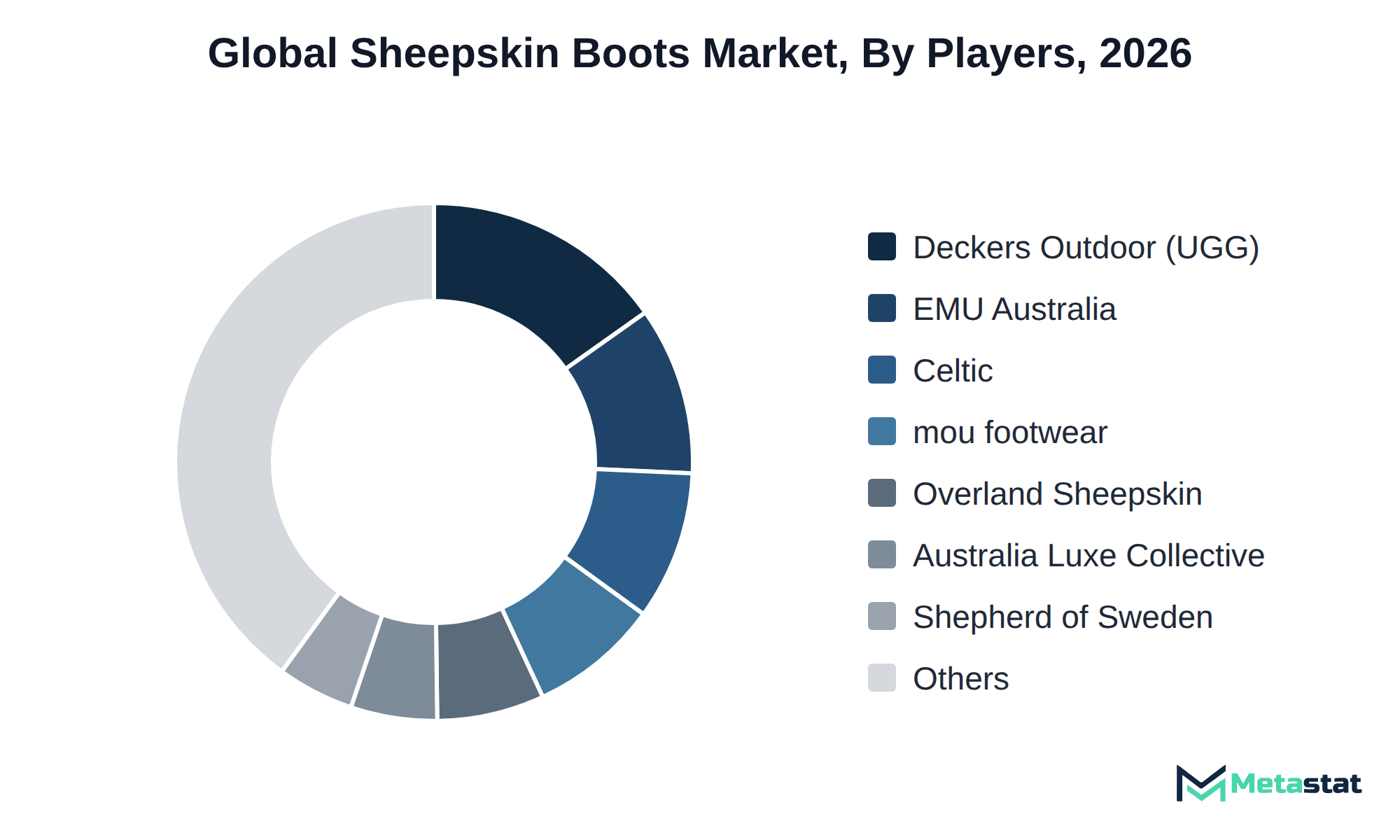
Companies in the Sheepskin Boots market compete on a variety of factors, including price, quality, and brand reputation. Buyers evaluate options based on material quality, design, and comfort, often seeking products that align with their personal preferences and lifestyles. Companies differentiate themselves through unique offerings, customization options, and strong customer service.
Deckers Outdoor Corporation (UGG) emphasizes brand prestige and premium quality, targeting consumers who prioritize luxury footwear. EMU Australia focuses on sustainability and eco-friendly materials, appealing to environmentally conscious buyers. Meanwhile, Australia Luxe Collective positions itself by offering a blend of style and functionality, catering to fashion-forward consumers seeking comfort without compromising aesthetics.
The growth trajectory of the Sheepskin Boots market depends on several key developments. Firstly, the increase in demand for Ankle and Mini Boots, driven primarily by younger consumers seeking fashion-forward options, will contribute significantly to market expansion. Secondly, the rise in online shopping continues to widen access to sheepskin boot styles. Online stores are expected to grow at a CAGR of 7.7%, increasing from USD 1,084.2 million in 2026 to USD 1,818.7 million by 2033. Conversely, risks including fluctuating raw material prices and supply chain disruptions could hinder growth, particularly impacting the Twinface Sheepskin segment, which is anticipated to reach USD 2,191.3 million by 2033. Addressing these challenges will be crucial for realizing the projected market size.
By Boot Height: Ankle and Mini Boots, Mid-Calf Boots, Knee-High Boots, Others (over-the-Knee Boots)
By Upper Material: Twinface Sheepskin, Suede Leather, Smooth Leather, Textile, Others (Synthetic Leather and Mixed-Material Uppers)
By End User: Women, Men, Children
By Distribution Channel: Online Stores, Specialty Footwear Stores, Department Stores, Supermarkets and Hypermarkets, Others (Catalog and TV Shopping)
The report strategically identifies and profiles the key market players and analyses their core competencies in each sub-segment of the Sheepskin Boots market.
Report Attributes | Details |
Study Period | 2021-2033 |
Base Year | 2025 |
Estimated Year | 2026 |
Forecast Period | 2026-2033 |
Historical Period | 2021-2025 |
Growth Rate | CAGR 5.5% from 2026 to 2033 |
Revenue Unit | USD million |
Segmentation | By Boot Height, Upper Material, End User, Distribution Channel, and Region |
By Region | North America (By Boot Height, Upper Material, End User, Distribution Channel, and Country)
|
Europe (By Boot Height, Upper Material, End User, Distribution Channel, and Country)
| |
Asia Pacific (By Boot Height, Upper Material, End User, Distribution Channel, and Country)
| |
South America (By Boot Height, Upper Material, End User, Distribution Channel, and Country)
| |
Middle East and Africa (By Boot Height, Upper Material, End User, Distribution Channel, and Country)
|
Find answers to common questions about this report
The Sheepskin Boots market size was valued at USD 2,395.7 million in 2025.
The market is projected to grow at a CAGR of 5.5% during the forecast period from 2026 to 2033.
The North America Sheepskin Boots market size is estimated to reach USD 1,324 million by 2033.
The leading segment in the Sheepskin Boots market is Ankle and Mini Boots, with a projected value of USD 1,711.4 million by 2033. This segment outpaces others in growth, reflecting a compound annual growth rate of 6.6 percent.
The increasing preference for sheepskin boots among women significantly influences market demand, driven by a focus on comfort, quality, and style. The expansion of online retail channels enhances accessibility, further driving purchases among consumers.
North America holds the dominant share of the Sheepskin Boots market, with a value of USD 1,324 million projected for 2033, representing 37.2 percent of the total market. This region surpasses others in market share, including Europe and Asia Pacific.
The high price point of sheepskin boots limits demand among budget-conscious consumers, particularly affecting the children's segment. rising raw material costs pressure profitability, leading to increased expenses for manufacturers and potential price adjustments for end consumers.
The expansion of online retail channels significantly enhances accessibility for consumers, driving purchases. the shift towards sustainable materials aligns with consumer preferences for ethically sourced products, further supporting market adoption.
The Sheepskin Boots market is estimated to reach a valuation of USD 3,697.2 million by 2033.
Key players operating in the Sheepskin Boots market include Deckers Outdoor Corporation (UGG), EMU Australia, Celtic & Co., mou footwear, Overland Sheepskin Co., Australia Luxe Collective, and Kooshy.
The analysts below cover Consumer Goods research at Metastat Insights.
LEAD ANALYST
Utkarsh Khirodkar is a Lead Market Research Analyst at MetaStat Insight, specializing in market intelligence, technology sector assessments, and competitive strategy.
Ambulatory surgical centers have very different purchasing cycles for robotic-assisted surgery platforms than major hospital networks. The MetaStat Insight study focused squarely on capital expenditure depreciation, procedural reimbursement pathways, and surgeon training overhead. That operational clarity made it much simpler to validate multi-year procedure growth forecasts against actual ambulatory center adoption patterns.
When planning edge sensor rollouts across refinery environments, generic IoT reports typically miss the harsh-environment certification bottlenecks. MetaStat Insight gave an objective evaluation of ATEX and Class 1 Division 2 hardware availability, along with realistic five-year maintenance cycle cost projections. The comparison of wireless mesh versus private cellular backhaul helped our team pressure-test network reliability models for remote processing facilities.
In the biological seed treatment space, registration timelines vary drastically between the European Union, Brazil, and North America. The MetaStat Insight research handled these cross-border regulatory barriers with genuine nuance, mapping commercialization pathways alongside historical field adoption rates. The segmentation between microbial strains and biochemical active ingredients was particularly well structured.
Explore related market intelligence reports worth reading alongside this one.