
Explore the dynamics of the Fish market, focusing on key growth drivers, consumer behaviors, and the impact of sustainability. Understand challenges and potential growth areas.
The demand for seafood continues to grow, significantly impacting the Fish market's trajectory. Understanding the reasons behind this expansion, especially in specific regions including Asia Pacific, provides insight into future opportunities for stakeholders in this sector.
What is driving growth in the Asia Pacific region?
The Asia Pacific region plays a crucial role in the global Fish market, accounting for 46.4% of the total market share. This dominance results from several factors, including a large population, increasing purchasing power, and cultural inclinations towards seafood consumption. With populations expanding and affluence rising, more consumers seek seafood because a primary protein source. This shift has led to a notable rise in demand for sustainable seafood options, attributed to consumers prioritizing health-conscious choices and environmental responsibility.
Countries within this region have witnessed significant growth in seafood consumption, driven by health trends emphasizing the benefits of fish, including omega-3 fatty acids. This upward trajectory creates a market environment conducive to innovation, with companies introducing new products and processing methods that appeal to health-driven consumers.
How is consumer behavior influencing the Fish market?
Consumer preferences are evolving rapidly, with a heightened focus on sustainability and ethical sourcing practices. Today's consumers, particularly younger demographics, are more aware of environmental issues and actively seek products that align with their values. This consciousness influences buying decisions, prompting companies to adapt by sourcing fish from certified sustainable fisheries and enhancing brand loyalty.
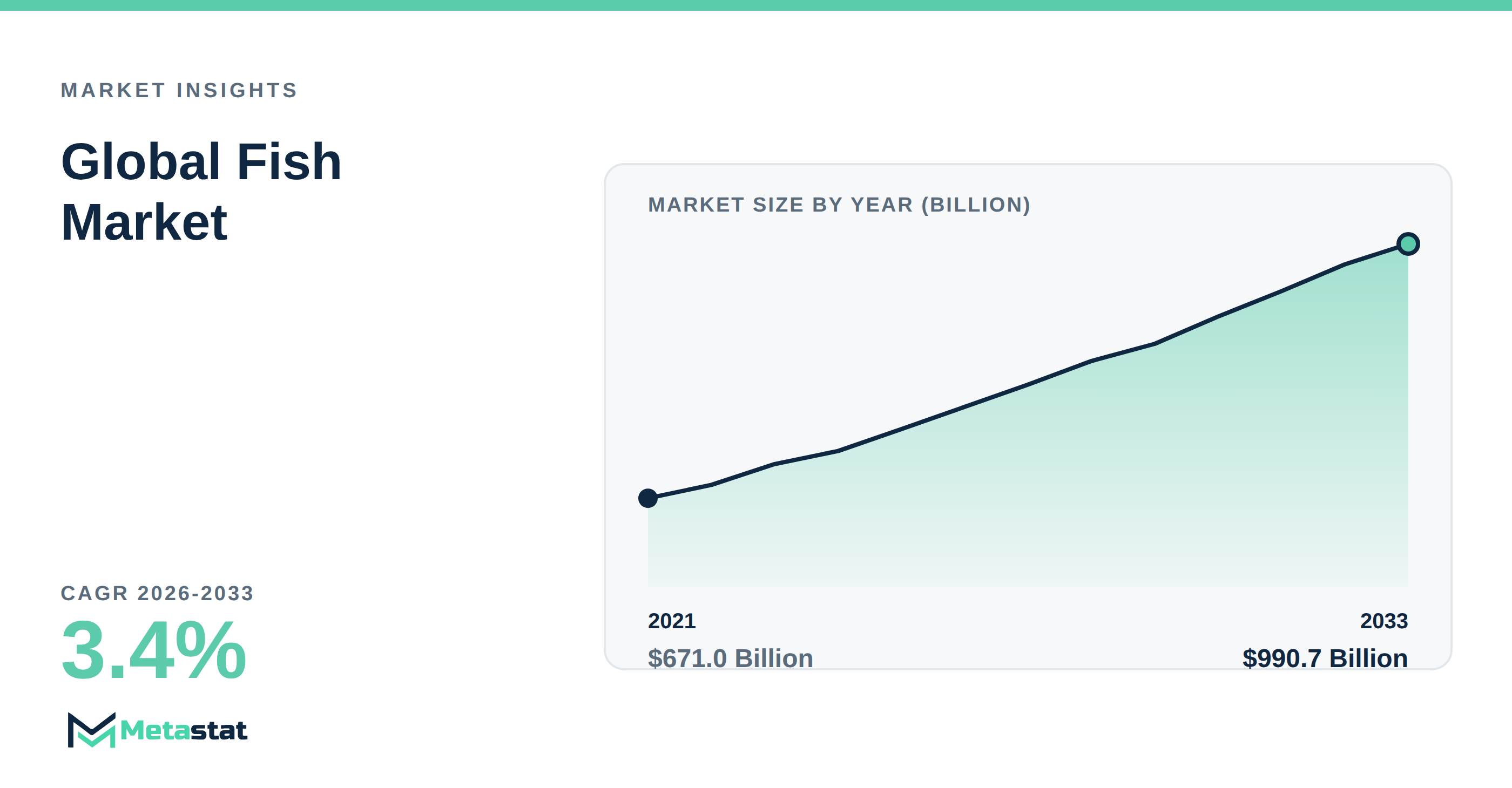
The integration of sustainable practices in production processes creates opportunities for companies to diversify their offerings while improving operational efficiencies. This alignment with consumer expectations enhances brand reputation and broadens the revenue stream because more buyers seek environmentally friendly products. The Fish market's growth trajectory, projected at USD 990.7 billion by 2033, can be attributed in part to this shift toward responsible consumption.
What challenges are impacting the Fish market?
Despite the positive trends, the Fish market faces considerable challenges, particularly regarding regulatory compliance and geopolitical risks. Stricter regulations concerning fishing practices increase operational costs for suppliers, which often proves burdensome for smaller firms. These rising costs limit competition and further consolidate the market in favor of larger players better equipped to absorb such expenses.
Geopolitical instability adds another layer of complexity, leading to uncertainties in trade relationships and supply chain disruptions. This volatility results in unpredictable pricing dynamics, complicating the ability of businesses to maintain consistent inventory levels. Companies navigate these challenges effectively to sustain their growth and market share in an increasingly competitive environment.
What opportunities exist for innovation and growth?
The Fish market is ripe for innovation, particularly with rising technological advancements in fishing and aquaculture practices. Investment in research and development focuses on enhancing sustainability measures and improving product quality, which is essential in meeting evolving consumer demands. Companies that prioritize sustainable sourcing and environmentally responsible practices are likely to capture a larger market share.
Emerging trends indicate a growing interest in specific fish species, notably Alaska Pollock and Atlantic Cod, known for their health benefits and culinary versatility. This shift allows companies to diversify their product offerings, catering to health-conscious consumers and enhancing their competitiveness.
Advancements in processing techniques and supply chain management contribute to a more efficient market environment. Companies leveraging these technologies reduce operational costs and enhance product availability, positioning themselves favorably for sustained growth.
In summary, the Fish market presents substantial growth potential driven by consumer demand for sustainable seafood, particularly in the Asia Pacific region. While challenges exist due to regulatory pressures and geopolitical risks, opportunities for innovation and product diversification position companies for success. Adapting to changing consumer behaviors and investing in sustainable practices will be crucial for stakeholders aiming to thrive in this dynamic market. For detailed insights, refer to the Global Fish Market report.
Tags
About the Authors

LEAD ANALYST
Utkarsh Khirodkar is a Lead Market Research Analyst at MetaStat Insight, specializing in market intelligence, technology sector assessments, and competitive strategy.

LEAD PRINCIPAL ANALYST, PHARMA AND HEALTHCARE
Food and Beverages · Healthcare · Healthcare IT · Medical Devices
Ajay Devgire is the Lead Healthcare Analyst at MetaStat Insight, leading strategic research and market intelligence initiatives across the global healthcare domain.

SENIOR RESEARCH ANALYST
Biotechnology · Food and Beverages · Medical Devices · Packaging
Snehal Pasalkar is a Research Analyst at MetaStat Insight, operating at the intersection of life sciences research, competitive strategy, and market intelligence.