
The Ship-to-Shore (STS) Container Cranes market is influenced by various factors, including automation, infrastructure investment, and geopolitical tensions. Understanding these dynamics is essential for stakeholders.
The Ship-to-Shore (STS) Container Cranes market is influenced by a range of critical factors that often get oversimplified in broader discussions. While many focus primarily on growth rates, the underlying aspects reveal a more intricate picture that stakeholders understand for effective decision-making.
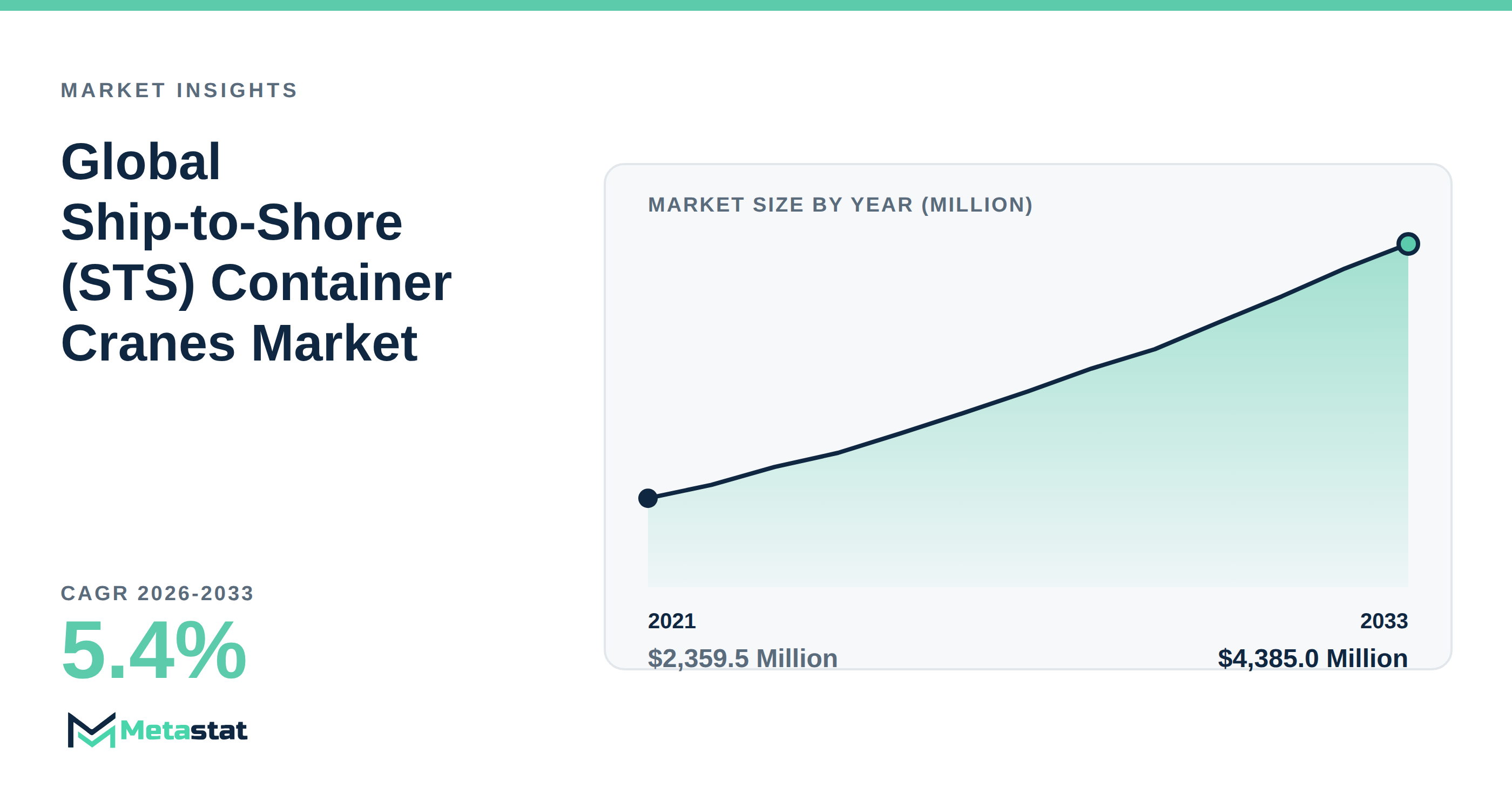
Investment in infrastructure modernization stands out because a fundamental driver for the development of the Ship-to-Shore (STS) Container Cranes market. Both government and private sector entities are increasingly dedicating resources to upgrade ports and enhance logistics capabilities. This commitment to revitalizing both physical and digital infrastructure translates into improved operational efficiency and increased shipping capacity. With rising global trade volumes, the need for advanced handling equipment becomes apparent, leading to consistent investments in STS cranes. The push for enhanced trade corridors and supply chain resilience supports this trend, resulting in a favorable investment environment for manufacturers looking to innovate and expand.
Technological integration significantly contributes to the expansion of the market. The rising adoption of automation, artificial intelligence, and predictive maintenance technologies enhances operational efficiency and productivity at ports. Companies are placing a premium on modern solutions that streamline crane operations while delivering cost efficiencies. This focus on innovation results in heightened interest in equipment that improves throughput and reduces turnaround times.
Nevertheless, challenges linked to high capital investment requirements remain a significant barrier to growth in the Ship-to-Shore (STS) Container Cranes market. The substantial costs associated with purchasing and installing these specialized cranes create hurdles, particularly for smaller enterprises. This financial burden often limits competition, because only larger firms with robust capital affords to invest in advanced technologies and infrastructure. Rising operational costs, alongside increased material expenses and compliance with safety regulations, further complicate financial planning for operators.
Geopolitical instability adds another layer of complexity for stakeholders in the Ship-to-Shore (STS) Container Cranes market. Increasing trade tensions disrupt supply chains, resulting in heightened costs and delays. Consequently, stakeholders adapt to the shifting political landscape to maintain their competitive edge. While geopolitical tensions escalate, companies face supply chain disruptions that strain procurement timelines and elevate operational expenses.
The push for automation in container handling operations is reshaping the market dynamics. Automated STS cranes enhance terminal productivity by reducing reliance on manual labor while improving loading and unloading efficiencies. The continued implementation of advanced configurations, including twin-lift and tandem-lift setups, allows for simultaneous handling of multiple containers, further boosting operational throughput. This movement aligns with the worldwide initiative to enhance productivity while ensuring cost efficiency.
Amid these opportunities and hurdles, noteworthy demand for larger STS cranes arises from the expansion of megamax vessels. Ports are increasingly investing in cranes capable of handling these ultra-large container ships, which necessitates upgrades to existing infrastructures. While ports modernize their operational capabilities, manufacturers are compelled to innovate, providing cranes that address the evolving demands of contemporary shipping.
Environmental sustainability initiatives are fostering a growing emphasis on electrification and energy-efficient technologies within the market. Ports are actively seeking electric cranes to meet emissions targets while reducing energy consumption. This shift aligns with broader sustainability objectives and presents new opportunities for manufacturers focused on environmentally sustainable solutions.
Looking towards the future, emerging regional demands shape the trajectory of the Ship-to-Shore (STS) Container Cranes market. The Asia Pacific region, particularly nations like China and India, is experiencing rapid urbanization and industrialization, resulting in heightened container traffic. This growth drives significant investments in port infrastructure, creating opportunities for suppliers of advanced container handling solutions.
Understanding the nuances of the Ship-to-Shore (STS) Container Cranes market requires a comprehensive analysis of the interconnected dynamics at play. From infrastructure investments to technological advancements, each factor influences market trends and growth potential. Stakeholders leverage these insights to navigate the complexities of this market, positioning themselves strategically for future success. For in-depth insights into the market's growth patterns, explore the Global Ship-to-Shore (STS) Container Cranes Market.
Tags
About the Authors

LEAD ANALYST
Utkarsh Khirodkar is a Lead Market Research Analyst at MetaStat Insight, specializing in market intelligence, technology sector assessments, and competitive strategy.

ENERGY & INFRASTRUCTURE INDUSTRY CONSULTANT
Automotive and Transportation · Electronics and Semiconductor · Energy and Power · Machinery & Equipment
Saurabh Vasant Ganvir consults for Energy & Infrastructure Industry at MetaStat Insight, specializing in renewable energy, solar EPC, and electric vehicle (EV) infrastructure markets.