
LEAD ANALYST
Utkarsh Khirodkar is a Lead Market Research Analyst at MetaStat Insight, specializing in market intelligence, technology sector assessments, and competitive strategy.

Global Ship-to-Shore (STS) Container Cranes Market Size, Share, By Crane Size Class (Panamax, Post-Panamax, Super Post-Panamax and Megamax), By Lifting Configuration (Single Lift, Twin Lift and Tandem Lift), By Level of Automation (Conventional / Manual STS Cranes, Semi-Automated STS Cranes and Fully Automated STS Cranes), By Crane Profile Type (High-Profile STS Cranes and Low-Profile STS Cranes), Industry Analysis, Growth, Trends, and Forecast, 2026-2033
Report ID
MSI-5266
Published
September, 2026
Pages
276 Pages
Format
Historical
Base year
Forecast
Forecast period
Report Details
Market Valuation: Valued at $2,878.1 Million in 2025, projected to reach $4,385 Million by 2033 at a 5.4% CAGR.
Dominant Segment: The Post-Panamax segment leads the market, driven by increased shipping capacity and the need for equipment that accommodates modern port dimensions.
Geographic Lead: Asia-Pacific is the largest market, accounting for 56.3% of the global share in 2025, fueled by rapid industrialization and expansion of port infrastructure.
What's Inside: The report includes comprehensive competitive coverage, detailed market segmentation, and forecasts from 2026 to 2033, providing insights into key trends and dynamics.
Emerging Demands: Emerging regional demands, particularly in China and India, are shaping market opportunities as investments in port infrastructure and crane technology increase.
Investment in Infrastructure: Significant investments in infrastructure development are driving market growth, as stakeholders seek to enhance logistics capabilities and operational efficiency.
Choose Your License
Global Ship-to-Shore (STS) Container Cranes Market
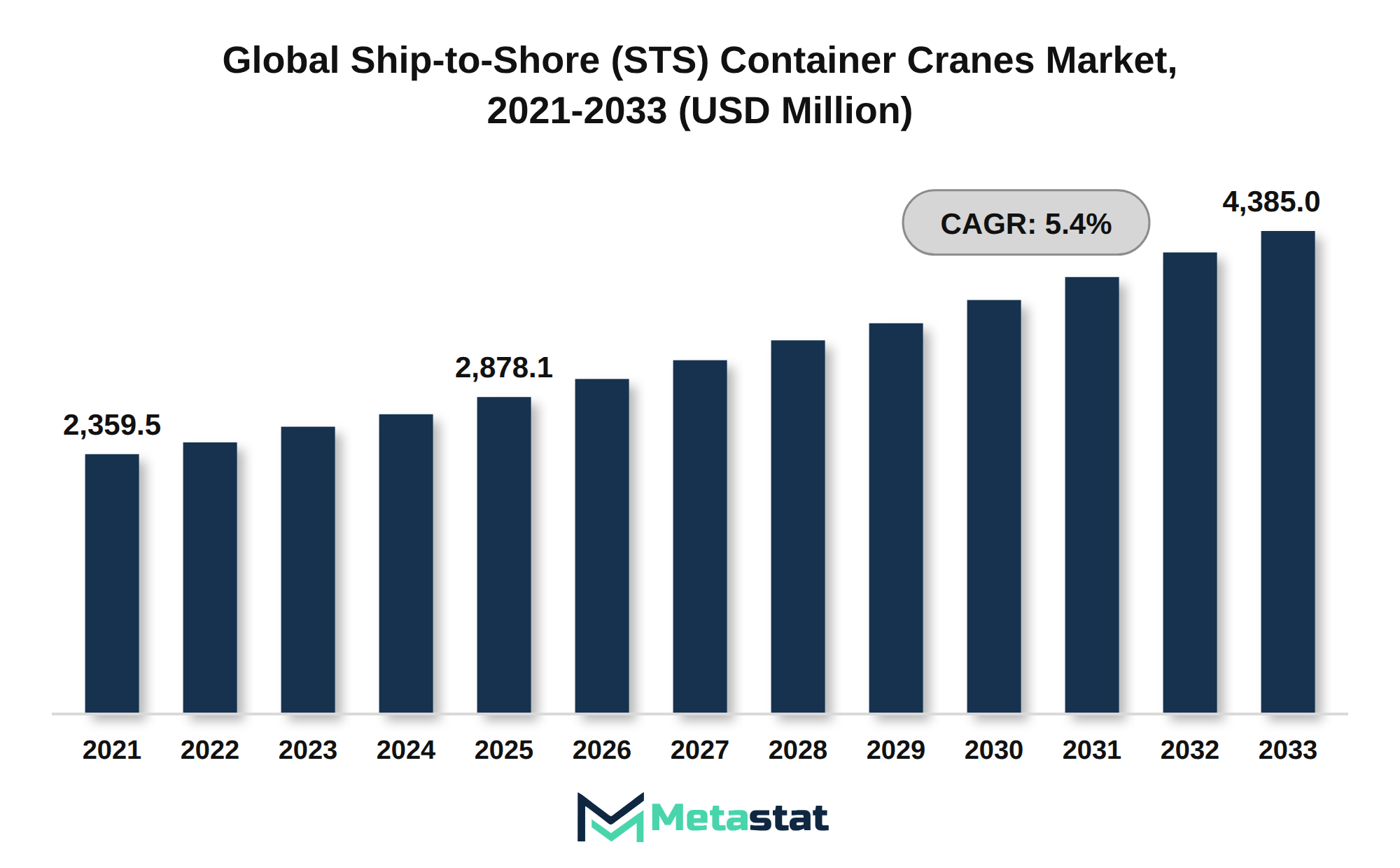
The global Ship-to-Shore (STS) Container Cranes market was valued at USD 2,878.1 million in 2025 and is projected to reach USD 4,385 million by 2033, growing at a CAGR of 5.4% over the forecast period.
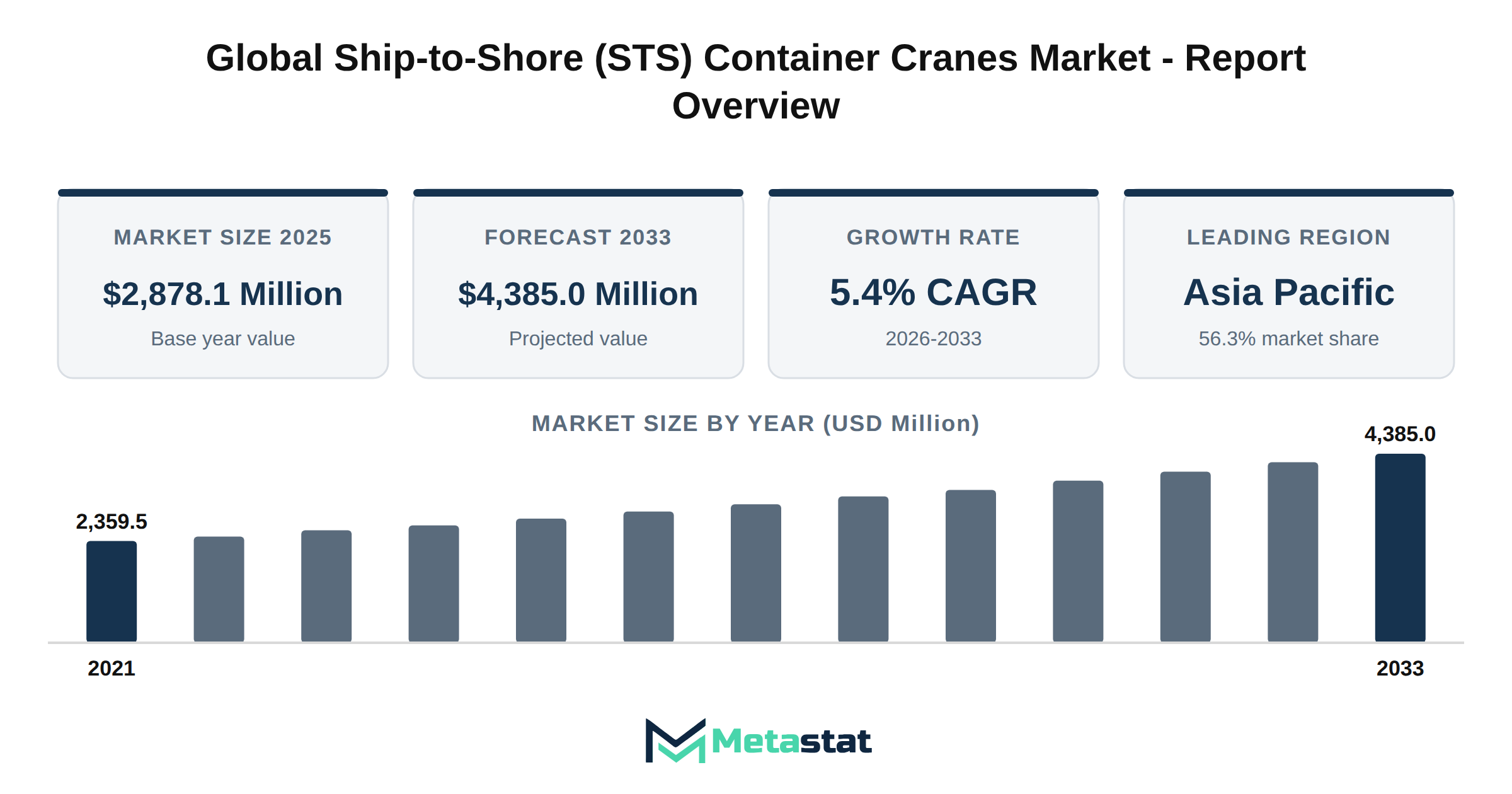
The Ship-to-Shore (STS) Container Cranes market reached a valuation of USD 2,878.1 million in 2025. This figure represents a significant increase from the USD 2,359.5 million recorded in 2021. Projections indicate a strong growth trajectory, with the market anticipated to reach USD 4,385 million by 2033, reflecting a compound annual growth rate (CAGR) of 5.4% during the forecast period from 2026 to 2033.
Automation and remote operation trends in ship-to-shore cranes are gaining traction, driven by advancements in technology. These innovations enhance operational efficiency and reduce labor costs, leading to increased adoption among terminal operators seeking to optimize performance. The growing integration of smart sensors and predictive maintenance technologies in cranes supports enhanced reliability and operational uptime.
Growth in megamax vessel sizes influences demand for larger STS cranes. Ports increasingly require cranes capable of handling these ultra-large container vessels, necessitating investments in larger and more capable crane systems. This trend encourages manufacturers to innovate and develop cranes that meet the evolving requirements of modern shipping.
Port capacity expansion initiatives significantly support investments in ship-to-shore cranes, driven by terminals striving to accommodate growing cargo volumes. These expansions often involve upgrading existing infrastructure and integrating advanced crane systems to enhance throughput and operational efficiency.
Automated STS cranes transform container terminal productivity through improved quayside throughput. The adoption of twin-lift and tandem-lift configurations allows for the simultaneous handling of multiple containers, thereby increasing loading and unloading efficiency. This enhanced capability effectively reduces turnaround times for vessels.
Electrification and energy-efficient technologies for STS cranes are increasingly prioritized, aligning with global decarbonization initiatives. Ports are actively adopting electric cranes to lower emissions and energy consumption, thereby contributing to sustainability goals. This shift opens new opportunities for manufacturers focused on developing environmentally friendly crane solutions.
In addition, the integration of AI and computer vision technologies in automated operations enhances safety and operational accuracy. Remote operator stations reshape traditional crane operations by enabling remote monitoring and control, further increasing efficiency and safety standards in container handling.
Automation in ship-to-shore container cranes is reshaping operational efficiencies within the market. The integration of remote operation capabilities enhances performance and safety, driving the adoption of advanced technologies among port operators. This trend aligns with the global push towards increased productivity and reduced operational costs.
Growth in megamax vessels significantly influences the demand for larger STS cranes. Ports are increasingly investing in equipment capable of handling these ultra-large container vessels, necessitating upgrades to existing infrastructure and crane systems. This development drives competition among manufacturers to provide innovative solutions tailored to these requirements.
Port capacity expansion remains a critical factor supporting investments in ship-to-shore cranes. Increased trade volumes and larger vessels compel ports to enhance their capabilities, prompting investments in more efficient and robust crane systems. This trend contributes to the overall growth of the market, driven by operators seeking to maximize throughput and minimize turnaround times.
Automated STS cranes are transforming container terminal productivity by streamlining operations and reducing labor costs. With enhanced accuracy and efficiency, these cranes facilitate quicker loading and unloading processes, leading to improved operational performance in terminals worldwide.
Low-profile STS cranes are gaining importance, particularly at height-restricted ports. The design of these cranes allows for increased flexibility in handling containers in constrained environments, enabling ports to optimize their operational capabilities without compromising safety or efficiency.
Twin-lift and tandem-lift STS cranes are improving quayside throughput by enabling the simultaneous handling of multiple containers. This capability significantly enhances loading and unloading efficiency, aligning with the increasing demands of global shipping operations.
Electrification and energy-efficient technologies are becoming a priority within the market, driven by sustainability initiatives and regulatory pressures. Ports are increasingly adopting electric cranes to reduce emissions and improve energy consumption, positioning themselves because environmentally responsible players in the logistics sector.
Smart sensors and predictive maintenance technologies are enhancing the reliability of ship-to-shore cranes. By providing real-time data and insights, these technologies enable operators to anticipate maintenance needs, thereby reducing downtime and extending the lifecycle of equipment.
Integration of AI and computer vision in automated STS operations enhances decision-making processes and operational efficiency. These technologies facilitate real-time monitoring and analysis, supporting the optimization of crane performance and overall terminal operations.
Remote operator stations are reshaping container crane operations by allowing for centralized control of multiple cranes from a single location. This approach improves safety and efficiency while enabling better resource allocation across terminal operations.
The modernization and retrofit demand at existing terminals signify the market's adaptability to new technologies. Ports are investing in upgrades to extend the lifespan of their cranes while integrating modern features, ensuring they remain competitive in a changing environment.
Design requirements for ship-to-shore cranes are increasingly influenced by ultra-large container vessels. Manufacturers are adapting their designs to meet the specific needs of these vessels, which enhances operational efficiency and safety in port environments.
Port decarbonization initiatives accelerate the adoption of electric STS cranes. These efforts align with global sustainability goals and provide ports with the opportunity to reduce their carbon footprint while maintaining operational efficiency.
Developments in safety and anti-collision technology for ship-to-shore cranes enhance operational security. These advancements reduce the risk of accidents, thereby promoting a safer working environment for crane operators and port personnel.
Container terminal automation drives demand for integrated crane systems that streamline operations. Automation solutions enable improved coordination between cranes and other terminal equipment, enhancing overall productivity and efficiency.
Optimization of lifecycle costs and maintenance for STS cranes is becoming increasingly critical because operators seek to maximize their return on investment. This focus on cost efficiency supports long-term sustainability within the market.
Global port infrastructure investments create significant opportunities for the ship-to-shore cranes market. Enhanced connectivity and capacity improvements encourage the adoption of advanced crane technologies, supporting trade growth across regions.
Expansion of container ports in the Asia Pacific region is supporting increased demand for STS cranes. Growing trade activity and investments in infrastructure developments position this region because a key player in the global market.
Megaprojects in Middle Eastern ports create new opportunities for ship-to-shore cranes. These ambitious developments support regional trade and enhance operational capabilities, driving demand for advanced crane systems.
Competitive dynamics among global ship-to-shore crane manufacturers reflect the evolving landscape of the market. Companies are focusing on innovation and technological advancements to differentiate their offerings and capture market share.
Supply chain dynamics and structural steel cost fluctuations impact the pricing and availability of STS cranes. Manufacturers navigate these challenges to maintain competitiveness while ensuring the sustainability of their operations.
Digital twin and crane simulation technologies in container terminals enhance operational planning and training. These innovative tools allow for better visualization and analysis of operations, improving decision-making processes.
Cybersecurity requirements for automated and remote STS cranes are increasingly important because the market expands. Ensuring the integrity and security of operational technologies supports the safe implementation of advanced systems.
Adoption trends for high-profile versus low-profile STS cranes reflect distinct market needs. Operators prioritize crane types based on specific port constraints and operational requirements, influencing purchasing decisions in the market.
Replacement cycles for ship-to-shore cranes at mature container ports present growth opportunities for manufacturers. Upgrading aging equipment ensures continued efficiency and safety, aligning with modern operational standards.
Future growth opportunities in automated megamax STS cranes illustrate the market's trajectory because demand for larger vessels increases. Manufacturers are expected to benefit from this trend by developing advanced solutions tailored to evolving industry needs.
Investment in infrastructure development significantly influences the Ship-to-Shore (STS) Container Cranes market. Governments and private entities increasingly allocate resources toward port modernization and the enhancement of logistics capabilities. This emphasis on upgrading physical and digital infrastructure improves operational efficiency and shipping capacity, which benefits stakeholders across various industries.
Growing global trade volumes necessitate advanced handling equipment at ports, prompting investments in STS cranes. While nations focus on enhancing trade corridors and ensuring supply chain resilience, demand for efficient crane solutions escalates. This trend leads to increased capital investments, enabling suppliers to innovate and expand their offerings.
Technological integration drives this development, supported by automation and digitization that create demand for advanced STS cranes capable of meeting contemporary logistical challenges. Manufacturers and port operators prioritize modern solutions that enhance productivity while ensuring operational cost efficiencies. The market anticipates substantial growth, with stakeholders eager to adopt new technologies that optimize crane operations.
Technological integration significantly contributes to the growth of the Ship-to-Shore (STS) Container Cranes market. The increasing adoption of automation, artificial intelligence, and software solutions enhances operational efficiencies and productivity. Companies focus on digitizing legacy processes, which streamlines operations and reduces costs, contributing to a more competitive market environment.
Investment in advanced technologies influences the capabilities of cargo handling and logistics operations. Improved efficiency leads to higher throughput at ports, supporting the growing demand for STS cranes. This trend attracts further investments from stakeholders looking to modernize existing equipment and facilities, enhancing overall operational effectiveness.
Market players respond to these technological advancements with innovative product offerings. Enhanced automation features and intelligent systems differentiate products in the market and align with rising consumer expectations for productivity and efficiency. Such developments create new revenue streams and strengthen competitive positions for suppliers operating within the Ship-to-Shore (STS) Container Cranes market, supporting long-term growth and adoption.
High capital investment requirements significantly affect the Ship-to-Shore (STS) Container Cranes market. The initial costs associated with procuring and installing these specialized cranes create barriers for entry, particularly for smaller firms. This scenario often leads to limited competition, because only larger players with substantial financial resources invest in new technologies and infrastructure. Consequently, firms face operational challenges, including the allocation of funds for maintenance and upgrades, which further strains budgets.
Escalating operating costs tied to labor, materials, and compliance with safety standards exacerbate the financial burden. The necessity for continuous investment in training and retaining skilled labor adds another layer of complexity. This situation restricts firms’ ability to adapt to evolving market demands, causing delays in adopting newer, more efficient crane technologies.
Geopolitical instability further complicates investment strategies within the market. Firms operating in regions affected by political unrest experience disruptions in supply chains, leading to increased costs and uncertainty in procurement timelines. Such instability deters potential investments in new equipment, limiting the expansion of operations and capacity.
These factors collectively hinder growth prospects within the Ship-to-Shore (STS) Container Cranes market, slowing down overall market development and adoption rates. The combination of high capital requirements, rising operating costs, and geopolitical challenges highlights the need for strategic planning and financial management in navigating the complexities of this market.
Geopolitical fragmentation significantly affects the Ship-to-Shore (STS) Container Cranes market through increased trade deficits and tariff friction. Regions experiencing heightened geopolitical tensions face challenges in cross-border trade, leading to increased costs and delays in procurement. This instability forces stakeholders to evaluate alternate supply routes, impacting the competitive landscape and increasing operational costs.
Technological disruptions further complicate market dynamics, driven by companies navigating complex research and development integrations while striving for innovation. The requirement for interoperability among various technological solutions creates friction, hindering overall operational efficiency and delaying the launch of new products within the market. These challenges exacerbate existing pressures related to rising input costs and margin compressions.
Logistical disruptions and supply chain instability continue to challenge the market, with fluctuating component availability resulting in project delays and increased expenses. Stakeholders face the risk of shortages and supply interruptions, particularly in volatile geopolitical climates. Consequently, managing logistics effectively becomes critical for maintaining competitive advantage.
Environmental pressures and evolving regulatory standards introduce additional complexity. Companies within the Ship-to-Shore (STS) Container Cranes market grapple with compliance overhead due to tightening global standards surrounding sustainability and decarbonization mandates. The need for enhanced environmental stewardship increases operational costs while requiring investments in new compliance systems and technologies.
Talent retention pressures, arising from skill gaps within the workforce, further challenge the market. The transition towards automation and advanced technologies necessitates a workforce equipped with specialized skills, yet the current talent pool often lacks sufficient expertise. This situation hampers the adoption of innovative solutions and adversely affects future growth prospects.
The Ship-to-Shore (STS) Container Cranes market experiences notable growth driven by emerging regional demands. Several regions exhibit increasing container traffic, prompting investments in port infrastructure and crane technology to enhance operational efficiency. Countries in the Asia Pacific region, particularly China and India, experience rapid urbanization and industrialization, leading to heightened demand for advanced container handling solutions. This trend creates substantial opportunities for suppliers within the market to expand their presence and introduce innovative products tailored to meet local needs.
Infrastructure modernization further drives the market forward. Ports worldwide initiate modernization projects to accommodate larger vessels and improve logistical capabilities. The integration of next-generation innovations, including automation and digital transformation, contributes to creating more efficient and sustainable port operations. Stakeholders focusing on this technological advancement capitalize on the increasing need for automated cranes, which improve throughput and reduce operational costs.
Strategic consolidation and cross-industry mergers enhance market dynamics by encouraging collaboration between various stakeholders. This approach promotes knowledge sharing and resource utilization, ultimately leading to the development of cost-effective solutions and improved service offerings. The ongoing trend towards sustainability imperatives reinforces the market's evolution, reflecting how stakeholders align with environmental, social, and governance (ESG) driven initiatives, promoting eco-friendly practices in crane manufacturing and operation.
Downstream market diversification emerges because a significant opportunity for growth within the Ship-to-Shore (STS) Container Cranes market. Companies increasingly explore niche applications beyond traditional shipping, including renewable energy and specialized cargo handling, enabling them to capture additional revenue streams. This diversification fuels demand for innovative lifting configurations and automation levels, allowing manufacturers to cater to a broader audience while maximizing their competitive advantage in the market.
The Global Ship-to-Shore (STS) Container Cranes market is segmented based on Crane Size Class, Lifting Configuration, Level of Automation, and Crane Profile Type.
Valued at USD 406.1 million in 2026, the Panamax segment is projected to reach USD 465.7 million by 2033, with a CAGR of 2% during the forecast period. Demand for Panamax cranes stems from their ability to efficiently handle containers in ports with size restrictions, a common scenario in many global shipping hubs. The ongoing expansion of shipping activities, particularly in regions with significant port traffic, drives the adoption of this crane size class.
Enhancements in lifting technologies and engineering improvements contribute to segment growth, facilitating better cargo handling and operational efficiency. The Panamax segment benefits from increasing investments in port infrastructure, driven by facilities aiming to accommodate larger vessels while optimizing container throughput. Regulatory compliance standards regarding safety and operational efficiency influence investments in newer, more efficient equipment.
Technological advancements offer strategic opportunities for manufacturers and suppliers within the segment to leverage next-generation upgrades. Competition intensifies, prompting companies in the Ship-to-Shore (STS) Container Cranes market to invest in research and development, focusing on innovative designs and automation features. This innovation enhances overall performance and meets the growing demand for environmentally sustainable and energy-efficient solutions.
Pricing volatility in raw materials impacts cost structures within the segment, pressuring profit margins for manufacturers. Companies manage supply chains strategically to mitigate risks related to raw material sourcing and logistics vulnerabilities. The Panamax segment presents a unique blend of challenges and opportunities, creating a dynamic environment for stakeholders in the Ship-to-Shore (STS) Container Cranes market.
Growing demand for larger vessels in global shipping significantly influences the Post-Panamax segment within the Ship-to-Shore (STS) Container Cranes market. This segment benefits from increased shipping capacity, necessitating equipment that accommodates the dimensions of modern ports and container ships. Enhanced loading and unloading efficiency drives adoption, particularly in regions with substantial shipping traffic, including Asia Pacific.
Technological maturation plays a critical role in the segment's evolution. Advancements in crane design and automation improve operational efficiency and safety, generating interest among port operators seeking to optimize logistical performance. The segment is projected to reach USD 1,069.9 million by 2033, at a CAGR of 4.2% during the forecast period. Investments in next-generation upgrades remain a focal point for stakeholders.
The ongoing transition toward larger crane sizes facilitates expanded operational capabilities, aligning with shifting consumption patterns in maritime logistics. Increased trade volumes and the continuous push for faster turnaround times stimulate demand for Post-Panamax cranes, reinforcing their importance in the market. Strategic opportunity windows emerge because manufacturers adapt to evolving regulatory compliance standards, particularly concerning environmental sustainability and energy efficiency.
Cost structures in the segment reflect the investment required for advanced technology and materials. Price volatility associated with raw materials impacts margin pressures, requiring manufacturers to develop resilient supply chains. Disruptive alternatives, including automated solutions and modular designs, challenge traditional crane concepts, driving innovation and differentiation within the market. This dynamism supports the segment's growth trajectory and ensures alignment with market demands.
Investment in the Super Post-Panamax segment continues to gain traction, driven by increasing demand for larger container vessels that enhance cargo capacity and improve supply chain efficiency. Ship operators seek cranes that match these larger vessels, fueling the segment's growth. Expanding port infrastructure and modernization initiatives further support the adoption of advanced cranes capable of handling heightened load capacities. Technological advancements in automation and smart features contribute significantly to operational efficiency, reducing turnaround times and enhancing productivity. End-users, particularly in the shipping and logistics sectors, benefit from the improved capabilities of Super Post-Panamax cranes, supporting their operational objectives.
The Super Post-Panamax segment is expected to reach USD 1,733.8 million by 2033. Pricing dynamics reflect the segment's premium positioning within the market, with heightened initial capital investment offset by long-term operational savings. The market experiences ongoing challenges related to raw material sourcing and potential disruptions in the supply chain. However, the strategic opportunity windows presented by increasing global trade volumes create favorable conditions for investment in this segment. Port operators focus on enhancing their technological capabilities, ensuring alignment with industry standards, and meeting the evolving regulatory compliance landscape.
Growing recognition of the advantages of Megamax cranes drives significant expansion in the Ship-to-Shore (STS) Container Cranes market. High throughput capabilities allow ports to handle larger container vessels, enhancing operational efficiency and reducing turnaround times. Ports with advanced infrastructure increasingly adopt Megamax cranes to accommodate the larger container ships prevalent in international shipping. The compound annual growth rate (CAGR) of 7.6% during the forecast period reflects increasing investment and technological enhancement in this segment.
Advancements in engineering and materials science contribute to the evolution of Megamax cranes. Innovations in automation and lifting systems enhance performance and reliability, catering to the demands of modern port operations. The segment's growth aligns with rising global trade volumes and the expansion of shipping networks, prompting ports to upgrade equipment to remain competitive.
Demand for Megamax cranes emphasizes the importance of regulatory compliance and operational safety standards. Manufacturers enhance their offerings to meet stringent requirements, ensuring that clients benefit from advanced safety features and energy-efficient designs. The market matures, and investments in research and development play a crucial role in driving innovation within the Megamax segment.
Megamax cranes represent a strategic opportunity window for manufacturers aiming to capture significant market share. Establishing alliances with major shipping companies and port authorities facilitates the penetration of innovative solutions tailored to specific operational needs. The industry shifts toward sustainability, and Megamax cranes adopting greener technologies attract investment and support the overall growth of the market.
Valued at USD 1,545.3 million in 2026, the Single Lift segment is projected to reach USD 2,029.4 million by 2033, achieving a CAGR of 4% during the forecast period. Demand drivers for this segment include the increasing volume of containerized cargo and the need for efficient loading and unloading processes at ports. Enhanced productivity and reduced turnaround times are crucial for shipping operators, driving adoption of Single Lift configurations that allow for higher operational flexibility.
Technological maturation influences segment expansion, with advancements in crane design and automation capabilities enabling greater lifting precision and reliability. Next-gen upgrades, including improved control systems and predictive maintenance technologies, further enhance operational efficiencies. End-use dynamics within the shipping industry are shifting towards solutions that optimize cargo handling, which aligns with the evolving requirements of global trade networks.
Regulatory compliance standards concerning safety and environmental sustainability influence purchasing decisions, compelling operators to invest in modern equipment. The segment benefits from favorable cost structures, attributed to Single Lift cranes typically requiring lower initial investment compared to more complex configurations. Pricing volatility in raw materials impacts overall costs, but the long-term growth outlook remains positive due to consistent demand and technological advancements driving innovation in the market.
Growing interest in advanced lifting configurations fuels the adoption of Twin Lift technology within the Ship-to-Shore (STS) Container Cranes market. This trend aligns with increasing vessel sizes and cargo volumes, driving the need for more efficient loading and unloading processes. With Twin Lift setups, operators achieve higher productivity by simultaneously lifting two containers, optimizing operational throughput. The segment is projected to reach USD 1,609.3 million by 2033, at a CAGR of 6.3% during the forecast period.
Technological maturation enhances the performance of Twin Lift cranes. Innovations in automation and advanced control systems improve precision and safety, contributing to increased adoption rates in ports globally. Downstream applications, particularly in container shipping and logistics, benefit from the enhanced efficiency that Twin Lift technology offers, contributing to a more resilient supply chain.
Regulatory compliance and certifications remain essential for growth in the segment. Adhering to stringent safety standards builds confidence among operators and port authorities, facilitating increased investments in Twin Lift cranes. Competitive pressures drive manufacturers to innovate, resulting in new product developments and upgrades that cater to evolving market demands. The potential for substantial capital investment in this segment opens strategic opportunities for industry players seeking to expand their market presence.
Demand for tandem lift configurations within the Ship-to-Shore (STS) Container Cranes market reflects increasing operational efficiency and productivity, particularly in ports handling substantial container volumes. This configuration facilitates the simultaneous handling of two containers, allowing for expedited loading and unloading processes. Shipping lines focused on enhancing throughput and turnaround times in busy terminals significantly favor this lifting method. Ongoing advancements in automation technologies contribute to the rising adoption of tandem lifts, equipping cranes with sophisticated control systems for improved precision and reliability.
Growth in the tandem lift segment aligns with broader trends in port modernization and the expansion of terminal capacities. Ports investing in advanced handling equipment enhance performance metrics, ultimately attracting larger vessels. The segment is expected to reach USD 746.3 million by 2033, reflecting robust demand driven by operational needs and technological advancements. Increased competition among suppliers in the market encourages innovation, further enriching product offerings and driving growth initiatives.
Commitments to sustainability influence purchasing decisions, with ports seeking energy-efficient solutions to reduce their environmental footprints. This shift highlights the importance of adopting equipment with lower emissions and improved fuel efficiency. Regulatory compliance regarding environmental standards prompts investment in tandem lift technologies that align with sustainability goals, providing a competitive edge in the market.
Valued at USD 1,318.2 million in 2026, the Conventional / Manual STS Cranes segment is projected to reach USD 1,616.3 million by 2033, at a CAGR of 3% during the forecast period. Increasing operational demands in ports and terminals drive the need for efficient and reliable crane operations. Demand for Conventional / Manual STS Cranes arises from their established use in existing port infrastructure, where transitioning to advanced automation systems faces barriers stemming from high costs and retraining requirements.
The segment's growth is further supported by the necessity of maintaining productivity levels while increasing container throughput. Manufacturers focus on enhancing the reliability and lifespan of these cranes, which contributes to operational efficiency and overall cost management. Competition within the market encourages innovation, leading to gradual improvements in lifting capabilities and safety features.
In response to evolving regulatory compliance standards, manufacturers prioritize incorporating safety mechanisms and adhering to environmental regulations in their designs. This shift influences product development strategies within the market, aligning with global sustainability goals. The Conventional / Manual STS Cranes segment holds a critical position, balancing traditional operational practices with emerging technological advancements.
Semi-Automated STS Cranes segment is estimated to reach USD 1,632.5 million by 2033, at a CAGR of 6.1% during the forecast period. Increasing demand for efficiency and productivity in port operations drives the adoption of semi-automated solutions. Ports face pressure to optimize workflows while minimizing operational costs, leading to a shift toward cranes that offer a blend of human oversight and automated functionalities. This segment benefits from advancements in technology that enhance operational accuracy and throughput, appealing to operators seeking to improve service levels amid rising global shipping volumes.
Ports expanding their capacity find that the integration of semi-automated cranes supports higher handling rates without necessitating complete automation. This balance addresses concerns about initial capital expenditure while providing a pathway toward increased automation in the future. Regulatory compliance regarding safety and efficiency pushes operators to consider these cranes, which incorporate advanced safety features while maintaining efficient operations. The ability to adapt to changing market dynamics reinforces the semi-automated segment's relevance within the broader Ship-to-Shore (STS) Container Cranes market.
Fluctuations in raw material prices and supply chain challenges impact cost structures related to semi-automated cranes. Manufacturers focus on optimizing production processes to maintain competitive pricing while ensuring product quality. This focus helps mitigate margin pressures faced by operators and encourages investment in new crane technologies. Overall, the semi-automated cranes segment represents a strategic opportunity for growth in the market, aligning with the ongoing evolution of container handling practices.
Adoption of Fully Automated STS Cranes continues to gain momentum owing to increasing pressure on operators to enhance efficiency and reduce operational costs. Automation in crane operations reduces human error, leading to greater reliability and safety, vital in high-traffic port environments. The shift toward automation reflects broader trends in global shipping, with ports seeking advanced technologies to improve handling capacity and throughput. The growing complexity of logistics and rising port congestion have intensified the need for more efficient equipment, driving investments in this market segment.
Technological advancements play a significant role in shaping the Fully Automated STS Cranes segment. Innovations in artificial intelligence and machine learning enhance the capabilities of these cranes, allowing for better integration with existing port systems and improved data analytics. Enhanced features, including real-time monitoring and predictive maintenance, support the operational efficiency that port operators seek. The ongoing maturation of automation technologies strengthens the competitive advantages of fully automated solutions in the market.
The Fully Automated STS Cranes segment is expected to reach USD 1,136.2 million by 2033. This growth reflects the strategic investment decisions made by port authorities and terminal operators in response to evolving market demands. Port operators increasingly prioritize automation to meet the challenges of larger container vessels and the need for rapid turnaround times. With a focus on maximizing throughput, investments in automation represent a critical strategy for maintaining competitive positioning in the global shipping landscape.
Regulatory compliance with safety standards and environmental regulations further drives the adoption of fully automated solutions. Stricter guidelines encourage operators to transition away from conventional systems that rely heavily on manual labor. Fully automated cranes not only enhance efficiency but fulfill compliance requirements more effectively, aligning with the industry's sustainability goals. The segment is positioned to capture a growing share of the market because these trends continue to evolve.
Valued at USD 2,476.8 million in 2026, the High-Profile STS Cranes segment is projected to reach USD 3,474.7 million by 2033, at a CAGR of 5% during the forecast period. Increasing demand for efficient cargo handling in ports and terminals drives the growth of this segment, particularly in regions with significant shipping activities. Enhanced operational efficiency and increased throughput from high-profile cranes directly benefit shipping companies and terminal operators, leading to a competitive advantage in the market.
Technological maturation within the segment enables the introduction of advanced features and smart technologies in high-profile cranes. Adoption of automation and digital solutions enhances performance and reduces operational costs, appealing to logistics providers focused on maximizing productivity. Regulatory compliance standards regarding safety and environmental impact influence investments in newer, high-profile crane models that meet stringent requirements.
While global shipping trends evolve, shifts toward larger vessels necessitate the use of high-profile STS cranes. These shifts affect terminal layouts and cargo handling strategies, reflecting an ongoing transformation in port operations. Capital investment in high-profile cranes supports infrastructure improvements and positions operators favorably for future challenges in the shipping industry.
Market expansion for Low-Profile STS Cranes benefits from increased demand for efficient and versatile container handling solutions. This segment addresses the need for cranes that operate effectively in confined spaces, making them suitable for various port environments. Rising container throughput in ports drives interest in this segment, reflecting ongoing evolution in global shipping dynamics.
The Low-Profile STS Cranes segment is projected to reach USD 910.3 million by 2033, at a CAGR of 7% during the forecast period. Growth in the segment results from technological advancements that enhance operational efficiency while reducing overall costs for operators. Adoption of these cranes aligns with growing pressures for faster turnaround times and improved logistical performance in the market.
Regulatory compliance and sustainability initiatives increase, leading operators to seek cranes that align with these objectives. Low-Profile STS Cranes fulfill this requirement by offering energy-efficient designs and reduced environmental impact. The segment's evolution reflects a shift toward modernization in port infrastructure, ensuring that operators meet the demands of evolving industry standards.
Investment in next-generation upgrades supports the segment's growth trajectory. Innovations in automation and control systems contribute to improved safety and productivity levels, appealing to a broader range of end-users in the market. Overall, the Low-Profile STS Cranes segment represents a critical aspect of the Ship-to-Shore (STS) Container Cranes market, adapting to changing demands and operational needs.
Based on geography, the Global Ship-to-Shore (STS) Container Cranes market is divided into North America, Europe, Asia-Pacific, South America, Middle East, and Africa.
North America Ship-to-Shore (STS) Container Cranes Market is set to expand at a CAGR of 5.4% within the forecast period, reaching a market size (TAM) of USD 558.2 million by the end of 2033. The region's market benefits from significant investment in infrastructure modernization driven by rising demand for efficient and high-capacity cranes across ports in the United States, Canada, and Mexico. Efforts to enhance cross-border trade corridors and regional supply chains contribute to growth, with local manufacturers increasingly focusing on demands for advanced automation and enhanced lifting configurations.
The market experiences pressures from geopolitical fragmentation and localized manufacturing densities, influencing procurement dynamics and B2B buying behaviors specific to each country. Domestic market participants, including prominent suppliers and manufacturers, play a crucial role in shaping competitive landscapes, while vendor consolidation trends continue to impact operations and service delivery in the region. The anticipated growth in the market aligns with strategic foreign direct investment (FDI) flows and an ongoing emphasis on energy grid resiliency and local infrastructure readiness, ensuring that the North American market remains a key player within the global Ship-to-Shore (STS) Container Cranes market.
Regional dynamics in Europe for the Ship-to-Shore (STS) Container Cranes market indicate a share of 17.8% in 2025. Countries including Germany, France, the UK, Italy, Spain, and Russia contribute to this landscape. The market's expansion in Europe is driven primarily by the modernization of port infrastructure, necessitating advanced crane technologies to accommodate larger vessels and increased cargo capacity.
Germany stands out because a leader in adopting innovative crane technologies, supported by robust investment in port upgrades. France and the UK focus on enhancing operational efficiency within their port systems, further driving demand for automated and semi-automated STS cranes. Italy and Spain, with their strategic geographic locations, enhance their competitiveness in cross-border trade, reinforcing the need for efficient container handling solutions.
The emergence of localized manufacturing and procurement dynamics influences purchasing behavior in the region. Domestic market participants focus on meeting compliance mandates and navigating local regulations, which shapes their operational strategies. Regional players invest in aligning their offerings with the distinct demands of European customers.
Incremental growth vectors, including high-value replacement cycles, support ongoing investments in new crane technologies. Existing operational capabilities face challenges from increased cargo traffic, making the need for modern STS cranes more pronounced. Overall, the European segment of the Ship-to-Shore (STS) Container Cranes market presents a landscape characterized by strong competition and strategic growth opportunities driven by local market conditions.
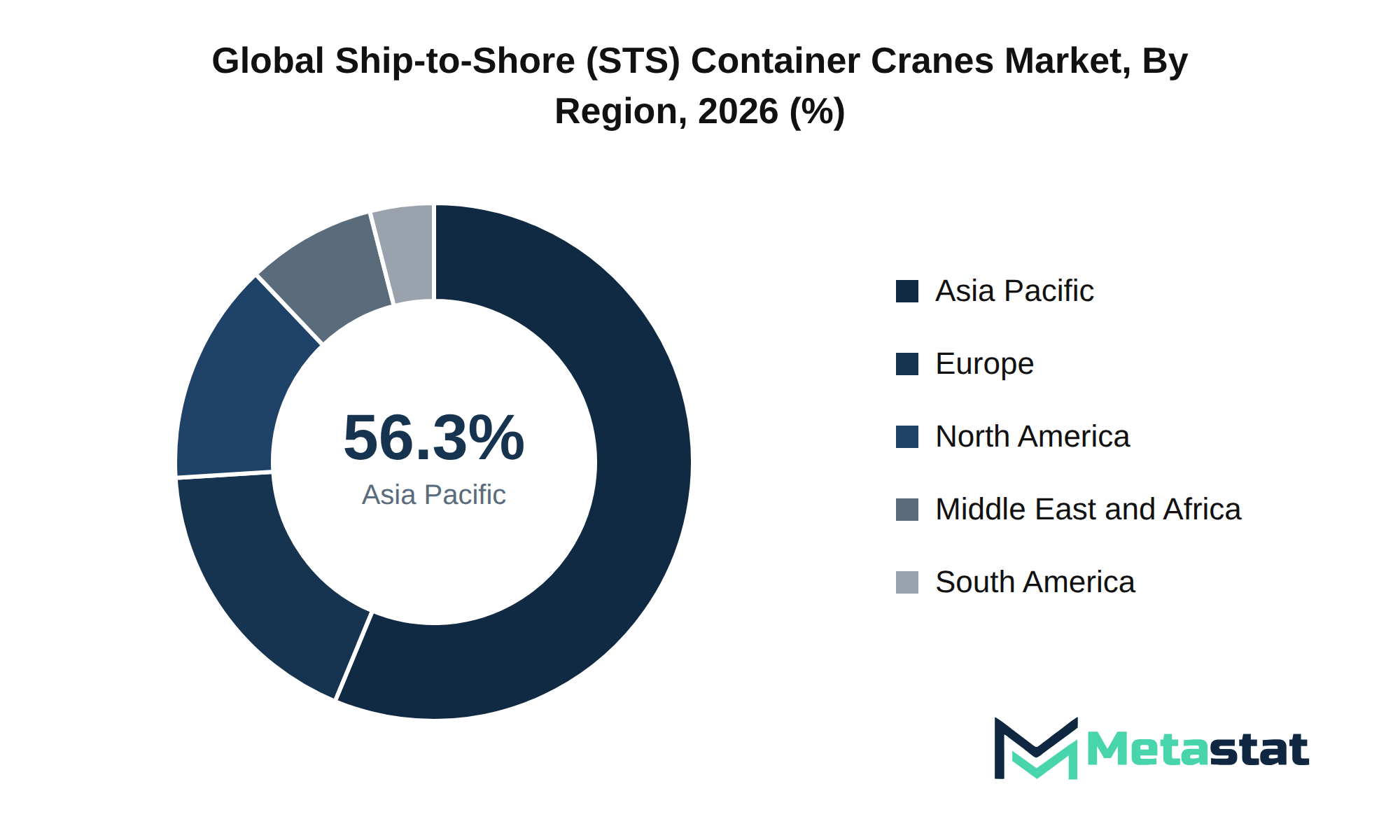
The Asia-Pacific region stands because the largest market for Ship-to-Shore (STS) Container Cranes, accounting for 56.3% of the global market share in 2025. Key drivers of demand include rapid industrialization, expansion of port infrastructure, and increasing trade activities among countries including China, Japan, India, South Korea, and Australia. The region experiences significant growth owing to modernization efforts in logistics and shipping sectors, leading to higher adoption rates of advanced crane technologies.
Emerging economies within Southeast Asia and the Rest of Asia Pacific demonstrate substantial potential for market penetration. Investments in local manufacturing and trade facilities contribute to the heightened need for efficient handling equipment, particularly in growing urban centers. Consequently, stakeholders in the region actively pursue opportunities for modernization, enhancing the competitive environment.
High-value replacement cycles within the existing fleet create further growth vectors for the market. Aging infrastructure and the demand for improved operational efficiency prompt port operators to upgrade their crane systems. This transition aligns with ongoing supply chain regionalization trends, because local manufacturers seek to strengthen their positions in the market through strategic partnerships and innovation.
Geopolitical dynamics influence cross-border trade activities, propelling market demand. The establishment of increased trade corridors and initiatives to enhance regional connectivity play a crucial role in driving investments in STS cranes. Consequently, domestic players, alongside international vendors, actively engage in competitive strategies to capture emerging opportunities.
Regulatory frameworks and compliance mandates impact procurement decisions within the region. Firms prioritize adherence to local standards, ensuring that their operations align with government policies. This focus on compliance shapes the market landscape, promoting collaboration between local and foreign entities to meet regulatory requirements efficiently.
South America represents a growing but underpenetrated market for Ship-to-Shore (STS) Container Cranes, with a projected share of 4.00% in 2025. Brazil and Argentina serve because the primary markets, demonstrating increasing demand for modern container handling solutions. Infrastructure modernization initiatives in port facilities across these nations fuel the need for advanced cranes that enhance operational efficiency and throughput.
Emerging market front-runners in South America leverage foreign direct investment (FDI) flows to support the acquisition of modern lifting equipment, ensuring compliance with local regulations and trade policy shifts. The focus on localized manufacturing densities and procurement dynamics influences purchasing behaviors, emphasizing cost-effectiveness and reliability. Key players in the region actively engage in vendor consolidation trends, enabling them to strengthen their market positions through strategic collaborations.
High-value replacement cycles drive growth in the market, particularly because older equipment becomes less efficient and more costly to maintain. The increasing reliance on cross-border trade corridors enhances regional dynamics, promoting the adoption of STS cranes to accommodate rising shipping volumes. Geographic regulatory frameworks prompt stakeholders to invest in advanced technology that aligns with evolving industry standards, creating a competitive landscape poised for expansion.
The Middle East and Africa region contributes to the global Ship-to-Shore (STS) Container Cranes market in 2025, presenting a developing environment for manufacturers and suppliers. Countries including Saudi Arabia, UAE, and South Africa demonstrate strong demand driven by infrastructure investments and increased trade activities. Local compliance mandates and regulatory frameworks influence operational strategies, pressing stakeholders to align with regional standards while targeting growth opportunities.
Emerging market front-runners focus on enhancing port capabilities and expanding container handling capacities. Strategic entry barriers, including foreign direct investment (FDI) flows, shape market accessibility, increasing competition among established players and new entrants. Ongoing geopolitical fragmentation influences cross-border trade corridors, altering supply chain dynamics and encouraging localized manufacturing densities.
While regional companies modernize infrastructure and prioritize high-value replacement cycles, the market experiences incremental growth vectors. Cultural nuances and regional B2B buying behaviors influence procurement processes and affect collaboration among domestic market leaders. Overall, the Middle East and Africa region presents a unique opportunity in the Ship-to-Shore (STS) Container Cranes market amid evolving dynamics and targeted investments.
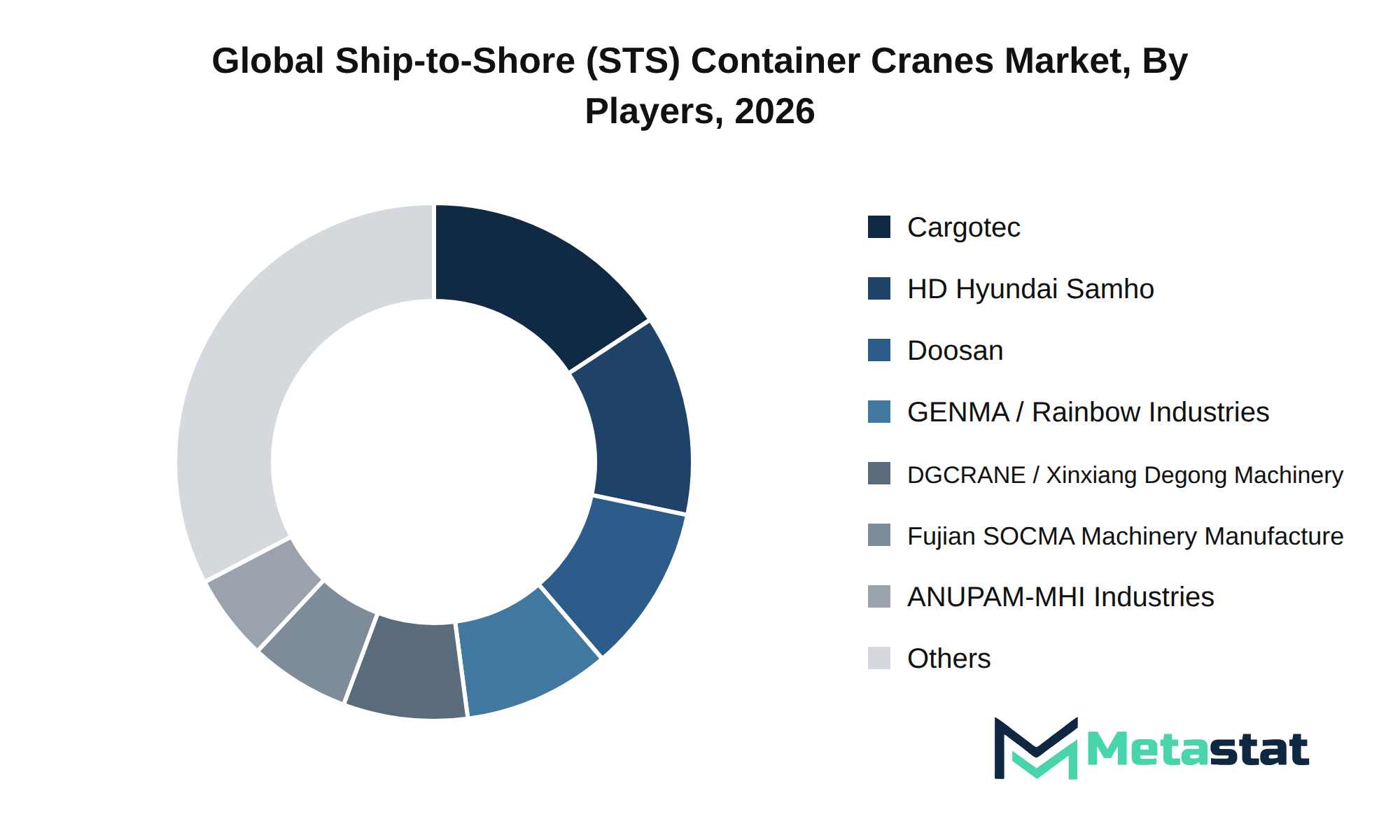
The Ship-to-Shore (STS) Container Cranes market features a range of strategic behaviors among key players. Companies focus on mergers, acquisitions, and strategic consolidation to enhance their market presence and develop competitive advantages. Collaborative efforts through joint ventures and strategic alliances contribute to innovation and technological advancements, enabling firms to differentiate their offerings in a crowded marketplace.
Investment in research and development pipelines supports the introduction of proprietary technologies, enhancing product differentiation. Companies including Konecranes Plc and Liebherr-International AG pursue intellectual property protection, securing patents to fortify their market positions. These efforts create barriers to entry, limiting the threat of new entrants and establishing a competitive environment that rewards established players.
The competitive outlook emphasizes customer retention strategies, with firms prioritizing brand equity and switching costs to maintain market share. This focus on customer loyalty highlights the importance of value chain integration and procurement leverage within the market. Overall, the strategic growth vectors identified within the Ship-to-Shore (STS) Container Cranes market reflect a commitment to innovation and operational excellence.
Market size is forecast to rise from USD 2,878.1 million in 2025 to over USD 4,385 million by 2033. The base case demonstrates steady growth at a 5.4% CAGR, reflecting increasing demand for Ship-to-Shore (STS) Container Cranes driven by global trade activities and infrastructure investments. Bull scenarios envision accelerated growth stemming from rapid technological advancements and enhanced automation, while bear scenarios arise from economic downturns or shifts in trade policies that could limit expansion.
Changes in downstream demand, particularly in industries including shipping and logistics, directly impact the market. Core industry maturation leads to heightened competition and necessitates ongoing innovation. Next-generation technology integration remains essential, with investments in research and development shaping future offerings. Regulatory evolution and compliance milestones influence operational frameworks for manufacturers, impacting production timelines and costs.
Geopolitical realignments and evolving trade corridors introduce uncertainties in global supply chains, affecting the logistics sector's operational efficiency. Strategic capital allocation directives, including infrastructure commitments, significantly influence CapEx investment vectors necessary for market growth. Emerging white-space opportunities highlight unmet enterprise needs, particularly in automation and efficiency enhancements.
The Ship-to-Shore (STS) Container Cranes market reflects dynamic growth potential, driven by infrastructure investments, technological advancements, and evolving global trade patterns. Identifying high-growth pockets proves essential for stakeholders aiming to capitalize on future market developments.
The report strategically identifies and profiles the key market players and analyses their core competencies in each sub-segment of the Ship-to-Shore (STS) Container Cranes market.
Report Attributes | Details |
Study Period | 2021-2033 |
Base Year | 2025 |
Estimated Year | 2026 |
Forecast Period | 2026-2033 |
Historical Period | 2021-2025 |
Growth Rate | CAGR 5.4% from 2026 to 2033 |
Revenue Unit | USD million |
Segmentation | By Crane Size Class, Lifting Configuration, Level of Automation, Crane Profile Type, and Region |
By Region | North America (By Crane Size Class, Lifting Configuration, Level of Automation, Crane Profile Type, and Country)
|
Europe (By Crane Size Class, Lifting Configuration, Level of Automation, Crane Profile Type, and Country)
| |
Asia Pacific (By Crane Size Class, Lifting Configuration, Level of Automation, Crane Profile Type, and Country)
| |
South America (By Crane Size Class, Lifting Configuration, Level of Automation, Crane Profile Type, and Country)
| |
Middle East and Africa (By Crane Size Class, Lifting Configuration, Level of Automation, Crane Profile Type, and Country)
|
Find answers to common questions about this report
The Ship-to-Shore (STS) Container Cranes market size was valued at USD 2,878.1 million in 2025, according to the Metastat Insights study.
The Ship-to-Shore (STS) Container Cranes market is projected to grow at a CAGR of 5.4% during the forecast period from 2026 to 2033.
The North America Ship-to-Shore (STS) Container Cranes market size is estimated to reach USD 558.2 million by 2033.
The leading segment in the Ship-to-Shore (STS) Container Cranes market is the High-Profile STS Cranes, with a projected value of USD 3,474.7 million by 2033. This segment surpasses others in terms of market value.
Investment in infrastructure development and technological integration drive the Ship-to-Shore (STS) Container Cranes market. Increased global trade volumes necessitate advanced handling equipment, while automation and digitization enhance operational efficiencies, prompting stakeholders to invest in modern solutions that optimize crane operations.
High capital investment requirements, rising operating costs, and geopolitical instability significantly restrain the Ship-to-Shore (STS) Container Cranes market growth. Smaller firms face barriers to entry due to initial procurement costs, while geopolitical tensions disrupt supply chains and increase operational expenses. These factors collectively hinder the market's overall development and adoption rates.
Investment in infrastructure development and the increasing adoption of automation and advanced technologies favor product adoption in the Ship-to-Shore (STS) Container Cranes market. These factors enhance operational efficiency, support higher throughput at ports, and address contemporary logistical challenges, driving demand for modern crane solutions.
The Ship-to-Shore (STS) Container Cranes market is estimated to reach a valuation of USD 4,385 million by 2033.
Key players in the Ship-to-Shore (STS) Container Cranes market include Cargotec, Doosan Corporation, Fujian SOCMA Machinery Manufacture Co, Ltd, HD Hyundai Samho Co, Ltd, Konecranes Plc, Liebherr-International AG, Mitsui E&S Co, Ltd, and Shanghai Zhenhua Heavy Industries Co, Ltd (ZPMC).
The Ship-to-Shore (STS) Container Cranes market is projected to grow at a compound annual growth rate (CAGR) of 5.4% from 2026 to 2033.
The analysts below cover Automotive and Transportation research at Metastat Insights.
LEAD ANALYST
Utkarsh Khirodkar is a Lead Market Research Analyst at MetaStat Insight, specializing in market intelligence, technology sector assessments, and competitive strategy.

ENERGY & INFRASTRUCTURE INDUSTRY CONSULTANT
Automotive and Transportation · Electronics and Semiconductor · Energy and Power · Machinery & Equipment
Saurabh Vasant Ganvir consults for Energy & Infrastructure Industry at MetaStat Insight, specializing in renewable energy, solar EPC, and electric vehicle (EV) infrastructure markets.
When evaluating distributed energy resource management systems, standard research summaries tend to gloss over the operational differences between front-of-the-meter utility deployments and behind-the-meter industrial sites. The MetaStat Insight report addressed those distinctions directly, especially regarding software interoperability standards and grid interconnection backlogs. The five-year market sizing across regional transmission organizations provided actionable context for our grid modernization strategy.
Most industry reports on warehouse automation bundle autonomous mobile robots and fixed conveyor installations into the same top-level numbers, which complicates advisory work. This study split the market cleanly by payload tiers, navigation technology, and fleet management software layers. The regional forecast for Western Europe gave our team defensible adoption benchmarks when evaluating capital allocation for logistics clients, saving us days of secondary data scrubbing.
Standard industry briefs frequently blur the operational distinctions between isobaric pressure exchangers and centrifugal turbines. In this study, MetaStat Insight categorized mega-scale desalination tenders across the GCC and Mediterranean basins by membrane replacement frequencies and salinity tolerances. Their primary research helped us evaluate local content requirements in Saudi Arabia and the UAE without relying on marketing literature. We found the segment-level equipment replacement estimates grounded and well-reasoned throughout.
Explore related market intelligence reports worth reading alongside this one.